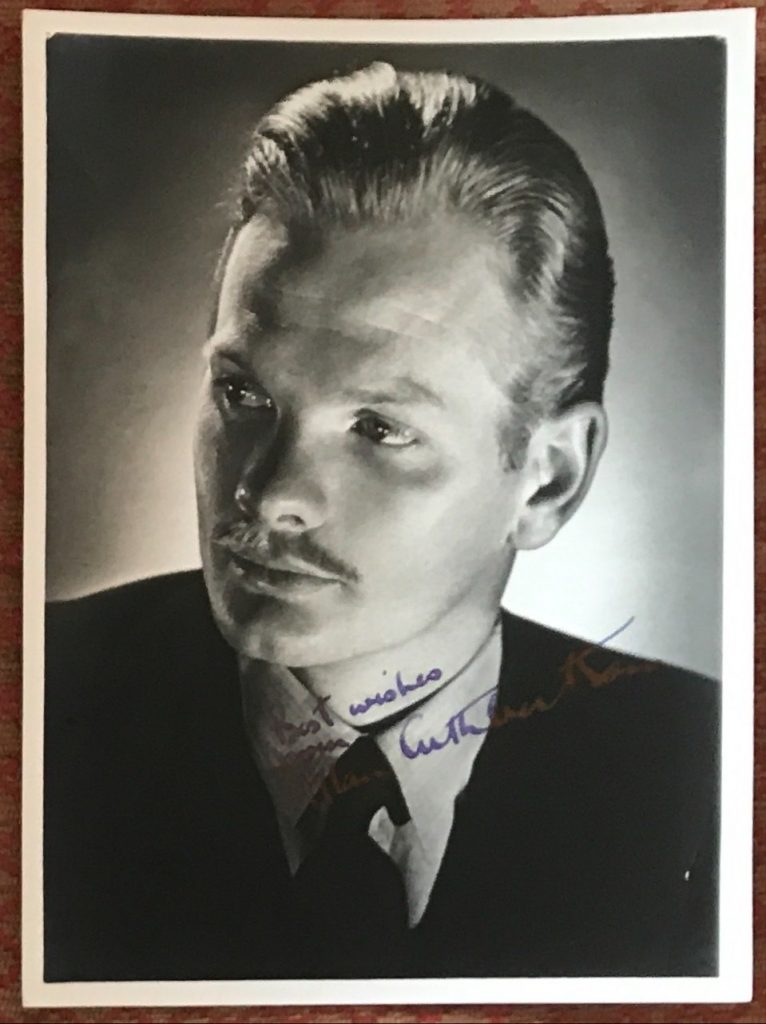
Allan Cuthbertson (1920–1991) was the undisputed master of the “gaze of frozen contempt.” An Australian-born actor who became a pillar of British cinema and television, Cuthbertson carved out a singular niche playing the ultimate establishment figure: the stiff-upper-lipped officer, the supercilious civil servant, or the condescending aristocrat.
While he was often typecast, a critical analysis of his work reveals an actor of immense precision who understood the comedic and dramatic power of understatement and status play.
I. Career Overview: The Quintessential Englishman
Act 1: The Military Mold (1940s–1950s)
After serving in the Royal Australian Armoured Corps during WWII, Cuthbertson moved to Britain. His breakthrough came on stage and in early war films. His naturally formal bearing and crisp, clipped diction made him the first choice for military roles in epics like The Guns of Navarone (1961) and Carve Her Name with Pride (1958).
Act 2: The Satirical Pivot (1960s–1970s)
Cuthbertson’s greatest career move was leaning into the absurdity of his own “stiff” persona. He became a favorite of the British comedy elite, appearing in everything from The Avengers and Fawlty Towers to several Carry On films. He was the perfect “straight man,” providing a granite-faced foil to the chaos of John Cleese or the Goons.
Act 3: The Elder Statesman (1980s)
In his later years, he transitioned into prestige television and period dramas, such as The Mirror Crack’d (1980) and Edge of Darkness (1985). He remained the definitive representation of a vanishing version of British colonial and class-based authority.
II. Critical Analysis: The Art of the “High-Status” Foil
1. The Weaponization of Snobbery
Cuthbertson didn’t just play snobs; he played the vulnerability of snobbery.
-
The Technique: Critics often noted his “economy of movement.” He could convey a world of disapproval with a microscopic twitch of his mustache or a slight narrowing of the eyes.
-
Status Play: In British social comedy, status is everything. Cuthbertson understood that the funnier the lead actor (like Basil Fawlty) became, the more rigid he had to remain. By refusing to “crack,” he heightened the comedy of those around him.
2. The “Guns of Navarone” Effect: Professionalism as Flaw
In The Guns of Navarone, he played Major Baker.
-
The Performance: He portrayed a man so bound by bureaucracy and “proper” military conduct that he became an obstacle to the mission’s success.
-
Critical View: This is cited as a masterclass in playing an “antagonist who isn’t a villain.” He isn’t evil; he is simply limited by his own devotion to the rules. Cuthbertson excelled at showing the danger of a rigid mind in a fluid situation.
3. The “Fawlty Towers” Cameo: A Cultural Touchstone
His guest appearance as Colonel Hall in the “Gourmet Night” episode of Fawlty Towers is perhaps his most analyzed comedic work.
-
The Dynamic: Opposite John Cleese’s frantic energy, Cuthbertson’s Colonel is a pillar of unimpressed dignity.
-
Critical Significance: Historians of British comedy point to this role as the archetype of the “Squire” figure—the man who expects the world to function a certain way and is quietly, terrifyingly baffled when it doesn’t.
III. Major Credits and Archetypal Roles
| Work |
Medium |
Role |
Significance |
| The Guns of Navarone(1961) |
Film |
Major Baker |
His definitive “rigid officer” performance. |
| The 7th Dawn (1964) |
Film |
Cavendish |
Showcased his range in colonial dramas. |
| The Avengers (Multiple) |
TV |
Various |
Played the “villainous gentleman” with chilling charm. |
| Fawlty Towers (1975) |
TV |
Colonel Hall |
The gold standard for the British “Straight Man.” |
| Hopscotch (1980) |
Film |
Chartermain |
A late-career turn playing a high-level intelligence official. |
Final Reflection
Allan Cuthbertson was the “architect of the sneer.” He occupied a space in the British imagination as the man who represented the “Old Guard”—sometimes heroic, often ridiculous, but always impeccably dressed and utterly certain of his own importance. He was a vital component of 20th-century British storytelling, providing the essential friction against which more “modern” or “rebellious” characters could rub.