
Helmut Berger

Helmut Berger
Helmut Berger

Helmut Berger (Wikipedia)

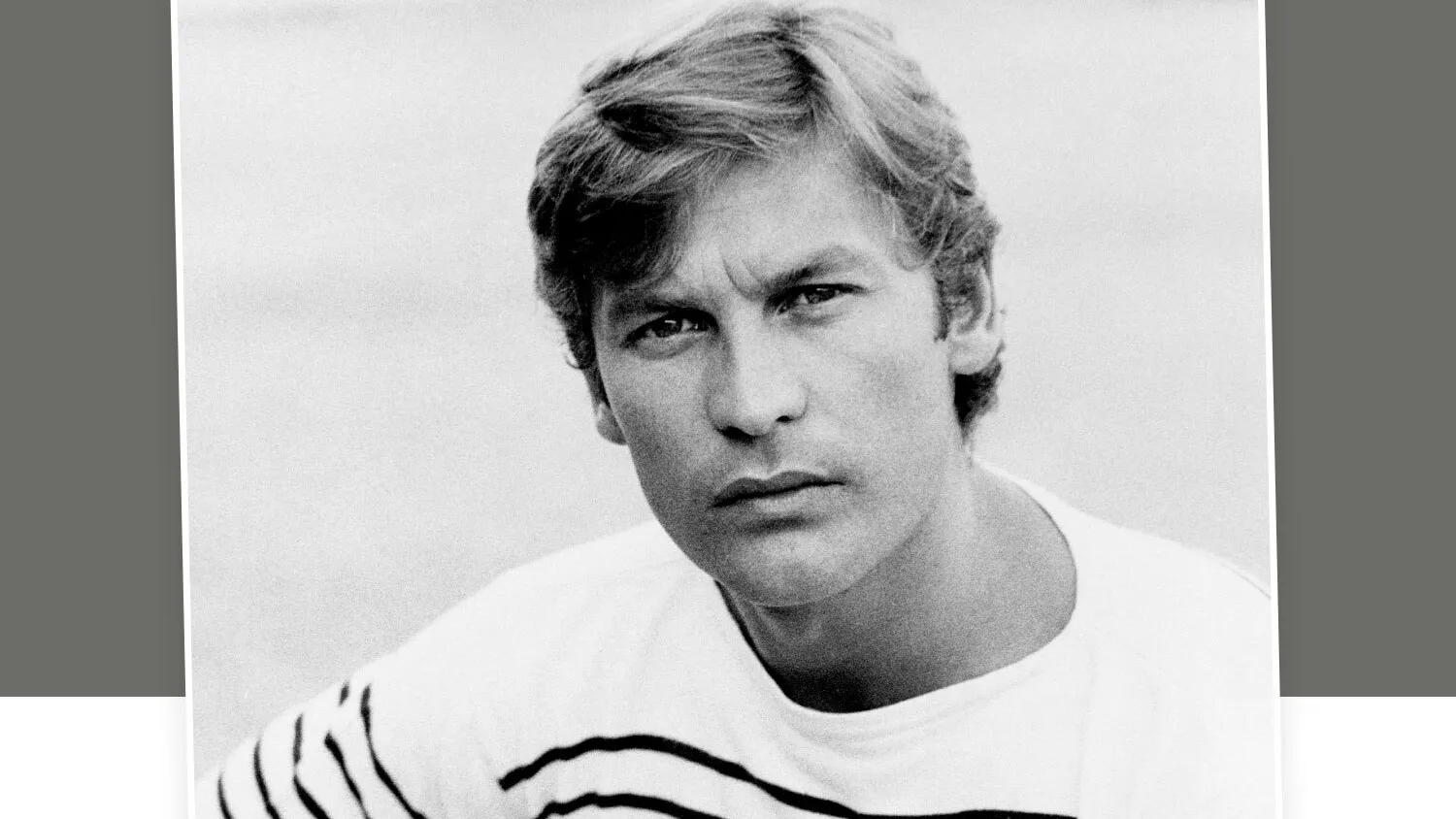
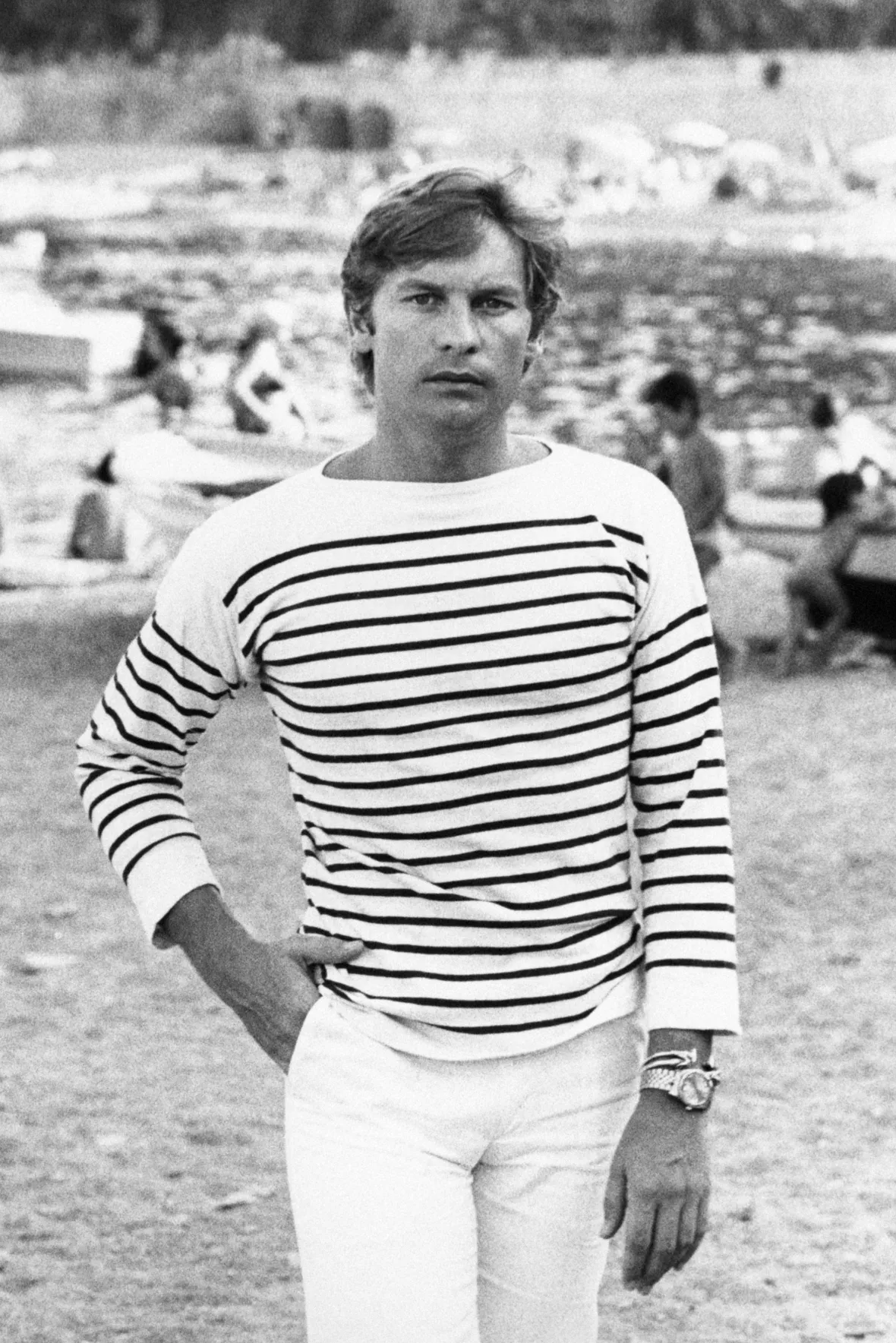
Helmut Berger is an Austrian film and television actor. Berger, who often portrayed narcissistic and sexually ambiguous characters, was one of the best-known stars of the European cinema in the late 1960s and 1970s. 

Berger is most famous for his work with Luchino Visconti, particularly in his performance as King Ludwig II of Bavaria in Ludwig, for which he received a special David di Donatello award, and his performance in The Damned for which he was nominated for a Golden Globe Award. He appears primarily in European cinema, but has also acted in American productions such as The Godfather Part III as well as a guest appearance on the soap opera, Dynasty.

Berger was born in Bad Ischl, Austria, into a family of hoteliers. After receiving his Abitur, Berger initially trained and worked in this field, even though he had no interest in gastronomy or the hospitality industry. At age eighteen, he moved to LondonEngland, where he did odd jobs while taking acting classes.[1] After studying languages at University of Perugia in Italy,[2] Berger moved to Rome, Italy.

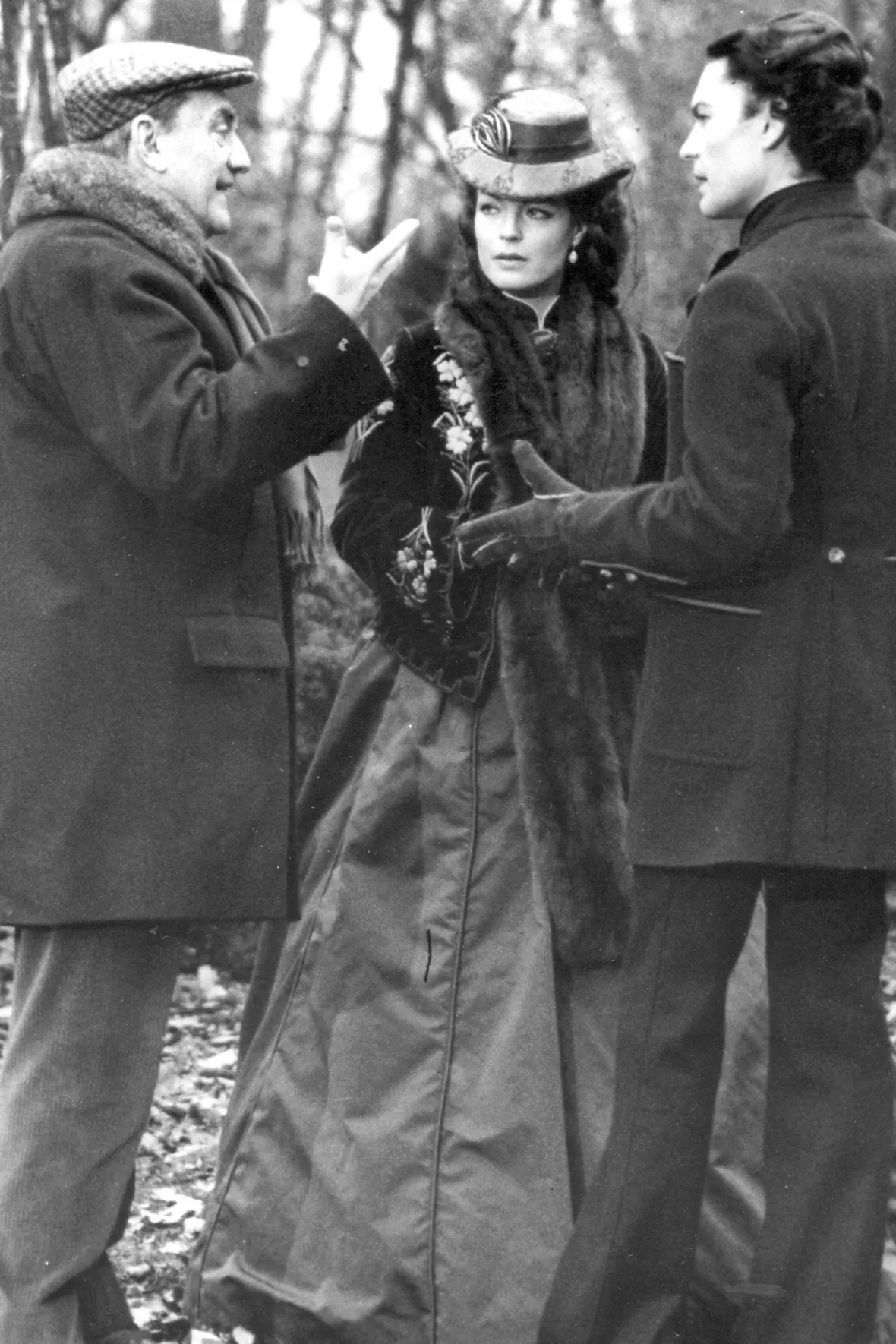
He first met the film director Luchino Visconti in 1964. Visconti gave him his first acting role in the film Le streghe (The Witches, 1967) (in the episode “La Strega Bruciata Viva”), but he gained international prominence as the amoral Martin von Essenbeck in Visconti’s The Damned (1969). In that film, in what is perhaps his best-known scene, he pretends to be Marlene Dietrich in the film The Blue Angel (1930). It was followed by the title role in the Oscar Wilde adaption Dorian Gray (1970) and a leading role in the Oscar-winning Italian drama film The Garden of the Finzi-Continis (1970). In Visconti’s Ludwig(1972), Berger portrays Ludwig II of Bavaria from his blooming youth to his dissolute final years. Romy Schneider starred alongside him in the film. This performance got him a David di Donatello award and is perhaps his most famous role. In 1974, Berger starred with Burt Lancaster in Visconti’s Conversation Piece. The story of Conversation Piece is often considered as an allegory of the personal relationship between Berger and Visconti. On several occasions Berger mentioned this film as his favorite.

In the following he played leading roles in international productions such as Ash Wednesday (1973) alongside Elizabeth Taylor and Henry Fonda. Another film was The Romantic Englishwoman (1975) alongside Michael Caine and Glenda Jackson. He also appeared in Tinto Brass‘s controversial film, Salon Kitty (film) with Ingrid Thulin in 1976. Well-known photographers including Helmut NewtonMary Ellen Mark and David Bailey published series of pictures of him. Andy Warhol made polaroids of him and produced serigraphs. Berger was also, in 1970, alongside his then-girlfriend Marisa Berenson, the first man on the cover of Vogue.[3]

The death of his partner Luchino Visconti in 1976 plunged him into a personal crisis. Exactly one year after Visconti died, Berger tried to commit suicide but was found in time to be saved.[4] In the following time the abuse of drugs and alcohol shadowed his acting career. In 1980 Berger was cast by Claude Chabrol as Fantômas before he went to America to work in television in the role of Peter De Vilbis in nine episodes (1983–1984) of the American prime time soap opera Dynasty, which he said he did only for money. He would later say he was “crying on the way to the set but laughing on the way to the bank”.[citation needed] This was his last appearance in a television series. He continued working in the US on various projects, most notably starring in Code Name: Emerald in 1985. In Europe, he acted the TV-miniseries The Betrothed in 1989.

In 1990, Berger appeared in The Godfather Part III. He later appeared in the music video to Madonna‘s song “Erotica” in 1992, and also appeared in Madonna’s book Sex.[5] In 1993, Berger reprised his role as King Ludwig II. in the critically acclaimed film Ludwig 1881. Throughout the second half of the 1990s, he concentrated mainly on European productions, acting in films directed by Christoph SchlingensiefYves Boisset and many others.

In 1997, Quentin Tarantino included some archive footage of the film Beast with a Gun in his film Jackie Brown and thanked Berger in the closing credits for his powerful performance.

From the early 2000s to 2009, Berger largely withdrew from the acting world, moving to Salzburg to his mother who was in need of care.  She died in 2009.[7] Since then, he has acted in bigger film productions again.

2012, Schwarzkopf & Schwarzkopf Verlag published Helmut Berger – A Life in Pictures, a coffee table book about his life, featuring many previously unreleased photographs of his life and films plus essays in German, English, Italian and French. The book was well received by the press.

In the thriller film Iron Cross (2009) Berger played Shrager, an aging character believed to be an old SScommander responsible for murdering Jews during World War II. In recent years, Berger has starred in two films directed by Peter Kern – Blutsfreundschaft (shown at the 60th Berlin International Film Festival (2010)), and Mörderschwestern (2011). In 2014, Berger appeared in Saint Laurent as old Yves Saint Laurent for which he was “celebrated” at Cannes Film Festival.[9] The short film Art!, in which Berger had a starring role, had its world premiere at Paris Independent Film Festival 2015. Most recently, he stars in the role of “Professor Martin” in the film Timeless by Alexander Tuschinski, due to be released in 2016.

In 2015 Austrian filmmaker Andreas Horvath released a feature-length documentary about Helmut Berger called Helmut Berger, Actor. The film premiered at the Venice Film Festival. In the magazine Artforum American film director John Waters chose Helmut Berger, Actoras the Best Motion Picture of the year 2015.[10] Berger later filled a lawsuit against Horvath. 

On February 22, 2018, the premiere of Albert Serra‘s play, Liberté, starring Helmut Berger and Ingrid Caven was performed at the Volksbühne theater in Berlin. The play is scheduled to be performed throughout 2018. It was the first stage role in Berger’s career.  In 2019, another documentary film Helmut Berger, meine Mutter und ich was released, dealing with his personality and an attemped comeback.

In 1969, Berger was nominated for a Golden Globe Award for his role in The Damned, and in 1973, he won a David di Donatello – the Italian equivalent of an Academy Award – for his performance in Ludwig.

In 2007, he received a special Teddy Award at the 57th Berlin International Film Festival (2007) for his overall professional achievements.

In 2010 Berger received two Prix Lumières at the Lumière Film Festival in Lyon and also the “golden key” of the city.

In 2011, he received a Kristián Award, awarded at the Czech film festival Febiofest “for Contributions to World Cinema”.
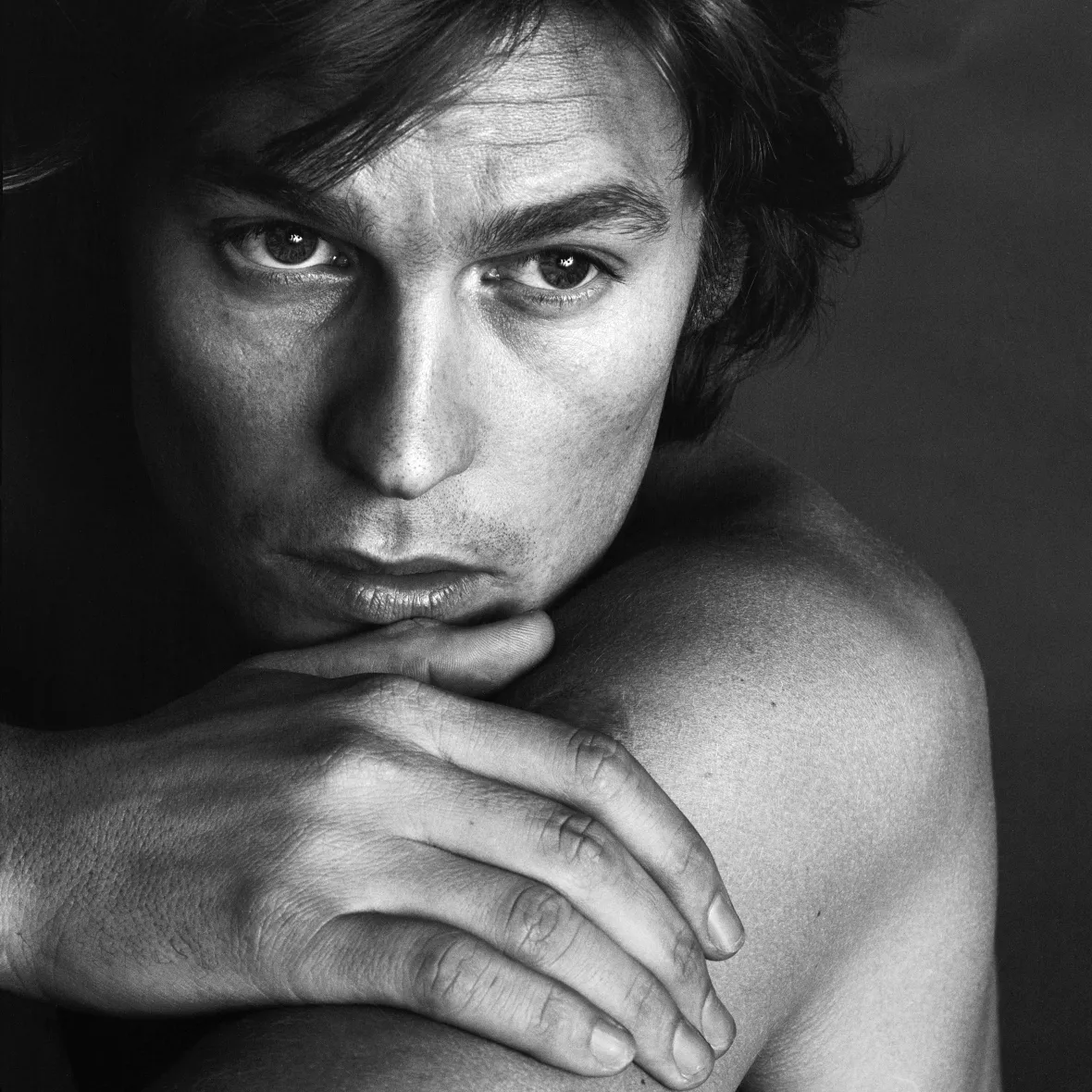
The times obituary in 2023.

It may be harder than it seems to be the best-looking man in the world. Helmut Berger, the Austrian actor to whom the press regularly accorded that status in the 1970s, certainly gave the impression it was so.

Over a decade, he transcribed the classic self-destructive arc through the rarefied air of the jet set. For every film premiere, Vogue cover shot or holiday on the yacht of the Greek plutocrat Stavros Niarchos, there was a run-in with the law, a struggle with inner demons and an impromptu departure over the taffrail, preceded into the Aegean by his suitcases. Those cheekbones notwithstanding, it was that kind of life.

Berger was chiefly associated with Luchino Visconti, the Italian director of films such as The Leopard who became both his mentor and lover. By Berger’s not always reliable account, they met in Assisi in 1964, where Visconti was making Sandra. The director noticed the blue-eyed language student and aspiring actor, then aged 20, sitting in a pizzeria. Visconti lent him a scarf as he seemed cold and invited him to lunch.

Soon they were living together in Paris, on the Italian island of Ischia, and at Visconti’s villa on the Via Salaria, Rome, where Berger’s predecessors had included Franco Zeffirelli. Despite his radical leanings, and an oeuvre shot through with commentary on class hypocrisy, Visconti, himself an aristocrat, tried to keep their relationship a secret, not least from his servants.

Then almost 40 years Berger’s senior, he became the younger man’s father figure. He educated him about art and taught him English. In return, Berger, who craved the companionship of his contemporaries and snuck out to nightclubs when Visconti was asleep, introduced him to the likes of the Beatles.

Visconti had a vision of the group collaborating with the conductor Leonard Bernstein. When the quartet came to dinner, however, he complained about the length of their hair and forbade Berger to grow his.


As in many relationships, there were bouts of jealousy between them, as well as scenes in public. One occurred when Berger tried on everything in a clothes shop in Greece and the owner commented to Visconti that parents needed patience with their children

Even so, Visconti’s infatuation did not abate and he cast Berger in prominent roles in several of his films, starting with The Witches (1967). He was next seen — sensationally — making his entrance in The Damned (1969) for which he dressed up in the androgynous top hat and stockings style of Marlene Dietrich in The Blue Angel.

Loosely based on the history of the Krupp dynasty, the film depicts a family of German industrialists tied to the Nazis. Berger was the homosexual heir, Martin von Essenbeck, whose emotional turmoil culminates in the rape of his mother and the forced suicide of her lover, played by Dirk Bogarde. “Except for Helmut Berger, there are no interesting women today,” quipped Billy Wilder about the actor’s performance. Nevertheless, he was nominated for a Golden Globe and Visconti for an Oscar for the script. Dietrich, meanwhile, sent Berger a photograph of herself with her compliments and the inscription: “Who’s prettier”

Disdaining the risk of self-parody, Berger was next seen in Dorian Gray (1970), set in louche contemporary London. Much more substantial was Vittorio De Sica’s adaptation of The Garden of the Finzi-Continis (1970), about a well-to-do Jewish family in Fascist-era Ferrara. Berger was notably convincing as the ailing son whose fragility mirrors that of the Edenic existence soon to be destroyed.

Berger described his next film as “the role of his life”. Ludwig (1973), which with Death in Venice (1971) completed Visconti’s “German trilogy”, portrayed lavishly the architectural and sexual excesses of the “mad king” of Bavaria who was Richard Wagner’s patron. Some critics felt the director’s lens lingered too long on his leading man — the film lasts three hours — but Berger was awarded Italy’s equivalent of a Bafta, the David di Donatello.

He was now regarded as a rising star of European cinema, but his subsequent films exposed his limited range. They included Ash Wednesday (1973), with Elizabeth Taylor as a woman rejuvenated by cosmetic surgery. Berger and the actress’s husband, then Richard Burton again, did not get along. The Austrian liked to tell how he had pranked the star of Where Eagles Dare by getting him to sit in white trousers on a sofa that Berger had smeared with chocolate truffles

His last film for Visconti was Conversation Piece (1974), widely regarded as a study of their relationship, with Burt Lancaster in the role of the older man. By then, however, the director, who smoked 120 cigarettes a day, had had a stroke and had moved in with his sister.

He was also livid that Berger had fallen into the clutches of cocaine. This further exacerbated his protégé’s lack of inhibition, promiscuity and oscillation between what he called the angelic and diabolic sides of his personality.

Berger’s last role of note came in Tinto Brass’s blatantly exploitative Salon Kitty(1976), based on the Berlin brothel run by the Nazis for the purposes of gathering intelligence. Visconti’s death that year sent Berger still further off the rails, especially after he discovered he had been left nothing in the will.

A year later, he attempted suicide by taking an overdose. Friends intervened, but ever afterwards he would define himself as having been “widowed at 32”

He was born Helmut Steinberger in 1944 at Bad Ischl, near Salzburg, Austria. His parents ran a hotel, but his father, Fritz, was then a prisoner of war in Russia. He did not meet his son until he was three and thereafter their relationship was difficult.

Berger claimed that his father would beat him. He did not find school more congenial and was expelled from several for bad behaviour and lack of concentration. (These days the traits he displayed might invite a diagnosis of neurodivergence.)

At 18, unwilling to work for his parents, he stole money from his mother and made his way to London. He was thrown out of the Central School of Speech and Drama for oversleeping but found work in a restaurant on the Kings Road, Chelsea. There he came to know stars such as Cat Stevens and, after discovering marijuana, participated in hedonistic orgies.

Much of his réclame depended on his well-publicised dalliances with famous lovers of both sexes. Among these were Rudolf Nureyev, although the dancer’s love of garlic and vodka repelled him, Ursula Andress and Britt Ekland, to whom he proposed marriage after her divorce from Rod Stewart.

His other paramours included, he said, the film stars Linda Blair and Nathalie Delon, and Anita Pallenberg. He liked to recount how he had slept with both Bianca and Mick Jagger, but only in the platonic sense. Berger had a much longer relationship with the actress Marisa Berenson. In 1970, he became the first man to appear on the cover of Vogue when photographed with her by David Bailey. He was also immortalised by Helmut Newton and Andy Warhol.

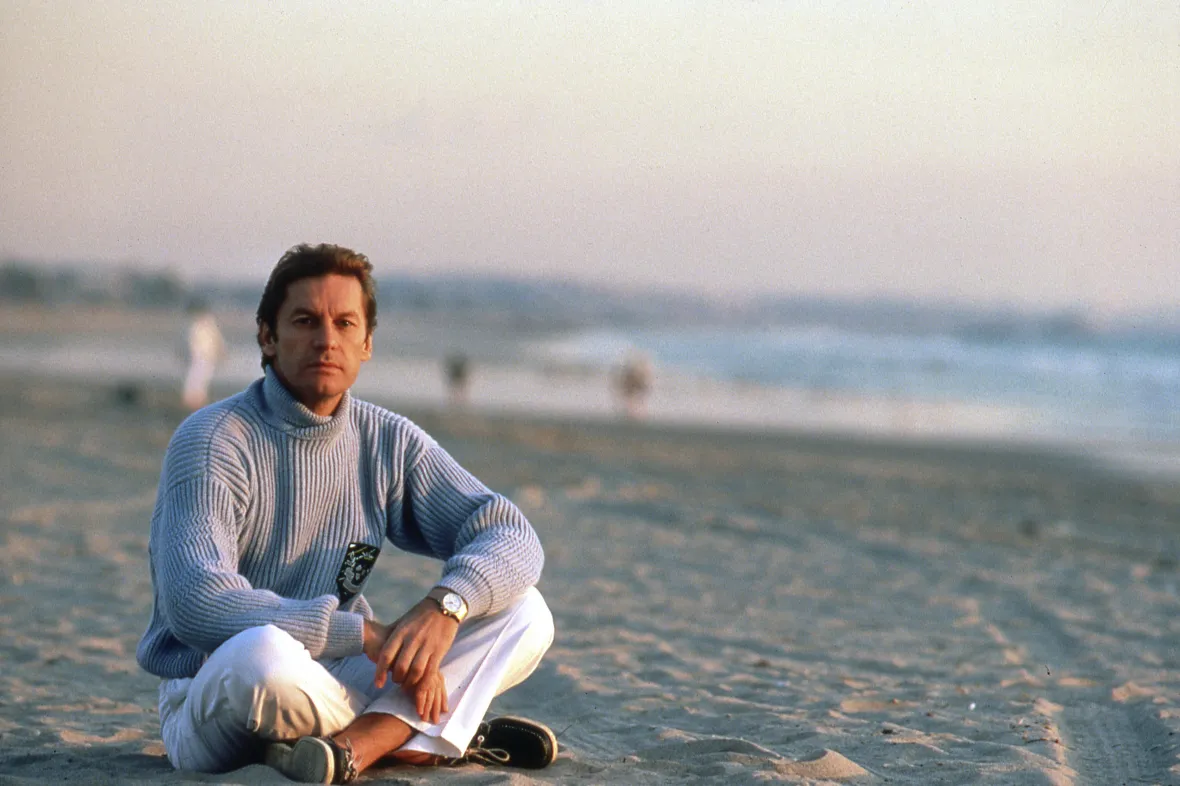
Short of money, Berger appeared in 1983 in nine episodes of the soap Dynasty, as a drug-addled playboy. Although he remained an inspiration to Madonna, featuring in 1992 in her book Sex, thereafter he was little seen on the screen for two decades. For much of that time, Berger was caring for his mother, Hedwig, and battling his addictions to alcohol and drugs, which he said he resorted to in an attempt to overcome acute shyness.

He also had obsessive-compulsive tendencies, taking days to pack suitcases without creasing his clothes.

He had a small role in The Godfather Part III (1990) and in 2014 was seen as the elderly Yves Saint Laurent in a drama about the designer. He published a memoir in German, Ich, in 1998, and in 2015 appeared in a sexually graphic, rather Swiftian documentary about his life.

Berger’s time with Visconti fired extravagant tendencies that never faded. Thinking a boathouse the height of desirability, he had one built but never bought a boat to put in it. At one stage, his assets included a chalet in Kitzbühel which he sold to Franz Beckenbauer.

Yet he lost many of his possessions, supposedly including paintings by Chagall and Picasso, in 1992 in a fire in Rome caused by a cigarette. Berger said he had not been paid much of what he had been promised for his film roles and by 2010 claimed his only income was his monthly state pension of €200.

This was disputed by his estranged wife, Francesca Guidato, a writer whom he had married in 1994. The guests were kept waiting for two and a quarter hours while the groom made his confession.

The marriage was stormy, and though he helped to raise a stepdaughter, Salome, he and his wife had been separated for many years. In 2015, she denounced him for bigamy with a younger man, but the accusation proved untrue and the relationship in any event ended soon after.

“You know, I like myself,” reflected Berger. “I am what I am. Take me or leave me.”

“I have lived three lives. And in four languages. Je ne regrette rien.”

Helmut Berger, film actor, was born on May 29, 1944. He died on May 18, 2023, aged 78


Leave a Reply

Your email address will not be published. Required fields are marked *