

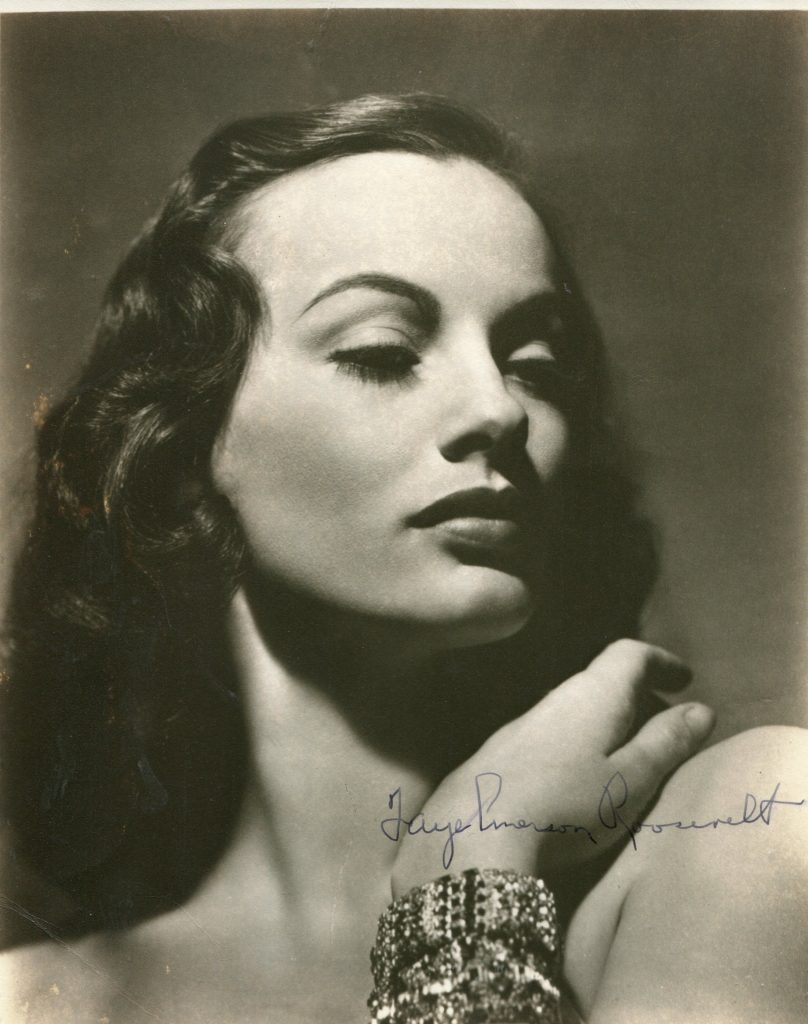
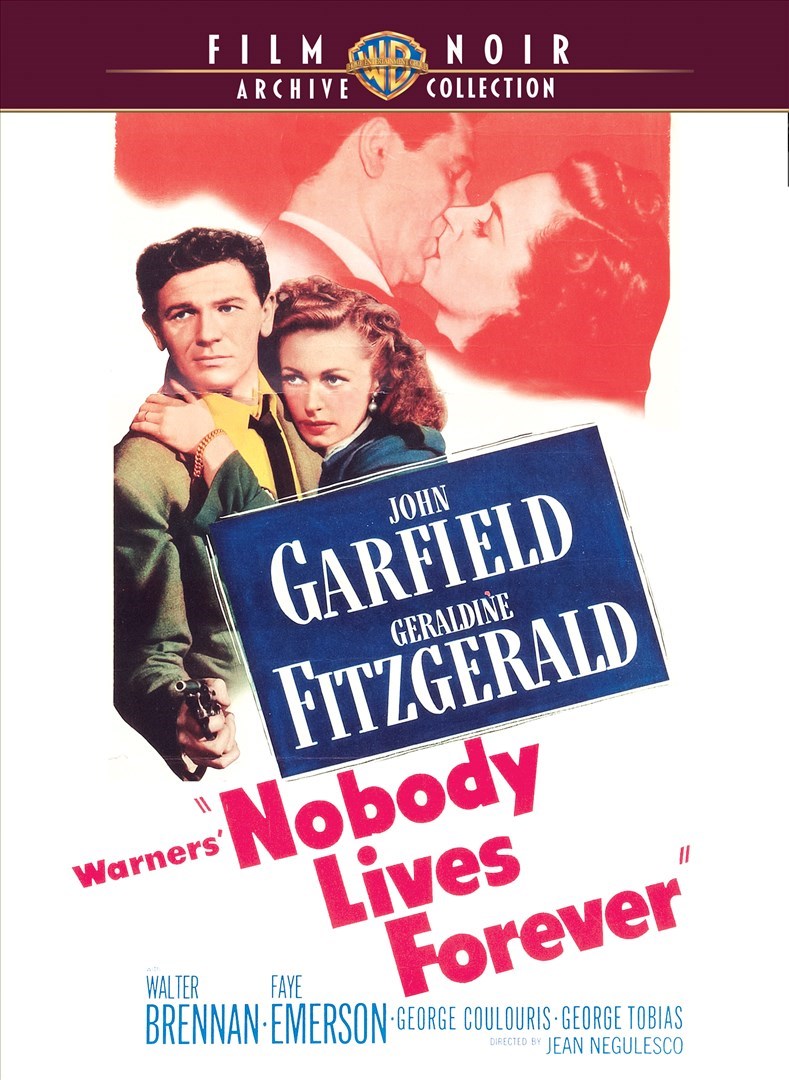
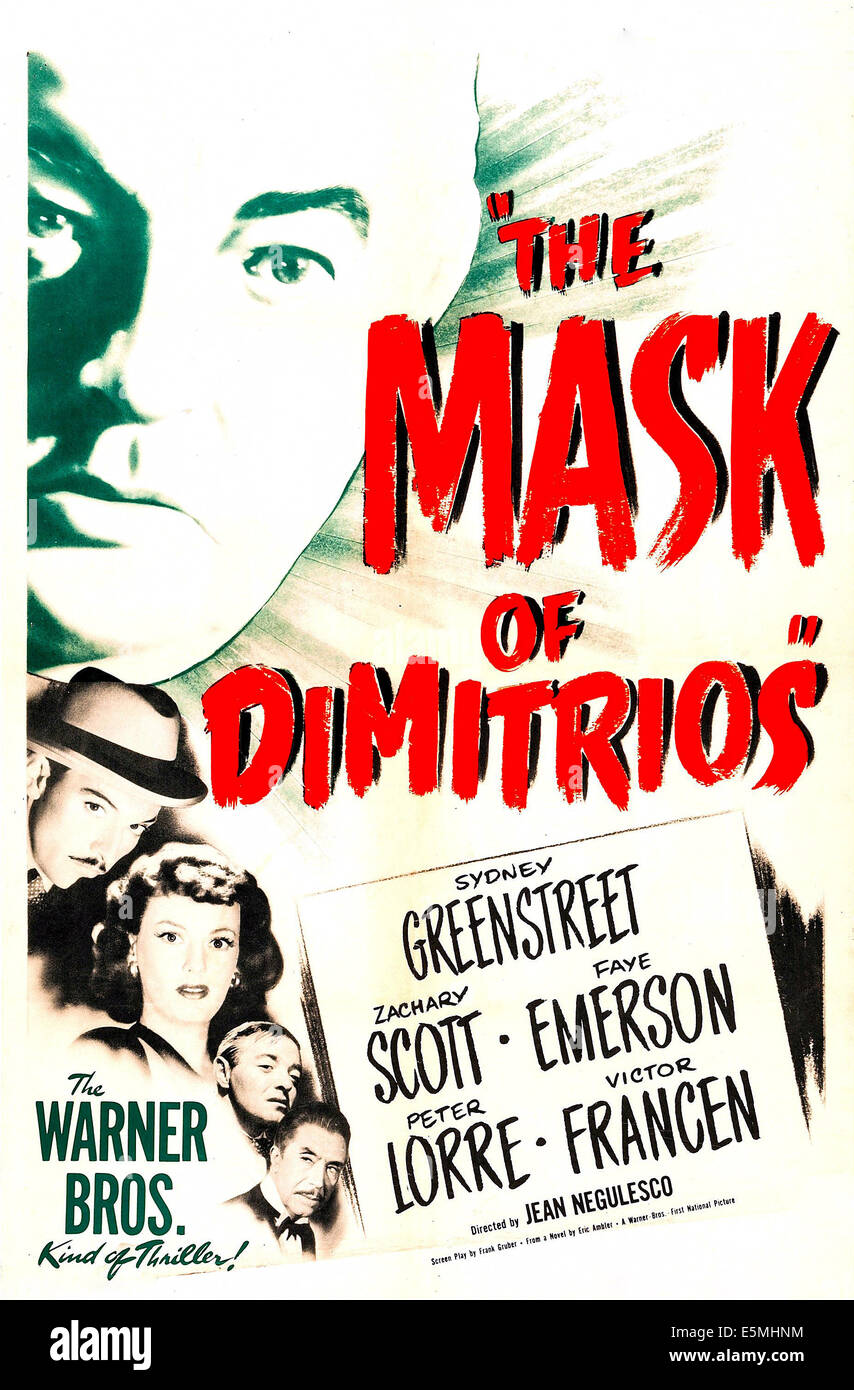
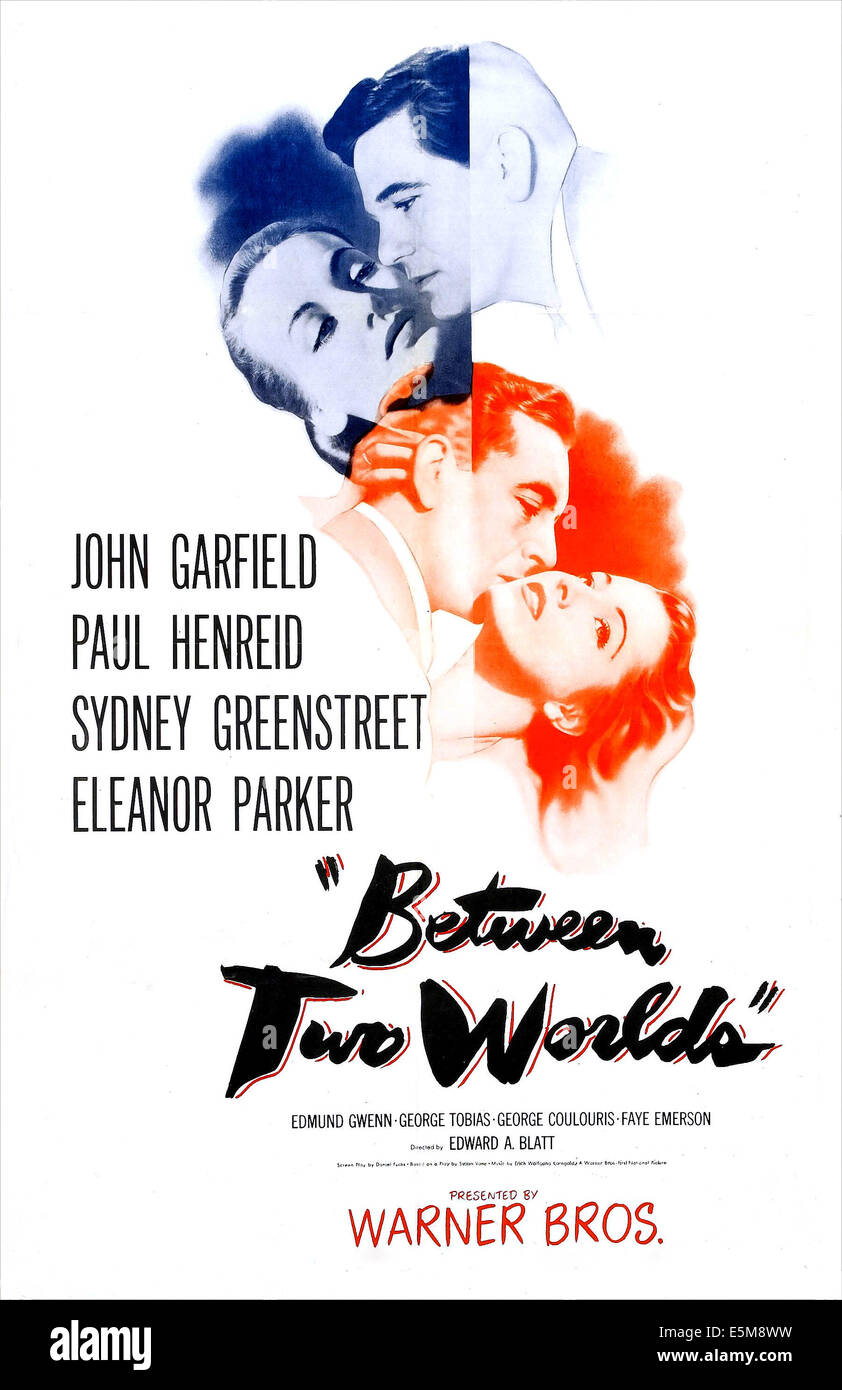
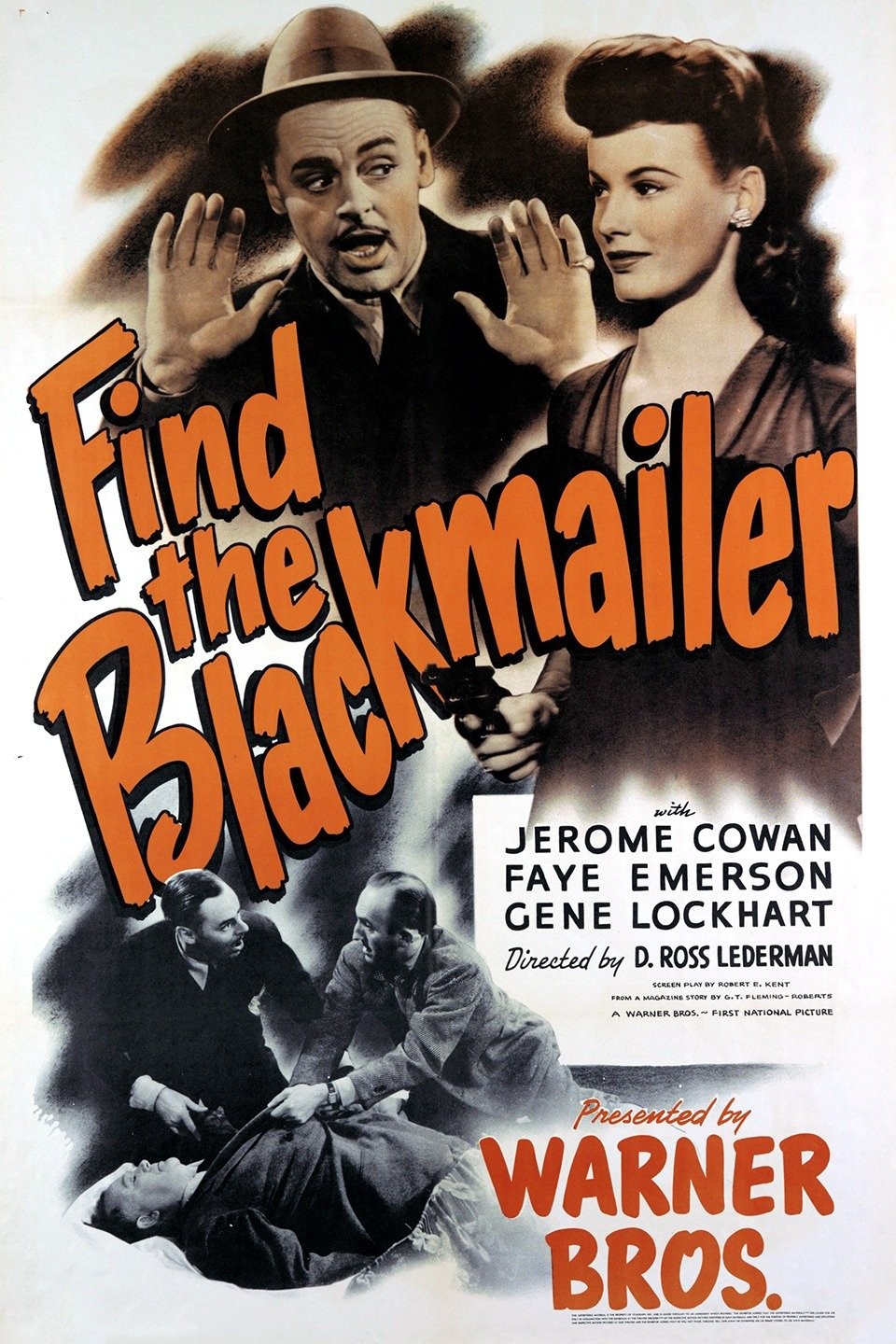
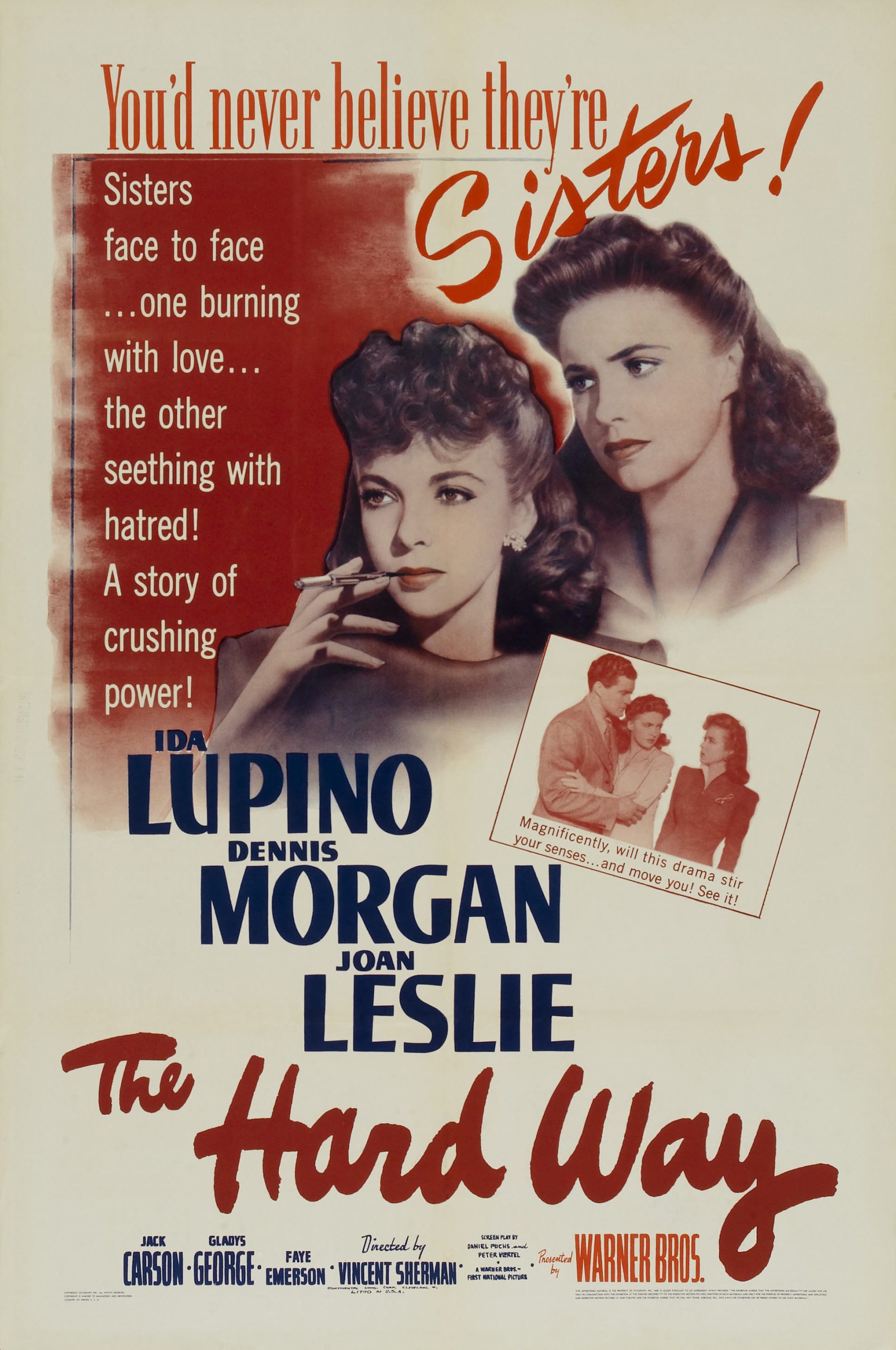
Faye Emerson was born in 1917 in Louisiana. She was a leading actress in film noir of the 1940’s. Her film debut was in 1941 in “Affectionately Yours”. Her major movies include “Between Two Worlds”, “The Mask of Dimitros” and “Nobody Lives Forever”. Her final movie was “A Face in the Crowd” in 1957. She died in 1983.
Gary Brumburgh’s entry:
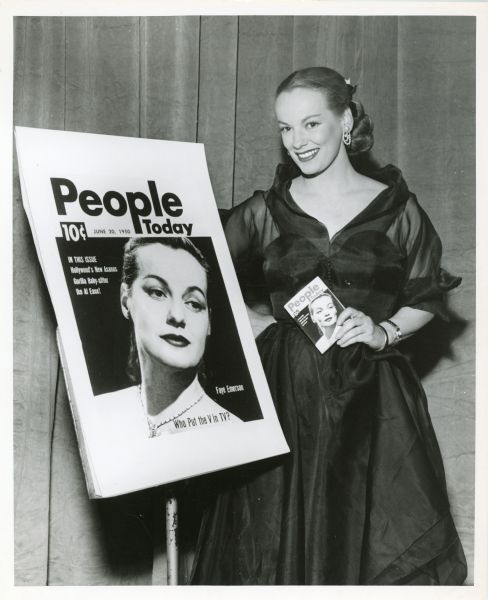
Synonymous with chic, the ever-fashionable Faye Emerson certainly qualified as one of the “first ladies” of TV glamor. Bedecked in sweeping, rather low-cut gowns and expensive, dangling jewelry, she was a highly poised and stylish presence on the small screen during its exciting “Golden Age”. An enduring presence throughout the 1950s, she could have lasted much longer in her field of work had she so desired.
Born in 1917 in Elizabeth, Louisiana, her father was both a rancher and court stenographer. The family subsequently lived in Texas and Illinois before settling in California. Her parents divorced after she entered her teens and she went to live with her mother (and new husband) in San Diego where she was subsequently placed in a convent boarding school. Following graduation from high school, she attended San Diego State College and grew interested in acting, performing in several Community Players productions. She made her stage debut with “Russet Mantle” in 1935.
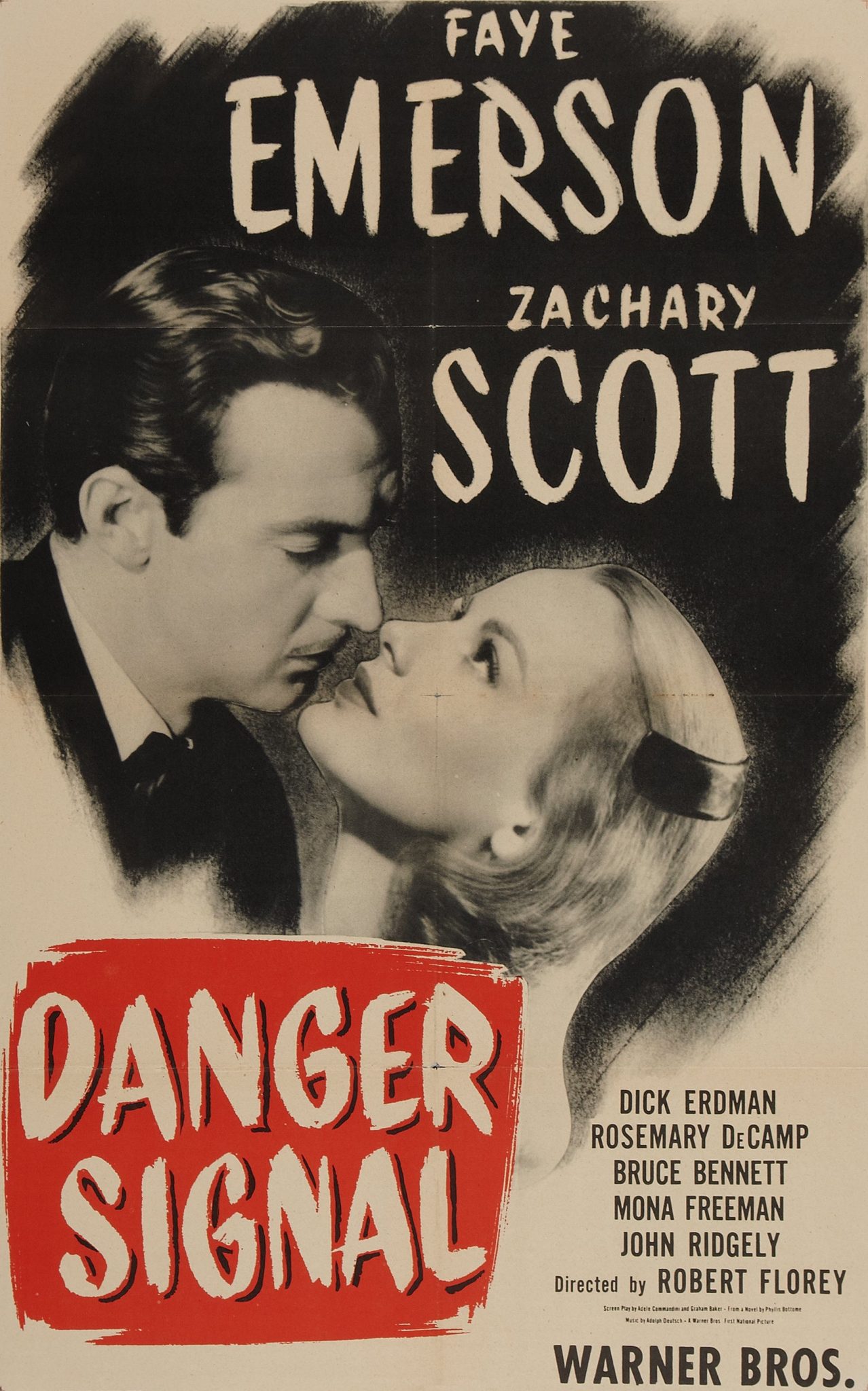
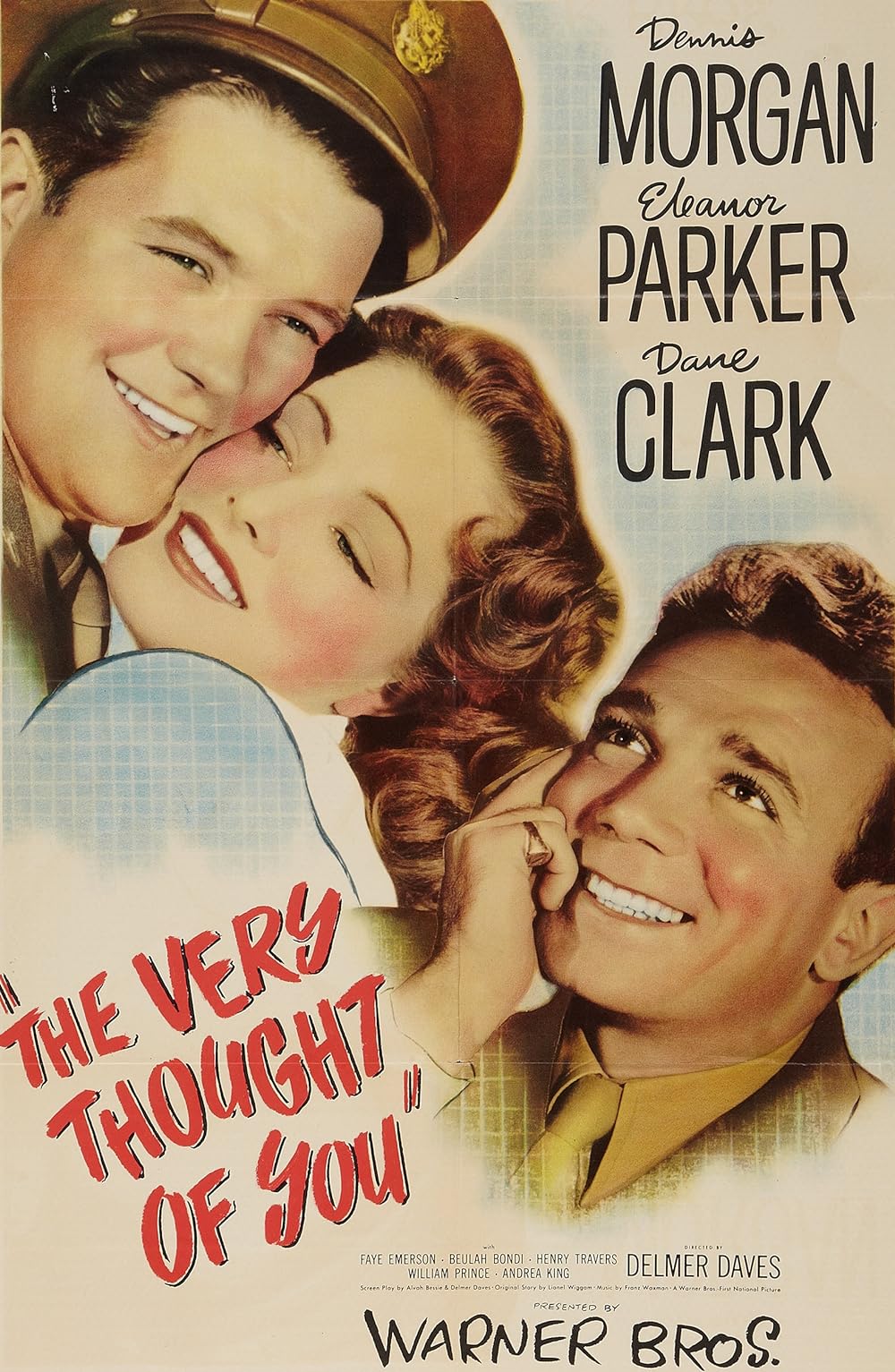
Her first marriage to a San Diego car dealer, William Crawford, was short-lived, but produced one child before it ended in 1942. Both Paramount and Warner Bros. talent scouts spotted her in a 1941 San Diego production of “Here Today” and were impressed, offering her contracts. She decided on Warner Bros. and began uncredited in such films as Manpower (1941) and Blues in the Night (1941). During her five-year tenure at Warners she progressed to a variety of swanky secondary and co-star roles in such “B” war-era movies as Murder in the Big House (1942) starring Van Johnson, Air Force (1943) with Gig Young, The Desert Song (1943) starring Dennis Morgan, The Mask of Dimitrios(1944) with Peter Lorre, Between Two Worlds (1944) with John Garfield, The Very Thought of You (1945) (again) with Dennis Morgan, Hotel Berlin (1945) starring Helmut Dantine, Danger Signal (1945) with Zachary Scott, and Nobody Lives Forever (1946) (again) starring John Garfield. A large portion of the roles she received were interesting at best. For the most part, however, Faye was caught in glittery roles that were submerged in “men’s pictures”.
At this juncture, Faye was probably better known as Mrs. Elliott Roosevelt, the fourth child of Franklin and Eleanor Roosevelt, whom she married in 1944. Her husband was a war hero and author and the couple lived in the White House for a spell (FDR died in 1945). Faye abruptly abandoned the Hollywood scene after her marriage and the couple instead became major figures in the New York social scene. Sometime after the war Elliott and Faye entered the Soviet Union as journalists where they interviewed Joseph Stalin for a national publication.
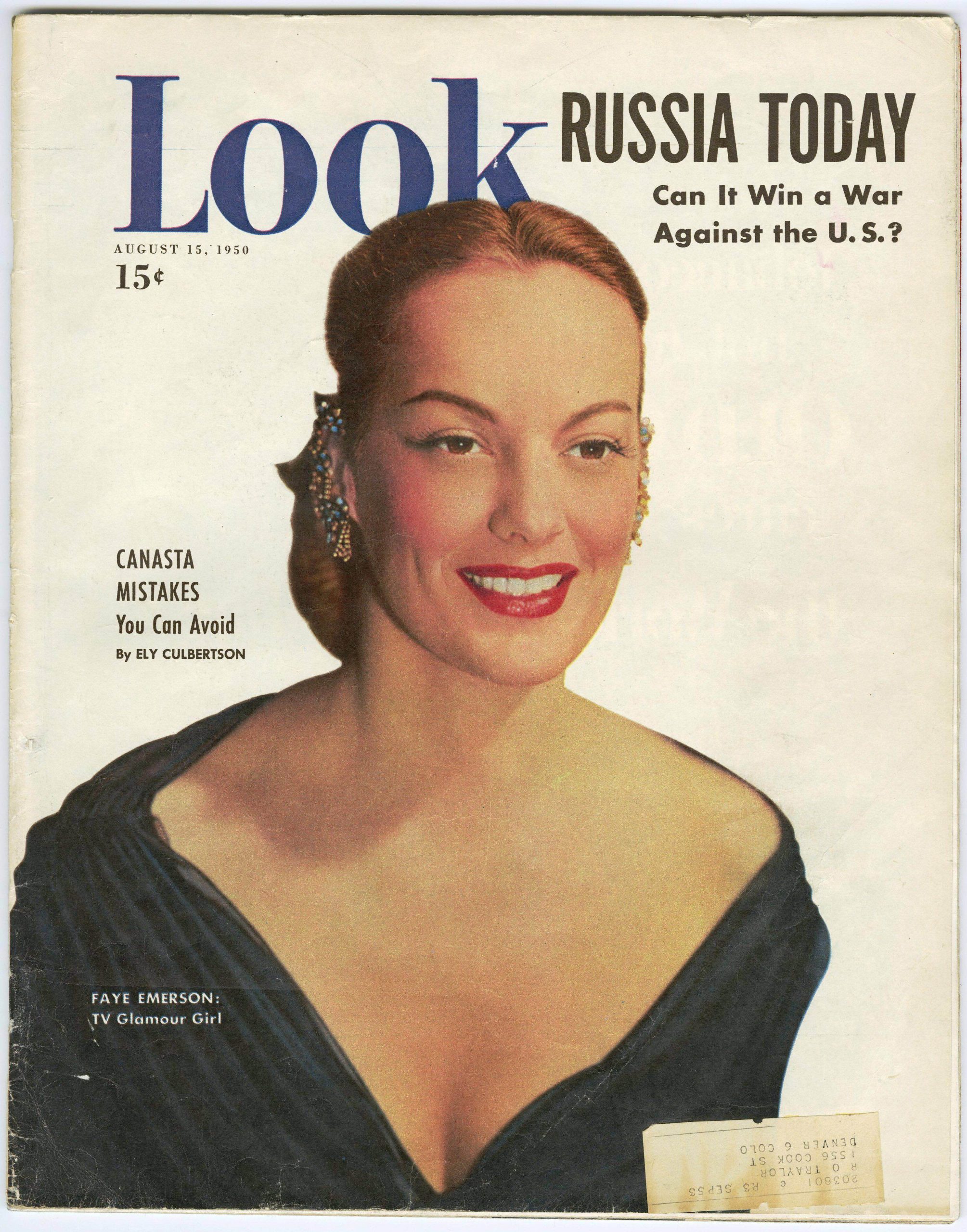
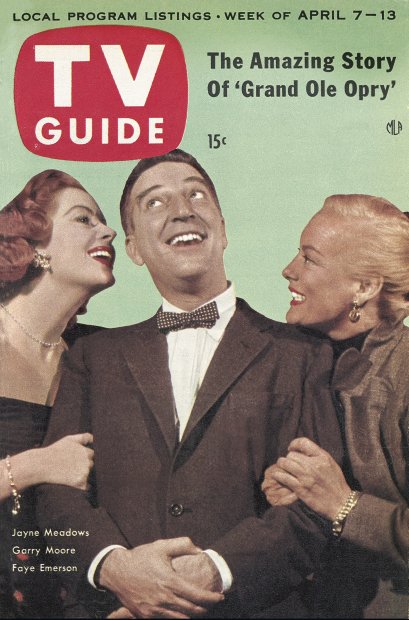
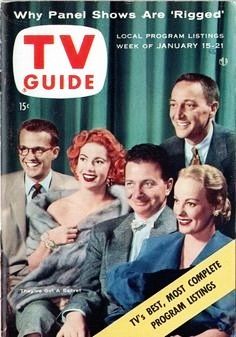
With her movie career on the outs, the recently-transplanted New Yorker made her Broadway debut in “The Play’s the Thing” (1948), then entered the world of television where she truly found her niche. Managing to combine both beauty and brains, Faye was a sparkling actress of both drama and comedy and a stylish, Emmy-nominated personality who became an emcee on Paris Cavalcade of Fashions (1948); a hostess of her own show The Faye Emerson Show (1950); a moderator of Author Meets the Critics(1947); and a regular panelist on the game shows Masquerade Party (1952) and I’ve Got a Secret (1952). In addition she enjoyed time as a TV columnist, appeared on such covers as Look magazine, and was performed as guest host for other permanent TV headliners such as Garry Moore, Dave Garroway and even Edward R. Murrow on his “Person to Person” vehicle. All the while Faye continued to return sporadically to the stage and added to her array of Broadway credits such shows as “Parisenne” (1950), “Heavenly Twins (1955), “Protective Custody” (1956) and “Back to Methuselah” (1958), the last mentioned pairing her with Tyrone Power. Regional credits included “Goodbye, My Fancy”, “State of the Union”, “The Pleasure of His Company”, “Mary Stuart”, “Elizabeth the Queen” and “The Vinegar Tree”. One highlight was gracing the stage alongside such illustrious stage stars as Eva Le Gallienne, Viveca Lindfors and Basil Rathbone in the 1953 production of “An Evening with Will Shakespeare”.
Divorced from Roosevelt in 1950, her third (and final) marriage also would figure prominently in the public eye. She wed popular TV band leader Skitch Henderson shortly after her second divorce was final. The couple went on to co-host a 15-minute music show Faye and Skitch (1953) together. This union would last seven years.
Faye was a welcomed as a guest panelist on other game fun too such as “To Tell the Truth” and “What’s My Line?”. The actress, once dubbed the “Best-Dressed Woman on TV,” focused on traveling in the early part of the 1960s and never returned actively to Hollywood. For nearly two decades she lived completely out of the limelight in and around Europe, including Switzerland and Spain, returning to America very infrequently and only for business purposes. She died of stomach cancer in 1983 in Majorca, Spain.
– IMDb Mini Biography By: Gary Brumburgh / gr-home@pacbell.net
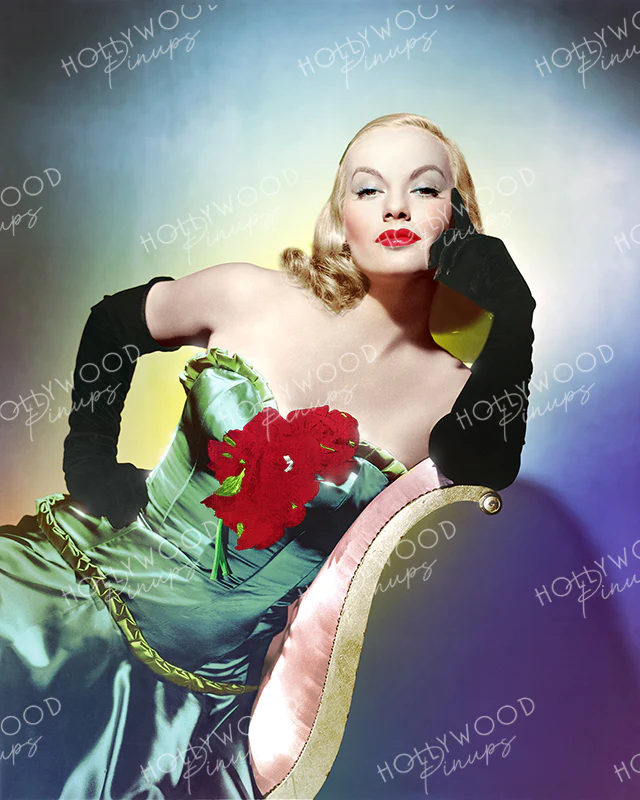
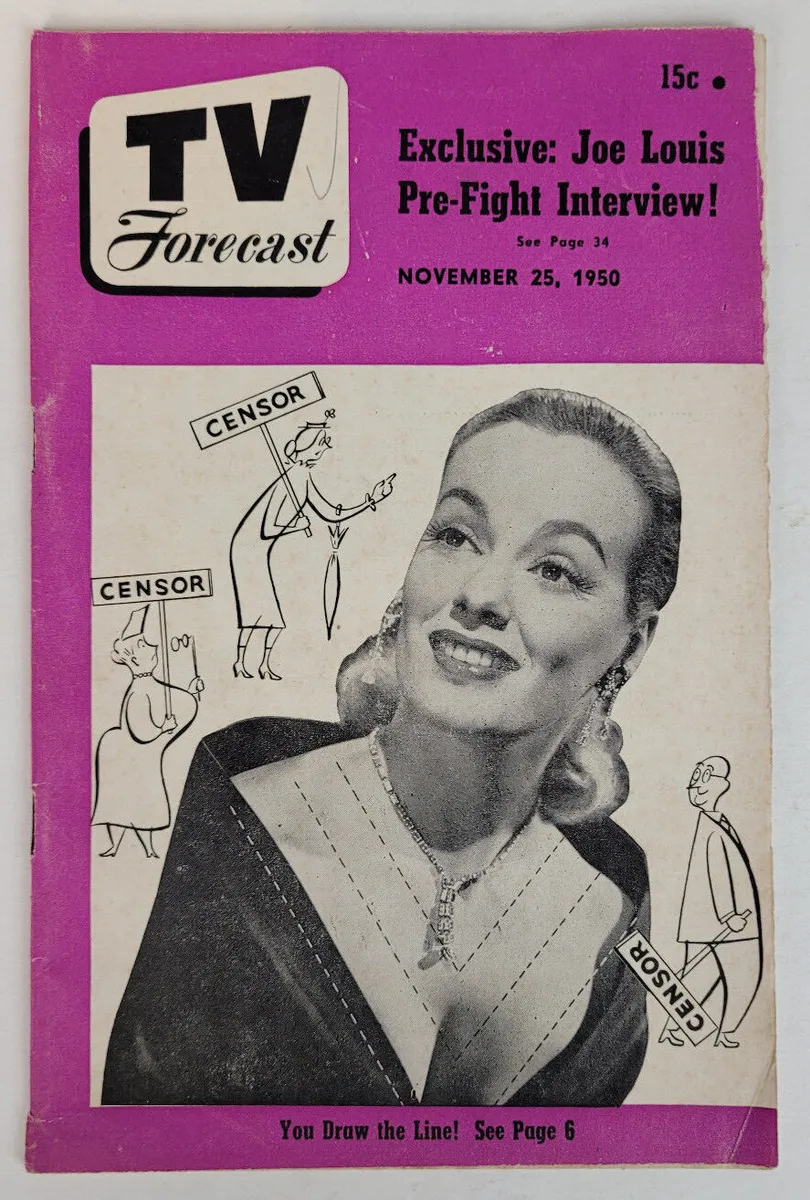
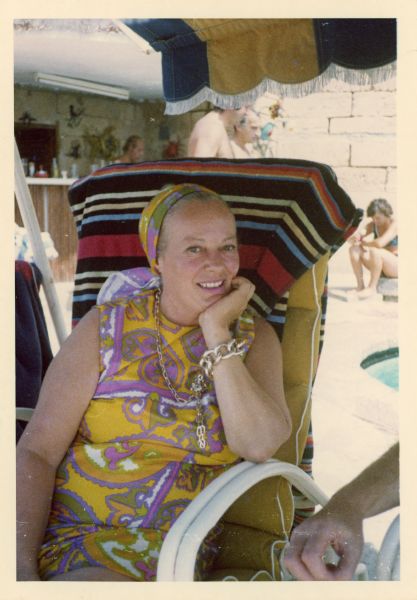
Faye Emerson (1917–1983) holds a unique position in entertainment history as the bridge between the high-glamour studio system of the 1940s and the intimate, conversational medium of early television. Known as the “First Lady of Television,” she was a pioneer who essentially invented the late-night talk show format decades before it became a male-dominated staple.
While her film career often saw her cast as the “other woman” or a sharp-tongued dame, her transition to television revealed a sophisticated, politically minded intellectual who used her platform to challenge mid-century gender norms.
I. Career Overview: The Screen to the Small Screen
Act 1: The Warner Bros. “Noir” Era (1941–1946)
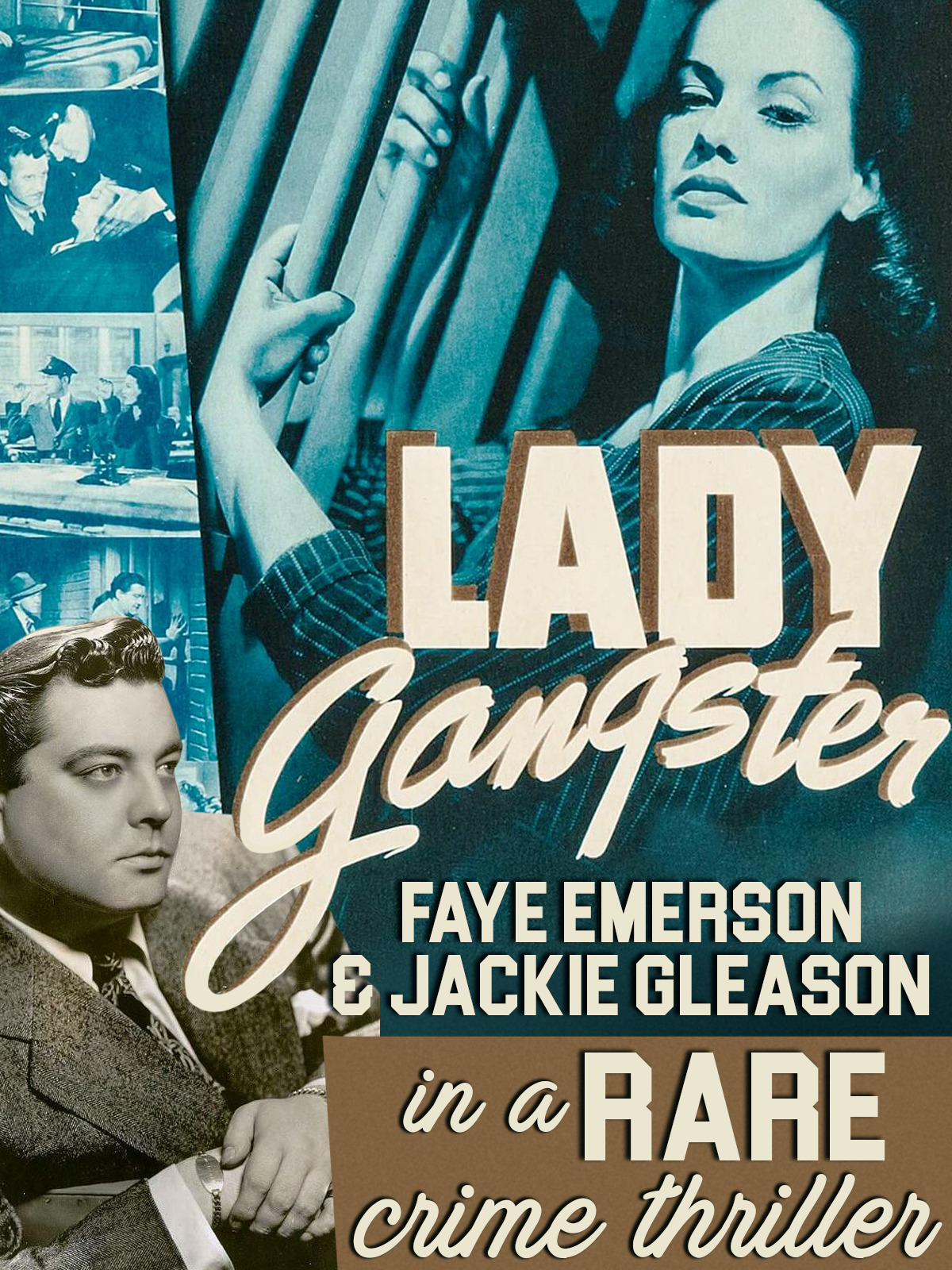
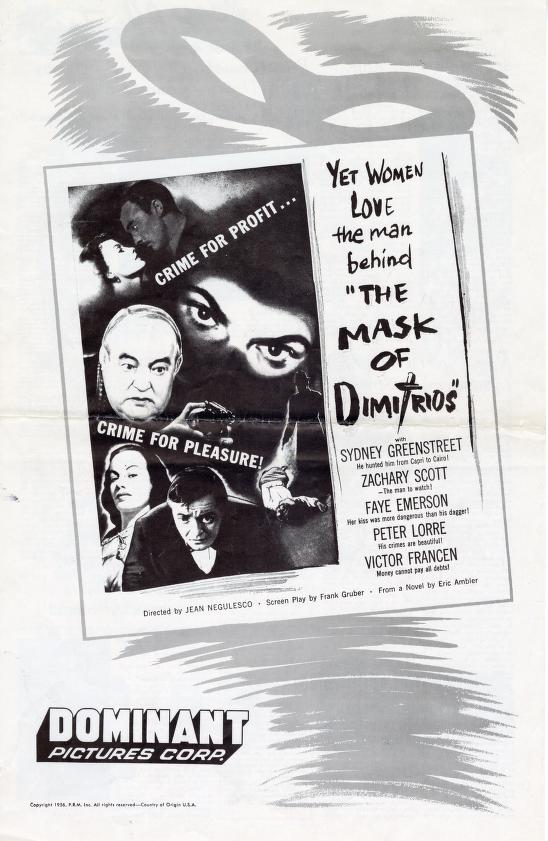
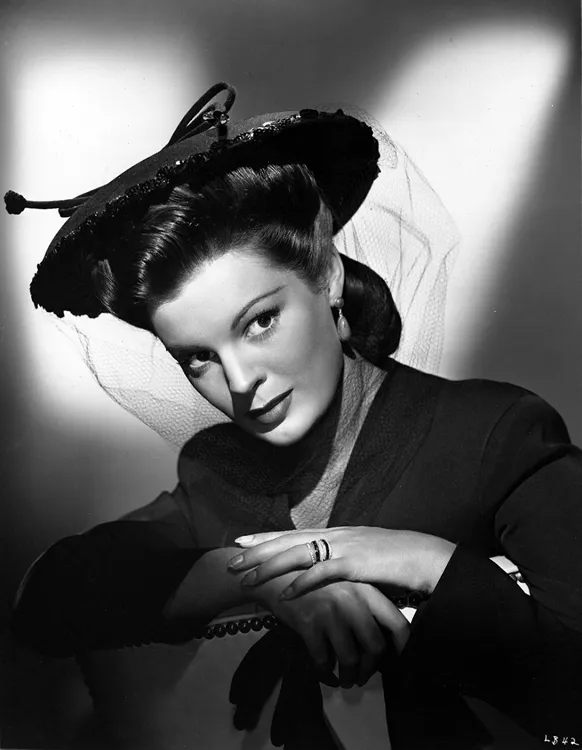
Emerson was a prolific contract player for Warner Bros. during the war years. She excelled in Film Noir and gritty dramas, often playing women who were tougher and more cynical than the era’s traditional ingenues.Her standout roles included the uncredited but memorable turn in The Mask of Dimitrios (1944) and the title role in Lady Gangster (1942).
Act 2: The “First Lady of Television” (1948–1960s)
After a brief retirement to focus on her high-profile marriage to Elliott Roosevelt (son of FDR), Emerson returned to the spotlight in a brand-new medium: television.
The Faye Emerson Show (1949–1952): This was the first true late-night talk show. It aired at 11:00 PM and featured a mix of celebrity gossip, fashion, and—crucially—hard-hitting political discourse.
The “V in TV”: She became a fashion icon known for her plunging necklines, which leering critics claimed put the “V in TV,” but which she defended as standard evening wear for a sophisticated urban hostess.
Act 3: The Intellectual Pivot & Retirement
By the mid-1950s, she shifted toward more serious intellectual pursuits, hosting Author Meets the Critics and appearing as a regular panelist on I’ve Got a Secret. She eventually retired to Spain in 1963, seeking a quiet life away from the relentless American spotlight.
II. Critical Analysis: The Professional Persona
1. Subverting the “Starlet” Archetype
In her film work, Emerson lacked the soft-focus vulnerability of her contemporaries. Critics noted her “architectural” beauty—sharp features and a crisp mid-Atlantic accent—which made her perfect for roles involving deception or professional capability. In The Mask of Dimitrios, she held her own against screen heavyweights like Peter Lorre and Sydney Greenstreet by utilizing a “contained, watchful energy.”
2. The Late-Night Architect
The most significant critical assessment of Emerson’s work lies in her hosting style.
The Intimate Gaze: Unlike the vaudevillian, slapstick style of Milton Berle, Emerson understood that television was an intimate medium. She looked directly into the camera lens as if she were talking to a single guest in her living room, a technique that would be perfected by Jack Paar and Johnny Carson.
Political Radicalism: In an era when women were expected to stick to “homemaking” segments, Emerson interviewed world leaders and discussed nuclear arms and the Korean War. She was a “femcee” who proved that glamour and political literacy were not mutually exclusive.
3. The Cleavage Controversy as Social Commentary
The national obsession with her necklines is often analyzed by media historians as a proxy for the era’s discomfort with a powerful, independent woman. By addressing the controversy directly on her show, she turned a “wardrobe malfunction” into a conversation about autonomy and double standards, effectively using her celebrity to push the boundaries of what was “acceptable” for women on screen.
III. Major Credits and Cultural Milestones
| Year | Work | Role / Role Type | Significance |
| 1942 | Lady Gangster | Dot Burton | Her first major lead; a tough, post-Code style performance. |
| 1944 | The Mask of Dimitrios | Irana Preveza | A masterclass in the “noir” secondary lead. |
| 1949 | The Faye Emerson Show | Host | The blueprint for all late-night talk shows. |
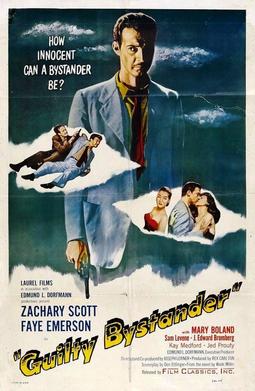
| 1950 | Guilty Bystander | Georgia | A return to noir that showcased her maturing dramatic range. |
| 1952-58 | I’ve Got a Secret | Panelist | Solidified her as a household name and “brainy” celebrity. |
| 1957 | A Face in the Crowd | Self (Cameo) | Her appearance served as a cultural shorthand for TV fame. |
Final Reflection
Faye Emerson was a woman ahead of her time who was eventually pushed out of the very genre she helped invent as networks began to prefer the “safe” masculinity of male hosts for late-night slots. Her legacy is one of multimodal brilliance: she was a noir star who could play a moll, a Broadway actress who could handle Wodehouse, and a broadcaster who could talk circles around the politicians of her day.
II. Detailed Critical Analysis of Her Stage Work
1. The Wodehouse Debut: Transitioning from Film to Stage
Emerson’s debut in The Play’s the Thing (1948) was a calculated risk. Having been a contract player in Hollywood “men’s pictures,” she needed to prove she could handle the rhythmic, rapid-fire dialogue of a drawing-room comedy.
The Style: Critics noted that Emerson possessed a “vocal crispness” that felt native to the stage. Unlike many film stars who struggled with projection and theatrical timing, Emerson’s voice—already trained for radio and public speaking—carried a natural authority.
The Impact: This production was the catalyst for her 1950s resurgence. It effectively rebranded her from “Mrs. Elliott Roosevelt” back to “Faye Emerson, the Actress.”
2. High-Style Sophistication in The Heavenly Twins
By 1955, Emerson was the “First Lady of Television,” and her stage roles began to reflect her public persona: elegant, witty, and slightly dangerous.
Critical Reception: In The Heavenly Twins, she was praised for her “effortless glamour.” However, some critics began to note a “screen-centrism” in her acting—a tendency toward subtle facial expressions that worked perfectly on a 1950s TV monitor but sometimes felt too small for the back rows of a Broadway house.
The “Persona” Problem: A recurring theme in reviews was the difficulty audiences had in separating “Faye Emerson the Hostess” from the characters she played. She was so successful at being herself on television that her theatrical characterizations were often viewed through that lens.
3. Intellectual Rigor: Back to Methuselah (1958)
Her most ambitious theatrical undertaking was the Arnold Moss production of Shaw’s Back to Methuselah.
The Challenge: The play is a sprawling, philosophical journey through human history. Emerson played multiple roles, including Eve in the Garden of Eden and “Zoo” in the distant future.
The Partnership: Performing alongside Tyrone Power, Emerson was forced to dig deeper than her usual “society wit” archetypes. Critics praised her for her “intellectual stamina,” noting that she handled Shaw’s dense, ideological monologues with a clarity that many seasoned stage veterans lacked. It was a performance that finally decoupled her from the “talk show host” label, proving her range as a classical actress.
4. The Dramatic Risk: Protective Custody (1956)
Though the play was a commercial failure (closing after 2 nights), it is critically significant as Emerson’s attempt at gritty psychological drama.
The Role: Playing a journalist held behind the Iron Curtain, Emerson abandoned her signature gowns and “V-neck” glamour for a role of vulnerability and political terror.
Critical Post-Mortem: While the play was panned as “clunky,” Emerson was personally spared; reviewers noted that she brought a “haunted, desperate energy” to the part that suggested a dramatic depth her more successful comedies had never required.
III. Legacy on the Boards
Faye Emerson used Broadway not to find fame, but to reclaim her agency. In Hollywood, she was a commodity of the studio system; on Broadway, she was a collaborator with giants like Tyrone Power and Arthur Moss. She remains a rare example of a 1950s icon who successfully balanced the “disposable” celebrity of television with the “permanent” prestige of the theater