



MICHAEL PATE OBITUARY IN “THE GUARDIAN” IN 2008.
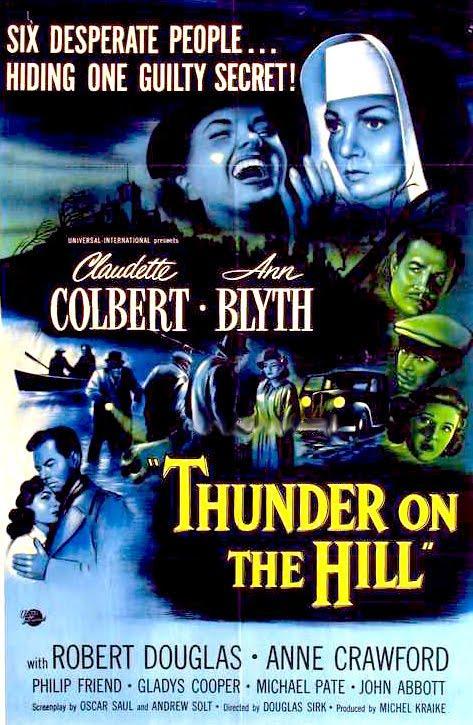
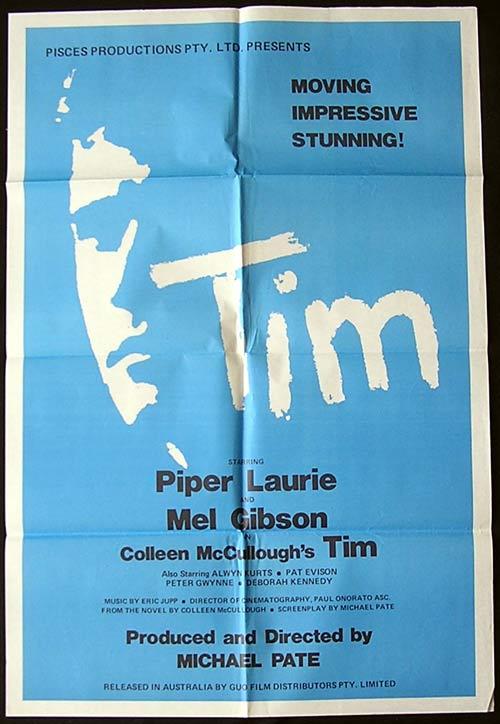
Michael Pate was born in 1920 in Sydney, Australia. He began his career on radio. In World War Two he served in the Australian Army in the South Pacific. At war’s end he resumed his career on radio gradually turining to acting. In 1950 he made “Bitter Springs” with Chips Rafferty. That same year he went to Hollywood where he began a profilic career in U.S. movies. Among his many film credits are “Thunder on the Hill”, “Brainstorm” and “The Singing Nun”. By 1979 he was back in Australia where he directed the young Mel Gibson in “Tim” with Piper Laurie. He died in 2008.
His “Guardian” obituary:
The Australian actor Michael Pate, who has died aged 88, had a successful Hollywood career, appearing in more than 50 films and numerous TV series. Black-haired and thick-set, he was often cast as a Native American in westerns. Later, resuming his career in his homeland, he also ventured behind the camera.
He was born in Drummoyne, a suburb of Sydney, and attended Fort Street high school. Although he had hoped to become a college lecturer, and had begun writing short stories, he left school to become an accountant
His career in the entertainment industry began when, aged 18, he was selected, “out of the blue”, as he put it, by the Australian Broadcasting Commission to take part in a radio series in which young people interviewed visiting celebrities. Pate spoke to HG Wells, Yehudi Menuhin and Sir Malcolm Sargent. He acted in radio plays and made his stage debut in 1940. During second world war army service in the south Pacific, he continued to act, his colleagues including Tony Hancock’s future sidekick Bill Kerr.
Pate’s film debut was several bit parts in an epic war film, Forty Thousand Horsemen (1940); he played two Arabs and one Sikh. His first significant role was as the eldest son in Sons of Matthew (1949), a family saga. The first of his many police parts was in Bitter Springs (1950), made by Ealing Studios’ Australian unit.
On stage, he had played a servant in Bonaventure, a melodrama set in Britain. On hearing that a film version was being made in Hollywood, he wrote letters asking for the chance to reprise his role, in Thunder on the Hill (1951), directed by Douglas Sirk. His decision to stay in Hollywood may have been influenced by the Australian Security Intelligence Organisation, which viewed him with suspicion and had him closely watched.
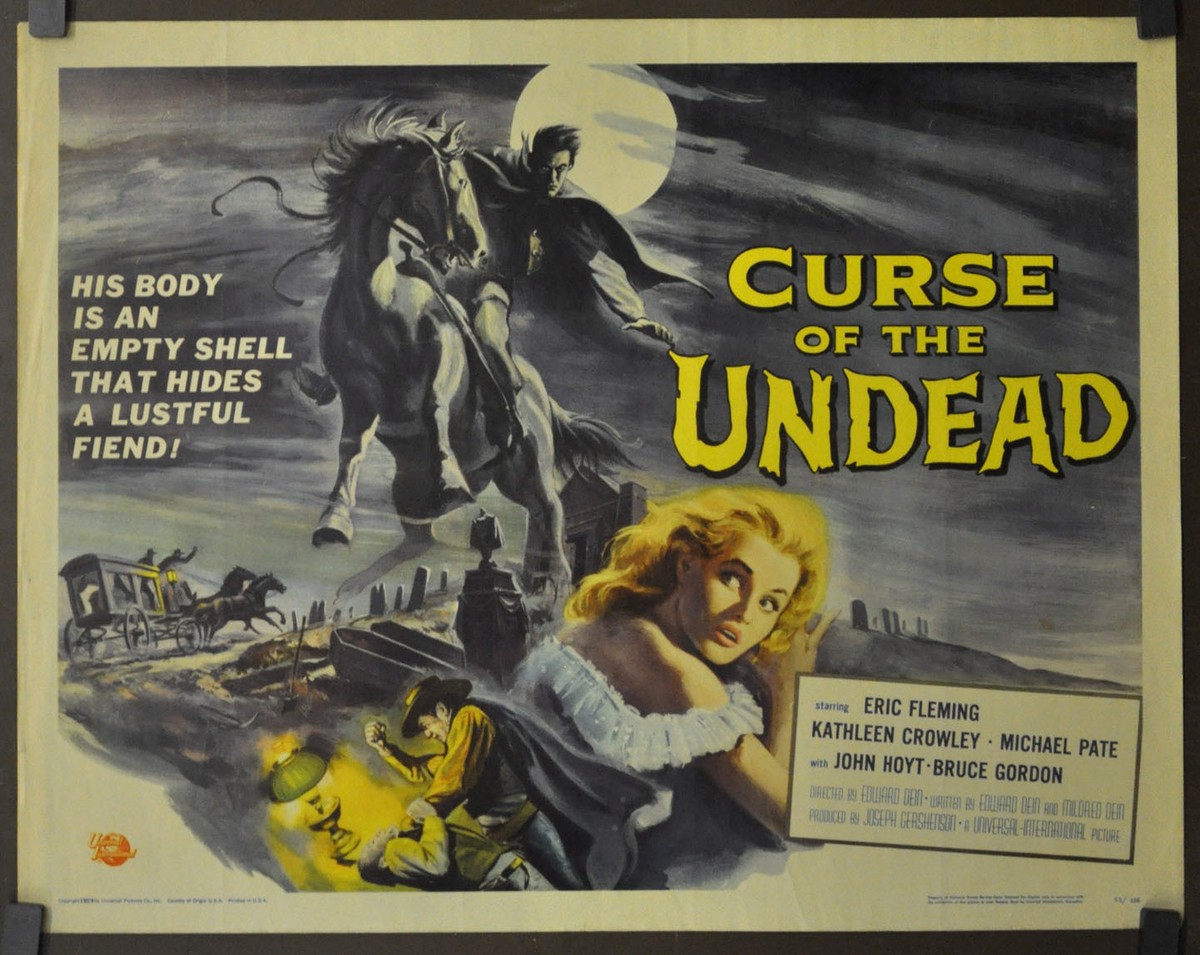
He supported John Wayne in Hondo (1953), as an Indian chief, and in McLintock! (1963). The former led to a TV series in 1967 in which Pate reprised his role. Exceptions to the B-movie rule were Joseph L Mankiewicz’s film of Julius Caesar (1953), and Sam Peckinpah’s Major Dundee (1965). The odd western horror Curse of the Undead (1959) combined his two most prevalent genres.
He was even busier on television, in Maverick, Tales of Wells Fargo, The Rifleman, Gunsmoke and five episodes of Rawhide, one of which he also wrote. Keeping pace as westerns were replaced by spy and fantasy series, he was a henchman in Batman (1966), but in The Man from Uncle (1966) and Mission Impossible (1967), he was cast as an Arab and South American general, respectively.
In 1954, CBS presented the first screen version of Casino Royale, with Barry Nelson as an Americanised James Bond. Reversing the transatlantic process, Bond’s CIA contact Felix Leiter became the British agent Clarence Leiter – Pate, with a plummy accent and tuxedo.
In 1968 he returned to Australia to produce Age of Consent (1969); he had wanted to film Norman Lindsay’s novel for years. He went on to star as a detective in Matlock Police (1971-75), winning a best actor award from the Television Society of Australia in 1972.
For the cinema, Pate wrote and produced The Mango Tree (1977), a nostalgic drama with his son, Christopher, in the lead. Tim (1979), which Pate directed, produced and adapted from Colleen McCullough’s novel, starred a young Mel Gibson. With Christopher, he toured with the play Mass Appeal in the mid-1980s, which concluded at the Sydney Opera House.
In 2000, he was presented with a special award from the Film Critics’ Circle of Australia and retired from acting the following year. However, until he was admitted to hospital, he continued working on a script, which Christopher hopes to complete.
Pate is survived by his wife Felippa and Christopher











CAREER OVERVIEW
Michael Pate (1920 – 2008) was one of Australia’s most versatile screen figures—an actor, writer, director, and producer whose career spanned nearly six decades across radio, stage, Hollywood, and Australian television. Starting as a literate radio dramatist before World War II, he became a prolific character actor in mid‑century American films and TV, then returned home to help shape Australia’s film and television industry.
Early life and beginnings in Australia
Born Edward John Pate in Drummoyne, New South Wales, he attended Fort Street High School. Initially aspiring to become a medical missionary, he turned instead to radio journalism, joining the Australian Broadcasting Commission in 1938 and co‑creating the youth program Youth Speaks . During this period he also wrote theatre and book reviews and published short stories in Australia and the United States .
Pate made his stage debut in 1939 in Lux Radio Theatre and soon appeared in Charles Chauvel’s patriotic war epic Forty Thousand Horsemen (1940), followed by The Rats of Tobruk (1944). World War II interrupted his acting career; he served with the Australian Army in the South West Pacific Area, later joining the 1st Australian Army Amenities Entertainment Unit (“The Islanders”), writing and performing to entertain troops .
Post‑war Australian success
After demobilization, Pate returned to radio drama, where he was valued as both writer and performer. His role in Charlotte Hastings’s stage play Bonaventure brought him critical notice; when Universal Pictures filmed it as Thunder on the Hill (1951) with Claudette Colbert and Ann Blyth, Pate was invited to Hollywood to reprise his role .
Hollywood years (1950s–1960s)
For much of the 1950s Pate lived and worked in the United States, becoming one of the few Australians then active in Hollywood. Between 1951 and 1968 he appeared in more than 300 television episodes and dozens of films. Highlights include:
- Hondo (1953), opposite John Wayne, in which he played the Apache chief Vittorio—a role he would repeat in several Westerns.
- The Court Jester (1955) as the stately Sir Locksley.
- The Silver Chalice (1954) and The Talisman (1954) in supporting historical roles.
- Guest appearances on nearly every major television Western—Broken Arrow, Have Gun—Will Travel, Zorro, The Rifleman, Gunsmoke, Wagon Train, and Perry Mason .
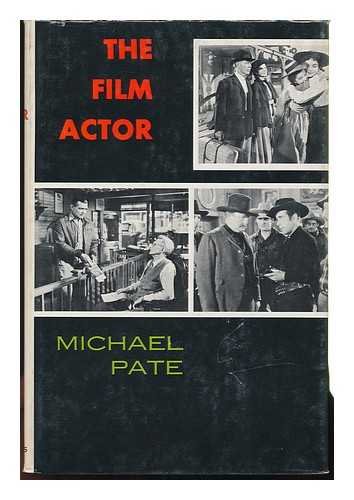
Often cast as Native Americans, Mexicans, or villains, he became Hollywood’s archetypal “cultured antagonist”—refined diction, ironic dignity, sometimes moral ambivalence. He also wrote or co‑wrote screen stories, including Escape from Fort Bravo (1953) and The Most Dangerous Man Alive (1961) . Though type‑casting limited him to ethnic or villainous parts, his intelligence and gravitas often elevated formula material.
Pate simultaneously taught film acting in Los Angeles, helping found the Screen Actors Studio in 1963 .
Return to Australia and reinvention (late 1960s–1980s)
Pate returned home in the late 1960s as Australia’s television industry was expanding. He co‑starred in Matlock Police (1971–75) as Detective Senior Sergeant Vic Maddern, appearing in nearly 200 episodes and becoming a household name . Behind the camera, he directed, produced, and wrote, most notably the feature Tim (1979), starring Piper Laurie and a young Mel Gibson—a gentle romantic drama widely praised for its sensitivity.
He also remained active as an actor in Australian features such as The Return of Captain Invincible (1983), The Wild Duck (1983), and Death of a Soldier (1986), as well as in voice work for animation (The Camel Boy, 1984).
Acting style and screen persona
- Versatile professionalism: Pate blended theatre diction with a relaxed camera naturalism suited to both classic Hollywood and television close‑ups.
- Authority and intellect: He projected measured intelligence; even in villainous roles he appeared thoughtful rather than brutish.
- Cultural adaptability: As one of the earliest Australians to succeed internationally, he modulated accent and demeanor deftly, making him useful to American casting directors seeking “continental” flavor.
- Writing and direction: His later shift to production and teaching reflected a cerebral approach to acting—he viewed performance as a craft grounded in analysis and discipline.
Strengths and limitations
Strengths
- Extraordinary range across radio, film, theatre, and TV; survived multiple industry transitions.
- Distinctive voice and presence; convincing in both authority figures and reflective roles.
- Dedication to mentoring and developing Australian screen culture on his return.
Limitations
- Hollywood typecasting confined him to secondary ethnic roles during the 1950s, preventing him from achieving leading‑man status.
- His own reserved temperament sometimes read as detachment, limiting emotional volatility on screen.
Legacy and critical assessment
Critics praised Pate’s “prodigious output” and craftsmanship: The Sydney Morning Herald called him “an actor of accomplishment and sometimes very fine work” whose career remained “extraordinarily productive” . Across more than 170 film and television credits, his professionalism and flexibility embodied a generation of Australian talent proving itself internationally.
His later career—especially Tim and Matlock Police—cemented his domestic reputation as a pioneer who brought international polish to Australian storytelling. When he died in 2008 at age 88, tributes stressed his dual contribution as actor and filmmaker, a creative bridge between Australia’s pre‑ and post‑renaissance screen industries.
In summary: Michael Pate’s career demonstrates how craft, adaptability, and intellect can sustain an actor through radical shifts in media and geography. From radio dramatist to Hollywood character specialist to Australian television mainstay, he quietly helped define the professionalism and global reach of Australian performers in the twentieth century