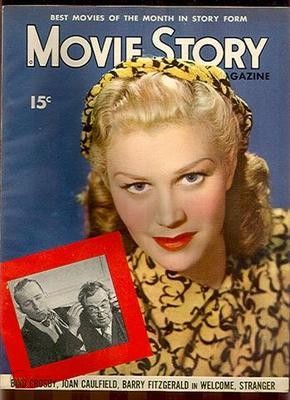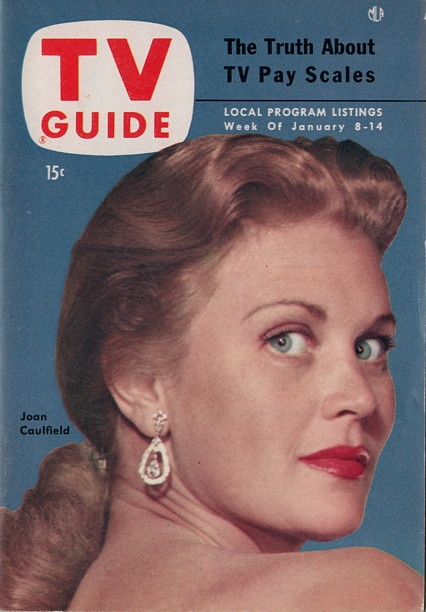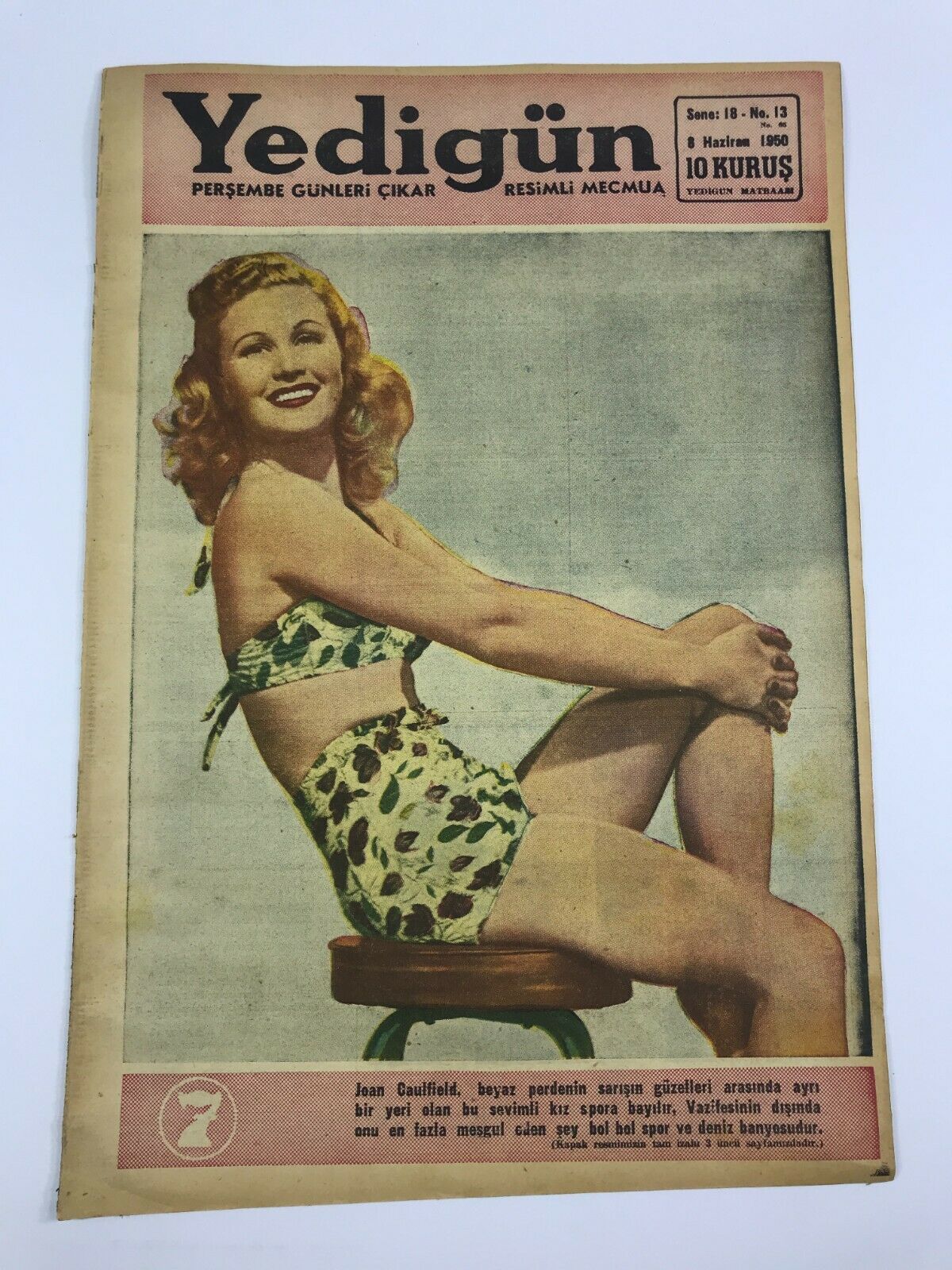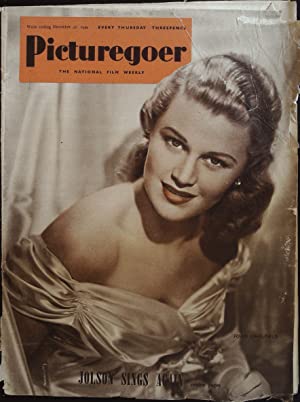

New York times obituary
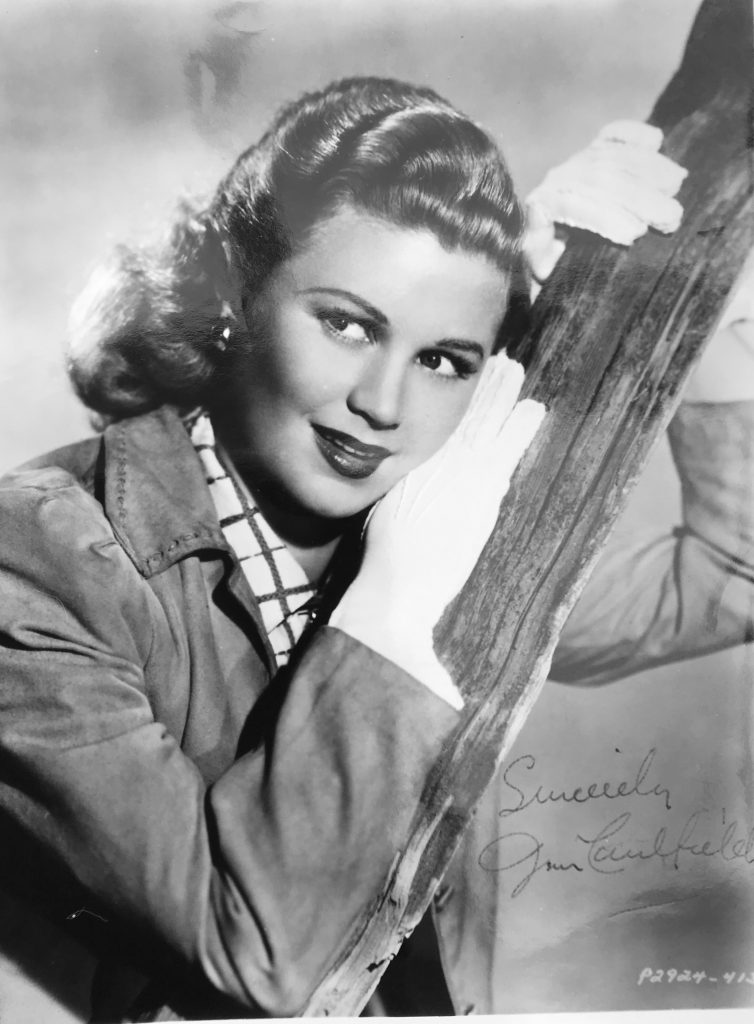
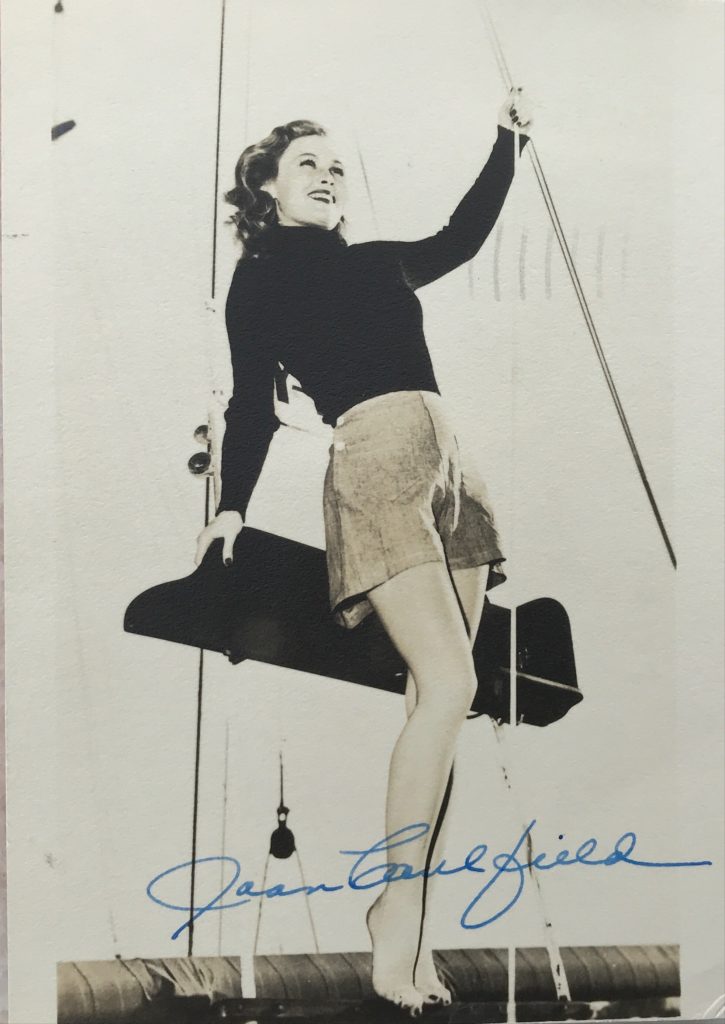
Joan Caulfield, an actress who starred in films of the 1940’s and in television situation comedies of the 1950’s, died on Tuesday at Cedars-Sinai Medical Center in Los Angeles. She was 69 years old and lived in Beverly Hills, Calif.
She died of cancer, a hospital spokesman said.
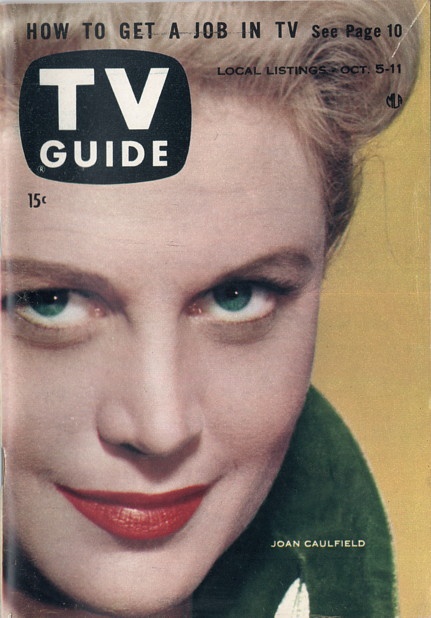
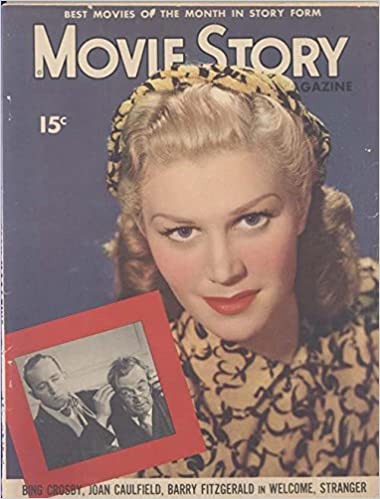
Miss Caulfield was propelled to stardom by the films “Monsieur Beaucaire,” in which she appeared with Bing Crosby, and “Blue Skies,” with Bob Hope, both released in 1946, and by “Dear Ruth,” appearing opposite William Holden, in 1947. On television she was a co-star of “My Favorite Husband,” on CBS from 1953 to 1957, and “Sally” on NBC in the 1957-58 season.
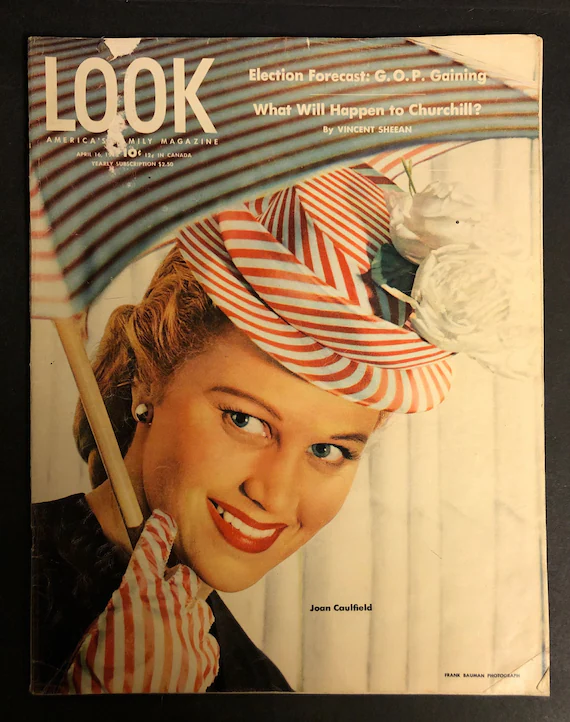
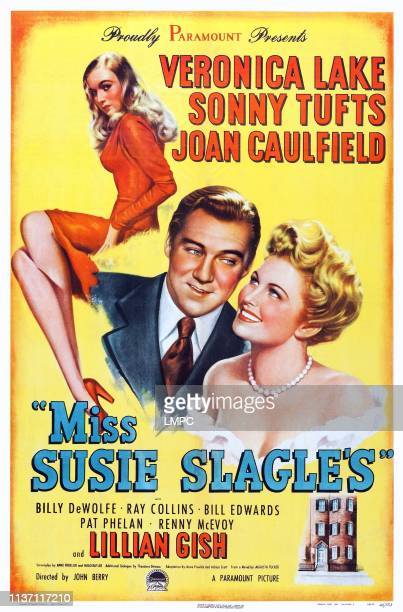
Miss Caulfield, who was a native of West Orange, N.J., attended Columbia University and was a fashion model and a cover girl before she landed ingenue roles on Broadway in the early 1940’s. Her first stage success was in the 1943 production of the comedy “Kiss and Tell,” in which she appeared for 14 months. Paramount Pictures promptly offered her a contract and she began her Hollywood career with “Miss Suzie Slagle’s,” in 1946. Occasional Film Appearances
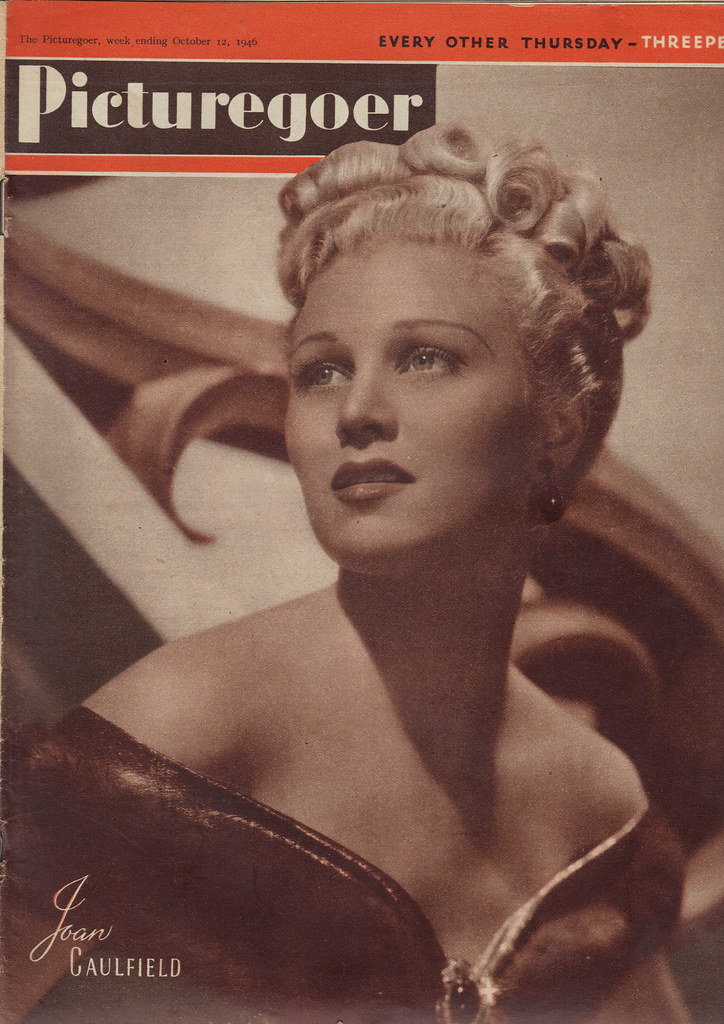
Her films made the most of her beauty, although she was determined to win a reputation as an actress and not, as she said, “just a decoration.”
In 1950, Miss Caulfield married the film producer Frank Ross and subsequently appeared only occasionally in films. She and Mr. Ross were divorced in 1960. She later married Robert Peterson, a dentist, from whom she was also divorced.
She is survived by two sons, Caulfield Kevin Ross of Sherman Oaks, Calif., and John Caulfield Peterson of Sacramento, Calif.; two sisters, Mary Parker of Stuart, Fla., and Elizabeth Victor of Los Angeles, and a grandson
Joan Caulfield (1922–1991) was a stage‑trained performer, film leading lady, and television actress whose career spanned over four decades, from the mid‑1940s through the 1980s. She is best remembered as a refined, elegant presence in Hollywood’s Technicolor era, often cast in light comedies, romantic leads, and sophisticated supporting roles. Her trajectory—from Broadway ingenue to Hollywood contract player to television comic star—reveals both the strengths of her screen presence and the structural limitations imposed on actresses of her generation.
1. Formation: Early Life, Modeling, and Broadway (1940–1944)
Born Beatrice Joan Caulfield in West Orange, New Jersey, she studied drama at Columbia University and simultaneously enjoyed success as a fashion model, appearing on the cover of Life magazine in 1942. This early exposure placed her in the public eye and showcased her striking beauty and chic appeal.
Her acting career began on stage: she appeared in Beat the Band (1942) and notably as Corliss Archer in the Broadway hit Kiss and Tell (1943), which ran for nearly 1,000 performances. This established her as a natural and engaging performer, combining both comic timing and stage charm—skills that made Hollywood studios take notice.
Critical Note:
Caulfield’s early success revealed two core aspects of her persona that would define her screen work:
- Natural charm and affability, rooted in genuine stage experience.
- Visual presence shaped by classical beauty and poised delivery.
Yet, even at this early stage, her training leaned toward light comedy and “ingénue” parts rather than psychologically demanding material—a factor that would influence the types of roles she later received.
2. Hollywood Contract Player and Early Film Work (1944–1950)
Paramount signed Caulfield in 1944, giving her a contract that was relatively generous for a newcomer: it included clauses allowing her to return to Broadway annually. She debuted (filmed in 1944 but released in 1946) in Miss Susie Slagle’s, opposite Sonny Tufts.
Over the next several years she became a fixture in Paramount’s roster:
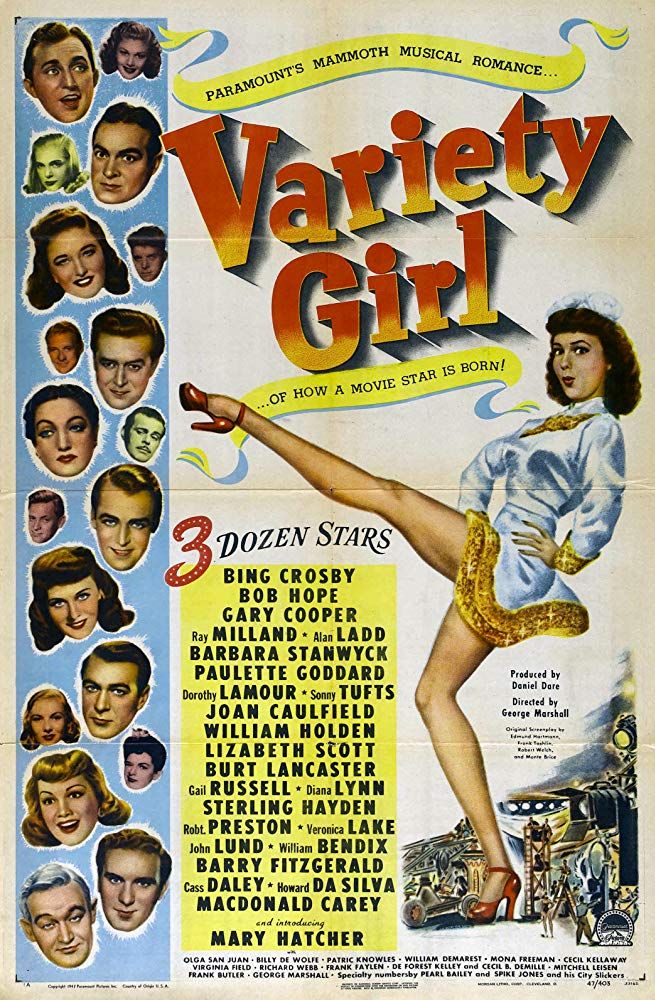
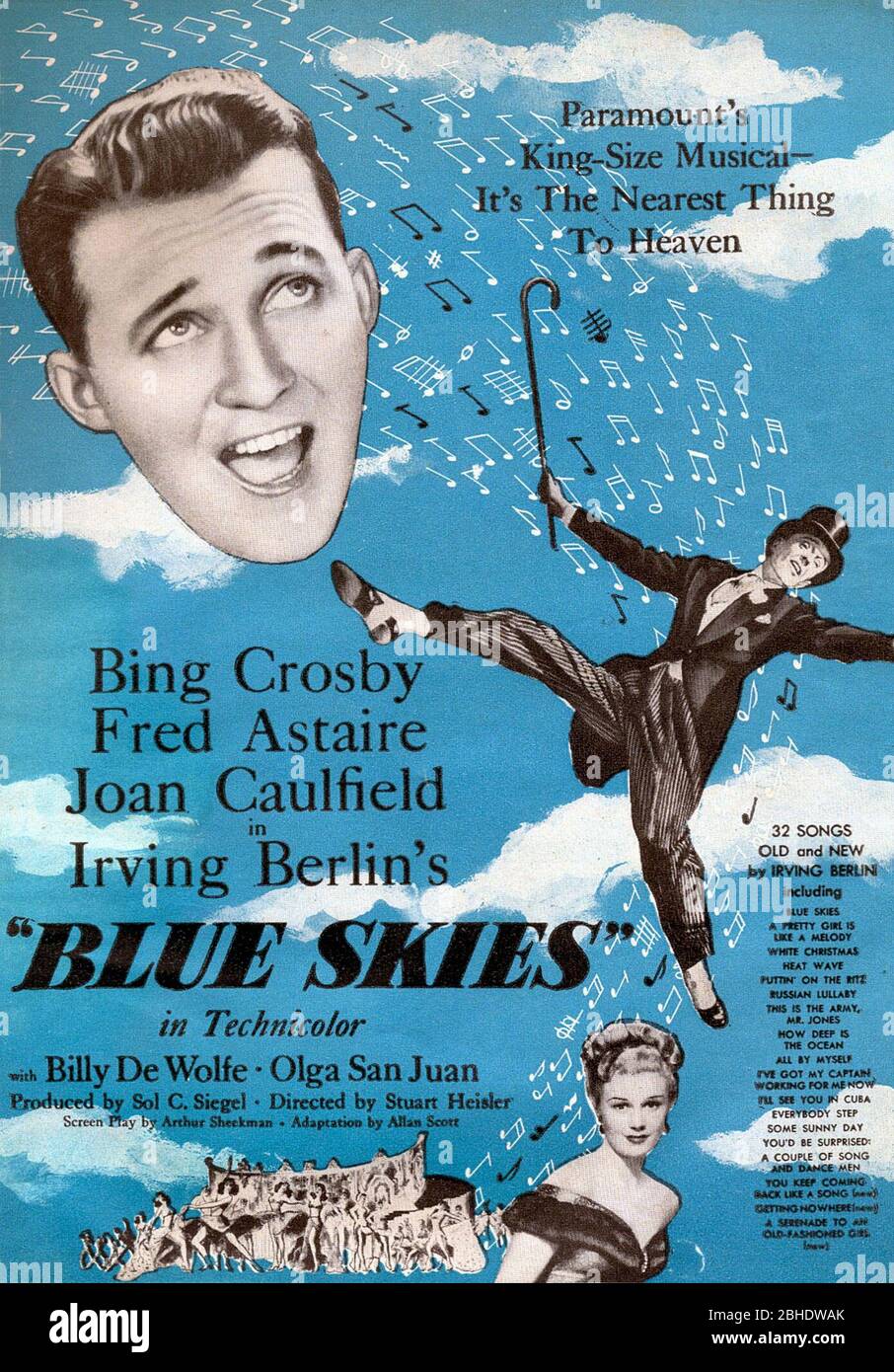
- Blue Skies (1946) – costarring with Bing Crosby and Fred Astaire in an Irving Berlin musical showcase.
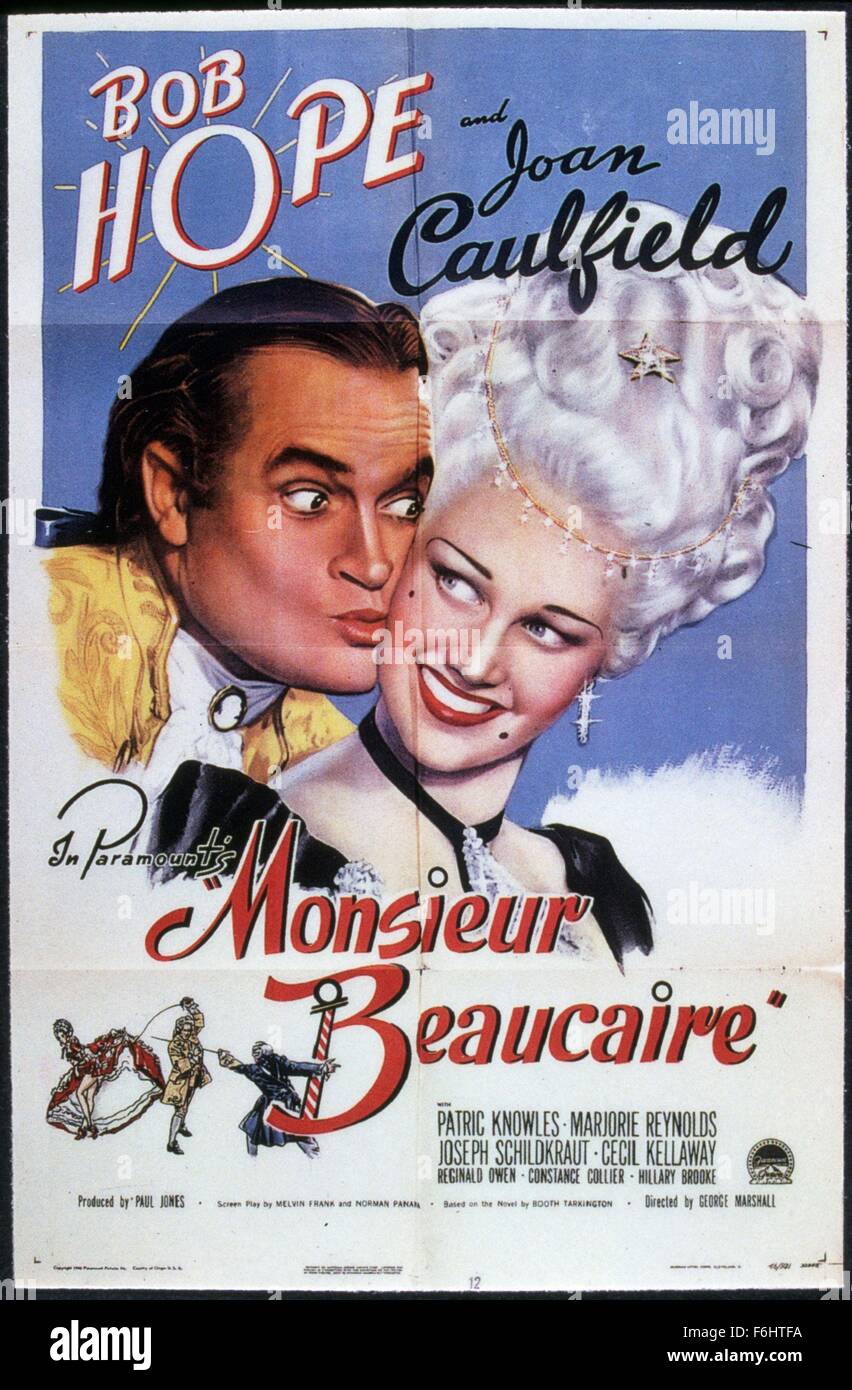
- Monsieur Beaucaire (1946) – featuring her in a delicate comic subplot opposite Bob Hope.
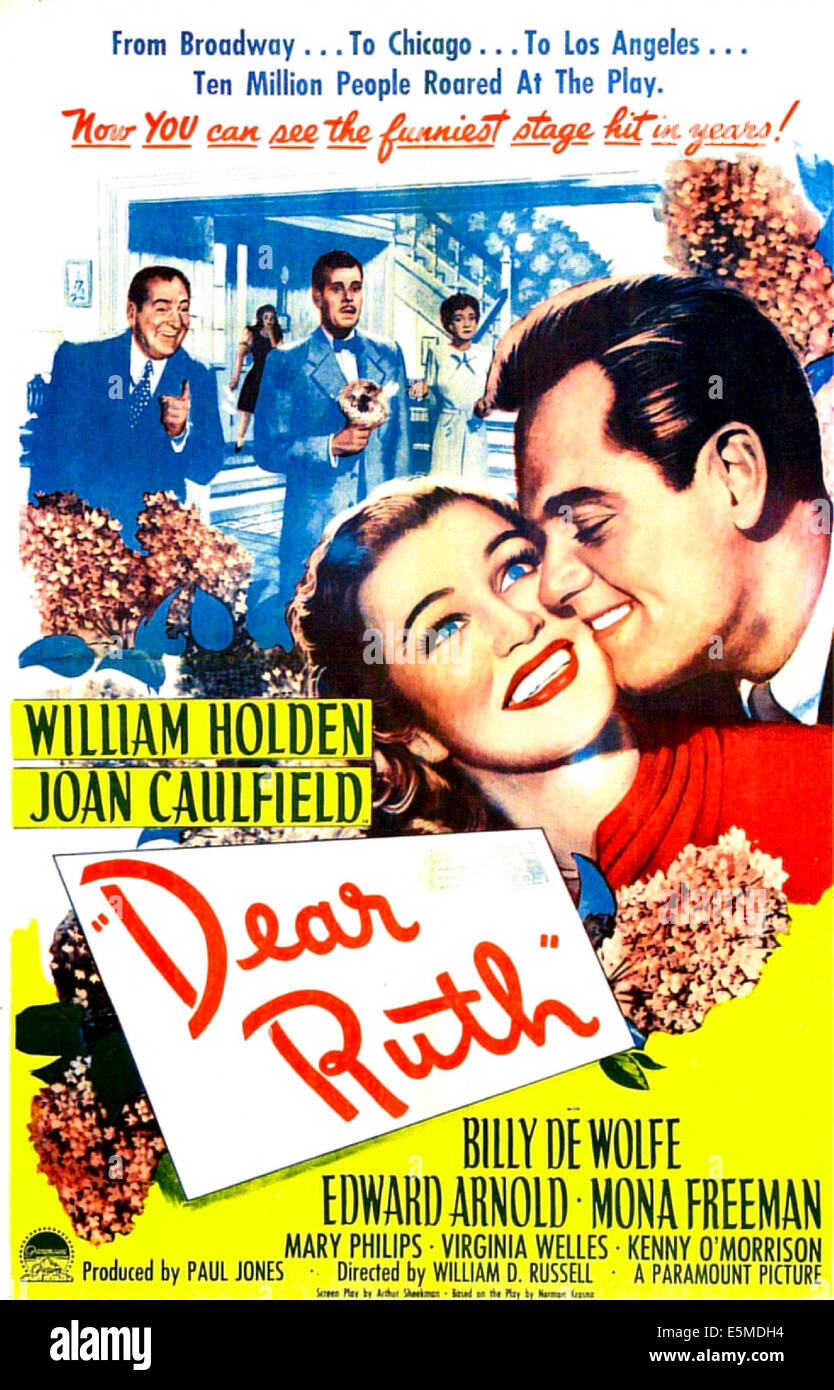
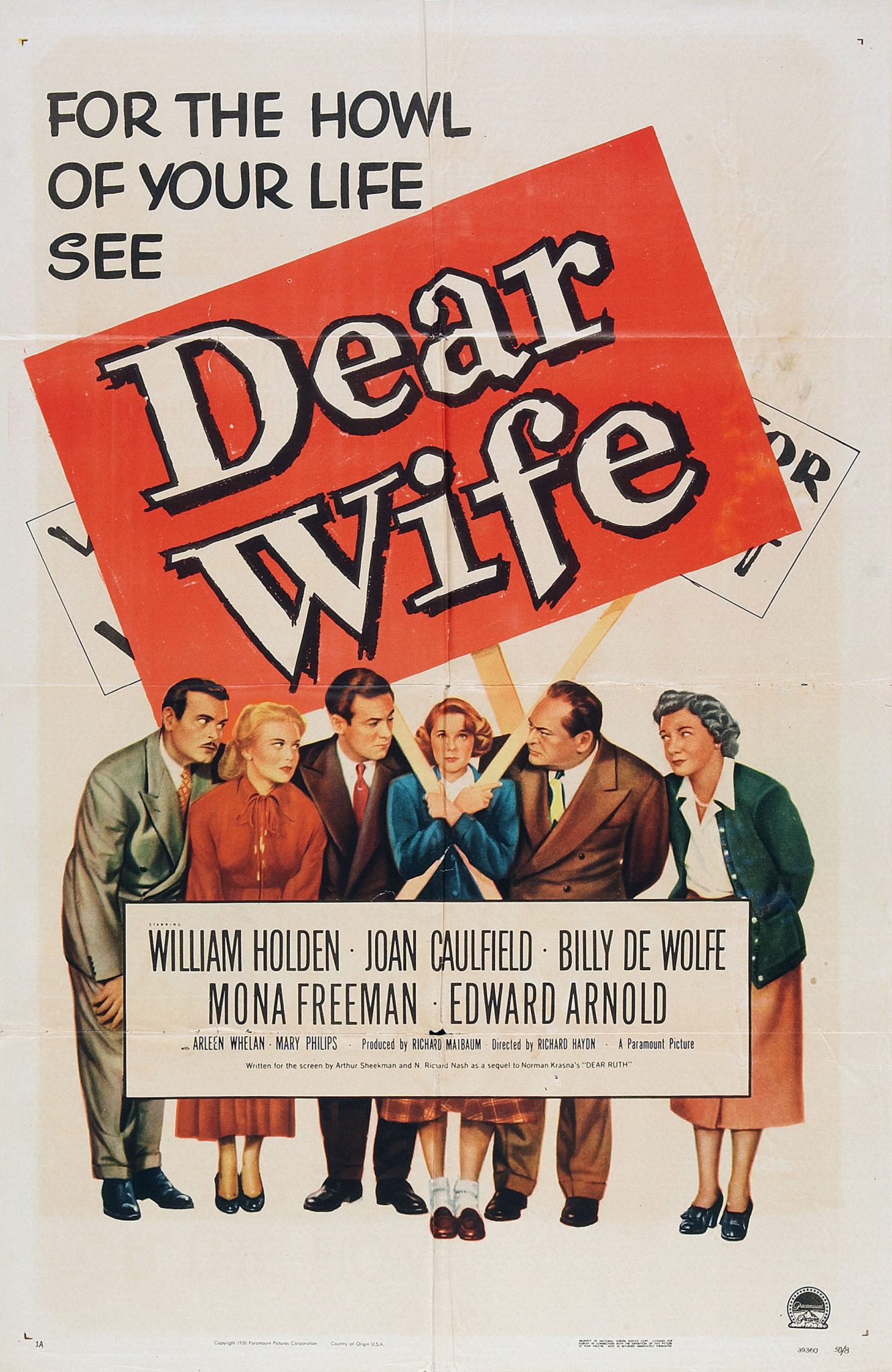
- Dear Ruth (1947) – one of her most successful vehicles, opposite William Holden; she reprised her role in the sequel Dear Wife (1949).
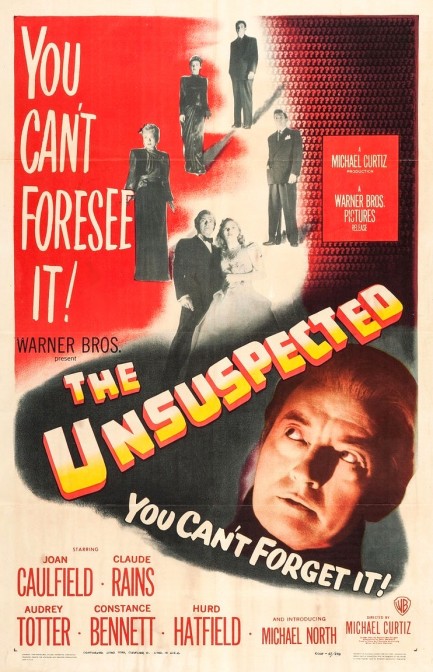
- The Unsuspected (1947) – a film noir‑tinged mystery in which she demonstrated light dramatic skills.
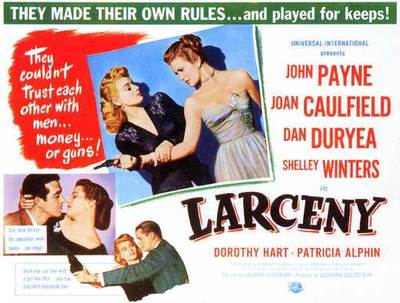
- The Sainted Sisters (1948) and Larceny (1948) – varied supporting projects.
Critical Analysis
Screen Persona and Acting Strengths
Caulfield’s early screen persona was built around a blend of:
- Polished elegance – she conveyed a refined, cultured femininity that fit well with post‑war Hollywood’s aspirational narratives of affluence and optimism.
- Understated warmth – rather than overt melodrama, Caulfield’s performances often relied on subtlety, expressive restraint, and a genteel comic touch.
- Comedic ease – in films like Dear Ruth she could deliver breezy, situational humor with a naturalistic ease.
Limitations in Dramatic Range
While successful in light genres, most critics (including period observers like Bosley Crowther) noted that Caulfield was less convincing in serious dramatic roles; her performances could come across as decorative rather than deeply layered. Her work in musicals like Blue Skies showed her charm but also exposed limitations—she was primarily cast for her visual presence and likability rather than vocal or dramatic force.
3. Marriage, Television, and Shifts in Career (1950–1960)
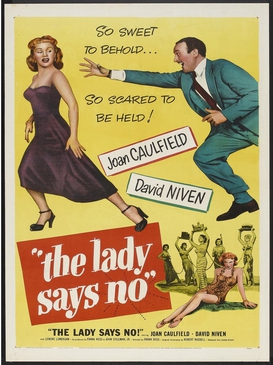
In 1950 she married film producer Frank Ross, who cast her in The Lady Says No (1951), a romantic comedy meant to elevate her starring status.
Transition to Television
In the early 1950s Caulfield began appearing frequently on live anthology television series such as Robert Montgomery Presents, Lux Video Theatre, and The Ford Television Theatre.
She signed with CBS and starred in:
- My Favorite Husband (1953–55) – a sitcom adaptation of the radio show, in which she co‑starred opposite a bank executive husband.
- Sally (1957–58) – a sitcom in which she played salesgirl Sally Truesdale traveling with a wealthy widow.
Critical Analysis
Television showcased a different side of Caulfield:
- Comic timing and accessibility: In contrast to her film work, which often foregrounded grace and polish, television allowed Caulfield to exercise brisker comedy and more sustained character work weekly.
- Audience presence: Her TV roles emphasized relational dynamics and situational comedy, revealing her capacity to engage audiences in domestic and interpersonal narratives rather than single‑scene vignettes.
However, both series were relatively short‑lived, and while they demonstrated her adaptability, they did not cement her as a major television star.
4. Mature Roles, Stage Work, and Later Screen Appearances (1960–1980s)
After her CBS contract ended, Caulfield returned to sporadic feature work and guest roles:
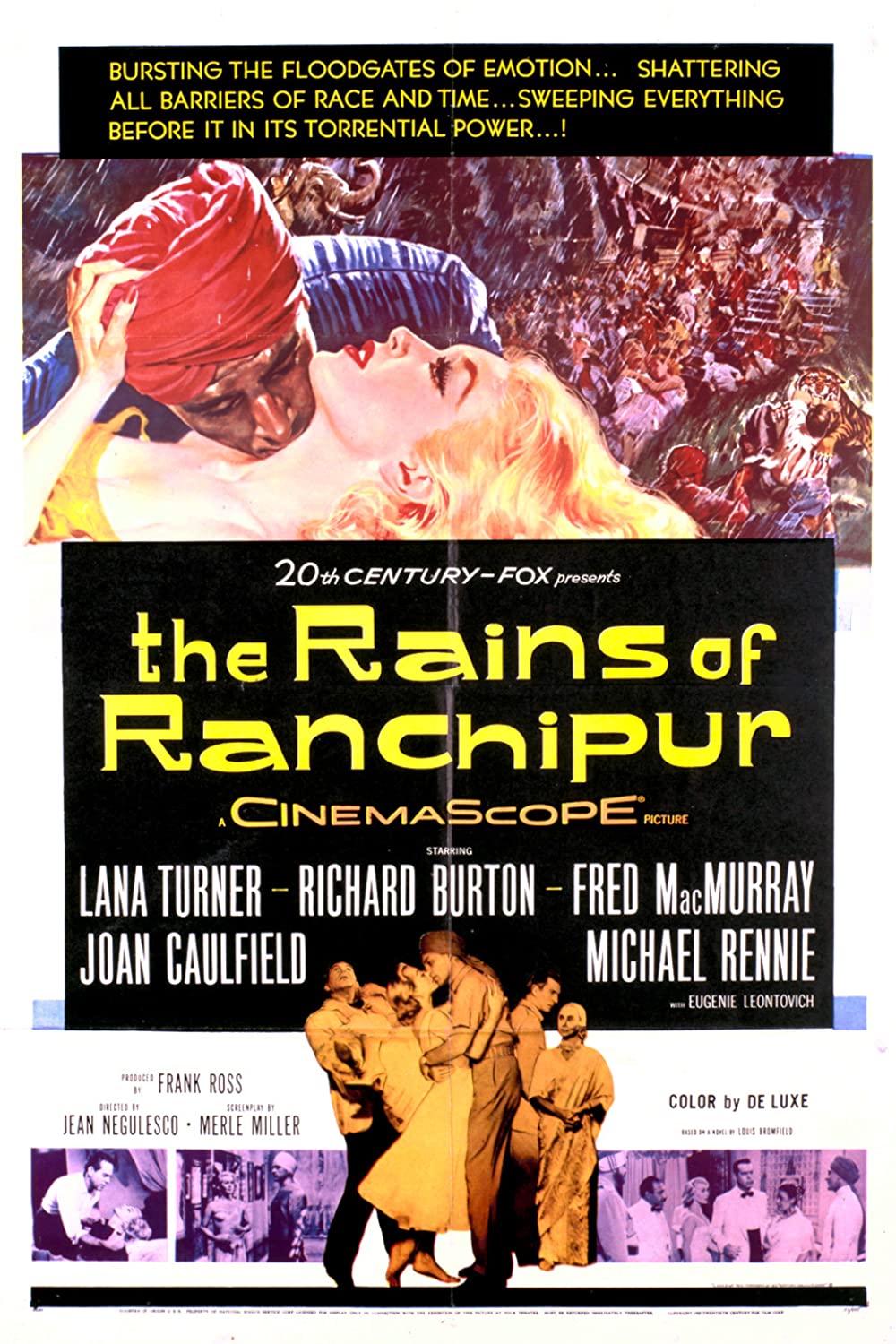
- The Rains of Ranchipur (1955) – a melodrama with Lana Turner and Richard Burton, where Caulfield played a supporting part.
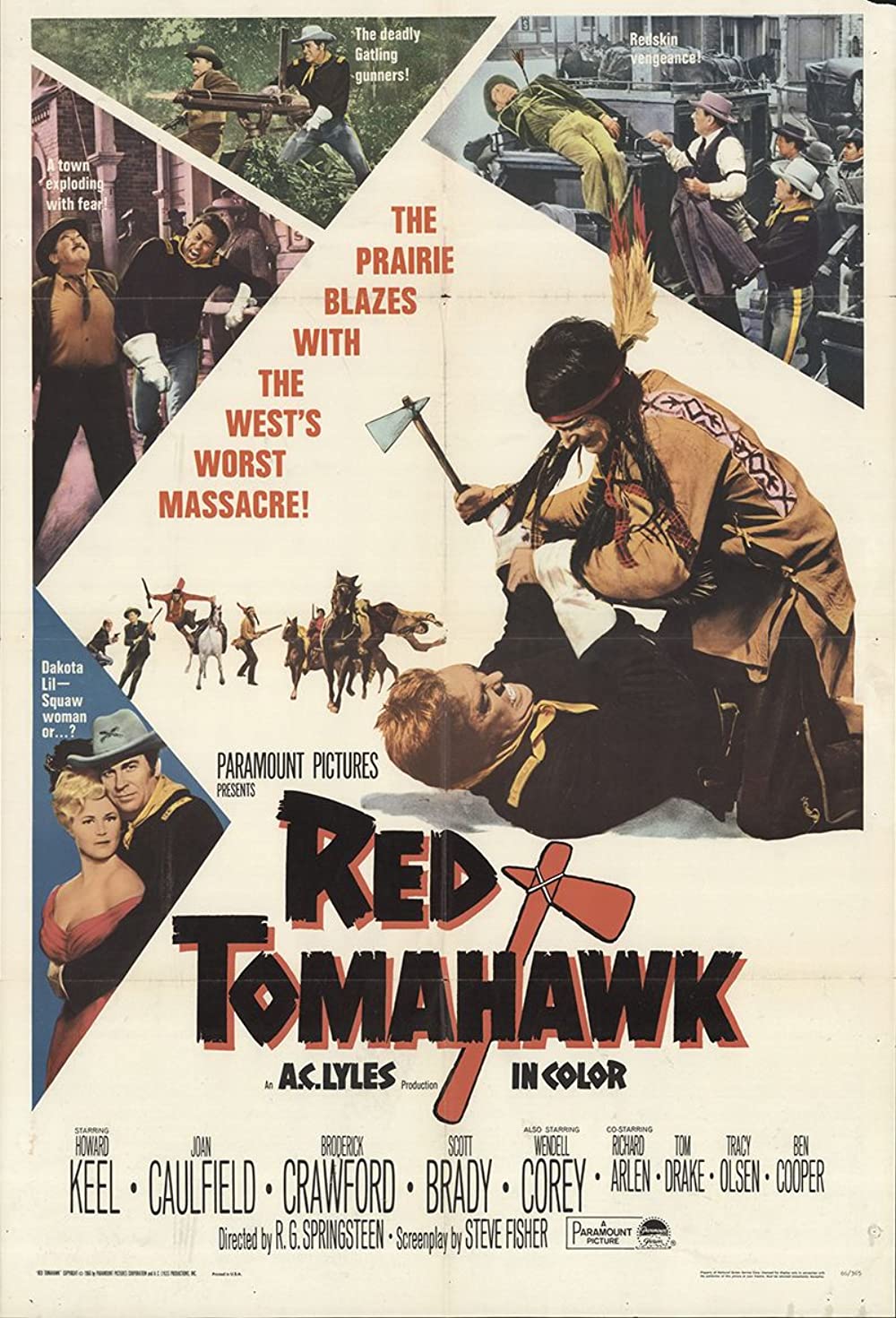
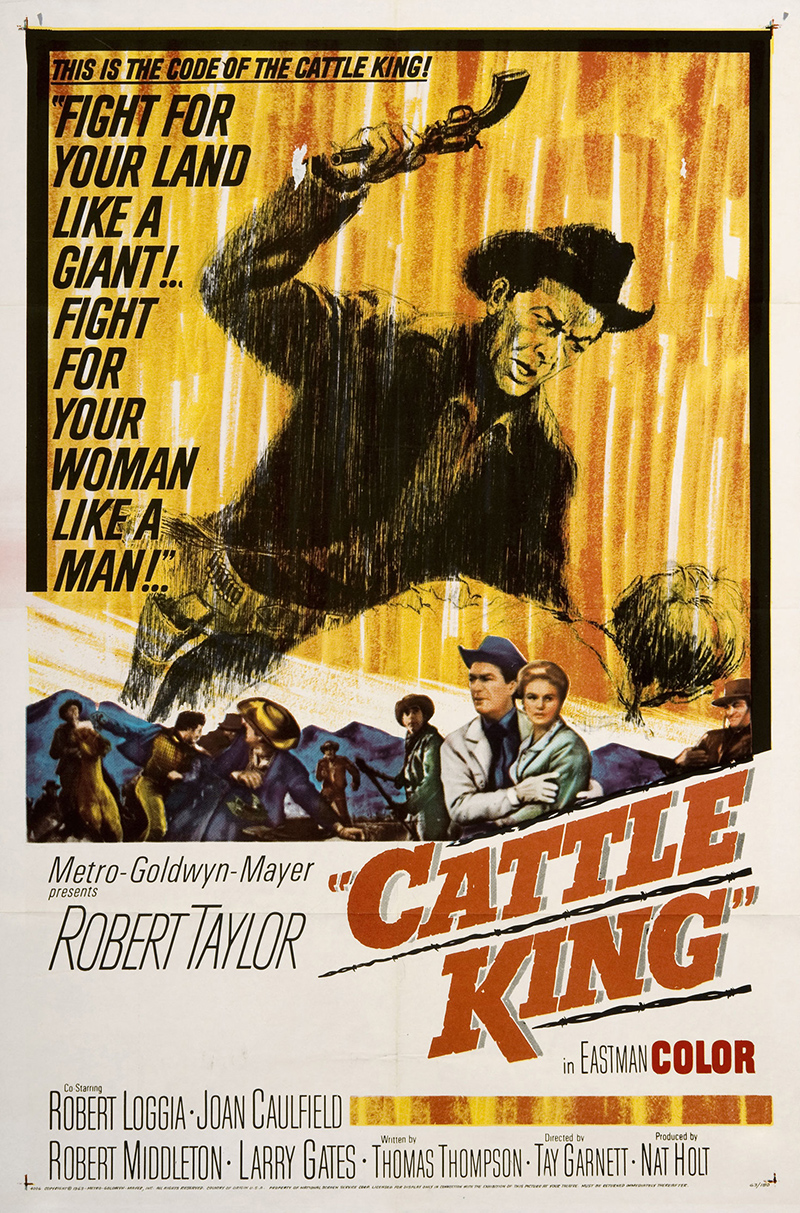
- Cattle King (1963) and Red Tomahawk (1967) – B‑Western films that reflected the shifting nature of studio casting for actresses of her generation.
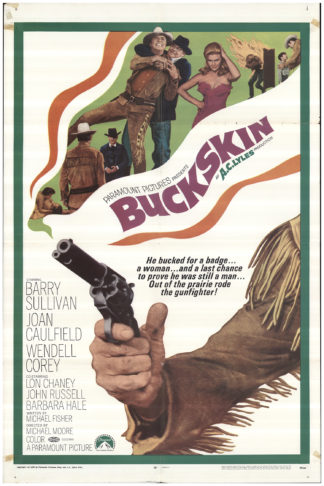
- Buckskin (1968) – another Western genre appearance.
- Series guest spots on Pursuit, General Electric Theater, Cheyenne, Burke’s Law, The High Chaparral, and later Murder, She Wrote.
She also appeared in touring stage productions, summer stock, and dinner theatre, demonstrating a persistent engagement with live performance outside of Hollywood’s studio orbit.
Critical Analysis
By the 1960s, Caulfield’s film roles largely shifted to supporting or genre work, reflecting a broader industry pattern where actresses associated with earlier eras of Hollywood found fewer central opportunities as studio structures evolved. Nevertheless:
- Adaptability: She sustained a career across media (film, television, stage) and genres (comedy, drama, Western), a testament to her professional resilience.
- Range within constraints: Even in lesser material, Caulfield often brought graceful presence and comic charmto her parts, lifting otherwise routine scripts.
5. Acting Style and Screen Persona
Caulfield’s acting style is marked by:
🎭 Understated Elegance
Her performances emphasized controlled, polished delivery, which suited the refined romantic and comedic leads she was typically cast in.
🎭 Subtle Emotionality
Rather than broad dramatic gestures, she favored small, expressive responses—a trait that worked well in witty ensemble comedies but was sometimes mismatched to more intense dramatic material.
🎭 Transition from Decorative to Distinctive
In early films, she was often cast as the “lovely leading lady,” but throughout her career she sought roles that allowed more personality beyond prettiness. Her choice to pursue sitcom work reflects a desire for character engagement over surfaces.
Notably, Caulfield later admitted that early in her career she struggled with Hollywood’s star system and tried to mimic other performers, which she felt compromised her naturalism; this self‑reflection highlights the tension between studio shaping and authentic acting identity.
6. Legacy and Cultural Assessment
🌟 Golden Age Presence
Caulfield remains emblematic of post‑war Hollywood femininity: poised, attractive, and capable in light romantic or comedic material. Her early films like Dear Ruth and Blue Skies preserve her classic screen image.
📺 Television Pioneer
Her work in early TV sitcoms illustrates the transition many film actors made to the small screen in the 1950s, and her performances show she could anchor weekly comedy outside the studio framework.
🎥 Artistic Constraints
Critically, Caulfield is often viewed as an under‑utilized talent. She excelled in roles that matched her charm and grace, but rarely had opportunities to demonstrate dramatic depth in more challenging contexts—both a reflection of her strengths and of Hollywood’s cautious casting of women in romantic or comedic types.
🏆 Industry Recognition
She was awarded a star on the Hollywood Walk of Fame, cementing her status as an enduring figure of mid‑20th‑century American entertainment.
7. Critical Conclusion
Joan Caulfield’s career showcases a performer whose classic beauty and refined screen presence brought warmth and sophistication to her roles, especially in light comedies and romantic features of Hollywood’s post‑war era. She had the technical skill from stage training, a natural comic sensibility, and a sustained adaptability across media. However, structural constraints in casting, along with her own early succumbing to star‑system coaching, limited her from deeper dramatic exploration.
In retrospect, Caulfield’s legacy lies not only in her film highlights but in her transition to television and enduring professional resilience across changing entertainment landscapes.