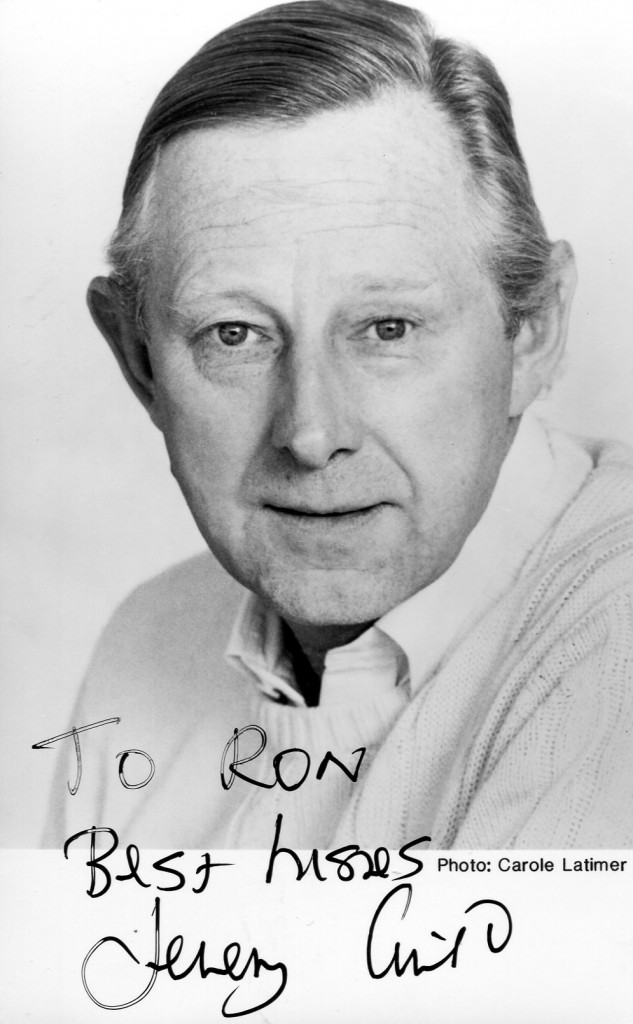
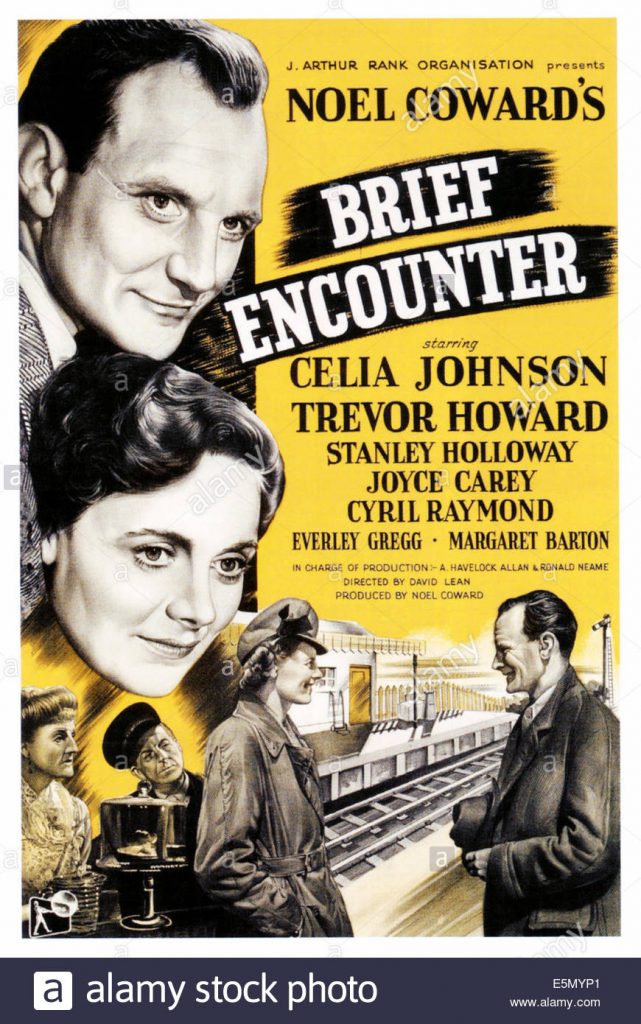
Jeremy Child was born in Woking, Surry in 1944. On screen he specialises in playing civil servants, military types and scheming politicans. As his best in the 1986 mini-series “First Among Equals” based on the novel by Jeffrey Archer. Jeremy Child was recently seen as again a politican in “The Iron Lady” which starred Meryl Streep.
IMDB entry:
Jeremy Child was born on September 20, 1944 in Woking, Surrey, England as 3rd Bt Sir Coles John Jeremy Child. He is an actor, known for A Fish Called Wanda (1988), Lagaan: Once Upon a Time in India (2001) and The Madness of King George (1994). He has been married to Elizabeth Morgan since 1987. They have two children. He was previously married to Jan Todd and Deborah Grant.Has the distinction of portraying a British Foreign Secretary three times in his career; fictional Foreign Secretary Charles Seymour in First Among Equals, real life Foreign Secretary Sir Samuel Hoare in Bertie and Elizabeth and real life Foreign Secretary Francis Pym in The Falklands Play.
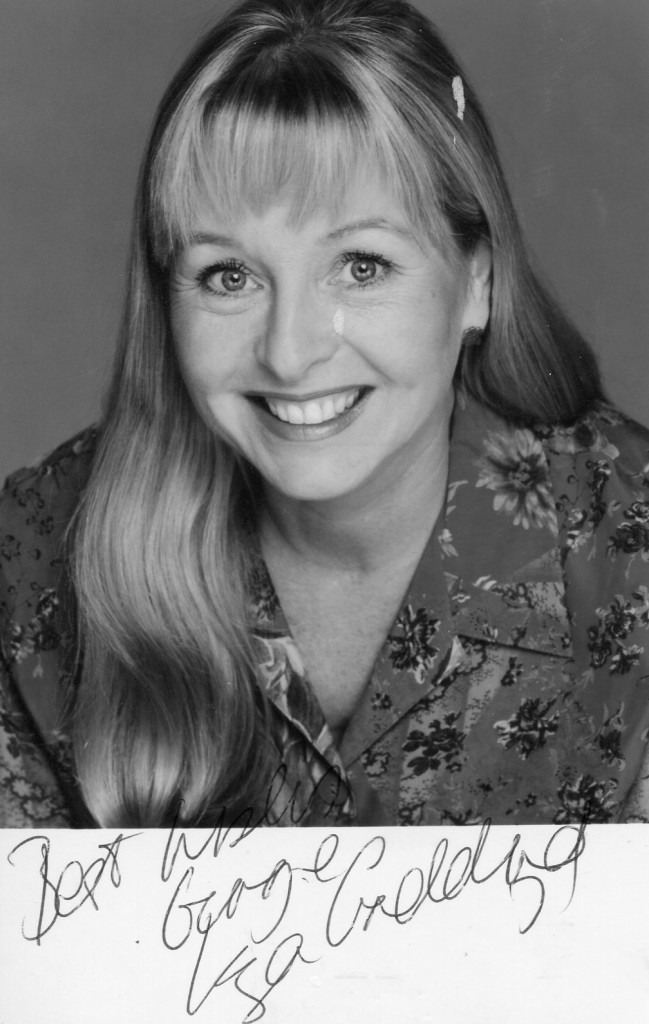
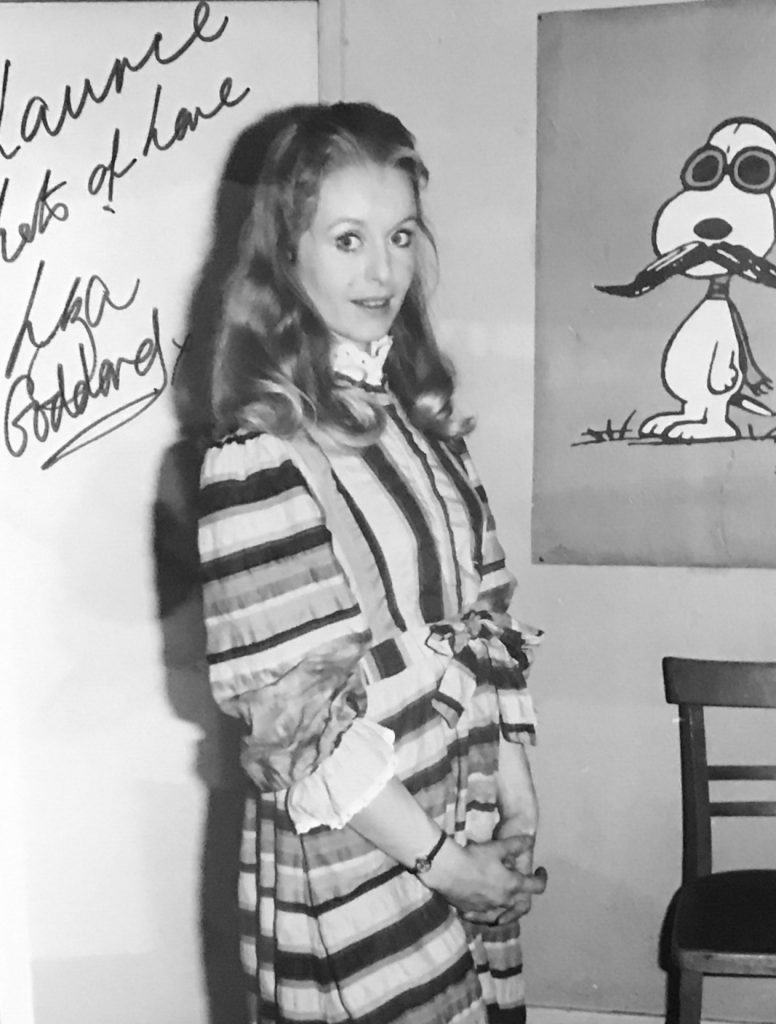
Liza Goddard was born in 1950 in the West Midlands. She moved to live in Australia with her family when she was a teenager. She became popular with the children’s TV series “Skippy”. In her early twenties she was back in the UK and starred in many television series such as Take Three Girls” in 1969, “Yes, Honestly”, “The Brothers” and “Bergerac”. She has had a busy career also on the stage. Films include “I Want What I Want” in 1972.
She was the Middle England pin-up, exuding an aroma of horses, hockey sticks and sexy wholesomeness, who refused to be parted with her clothes. But now, at 61, Liza Goddard preaches the gospel of ‘flaunt it while you’ve got it’.
‘Directors would ask me to strip off and I’d refuse. I wish I had flashed it around, as I had a lovely body, but I was prim and lacked confidence. Now I tell all the lovely young girls I work with, “You’re gorgeous. Show it off.”’
Her only other regret? Marrying three times, first to a future Doctor Who,Colin Baker, followed by glam rock’s Alvin Stardust, before finally finding happiness with her husband of 16 years, former TV director David Cobham.
+4
Wisdom: At 61, Liza Goddard preaches the gospel of ‘flaunt it while you’ve got it’
‘If I could change things, I probably wouldn’t have leapt in and had relationships so readily. Or maybe I should just have lived with them, then at least you don’t have to get divorced.’ She admits it was babies she wanted, not husbands. ‘It’s my hormones that have let me down.’
Liza was a teen star who became famous around the world playing the blonde pig-tailed Clancy in Australian TV’s Skippy The Bush Kangaroo. Then she became an emblem of Swinging London at 19 as the cello-playing Victoria in the female flat-sharing drama, Take Three Girls, before appearing in TV series like The Brothers, Bergerac and Doctor Who, and theatre and game shows.
She has just written her autobiography and when asked why now, she replies, ‘Having had breast cancer, I thought maybe I should do it, because otherwise you keep putting it off.’ If this sounds like someone sorting out their affairs, far from it. The cancer returned in 1997, three years after the original diagnosis, necessitating a masectomy – which led to an infection that nearly killed her – but since then she’s hardly had a cold.
Liza’s feeling very perky and she sounds it too; the familiar cut-glass accent rippling with laughter, quite often directed against herself. I haven’t seen her for years and at first I wonder if the blonde sizzling in sunglasses, a shocking pink top and jeans showcasing slender legs can be her. She is one of the least vain women, let alone actresses, I have encountered, although she acknowledges, ‘When I look in the mirror, I see a 61-year-old woman. But acting keeps you young.’
She had this horrid, evil side… She herself said she had vitriol in her veins rather than blood
She always uses her senior rail card ‘and they never say, “You can’t be old enough”,’ she guffaws. What she reveals in her book, Working With Children And Animals, is a new version of her childhood, previously told as a rural commuter belt idyll, with geese, ducks and chickens flapping around the rose-framed door, out of which wafted the inviting smell of home baking. Now she says that her mother, Clare, was emotionally and physically abusive.
‘She spent her whole time screaming at us.’ Liza felt nothing she did was ever good enough for her mother, to whom the concept of praising children was alien. Pictures of the teenage Liza and her sister Maria, two years younger, show a pair of blonde stunners, but both lacked confidence in their looks. Maria became anorexic, while Liza ‘hated the way I looked when I was young’. She hasn’t talked about this before ‘to spare my mother’s feelings’ but now, at almost 86, Clare has dementia.
‘She had this horrid, evil side. She herself said she had vitriol in her veins rather than blood. She used to whack me with anything that came to hand. She was a full-time mother and I don’t think she enjoyed it.’ Then, one day, a girl several years older than Liza arrived at their home. ‘My mother said, “This is your half-sister Gail.” I was astounded. She had tracked us down and was welcomed with open arms.’ Gail, the product of Clare’s first marriage, had been abandoned by her at the age of three and was brought up by her father.
‘I never felt I could ask my mother why she had left her child. Recently, Gail and I went to see Mum and she said, “Gail, I’m so terribly sorry”, and we all burst into tears. It was very healing for Gail. So now, with her dementia, we’ve got this sweet old woman for a mother, the mother I’ve always wanted.’ Then there was another shock for the teenager. ‘Mother began dropping hints that my father was not really my father, although earlier she had said I was premature.’
We moved to the country and I wore tweeds, but it was just a role I was playing… I leapt into the marriage and then I leapt out
She has, of late, tried to tap her mother for information. ‘All I get from her is nonsense.’ Her parents finally divorced and Liza admits she felt bereft. She believes this led to a relationship with a man who was violent towards her. ‘It was nothing that showed, no broken bones, but it was abusive and I think it came down to my low selfesteem.’ She became pregnant, felt suicidal and had an abortion, although this incident is omitted from the book.
‘I think I just forgot it,’ she says curiously. But she does relate how she became pregnant again by the same man, left him and gave birth to her son Thom in 1976. She now says she was desperate for a baby, even with the wrong man. While pregnant, she joined the hit TV show The Brothers, and fell in love with one of its stars, Colin Baker. They married within months and somehow the story got out that he was Thom’s father.
‘It was easy for Colin to go along with the pretence. I think I was desperate for a father for Thom and Colin fitted the bill, but I think my mind was unbalanced, having just given birth. We were great friends but should never have married. We moved to the country and I wore tweeds, but it was just a role I was playing. I leapt into the marriage and then I leapt out.’
After a few years of single motherhood, she was chatted up by Alvin Stardust at a showbusiness event. ‘I wasn’t especially a fan of his music but I was bowled over by his charm and within a few weeks he moved in. At home he didn’t wear the quiff, he brushed his hair normally: he was going through a mellow phase. I think what I really wanted was a baby. I wanted my girl.’ She gave birth to their daughter, Sophie, in 1981 and soon afterwards she and Alvin married, only to divorce eight years later.
‘I thought, “Another one down the drain.” That was a long marriage by my standards.’ Liza had been working harder and felt Alvin wasn’t pulling his weight domestically. The last straw was his famous conversion to Christianity on a 40-minute train journey. ‘He was converted by a group of people in his carriage. At Waterloo, the cleaner found them on their knees praying. Alvin came home and said “I’ve found God”.’
She then married David, and has forgotten her differences with Alvin. They are friends again, and she admires him, she says, ‘because at 68, Alvin is still touring in his wig and platform boots’. In the last few years, she has even been able to empathise with his feelings about faith. ‘Our daughter Sophie introduced me to Shamanism. I’m learning to harness the body’s power to heal itself – I treated someone with an eye infection recently and it cleared up in 24 hours.
‘David was a bit alarmed at first. His father was a vicar. He thoughtSophie was trying to get me into a cult. But at last I understand how marvellous it was for Alvin to find his spirituality, now that I’ve found mine.’
Des McAleer is a terrific character actor who was born in Belfast in 1952. He seems to specialise in ‘hard’ men and is a welcome presence on film and in television.He made his film debut in “Anne Devlin” with Brid Brennan in 1984. Other movies include “Hidden Agenda” in 1990,”Poor Beast in the Rain” and “This Is the Sea”.
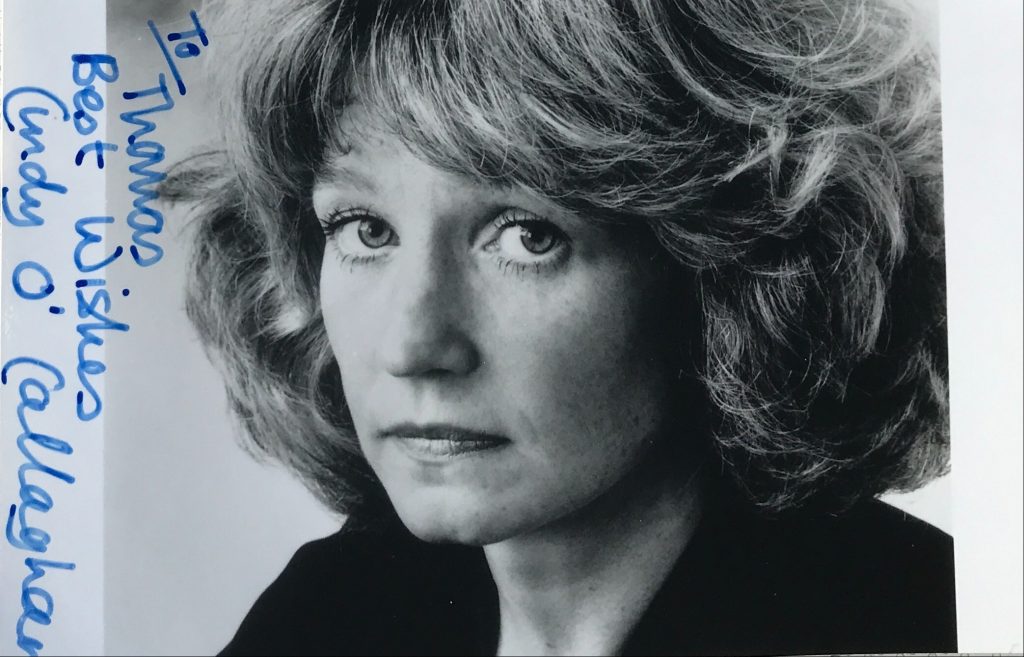
Cindy O’Callaghan was born in Ireland in 1956. In 1971 she was brought to Hollywood by Walt Disney studios to film “Bedknobs and Broomsticks” with Angela Lansbury. She returned to England to continue her studies. Her other film appearances include “Hanover Square” in 1979. In 1980 she starred in the television series about nursing entitled “Angels”.
“Wikipedia” entry:
O’Callaghan is probably most famous for her childhood role of ‘Carrie Rawlins’ in the Disneyclassic film Bedknobs and Broomsticks (1971), where she starred opposite Angela Lansbury and David Tomlinson. She has commented “filming Bedknobs was an incredible adventure. There I was, a working class girl from West London suddenly living on a film set in Los Angeles. My mum, who came with me, would race to the studio canteen every morning and then shake with excitement when celebrities like Rock Hudson came in to get their breakfast. I was just as star struck. I had to go to school for two hours every morning before filming, and would often be sitting in class next toDonny Osmond, whom I had a big crush on. We lived in a council house in London, but in Hollywood we had a plush apartment with its own pool. I got the role after casting directors trawled schools looking for children with London accents. I was asked to attend an audition at Pinewood, where I had to stand up and tell a funny story. I talked about how horrible my older brothers were to me. I was a big fan of Mary Poppins and couldn’t believe I was going to be in a Disney film. When I returned to Britain, my school friends were massively jealous and stopped talking to me. It marred the premiere for me. After a few unhappy months, I decided to use my fee of £3,000 to attend a private school that specialised in drama.”[2]
O’Callaghan managed to maintain—in her own words—”an averagely successful career”, doing lots of theatre as well as television work.[2] She has appeared in numerous television programmes throughout the 1970s, ’80s, ’90s and early 2000s, including ITV‘s The Bill, Casualty, Specials, Boon, Rumpole of the Bailey, Woof! and as Linda Kennedy in the BBC soap opera Triangle, among others. She has also appeared in films, including Hanover Streetand I.D.
O’Callaghan attended university in 2000, and in 2004 it was reported that she had given up acting to become a child psychologist. She commented “Four years ago, I decided to go to university and am now training to be a child psychologist. I just wanted to do something that was more fulfilling.”[2] However, O’Callaghan has appeared on television since this time, in the 2005 documentary The 100 Greatest Family Films, where she discussed the movieBedknobs and Broomsticks, along with co-stars Angela Lansbury and Ian Weighill, who played Charlie Rawlins in the film.
The above “Wikipedia” entry can also be accessed online here.
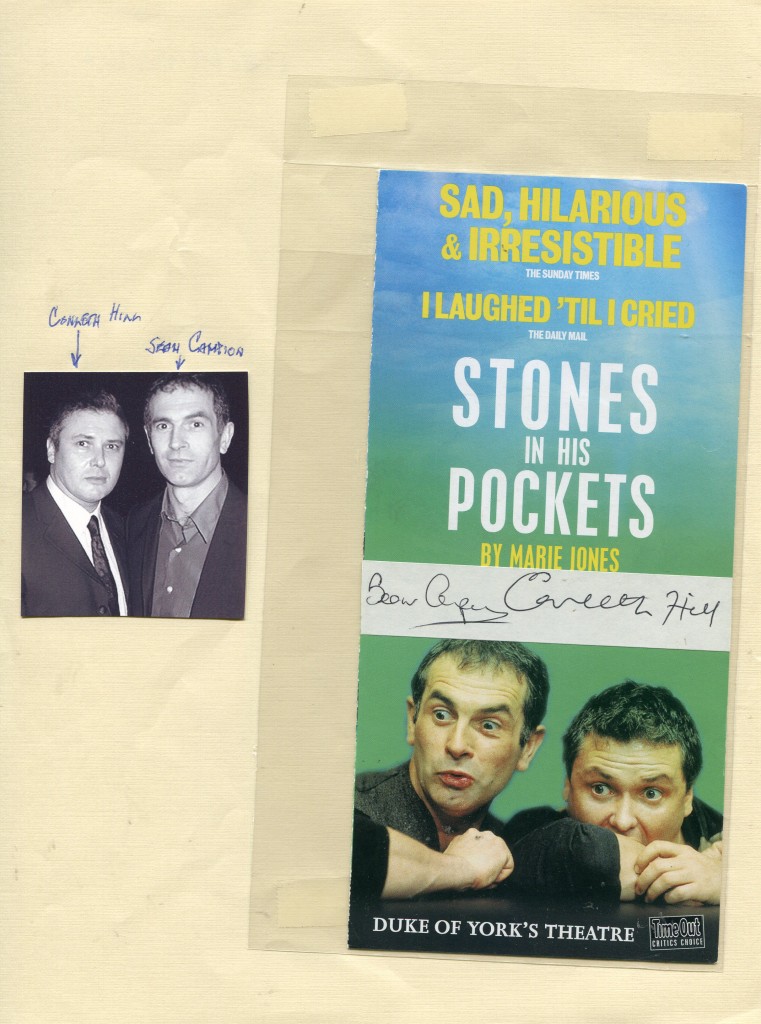
Prior to Stones in His Pockets, Campion’s many stage credits in his native Ireland includedWaiting for Godot, The Mayor of Casterbridge, Northern Star, Poor Superman, The Moon for Misbegotten, The Importance of Being Earnest, The Merchant of Venice, Good Evening Mr Collins, Observe the Sons of Ulster Marching Towards the Somme, Macbeth, Romeo and Juliet, Miss Julie, Equus, Bent and Translations.
Campion is currently appearing in Oxford Stage Company’s 50th anniversary revival of Brendan Behan’s modern Irish classic, The Quare Fellow, directed by Kathy Burke. After a regional tour, the production transfers for a limited season at the Tricycle Theatre, where, coincidentally,Stones in His Pockets also started its London life in 2000.
Date & place of birth Born 20 December 1959 in Freshford, County Kilkenny in Ireland.
Trained at… I trained at the Focus Theatre in Dublin with Deirdre O’Connell, who was a real mentor to me.
Lives now in… Fulham Broadway, west London. I just moved there in December. I spent a year in London when we were doing Stones in His Pockets. We went on with the show to the States and so on, and after that finished, I decided to come back to London instead of Dublin. It’s easy to commute between one and the other. And now I’ve bought my place in Fulham, so I might well be here for a while.
What do you consider your first big break? Now that’s really tricky, you could offend people, couldn’t you? For me, it was – and I don’t want this to sound corny – but it was the day I walked into Focus and met Deirdre. I came without any knowledge whatsoever, and she was my guiding light about what theatre and acting is all about. She taught me what you should bring to the profession. Also to work at the Abbey Theatre in Dublin at the time that I did, I can’t explain how excited I was about that. I spent two years as a member of company there. That gave me some great opportunities and exposure to a lot of work.
Career highlights to date Being a part of the production of Observe the Sons of Ulster Marching Towards the Somme which was performed at the Abbey Theatre as a way of acknowledging the ceasefire in Northern Ireland at the time. It’s an extraordinary piece of writing by Frank McGuinness and Patrick Mason, then the Abbey artistic director, was directing. On opening night, we had Unionist and Sinn Fein members sitting side by side in the theatre. It was an extraordinary evening.
Also in terms of highlights, I can’t not mention Stones in His Pockets. That was an incredible journey for Conleth Hill and me. It was only meant to be a few weeks in Belfast, but for some reason, we ended up in the West End and then on Broadway. You run out of adjectives very quickly – how do I explain? I loved every moment of it.
How did you find working on Broadway? Neither Conleth nor I had ever even stepped foot in the US before. The evening we arrived, we went down to Times Square and found it so overpowering, we had to duck out because we couldn’t cope. What I really loved about Broadway is that everybody wanted to celebrate your success with you. There was also a wonderful feeling of camaraderie amongst all of the Broadway companies. We were brought together regularly, for baseball tournaments, charity fundraisers and the like. I thoroughly enjoyed being a part of that theatrical community.
Favourite productions you’ve ever worked on Certainly those two and many more: Brian Friel’s Translations, one of the most beautiful plays that has ever come out of the Ireland; Bent, which I did with a young company to a phenomenal audience response; Waiting for Godot, for a lot of different reasons. There’s such a list.
Favourite co-stars I can’t do that! (laughs) I’ve had a kick with just about everybody I’ve worked with. I wouldn’t want to leave anyone out.
Favourite directors Again, I wouldn’t want to leave anyone out. I will say, though, that I’m having a grand time withKathy Burke now on The Quare Fellow. I’ve always been a great admirer of her acting talent. She can do hysterical comedy but then also has the ability to show that much darker side of life – it’s mind-blowing. As an actor herself, she understands how we work and what we need, and as the director of this play, her understanding of Brendan Behan and what she wants from the piece is very impressive. She’s terrific. Okay, I’ll also just mention the Abbey’s Patrick Mason. The breadth of work he’s covered is phenomenal and his love of theatre is unequalled. To be in a rehearsal room with Patrick is always an education.
Favourite playwrights Of those whose plays I’ve appeared in, I’d say Brian Friel, Frank McGuinness, Samuel Beckett and, of course, Marie Jones. Also Shakespeare, if only for King Lear alone. I could go on forever. As for playwrights I haven’t worked with, Marina Carr comes to mind. She’s a young Irish playwright with a very distinctive voice.
What roles would you most like to play still? I have no idea on that, it’s just too broad. The phone could ring tomorrow and you could say yes or no. That’s how it goes.
What was the last thing you saw on stage that you really enjoyed? Can I say two or three things? Michael Frayn’s Democracy definitely – I want to go back and see it again – and Conleth is terrific in it. Also, a few months back, just as an exercise, I went to see first the Icelandic Theatre Vosturport’s Romeo and Juliet at the Young Vic and Shakespeare’s R & J in the West End. What I loved was that they were both using the possibilities of the stage and what it can do. I loved the imagination and the risk involved. That’s what theatre is about.
What would you advise the government to secure the future of British theatre? Where does one begin? I think I’d say, wake up and realise that theatre is not a luxury and it does need to be subsidised properly. I’m completely convinced that theatre can affect change, but also entertain and educate. It does have a place. At the moment, it seems to be perceived as a luxury with only token gestures made towards it.
Favourite holiday destinations I have never been to Australia but I’d really like to go, all around. It’s a country I’m intrigued by. I love the notion of this outdoor culture, a small population living in such a vast country with so many types of landscapes. It’s the difference in the cultural mentality that appeals, too. I went to Japan a few years ago with a production of Othello, and I’ll never forget stepping off the plane and thinking, I know nothing about this. It could have been a different planet.
Favourite books I’m a fan of William Kennedy’s novels, most of which are set in Albany in upstate New York.
Favourite after-show haunts During the year we spent with Stones in His Pockets on and off St Martin’s Lane, we became regulars at the Harp Bar just off Trafalgar Square. They’re great in there.
Favourite websites Yahoo, because I can never remember how to find anything on the web!
If you hadn’t become an actor, what would you have done professionally? I thought I wanted to be a hotel manager – that was going to be the life for me. But then I spent a couple of years in a hotel and realised it was certainly not the life – I had no patience with the public.
Why did you want to join this production of The Quare Fellow? I wasn’t aware of the play before. The only Behan I was familiar with was The Hostage and Borstal Boy. So I was curious. When I read it, I was taken by surprise. The play is set in an Irish prison on the night before a hanging, and it looks at how that’s affecting the prisoners and the warders. When Joan Littlewood did it at Stratford East, she used lots of songs and exposition, but beyond all that, there’s an extraordinary piece of writing about humanity and the notion of capital punishment, writing with a lot of humour but that’s not afraid to go to the darker side. Then I met Kathy and she explained that her intention was to lose a lot of the vaudeville, take the ‘Oirishness’ out of it and just go for the meat. Having spoken to her, I knew I wanted to be there.
How would you describe your character? Regan is the moral centre of the play. He’s a warder who’s been working in the prison for 20 years. He understands that the system doesn’t necessarily have to be cruel – there’s a way of dealing with people that has benefits for everybody. Because of that attitude, he’s also the person people ask for at the end, but he’s got to a point where he can’t deal with that anymore. He’s got his own demons to deal with, in relation to all those years of hangings.
What’s your view on capital punishment? I’m totally against it. I don’t believe anybody has the right to take someone else’s life. It seems so hopeless. I hate to think there’s no chance of rehabilitation or some element of redemption. I’m probably overly idealistic. I do suffer from idealism occasionally.
What’s it like working with a 17-strong all-male cast? It would be great if I could say it’s a nightmare, but it’s not. One or two of the other actors I knew before. We’re a group that’s bonded so well – the generosity is remarkable – and we’re having great fun on the road together. It’s not exclusively male, of course. In the rehearsal room, Kathy, her assistant Ro McBrinn and Maggie Tully were a force amongst themselves. They’re the three sisters keeping these boys in check.
The above “What’s On Stage” interview can also be accessed online here.
The “Agency” page:
His theatre work includes The Importance of Being Earnest, Macbeth, Big Maggie, Rosencrantz and Guildenstern are Dead, The Silver Tassie, Sive and Observe the Sons of Ulster Marching Towards the Somme – all at the Abbey Theatre and Good Evening Mr Collins, Hubert Murray’s Widow, Antigone, Calvary/Resurrection, Cuirt An Mhean Oiche– at the Peacock Theatre.Most recently, Sean has appeared in The Quare Fellow at The Tricylce Theatre, directed by Cathy Burke.
Other work includes Transalations, Bent (Red Kettle Theatre Co); Equus, Canaries(Gaiety Theatre); Mutabilitie, Tarry Flynn (Royal National Theatre); A Moon for the Misbegotten (Dubbeljoint Theatre Co.); Miss Julie (Everyman Palace); Poor Superman(Muted Cupid Theatre Co.); Northern Star (Tinderbox/Field Day Theatre Co.); The Mayor of Casterbridge (Storytellers Theatre Co.), Waiting for Godot (Lyric Theatre) and most recently The Dead School (Livin’ Dred Theatre Co.).
Film/TV work includes Glenroe, Fair City (RTE); Echoes (Channel 4); Most Important(Parzival Productions), Saving Grace (Independent), Eastenders (BBC 1) Holby City(BBC), RAW (RTE), Borgia (Atlantique Productions), and Identity (ITV). Most recently he has reprised his role as Virginio Orsini in Borgia.
2013 has seen Sean has cast as the Earl of Kent in the Abbey Theatre’s production ofKing Lear, directed by Selina Cartmell, and United Passions a feature directed by Frédéric Aubertin in which he plays the role of Werner Lutzi.
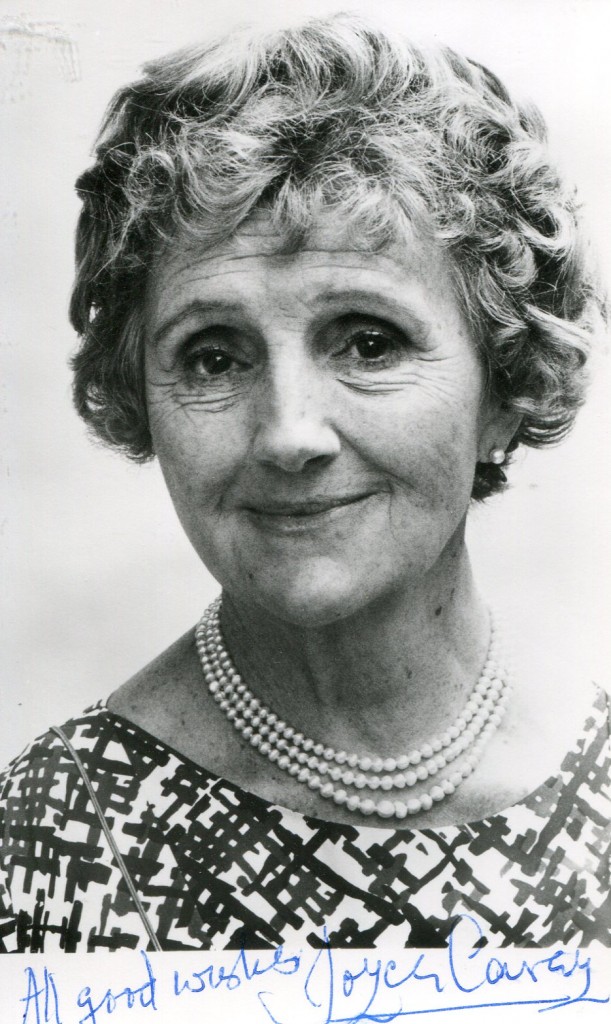
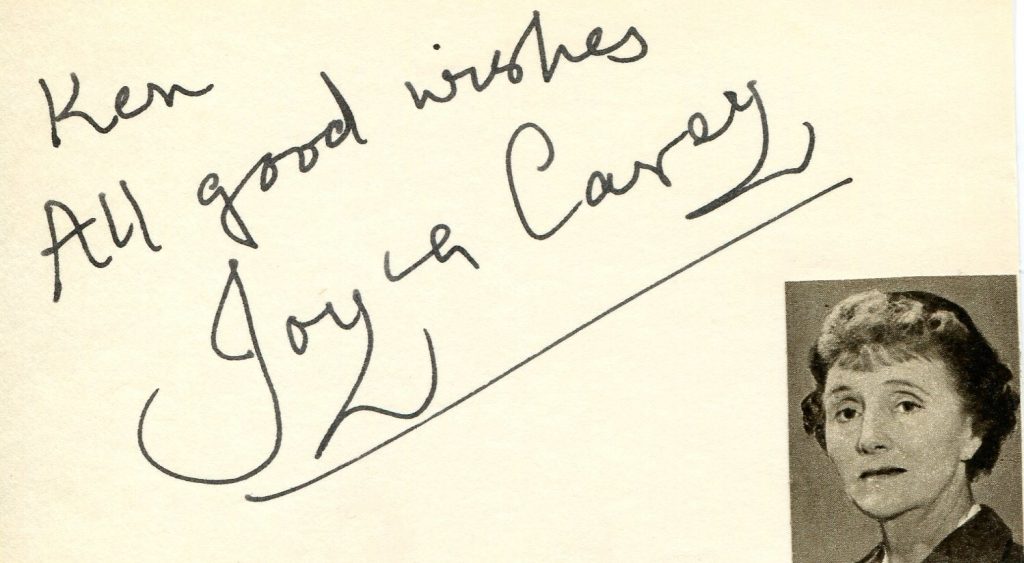
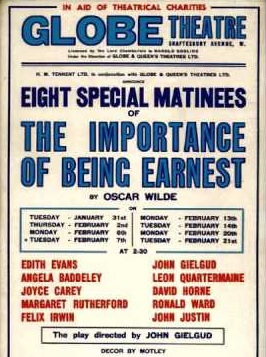
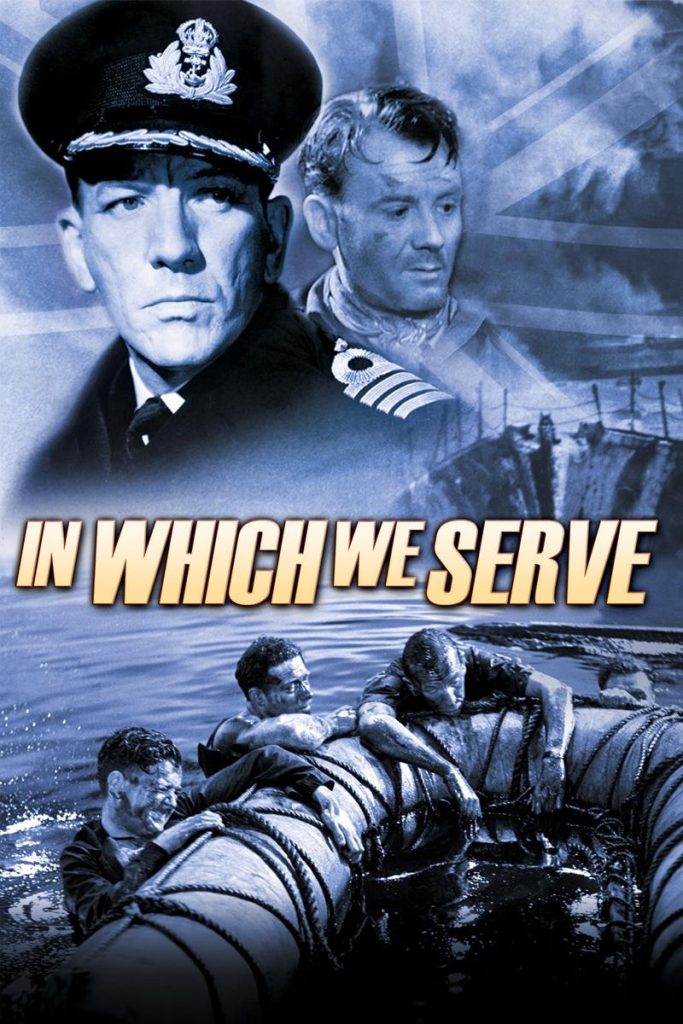
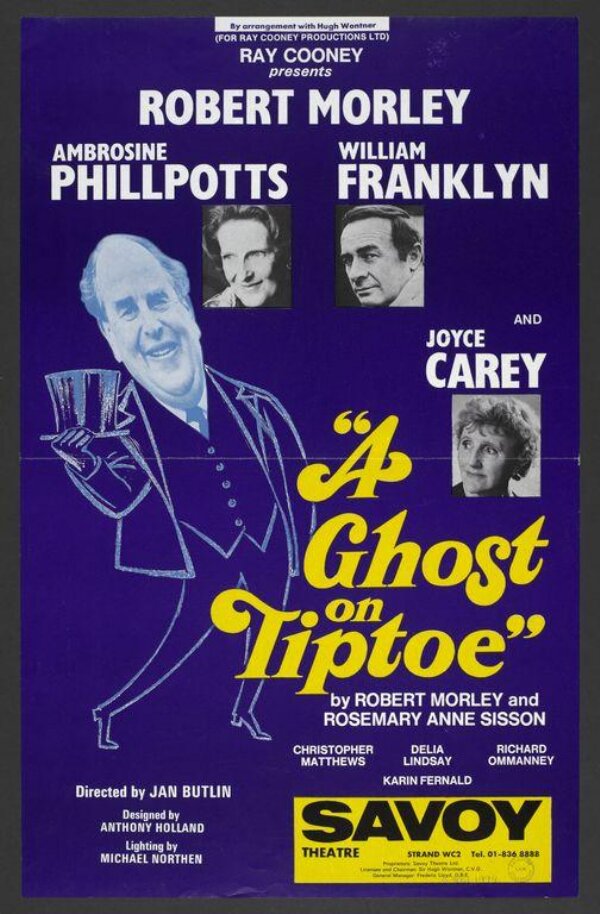
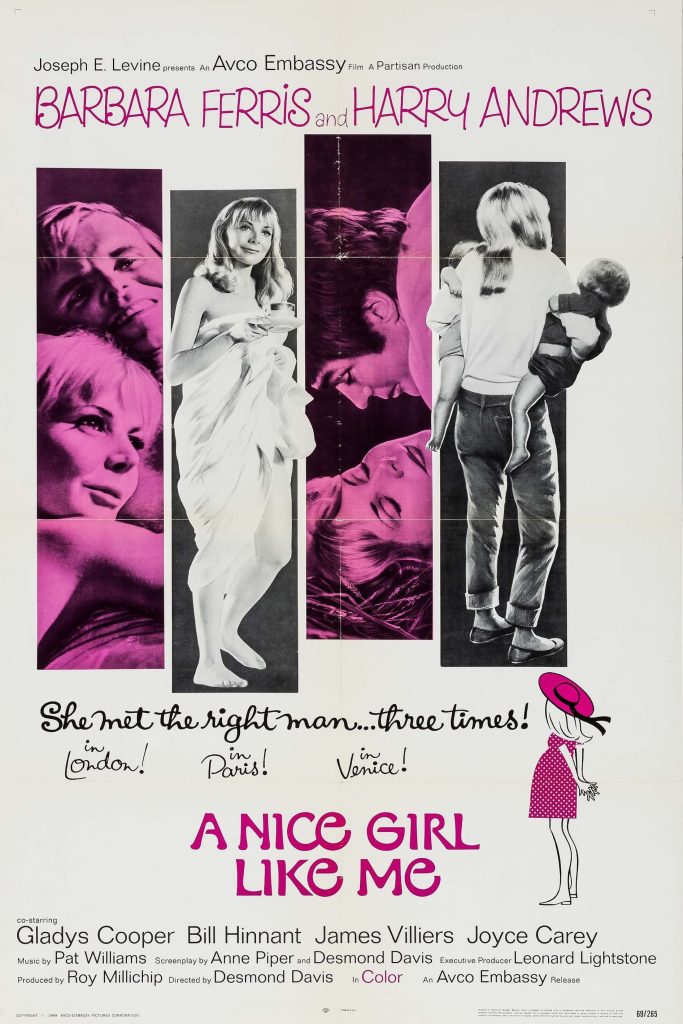
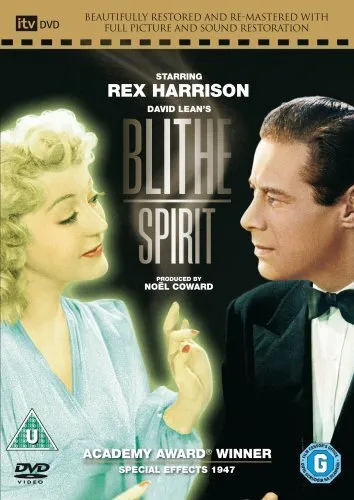
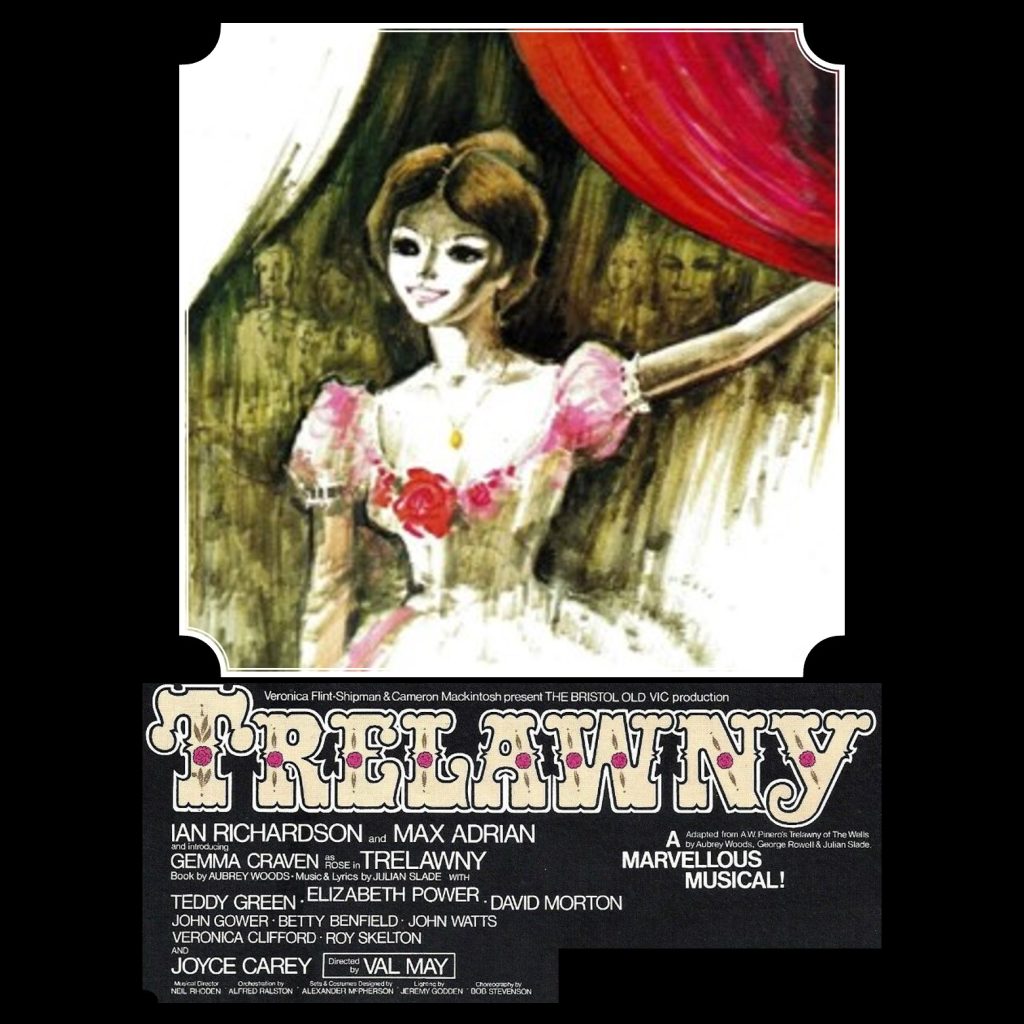
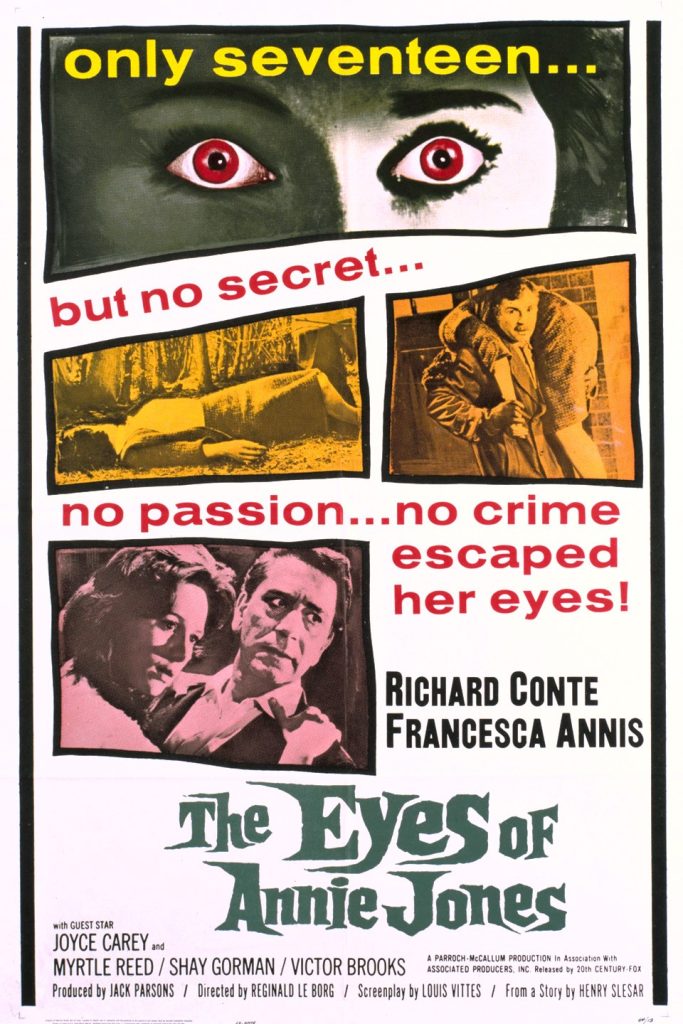
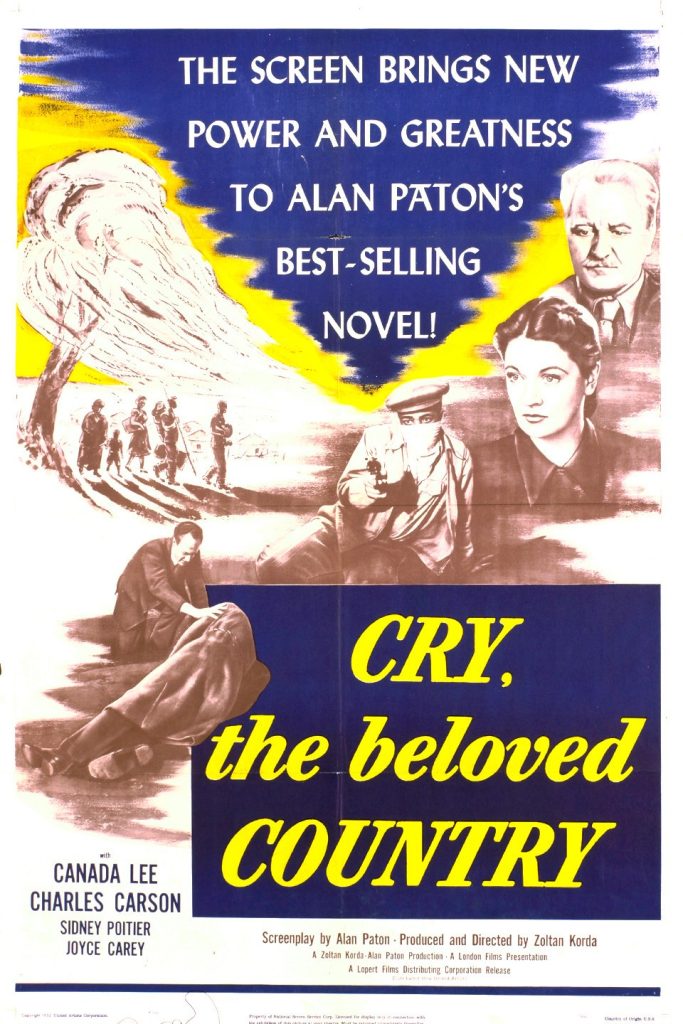
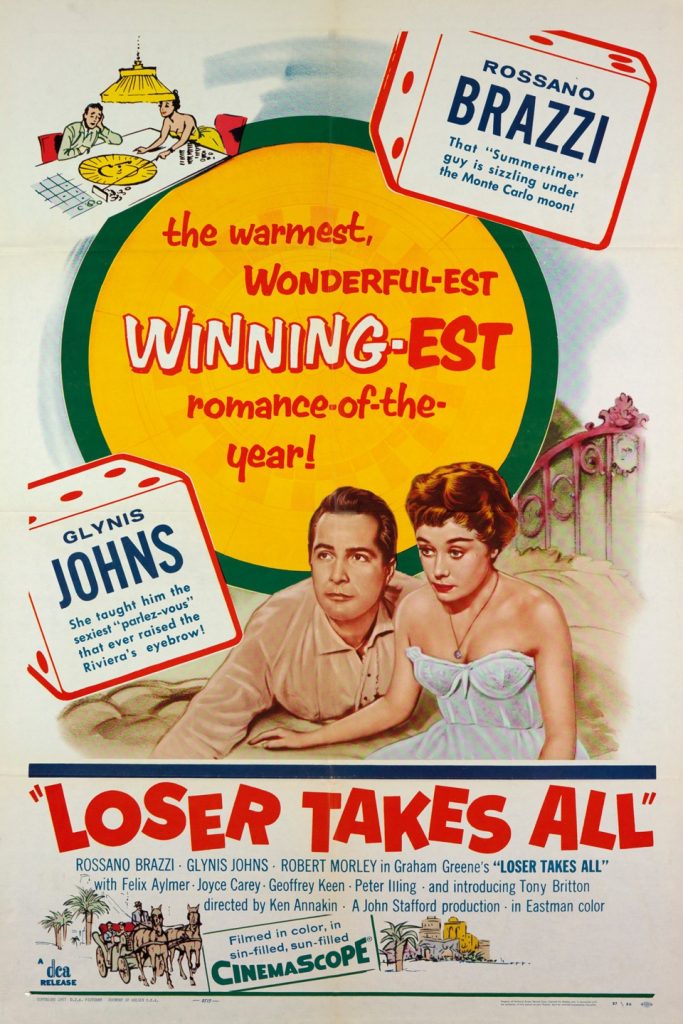
Joyce Carey was born in 1898. She was the daughter of actress Lilian Braithwaite. She is mostly associated with her performances in the works of Noel Coward. Her films include “In Which We Serve” in 1942, “Brief Encounter”, “Blithe Spirit” and “Cry, the Beloved Country”. She died in 1993.
Adam Benedick’s obituary in “The Independent”:Joyce Carey, actress, born London 30 March 1898, OBE 1982, died London 28 February 1993.
Joyce Carey
JOYCE CAREY was the last authoritative and closely human link with the world of Noel Coward and Binkie Beaumont in its pre-war heyday and wartime triumphs.
A slight, diminutive, graceful actress with a dry sense of comedy who specialised in managing wives and confidential aunts, twittering spinsters and sympathetic mothers – frowning at the antics of modern actors in light comedy as she surely had a right to, having first acted for the prince of light comedians, George Alexander, at the St James’s – she almost spanned the century in her service to the stage. It was a service of some influence. Not only as one of the busiest and most attractive players of her generation – starting in 1916 and more or less stopping in 1990 – but also as one of Coward’s loyalest friends and most constant companions. She was an invaluable actress in most of his plays and many of his films, including an unforgettably genteel barmaid in the station buffet in Brief Encounter (1945), suffering with skilful tact the advances of Stanley Holloway’s robust ticket collector.
‘Now look at my Banburys all over the floor,’ she gasped, polishing a tumbler after he had set her confectionery flying with one of his advances.
She was also an invaluable adviser behind the scenes and in the playhouse, where her tact and theatrical judgement shaped many a choice of cast and director. Who can wonder if her taste was so trusty? She had been born into one of the most illustrious theatrical families. Her father, Gerald Lawrence, was a notable Shakespearean who had acted for Irving; and her mother was to become Dame Lilian Braithwaite, a grande dame of the West End theatre for as long as anyone could remember, whose career achieved monumental status as a comedienne in the 1940s in the long-running Arsenic and Old Lace.
But 20 years earlier Lilian Braithwaite had formed the connection with Coward as his leading lady in his first hit as the spokesman of his generation – Florence Lancaster in The Vortex (1924). Almost from that moment onwards her daughter and Coward became friends, and the following year Joyce Carey played in Coward’s next piece, Easy Virtue, both in New York and in London. After which she spent the next seven years on Broadway or touring in the United States: not always in light comedies, sometimes in Shakespeare.
Joyce Carey had seen to it (under the influence of her parents) that her training should not ignore the classics; and having done a stint at Stratford-upon-Avon in 1919, she was often picked for West End Shakespeare revivals – as Jessica, Miranda, the Princess Katharine, Perdita or Celia (to Fabia Drake’s Rosalind); and on Broadway she turned up in The Elektra of Sophocles as Chrysothemis.
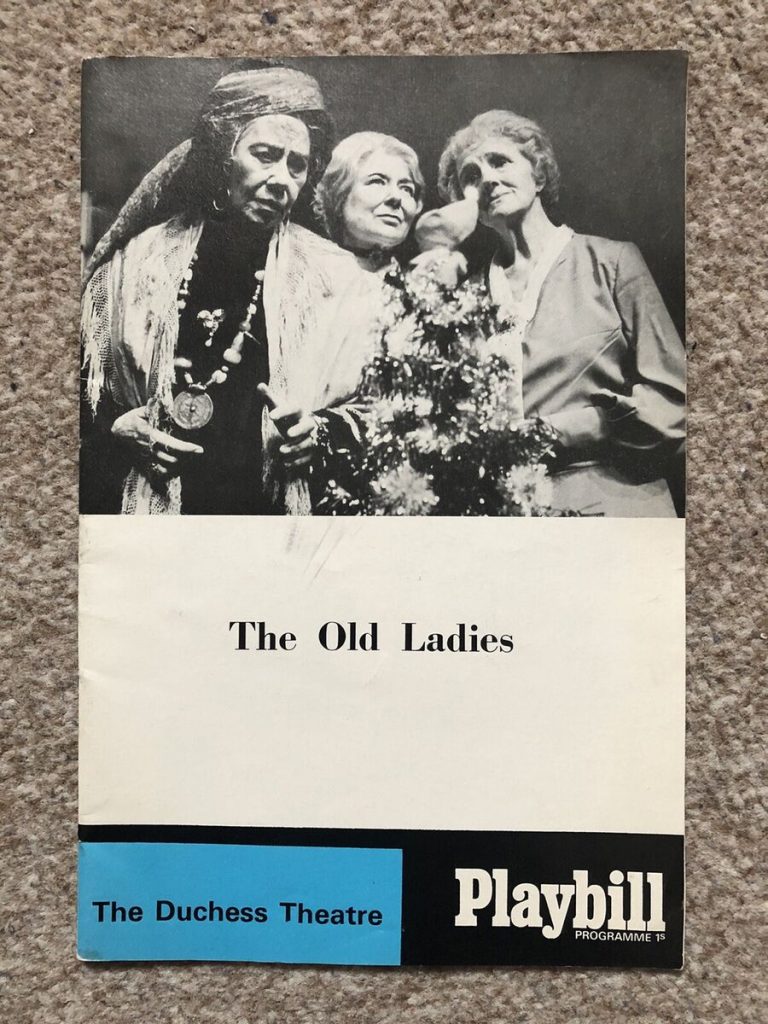
Indeed, years later she surprised her admirers by almost eclipsing her two rivals Joan Miller and Flora Robson in Peter Cotes’s 1969 production of The Old Ladies with her powerful expression of fear as the gentle May Beringer.
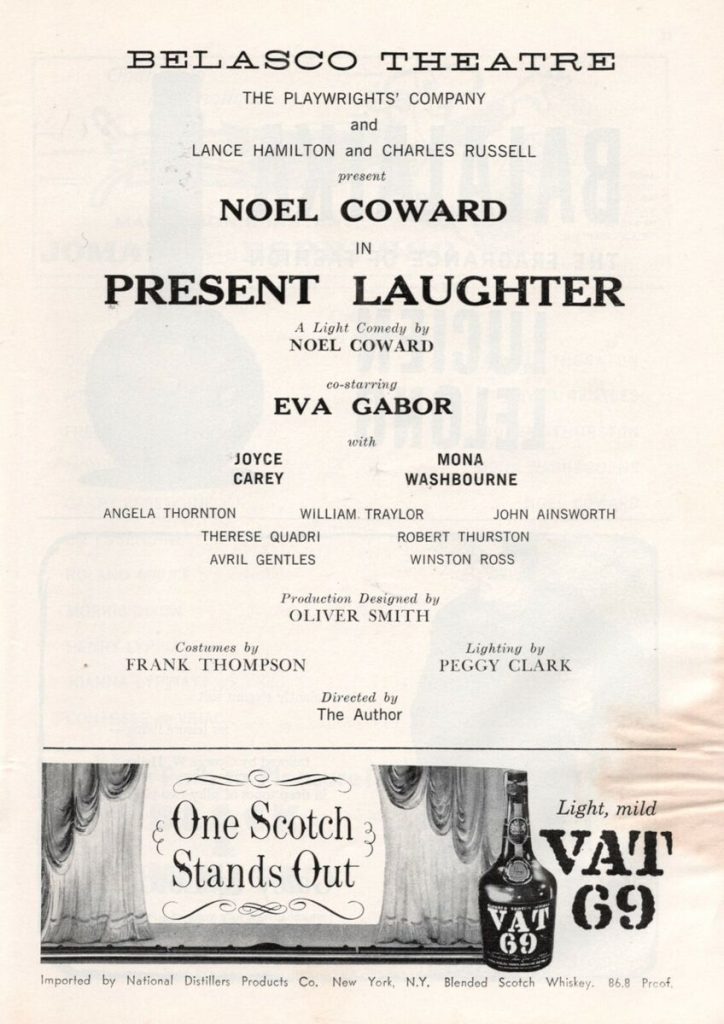
In general, though, Joyce Carey’s art flourished in comedy and particularly in Noel Coward’s branch of it, from the one-act plays comprising Tonight at 8.30 (1936) through wartime tours as Ruth in Blithe Spirit both for ENSA and the West End – where she also twice played Coward’s wife Liz Essendine in Present Laughter (1942 and 1947), and Sylvia in This Happy Breed, both at the Haymarket – before returning to Blithe Spirit for the last two years of its record-breaking run.
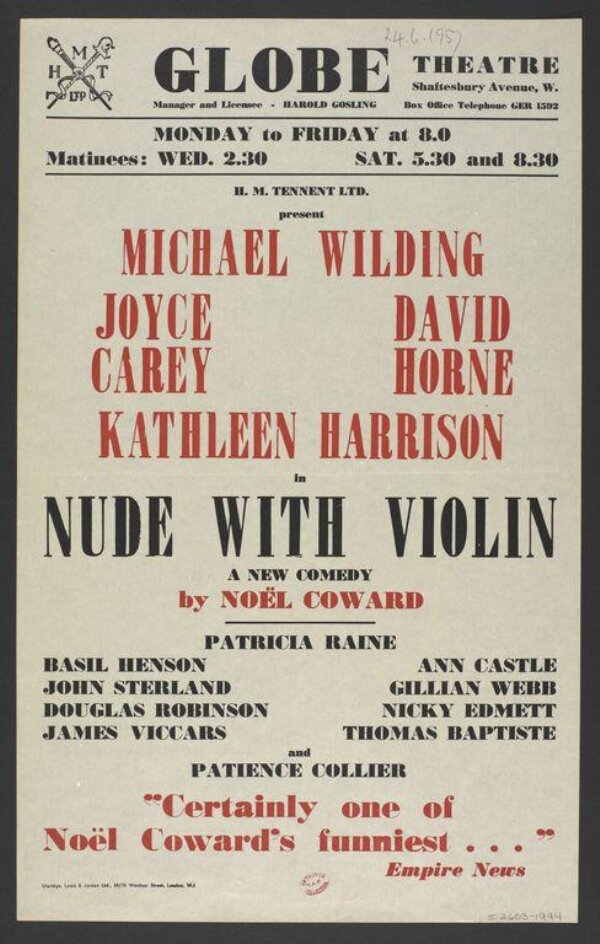
If Coward’s post-war plays had not much to offer her apart from Quadrille (with the Lunts), South Sea Bubble and Nude With Violin, Carey played Liz Essendine again on Broadway in 1958 and remained an important member of his entourage until his death in 1973. The entourage included, of course, the indomitable Beaumont, for decades the most powerful personality in the British theatre, who had given Carey her first chance as a playwright in the 1930s, and was now getting more anxious every minute about the changes taking place in post-war public taste.
Carey was never fazed by such changes. If she had no truck with the kitchen-sink drama she could count on a regular need for her style of ladylike comedy; and there were still plenty of ladies in the old-fashioned sense to be acted in the plays of Wilde, Dodie Smith, Pinero and Agatha Christie in which she could quietly express her dignity, wit and social authority.
This may never have matched her mother’s but it assured playgoers who still had a taste for that sort of thing of the status of the West End drawing-room.
Her own play had been written under the pseudonym of J. Mallory, called Sweet Aloes, which had a year’s run at Wyndham’s in 1934 and was a well-crafted if novelettish weepie with aristocrats getting girls ‘into trouble’. Tyrone Guthrie directed it for Beaumont in London and in New York and she herself took on the role of Lady Farrington in both cities. In New York the play nudged Rex Harrison’s career forward.
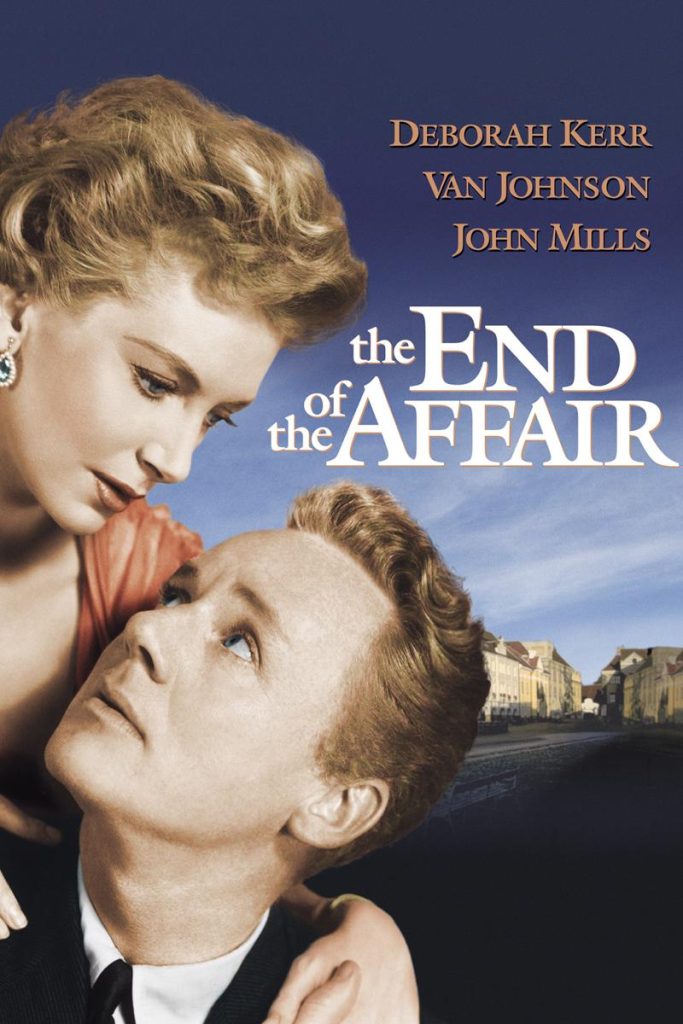
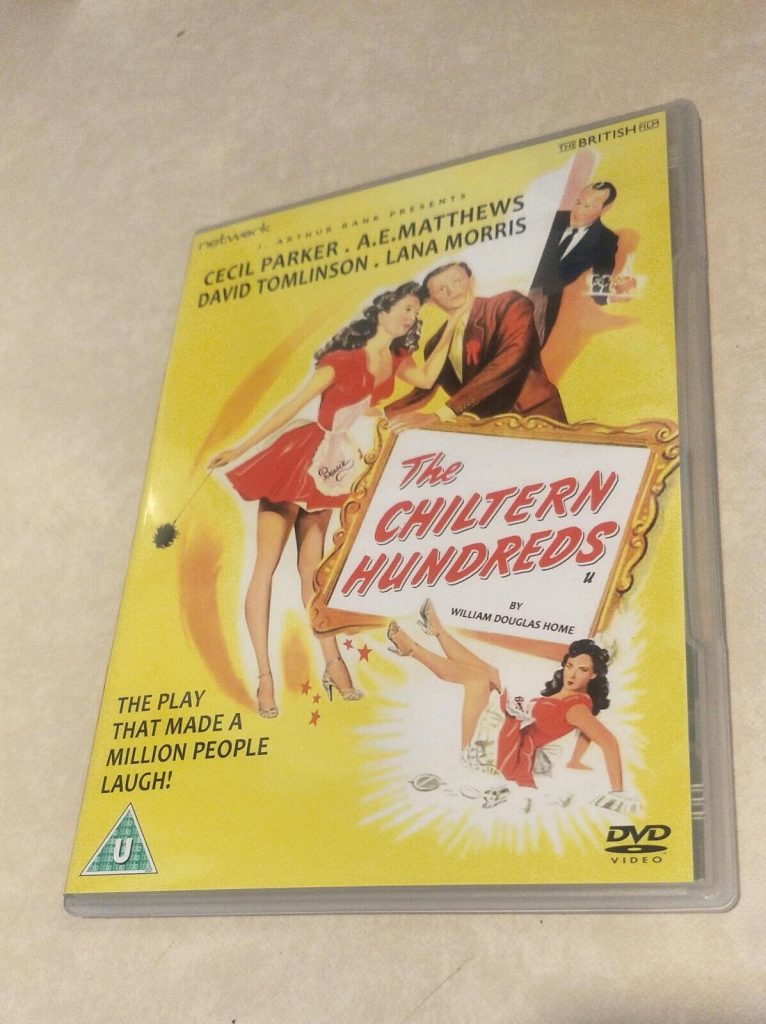
Apart from Brief Encounter, where that brief encounter with Stanley Holloway so pleasingly offset the gravity of the principals, her films, which had begun with silents in 1921, again reflected her affinity for Coward, including In Which We Serve (1942), Blithe Spirit (1945) and The Astonished Heart (1949), The Way To The Stars (1945), London Belongs To Me (1948), The Chiltern Hundreds (1949) and The End of the Affair (1954) – all sound English stuff.
But what could have been sounder than her choice of authors for her last two appearances on the London stage at the age of 90? The first was in a forgotten (because censored) piece by Coward, Semi-Monde from the 1920s, and the second was a similarly neglected work by Terence Rattigan, A Tale of Two Cities.
The above “Independent” obituary can also be accessed online here.
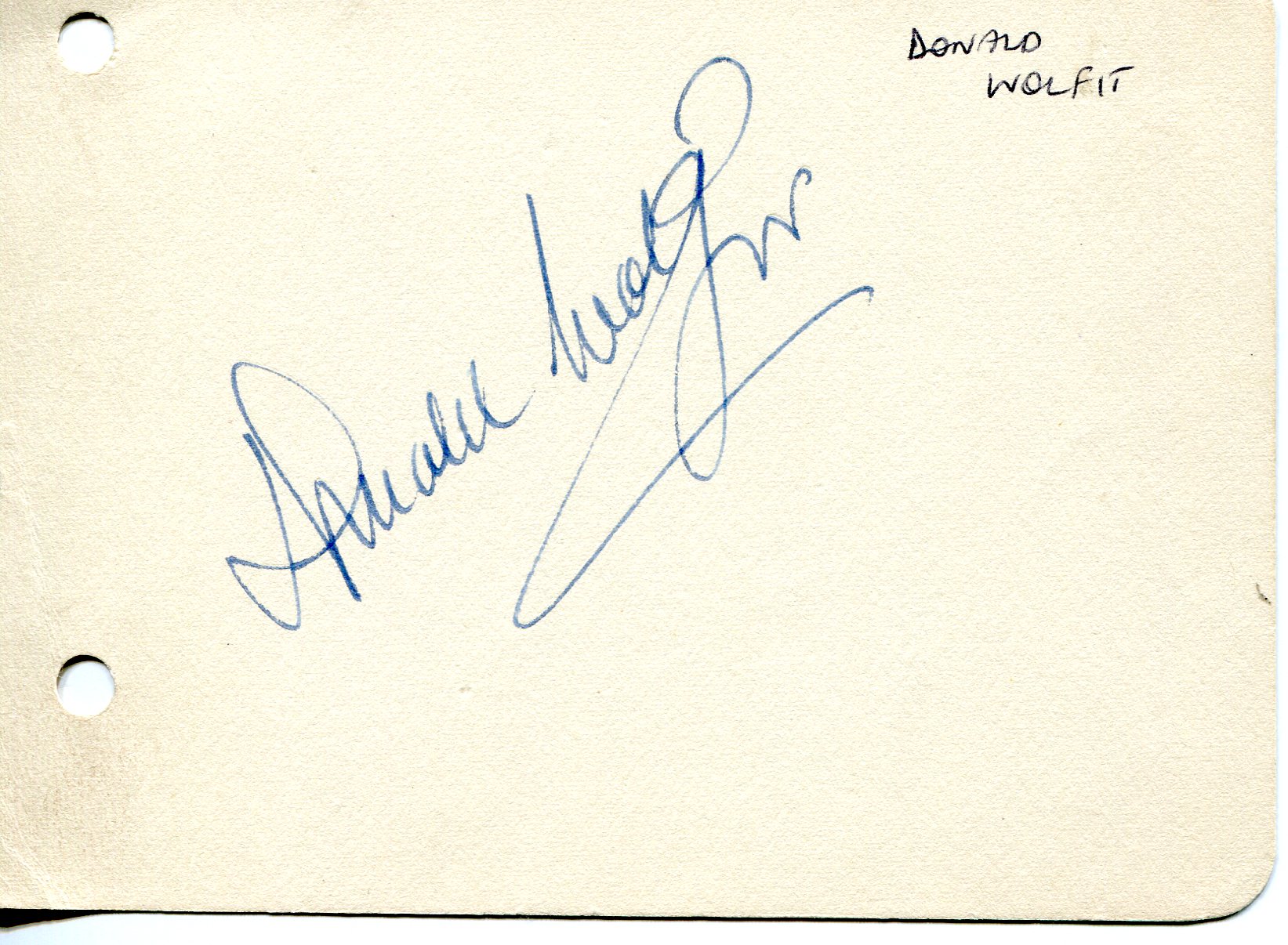
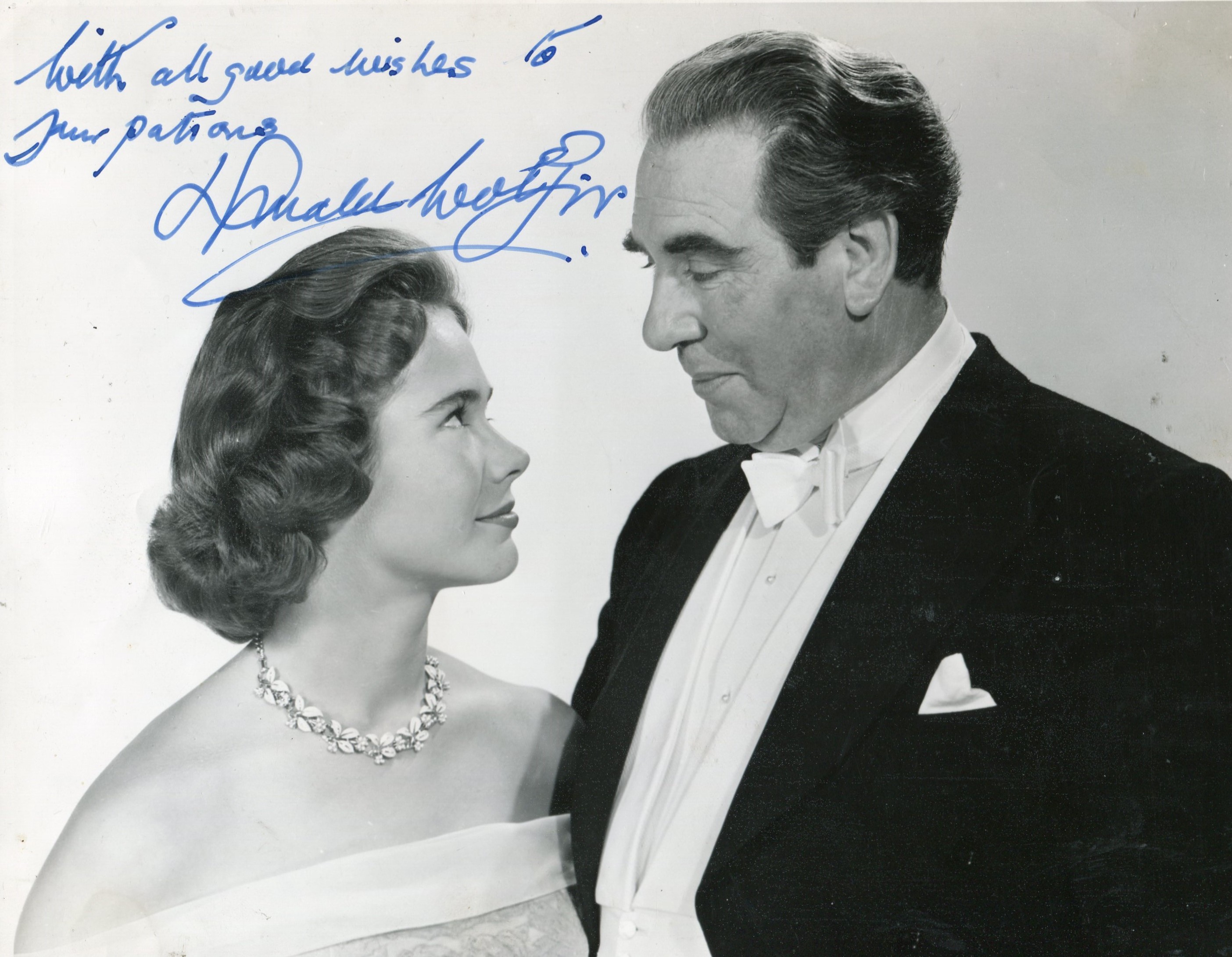
Donald Wolfit was born in 1902 in Nottinghamshire. He became well known in Britian as a travelling actor/manager specialising in the works of Shakespeare. His films include “The Ringer” in 1952, “Room at the Top” in 1959 and “Laurence of Arabia”. He died in 1968.
IMDB entry:
One of the great British stage actors of his era Donald Wolfit was noted for his magnificent portrayals of King Lear and Tamburlaine. Yet no actor of his generation was surrounded by more controversy. He was tempermental and difficult to deal with, enraged by criticism and tyrannical with the companies he led.
Although his talent was never in any doubt, critics often condemned his companies’ poor supporting players and tasteless costumes. Even in death he had his critics. When Ned Sherrin, who organised a BBC television tribute to him, asked Sir John Gielgud to participate, he replied “I couldn’t. You see we always regarded him as something of a joke.”
Wolfit appeared in numerous theatre seasons at the Old Vic and Stratford-upon-Avon but preferred the life of a touring player and as the star of a vagabond troupe. He also appeared in many films and television plays. One of his most barnstorming performances was in the title role of the film Svengali (1954) in which, with his hypnotic real-life stare, he puts Hildegard Knef into a permanent trance.
The money from his film work helped to finance many of his stage productions. Wolfit is best remembered today as the inspiration for the film The Dresser (1983), in which Albert Finney plays a barnstorming actor-manager.
– IMDb Mini Biography By: Patrick Newley
The above IMDB entry can also be accessed online here.
Laurence Naismith was born in Surrey in 1908. He gave many terrific supporting performances in British films especially in the 1950’s and 60’s. His movies of note include “I Believe in You” in 1952, as Captain Smith in “A Night to Remember” in 1958, “The Angry Silence” and “Sink the Bismarck”. In 1966 he went to Hollywood where he made such films as “The Scorpio Letters” and “Camelot”. He died in Australia in 1992.
IMDB entry:
The British charactor actor Laurence Naismith was a Merchant Marine seaman before becoming an actor. He made his London stage debut in 1927 in the chorus of the musical “Oh, Boy.” Three years later, he joined the Bristol Repertory and remained with them until the outbreak of World War II. After serving nine years in the Royal Artillery (with the final rank of Acting Battery Commander), Naismith returned to the stage and also made his film debut. His seafaring background came in handy in a number of film roles, including the steamboat captain in Mogambo (1953), Dr. Hawkins in Boy on a Dolphin (1957), the captain of the Titanic in A Night to Remember (1958), and the First Sea Lord in Sink the Bismarck! (1960). Naismith also made numerous television appearances, including the recurring roles of Judge Fulton on “The Persuaders” (1971) and Father Harris on “Oh Father” (1973) .