
European Actors

Collection of Classic European Actors

Marthe Keller
Marthe Keller
Marthe Keller

IMDB entry:

Keller’s earliest film appearances were in Funeral in Berlin (1966) (uncredited) and the German film Wild Rider Ltd. (1967). She appeared in a series of French films in the 1970s, including A Loser (1972), The Right of the Maddest (1973) and And Now My Love (1974) (And Now My Love, 1974). Her most famous American film appearances are her Golden Globe-nominated performance as Dustin Hoffman‘s girlfriend in Marathon Man (1976) and her performance as an Arab terrorist who leads an attack on the Super Bowl in Black Sunday (1977). Keller also acted with William Holden in the 1978 Billy Wilder film Fedora(1978). She appeared alongside Al Pacino in the auto racing film Bobby Deerfield (1977). Her later films included Dark Eyes (1987), with Marcello Mastroianni.

Keller has appeared in Europe and America in plays, directed opera and as a speaker on classical music in the last twenty years. For example, in 2001, Keller appeared in a Broadway adaptation of Abby Mann‘s play “Judgment at Nuremberg” as “Mrs. Bertholt” (the role played by Marlene Dietrich in the 1961 Stanley Kramer film version). She was nominated for a Tony Award as Best Featured Actress for this performance.

In addition to her work in film and theatre, Keller has developed a career in classical music as a speaker and opera director. She has performed the speaking role of “Joan of Arc” in the oratorio “Jeanne d’Arc au Bûcher of Arthur Honegger” on several occasions, with conductors such as Seiji Ozawa and Kurt Masur. She has recorded the role for Deutsche Grammophon with Ozawa (DG 429 412-2). Keller has also recited the spoken part in Igor Stravinsky‘s “Perséphone”. She has performed classical music melodramas for speaker and piano in recital. The Swiss composer Michael Jarrell wrote the melodrama “Cassandre”, after the novel of Christa Wolf, for Keller, who gave the world premiere in 1994. Keller’s first production as an opera director was “Dialogues des Carmélites”, for Opéra National du Rhin, in 1999. This production subsequently received a semi-staged performance in London that year. She has also directed “Lucia di Lammermoor” for the Washington National Opera and for the Los Angeles Opera. Her directorial debut at the Metropolitan Opera was in a 2004 production of “Don Giovanni”.

– IMDb Mini Biography By: Marthe Keller

Marthe Keller (born January 28, 1945, Basel, Switzerland) is a Swiss actress. She studied ballet as a child but stopped after a skiing accident at age 16. She changed to acting, and worked in Berlin at the Schiller Theatre and the Berliner Ensemble.[1] Keller’s earliest film appearances were in Funeral in Berlin (1966) (uncredited) and the German film Wild Rider Ltd. (1967). She appeared in a series of French films in the 1970s, including A Loser(1972), The Right of the Maddest (1973) and And Now My Love (1974) (And Now My Love, 1974). Her most famous American film appearances are her Golden Globe-nominated performance as Dustin Hoffman‘s girlfriend in Marathon Man (1976) and her performance as an Arab terrorist who leads an attack on the Super Bowl in Black Sunday (1977). Keller also acted with William Holden in the 1978 Billy Wilder film Fedora (1978). She appeared alongside Al Pacino in the auto racing film Bobby Deerfield (1977), and subsequently the two of them were involved in a relationship. Since then, Keller has worked more steadily in European cinema compared to American movies. Her later films include Dark Eyes (1987), with Marcello Mastroianni.[2] In 2001, Keller appeared in a Broadway adaptation of Abby Mann‘s play “Judgment at Nuremberg” as “Mrs. Bertholt” (the role played by Marlene Dietrichin the 1961 Stanley Kramer film version).[3] [4] She was nominated for a Tony Award as Best Featured Actress for this performance. In addition to her work in film and theatre, Keller has developed a career in classical music as a speaker and opera director. She has performed the speaking role of “Joan of Arc” in the oratorio “Jeanne d’Arc au Bûcher of Arthur Honegger” on several occasions, with conductors such as Seiji Ozawa[5] Kurt Masur[7]. She has recorded the role for Deutsche Grammophon with Ozawa (DG 429 412-2). Keller has also recited the spoken part in Igor Stravinsky‘s “Perséphone”[8] [9]. She has performed classical music melodramas for speaker and piano in recital.[10] The Swiss composer Michael Jarrell wrote the melodrama “Cassandre”, after the novel of Christa Wolf, for Keller, who gave the world premiere in 1994. Keller’s first production as an opera director was “Dialogues des Carmélites”, for the Opéra National du Rhin, in 1999. This production subsequently received a semi-staged performance in London that year.[11] She has also directed “Lucia di Lammermoor” for the Washington National Opera and for the Los Angeles Opera.[12] Her directorial debut at the Metropolitan Opera was in a 2004 production of “Don Giovanni”.[13] [14] [15] Keller has a son, Alexandre (born 1971), from her relationship with Philippe de Broca.

– IMDb Mini Biography By: A.Nonymous

The above IMDB entry can also be accessed online here.
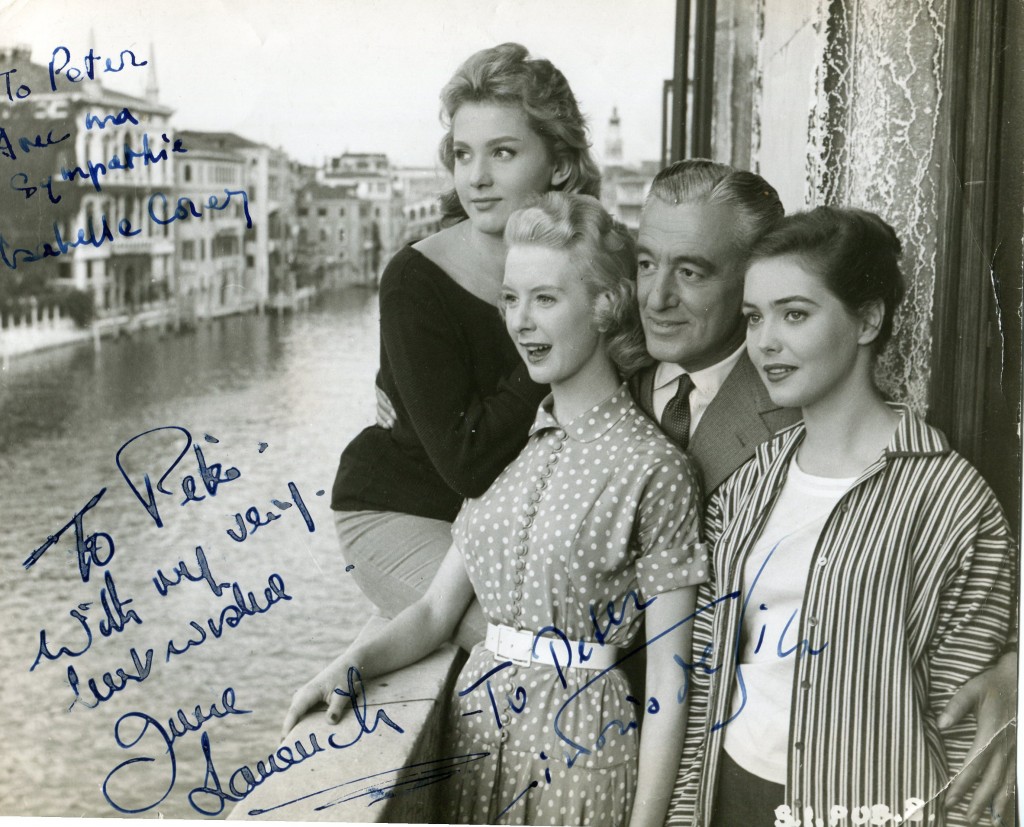
Isabelle Corey

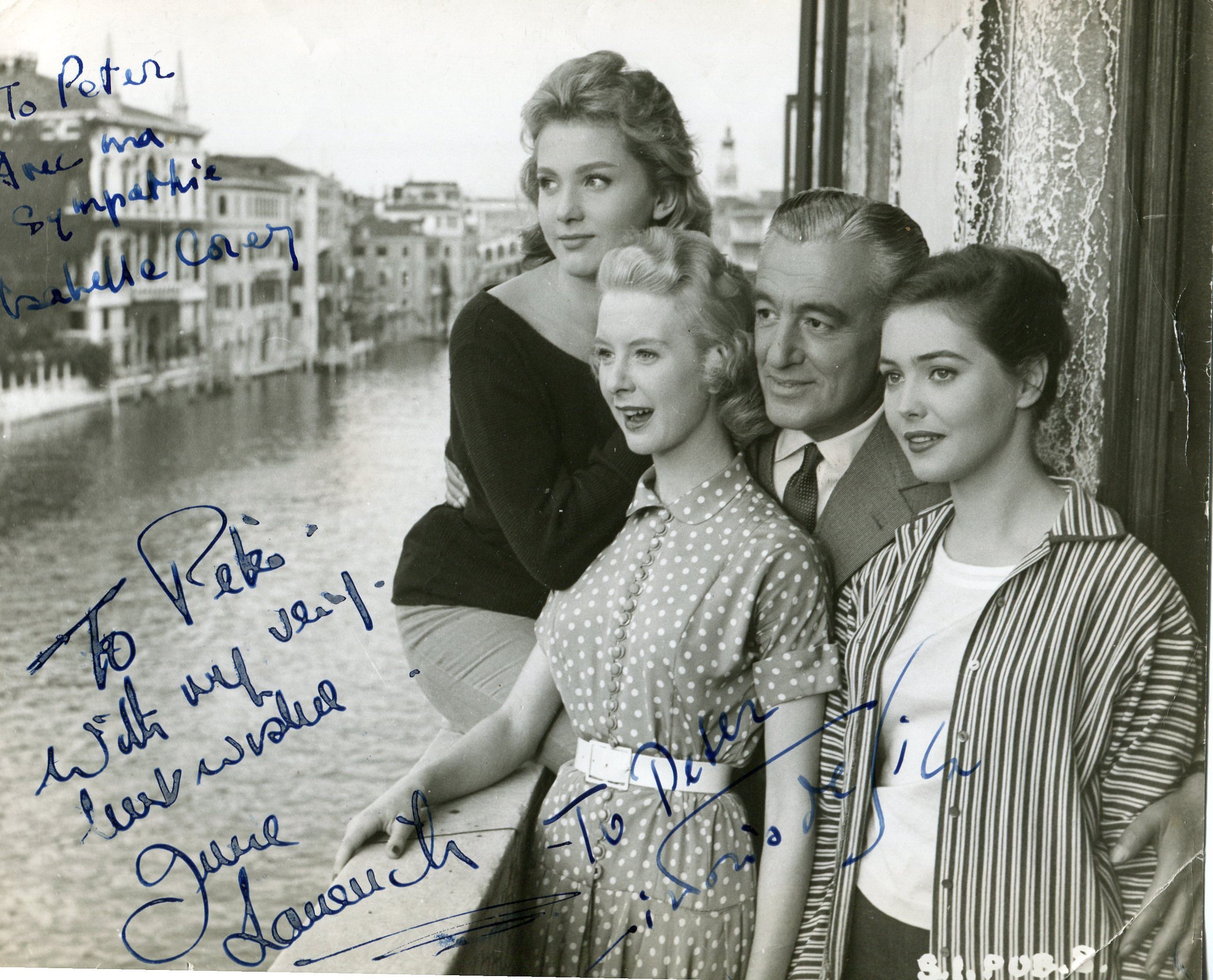
Vittorio de Sica, Isabelle Corey & June Laverick

Vittorio de Sica, Isabelle Corey & June Laverick


Isabelle Corey was born in Metz, France in 1939. She was discovered by directorJean-Pierre Melville, walking the streets of Montmartre. Her film debut was his film noir Bob le flambeur/Bob the Gambler (1956, Jean-Pierre Melville) starringRoger Duchesne as an old gangster and Corey played his young femme fatale, Anne. When Anne is down on her luck Bob takes her under his wing, hoping to steer her away from a life of prostitution. But Anne begins a love affair with Paulo (Daniel Cauchy), one of Bob’s young associates. Alice Liddel at IMDb writes: “Isabelle Corey is unprecedented among all film heroines, her amoral, seemingly indifferent sexuality far more suggestive and powerful than her contemporary, Bardot’s”. That same year Corey appeared opposite Brigitte Bardot

in the hit Et Dieu… créa la femme/And God created Woman (1956, Roger Vadim), which made a superstar of BB. James Travers writes at Films de France: “Vadim was so impressed with his work that he remade the film in the late 1980’s, but, lacking the presence of Bardot, the result was scarcely a patch on the original. The original Et Dieu… créa la femme succeeded, despite the shallowness of its subject matter, because it happened at just the right time. Its impact on French cinema can only be guessed at, but it was probably very considerable indeed”.

The following years Isabelle Corey played in several French-Italian coproductions, filmed in Italy. Among them were the romantic comediesVacanze a Ischia/Holiday Island (1957, Mario Camerini) with Vittorio de Sica,Souvenir d’Italie/It Happened in Rome (1957, Antonio Pietrangeli), and Adorabili e bugiarde/Adorable and a Liar (1958, Nunzio Malasomma). More interesting were the comedies Giovani mariti/Young Husbands (1958, Mauro Bolognini) based on a screenplay by Pier Paolo Pasolini, and Amore a prima vista/Love at First Sight(1958, Franco Rossi) with Walter Chiari. Three years later, she reunited with director Mauro Bolognini for La Giornata balorda/A Crazy day (1961, Mauro Bolognini) which featured Jean Sorel

and Lea Massari. Again the script was written by Pier Paolo Pasolini, before he became a director himself. It is a black-and-white film about the lower class of Rome, based on a novel by Alberto Moravia. Corey then worked with the future horror master Mario Bava at the peplum spectacle L’Ultimo dei Vikinghi/Last of the Vikings (1961, Giacomo Gentilomo, Mario Bava) starring Cameron Michell in the good-guy role and Edmund Purdom as the mincing, giggling villain. That year she also worked with maestro Roberto Rossellini on the costume dramaVanina Vanini/The Betrayer (1961, Roberto Rossellini) starring Sandra Milo andLaurent Terzieff. This is her last film according to IMDb. Rovi also lists the Italian/Spanish peplum Il Gladiatore Invincibile/Invincible Gladiators (1963, Alberto de Martino, Robert Mauri) with Richard Harrison. After only 16 films Isabelle Corey’s film career was over.

Trailer for Bob le flambeur/Bob the Gambler (1956). Source: CynicalC1 (YouTube).

Sources: James Travers

(Films de France), RoviWikipedia

and IMDb.

The above entry can be accessed online here.

Vittorio de Sica
Vittorio de Sica, Isabelle Corey & June Laverick

TCM Overview:

Italian director Vittorio De Sica was also a notable actor who appeared in over 100 films, to which he brought the same charm and brightness which infused his work behind the camera.

By 1918, at the age of 16, De Sica had already begun to dabble in stage work and in 1923 he joined Tatiana Pavlova’s theater company. His good looks and breezy manner made him an overnight matinee idol in Italy with the release of his first sound picture, “La Vecchia Signora” (1931). De Sica turned to directing during WWII, with his first efforts typical of the light entertainments of the time. It was with “The Children are Watching Us” (1942) that he began to use non-professional actors and socially conscious subject matter. The film was also his first of many collaborations with scenarist Cesare Zavattini, a combination which shaped the postwar Italian Neorealist movement.

With the end of the war, De Sica’s films began to express the personal as well as collective struggle to deal with the social problems of post-Mussolini Italy. “Shoeshine” (1946), “The Bicycle Thief” (1948) and “Umberto D” (1952) combined classic neorealist traits–working-class settings, anti-authoritarianism, emotional sincerity–with technical and compositional sophistication and touches of poignant humor.

De Sica continued his career as an actor with sufficient success to finance some of his directorial projects, playing a host of twinkling-eyed fathers and Chaplinesque figures in films such as “Pane, amore e gelosia” (1954). His later directorial career was highlighted by his work with Sophia Loren and Marcello Mastroianni in “Yesterday, Today & Tomorrow” (1963), which won the Oscar as best foreign film. After a period of decline in which he came to be perceived as a slick, rather tasteless master of burlesque, De Sica resurfaced with “The Garden of the Finzi-Continis” (1971), a baroque political romance which won him another Oscar for best foreign film.

Active to the end, De Sica appeared as himself in Ettore Scola’s “We All Loved Each Other So Much” (1975), which was released after his death.

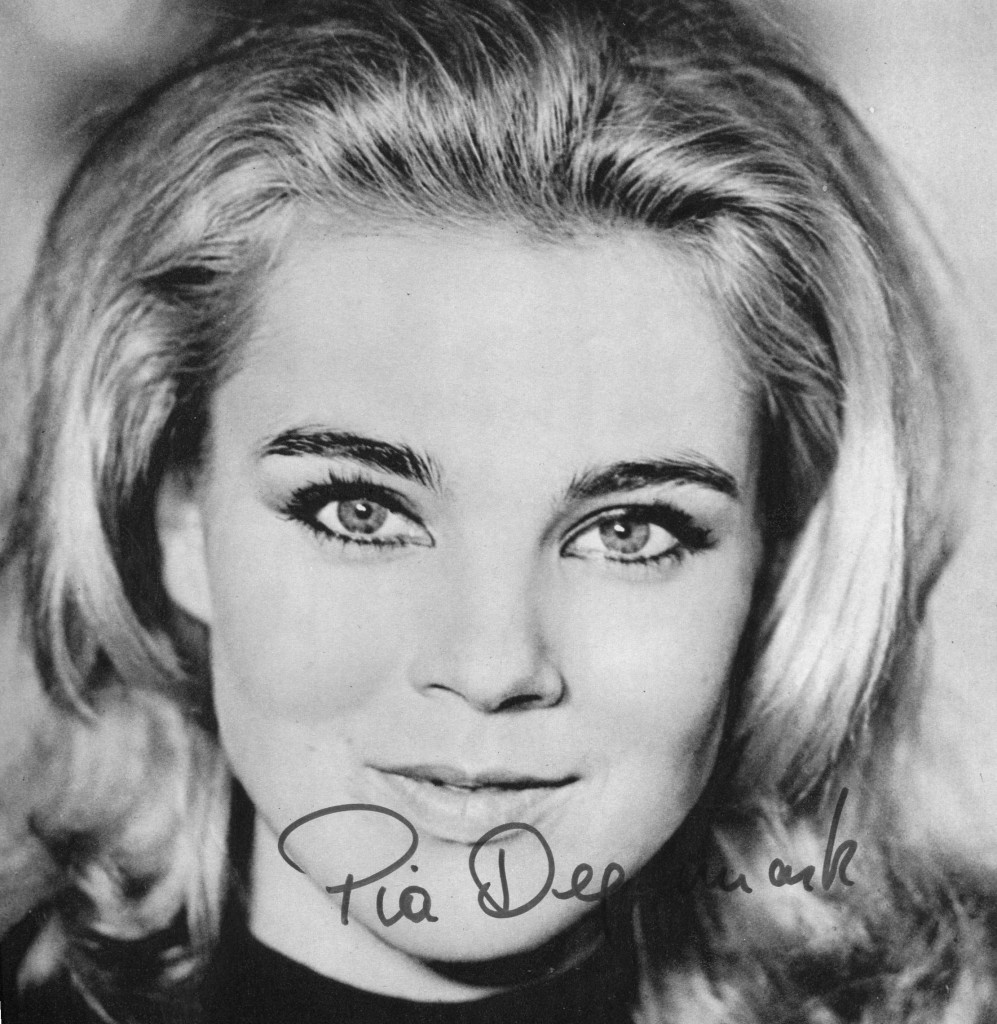
Pia Degermark
Pia Degermark
Pia Degermark

Pia Degermark was born in 1949 in Stockholm.   She is best know for her performance in the title role in “Elvira Madigan” in 1967.   Her only other major movie role was “The Looking Glass War” with Christopher Jones in 1969.

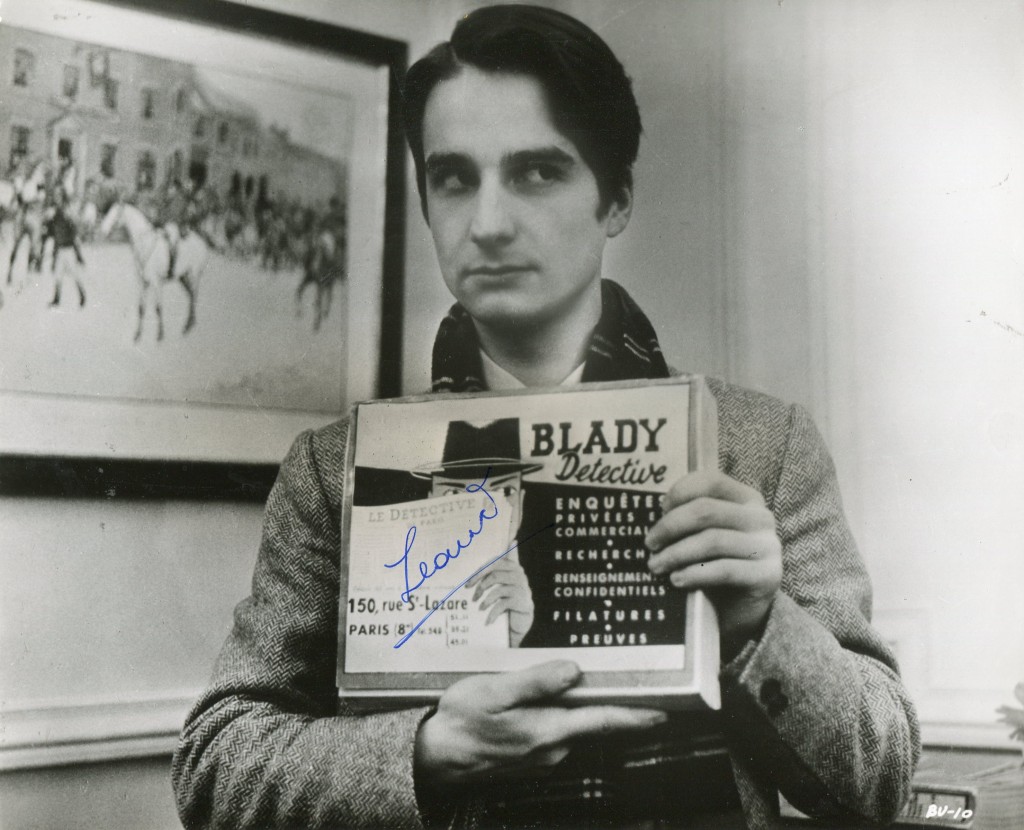
Jean-Pierre Leaud
Jean-Pierre Leaud
Jean-Pierre Leaud

Jean-Pierre Leaud was born in 1944 in Paris.   He first came to fame as a boy actor in 1959 in “The 400 Blows” in 1959 which was directed by Francois Truffaut.   He became associated with the films of Truffaut including “Bed and Board” in 1970 and “Two English Girls” and especially in 1973, “Day For Night”.   He also made many films with Jean-Luc Goddard.

TCM overview:

n his first major film role as Antoine Doinel, Jean-Pierre Leaud exhibited a mature command as an unloved youth who turns petty thief in Francois Truffaut’s memorable classic “The Four Hundred Blows” (1959). The film’s final frozen image of Leaud’s round face staring at the camera with a mixture of humor and confusion has become a familiar screen image. Truffaut went on to direct the actor in six additional films, four of which detailed the further adventures of Doinel. Leaud matured into a lanky, sharp-featured but furtive man. Over the course of the series, he proved to be a modest talent with his initial performance the best. As Leaud matured along with the character of Doinel, he demonstrated his limitations, playing against the sentimentality of “Stolen Kisses” (1968) and lending an almost cold presence to “Bed and Board” (1970, easily the weakest of the entries in the series). The final installment, “Love on the Run” (1979), was a modest effort. Despite having allied himself with Truffaut (Leaud also gave adequate performances in 1971’s “Two English Girls” and 1973’s “Day For Night”), the actor also forged working relationships with several of the key figures of the New Wave, most notably Jean-Luc Godard. “Masculin-Feminin” (1966) offered Leaud a role not dissimilar for Doinel, a hopeless romantic searching for true love. He received some notice as the callow central figure in a love triangle in “La Maman et la putain/The Mother and the Whore” (1973). But after Truffaut’s untimely death, Leaud seemingly lost interest while continuing to work. Reportedly dealing with personal problems, he became a much more haunted screen presence, often cast as filmmakers (e.g., Godard’s “The Rise and Fall of a Small Film Company” 1986; Olivier Assayas’ “Irma Vep” 1996) or neurotics (i.e., the father in “Paris at Dawn” 1991). The eternal question posed at the end of “The Four Hundred Blows” seems as appropriate in the 90s as it did in 1959: what was to become of this person? It is one only time could answer.

 The above TCM overview can also be accessed online here.
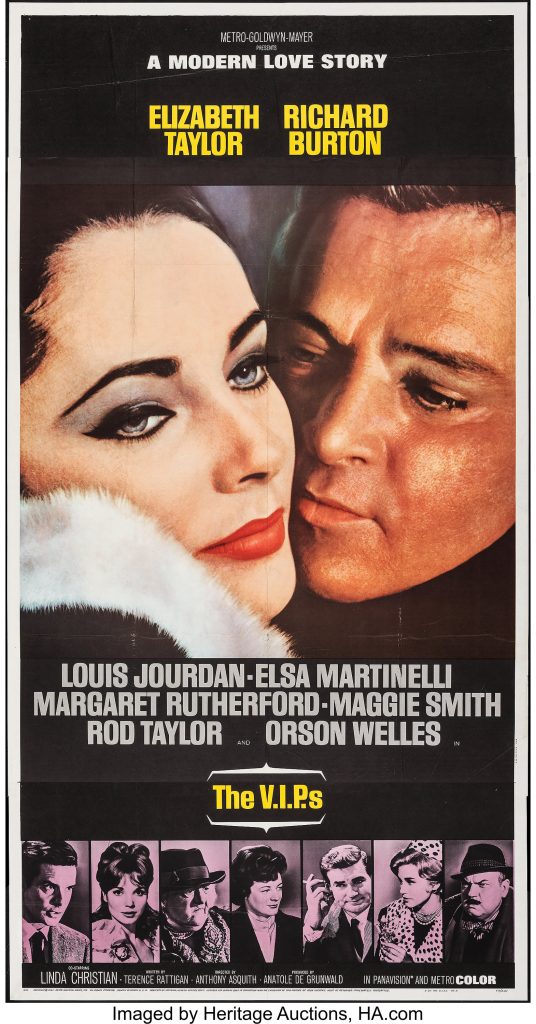
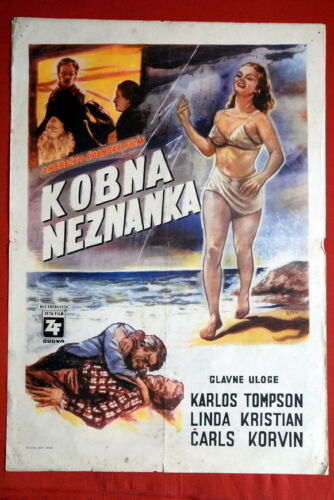
Linda Christian
Linda Christian
Linda Christian
Edmund Purdom & Linda Christian
Linda Christian
Linda Christian
Linda Christian
Linda Christian

Ronald Bergan’s “Guardian” 2011 obituary:

The phrase “famous for being famous” could have been invented for Linda Christian, who has died aged 87. Her celebrity came from her marriages to the handsome film stars Tyrone Power and Edmund Purdom, and her liaisons with various wealthy playboys and bullfighters, rather than her somewhat limited acting ability.

Christian’s extravagant, cosmopolitan lifestyle derived from her stunning beauty – she was dubbed “The Anatomic Bomb” by Life magazine – and her ability to speak fluent French, German, Dutch, Spanish, Italian and English. She was born Blanca Rosa Welter in Tampico, Mexico, the daughter of a Dutch executive at Shell, and his Mexican-born wife of Spanish, German and French descent. As the family moved around a great deal, living in South America, Europe, the Middle East and Africa, she gained a taste for globetrotting.

Christian’s early ambition was to become a doctor, but after winning a beauty contest and meeting Errol Flynn in Acapulco, she was persuaded to try her luck in films in the US. She was soon cast as a Goldwyn Girl in the actor Danny Kaye’s first feature film, Up in Arms (1944), and as a cigarette girl in Club Havana (1945), directed by Edgar G Ulmer. Then, with her name changed to Linda Christian, she signed a contract with MGM, which gave her a small decorative role in the musical Holiday in Mexico (1946), shot in Hollywood, and an exotic one in Green Dolphin Street (1947), as Lana Turner’s Maori maid.

At the time, Turner was having an affair with Power. Rumour has it that Christian overheard Turner say when Power was going to be in Rome. Christian decided to fly to Rome, stay at the same hotel and wangle a meeting with the dashing star. A romance led to Christian and Power getting married in January 1949 at a church in Rome while an estimated 8,000 screaming fans lined the street outside.


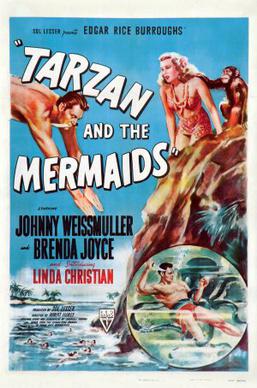
Prior to the marriage, the only substantial role MGM had given Christian was as an island girl rescued by Tarzan from the clutches of an evil high priest in Tarzan and the Mermaids (1948), the 12th and final time Johnny Weissmuller played the Ape Man. Christian, wearing a skimpy two-piece costume, is referred to as a mermaid because she swims a lot.

After marrying Power, Christian started to get a few leading roles in B-pictures such as Slaves of Babylon (1953), co-starring Richard Conte. More gratifying was her sitting for a portrait by the great Mexican artist Diego Rivera. The painting, reproduced on the cover of her autobiography, Linda (1962), and for which she was once offered $2m, is now in a private collection.

In 1954, Christian played Valerie Mathis, James Bond‘s former lover now working for the French secret service, in a CBS television version of Ian Fleming’s Casino Royale, therefore allowing her to lay claim to being the first Bond girl. At this time, the movie fan magazines were full of photos of Power and Christian as a blissfully married couple with two daughters, while the gossip columns intimated that both husband and wife had strayed. In 1954, Christian played Purdom’s snooty fiancee in the MGM musical Athena. Christian had been at the same school as Purdom’s wife, the former ballerina Anita Phillips, and the Powers and the Purdoms became good friends, even going on holidays together. But soon sexual jealousy broke up the once cosy foursome. In 1956, Christian divorced Power, charging mental cruelty.

After the divorce, there was no shortage of millionaires to help keep Christian in the manner to which she was accustomed. Once she was called to testify at a Los Angeles court because she refused to return jewels given to her by the socialite Robert H Schlesinger, whose cheque for $100,000, as partial payment for the jewels, had bounced. Christian was also involved with the racing driver Alfonso de Portago, with whom she was photographed a short while before he died in a crash at the 1957 Mille Miglia car race, in which several spectators were also killed. That year, she and the Brazilian mining millionaire Francisco “Baby” Pignatari went on an around-the-world tour together. In 1962 she married Purdom. They divorced the following year.

Christian continued to appear in routine films such as The Devil’s Hand (1962), as a seductive high priestess of voodoo, opposite her real-life sister Ariadna Welter. In Francesco Rosi’s semi-documentary The Moment of Truth (1965), she played herself as an American in Barcelona who attracts a matador (the bullfighter Miguel Mateo Miguelín). During the filming, she fell for the bullfighter Luis Dominguín, the former lover of Ava Gardner.

In 1968, Christian retired to Rome. She returned to cinema almost 20 years later, at the age of 64, in a couple of dreadful Italian thrillers.

She is survived by her daughters, Taryn and Romina Power.

• Linda Christian (Blanca Rosa Welter), actor, born 13 November 1923; died 22 July 2011

The Guardian obituary for Linda Christian:

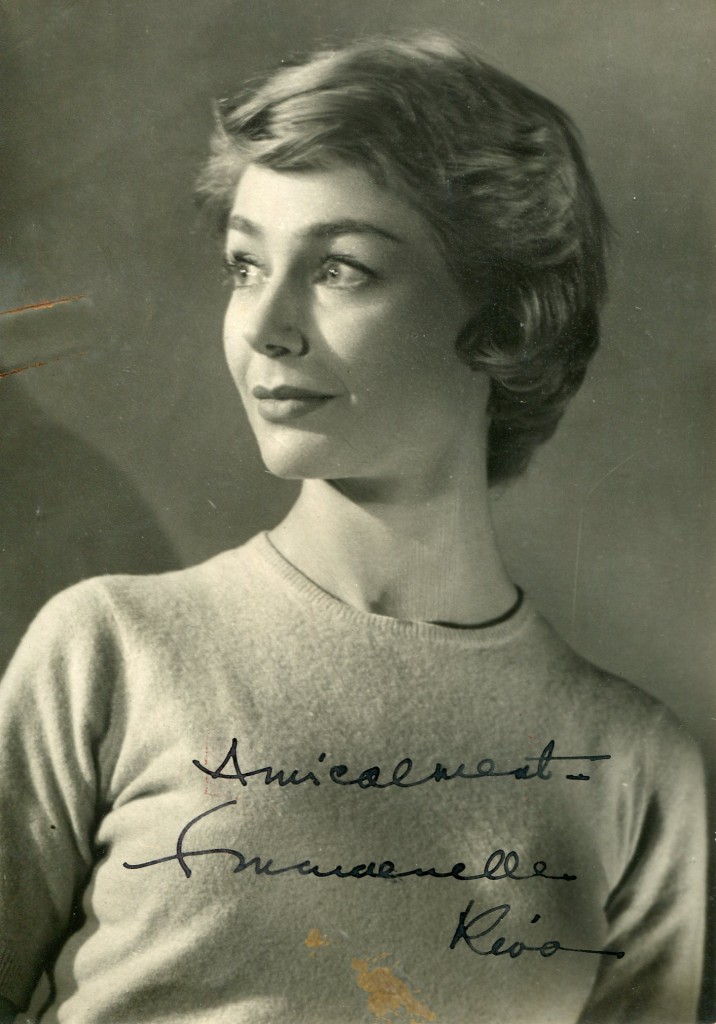
Emmanuelle Riva
Emmanuelle Riva
Emmanuelle Riva

Emmanuel Riva obituary in “The Guardian” in 2017.

For her brave, unsentimental performance as an elderly woman agonisingly declining physically and mentally in Michael Haneke’s Amour (2012), Emmanuelle Riva, who has died aged 89, became the oldest best actress Oscar nominee ever, at 85. It was more than half a century since Riva’s soothing cadenced voice and delicate features had dominated Alain Resnais’ masterful Hiroshima Mon Amour (1959).

In that film, the voice of Riva as Elle is first heard over horrific newsreel images of the victims of the atom bomb, and it is almost 10 minutes into the film before we see her in the arms of her Japanese lover (Eiji Okada), called simply Lui. She is a French actor in Hiroshima, he is an architect. The repeated phrases of their dialogue echo throughout the film written by Marguerite Duras. He says: “You saw nothing in Hiroshima. Nothing.”

She replies: “I saw everything. I imagined nothing.” He retorts: “You imagined everything.” Riva’s performance is both symbol and reality. She both represents France and a woman trying to come to terms with the tragedy of the Japanese man’s city while recalling her love for a German soldier in Nevers during the war.Advertisement

Interviewed in 1959 after the film’s premiere, Riva said with some foresight, “The film has probably spoiled me because I think I’m now going to be disappointed in anything that follows.” Thus, whatever she did subsequently, until Amour came along, she would always be measured by her role in Hiroshima Mon Amour. Yet few actors could claim to have worked with such a range of radical directors: Resnais, Haneke, Georges Franju, Marco Bellocchio, Philippe Garrel, Gillo Pontecorvo, Jean-Pierre Mocky, Jean-Pierre Melville, Fernando Arrabal and Krzysztof Kieslowśki.

Born Paulette Riva in Cheniménil, Alsace-Lorraine, to René Riva, an Italian-born sign writer, and his wife, Jeanne (nee Nourdin), she began working, like her mother, as a seamstress for a dressmaker. However, she decided to realise her ambitions to become an actor after appearing with an amateur company, despite her father’s opposition.

She arrived in Paris in 1953 hoping to study at the Conservatoire National d’Art Dramatique. At 26, however, she was considered too old to apply for a grant. But she was able to attend the celebrated Centre d’Art Dramatique at 21 rue Blanche, under Jean Meyer. (More than 20 years later, Riva played Natalya Petrovna to Meyer’s Doctor Shpigelsky in a TV production of Turgenev’s A Month in the Country.)

She got her first break in the theatre in Paris as Raina in George Bernard Shaw’s Arms and the Man, which was followed by her Vivie in Shaw’s Mrs Warren’s Profession, and further parts in Luigi Pirandello’s Naked and Gorky’s Children of the Sun. When Resnais cast her in Hiroshima Mon Amour, Riva claimed, at 32, that it was the first part she had been given as “a real woman and not a young girl”. It counts as her first screen role, though she had previously had a small uncredited part as a secretary in The Possessors (Les Grandes Familles,1958), starring Jean Gabin.

After Hiroshima Mon Amour, she was much in demand and made about two films a year during the 1960s. Often called “intellectual”, she contributed to this image by refusing star status and being very selective in her artistic choices. Although introverted as a performer, she often played a tragic woman of passion.

She shone in Pontecorvo’s Kapo (1960) as a woman in a concentration camp who kills herself by running into an electrified fence. In Léon Morin, Priest (Léon Morin, Prêtre, 1961), she is the atheist widow who falls in love with the Catholic priest (Jean-Paul Belmondo) in rural France during the occupation. Melville’s quietly polemical film explores their ideology through a series of discussions, beautifully modulated in a restrained manner by Riva and Belmondo.

In Franju’s Thérèse Desqueyroux (1962), an updated version of François Mauriac’s 1927 novel of the same name, Riva plays a woman who, stifled by provincial life and a dull marriage, decides to poison her boring but inoffensive husband (Philippe Noiret). Her subtle portrayal of the psychological and physical deterioration of Thérèse won her the Volpi cup for best actress at the Venice film festival.

Also for Franju, she appeared as an aristocratic widow who helps the wounded during the second world war in Thomas the Impostor (Thomas l’Imposteur, 1964), from the Jean Cocteau’s 1923 novel. She was also effective as the wife of a teacher (Jacques Brel), accused of the rape of three pupils in André Cayatte’s Risky Business (Les Risques du Metier, 1967). One of her most bizarre enterprises was Arrabal’s I Will Walk Like a Crazy Horse (J’Irai Comme un Cheval Fou, 1972) in which Riva, seen in surreal flashbacks, played a domineering mother murdered by her son.

Gradually, Riva began to accept supporting roles in films and on television, and returned occasionally to the theatre. Among her more interesting films were Mocky’s Is There a Frenchman in the House? (Y a-t-il un Français dans la Salle?,1982), Bellocchio’s The Eyes, the Mouth (Gli Occhi, la Bocca, 1982) and Garrel’s Liberty at Night (Liberté, La Nuit, 1983), in which she played an abandoned wife moving towards politics during the Algerian war.

In Kieslowśki’s Three Colours: Blue (Trois Couleurs: Bleu, 1993), there is a memorable homage sequence when the grief-stricken Juliette Binoche, whose mother Riva plays, scrapes her knuckles against a stone wall she passes, as Riva does in a similar scene in Hiroshima Mon Amour.

In 1997, she won great praise for her performance in Jorge Lavelli’s staging of José Sanchis Sinisterra’s Le Siège de Léningrad at the Théâtre National de la Colline in Paris, and in 2001, she was seen as The Chorus in a TV production of Euripides’ Médée with Isabelle Huppert in the title role.

In Amour, retaining a certain fragile beauty, she put the acting experience of a long lifetime into the character of the partially paralysed Anne, to Jean-Louis Trintignant’s devoted husband Georges, with Huppert as their daughter.

In contrast, this was followed by small film roles in light comedies such as a medium, distant and yet reassuring, in A Greek Type of Problem (Tu Honoreras Ta Mère et Ta Mère, 2013) and an eccentric aunt on the run in Lost in Paris (Paris Pieds Nus, 2016). In February 2014, Riva returned to the Paris stage, performing in Savannah Bay by Duras at the Théâtre de l’Atelier, a reunion with the avant-garde writer more than 50 years after Hiroshima Mon Amour.

Riva, who never married, once said: “I had dozens of marriage proposals, I refused them all. Why would I tie myself down with a husband and children?”

• Emmanuelle Riva (Paulette Germaine Riva), actor, born 24 February 1927; died 27 January 2017Topics