
Hollywood Actors

Collection of Classic Hollywood Actors

Elvis Presley
Elvis Presley
Elvis Presley

Dubbed “The King of Rock n’ Roll,” Elvis Presley transcended multiple musical genres and entertainment mediums, ultimately becoming a global phenomenon – the 20th Century personification of America’s great potential, mirrored by its predisposition for self-destruction. As a teenager, Presley was discovered by Sam Phillips at Memphis’ famous Sun Studio, home of other future musical giants like Jerry Lee Lewis and Johnny Cash. A scant three years later, under the Svengali-like guidance of manager “Colonel” Tom Parker, the young singer exploded onto the national stage with a series of controversial TV appearances, culminating with three star-making guest spots on “The Ed Sullivan Show” (CBS, 1948-1971). The making of hit singles such as “Heartbreak Hotel” and movie roles in films like “Jailhouse Rock” (1957) were temporarily sidelined when the hip-shaking heartthrob was drafted into the U.S. Army for two years in 1958. After his triumphant return in 1960, Presley soon shifted his focus from music and live performances to his work in film. For almost 10 years, he would churn out nearly 30 films – which began a steady decline in quality by the mid-1960s – as his once prolific and groundbreaking recording career lost the relevance it had previously enjoyed. With his mesmerizing comeback in the televised special “Elvis” (NBC, 1968), Presley reinvented himself and rediscovered his passion for live performance. His historic globally broadcast live concert “Elvis: Aloha from Hawaii” (1973) would be the pinnacle of a career that had already exceeded existing perceptions of fame and success. Sadly, the years that followed saw Presley’s physical and emotional state deteriorate due to the shocking pharmacopeia he had for so long relied upon to meet the grueling demands of constant touring. When Presley died at the age of 42 in August of 1977, it was simultaneously the end of a career unlike anything the world had ever known and the beginning of a true cultural icon.

Born Elvis Aaron Presley on Jan. 8, 1935 in Tupelo, MS, Presley grew up an only child, his twin brother Jesse Garon having died at birth, a fact that was interpreted by mother Gladys as a divine omen foreshadowing her son’s destiny. When he was three, his father Vernon served an eight-month prison term for writing bad checks, and thereafter, the senior Presley’s erratic employment kept the family just above the poverty level. The Pentecostal services attended by the Presleys first exposed the young Elvis to music, and his fifth place finish at the Mississippi-Alabama Fair and Dairy Show for a rendition of Red Foley’s “Old Shep” was the first indication that singing would play a major role in his life. The family’s move to Memphis, TN in 1948 soon placed him in the ideal environment to forge his distinctive style. Hanging around the city’s historic Beale Street, Presley absorbed the blues and gospel music he heard at the all-night clubs and eventually bought clothes that reflected the milieu. Further influenced by his new surroundings, Presley grew out his hair in a slicked-back pompadour, presaging the rebel image he would be known for years later. While at Memphis’ L.C. Humes High School, he entered a student talent show and was buoyed by the enthusiastic response his performance generated. After graduating from high school, Presley worked for a period at a local machine shop. Later that summer he stopped by Sun Studio to record a demo of two songs, which he planned to give to his mother as a belated-birthday gift. Although Sun owner Sam Phillips was not present at this first recording, the two would meet several months later when Presley returned. Although unsure of what to do with his untrained performance style, Phillips was intrigued by what he saw and heard in the young man.

In the summer of 1954, Phillips teamed the young Presley with local musicians Scotty Moore on guitar, and Bill Black on bass, for a series of recording sessions. Although he was initially unimpressed by the results, Phillips took notice when the trio spontaneously launched into an improvisational, sped-up version of Arthur “Big Boy” Crudup’s “That’s All Right.” The song, accompanied by a rendition of “Blue Moon of Kentucky” would become the first of five singles for the Sun label. Throughout the remainder of the summer, Presley, Moore and Black toured locally throughout the South and their singles enjoyed moderate success. That fall, after a disappointing performance at the venerated Grand Ole Opry, Presley and his band mates began appearing on “The Louisiana Hayride” radio broadcasts out of Shreveport’s KWKH. It was during his association with Hayride that Elvis met “Colonel” Tom Parker, a promoter and manager for country music star Hank Snow. Gradually, over the course of that year’s touring schedule, Parker would become more and more involved with Elvis’ career. By the summer of 1955, the crafty Colonel had signed a deal that made him Presley’s sole manager – a position that, for better or worse, he would maintain until the star’s death. As Presley’s popularity grew, so too did the interest of major record labels in signing him. In October of that year, Parker brokered a deal that sold the singer’s Sun recording contract – and the rights to the previously recorded material at Sun – to RCA Victor for an unprecedented $40,000. Of the young artists at the forefront of the new “rockabilly” wave of music, Presley was by far the most charismatic and popular.

In January of 1956, Presley recorded his first album with RCA. Among the tracks laid down during the session was the future signature hit single “Heartbreak Hotel” – which would soon become the performer’s first gold record. Presley made his national TV debut on the Dorsey Brothers’ “Stage Show” (CBS) on Jan. 28, 1956, followed soon by six consecutive appearances on the series. With his self-titled debut album climbing the charts, Presley undertook a two-week engagement at the New Frontier Hotel in Las Vegas – an early engagement that was not well-received by the older, conservative crowd – prior to two appearances on “The Milton Berle Show” (NBC, 1948-1956) that summer. It was his second performance on the show, during which Presley launched into a wild pelvic gyration while performing his hit song “Hound Dog,” that sparked nationwide controversy and charges of lewdness by several entertainment critics. After that great arbiter of American good taste, Ed Sullivan, vowed never to have “Elvis the Pelvis” on his show, Presley took his act to Sullivan’s competition, “The Steve Allen Show” (NBC, 1956-1960). Although the singer did not appreciate being asked to sing his new hit song alongside an actual basset hound – dressed in a tuxedo, no less – Presley good-naturedly went along, and the performance drew huge ratings. By now Sullivan realized he had been scooped by Berle and Allen. In an about-face, he invited Presley to appear on “The Ed Sullivan Show” (CBS, 1948-1971) for three appearances, for which the singer received an astonishing $50,000. His first appearance on the variety show broke ratings records. When Presley returned to Tupelo to perform again at the Mississippi-Alabama Fair and Dairy Show, National Guardsmen were called in to assist with crowd control. In the fall of that year, Presley’s first film “Love Me Tender” (1956) premiered, with both the movie and corresponding soundtrack becoming certifiable hits. In January 1957, he made his third and final appearance on the Sullivan show, during which he was famously filmed only from the waist up. After the performance, Sullivan gave Presley his official seal of approval when he announced on air that Elvis was “a decent, fine boy.”

Elvis mania was in full bloom, not only across America, but as far abroad as the Soviet Union, where rumors began to circulate that Presley’s records were being sold on the black market. His first three singles released in early 1957 all went to No. 1, as he completed filming his second feature film “Loving You” (1957), and continued to perform live for throngs of increasingly hysterical teenage girls. In the spring of that year, Presley purchased Graceland manor in Memphis, in which he and his parents would reside. His third film, “Jailhouse Rock” (1957) – featuring the iconic cellblock title song performance that would be the precursor for MTV music videos some 30 years later – went on to become an even bigger box-office success than “Loving You,” with the EP for the title song also reaching No. 1 on the charts. Rioting at Presley’s concerts was now commonplace, drawing the derision of such established musical luminaries as Frank Sinatra over rock-and-roll in general. Near the end of the year, he received his official draft notice from the U.S. Army; something he and his family knew had been inevitable for some time. Given a deferment before being inducted, Presley filmed and recorded the soundtrack for his fourth film, “Kid Creole” (1958), a movie that would become largely regarded as the singer’s most accomplished and promising cinematic performance. In March 1958, he began basic training at Fort Hood, TX, after a much publicized induction process during which he was photographed getting his famous pompadour buzzed. Despite his fears that his time away from the entertainment industry would damage his career, Presley committed to fulfill his duty as a regular enlisted soldier, and without preferential treatment.

In August of that year, while still in basic training, Presley was dealt a devastating blow when his beloved mother, Gladys, died after a bout of acute hepatitis. In the fall he and his company set sail to Germany aboard an Army transport ship, where he was stationed for the next 18 months. During this time Presley was introduced to karate and amphetamines, both of which remained constants throughout the remainder of his life. He was also introduced to 14-year-old Priscilla Beaulieu, the step-daughter of an Air Force Captain stationed nearby. Having planned ahead, Parker had arranged for Presley to record a number of songs before leaving for the Army, and during his stint abroad, he still managed to have a total of 10 hits in the Top Ten. In March of 1960, Sergeant Elvis Aaron Presley was formally discharged from the Army, and returned stateside to be greeted by hordes of jubilant fans. Immediately, he set about recording the homecoming album appropriately titled Elvis is Back!, which went on to spawn several hit singles, including the operatic “It’s Now or Never” and the ballad “Are You Lonesome Tonight?” In May, Elvis appeared on “The Frank Sinatra Timex Special” (ABC, 1960). Known more popularly as the “Welcome Home, Elvis!” special, it was ironic, considering Sinatra’s unflattering assessment of Presley and his music in the press barely two years prior. In the fall, his fifth film, “G.I. Blues” (1960), was released and performed exceptionally well at the box-office.

From early in his career, Presley had envisioned a serious pursuit of acting in films and by 1961 Parker had set in motion an assembly line of formulaic productions for Elvis to star in. Initially, the performer had pushed for more dramatic roles, with less emphasis on musical numbers. However, when the two follow-up efforts – the Don Siegel directed “Flaming Star” (1960) and “Wild in the Country” (1961), written by famed playwright Clifford Odets – failed to live up to expectations, Presley reluctantly agreed to revert to the tried-and-true recipe of exotic locales, musical interludes, and loads of pretty girls. Critically panned, the films were nonetheless profitable, and for the remainder of the decade he would churn out nearly 30 more pictures. In the early half of the 1960s, many of the films produced hit soundtrack albums, including the LP for “Blue Hawaii” (1961), which yielded the No. 2 single “Can’t Help Falling in Love,” a song destined to become a Presley classic. During his Hollywood sojourn, Presley enjoyed only one non-soundtrack No. 1, “Good Luck Charm” in 1962. One of the few bright spots of the movie cycle was “Viva Las Vegas” (1964), which despite the usual lackluster plot, paired Elvis with Ann-Margret – possibly the only film in which Presley’s co-star exuded nearly as much charisma and sexual energy as the King himself. Such was their onscreen chemistry that rumors of an affair soon circulated, as did similar stories of Colonel Parker being unhappy with the talented starlet potentially upstaging his client. As Parker and Presley ground out movie after movie in this fashion, the singer’s musical reputation was undeniably damaged, while acts like The Beatles, The Rolling Stones and Bob Dylan, supplanted Elvis’ place in the pop-culture zeitgeist.

After more than seven years of a relationship largely kept under wraps due to her young age, Presley married the now legal Priscilla Beaulieu a small ceremony at the Aladdin Hotel in Las Vegas in May of 1967. Barely nine months later, Priscilla gave birth to their first and only child, Lisa Marie Presley. When the soundtrack for Presley’s latest movie effort “Clambake” (1967) failed to climb past the 40th position on the charts, Parker set his sights on television as a means to resurrect his client’s suffering musical reputation. Originally envisioned as a gimmicky Christmas special, “Elvis” (NBC, 1968) would serve as the resurrection of the rock-n-roll icon and consummate performer, and would later be popularly referred to as “The ’68 Comeback Special.” Clad entirely in black leather with his guitar slung across his shoulder, Presley enthralled with an energetic, yet informal jam session, surrounded by his longtime band mates. It was as if the 33-year-old musician were unleashing nearly a decade’s worth of pent up artistic energy in a performance that floored audiences and critics alike. By the time Presley, in an elegant two-piece white suit, performed the inspirational ballad “If I Can Dream,” he was a man reborn, both in the eyes of his fans and his own. The program went on to become NBC’s highest rated of the year, and put to rest any fears that Presley’s artistic prowess had lessened during Tinseltown exile. He immediately entered the American Sound Studio in Memphis and began recording. These sessions would produce such late-career hits as “In the Ghetto,” “Suspicious Minds,” and “Kentucky Rain.”

Hungry to return to concert performances – something he had not done in years – Presley began a series of 57 performances at Las Vegas’ new International Hotel in the summer of 1969. Whereas his earlier stint in Sin City had proved one of the most embarrassing of his career, his return was a triumph, breaking previous Las Vegas attendance records and spawning his first live album, Elvis in Person at the International Hotel. It was around this time that he began wearing his signature high-collared, karate uniform-inspired outfits, the precursors to the sequined, one-piece jumpsuits he would later be known for. That same year, “Change of Habit” (1969), co-starring Mary Tyler Moore, was released, marking his final appearance as an actor in a film. Presley’s renewed popularity continued to grow through his concert appearances, recordings, and two documentaries, “Elvis: That’s the Way It Is” (1970) and “Elvis on Tour” (1972). Unfortunately, Presley’s constant touring – and rumored infidelities – took its toll on his marriage with Priscilla, and by August of 1972 the couple had filed for divorce. In January of the following year, Presley made television history with “Elvis: Aloha from Hawaii” (1973). A massive benefit concert for the Kui Lee Cancer Fund, it became the first program to be broadcast live via satellite around the world. When the show was aired again on NBC in April of that same year, it broke records by garnering a full 57 percent share of the American viewing audience. Although Elvis appeared to be at the top of his game, all was not well behind the scenes. After more than a decade of escalating pharmaceutical drug abuse, he was deteriorating physically as well as emotionally.

At the very pinnacle of superstardom, Presley threw himself into a hectic schedule of touring, punctuated by sporadic recording sessions in Memphis. By October 1973, Priscilla’s divorce from Elvis was granted. She would later claim that once the couple consummated their relationship on their wedding night, Presley lost interest in her sexually. Regardless of their unorthodox, slightly suspect relationship, they couple remained in love with one another even post-divorce. Presley finished the year having performed in upwards of 168 live shows, and made plans to increase the number in 1974. In order to maintain the unforgiving regimen, the rock icon relied more and more on an astounding array of pharmaceuticals supplied to him by a cadre of doctors, some of whom tried, however ineffectually, to moderate his intake more than others. Twice in the previous year Presley had overdosed on barbiturates, lapsing into a coma in his hotel room for three days on the first occasion, and being admitted to a hospital in a semi-comatose condition on the second. Longtime friends – those who dared to speak out – begged him to take a break from touring and focus on his health, to no avail. The next few years saw Presley’s weight balloon alarmingly as his concerts became marred by slurred lyrics, abbreviated performances, or outright cancellations. He became increasingly paranoid and spent days at a time holed up in his hotel room or in his bedroom at Graceland. Presley’s distrust of those closest to him was only exacerbated after the release of the tell-all book Elvis: What Happened?. Co-written by three of his ex-bodyguards, it was the first public disclosure of Presley’s abuse of prescription drugs and erratic behavior. However, despite his infrequent recording sessions and the concerns of RCA, Presley nonetheless managed to release several albums during this period, including Promised Land and Moody Blue.

In November of 1976, Presley, who had been touring almost non-stop for nearly two years, broke up with girlfriend Linda Thompson, a woman he had been with since his separation from Priscilla. Within weeks, he began dating Ginger Alden, a former beauty queen, half his age. In the spring of 1977, Presley, whose health was in a precipitous decline, was hospitalized and the remainder of a planned tour was canceled. When he returned to the stage that summer, Presley’s final live performances were captured on film for a planned TV special “Elvis in Concert” (CBS, 1977). The footage revealed a shocking image of the once vibrant, quintessential showman reduced to a bloated, sweaty caricature of his former self. After a nearly two-month break, Presley prepared to go back on the road, beginning with a first appearance in Portland, ME. After spending time with family and friends on the morning of August 16, he retired to his master suite at Graceland. Hours later, Alden discovered an unconscious Presley collapsed on his bathroom floor. Attempts to revive him failed, and he was pronounced dead later that afternoon, setting off a tidal wave of disbelief and anguish from Elvis fans across the world. Two days later, Presley’s funeral was held at Graceland, attracting massive media attention, and a processional of devotees numbering approximately 80,000 people. Elvis Aaron Presley was just 42 years old.

The King, however, would never truly die in the hearts of fans. Almost immediately after his death, so-called sightings of a very much alive Elvis proliferated across the globe and Presley impersonating grew into a cottage industry for devoted fans and frustrated crooners everywhere. His only child, Lisa Marie, grew up under the watchful, often intrusive, eye of the tabloid press who reported her every move. Scores of books detailing every aspect of his life have been written, accompanied by a myriad of documentaries and biopics, including “Elvis” (ABC, 1979), directed by John Carpenter and starring Kurt Russell in a convincing portrayal of Presley. Even relatively minor events in Presley’s life were meticulously recreated in works such as “Elvis Meets Nixon” (Showtime, 1997), which chronicled the real-life weekend encounter between the performer and scandal-plagued former president. More pervasive was Presley’s music, which continued to sell records decades after his passing, and was used in hundreds of film and television projects over the years. Notably, the George Clooney/Brad Pitt heist movie “Ocean’s Eleven” (2001) made wonderful use of a remixed version of Presley’s “A Little Less Conversation” – a song that had not even been a hit during the singer’s lifetime. Even the horror comedy “Bubba Ho-Tep” (2002), starring Bruce Campbell as a decrepit Elvis who, along with an elderly black man claiming to be JFK (Ozzie Davis), battles a soul-devouring mummy was a bizarre homage to the King of Rock-n-Roll. Nearly 40 years after his death, the continued public fascination with Elvis Presley remained as strong as ever.

This TCM overview can also be accessed online here.
 
Howard Duff
Howard Duff
Howard Duff

Gary Brumburgh’s entry:

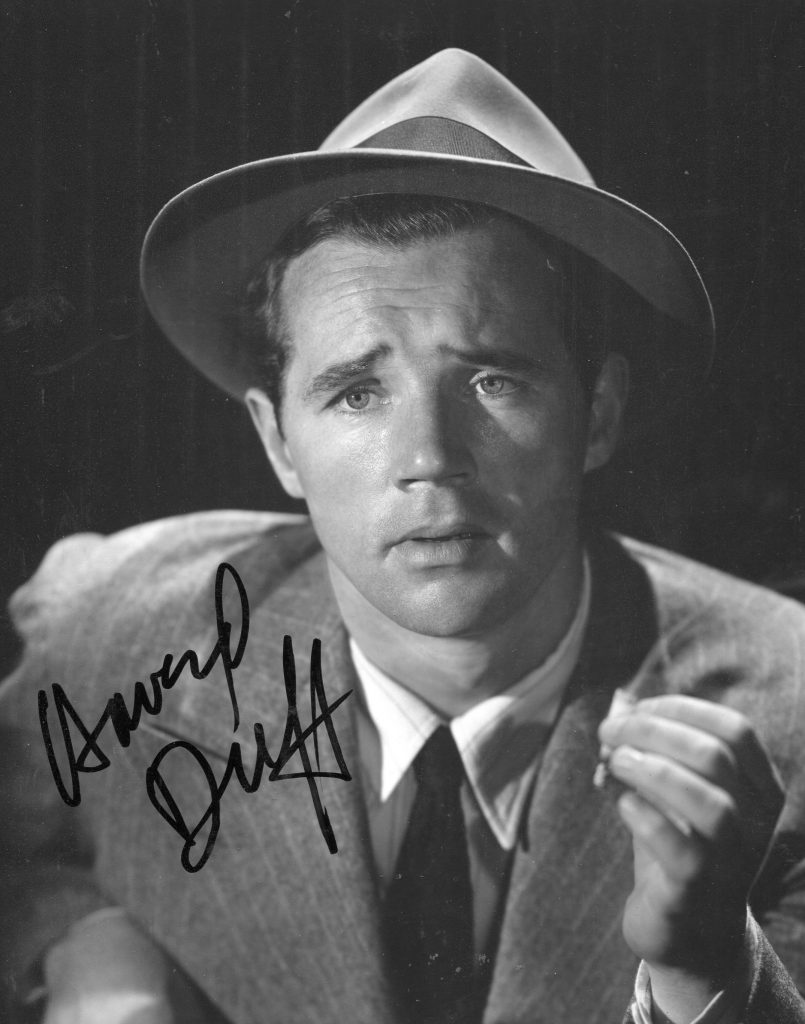
Tough, virile, wavy-haired and ruggedly handsome with trademark forlorn-looking brows that added an intriguing touch of vulnerability to his hard outer core, actor Howard Duff and his wife-at-the-time, actress Ida Lupino, were one of Hollywood’s premiere film couples during the 1950s “Golden Age”. Prior to that, Duff had relationships with a number of the cinema’s most dazzling leading ladies, including Ava Gardner (just prior to her marriage to musician Artie Shaw) and Gloria DeHaven.

Duff’s talent first manifested itself on radio as Dashiell Hammett‘s popular private eye “Sam Spade” (1946-1950), and eventually extended to include stage, film and TV. While never considered a top-tier movie star and, despite his obvious prowess, never considered for any acting awards, Howard Duff was an undeniably strong good guy and potent heavy but perhaps lacked the requisite charisma or profile to move into the ranks of a Burt LancasterKirk Douglas or Robert Mitchum. His career spanned over four decades.

His full name was Howard Green Duff and he was born in Bremerton, Washington on November 24, 1913. Growing up in and around the Seattle area, he attended Roosevelt High School where he played basketball. It was here that he also found an outlet acting in school plays and, following graduation, studied drama. He eventually became an acting member of the Repertory Playhouse in Seattle. Military service interrupted his early career and he served with the U.S. Army Air Force’s radio service from 1941 to 1945. Upon his discharge, he returned to his acting pursuits and won the role of “Sam Spade” on NBC Radio in the role Humphrey Bogart made famous in The Maltese Falcon (1941).Lurene Tuttle played his altruistic secretary “Effie” on the series. He eventually left the program when his film career settled in and Stephen Dunne took over the radio voice of the detective in 1950 for its final season.

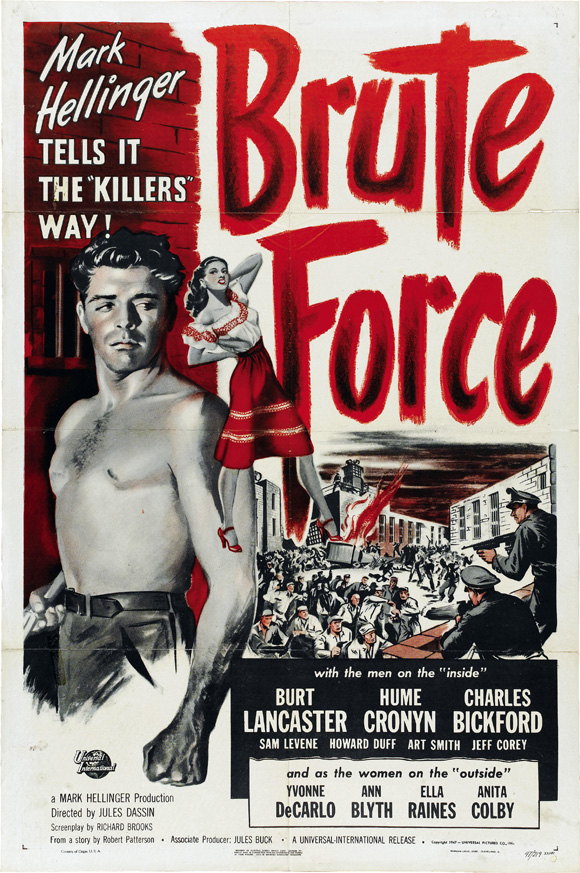
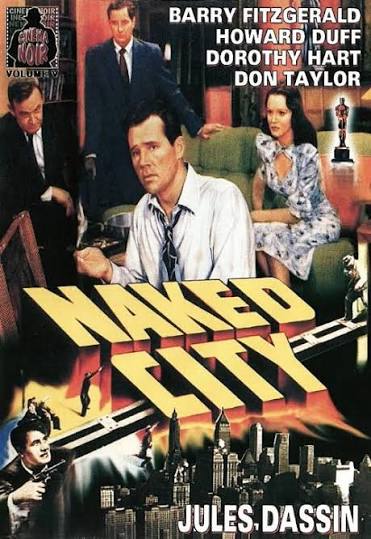
Duff’s post-war movie career started completely on the right foot at Universal with the hard-hitting film noir Brute Force (1947), in which he received good notices as an ill-fated cellmate to Burt LancasterCharles Bickford and others. Quite well-known for his radio voice by this time, he was given special billing in the movie’s credits as “Radio’s Sam Spade”. This was followed by equally vital and volatile performances in the prescient semi-documentary-styled police drama The Naked City (1948) and in Arthur Miller‘s taut family drama All My Sons (1948) starring Lancaster, again, and Edward G. Robinson.

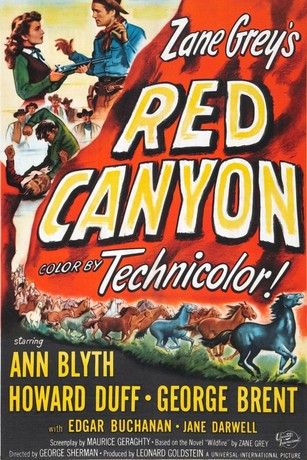
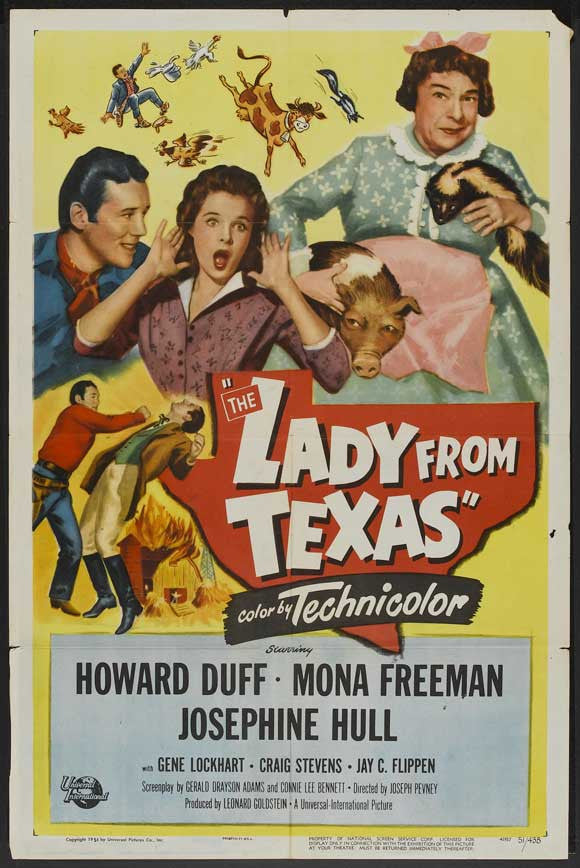
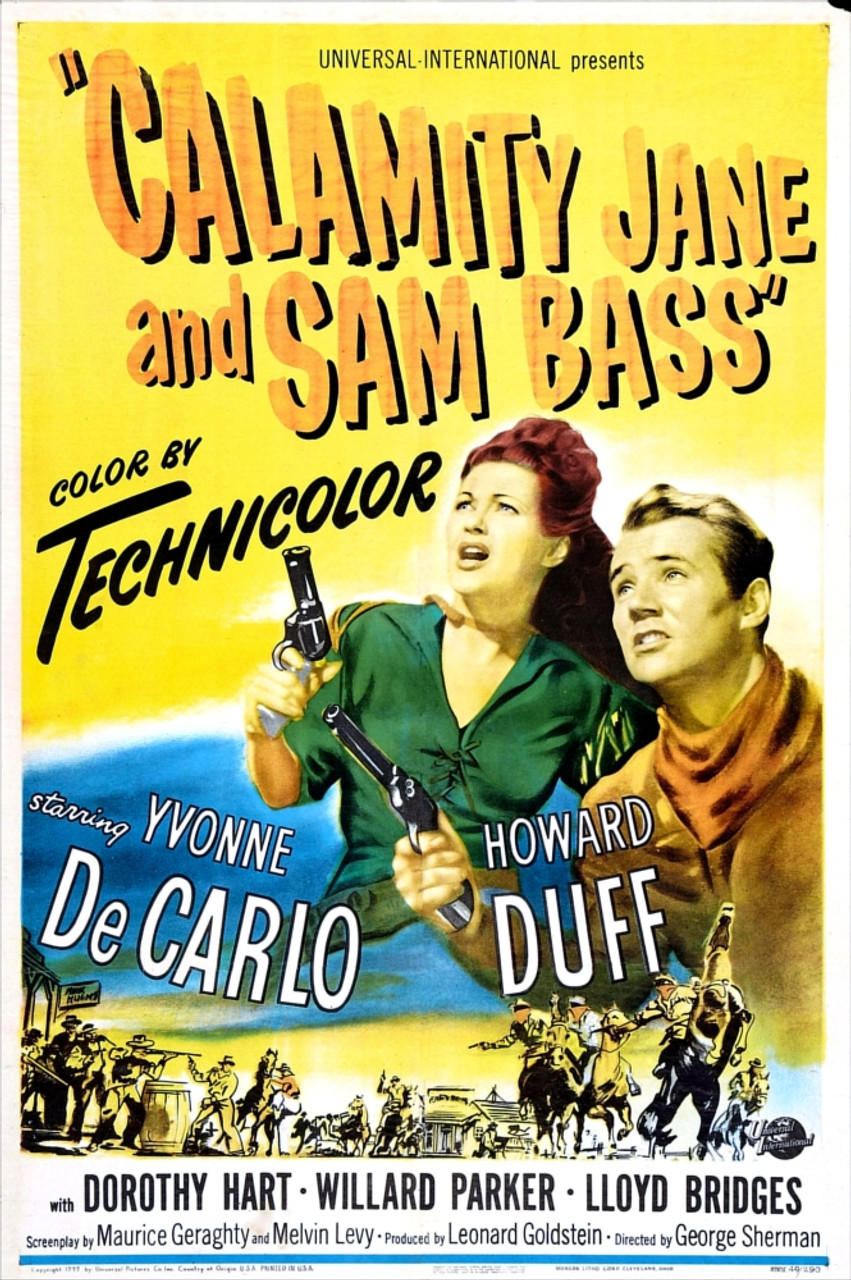
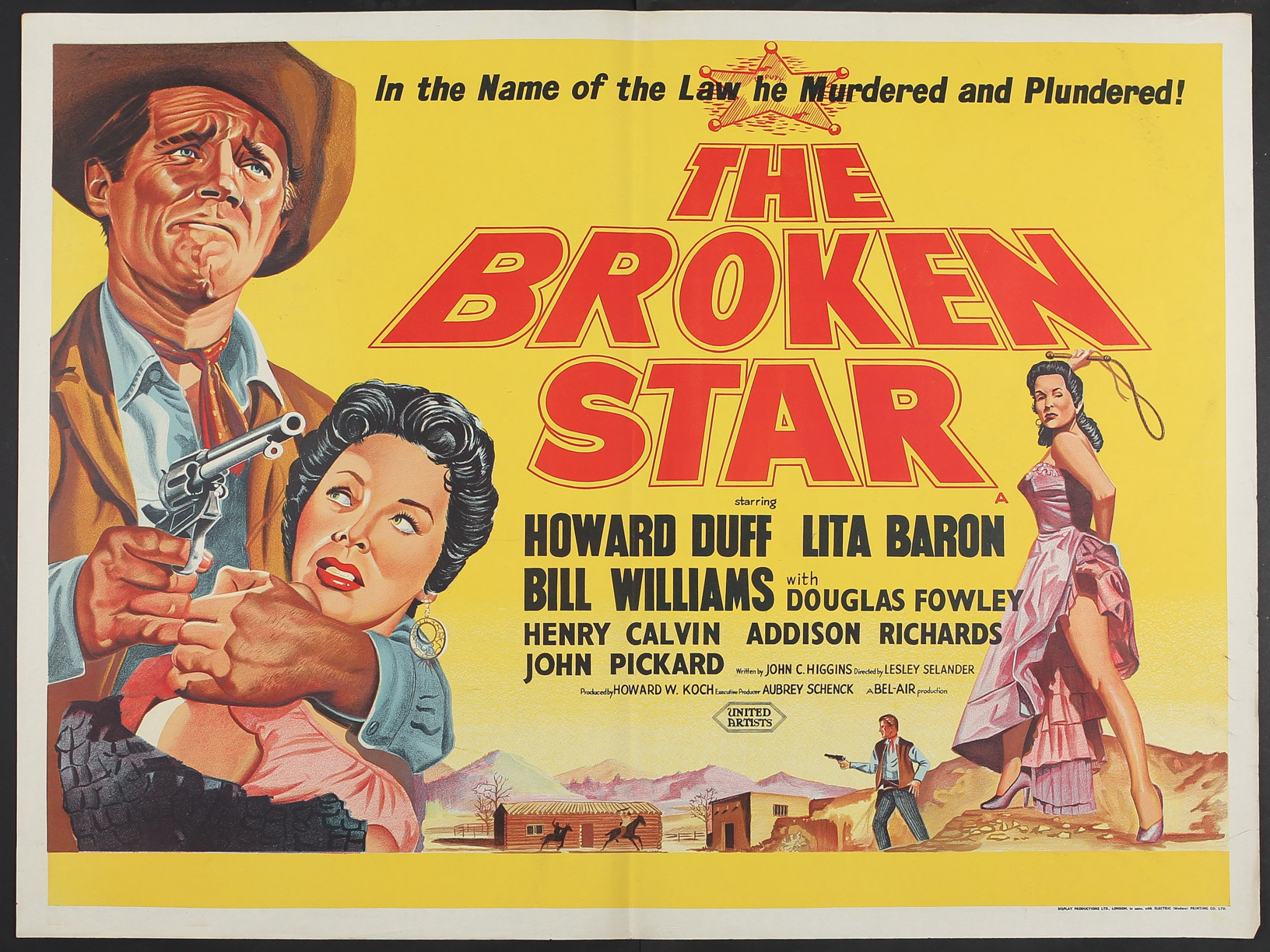
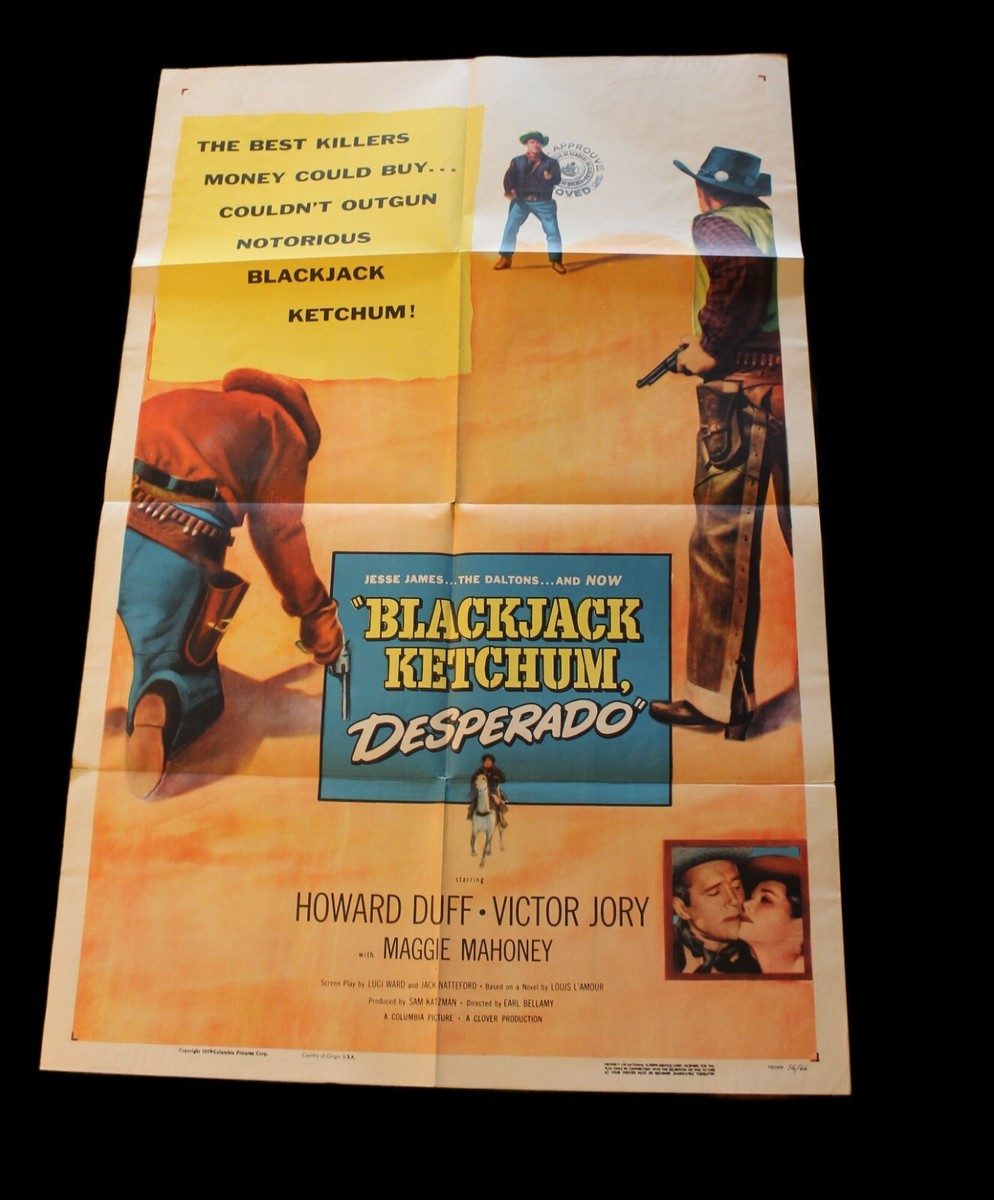
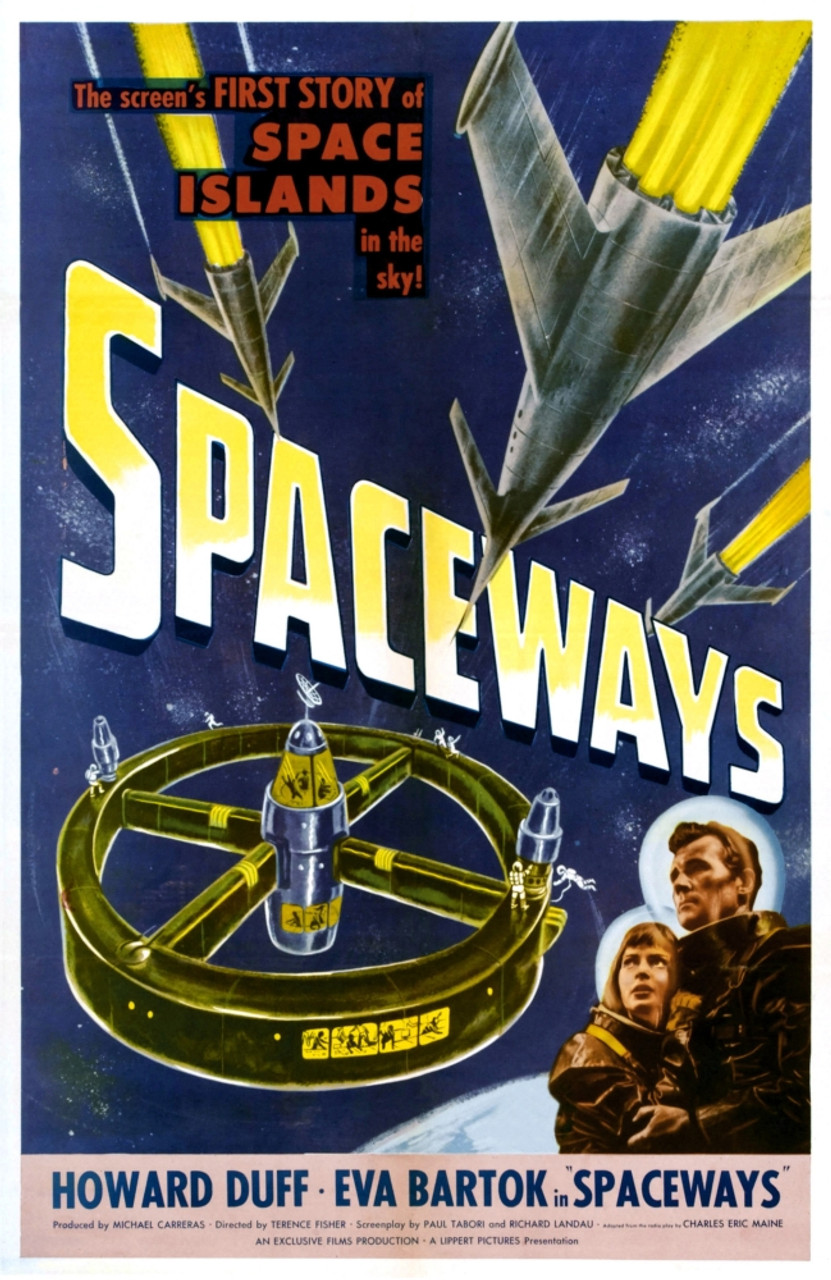
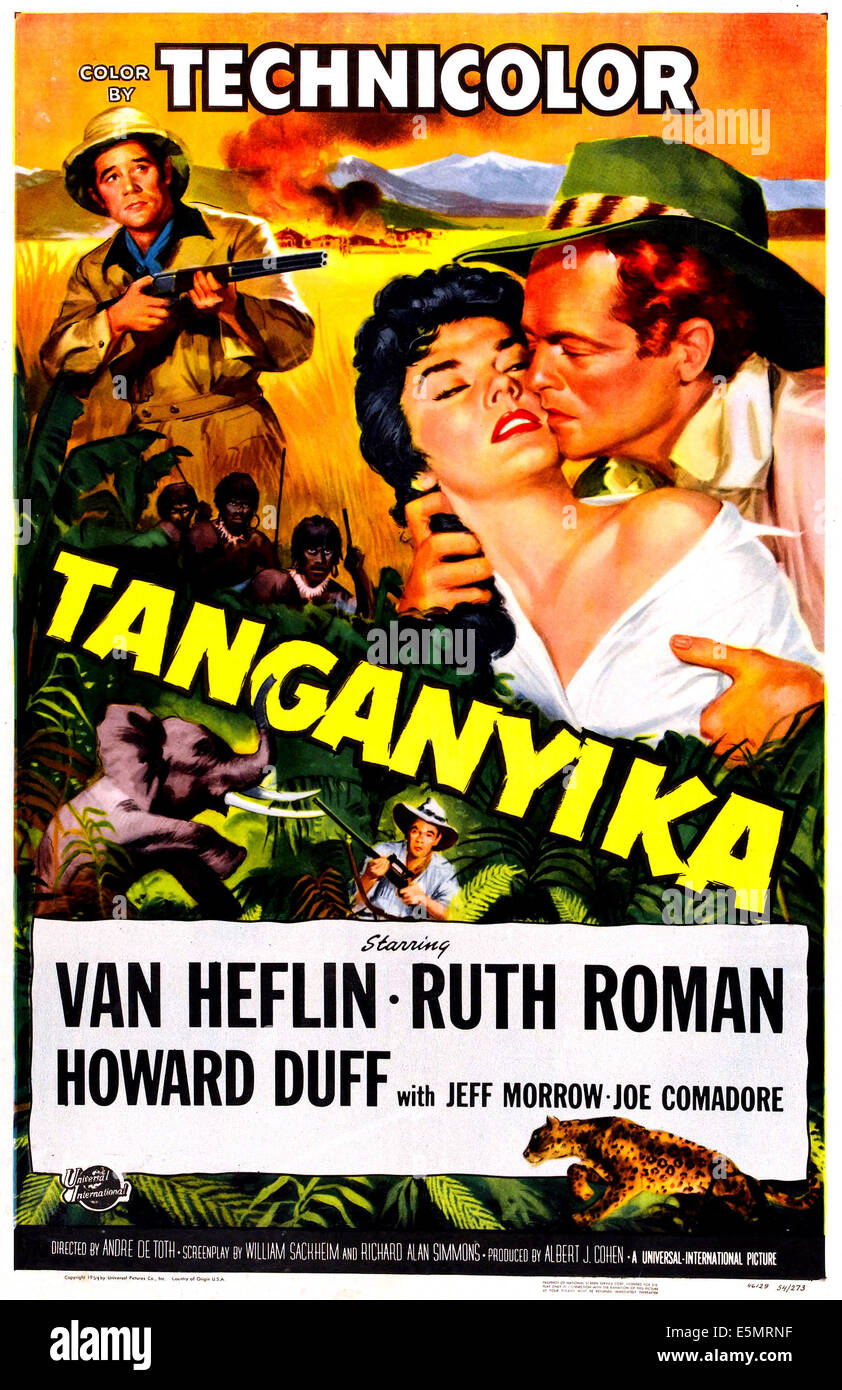
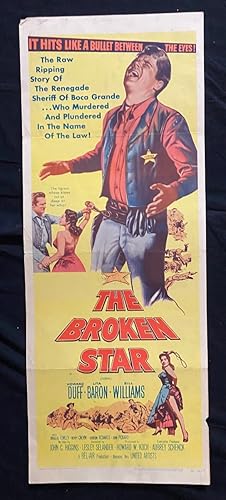
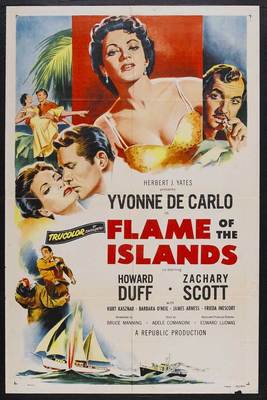
After such a strong showing, Howard career went into a period of moviemaking in which his films were more noted for its entertainment and rousing action than as character-driven pieces. A number of them were routine westerns that paired him opposite some of Hollywood’s loveliest ladies: Red Canyon (1949) with Ann BlythCalamity Jane and Sam Bass (1949) with Yvonne De Carlo and The Lady from Texas (1951) with Mona Freeman. Other adventure-oriented flicks that more or less came and went included Spaceways(1953), Tanganyika (1954), The Yellow Mountain (1954), Flame of the Islands (1956),Blackjack Ketchum, Desperado (1956) (title role), The Broken Star (1956) and Sierra Stranger (1957). Howard also began appearing infrequently on the stage in the early 1950s with such productions as “Season in the Sun” (1952) and “Anniversary Waltz” (1954).

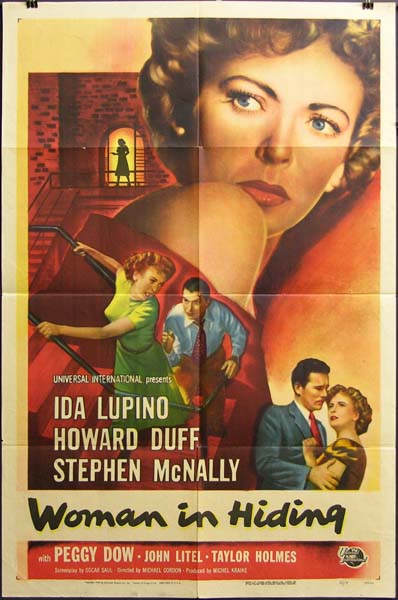
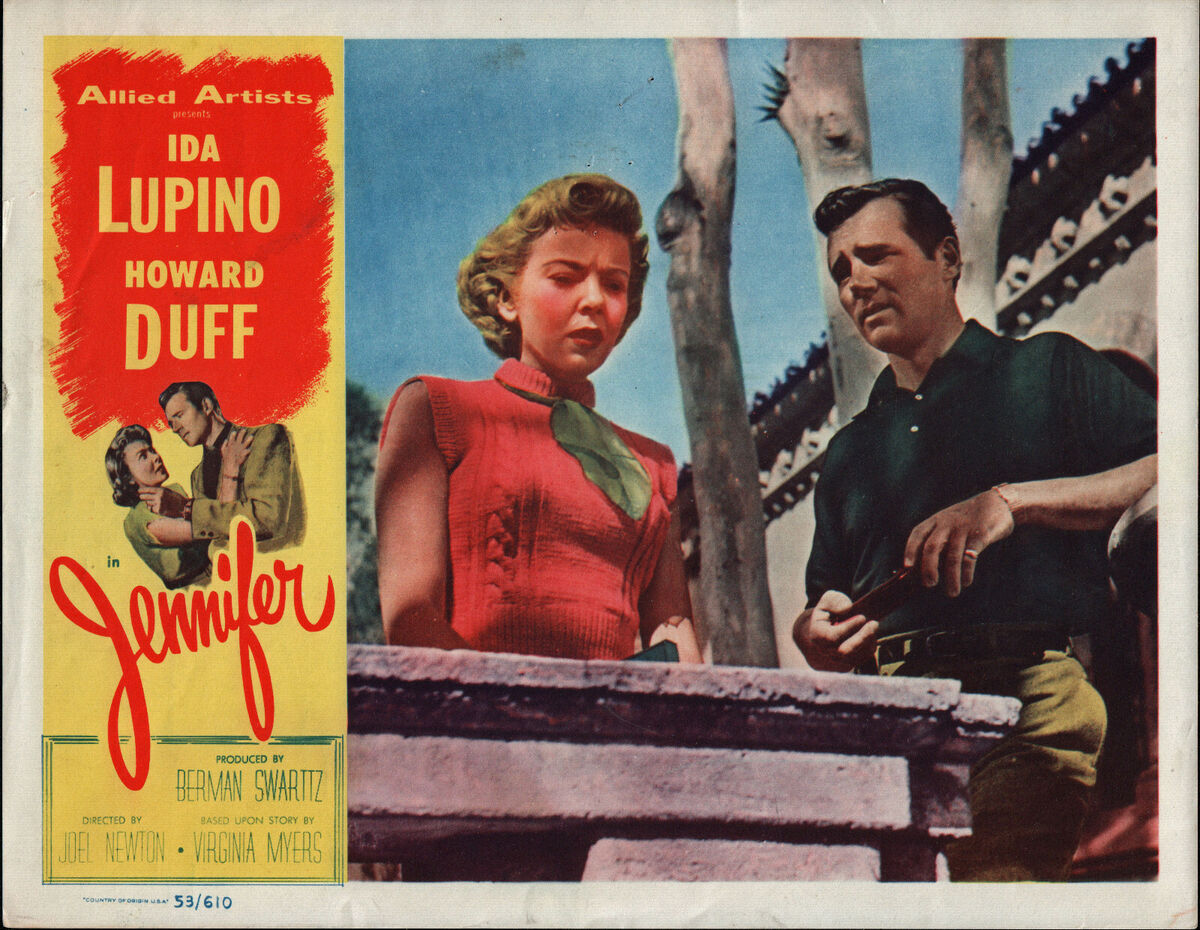
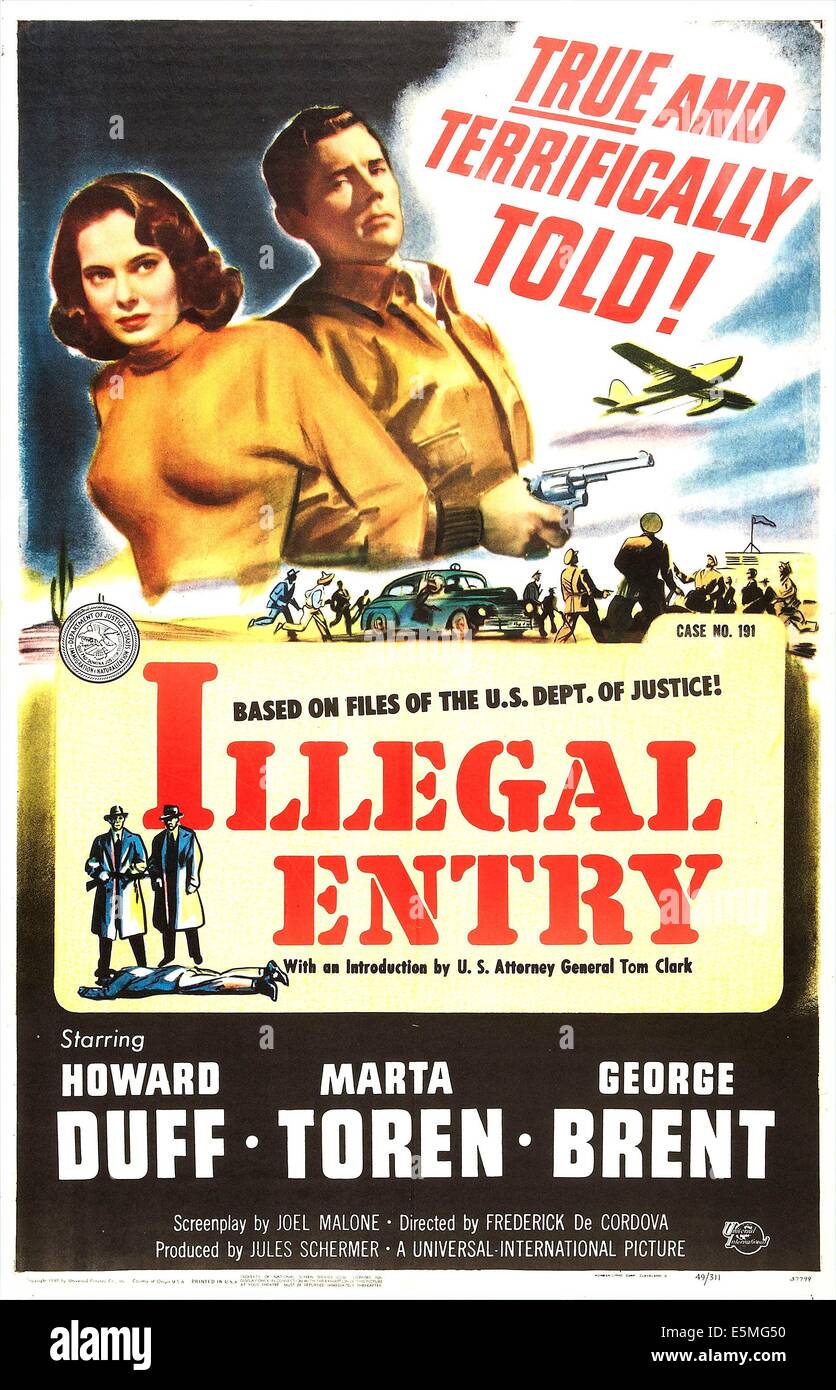
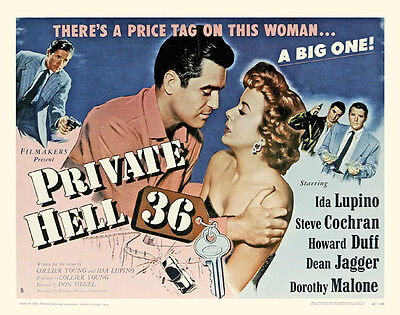
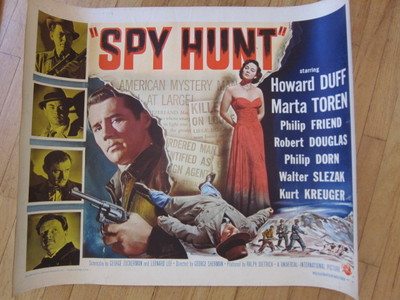
Those films that rose above the standard included gritty top-billed roles in Johnny Stool Pigeon (1949), Illegal Entry (1949), Shakedown (1950), Spy Hunt (1950) and Woman in Hiding (1950), the last a film noir which paired him with Ida Lupino for the first time. Here, he plays the hero who saves Lupino from a murdering husband (Stephen McNally). In 1951, he married Ms. Lupino, already a well-established star at Warner Bros., who was coming into her own recently as a director. The couple had one daughter, Bridget Duff, born in 1952. Lupino and Duff co-starred in four hard-boiled film dramas during the 1950s — Jennifer (1953), Private Hell 36 (1954), Women’s Prison (1955) and While the City Sleeps (1956). The demise of the studio-guided contract system had an effect on Howard’s film career and offers started drying up in the late 1950s.

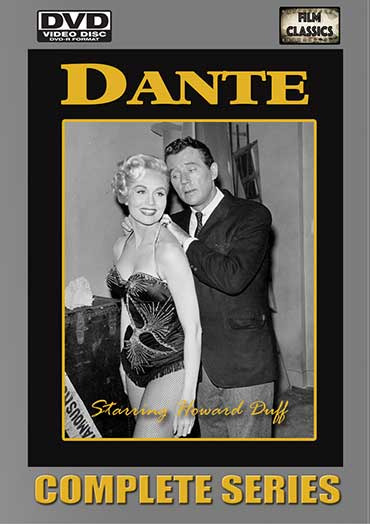
Fortunately, he found just as wide an appeal on TV, appearing in a number of dramatic showcases for Science Fiction Theatre (1955), Lux Video Theatre (1950) and Climax!(1954). And, in a change of pace, the married couple decided to go for laughs by starring together in the TV series Mr. Adams and Eve (1957). Here, they played gregarious husband-and-wife film stars “Howard Adams” and “Eve Drake”. Many of the scripts, though broadly exaggerated for comic effect, were reportedly based on a few of their own real-life experiences. They also guest-starred in an entertaining hour-long episode of theThe Lucy-Desi Comedy Hour (1957) in 1959 with the two couples inadvertently booked at the same vacant lodge, together. The show ends up a battle-of-the sexes, free-for-all with the two gals scheming to add a little romance to what has essentially become a fishing vacation for the guys. The 1960s bore more fruit on TV than in film. Sans Lupino, Duff went solo as nightclub owner “Willie Dante” in the tongue-in-cheek adventure seriesDante (1960), which lasted less than a season. A few years later, the veteran co-starred with handsome rookie Dennis Cole in what is perhaps his best-remembered series, the police drama Felony Squad (1966), which was filmed in and around Los Angeles. Duff directed one of those episodes, having directed several episodes of the silly sitcom Camp Runamuck (1965), a year or so earlier. In between series work were guest assignments on such popular primetime shows as Bonanza (1959), Twilight Zone (1959), Burke’s Law(1963) and Combat! (1962).

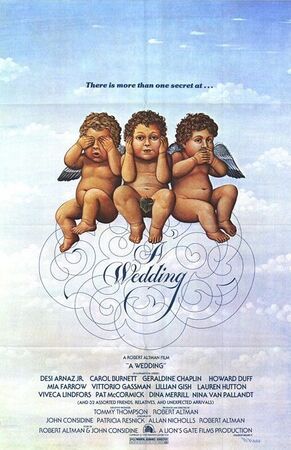
The marriage of Ida and Howard did not last, however, and the famous married couple separated in 1966 after 15 years of marriage. Ida and Howard didn’t officially divorce, however, until 1984. Howard later married a non-professional, Judy Jenkinson, who survived him. While much of Howard’s work in later years was standard, if unmemorable, every now and then he would demonstrate the fine talent he was. A couple of his better film performances came as a sex-minded, booze-swilling relative in A Wedding (1978) and as Dustin Hoffman‘s attorney in the Oscar-winning drama Kramer vs. Kramer (1979). He also enjoyed a villainous role in the short-lived series Flamingo Road (1980) and had a lengthy stint on Knots Landing (1979) during the 1984-1985 season. Duff died at age 76 of a heart attack, on July 8, 1990, in Santa Barbara, California.

– IMDb Mini Biography By: Gary Brumburgh / gr-home@pacbell.net

Barbara Britton
Barbara Britton
Barbara Britton

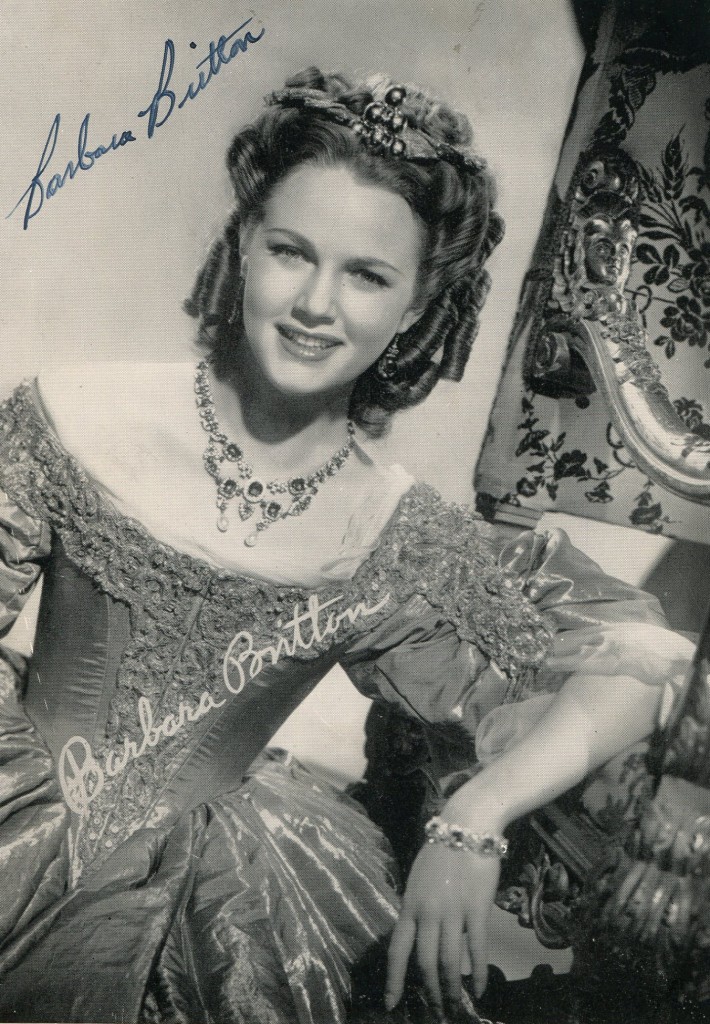
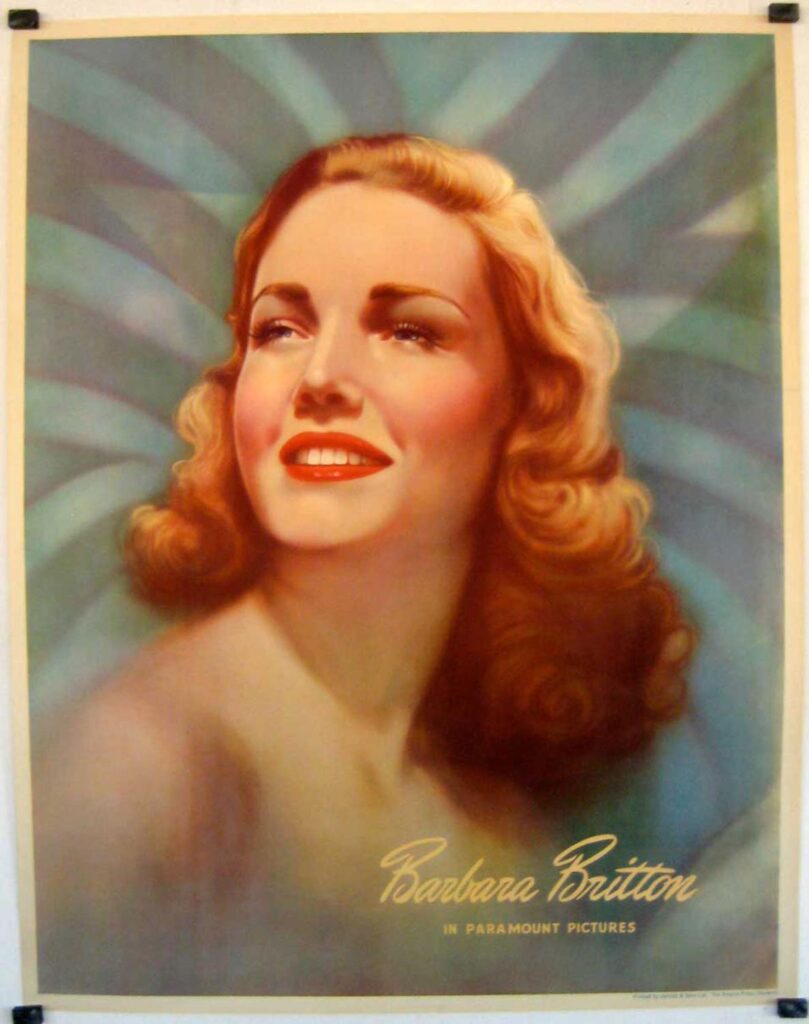
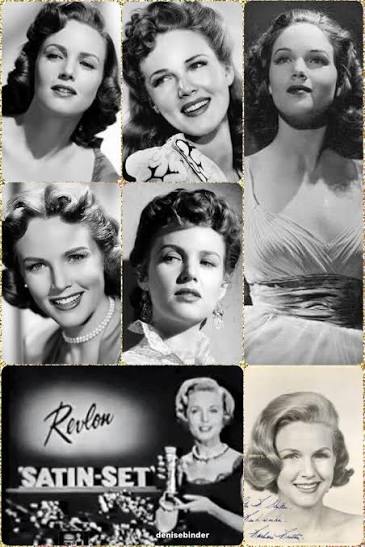
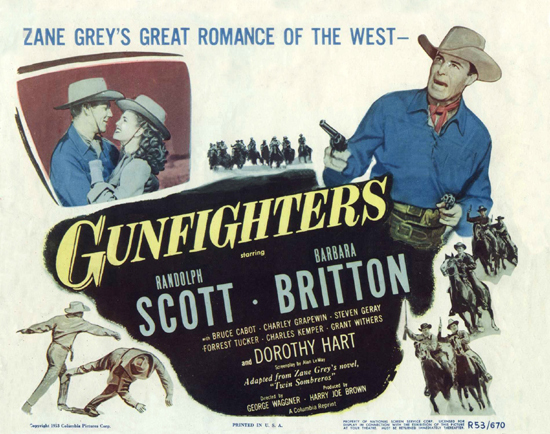
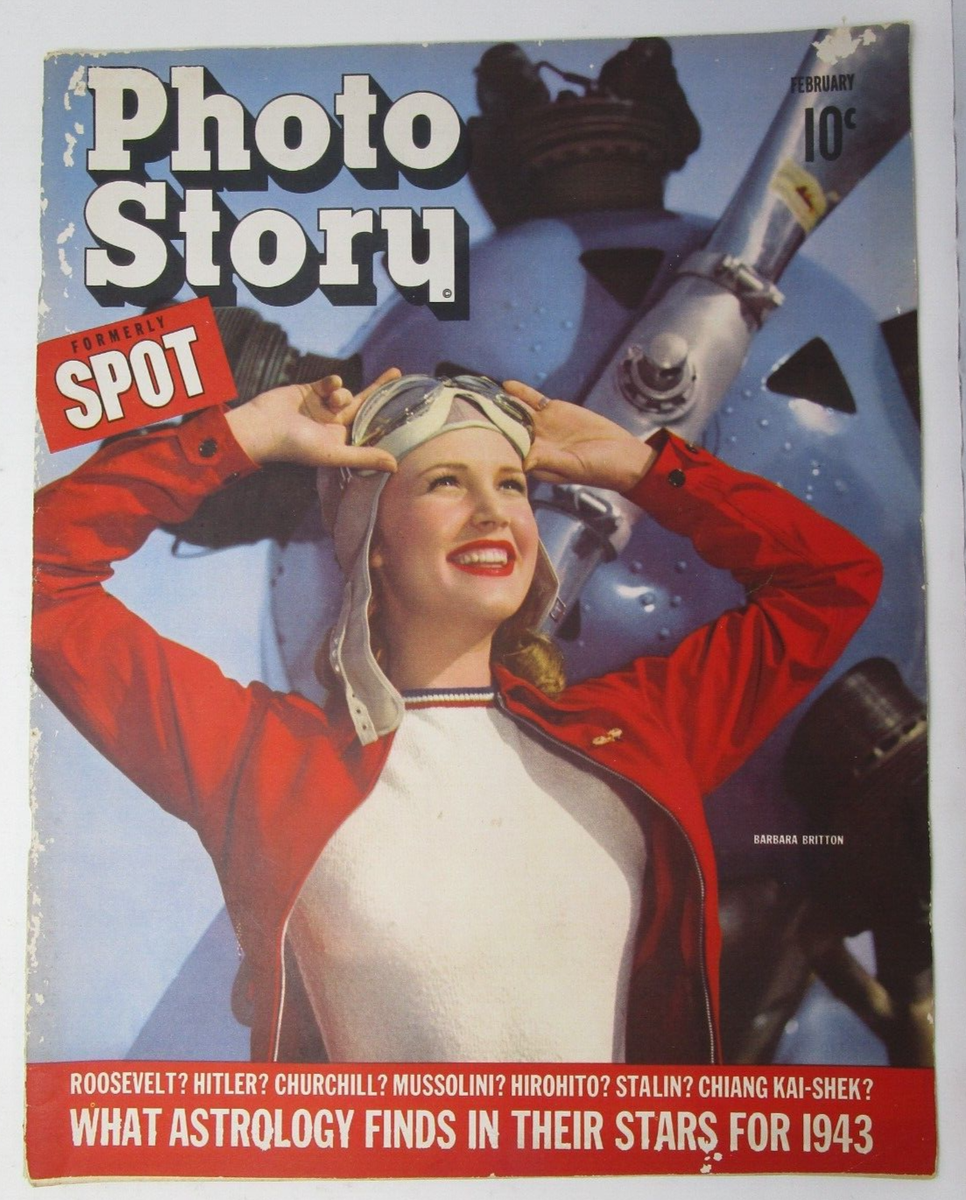
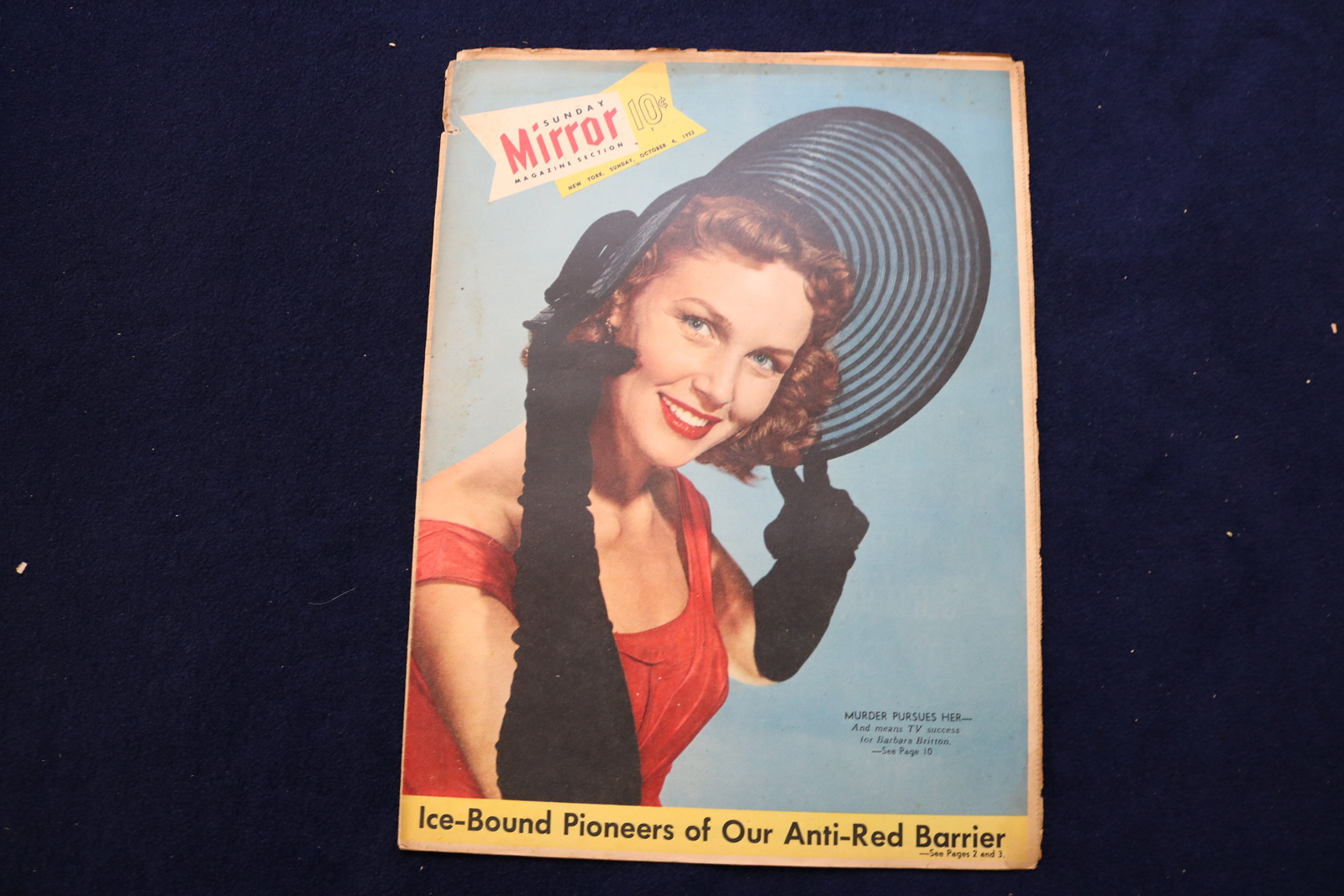
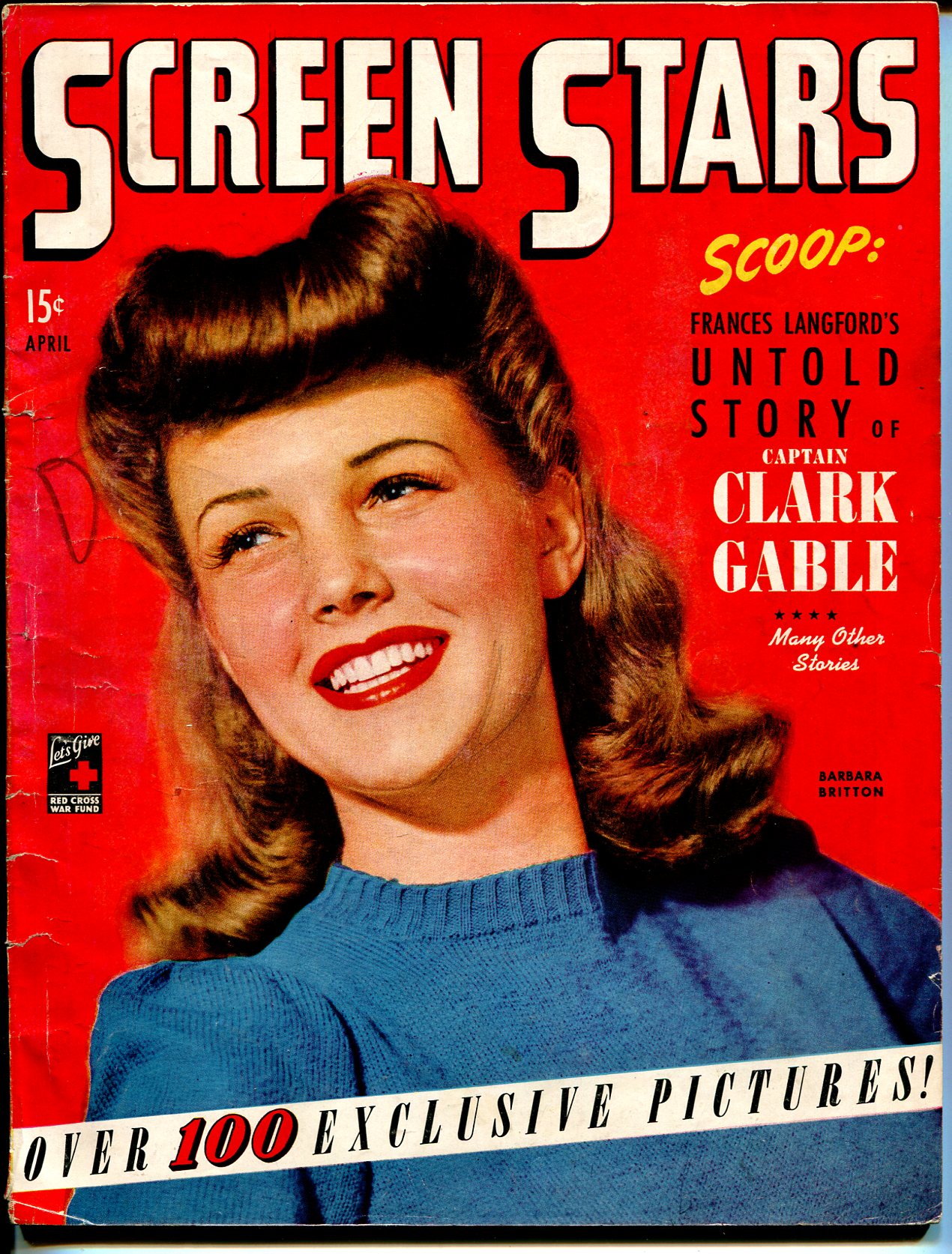
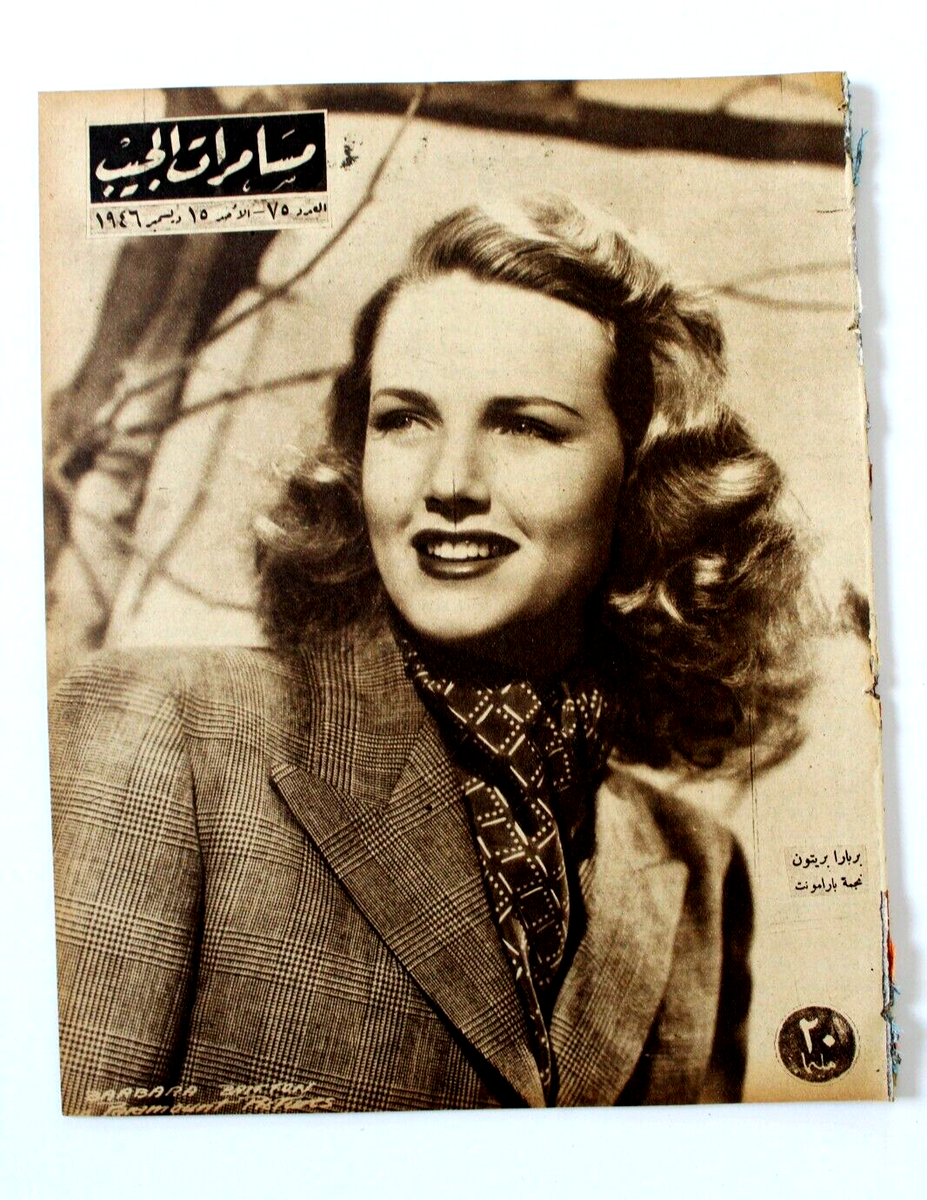
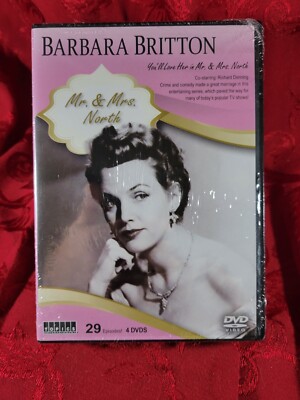
Radiant to a tee, well-coiffed and well-dressed Barbara Britton looked like she stepped out of a magazine when she entered into our homes daily as the ‘Revlon Girl’ on 50s and 60s TV. She sparkled with the best of them and managed to capture that “perfect wife/perfect mother” image with, well, perfect poise and perfect grace. Co-starring opposite some of Hollywood’s most durable leading men, including Randolph Scott(multiple times), Joel McCreaGene AutryJeff Chandler and John Hodiak, it’s rather a shame Barbara was rather obtusely used in Hollywood films, but thankfully her beauty and glamour, if not her obvious talent, would save the day and put the finishing touches on a well-rounded career.

It all began for sunny, hazel-eyed blonde Barbara Maureen Brantingham in equally sunny Long Beach, California on September 26, 1920 (1919 is incorrect, according to her son and several other sources). Attending Polytechnic High School, Barbara eventually taught Sunday school and majored in speech at Long Beach City College with designs of becoming a speech and drama teacher. Her interest in acting, however, quickly took hold and she decided, against the wishes of her ultra-conservative parents, to pursue the local stage. Barbara’s own personal ‘Hollywood’ story unfolded when, as a Pasadena Tournament of Roses parade representative of Long Beach, she was seen on the front pages of the newspaper, scouted out and signed by Paramount movie agents.

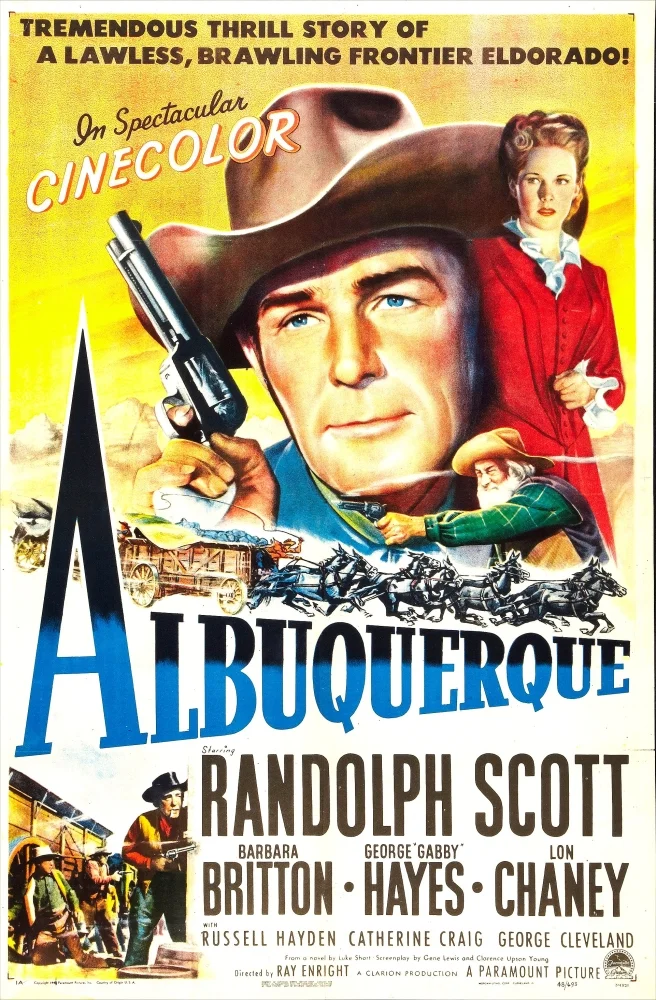
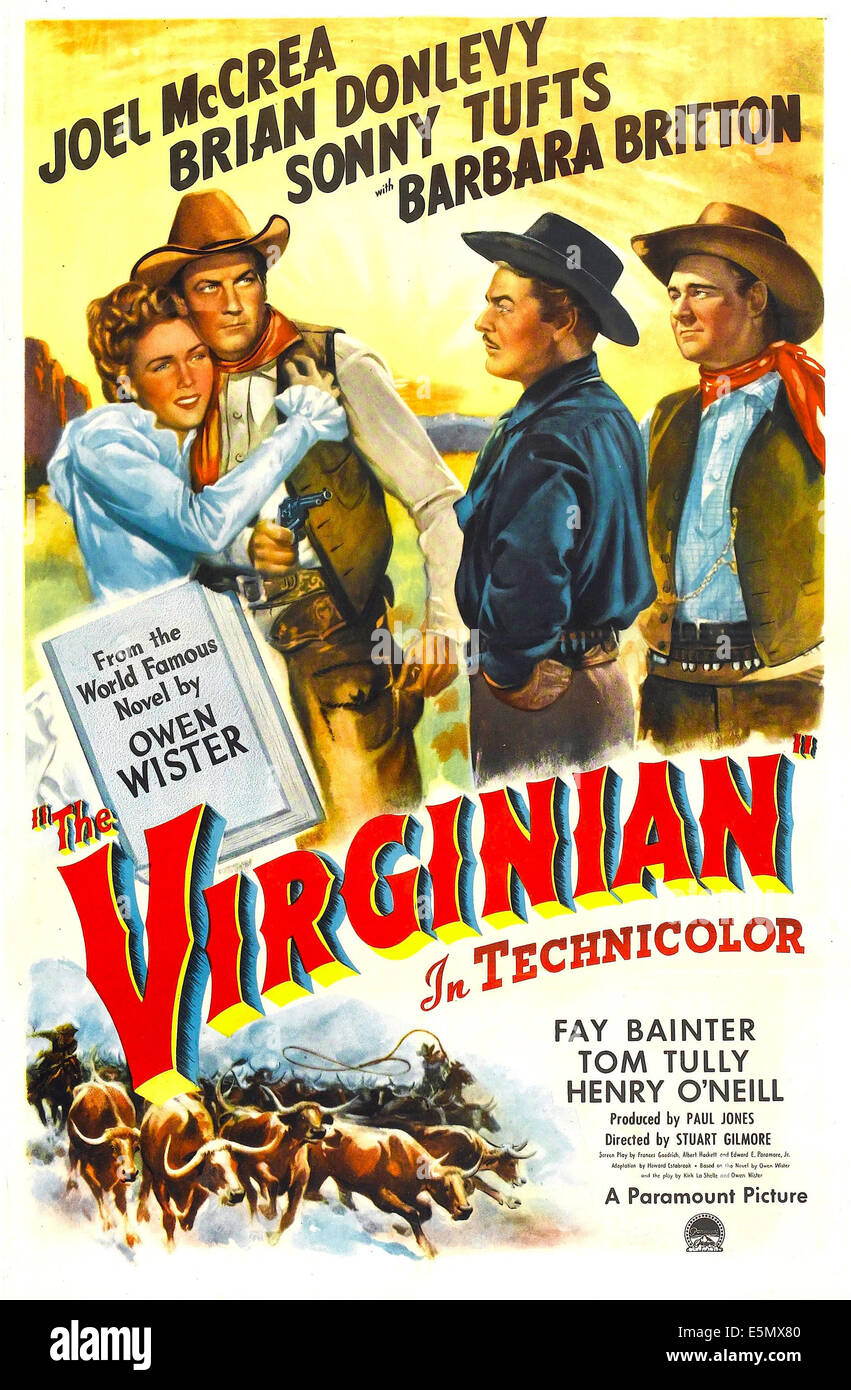
The surname Britton was a cherished family name and Barbara picked it as her stage moniker when Paramount complained that Brantingham was “too long to fit on a marquee.” She made her film debut with Secrets of the Wasteland (1941), a Hopalong Cassidy western, and continued in bit parts for a time before finding modest but showier roles in such fare as Louisiana Purchase (1941), So Proudly We Hail! (1943) and Till We Meet Again (1944). She eventually earned higher visibility as a lead and second femme lead but was underserved for most of her film career, confined as a pretty, altruistic, genteel young thing in such durable but male-oriented films as The Great John L. (1945),The Virginian (1946), The Return of Monte Cristo (1946), Albuquerque (1948), andChampagne for Caesar (1950).

Barbara wisely turned to the stage and TV in the 1950s, making her TV debut on an episode of “Robert Montgomery Presents” in 1950 and her Broadway debut co-starring in the short-lived Peggy Wood comedy “Getting Married” the following year.

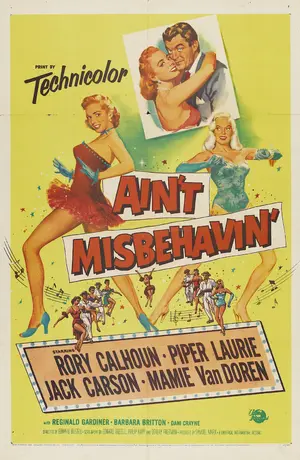
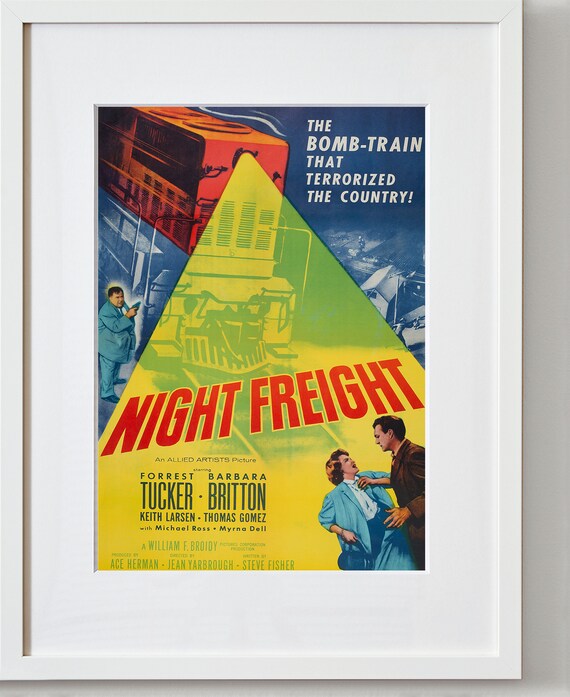
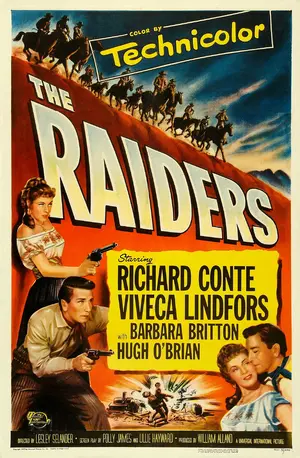
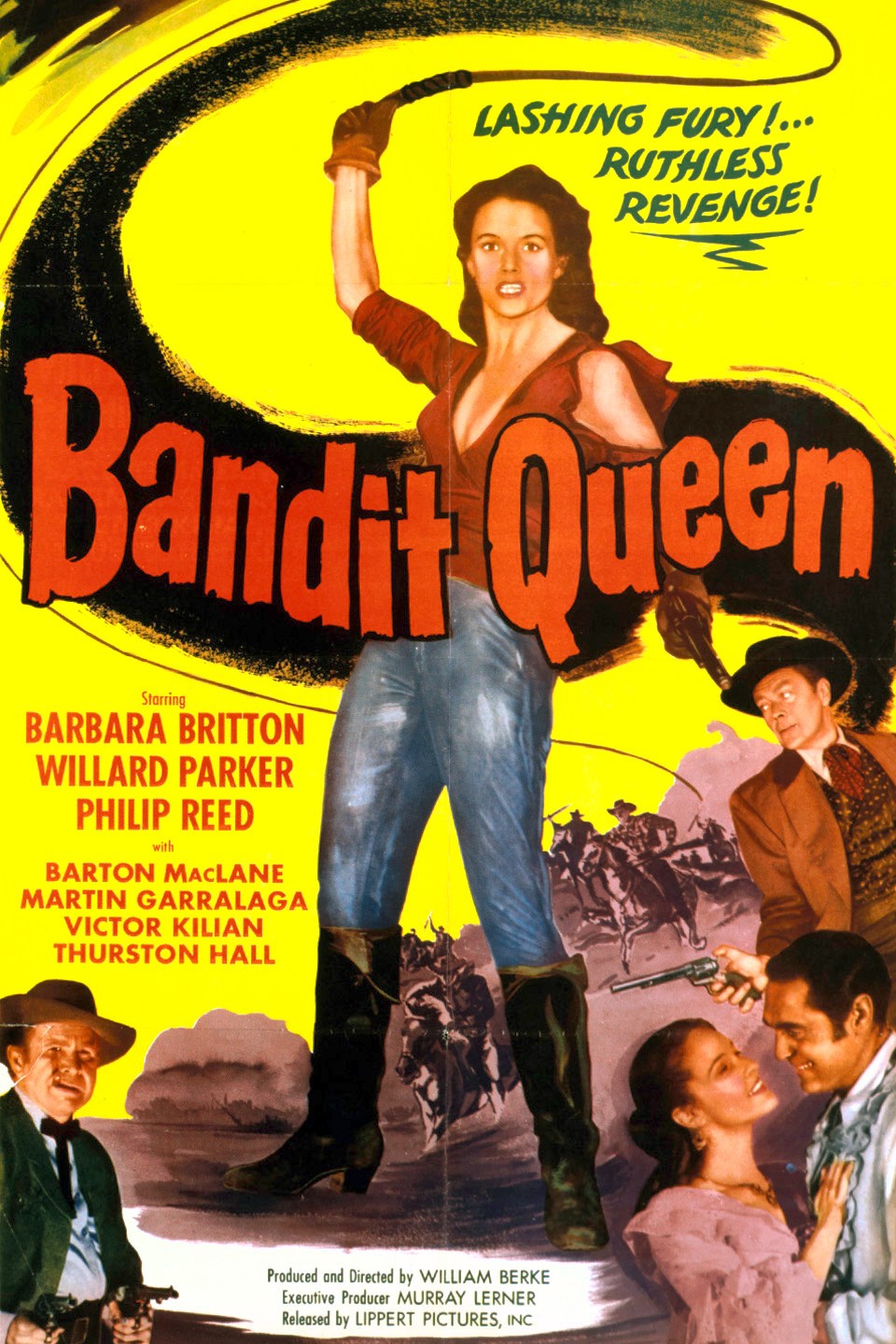
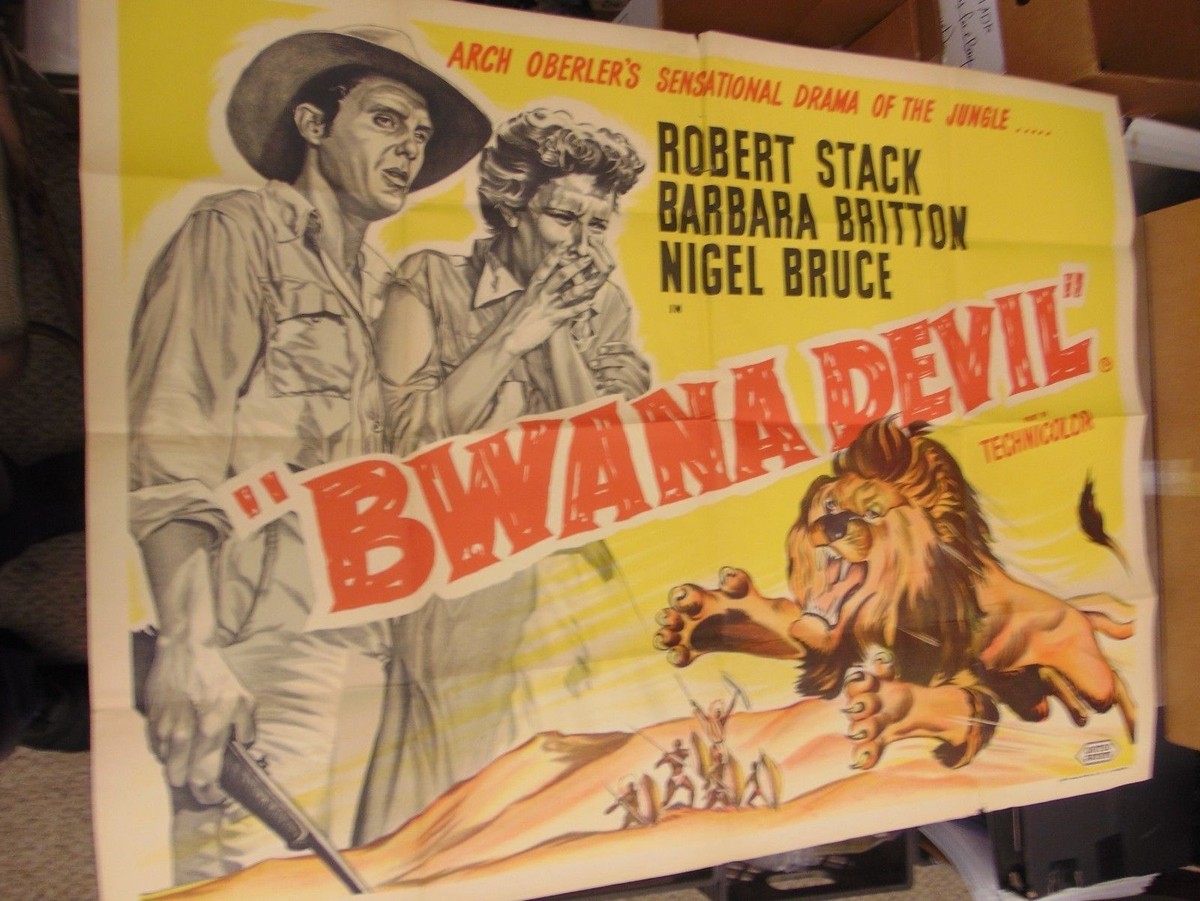
After co-starring a couple of seasons with Richard Denning on the TV program Mr. & Mrs. North (1952), Barbara earned major attention as Revlon’s lovely pitchwoman and remained on view in that capacity for 12 years. She appeared in Revlon commercials live for a number of programs, including “The $64,000 Question,” “The $64,000 Challenge,” “Revlon’s Big Party” and “The Ed Sullivan Show.” In between Barbara graced several of the top dramatic shows of the day, and co-starred intermittently in such “B” films as The Bandit Queen (1950), The Raiders (1952), Bwana Devil (1952), Dragonfly Squadron(1954) and Night Freight (1955) before ending her movie run with The Spoilers (1955) opposite Jeff Chandler and Rory Calhoun.

Various Broadway shows included “Wake Up, Darling (1956), “How to Make a Man” (1961), and “Me and Thee” (1965). Other stage credits on the dinner theatre and summer stock circuits include “Last of the Red Hot Lovers”, “Mary, Mary,” “Barefoot in the Park” and “No, No, Nanette.” As time passed, more and more would be devoted to raising her family. Only occasionally seen in the 1970, Barbara sometimes appeared with her two children in such regional shows as “Best of Friends,” “Forty Carats” and “A Roomful of Roses”.

Married in 1945 to Eugene Czukor, a naturopathic physician at the time, he later became a psychiatrist when the family moved to New York City (Manhattan) in 1957. The couple raised two children — son Theodore (Ted or Theo) who appeared on the Canadian Shakespearean stage and later became a yoga instructor, and daughter Christina who grew up to become a model, actress, opera singer, music therapist and romance novelist. Both used the surname Britton in their respective performance careers. Sadly, two other children born to Barbara and husband Eugene, a girl and a boy, died at the hospital shortly after birth.

One of Barbara’s last roles was as a regular on the daytime soap One Life to Live (1968) in 1979. Her enjoyment on this show was short-lived as the vivacious actress was diagnosed with pancreatic cancer not long after. She died in January of 1980 at age 59.

– IMDb Mini Biography By: Gary Brumburgh / gr-home@pacbell.net

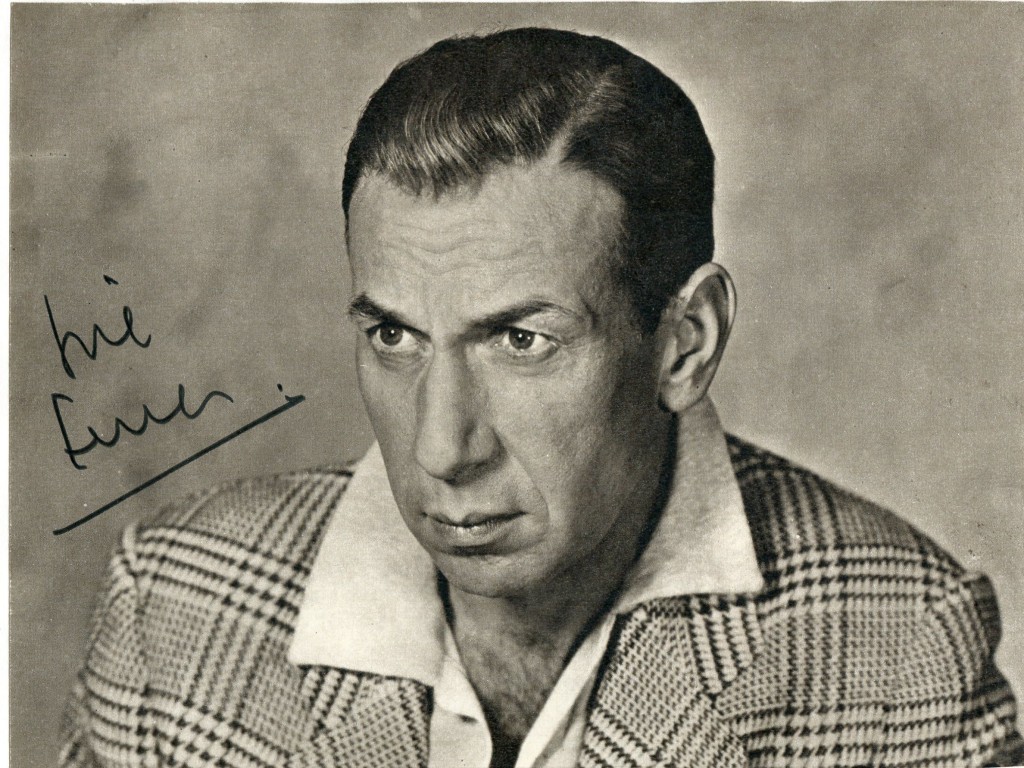
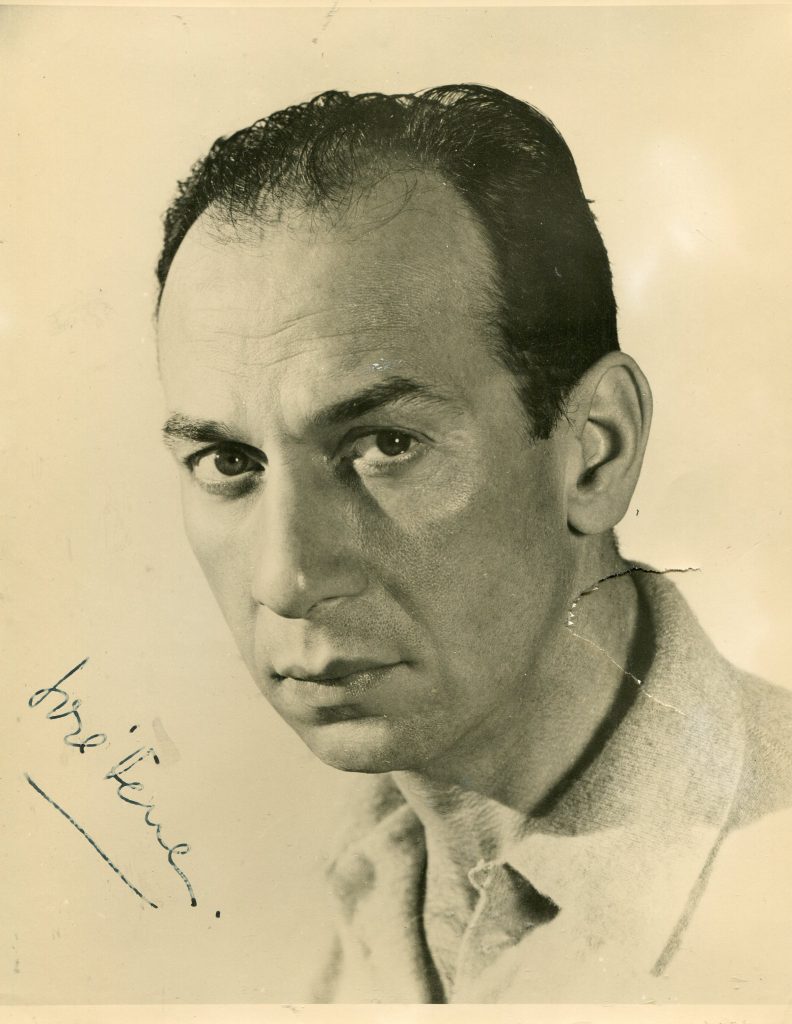
Jose Ferrer

TCM Overview:

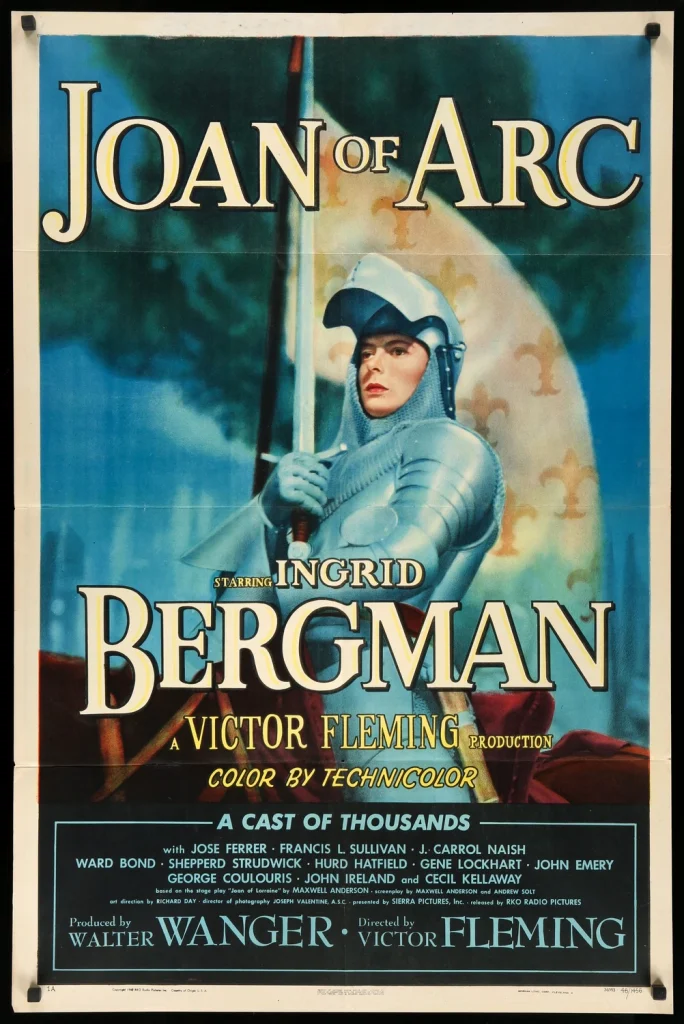
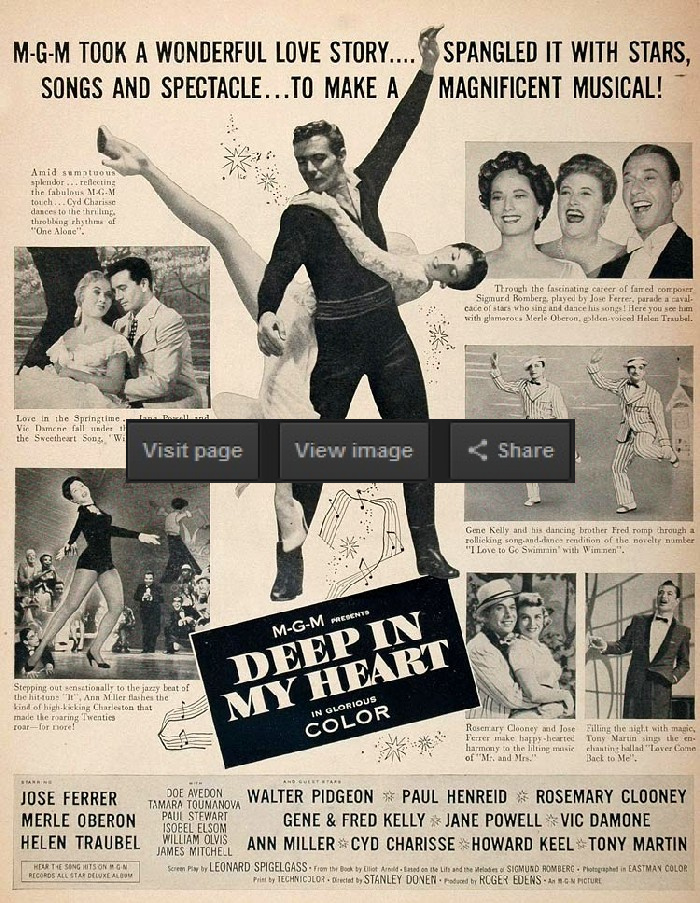
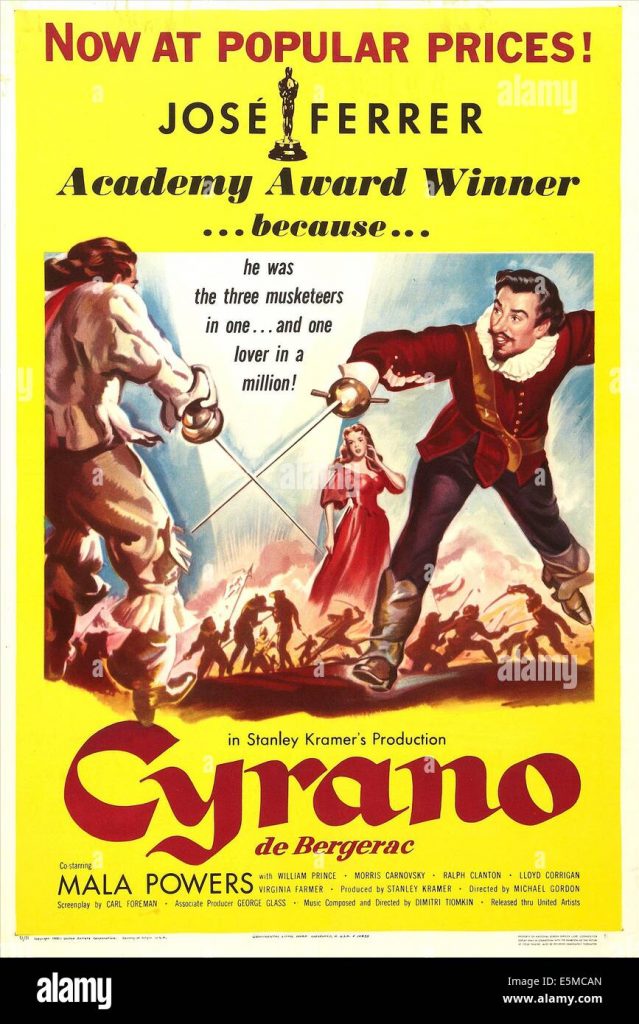
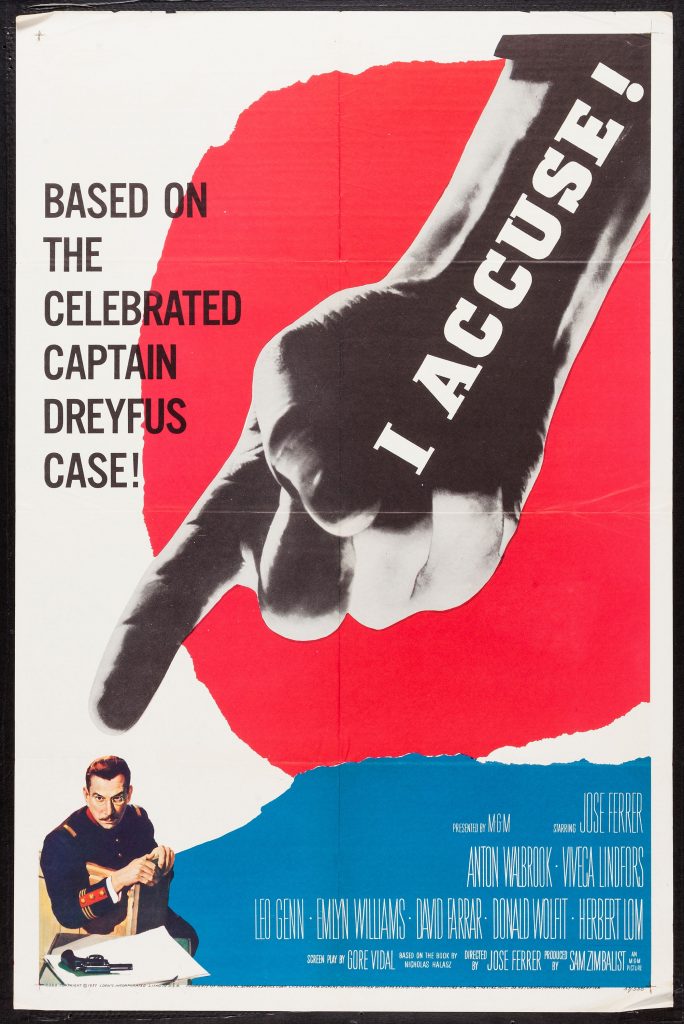
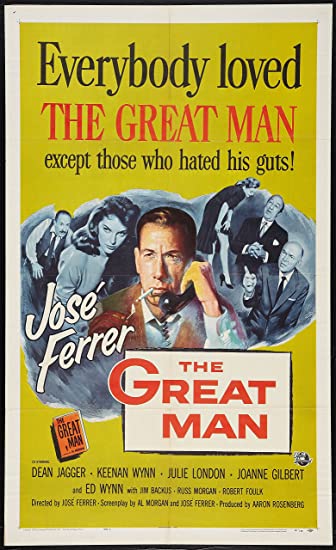
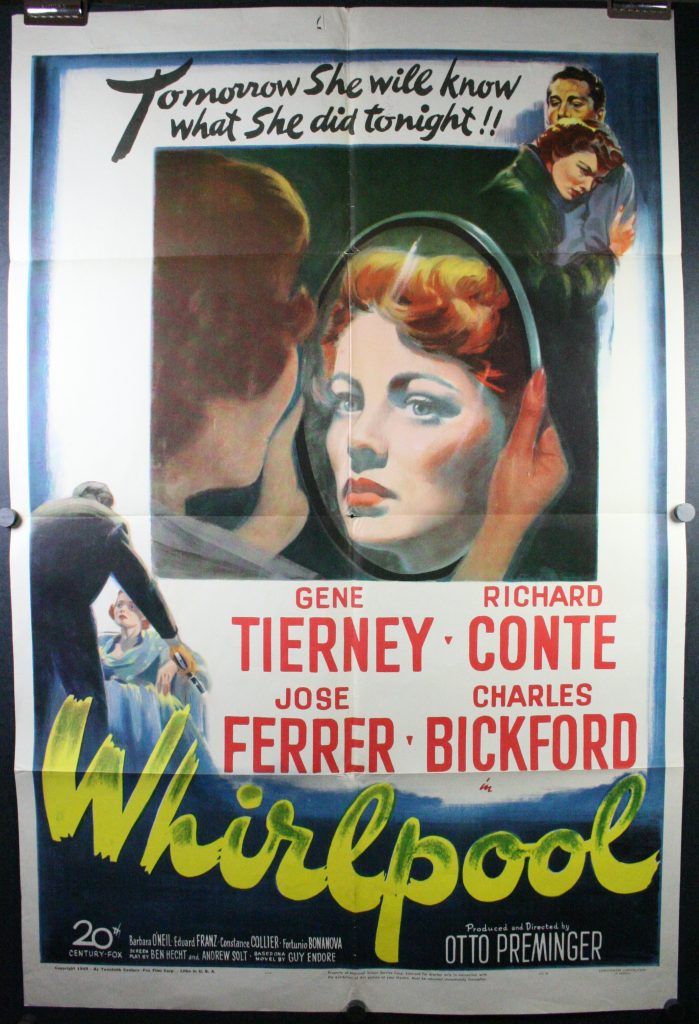
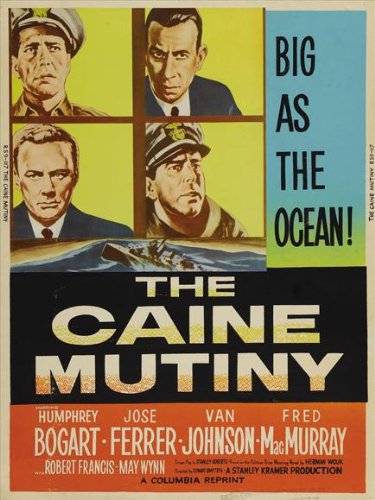
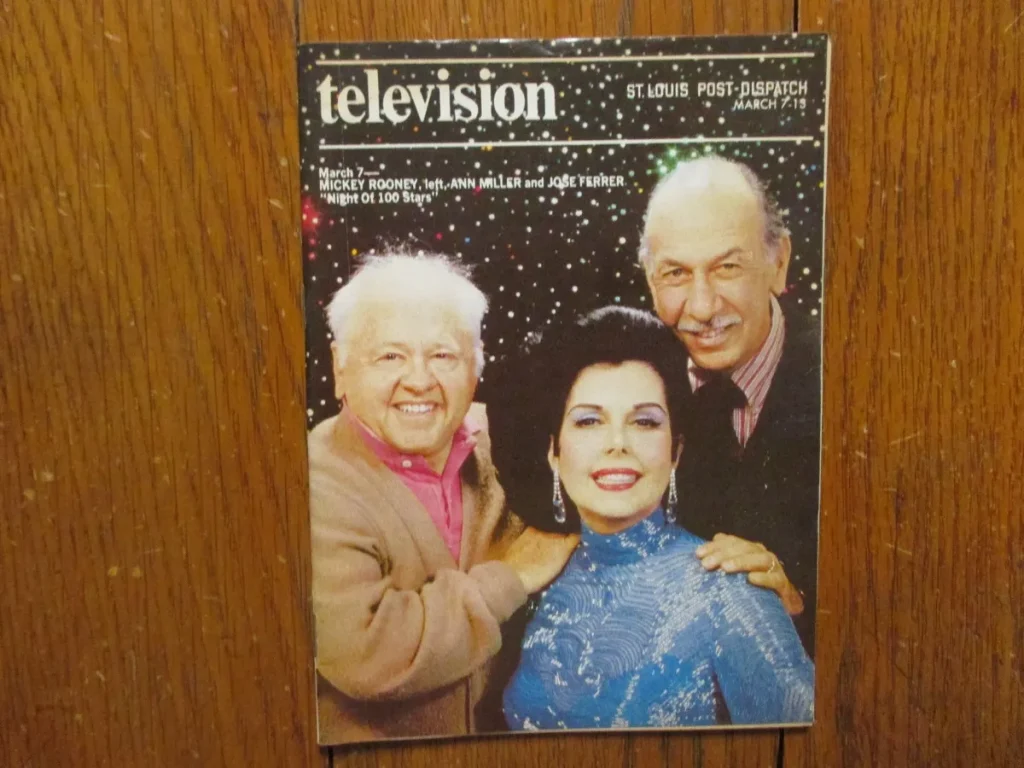
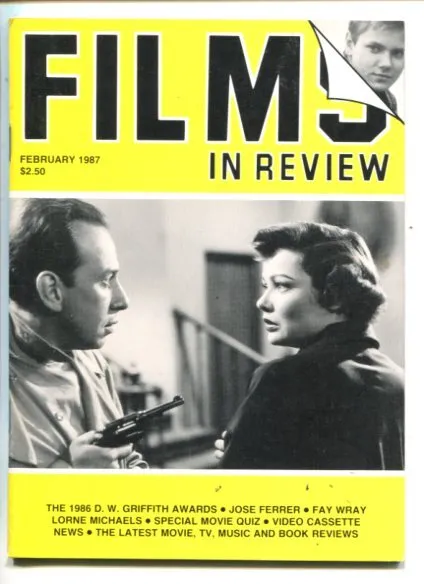
Protean Broadway actor-director-producer whose noteworthy stage performances include Iago to Paul Robeson’s “Othello” (1942), a Tony-winning “Cyrano de Bergerac” (1946) and the prince in the Noel Coward musical, “The Girl Who Came to Supper” (1964).Ferrer made his Hollywood debut in “Joan of Arc” (1948) and, thanks to his sonorous voice and urbane manner, excelled at playing pedants and snobs, like the pompous Nazi professor in Mel Brooks’s 1983 remake of “To Be or Not to Be”. He proved his versatility, though, as the murderous hypnotist in “Whirlpool” (1949), the defending officer in “The Caine Mutiny” (1954), the sadistic Turkish bey in “Lawrence of Arabia” (1962) and the ham actor in “Enter Laughing” (1966).Ferrer’s work as a film director has been generally undistinguished, one exception being his scathing look at the TV industry, “The Great Man” (1956). He was married to actress Uta Hagen (1938-48) and singer Rosemary Clooney (1953-66), and his son is character actor Miguel Ferrer.

New York Times obituary in 1992:

Jose Ferrer, renowned as the cool, cerebral and idiosyncratic actor who won an Academy Award playing Cyrano de Bergerac, died yesterday at Doctors’ Hospital in Coral Gables, Fla.

A family spokesman gave his age as 80, although some reference works said he was 83. He was a resident of Miami. His family said he died after a brief illness but did not disclose its nature.

Versatility, intelligence and longevity were the hallmarks of his extraordinary career in entertainment. He was successful as an award-winning actor and a producer, writer and director, and was a musician as well.

“Jack of all trades, and master of most of them,” commented David Shipman in his book “The Great Movie Stars” (St. Martin’s, 1972). Broadway Return Called Off

Mr. Ferrer’s work spanned the stage, films and television for more than half a century. He had planned a return to Broadway this spring, starring opposite Judd Hirsch in “Conversations With My Father,” but his name was removed from the marquee because of his failing health.

To sample the breadth of his work: He organized a successful cruise ship band in college, played Iago to Paul Robeson’s Othello, appeared in the original television pilot of “Kojak,” sang opera at the Brooklyn Academy of Music and the Beverly Hills Opera, and made guest appearances on the “Newhart” series.

His first Tony Award came in 1947, for his role as the lovelorn lead with the prodigious proboscis in “Cyrano de Bergerac.” A television version followed in 1949. His film performance of the role captured the Academy Award in 1950, and his career surged at its peak. That same year he played opposite Gloria Swanson in “Twentieth Century” on stage, just after she had filmed “Sunset Boulevard.” Her contract stipulated that she appear only with him.

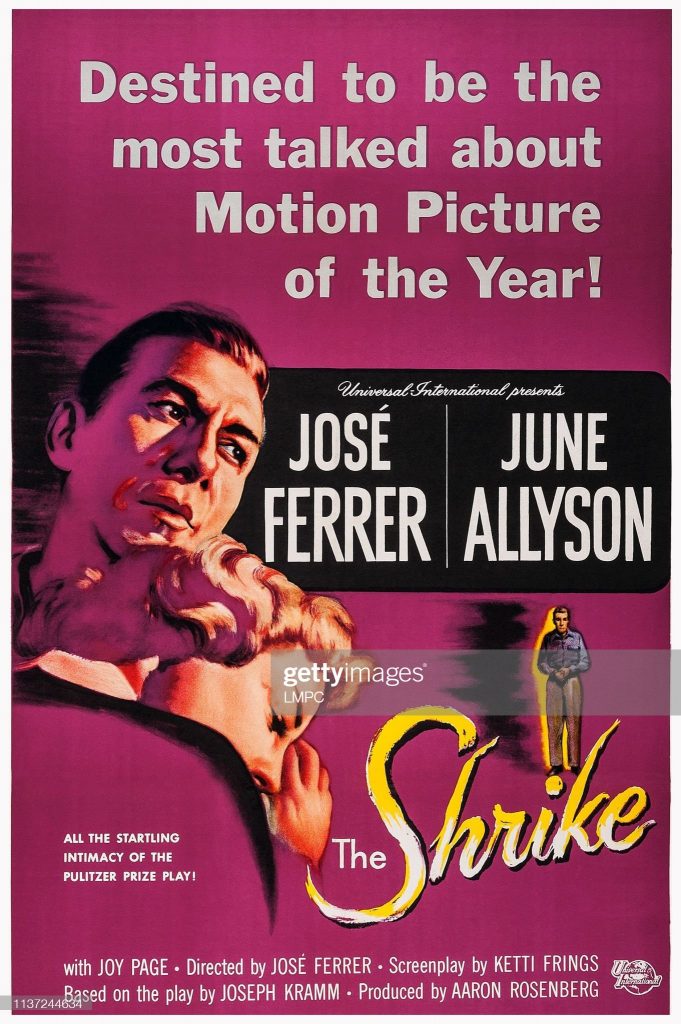
In 1952, he won three Critics’ Circle prizes and twin Tony Awards on Broadway. One Tony was for directing three different plays, “Stalag 17,” “The Fourposter” and “The Shrike,” which also won the Pulitzer Prize. The second Tony was for acting in “The Shrike.”

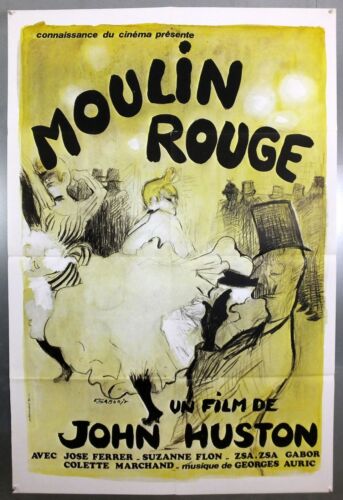
He ended that year by filming “Moulin Rouge,” directed by John Houston. In it, the tall Mr. Ferrer literally got down on his knees, with his legs strapped up, to portray the hobbling Toulouse-Lautrec. His performance won another Oscar nomination.

Born in Santurce, Puerto Rico, Jose Vicente Ferrer y Cintron made his first visit to the mainland as young boy for an operation on his palate. His family moved permanently to the mainland when he was 6. His parents were from Spain, and his father was a lawyer.

Young Mr. Ferrer attended public and private schools in New York City. He passed the entrance examination for Princeton University at the precocious age of 14, but at the urging of Princeton, he first took an extra year of preparation at a school in Switzerland. He was promising young pianist, and for a time was expected to became a concert performer. Taint by Association

Once at Princeton, however, he turned to the study of architecture. But show business tugged at him as got involved with campus productions that also drew the likes of James Stewart and Joshua Logan. It was during this same period that he organized his band, the Pied Pipers.

He did a brief showboat stint on Long Island in 1935, then went to Suffern, N.Y., on the straw-hat circuit with Mr. Logan, working as a stage manager. Later that year he got a one-line part on Broadway. His first major stage role was the lead in “Charley’s Aunt” in 1940.

Soon he took over a part played by Danny Kaye in “Let’s Face It,” then did “Othello” with Mr. Robeson. Sharing that bill later brought him under scrutiny on the suspicion of sharing Mr. Robeson’s leftist sympathies, which Mr. Ferrer denied.

His film debut was as the Dauphin with Ingrid Bergman in “Joan of Arc” in 1948, which earned the first of his three Oscar nomination.

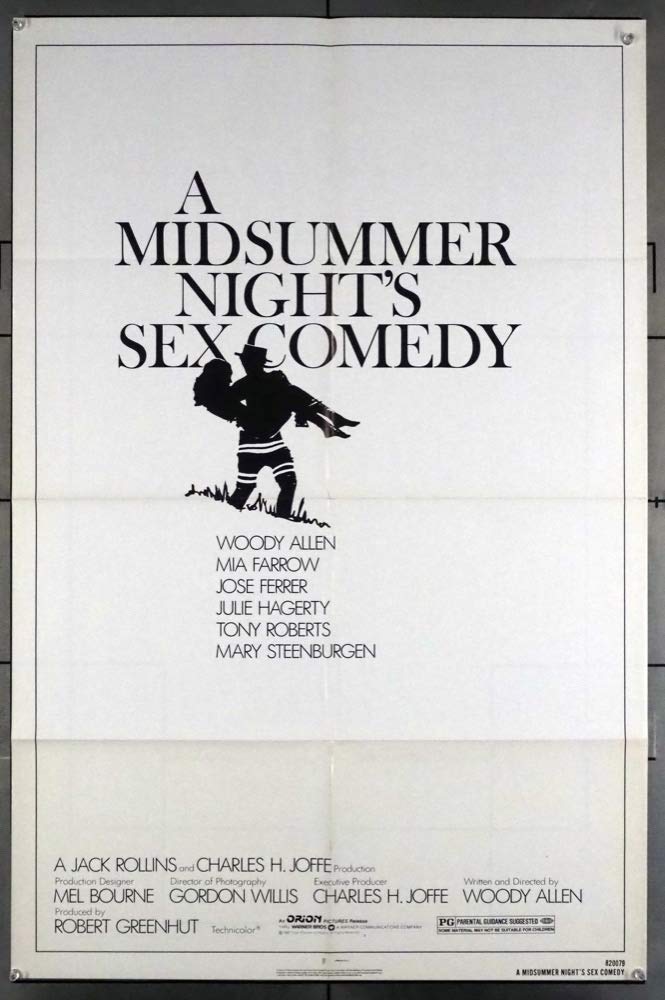
In his later years in film, he played memorable character roles in movies as disparate as “The Caine Mutiny,” “Lawrence of Arabia,” “Ship of Fools” and Woody Allen’s “Midsummer Night’s Sex Comedy.” On Broadway he starred in “Man of La Mancha” and directed “The Andersonville Trial.” On television he appeared in fare both serious and light, including “Gideon’s Trumpet” and “Magnum, P.I.” Dross Amid the Gold

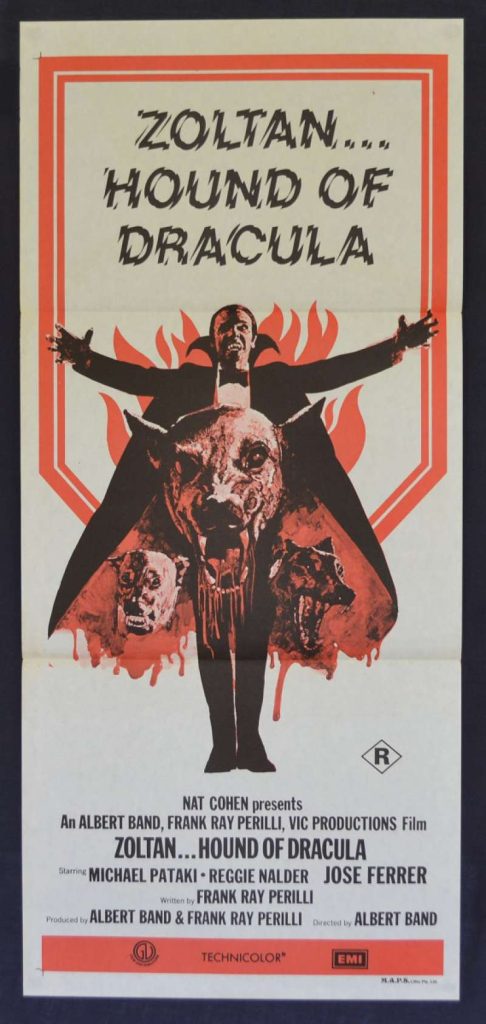
While his skill and intellect were often praised, some critics regretted that he failed to project much warmth. Like most performers, he had his share of duds. He directed “Return to Peyton Place” and appeared in another movie entitled “Dracula’s Dog.” But he always looked forward to the next production.

His last stage appearances were in 1990 in London and at the Paper Mill Playhouse in Millburn, N.J. He remained active directing, including Lee Richardson and Frances Sternhagen in tour of “All My Sons” in 1988 and a production of “The Best Man” at the Mark Taper Forum in Los Angeles.

President Ronald Reagan awarded him the National Medal of Arts in 1985, the first actor to receive that honor. Until recently he was president of the Players club, founded by Edwin Booth, and was active in the Actors Fund.

Three of Mr. Ferrer’s marriages ended in divorce, with the German actress Uta Hagen from 1938 to 1948, with Phyllis Hill from 1948 to 1953, and with the singer Rosemary Clooney twice in the 50’s and 60’s.

Surviving are his fourth wife, the former Stella Magee; three sons, Rafael Francisco, of New York City, and Miguel Jose and Gabriel Vicente, both of Los Angeles; three daughters, Leticia Thyra Ferrer of New York City, Maria Providencia Ferrer of Los Angeles and Monsita Teresa Botwick of Virginia Beach, Va.; eight grandchildren; two sisters, Leticia Garcia and Elvira Villafane, and a half-brother, Rafael.

Frank Sinatra
Frank Sinatra

Dick Vosburgh’s “Independent” obituary:

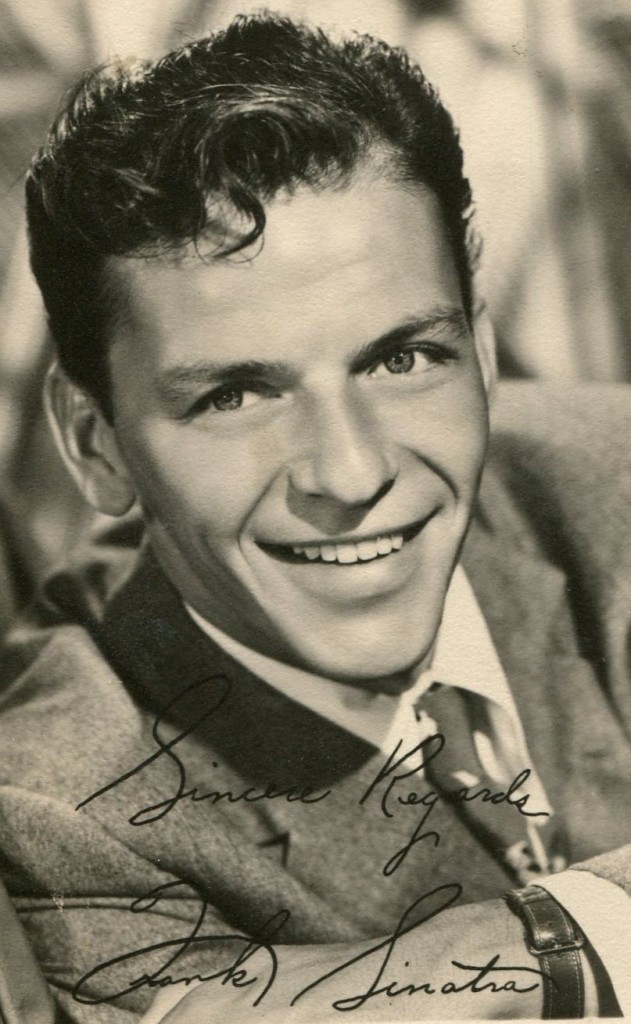
“WE ALL grew up with Sinatra,” said the film director Peter Bogdanovich. “His songs have meant so much to us that, when he sings, he’s not only doing his own autobiography, he’s doing ours.” “The Voice”, “Ol’ Blue Eyes”, “The Chairman of the Board”, “King of the Hill” – Frank Sinatra was a phenomenon, a pint-sized colossus bestriding the worlds of film, finance and music.

The main thing, of course, was the music; no popular singer has sung so many first-rate songs, old and new. He brought to this material a unique, evocative phrasing that personalised the romantic sentiments in the lyrics. The disc jockey William B. Williams once said, “Sinatra’s records were on the radio during more deflowerments than those of any other singer’s.”

Sinatra developed his style by studying many performers, but it was of Mabel Mercer that he said, “She taught me everything I know.” In the 1940s he haunted Tony’s West Side, an intimate bar-restaurant on 52nd Street in New York, to hear the Staffordshire-born Mercer sing superior, neglected songs with impeccable diction and an innate sense of story-telling.

You can hear her influence in Sinatra’s 1957 recording of David Raksin and Johnny Mercer’s “Laura”. Most vocalists singing “The laugh that floats on a summer night / That you can never quite recall” would sensibly take a breath after “recall”, thereby starting the new thought “And you’ll see Laura on the train that is passing through” with the new breath. But Sinatra manages to maintain the sense despite taking his breath after “never quite”. Then, in a smooth, flowing phrase, he holds “Recall” (which he sings full-out), continuing into a tender “And you’ll see . . .”

Here he takes his next breath to sing the word “Laura”, which Raskin composed to be sung on two repeated notes. Sinatra, however, abandons the second note and swoops to a lower one (staying, of course, within the harmony), thus giving the effect of caressing the name, as well as providing a strand of melodic invention which the conductor/arranger Gordon Jenkins can’t resist echoing in the strings. The song ends with one of Johnny Mercer’s surprise twists: “That was Laura, but she’s only a dream.” To emphasise this twist, Sinatra sings full-out on the word “but” (placed on the highest note in the song), and then brings an aching sadness to the last line, he and the orchestra pausing dramatically between “She’s only” and “a dream”.

On an earlier recording of Cole Porter’s “Night and Day”, Sinatra made an identical downward swoop on the word “Torment” (also composed to be sung on two repeated notes), probably motivated by the same sense of emotion. Such improvisation, plus even more annoying liberties with many of his rhymes – “I said to myself, `This affair never will go so well’, / But why should I try to resist when baby, I know damn [should be “so”] well” – eventually prompted a telegram from Porter, asking, “Why do you sing my songs if you don’t like the way they were written?”

Throughout his career Sinatra attracted controversy, over his private life, his political views and, most obviously, his friendship with Mafia figures. For over 40 years stories circulated about his links to the Mafia. Recently, while sitting between two women in a Los Angeles restaurant, he leant back too far in his chair and found himself falling. He caught hold of the two women, who tried to save themselves by catching hold of the tablecloth, after which all three fell to the floor, followed by the contents of their table. So closely was Sinatra identified with organised crime that everyone who saw him lying there immediately assumed he had finally been the victim of a Mob killing and ran from the restaurant in terror.

His parents were both Italian immigrants. His father, a fireman who also boxed briefly under the name Marty O’Brien, was shocked by his son’s early decision to sing for a living. Francis’s mother, Natalie Della (Dolly), a mid-wife, abortionist, tavern owner and political activist, was more sanguine when, at the age of 16 and full of high pie-in-the sky hopes he dropped out of high school, in Hoboken, New Jersey, unable to wait until graduation to become a singing star. He performed at dances, weddings, and other New Jersey functions until 1935, when he and three fellow Hobokenites auditioned for the radio series Major Bowes’ Amateur Hour. Bowes liked them, dubbed them the Hoboken Four, and put them on his show. They won first prize and a spot in one of the Major’s vaudeville tours.

Sinatra gained invaluable experience during his two years at the Rustic Cabin, a New Jersey roadhouse where he worked as singing head waiter and master of ceremonies, putting up with the low pay because the place featured regular radio broadcasts. He also sang, free of charge, on the New York independent radio station WNEW.

In 1939 Harry James, who had just left the Benny Goodman band to start his own outfit and had yet to find a vocalist, heard Sinatra on WNEW and dropped into the Cabin the following night. He hired him at $65 a week, despite the singer’s adamant refusal to change his name. Soon the trade paper Metronome, reviewing the new band, praised “the pleasing vocals of Frank Sinatra, whose easy phrasing is especially commendable”.

He had been with James for six months and was still under contract to him when a CBS executive tipped off Tommy Dorsey about “the skinny kid who’s singing with Harry’s band”, after which Dorsey auditioned him and offered $125 a week. James, knowing Sinatra’s wife Nancy was pregnant and that the extra dollars would come in handy, released him from his contract with a grin and a handshake.

The skinny kid’s original inspiration was Bing Crosby, particularly for the way he handled a microphone. “The microphone is the singer’s basic instrument,” Sinatra maintained. “You have to learn to play it like it was a saxophone.” Or a trombone; it is part of musical mythology that “The Voice” learnt his breath control by studying Dorsey’s trombone technique night after night. In 1941, the readers of Billboard voted him the year’s “Outstanding Male Vocalist”. In 1942 Metronome accorded him the same honour.

He sang with Dorsey for nearly three years, made 83 recordings (including the very popular “This Love of Mine” and “I’ll Never Smile Again”), and gained useful camera experience when the band appeared in the films Las Vegas Nights (1941) and Ship Ahoy (1942). In 1942, when Sinatra left to go out on his own, Dorsey, the womanising, vindictive, hard-drinking brawler who was incongruously billed as “The Sentimental Gentleman of Swing”, demanded 431/3 per cent of the ingrate’s earnings for the next 10 years.

The date 30 December 1942 marked the the end of the Band Era and the start of the Age of the Crooner. On that day Sinatra appeared as an “Extra Added Attraction” at the New York movie house the Paramount, on a bill headed by Benny Goodman and his band. The teenaged bobby-soxers in the audience gave Sinatra a screaming, swooning, headline-making reception, and he was suddenly the hottest talent in show business. During one engagement, when he missed a few performances because of a sore throat, hundreds of teenage girls marched forlornly around the theatre, mourning their idol’s non-appearance by wearing black bobbysocks.

In 1942 Sinatra had been chatting with a friend and fellow singer named Barry Wood. “You’re really going places, Frank,” Wood said. “What are your future plans?” Sinatra replied, “I want to be the star of the Hit Parade radio show.” Wood was lost for words as he was then the star of The Hit Parade. Sinatra took over the following year. He also signed a contract with RKO, who cast him as a swooner-crooner named Frank Sinatra in a loose adaptation of the Broadway musical Higher and Higher (1943).

RKO used Rodgers and Hart’s “Disgustingly Rich”, but jettisoned the rest of their songs, including “It Never Entered My Mind”, which Sinatra would record, memorably, 12 years later. The film’s new score, by Harold Adamson and Jimmy McHugh, provided the singer with two recording hits, “A Lovely Way to Spend an Evening” and “I Couldn’t Sleep a Wink Last Night”.

RKO’s next assignment, Step Lively (1944) was even thinner than Frankie Boy himself; a feeble re-hash of the old Marx Brothers flop Room Service (1938), but it had a lively score by Sammy Cahn and Jule Styne. When MGM bought up his RKO contract, Sinatra insisted that Cahn and Styne write the score for his first Metro film, the hugely successful Anchors Aweigh (1945). That year he also won a special Academy Award for his appearance in The House I Live In, a10-minute short attacking racial and religious prejudice.

Sinatra’s emaciated frame and hollow cheeks made him God’s gift to gagwriters. A 1945 Bob Hope radio show featured a sea sketch in which First Mate Jerry Colonna shouted, “Cap’n, look at the flag that ship’s flying! A skull and crossbones!” Hope snapped back, “Everywhere you go – Sinatra!” And he was everywhere: in supper clubs, on records, on the cinema screen, on radio in The Hit Parade, in his own radio show Songs by Sinatra and as Guest Star on just about everyone else’s. When Bing Crosby said, “A singer like Frank only comes along once in a lifetime . . . but why did it have to be my lifetime?” one suspects he was only half joking.

In 1947 Sinatra inspired some very unwelcome headlines after a Cuban holiday, during which he was seen all over Havana in the company of the deported Mafia killer and vice king Charlie “Lucky” Luciano. A few months later, his performance in It Happened in Brooklyn (1947) was mocked by the Hearst columnist Lee Mortimer, who referred to him as “Frank (`Lucky’) Sinatra”. Soon afterwards, there were even more unwelcome headlines when the singer (with the help of four friends) attacked Mortimer outside a Hollywood night-club and put him in hospital. He had to pay damages.

In the 1960s, when Sinatra sang “It Was a Very Good Year” he was certainly not referring to 1948; that was the year of more public brawls and attacks from the Hearst press, not to mention The Kissing Bandit, a film so dire that he took public swipes at it for the rest of his life. In a desperate attempt to try something new and different on the screen, he persuaded MGM to lend him back to RKO for the straight role of a priest in an even worse film, The Miracle of the Bells (1948). One critic said the movie proved there should be a Society for the Prevention of Cruelty to God.

Things looked up in 1949, when Sinatra was reunited with his Anchors Aweigh co-star Gene Kelly for the sprightly Take Me Out to the Ball Game and the joyously innovative On the Town, but in 1950 the news that he had left Nancy and their three children to marry Ava Gardner caused a torrent of bad press and the disbanding of most of his fan clubs.

In his heyday Sinatra never employed the hoary publicity stunt of insuring his voice for a vast sum, and must have regretted this in the early 1950s; heavy drinking and smoking had wreaked havoc with his vocal cords, which began haemorrhaging. Everything was turning sour; both MGM and The Hit Parade had dropped him, his records couldn’t be given away, and he owed a fortune in back taxes.

After Ava Gardner interceded with her former boyfriend Howard Hughes, now head of RKO, Sinatra was cast in a little comedy-with- music called It’s Only Money. When the film was finally released in 1951, he was billed below Jane Russell and Groucho Marx, and the title had been changed to Double Dynamite, in honour of Russell’s frontage, which was deemed more commercial than Frank Sinatra. A Down Beat poll of male vocalists in November 1951 showed that he had slid down to fourth place, below Billy Eckstine, Perry Como and Frankie Laine. By 1952 “The Voice” was washed up. Although he gave a splendid, assured performance in Universal’s Meet Danny Wilson (1952), and was in excellent voice, few people bothered to see the movie.

He fought his way back to centre stage by begging Columbia’s Harry Cohn for the role of the feisty Private Angelo Maggio in the film version of the James Jones novel From Here to Eternity (1953), which he played for a Woolworth price. His performance earned him the Academy Award for Best Supporting Actor, and Variety hailed his comeback as “the greatest in showbiz history”.

In 1954, six months after the expiration of his Columbia Records contract, Sinatra signed with a reluctant Capitol, and made a return to the record business that was even more triumphant than his film comeback. In a decade when novelty hits like Perry Como’s “Hot Diggity”, Georgia Gibbs’s “Tweedle Dee” and Patti Page’s “Doggie in the Window” were million-sellers, his Capitol albums offered fine standards by George and Ira Gershwin, Harold Arlen, Cole Porter, Johnny Mercer, Rodgers and Hart, Lerner and Loewe, Leonard Bernstein, Jerome Kern, Kurt Weill and Noel Coward, plus custom- made new songs like “Come Fly With Me”, “It’s Nice to Go Trav’lling” and “The September of My Years”, by his personal songwriters, Sammy Cahn and Jimmy Van Heusen, a team he put together.

Swing Easy, In the Wee Small Hours, Songs for Swingin’ Lovers, Close to You, A Swingin’ Affair, Come Fly With Me, Only the Lonely and the rest of his Capitol albums kept up a remarkable standard. Most were made with his all-time favourite conductor/ arranger, the late Nelson Riddle. “Nelson had a fresh approach to orchestration,” Sinatra said, “and I made myself fit into what he was doing.”

Sinatra’s film comeback continued in Young at Heart (1954), with Doris Day. In Stanley Kramer’s medical saga Not as a Stranger (1955), his co- star was Robert Mitchum, who once admitted, “The only man in town I’d be afraid to fight is Frank. I might knock him down, but he’d keep getting up until one of us was dead.” Also in 1955 he surpassed his Eternity performance as the tormented junkie Frankie Machine in The Man with the Golden Arm, then had a light comedy success (complete with Cahn/ Van Heusen hit song) in The Tender Trap.

The same year saw the making of Guys and Dolls, which Sinatra found a miserable experience. He knew he was miscast in the supporting role of Nathan Detroit, and hankered after Sky Masterson, the star part Marlon Brando was playing. (The previous year, Brando had beaten him to the role of Terry Malloy, the ex-prize fighter who “could have been a contender” in On the Waterfront, a story set in Sinatra’s hometown, Hoboken.) And he hated acting with Brando, who would require take after take, whereas repetition maddened “One-Take Frankie”; he walked off the film Carousel (1956) on the very first day when he learnt he would have to play every scene twice – once for CinemaScope and once for Todd-AO.

Yet he took infinite pains in his spiritual home, the recording studio; his recording of “Day In, Day Out” required 31 takes before he was satisfied. An even greater dedication went into Peggy Lee’s The Man I Love album. Sinatra produced it, conducted it, chose the songs, hired Riddle to write the arrangements, designed the cover, and, with his own hands, put menthol in Lee’s eyes to make them look suitably misty for the cover photograph.

In the 1960s he left Capitol and started his own Reprise record label, turning out another series of magnificent albums with Riddle, Johnny Mandel, Sy Oliver, Billy May, Quincy Jones, Neal Hefti, Gordon Jenkins, Don Costa, Claus Ogerman, and his regular arranger-conductor of the 1940s, Axel Stordahl.

The 40-odd films Sinatra made after his 1953 comeback also included High Society (1956), The Joker is Wild (1957), Pal Joey (1957), and The Pride and The Passion (1957), in which he was ludicrously miscast as a Spanish peasant. Rumour had it that he only accepted the role because the film was made in Spain, where his estranged wife Ava Gardner was now living; still madly in love with her he hoped to dissuade her from ending their marriage, but she wouldn’t be swayed and divorced him that same year.

In 1962 he made the brilliant, eerily prophetic assassination thriller The Manchurian Candidate (1962). Sinatra, devastated by the assassination, the following year, in 1963, of his friend John F. Kennedy, blocked the film’s re-release for decades.

A lifelong Democrat, the singer astonished his intimates in the 1970s by suddenly becoming an ardent Republican. “It was bad enough when Frank palled around with `Lucky’ Luciano and `Bugsy’ Siegel,” said a screenwriter friend. “Now he’s buddies with Nixon, Agnew and Reagan!”

In 1971 Sinatra, brooding about badly received films like Dirty Dingus Magee (1970), a decline in album sales and the recent failure of his brief marriage to Mia Farrow, announced his retirement. The final song of his “farewell performance” at the 50th Anniversary benefit show for the Motion Picture and Television Relief Fund was “Angel Eyes”, which ends: “Pardon me, but I gotta run. / The fact’s uncommonly clear, / Gotta find who’s now number one, / And why my angel eyes ain’t here. / ‘s’cuse me while I disappear.”

The disappearance only lasted 24 months; he announced his “unretirement” with Ol’ Blue Eyes is Back, 1973’s most expensive television special, and with an LP of the same name which reached the top 15. Three years later he married Barbara Marx, the divorced wife of Zeppo, the youngest Marx brother. When the judge who performed the civil ceremony asked the bride, “Do you take this man for richer, for poorer?”, the happy groom ad-libbed, “Richer, richer!”

In the last decades of his life, the nickname “Ol’ Blue Eyes” was more appropriate than “The Voice” but, although his vocal range was diminished, his phrasing was as impeccable as ever. You could still hear a pin drop whenever he sang the Mercer/Arlen classic “One For My Baby”, a song that didn’t belong in the same repertoire as “My Way”, the self-aggrandising paean he was singing just before his collapse on 6 March 1994, during a concert in Richmond, Virginia. Rushed to hospital, he was asked by anxious doctors to stay overnight, but, true to form, waved away such a suggestion and boarded his private jet for home. His reactions were equally characteristic earlier in the same week when he was given a “Living Legend” award at the 1994 Grammys; first he wept at the audience’s standing ovation, then complained that he hadn’t been asked to sing at the ceremony. His first Duets album, made the preceding year, pleased him by reaching Second Place in Billboard’s album charts but it was a clumsy and pointless endeavour, as was Duets II, released in late 1994.

Sinatra had come close to death 30 years before while starring in None But the Brave (1964), a movie he also produced and directed. It was filmed on the Hawaiian island of Kauai, where he nearly drowned. While swimming, he and Ruth Koch, his executive producer’s wife, were engulfed by a giant wave and pulled out to sea by the undertow. When the burly actor Brad Dexter swam to the rescue, an exhausted Sinatra gasped “Save Ruth – I’m going to die.”

Somehow Dexter managed to keep both swimmers afloat until a surfboard crew arrived. He told Sinatra’s biographer Earl Wilson: “I felt Frank meant it when he said I should save Mrs Koch and not worry about him. I felt that he wouldn’t care if he died. Because he’d lived a great life. Frank had been there and back.”

Francis Albert Sinatra, singer and actor: born Hoboken, New Jersey 12 December 1915; married 1939 Nancy Barbato (one son, two daughters; marriage dissolved 1950), 1951 Ava Gardner (marriage dissolved 1957), 1966 Mia Farrow (marriage dissolved 1968), 1976 Barbara Marx (nee Blakely); died Los Angeles 15 May 1998.

The above “Independent” obituary can also be accessed online here.

Don Stroud
Don Stroud
Don Stroud
Don Stroud

Don grew up on the beach in Honolulu, Hawaii, where his stepfather, Paul Livermore, and his mother, Ann, owned and operated the popular “Embers Steak House” and nightclub where Ann performed nightly. Don thrived on the beach in Waikiki under the watchful eyes of such mentors as Blackout, Mud, Buckshot, Rabbit and Steamboat. He learned much from these famous beach boys and in 1960, at the age of 17, he placed fourth in the “Duke Kahanamoku World Surfing Championship” at Makaha, Hawaii. Don was surfing at Waikiki when he was discovered. Actor Troy Donahue was filming Hawaiian Eye (1959) and needed a stunt double for his surfing scenes. Don, at 18, 6′ 2″ and 175 pounds, stepped up and was hired on the spot. He loved the gig so much, he decided to go to Hollywood to give it a try. Upon arriving in L.A., he landed a variety of jobs, including parking cars, bouncer and then manager of the world famous “Whiskey A Go-Go” nightclub on the Sunset Strip, where such greats as Janis Joplin, Jimi Hendrix and Jim Morrison of the “Doors” appeared. It was at the “Whiskey” that actor Sidney Poitier turned Don on to his acting career. Don went on to become one of Hollywood’s great heavies and character actors. He has starred in over 100 movies and 175 television shows to date. He has also starred in four television series, notably Mickey Spillane’s The New Mike Hammer (1984) with Stacy Keach and The New Gidget (1986) where he was a natural to play the “Kahuna”.
– IMDb Mini Biography By: www.donstroud.com (with permission)

Alan King
Alan King
Alan King

Mile Carlson’s “Guardian” obituary:

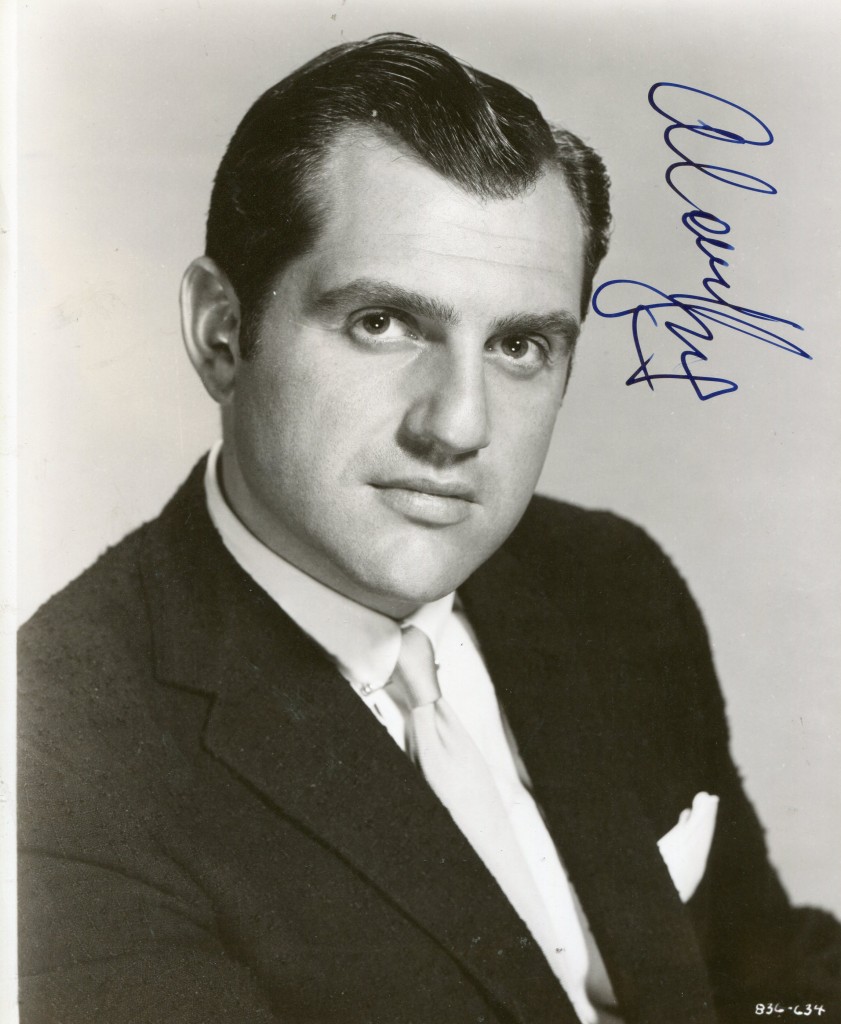
The acerbic wisecracking of Alan King, who has died aged 76, was the essence of Jewish comedy for mainstream Americans, and once for British royalty. In 1956, he opened for Judy Garland at a royal command performance. In the receiving line, the Queen asked him, “How do you do, Mr King?” “How do you do, Mrs Queen?” the comedian replied. As King recounted, “Then Prince Philip laughed. Thank God, he laughed.”

King’s combination of wit and chutzpah made him a popular comedian, but he was also a underrated actor, a successful producer of theatre and films, and a very funny writer.

Born to Russian immigrant parents in Brooklyn’s Williamsburg district, he moved with his family to the Lower East Side, where he claimed to have survived the rough neighbourhood by fighting back with humour. He left school at 14 to work the Catskills borscht belt, first as a drummer and then as a stand-up comic. His success opening for Frank Sinatra led to stints with Lena Horne, Patti Page, Billy Eckstein and Garland, with whom he had a record-breaking run at New York’s Palace Theatre.

The key to King’s success involved taking advantage of America’s suburbanisation in the 1950s. When he married, in 1947, his wife Jeanette persuaded him to leave Manhattan for Forest Hills, Queens. His urban Jewish take on suburban life led to his nicknaming the Long Island Expressway as “the world’s longest parking lot”.

King’s books, among them Anyone Who Owns His Own Home Deserves One (1962), were commonplace on American suburban bookshelves in the 1960s. He was one of the most frequent performers on the Ed Sullivan Show, and a regular guest on the Tonight Show, where his interest in people made him a natural fill-in for host Johnny Carson.

Although his film career began in 1955, he first attracted attention as the rabbi in Bye Bye Braverman (1968). His character parts were typified by his role in Martin Scorsese’s Casino (1995), but he was effective as the husband trying to save his marriage in Sidney Lumet’s Just Tell Me What You Want (1980) and memorable as the father in John Sayles’ Sunshine State (2002).

He joked that his best role was as the villain in Rush Hour 2 (2001), because playing with Jackie Chan was the only time his grandchildren thought he was cool. On Broadway, he had a two-year run in Impossible Years in the mid-1960s; 30 years later, he won acclaim playing Samuel Goldwyn in an off-Broadway production. He began a second career as a producer, both in theatre (The Lion In Winter, Dinner At Eight) and less successfully in film (Wolfen).

This allowed him to spend more time with his family after discovering that one son was addicted to drugs, and to indulge his love of tennis; he kept a box at the US Open and sponsored a tournament in Las Vegas. His autobiography, Name Dropping, was published in 1996, and a second memoir, Matzoh Balls For Breakfast, is due this year.

He is survived by his wife and three children.

· Alan King (Irwin Alan Kniberg), comedian and actor, born December 26 1927; died May 9 2004

The above “Guardian” obituary can also be accessed online here.

“Guardian” obituary by Mike Garson:

Clive Owen
Clive Owen
Clive Owen

Clive Owen was born in 1964 in Coventry.   He first came to prominence in the UK with his performance in the lead in the cult TV series “Chancer” in 1990 and 1991.   His cinema fame came with “Close My Eyes” in 1991.   He has since made films in Hollywood and on the international scene.   His movies include “Gosford Park”, “The Bourne Identity”, “Closer” and “Sin City”.

TCM overview:

After a decade of steady work on British television, actor Clive Owen broke out internationally with American art house success of the taut crime-thriller “Croupier” (2000). With his rugged good looks and low key charm, comparisons to the great Sean Connery seemed inevitable as he delivered a series of strong performances in such films as “Gosford Park” (2001) and “The Bourne Identity” (2002). Nearly unanimous praise was heaped on the actor for his wicked performance in Mike Nichols’ brutal relationship drama, “Closer” (2005) – in a role he had originated on the stages of London – followed by a stylistic about-face as part of Robert Rodriguez’s hyper-stylized neo-noir “Sin City” (2005), adapted from Frank Miller’s graphic novel. His work in the intelligent, affecting and ultimately terrifying look into the near-future “Children of Men” (2006) secured Owen’s status as one of Hollywood’s top talents. He showed exceptional comic timing opposite Julia Roberts in the sexy satire “Duplicity” (2009) in addition to a willingness to tackle historical icons in acclaimed work like “Hemingway & Gellhorn” (HBO, 2012). While harkening back to the leading men of film’s golden era, Owen also brought to the table an unmistakably 21st-Century artistic sensibility, making him both an actor’s actor and bona fide movie star.

Born on Oct. 3, 1964 in the small town of Coventry, England, Owen was raised in a fairly rough neighborhood by his country music singing father, who was divorced from his mom in 1968. Owen knew early on that he wanted to be an actor after playing the Artful Dodger in a school production of “Oliver!” When he was 13 years old, he joined a youth group run by the Coventry Theatre while a student at Binley Comprehensive. Accustomed to poverty and occasional violence, Owen spent two years after graduating high school on the dole while trying to jump-start his acting career. He previously tried applying to the Royal Academy of Dramatic Art (RADA), but decided instead to drop out of civil society and make it on his own terms. Two soul-sucking years later, Owen reapplied to RADA and got in. He was fortunate enough to be working with a group in school that was workshopping a Howard Barker play that had yet been put to market. The play later opened at the Royal Court, attracting agents wishing to represent young Owen before he had the chance to even graduate.

After graduation, he took to the stage at the Young Vic, playing Romeo in “Romeo and Juliet” – where he met his soon-to-be wife, Sarah-Jane Fenton, who played Juliet – and Claudio in “Measure for Measure.” Owen made his feature debut in “Vroom” (1988), a story about three people – Owen, David Thewlis and Diana Quick – who escape their dreary surroundings and go on a road trip that suddenly turns disastrous. That same year, he displayed his darker side as a psychopath in the BBC adaptation of “Precious Bane,” which aired in America on PBS’ “Mystery!” before turning roguishly heroic for the British TV series, “Chancer” (1990-91). Owen delivered a strong portrayal of an ambitious businessman who is seduced by his older sister (Saskia Reeves), then becomes obsessed when she tries to break the affair off in Stephen Poliakoff’s excellent drama “Close My Eyes” (1991). Owen was tapped again by Poliakoff, this time to play a Jewish doctor who clashes with the head of a medical center (Charles Dance) in the period piece “Century” (1993).

Owen crossed the Atlantic to appear in the ABC drama “Class of ’61” (1993), as an Irish graduate of West Point who goes off to fight in the Civil War. Owen received strong notices for his seductive hedonist in “The Return of the Native” (CBS, 1994) and as Halle Berry’s lover in “The Rich Man’s Wife” (1996). After starring as a British private investigator in the series “Sharman” (1996), Owen essayed his most challenging role to date, playing a concentration camp inmate in Sean Matthias’ film version of “Bent” (1997). As Max, the actor gave a powerful performance, skillfully negotiating the characters evolution from selfish and debonair decadent to caring individual. Owen and co-star Lothaire Bluteau worked off one another to great effect, with both delivering star-making performances.

After co-starring on the London stage in “Closer” (1997), the actor appeared opposite Alex Kingston in director Mike Hodges’ absorbing crime drama “The Croupier” (1999), the film that would provide his breakthrough role. As a hard-boiled dealer who conspires to defraud a casino, Owens’ performances prompted critic Roger Ebert to compare his steely reserve to that of Sean Connery, noting “he doesn’t give himself wholly to the action, but seems to be keeping a part of his mind outside of it, measuring and calculating.” Not surprisingly, Owen quickly began topping the lists of potential successors to the James Bond role after Pierce Brosnan. Meanwhile, the actor’s popularity increased when he starred in a series of four “Second Sight” telepics for the BBC, playing hot shot British detective Ross Tanner in 1999 and 2000, and he became an icon of cool as The Driver in a series of avant-garde action shorts sponsored by BMW and helmed by directors John Woo, Ang Lee, Guy Ritchie, Tony Scott, Joe Carnahan and John Frankenheimer.

On the big screen, Owen again impressed with his turn in “Gosford Park” (2001), director Robert Altman’s delightful ensemble riff on British drawing room murder mysteries, playing the brooding Robert Park, who emerges as a central figure in the storyline. Off that success, he was cast in the big budget studio adaptation of Robert Ludlum’s spy thriller “The Bourne Identity” (2002) as the ruthless, steel-nerved assassin, The Professor. Owen next starred opposite Angelina Jolie in the disappointing melodrama “Beyond Borders” (2003), the story of a disaster-relief worker who falls in love with a socially conscious wealthy woman. He rebounded strongly, however, when he reunited with Hodges for the noirish “I’ll Sleep When I’m Dead” (2004), playing a retired British gangster who emerges from his secluded countryside life to investigate the death of his brother.

Next up was Antoine Fuqua’s supposedly “demystified” retelling of the legend of “King Arthur” (2004), a big budget, action-oriented film that cast Owen as England’s once and future king, this time set in a more historically correct context, if indeed a King Arthur actually existed. Owen’s next role made him an overnight star in the States. The highly literate, often romantically brutal drama “Closer,” directed by Mike Nichols followed the complex relationships between two couples (Owen, Natalie Portman, Julia Roberts and Jude Law) who become messily intertwined in a love/sex gender war. Despite such starpower, it was the relatively unknown Owen’s hard-edged performance that was the most heavily cited by critics and viewers. Not surprisingly, Owen took home the Golden Globe for Best Performance by a Supporting Actor and was nominated for an Oscar in the same category.

Amid furious rumors that he was being courted to become the next James Bond – he later admitted he wasn’t interested in the role, which ultimately went to Daniel Craig – Owen appeared to splendid effect in director Robert Rodriguez and writer-artist Frank Miller’s co-venture “Sin City” (2005), a visceral, visually stunning adaptation of Miller’s crime noir comic book series. Headlining the segment drawn from Miller’s story arc “The Big Fat Kill,” Owen played the hard-edged but noble Dwight McCarthy, who becomes embroiled in a sudden, violent battle over control of Sin City’s Old Town, where prostitutes armed to the teeth reign. A portion of Owen’s storyline, the eerie sequence in which he drives the talking corpse of the corrupt cop Jackie Boy (Benicio del Toro) was also directed by Quentin Tarantino. Next was the thriller “Derailed” (2005), which cast Owen and Jennifer Aniston as two married business executives having an affair who are forced into violent and illicit acts by a sadistic criminal, and must turn the tables to save their families.

After the blackmail thriller came and went without much notice, Owen starred in Spike Lee’s impressive genre piece, “Inside Man” (2006), playing a brilliant and cool-headed thief who remains one step ahead of a smooth-talking hostage negotiator (Denzel Washington) in an effort to pull off the perfect heist. Owen rounded out the year on a high note, starring in Alfonso Cuarón’s multi-award nominated “Children of Men” (2006), a futuristic dystopian tale about a former political activist (Owen) turned down-and-out bureaucrat who is convinced by a former lover (Julianne Moore) to help transport a young woman pregnant (Clare-Hope Ashitey) with the infertile world’s only child to the fabled Human Project in order to save the future. He was next cast as Sir Walter Raleigh in “Elizabeth: The Golden Age” (2007), Shekhar Kapur’s follow up to “Elizabeth” (1998) in which the Virgin Queen (Cate Blanchett) becomes involved in a relationship with the famed poet and explorer during one of the British Empire’s many entanglements with Spain.

Proving himself comfortable in virtually any and all imaginable genres, Owen starred opposite a scenery-chewing Paul Giamatti in the cartoonishly violent “Shoot ‘Em Up” (2007), as a nameless, carrot-chomping gunslinger, united with a beautiful prostitute (Monica Bellucci) in the guardianship of an infant targeted by a ruthless criminal (Giamatti). Far more somber in its tone was the espionage thriller “The International” (2009), in which Owen played an Interpol agent investigating a global banking organization involved in money laundering, arms trading and murder. Also that year he demonstrated nearly irresistible chemistry with co-star Julie Roberts in the jaunty “Duplicity” (2009), a romantic comedy in which they played two corporate spies conning a pair of captains of industry, even as they alternately scammed and wooed each other. Working with actor-turned-director, David Schwimmer, Owen gave a heart-wrenching performance in the drama “Trust” (2010) as a father whose world is turned upside down after his teenage daughter (Liana Liberato) is stalked and later raped by a man she met on the Internet. Returning to pure action, he paired with Robert De Niro and Jason Statham for the thriller “Killer Elite” (2011), prior to working alongside actress Nicole Kidman in the lauded period biopic “Hemingway & Gellhorn” (HBO, 2012), which covered the great American writer’s (Owen) love affair with war correspondent Gellhorn (Kidman) during the Spanish Civil War. His performance as Hemingway earned him an Emmy Award nomination for Outstanding Lead Actor in a Miniseries or a Movie – the first such honor of his career. He also received a SAG nod in the same category.

 The above TCM overview can also be accessed online here.

Christopher Atkins
Christopher Atkins
Christopher Atkins

Christopher Atkins was born in 1961 in New York.   Heis best known for his role opposite Brooke Shields in “The Bllue Lagoon” in 1980.   Other roles include “The Pirate Movie” in 1982 and “Prism” in 2009.