
Hollywood Actors

Collection of Classic Hollywood Actors

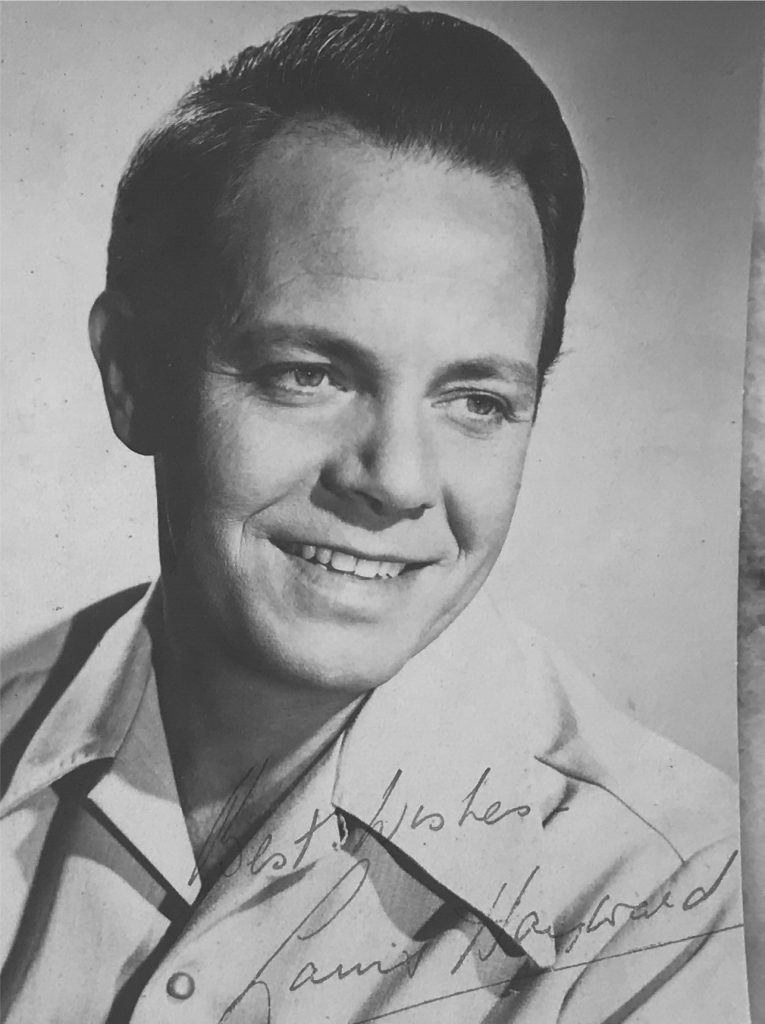
Louis Hayward
Louis Hayward
Louis Hayward

Louis Hayward


TCM Overview:

Suavely handsome, often tongue-in-cheek leading man of the 1930s and 40s who began his career with a provincial theater company in England. Hayward came to Hollywood in the mid-30s and quickly established a second-rank level of stardom which lasted until the mid-50s. He more than held his own in a wide variety of films; his light touch with cynical, witty banter suited him well in drawing room comedies and romantic dramas (“The Flame Within” 1935, “The Rage of Paris” 1938, “Dance Girl Dance” 1940), but he regularly appeared in detective films and adventures as well. Often cast as somewhat roguish playboys, Hayward played the leading role in Rene Clair’s sterling adaptation of Agatha Christie’s mystery “And Then There Were None” (1945) and was fine in dual roles James Whale’s stylish version of “The Man in the Iron Mask” (1939).

The latter film prefigured the later contours of Hayward’s film career, as his athletic, romantic dash led him to be cast in many medium-budgeted swashbucklers, four of which (including “Fortunes of Captain Blood” 1950 and “The Lady in the Iron Mask” 1952, recalling his earlier triumph) teamed him with Patricia Medina. Hayward was married for a time to Ida Lupino, with whom he co-starred in the Gothic melodrama “Ladies in Retirement” (1941).

Los Angeles Times obituary in 1985:

TIMES STAFF WRITER 

Louis Hayward, whose debonair charm and athletic good looks made him one of Hollywood’s most successful swashbuckling heroes of the 1930s and ‘40s, died Thursday at Desert Hospital in Palm Springs.

He was 75 and had spent the last year of his life in a battle against cancer, which he attributed to having smoked three packs of cigarettes a day for more than half a century.

A lifelong performer (“I did a Charlie Chaplin imitation for my mother when I was 6 and never really got over it,” he told friends), Hayward scored his first major screen success with the 1939 film, “The Man in the Iron Mask,” and spent the next decade starring in such adventure films as “The Son of Monte Cristo,” “The Saint in New York,” “The Black Arrow” and “Fortunes of Captain Blood.”

“I also did rather creditable acting jobs as the rotten seed in ‘My Son, My Son,’ and the villainous charmer in ‘Ladies in Retirement,’ ” he said ruefully. “But nobody really cared. They just handed me another sword and doublet and said ‘Smile!’ ”

Born March 19, 1909, in Johannesburg, South Africa, a few weeks after his mining engineer father was killed in an accident, Hayward was taken first to England and then to France, where he attended a number of schools under his real name, Seafield Grant.

He received early training in legitimate theater, appeared for a time with a touring company playing the provinces in England and then took over a small nightclub in London.

“Which is where my career really began,” he said. “Noel Coward came in one night; I managed to talk to him for a time and wound up wriggling into a small part in a West End company doing ‘Dracula.’ ”

He followed with roles in “The Vinegar Tree,” “Another Language” and “Conversation Piece” before going to New York, where a chance acquaintance with Alfred Lunt led to a role in the Broadway play, “Point Valaine,” for which he won the 1934 New York Critics Award.

His first Hollywood efforts in “The Flame Within” and “A Feather in Her Hat” were moderately successful, moderately well-received and almost instantly forgotten.

But then came the 1936 role of Denis Moore in “Anthony Adverse,” and studio officials began talking about stardom.

The dual role of Louis XIV and Philippe in “The Man in the Iron Mask” established Hayward as a swashbuckler and was followed by major roles in “And Then There Were None,” “The Duke of West Point” and similar vehicles.

Hayward, who had become a naturalized U.S. citizen the day before the Japanese bombed Pearl Harbor, served three years in the Marine Corps during World War II, winning the Bronze Star for filming the battle of Tarawa under fire.

Formed Own Company

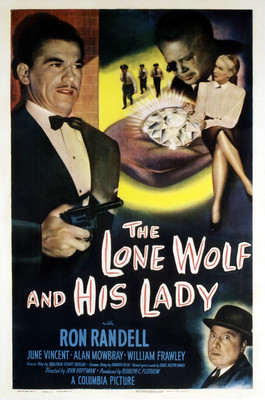
Returning to films after the war, he formed his own film company and was one of the first stars to demand and get a percentage of the profits from his pictures, which included “Repeat Performance,” “The Son of Dr. Jekyll,” “Lady in the Iron Mask,” “The Saint’s Girl Friday,” “Duffy of San Quentin” and “The Lone Wolf,” which he subsequently turned into a television series, playing the starring role in 78 episodes in the 1960s.

Hayward left Hollywood in the late 1950s to appear in a British television series, “The Pursuers,” returning for television appearances in “Studio One” and “Climax” anthology shows and returning to the stage as King Arthur, opposite Kathryn Grayson, in a Los Angeles Civic Light Opera production of “Camelot” in 1963.

His first two marriages, to actress Ida Lupino and to socialite Margaret Morrow, ended in divorce.

Hayward, who had lived in Palm Springs for the last 15 years, is survived by his wife, June, and a son, Dana. At his request, a family spokesman said, no funeral was planned.

news

Louis Hayward (1909–1985) was the “thinking man’s swashbuckler.” While often compared to Errol Flynn, a critical analysis of Hayward’s career reveals a much more complex, psychologically driven actor. He was the first to bring a “noir” sensibility to the adventure genre, portraying heroes who were often as haunted and cynical as they were heroic.

As a protégé of Noël Coward and the first actor to play “The Saint” on screen, Hayward carved out a legacy defined by mercurial charm and technical precision.


I. Career Overview: From the West End to the High Seas

Act 1: The Coward Protégé (1930s)

Born in Johannesburg and educated in England, Hayward was discovered by Noël Coward. He became a star of the London stage in Conversation Piece (1934) before moving to Broadway and Hollywood. His early film roles, such as in The Flame Within (1935), established him as a sophisticated, sometimes volatile romantic lead.

Act 2: The Definitive “Saint” and Swashbuckler (1938–1950)

Hayward made cinema history as the first Simon Templar in The Saint in New York (1938). He then pivoted to the genre that would define him: the historical epic. He starred in the dual role of Louis XIV and Philippe in The Man in the Iron Mask (1939), which set the gold standard for “twin” performances in early cinema.

Act 3: Post-War Noir and Television (1945–1970s)

After serving as a combat photographer in the Marine Corps during WWII (earning a Bronze Star), Hayward returned to Hollywood with a darker edge. He starred in the quintessential “Ten Little Indians” adaptation And Then There Were None (1945) and transitioned into television with the series The Pursuers.


II. Critical Analysis: The Architecture of the Anti-Hero

1. The “Bipolar” Performance: The Man in the Iron Mask

Hayward’s performance in this 1939 classic is a masterclass in physical and vocal contrast.

  • The Technique: To play the twin brothers, Hayward didn’t rely solely on costumes. He used two distinct vocal registers and completely different sets of facial tics. He portrayed Louis XIV as a preening, effeminate sociopath and Philippe as a grounded, rugged hero.

  • Critical Impact: Critics often note that Hayward’s Louis XIV was ahead of its time—a “camp” villain played with deadly, serious conviction. He managed to make the audience loathe and root for the same face simultaneously.

2. The Saint: Sophistication with a Switchblade

While many actors played Simon Templar, Hayward’s interpretation in The Saint in New York is considered the most “accurate” to Leslie Charteris’s original novels.

  • The Dark Edge: Unlike the later, more polished versions (like Roger Moore), Hayward’s Saint was a dangerous vigilante. He brought a mercenary coldness to the character’s charm.

  • Analysis: Critics point out that Hayward understood the “Saint” was a criminal who happened to be on the side of the law. He played the role with a “knowing smirk” that suggested he was always five minutes away from committing a crime himself.

3. The Post-War “Haunted” Hero

Hayward’s service in the Pacific deeply affected his later work. In the 1940s and 50s, his swashbucklers (like The Fortunes of Captain Blood) felt different from the escapism of the 30s.

  • Cynical Vitality: There was a “tightness” in his later performances—a sense of a man who had seen real violence. This added a layer of grit and realism to the adventure genre. He was one of the few actors who could make a sword fight look like a desperate struggle for survival rather than a choreographed dance.


III. Major Credits and Comparative Roles

Work Medium Role Significance
The Saint in New York(1938) Film Simon Templar Created the blueprint for the “Gentleman Rogue” on screen.
The Man in the Iron Mask(1939) Film Louis XIV / Philippe His most technically impressive “dual” performance.
And Then There Were None (1945) Film Philip Lombard A study in ensemble acting and post-war cynicism.
The Son of Monte Cristo(1940) Film Edmond Dantès, Jr. Solidified his status as Errol Flynn’s primary “thinking” rival.
House by the River (1950) Film Stephen Byrne A rare, terrifying turn as a murderous aristocrat for director Fritz Lang.
Vera Zorina
Vera Zorina
Vera Zorina

Vera Zorina wwwdoctormacrocomImagesZorina20VeraAnnexAn

The “Guardian” obituary from 2003:

Vera Zorina, who has died aged 86, began her career as a dancer, but branched out into many forms of musical theatre.

Born Eva Brigitta Hartwig, in Berlin, she made her debut at the age of 14 as the First Fairy in Max Reinhardt’s production of A Midsummer Night’s Dream in 1930, and worked for him again the following year in Offenbach’s Tales Of Hoffmann. She then moved to London, where she studied with Marie Rambert and Nicholas Legat.

In 1933, Anton Dolin spotted her and cast her opposite him in Ballerina, a play with ballet interludes. Her name was changed to Vera Zorina (in private she remained Brigitta) when she was invited to join Colonel de Basil’s Ballets Russes de Monte Carlo in 1934.

Léonide Massine cast her in leading roles in several of his ballets, including La Boutique Fantasque, Le Beau Danube and Les Presages. She also danced in Bronislava Nijinska’s Les Noces, which de Basil briefly revived. Although Massine was married at the time to another dancer, Evgenia Delarova, Zorina became his lover, a fact of which she made no secret in her autobiography Zorina (1986).

In 1936, she left de Basil to star in the London production of the Rodgers and Hart musical, On Your Toes. A hit in New York, where it starred George Balanchine’s first wife, Tamara Geva, and Ray Bolger, the show was an artistic if not a commercial success in London. She also appeared in London in Balanchine’s Slaughter On Tenth Avenue, in which the hoofer hero (Jack Whiting) danced a pas de deux with the dead striptease dancer (Zorina).

Balanchine did not go to London to supervise his choreography, but Zorina was soon to work with him when Samuel Goldwyn brought her to Hollywood to appear in his film The Goldwyn Follies, for which Balanchine had been engaged to stage the ballets. The most notable was the Water Nymph ballet, in which Zorina rose from a pool in a gold lamé tunic.

This began a long professional and personal association with Balanchine. Soon after finishing the movie in 1938, Zorina was featured on Broadway in another Rodgers and Hart musical, I Married An Angel, with ballets by the choreographer. By the time The Goldwyn Follies was released, she and Balanchine were married. The following year she appeared in the film version of On Your Toes. On Broadway in 1940, she starred in the Irving Berlin musical Lousiana Purchase, again with ballets by Balanchine. (The film version of 1941 was essentially a record of the stage show and included his Mardi Gras ballet, without screen credit.)

Zorina also had aspirations as a dramatic actress but, cast opposite Gary Cooper in the film of Ernest Hemingway’s For Whom The Bell Tolls, she was replaced after a few days’ filming by Ingrid Bergman. This put paid to Zorina’s ambitions and effectively to her film career.

She made a brief return to ballet in 1943, as a guest artist with (American) Ballet Theatre, where Balanchine cast her as Terpsichore in a revival of his Apollo. But it seemed that the ballet public was not prepared to accept her as a serious ballerina, and she returned to the Broadway stage in 1944 in another Balanchine musical, Dream With Music. When she played Ariel in The Tempest the following year, he arranged her movements, though without credit.

B y this time their association was only professional, and in 1946 they were divorced. Zorina then married Goddard Lieberson, later president of Columbia (CBS) Records. But in 1954 there was yet another production of On Your Toes on Broadway, this time under Balanchine’s personal supervision, and Zorina starred again as the temperamental Russian ballerina, 14 years after playing the part in the West End.

Always a glamorous, cultivated woman, Zorina was entirely at home in the New York intellectual and artistic circles in which both her husbands moved. In later years, she enjoyed considerable success as a narrator in such works as Arthur Honegger’s Jeanne d’Arc Au Bûcher and Claude Debussy’s Le Martyre De Saint-Sebastien. She worked again with Balanchine when she recited André Gide’s text for Perséphone in the New York City Ballet’s 1982 Stravinsky Festival.

Zorina also directed operas for the Santa Fe Opera, New York City Opera and the Norwegian Opera.

She is survived by her third husband, Paul Wolfe, a harpsichordist, and her son Peter Lieberson, the com poser. Another son by her marriage to Goddard Lieberson predeceased her.

· Vera Zorina (Eva Brigitta Hartwig), dancer, born January 2 1917; died April 9 2003

Gary Brumburgh’s entry:

Practically born with ballet slippers on, the dark, lithe and exotic Vera Zorina had memorable careers with the Ballet Russe and, to a lesser degree, Hollywood. Born in Berlin, her father Fritz was German and mother Billie Hartwig Norwegian. She took to ballet at age 2 (she used to take them to bed with her) and by age 4 was performing. She received her education at the Lyceum for Girls in Berlin but was trained in dance by Olga Preobrajenska and Nicholas Legat, the latter teaching Anna Pavlova and Nijinsky at one time.

The dancing prodigy was presented to Max Reinhardt at age 12 and he in turn cast her in his “A Midsummer Night’s Dream” (1929) and “Tales of Hoffman” (1931). A performance at London’s Gaiety Theatre led to her entrance into the company of the Ballet Russe de Monte Carlo in 1933. She was encouraged to change her stage name to something Russian and exotic in style and she chose “Vera Zorina” for its authenticity and simplicity from a long list of names. She also learned Russian in the process to feel closer to her dancing compatriots. She stayed with the renowned ballet company for three years appearing everywhere from Covent Garden in London to the Metropolitan Opersa House in New York.

Again, timing proved to be on Vera’s side when she won a lead role in the London company of “On Your Toes” in 1937 and was spotted by movie mogul Samuel Goldwyn, who signed her to a movie contract. The build-up was considerable and she made her official debut with the musical The Goldwyn Follies (1938). That same year she increased her visibility ten-fold by marrying noted choreographer/director George Balanchine. She followed her film debut successfully recreating her role in the movie version of On Your Toes (1939) and then played the role of a faux countess in the comedy crime caper I Was an Adventuress (1940). She impressed on Broadway with “I Married an Angel” and even more so in the 1940 musical “Louisiana Purchase” before returning to Hollywood once again to perform in the movie version of Louisiana Purchase (1941) opposite Bob Hope. She was cast as Maria in what could have been the beginning of a dramatic career in the Oscar-winning For Whom the Bell Tolls (1943), but was abruptly replaced after only two weeks of shooting by Ingrid Bergman, an action that proved detrimental to her movie career. When the sudden surge of film offers began to wane after the releases of Follow the Boys (1944) with George Raft and Lover Come Back (1946) co-starring Lucille Balland George Brent, she bade Hollywood a prompt goodbye.

Following her divorce from Ballanchine in 1946, she married Goddard Lieberson, president of Columiba Records and a social whirlwind ensued. The prominent couple went on to have two sons, Peter and Jonathan. In later years her lilting accent was used for narrations (in several different languages, including English, German and French) on several records and in tandem with numerous classical symphony orchestras and opera houses. She also directed a production of “Herod” for Norwegian TV. Vera was active with the Lincoln Center as an adviser and director and for several seasons directed operas at the Santa Fe Opera Company in New Mexico. She died in Santa Fe of a cerebral hemorrhage in 2003, predeceased by her second husband and son Jonathan.

– IMDb Mini Biography By: Gary Brumburgh / gr-home@pacbell.net 

Glenn Anders

Glenn Anders

Glenn Anders

Glenn Anders as published in Theatre World, volume 5: 1948-1949.


IMDB entry:

Glenn Anders was born September 1, 1889 in Los Angeles, California. He attended the Wallace dramatic school in California and began a career as a performer in vaudeville on the Orpheum circuit. He arrived in New York in 1919 and attended Columbia University from 1919 until 1921. He made his Broadway debut in 1919 in a play entitled Just Around the Corner. Mr. Anders had a very long and distinguished career on Broadway and during his career appeared in three Pulitzer Prize winning plays. Those plays were: Hell Bent for Heaven (1924) written by Hatcher Hughes; They Knew What They Wanted (1924) written by Sidney Howard and Strange Interlude (1928) written by Eugene O’Neill. Most of his career was spent on stage but he also had some noteworthy film appearances. He made approximately eight movies from 1925 to 1951. His most memorable film role was that of Grisby the lawyer in Lady from Shanghai, The (1948) starring Orson Welles and Rita Hayworth. After retiring from the stage he resided for several years in Mexico. He returned to the United States to reside at the Actor’s Fund Home in Englewood, New Jersey. He resided at the Actor’s Fund Home until his death in 1981 at the age of 92.

– IMDb Mini Biography By: Gregory Riley

Ann B. Davis
Ann B. Davis

Ann B. Davis

“The Guardian” obituary:

Comic actor Ann B Davis, who played the devoted housekeeper Alice on the television sitcom The Brady Bunch and won two Emmy awards as the forever-single secretary Schultzy on The Bob Cummings Show, died on Sunday, aged 88.   Her agent Robert Malcolm told NBC that she fell in the bathroom and hit her head, and died around 8.30 on Sunday morning at a hospital in San Antonio, Texas.   Bexar County, Texas, medical examiner’s investigator Sara Horne says no cause of death is available and that an autopsy is planned Monday.   Bishop Bill Frey, a longtime friend of Davis, says she suffered a fall Saturday at her San Antonio home and never recovered.

Davis’ character helped keep a large, blended family functioning on The Brady Bunch by offering advice and wisecracks to busy parents and frantic kids, or simply by making meatloaf for eight. She was known for her light blue housekeeper’s uniform with a white apron.   Behind the scenes, Davis provided a model of acting professionalism to the show’s six child actors, who on occasion were driven more by hormones and mischief than reason.   The Brady Bunch was among the first US television shows to focus on a non-traditional family. Robert Reed’s character, architect Mike Brady, was a widowed father of three boys. Florence Henderson’s character Carol Brady was a single mother – the show was vague as to why – who had three daughters. They get married in the first episode in September 1969      The series made its debut amid cultural tumult in the United States but remained invariably cheery and avoided controversy during its five seasons on the ABC network. It ran during a TV era populated by caustic sitcoms like All in the Family, Maude and Sanford and Son.

In 1994, Davis wrote of the wholesome The Brady Bunch: “Wouldn’t we all love to have belonged to a perfect family, with brothers and sisters to lean on and where every problem is solved in 23-1/2 minutes?”   After the cancellation of the original series in 1974, she appeared on later incarnations of the show, including The Brady Bunch Variety Hour (1976-1977), The Brady Brides (1981), A Very Brady Christmas (1988) and The Bradys (1990). She also made a cameo appearance in The Brady Bunch Movie, a successful 1995 big-screen spoof of the series.   She wrote Alice’s Brady Bunch Cookbook in 1994.   Davis already was a well-known TV actor when she landed the Brady Bunch role of Alice Nelson. She thrived as Charmaine ‘Schultzy’ Schultz on The Bob Cummings Show, which ran from 1955 to 1959.   Her character was a single secretary who had a crush on her boss – a bachelor photographer played by Cummings. She won Emmy awards for her role in 1958 and 1959 and was also nominated in 1956 and 1957.   Davis received a star on the Hollywood Walk of Fame in 1960 following the success of the series.

She was born in 1926 in Schenectady, New York, with a twin sister named Harriet. In the 1970s, she stepped away from show business to join a religious community, occasionally returning for roles in the various Brady Bunch projects. She never married.

The above “Guardian” obituary can also be accessed online here.

Ann B. Davis (1926–2014) remains one of the most recognizable figures in American television history. While many remember her solely as the cheerful center of the Brady household, her career was defined by a sophisticated comedic technique that earned her two Emmy Awards long before she ever donned Alice’s blue uniform.

Career Overview

Davis’s career can be divided into three distinct phases: her early comedic breakthroughs, the iconic “Alice” years, and her later focus on stage and faith.

  • The “Schultzy” Breakthrough (1955–1959): After graduating from the University of Michigan, Davis was discovered performing in a cabaret on Sunset Boulevard. She was cast as Charmaine “Schultzy” Schultz in The Bob Cummings Show (also known as Love That Bob). Her portrayal of the lovelorn, sharp-witted secretary made her a breakout star, winning her two Primetime Emmy Awards for Best Supporting Actress.

  • The Iconic Era (1969–1974): Though she worked steadily in film (Lover Come Back) and stage (Once Upon a Mattress), her legacy was cemented as Alice Nelson on The Brady Bunch. She became the “glue” of the show, appearing in all 117 episodes and nearly every subsequent spin-off and movie.

  • Later Life and Stage: In 1976, Davis largely stepped away from Hollywood to join a religious community led by Bishop William C. Frey. However, she never fully retired, returning for Brady Bunch reunions and Broadway productions like Crazy for You in the 1990s.


Detailed Critical Analysis

1. The “Invisible” Skill of the Character Actress

Critically, Davis is often analyzed through her rejection of “ingenue” roles. She famously stated that she preferred supporting parts because “supporting players get the one-liners.”

  • Subversion of Stereotypes: In both major roles, she played characters who were “plain” or “unlucky in love.” However, Davis resisted playing these roles with pathos. Instead, she infused them with a robust sense of self and agency.

  • Technical Mastery: Her background in cabaret and theater gave her impeccable timing. On The Brady Bunch, she often had to deliver punchlines while performing mundane tasks (dusting, stirring, etc.). Critics have noted her ability to make “business”—the small physical actions an actor does—feel organic yet comedically sharp.

2. Alice as the “Neutral Ground”

In a show often criticized for being overly saccharine or detached from reality, Alice Nelson served as the essential anchor.

  • The Emotional Mediator: Unlike the parents (Mike and Carol), who often delivered moral lectures, Alice provided a “friend-adult” dynamic. Her humor was frequently self-deprecating, which lowered the stakes of the household drama and made her the most relatable character for the audience.

  • A Mirror to the Audience: While the Brady kids were growing up and the parents were managing them, Alice was often the “observer.” Her reaction shots and dry asides acted as a surrogate for the viewer’s own perspective on the family’s chaotic perfection.

3. The Bridge Between Eras

Davis represented a specific transition in TV comedy. The Bob Cummings Show relied on 1950s “battle of the sexes” tropes, where Schultzy was the “ugly duckling” pining for the playboy. By the time she played Alice, she had evolved the character into a more modern archetype: the professional domestic who found fulfillment in her work and community rather than her marital status (despite the running gag of her beau, Sam the Butcher).

4. Cultural Iconography vs. Artistic Breadth

The “critical” tragedy of Davis’s career, if one exists, is that her massive success as Alice eclipsed her versatility. Early in her career, she was a satirist and sketch writer (writing her own cabaret material). By the 1970s, the industry viewed her almost exclusively as a “uniform” actress. Her later returns to the stage in the 1990s were often viewed by critics as a refreshing reminder that she possessed a formidable Broadway-caliber voice and physical range that went far beyond the kitchen of 4222 Clinton Way.

Esther Williams
Esther Williams
Esther Williams

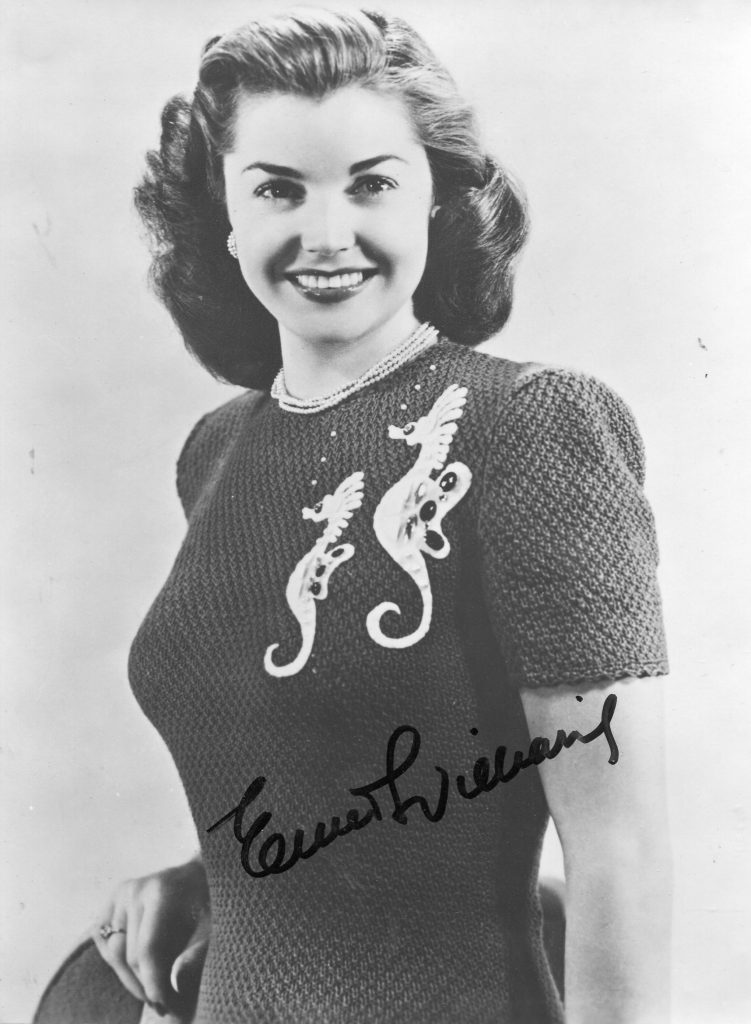
Esther Williams was one of the major MGM movie stars of the 1940’s and 50’s mainly associated with her swimming musicals.

Her Guardian obituary by Ronald Bergan :

Esther Williams, “Hollywood’s Mermaid”, who has died aged 91, swam her way through more than a dozen splashy MGM musicals in the 1940s and early 50s. While smiling at the camera, she was able to do a combination of crawl, breast and backstroke, and was forever blowing bubbles under water, seemingly having an inexhaustible supply of air.

Like the starlets Lana Turner, Kathryn Grayson and Donna Reed before her, she started out for MGM in a Hardy Family picture, Andy Hardy’s Double Life (1942) – though one that allowed her to swim with Mickey Rooney. After being billed 19th in A Guy Named Joe (1943), she shot to stardom in her third film, Bathing Beauty (1944).

It started out as an average Red Skelton vehicle, first called Mr Co-Ed, then Sing and Swim, but Esther’s superb figure and pretty features were heightened by Technicolor to such an extent that her part was built up and the title changed. A special 90-foot square, 20-foot deep pool was built at Stage 30 on the MGM lot, complete with hydraulic lifts, hidden air hoses and special camera cranes for overhead shots.

“No one had ever done a swimming movie before,” she explained, “so we just made it up as we went along. I ad-libbed all my own underwater movements.” Williams played a swimming instructor at a women’s college and the picture ended with a spectacular water-ballet set to the Blue Danube waltz, with alternate jets of water and flame bursting from the pool. Variety magazine said that William was “pulled to stardom by her swimsuit straps”.

The movie was a bigger hit than anyone had anticipated, and MGM spent the following decade hiring writers to invent scripts which allowed Esther to get wet. She would later remark: “My pictures were put together out of scraps they found in the producer’s wastebasket. All they ever did for me at MGM was to change my leading men and the water in the pool.” Actually her films were bubbly entertainments and the aquaballets (the most spectacular being staged by Busby Berkeley) were often breathtaking in their scope.

On An Island With You (1948) and Pagan Love Song (1950) were both set on South Sea islands, giving Williams ample opportunity to strip down to her stylish swim suits and take the plunge. She was a bathing suit designer in Neptune’s Daughter (1949), keen to demonstrate her creations herself, and is the last woman to give into the blandishments of a handsome polo player (Ricardo Montalban) who sings to her, Baby, It’s Cold Outside.

Most of the time in Dangerous When Wet (1953), co-starring her future husband Fernando Lamas, was taken up by her preparations to swim the English Channel. The best moment is a dream sequence in which Williams anticipates a crossing with the cartoon characters Tom and Jerry, while trying to avoid an octopus in a beret who gropes her with six extra hands.

However, she did not give in to groping very easily on screen: “My movies made it clear it’s all right to be strong and feminine at the same time,” she claimed.

In Fiesta (1947), Williams struck a blow for senoritas’ lib by proving herself the equal of any male matador, while in Take Me Out To The Ball Game (in Britain, Everyone’s Cheering, 1949), she played the owner-manager of a baseball team, whose initial interest in Gene Kelly lies in his ability to play ball. Inevitably, she thaws (after a swim) and falls for his rather blatant charms.

Williams portrayed Annette Kellerman, the Australian swimming champion who introduced the world to the one-piece bathing suit – as opposed to a combination of dress and pantaloons – in Million Dollar Mermaid (1952). The high spot of the film was Berkeley’s elaborately staged aquatic production number in which Esther rises like Aphrodite from the water surrounded by nymphs, and dives from a tremendous height into the centre of a kaleidoscopic pattern formed by swimmers. Although Williams did all her own swimming, she often had a stand-in for the more dangerous stunts.

She made an even bigger splash in the water-skiing ballet that ends Easy To Love (1953), one of Berkeley’s last and most spectacular sequences. Filmed on location at Cypress Gardens, Florida, it has over 30 waterskiers towed in arrowhead formation with Williams at the tip. They jump and slalom around the beautiful amphibian before she seizes a trapeze dangled from a helicopter, rises to the height of 500 feet, and dives into the pleasure-garden lagoon.

After the expensive belly-flop of Jupiter’s Darling (1955), a Roman romp in which Esther as Amytis prevents Hannibal (Howard Keel) from sacking Rome, MGM, for whom she had grossed over $80m, sacked her without even a goodbye or a thank you.

Born in Los Angeles, Esther was the fifth and last child of a pyschologist mother, Bula, and a signwriter father, Lou. She grew up swimming in local pools and surfing. By 16, she was a member of the Los Angeles Athletic Club swimming team and had won three national championships in both the breaststroke and freestyle. A year later, she was on the 1940 US Olympic team headed for Tokyo when the second world war intervened, cancelling the Games along with her hopes for international fame.

However, the showman Billy Rose noticed a photo of her, and starred her as Aquabelle opposite the Olympian and screen Tarzan Johnny Weissmuller as Aquadonis in his San Francisco Aquacade review. MGM scouts saw her in the show, and signed her to a contract.

Once her time at MGM had come to a close, the former prima ballerina of the water then tried her hand at dramatic roles at Universal, including The Unguarded Moment (1956) as a schoolteacher sexually attacked by one of her pupils. Her final movie appearance came in Fuente Magica (The Magic Fountain, 1963) directed by Lamas, whom she married in 1969.

Her first marriage, in 1940, had been to Leonard Kovner, and her second, in 1945, to the radio singer Ben Gage. Both ended in divorce. She and Gage had three children, whom she taught to swim soon after birth.

In September 1976, she sued MGM for $1m, claiming they had no legal right to utilise sequences from her films in That’s Entertainment (1974) without consulting her about it or offering to share profits. The matter was settled out of court.

Lamas died in 1982, and six years later Williams married a professor of French literature, Edward Bell. Together they made profitable businesses of Esther Williams Swimming Pools and the Esther Williams Collection, one of America’s most recognised swimwear brands.

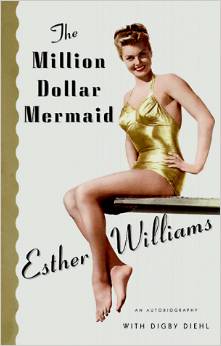
Though denied an Olympic appearance herself, Williams helped to inspire the development of synchronised swimming, an Oympic discipline since 1984. She was at those Games, in Los Angeles, to commentate on the event for television. Her rather fanciful autobiography, inevitably titled The Million Dollar Mermaid, appeared in 1999.

She is survived by Edward, a daughter, Susan, and a son, Benjamin.

• Esther Jane Williams, swimmer and actor, born 8 August 1921; died 6 June 2013

Her Guardian obituary can be accessed on-line here.

Esther Williams
Esther Williams
Elizabeth Franz

Elizabeth Franz

Elizabeth Franz

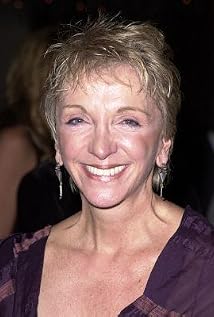
Elizabeth Franz Picture

IMDB entry:

Elizabeth Franz was born on June 18, 1941 in Akron, Ohio, USA as Elizabeth Frankovich. She is an actress, known for Another World (1964), Christmas with the Kranks (2004) andSabrina (1995). She was previously married to Edward Binns.

Won Broadway’s 1999 Tony Award as Best Actress (Featured Role – Play) for a revival ofArthur Miller‘s “Death of a Salesman.” Was also nominated two other times in the same category: in 1983 for “Brighton Beach Memoirs” and in 2002 for a revival of “Morning’s at Seven.”Plaintive, reedy-framed, award-winning stage actress (“Sister Mary Ignatius Explains It All for You” – Obie, 1980) who took her towering, Tony-winning portrayal of Linda Loman in “Death of a Salesman” to TV in 2000 and earned an Emmy nomination.   Raised in Akron, Ohio, she saw the Loretta Young film The Bishop’s Wife (1947) when she was young and decided then to become an actress.   Worked as a secretary after graduating from high school in order to earn enough money to enroll in the American Academy of Dramatic Arts in NYC.   Husband Edward Binns was 25 years her senior. They married in 1983. He died seven years later.   She was awarded the 1999 Joseph Jefferson Award for Actress in a Supporting Role in a Play for “Death of a Salesman” at the Goodman Theatre in Chicago, Illinois.   National Theatre, London, making her UK stage debut in a major revival of “Buried Child” by Sam Shepard. [September 2004]  On Broadway in “Mornings at Seven”

Trini Lopez

Trini Lopez

Trini Lopez

IMDB entry:

Trini Lopez is a American singer and actor who had 16 Top 40 songs on the charts from 1963 through 1968. He was born Trinidad López III in the Little Mexico neighborhood Dallas, Texas on May 15, 1937. He started performing with his own band when he was 15 years old and caught the eye of rock and roll legend Buddy Holly, who recommended him to a music producer who signed Lopez and his band, “The Big Beats”, to Columbia Records.

Lopez eventually quit “The Big Beats” to go solo, but none of the singles he cut made the charts. He moved to Los Angeles to audition as a vocalist for Holly’s old band “The Crickets”, but didn’t get the job. Performing in night clubs, he was discovered by Frank Sinatra, who signed Lopez to his label, Reprise Records.

His cover of “If I Had a Hammer” from his first album, which was released in 1963, made it to #3 on the charts, eventually earning a gold disc with sales exceeding one million copies. His other big hits were “Lemon Tree” and “I’m Comin’ Home, Cindy”, both of which made it to #2 on the Easy Listening chart, and “Michael”, “Gonna Get Along Without Ya Now” and “The Bramble Bush”, which made it to $7, #6 and #4, respectively.

Trini Lopez was inducted into the International Latin Music Hall of Fame in 2003.

– IMDb Mini Biography By: Jon C. Hopwood

Pamela Duncan

Pamela Duncan

Pamela Duncan

“The Independent” obituary:

The 1957 B-movie Attack of the Crab Monsters was promoted with the tagline “From the depths of the sea . . . a tidal wave of terror!” Directed and produced by Roger Corman, it grossed over $1m at the US box-office even though it had only cost $70,000 to make. Corman attributed its success and subsequent cult status to “the wildness of the title and the construction of the storyline”.

Under the effects of radiation, crabs on a remote Pacific island mutate into 25ft monsters relishing the taste of human brains and mimicking their victims’ voices to lure the surviving scientists towards their claws. Pamela Duncan was the female lead, Martha Hunter, fighting the giant talking crustaceans, alongside the Corman regulars Richard Garland and Mel Welles.

She also starred in Corman’s horror movie The Undead (1957), again alongside Garland and Welles, this time as Diana Love, a call girl who is submitted to hypnosis and relives her past life as Helene, a medieval witch. The cast almost suffocated during filming in Los Angeles when Corman filled the small soundstage located in an abandoned supermarket on Sunset Boulevard with creosote fog. Retrogression proved a popular theme at the box office and the pneumatic charms of the bosomy witches and wenches portrayed by Duncan, Allison Hayes and Dorothy Neumann lured in enough viewers to enable Corman to recoup his $70,000 outlay within weeks of the movie’s release.

These lead parts came halfway through a busy 12 years for Duncan, who appeared in over 50 episodes of television series such as Dragnet, The Adventures of Rin Tin Tin, Maverick and Perry Mason between 1951 and 1962. When the acting work dried up, she left California and moved back to the East Coast and, in 2000, was one of several entertainers interviewed at the Lillian Booth Actors’ Fund of America Home in Englewood, New Jersey, for the Chuck Braverman documentary Curtain Call, which was nominated for an Oscar.

Born in Brooklyn, New York, in 1932, Pamela Duncan had such grace and poise as a teenager that she won several beauty pageants in the New York area. In 1951, she moved to Hollywood and landed the part of a saloon barmaid in a B-western, Whistling Hills, subsequently appearing in Lawless Cowboys (1951) and The Saracen Blade (1954).

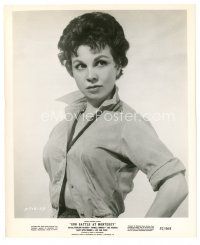
Her dark looks meant she was often cast as a señorita (in 1956, in Budd Boetticher’s Seven Men From Now or in 1957, in Gun Battle at Monterey) or as a private detective’s secretary (My Gun Is Quick, 1957). Still, she also appeared in Julie (1956), the Andrew L. Stone film starring Doris Day as a air hostess on the run from her murderous husband Louis Jourdan, and in episodes of Rawhide, Laramie, Colt 45 and Dr Kildare.

When her last three film appearances, in Don’t Give Up the Ship (1959) starring Jerry Lewis, as Pearl in Summer and Smoke (1961) and as the cigarette girl in the Elvis Presley vehicle Girls! Girls! Girls! (1962) went uncredited, Duncan knew that she would not make the leap from starlet to bona fide actress. She drifted back into obscurity and only re-emerged to reminisce about the good old days for fan magazines and for the Curtain Call documentary in 2000.

Pierre Perrone

The above “Independent” obituary can also be accessed online here.

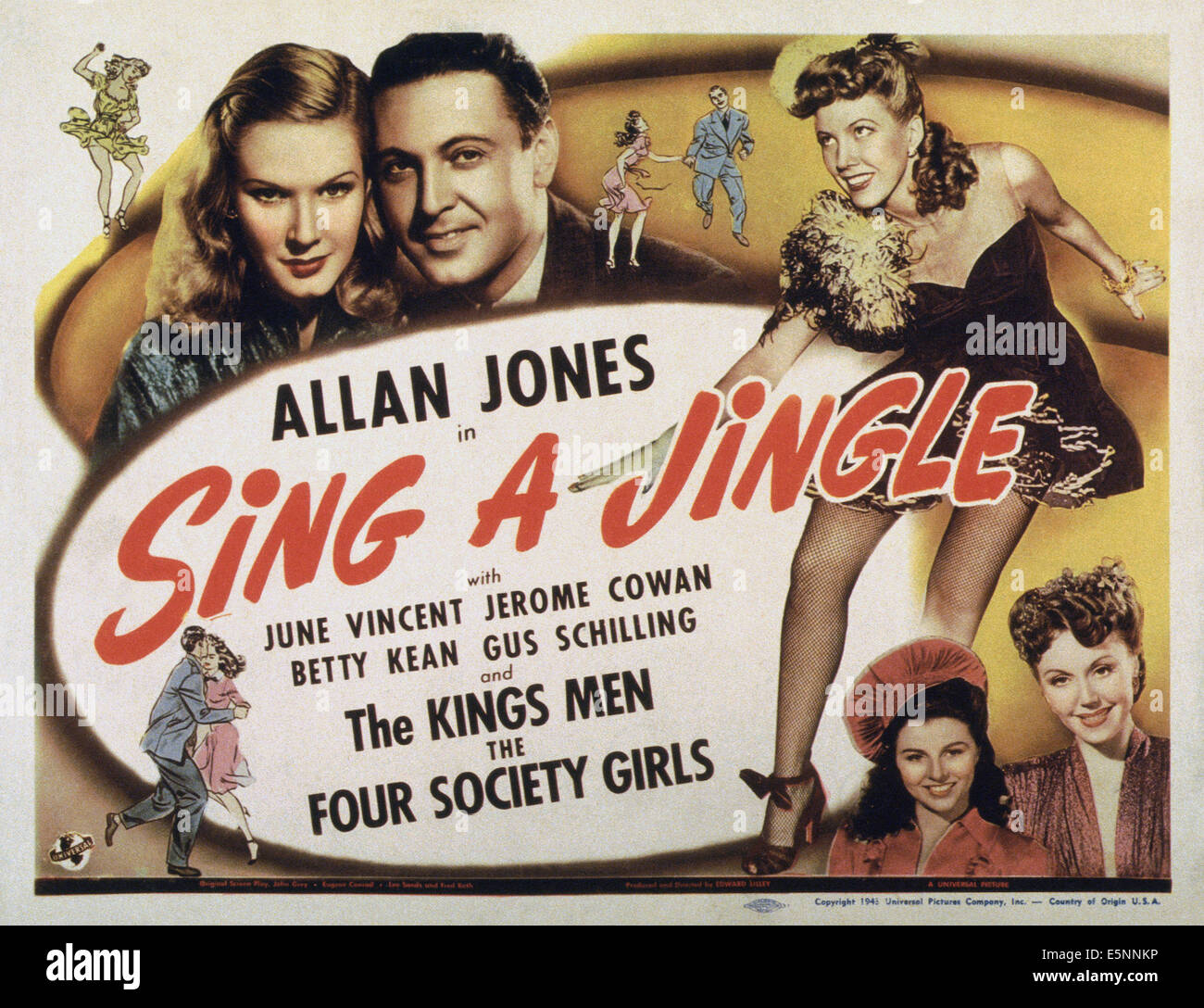
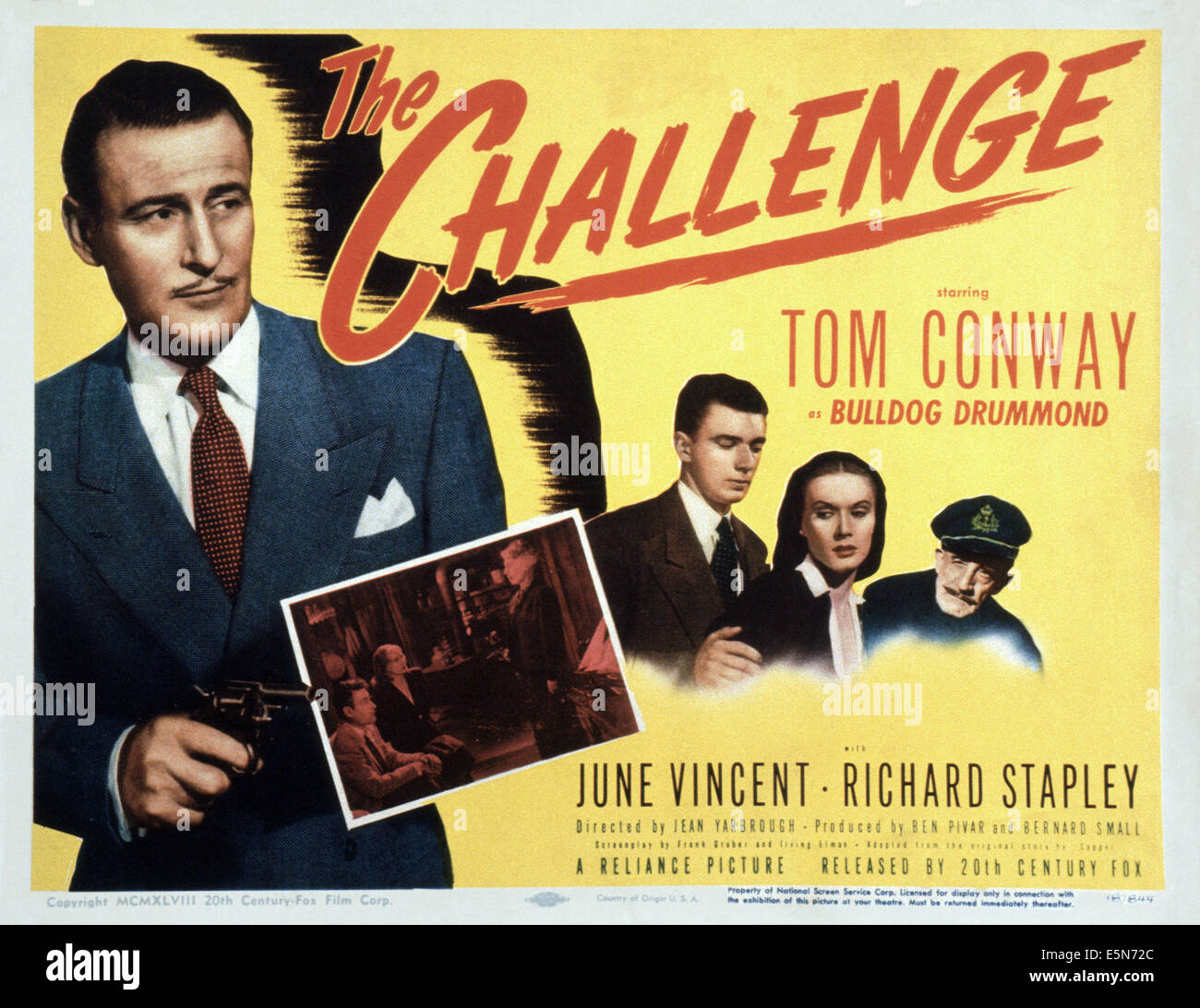
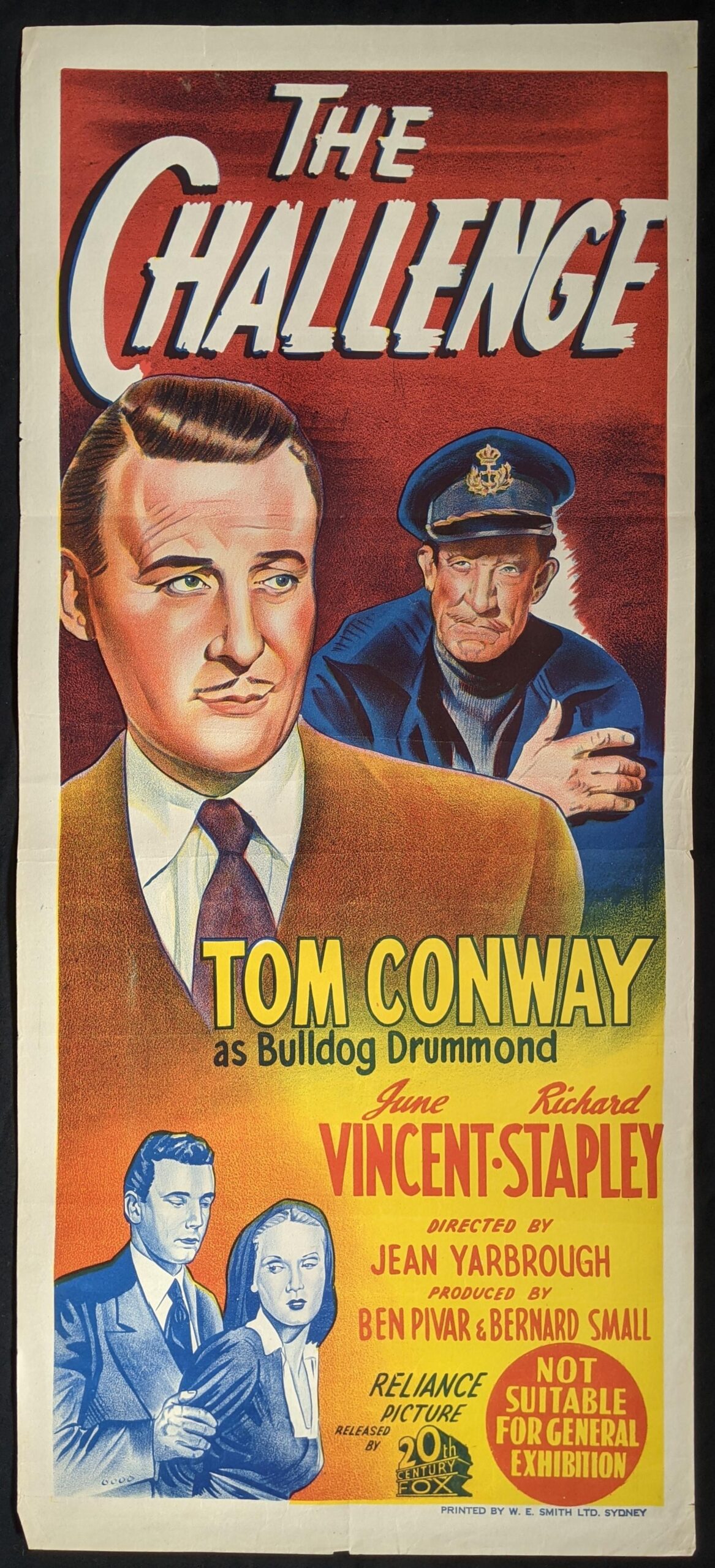
June Vincent
June Vincent

June Vincent

Article from “Shadows and Satin”:
June Vincent: Not Just Another Pretty Face — by Guest Blogger Kristina Dijan

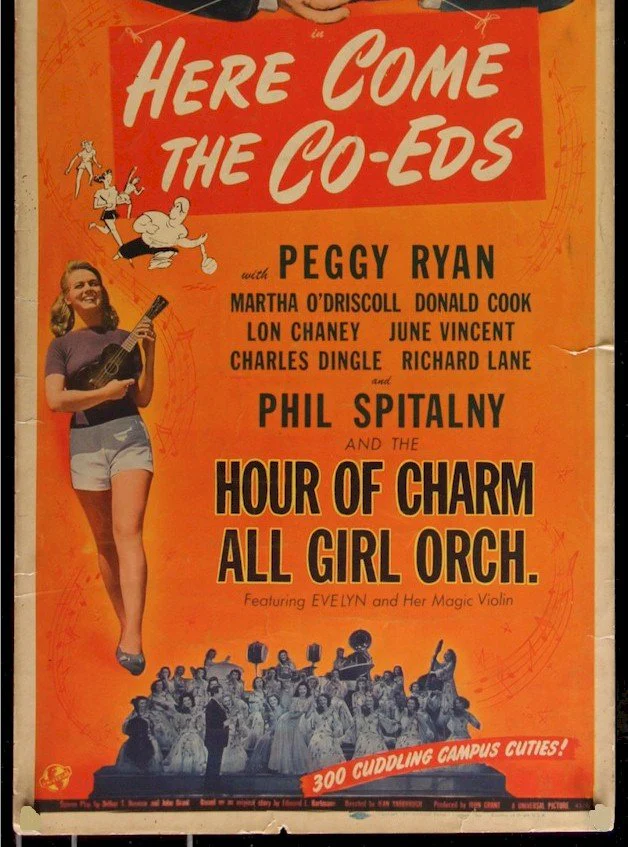
Shadows and Satin is pleased and privileged to present our very first guest blog post, by none other than Senior Writer for The Dark Pages film noir newsletter, Kristina Dijan! Kristina also writes regularly for Landmark Report (www.landmarkreport.com/kdijan) and hosts her own blog, Kristina’s Kinema, at www.kinoroll.blogspot.com. The following originally appeared in the April/May 2009 issue of The Dark Pages. (For information on subscribing to The Dark Pages, or to request a sample issue, visit:http://allthatnoir.com/newsletter.htm.) Enjoy! June Vincent strikes a glamorous pose.

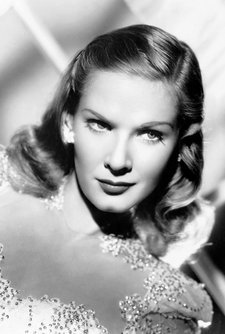
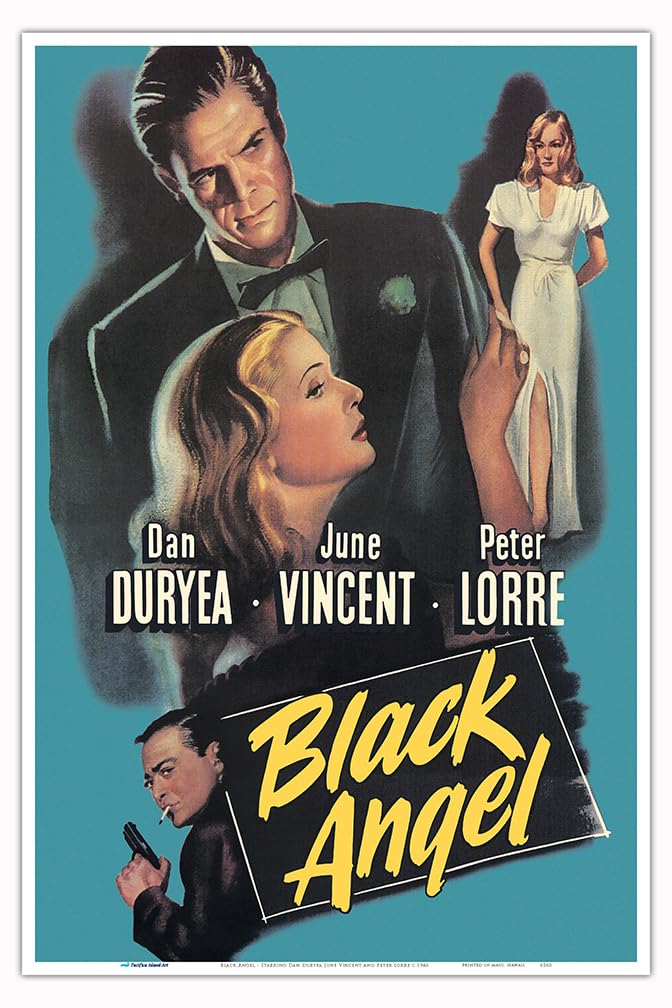
At the beginning of 1945, Universal bought the film rights for The Black Angel, a novel by Cornell Woolrich, and a little over a year later, in April 1946, the film was set to start production with Ava Gardner in the lead role. Only days after that casting announcement, however, Gardner dropped out to travel east and visit husband Artie Shaw. The immediate beneficiary of this turn of events was June Vincent, a luminous blonde who replaced Gardner and thus stepped into her first major starring role. Black Angel is a great noir, and possibly Vincent’s best known feature, though she did grace a number of good B westerns and crime films. Vincent had to her credit one other notable but brief noir appearance – more on that one later.

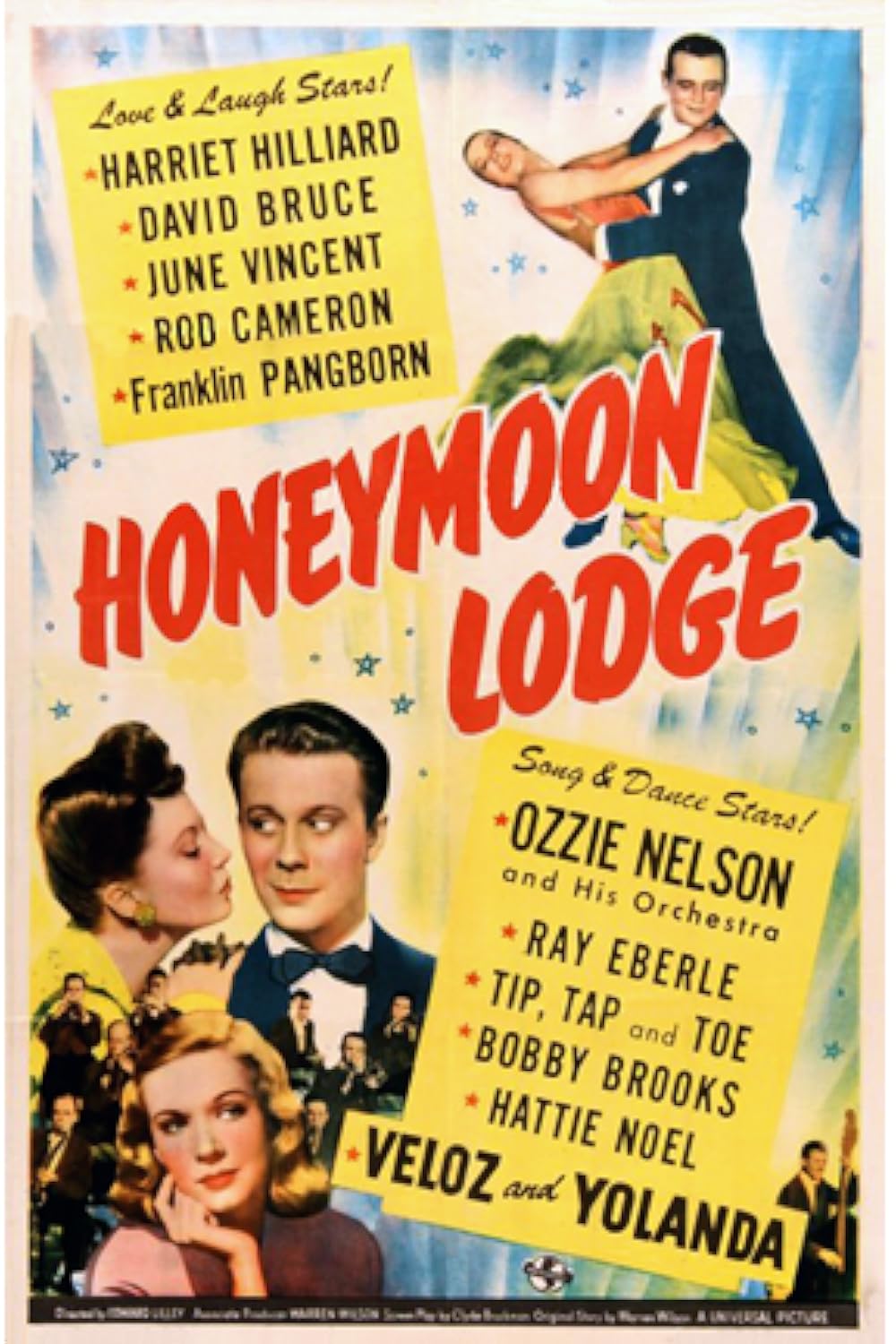
Vincent was born Dorothy June Smith in Ohio, the daughter of a pastor. At 17 she went to New York to pursue a modeling career, and received her first break with Harper’s Bazaar. While modeling, she struck up a friendship with Lauren Bacall, with whom she went to Hollywood after appearing on Broadway and shooting a screen test for Universal. Vincent started her film work in Honeymoon Lodge (1943).

Next for Vincent came Ladies Courageous (1944), a war film about the Women’s Auxiliary Ferrying Squadron, with Loretta Young, Anne Gwynne and Evelyn Ankers. During filming, Vincent was fixed up on a blind date, through which she met her future husband, navy pilot Lieutenant William Sterling. The couple wed in 1944, and the first of their three children was born in August 1945. Vincent worked sporadically, and then came her big break.

Black Angel is a whodunit about a woman whose husband is falsely accused of murdering slinky singer and blackmailer Mavis Marlowe (Constance Dowling). The loyal wife Catherine Bennett, played by June Vincent, embarks on her own investigation to find the real killer and save her husband from execution. Vincent teams up with Mavis’ estranged husband, a tortured and alcoholic songwriter played by Dan Duryea, who is one possible suspect until he’s cleared by an alibi. Vincent and Duryea follow a clue to Peter Lorre, whom Duryea remembers seeing at Dowling’s apartment building the night of her murder. Vincent and Duryea pretend to be a nightclub act to work at Lorre’s joint and Vincent further ingratiates herself to get her hands on evidence to clear her husband. In true noir fashion, though, things fall apart.

Vincent in Black Angel is a very appealing presence; elegant, cool and polished, but also warm, kind, concerned. She and Dan Duryea, whom Vincent called one of her favorite leading men, made an interesting couple, with him playing against type as a nicer guy, and highly sympathetic at that. Vincent goes through a fascinating transformation in the film. When she learns of her husband’s presence at Dowling’s apartment, she’s the plain, decidedly un-stylish housewife. As she takes matters into her own hands, she gradually transforms into the ultra-glamorous nightclub singer (her voice in the musical scenes was dubbed). The change is so dramatic it’s no wonder other characters think she’s familiar but can’t quite place her as the humiliated wife seen at he husband’s trial. Little wonder also that Duryea falls in love with her. She has several good scenes, like the one where Duryea unveils his latest love song to her, and she conveys both her realization that Duryea loves her and also that she doesn’t return his feelings, and feels guilty and sad about it. Vincent is also good at barely hiding her disgust at Peter Lorre’s advances, having to tolerate his creepiness to get closer to evidence that might expose him. It’s a shame Vincent never progressed to A-list stardom – Black Angel alone proved she had both the talent and the presence.

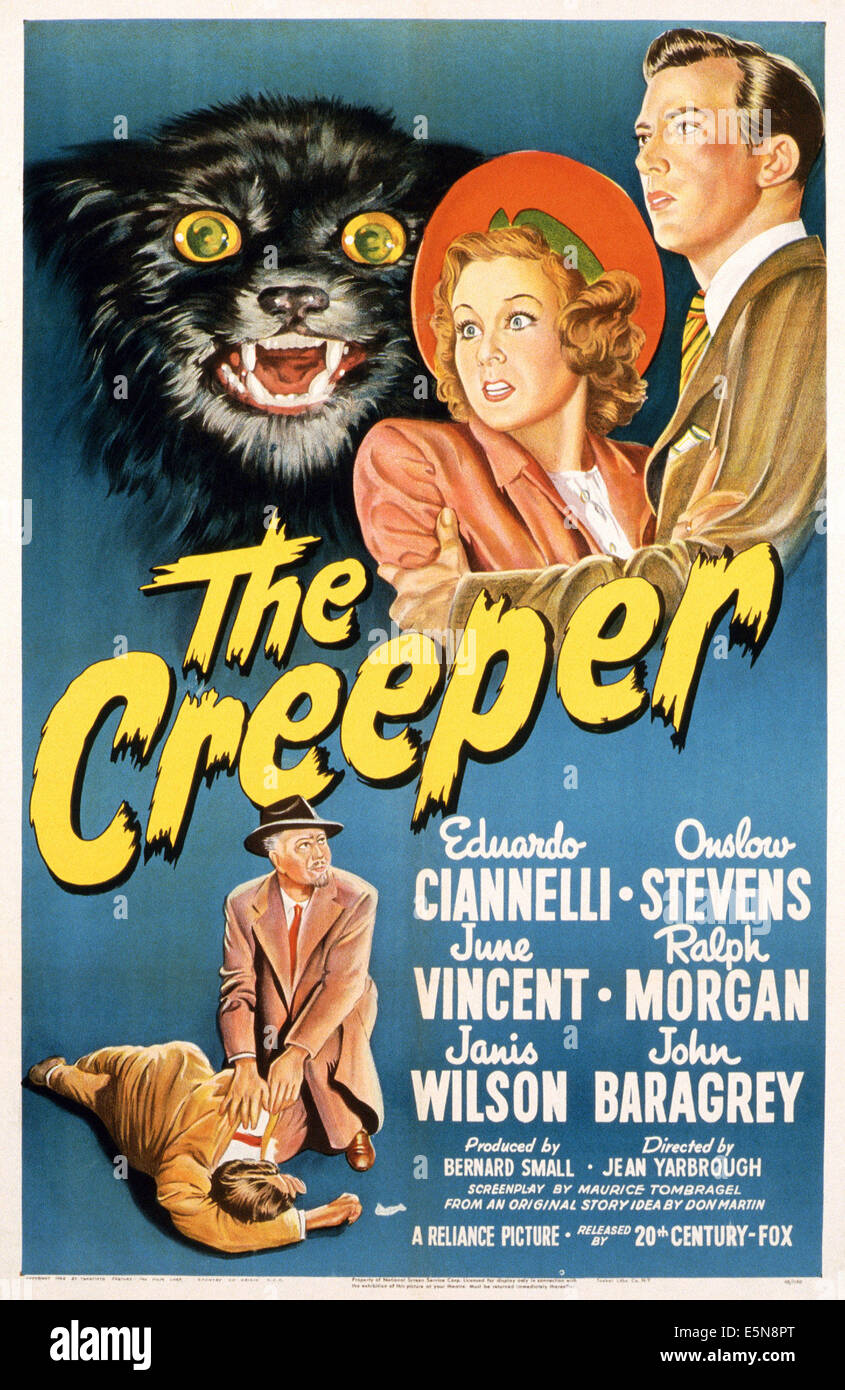
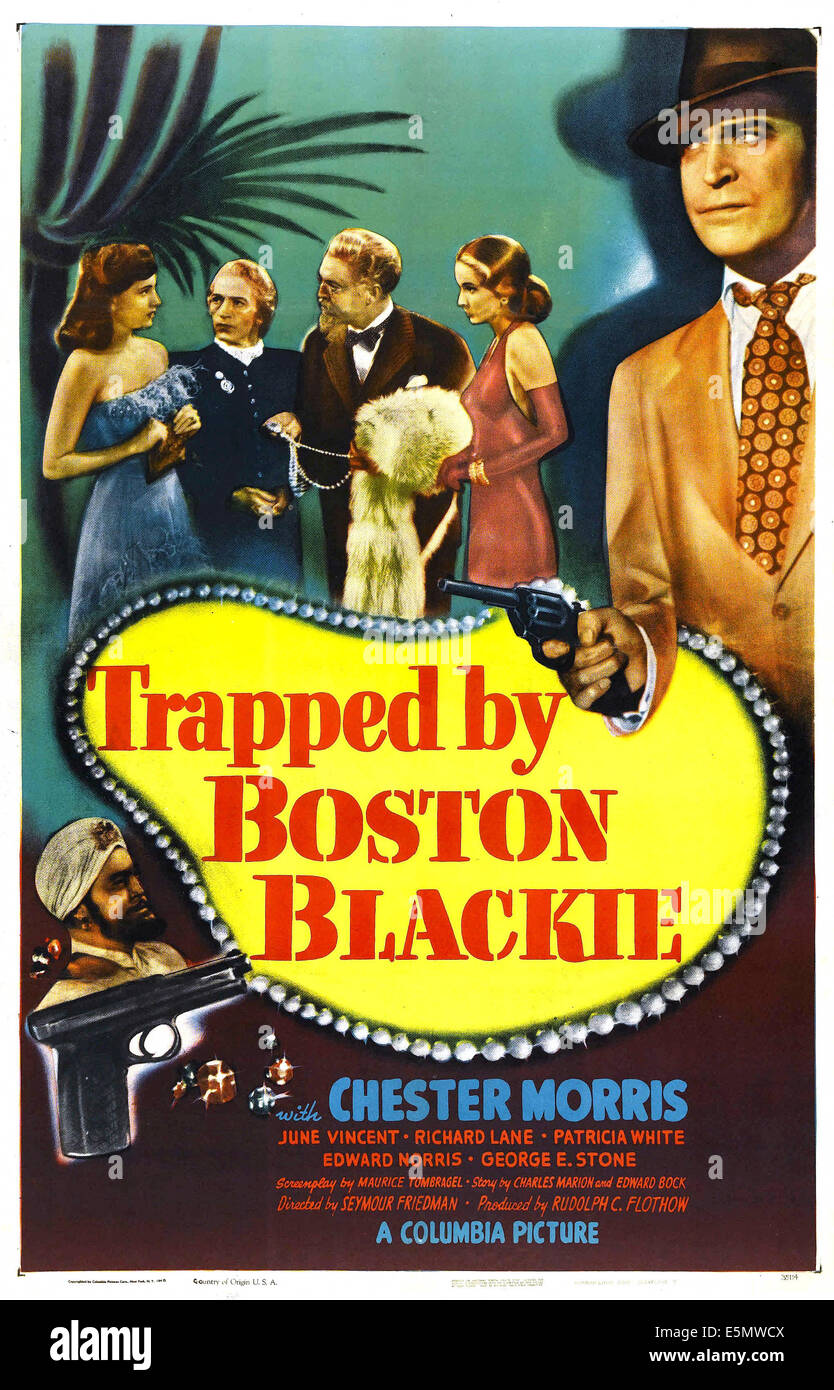
After Black Angel, Vincent left Universal for Columbia, and the change was reflected in her hairstyle. She had arrived in Hollywood wearing a long, peek-a-boo coif, similar to Veronica Lake, but with her relocation to Columbia, Vincent became a trendsetter when she started sporting white streaks – frosted hair in the front and darker in the back. At Columbia, Vincent worked almost nonstop, and appeared in many westerns and crime films, including Song of Idaho (1948), Trapped by Boston Blackie (1948), the horror film the Creeper (1948) The Arkansas Swing (1948), and Mary Ryan, Detective (1950)

So what was her uncredited cameo in a noir classic? Right after the opening credits finish rolling for In a Lonely Place (1950), a convertible pulls up next to Humphrey Bogart’s and June Vincent neatly introduces his character with her words, “Dix Steele! Don’t you remember me? You wrote the last picture I did for Columbia!” Her annoyed husband threatens Bogie, then races away.

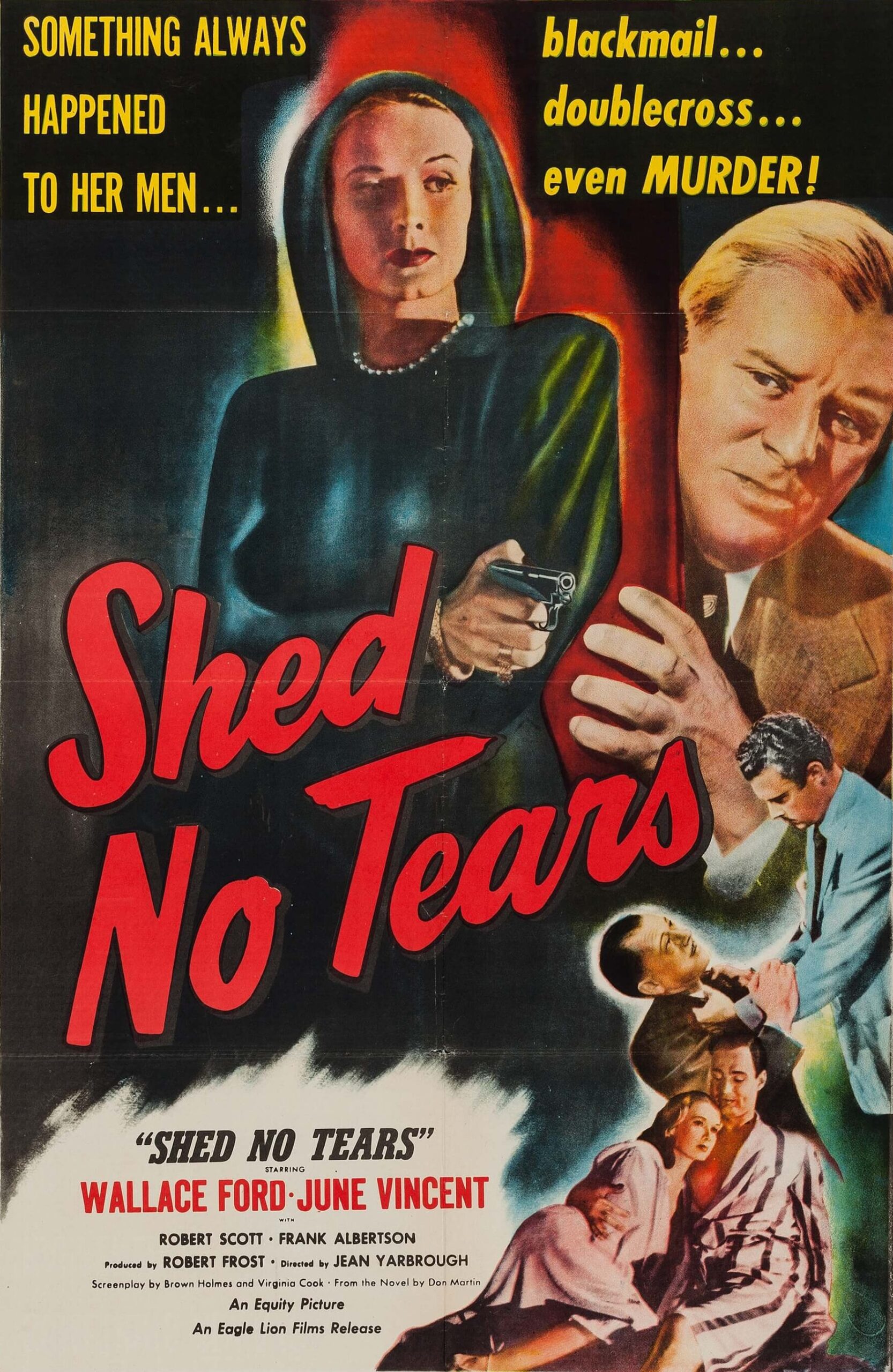
Vincent made another noir thriller, Night Without Sleep(1952), in which her husband, composer Richard Morton (Gary Merrill), awakens with a nasty hangover and amnesia about last night, and then digs through several flashbacks to figure out if his nightmare of killing a woman was real. With her film appearances dwindling out, Vincent was often seen in TV guest spots, including a number of times on Have Gun Will Travel, and on Perry Mason, since actress friend Gail Patrick was producer of that series. Vincent used to joke with Patrick that they had better start varying her roles because viewers were catching on that she always played the murderess. Vincent worked well into the 1970s, appearing on BewitchedThe Streets of San Francisco, and Kung Fu.

After guesting on Maude in 1976, Vincent said she no longer enjoyed what she saw coming out of Hollywood and retired for good. Some time in the 1980s, Vincent’s foot was run over by a supermarket shopper with a full cart. The injury required a lot of surgery and developed into arthritis, and Vincent also was afflicted with Parkinson’s disease. In an interview, she expressed her gratitude for the Actor’s Guild benefits that helped her through her health problems, a valuable reward for her 30 plus years in Hollywood. Vincent died in November 2008.

Guest post by Kristina Dijan (www.kinoroll.blogspot.com), Senior Writer for The Dark Pages.

The above “Shadows and Satin” article can also be accessed online here.