
Hollywood Actors

Collection of Classic Hollywood Actors

Eddie Fisher
Eddie Fisher
Eddie Fisher
Eddie Fisher
Eddie Fisher
Eddie Fisher

Eddie Fisher was one of the most famous of the popular solo singers in the U.S. in the 1950’s.   His hits included “Lady of Spain” and “On the Street Where You Live”.   He was born in Philadelphia in 1928.   He made some movies incuding “Bundle of Joy” opposite Debbie Reynolds, his first wife and “Butterfield 8” in 1960 opposite his second wife Elizabeth Taylor.   His third wife was actress Connie Stevens.   He died in 2010 at the age of 82.   His popular songs include “Lady of Spain” and “On the Street Where You Live”.

Michael Freedland’s obituary in “The Guardian”:

Eddie Fisher, who has died aged 82 of complications from hip surgery, deserves to be remembered as one of the sweetest popular singers of the pre-rock’n’roll era, with 32 hits selling millions of copies. Instead, it was as one of the many husbands of Elizabeth Taylor that he etched himself a place in show business history. And further to that, “I came from the streets of Philadelphia to the White House – Harry Truman loved me, Ike loved me, Jack Kennedy and I shared drugs and women,” he later said of himself.

It was a reputation that he did not need. Numbers such as I’m Walking Behind You, Wish You Were Here and Oh, My Pa-Pa got young women screaming and music aficionados admiring the sheer strength and beauty of his voice – a most unusual combination. Yet when his love for his wife Debbie Reynolds turned sour and he switched his loyalties to Taylor, fame took on an entirely different complexion.

Fisher was born in Philadelphia, the fourth of seven children of Russian-Jewish immigrants who worked in tailoring sweatshops and lived in a slum. He was shy as a child, but not for long. And he realised from an early age that he had a remarkably strong voice. “I couldn’t have been more than three or four years old. I opened my mouth and this beautiful sound came out.”

Fisher began his singing career in traditional fashion in the local synagogue choir, but secular music appealed more, and although he sang for services on Friday nights and Saturday mornings, on other evenings of the week he was taking part in amateur theatrical shows. He sang with local bands while still at high school, and at the age of 18 he was already performing with Buddy Morrow and Charlie Ventura.

He then took another traditional route – working in the Catskill mountains, the holiday resort much favoured by Jewish New Yorkers. It was the area known as the Borscht Belt, because of the emphasis on beetroot soup and sour cream, although that was never as important as the entertainers.

The Borscht Belt was the nursery of outstanding Jewish entertainers: Danny Kaye, Mel Brooks, Jerry Lewis and Eddie Cantor all made huge impacts at Belt hotels. Cantor’s role there was more as a talent scout than as a performer, and it was at Grossinger’s hotel that he first heard Fisher sing in 1949. He invited him on to the Eddie Cantor Show on radio, which proved highly popular with his audiences, and in 1950 Fisher had his first hit, Thinking of You.

The following year he joined the US army, further boosting his popularity by entertaining troops in Korea in 1952-53. He continued to make records during this time, helped by a publicity campaign featuring himself in uniform. His successes with I’m Walking Behind You and Oh, My Pa-Pa were followed by I Need You Now, Downhearted and, most significantly, (You Gotta Have) Heart (1954), the big hit from the show Damn Yankees. In 1955 there was Dungaree Doll and Everybody’s Got a Home But Me, and in 1956 Cindy, Oh Cindy. But it took until 1961, with a version of Tonight, from West Side Story, and 1966, with Games That Lovers Play, for him to return to the charts in a limited way.

“I was too busy making hit records to be concerned about the music,” he said. Frank Sinatra, Perry Como and Tony Bennett cared about “songs that meant something. I didn’t.” But his songs meant something to his private life. Another Fisher hit in 1956 had been Irving Berlin’s A Man Chases a Girl (Until She Catches Him). That particular record was notable for one other, uncredited, performance. The refrain “until she catches him” was recited by Reynolds who, four years earlier, had proved to be a favourite girl-next-door in the film Singin’ in the Rain.

They married in 1955, soon after the record was pressed, although Fisher would say he never really loved her enough to marry. He claimed to have had affairs with Marlene Dietrich, Judy Garland, Mia Farrow and Bette Davis among others. Yet for a time, he and Reynolds seemed to be the ideal couple, loved by fans and the famous alike.

Their closest friends were Elizabeth Taylor and her film producer husband, Mike Todd. When Todd was killed in an air crash, Fisher took it upon himself to console his widow. He and Reynolds divorced, and Fisher and Taylor married in a Jewish religious ceremony in 1959. The marriage did not last. In 1960 Taylor met Richard Burton while making Cleopatra, and in 1964 divorced Fisher.

Three years later he married the actor and singer Connie Stevens. They, too, divorced after a couple of years. His marriage to Terry Richard in 1975 lasted 10 months, but his fifth marriage, to a Chinese-born businesswoman, Betty Lin, in 1993, was the longest, ending with her death in 2001.

Fisher was frustrated that the scale of his early success as a singer was frequently overlooked. In his autobiography, Been There, Done That (1999), he reminded people that he had had more consecutive hits than the Beatles or Elvis Presley and that at one time, he had 65,000 separate fan clubs. In the mid-1950s, he was earning $1m a year.

Fisher had a short, unimpressive film career. The most notable role was playing opposite Taylor in her Oscar-winning movie, Butterfield 8 (1960). He had also appeared opposite Reynolds in Bundle of Joy (1956).

Fisher remained out of the public eye for almost 20 years, and a comeback of sorts in 1983 did not succeed in relaunching his career. At the same time, he issued an album of new songs, After All (1984), which received some critical approval.

He is survived by four children: his daughter Carrie, who came to fame as Princess Leia in the first three Star Wars films, and a son, Todd, from his marriage to Reynolds; and two daughters, Joely and Tricia, from his marriage to Stevens.

• Eddie (Edwin John) Fisher, singer and actor, born 10 August 1928; died 22 September 2010

The above “Guardian” obituary can also be accessed online here.
Angela Clarke

Angela Clarke

Angela Clarke

Angela Clarke

Wikipedia entry:

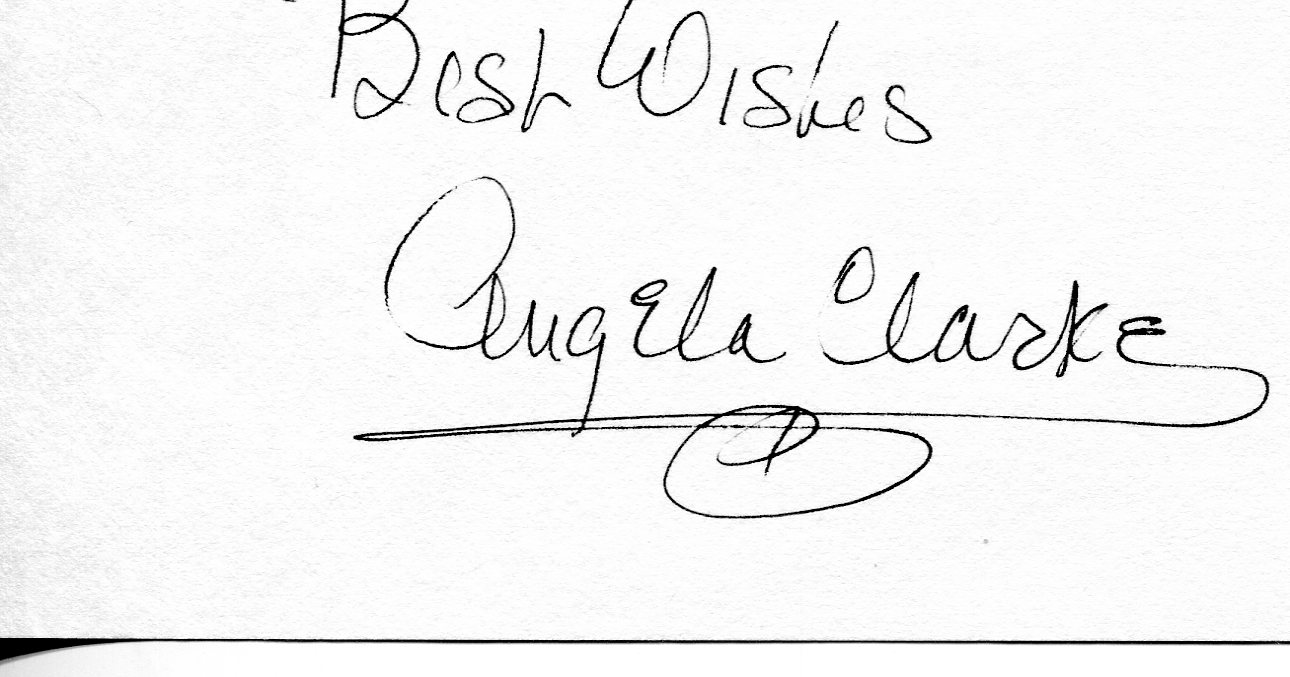
 (born August 14, 1909 – December 16, 2010) was an American stage, television and film actress.   Clarke appeared in over thirty films throughout her forty-year career, usually in bit parts or in background roles, uncredited. Films in which she made a large impression included The Seven Little Foys, where she played a large supporting role as Bob Hope‘s disapproving sister-in-law, House of Wax,[1] A Double Life,[2] The Gunfighter[3] and The Miracle of Our Lady of Fatima.   Angela Clarke, despite entering the film business in her early forties (in 1949’s The Undercover Man), cornered the market for grey-haired, matriarchal motherly-types (such as her role as Mama Caruso in The Great Caruso).[5] Clarke died, aged 101, in Moorpark, California.

Peggy Ann Garner

Peggy Ann Garner

Peggy Ann Garner


Jane Eyre-PA Garner-2.jpg

Peggy Ann Garner was a brilliant child actress of Hollywood movies of the 1940’s.   She is especially remembered as the child “Jane Eyre” in 1944 and as the lead in “A Tree Grows in Brooklyn”.   She made a few movies as an adult including “The Black Widow” in 1954.   She died in 1984 at the age of 52.

Dinah Shore
Dinah Shore

Dinah Shore


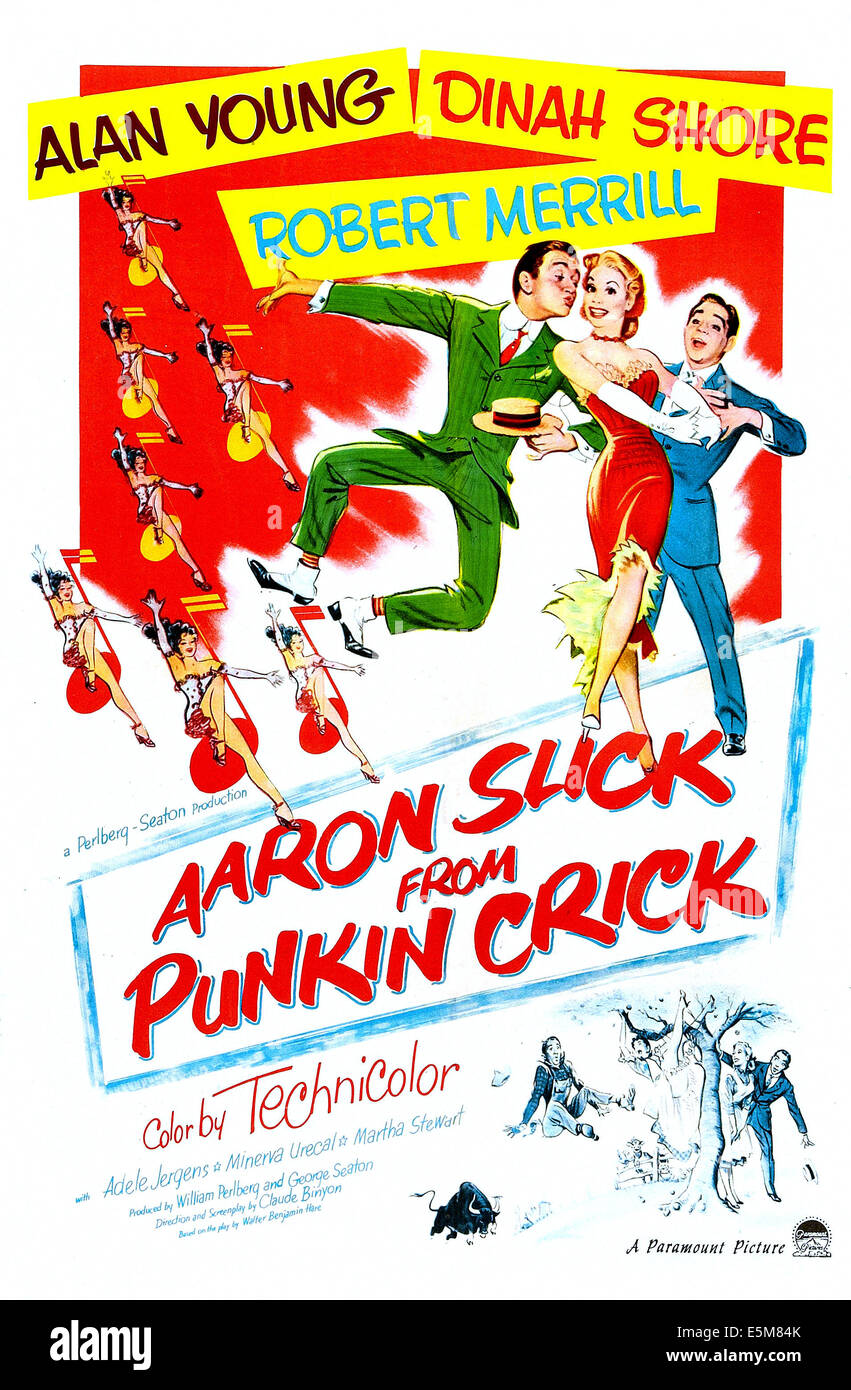
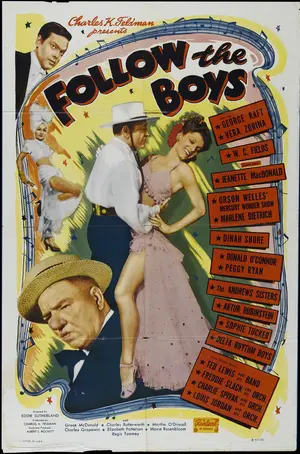
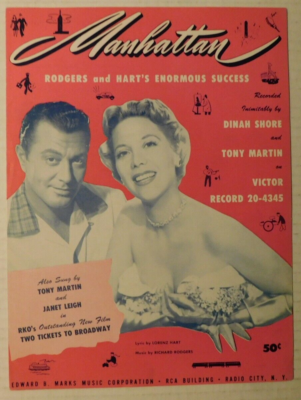
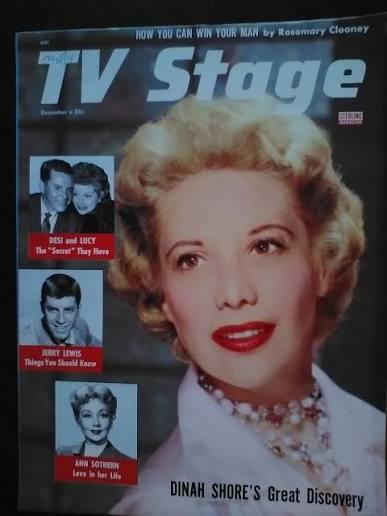
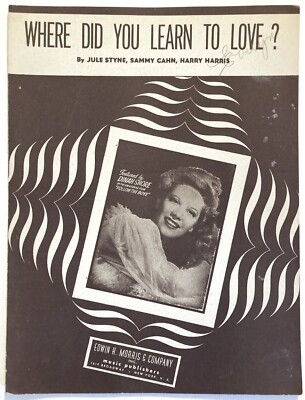
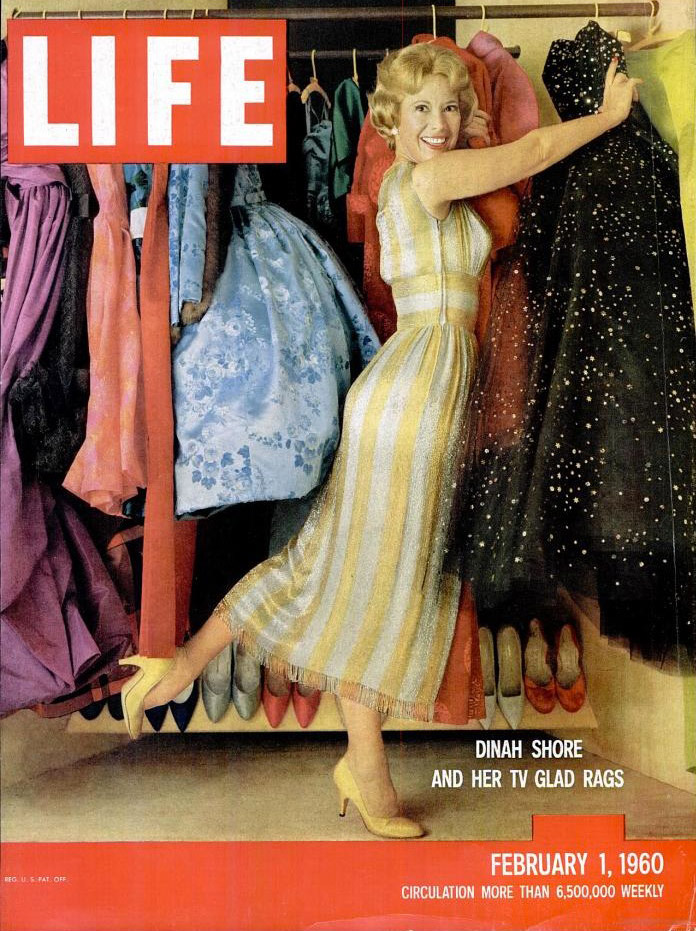
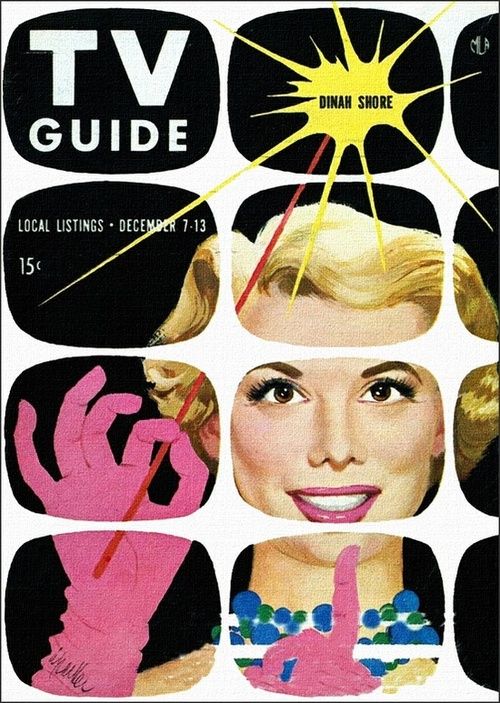
Dinah Shore was one of America’s most popular singers during the 1940’s and 50’s.   In the 1970’s she was a very famous TVhost.   She did too make some movies such as “Up In Arms” in 1944 opposite Danny Kaye and “Follow the Boys”.   She was born in 1916 in Tennessee and died in Beverly Hills in 1998.

Dick Vosburgh’s “Independent” obituary:

A SINGER who lights a fire by rubbing two notes together’. Thus was the 23-year-old Dinah Shore introduced on The Chamber Music Society of Lower Basin Street, a 1940 radio show. The sultry-voiced newcomer from Tennessee went on to become one of the United States’ most enduringly popular recording stars and television personalities.

Her professional singing career began in 1938 at WNEW, a New York radio station, where she sang for nothing. Like Frank Sinatra, who was also singing there gratis, she stepped in whenever an appropriate musical ‘filler’ was needed. Unlike Sinatra (and her rivals Peggy Lee, Doris Day and Ella Fitzgerald), Shore didn’t graduate from a big band; she was turned down by Tommy Dorsey, Benny Goodman and Woody Herman, but made her recording debut in 1939, singing with Xavier Cugat’s orchestra. (On the label she was billed as ‘Dinah Shaw’.) Next came her Chamber Music Society of Lower Basin Street appearances, after which Eddie Cantor signed her for his radio series. Shore was Jewish, and found ideal material in ‘Yes, My Darling Daughter’, adapted from a Yiddish folk song. Introduced on Cantor’s show, it became her first best-

selling record. The first of her nine million-sellers was ‘Blues in the Night’ (1941).

In 1943 she married the actor George Montgomery, then serving in the US Army. They had met at the Hollywood Canteen, where Shore sang regularly. Throughout the war she entertained servicemen all over the world. ‘There’s nothing to compare with the enthusiasm of those GIs,’ she told me in a radio interview. ‘You don’t find that much applause lying around loose for the rest of your life]’

In 1946, shortly after signing with Columbia Records, she was given the novelty number ‘Shoo-Fly Pie and Apple Pan Dowdy’ to record. She found the song ludicrous, especially as shoo-fly pie is a southern dessert and apple pan dowdy a New England one. To her amazement, the record sold 40,000 copies, and was swiftly followed by three million-sellers: ‘The Gypsy’, ‘Doin’ What Comes Natur’lly’ and ‘For Sentimental Reasons’. Billboard proclaimed her Top Female Vocalist of 1946.

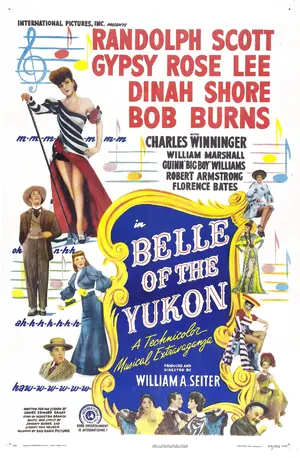
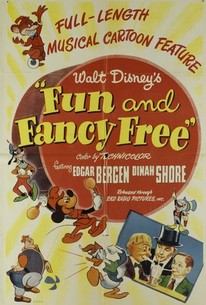
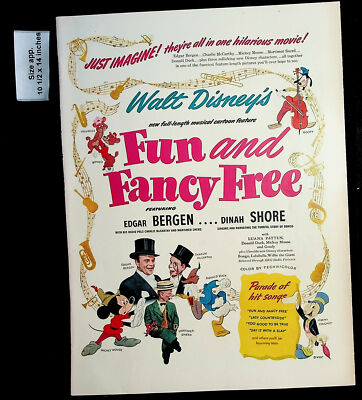
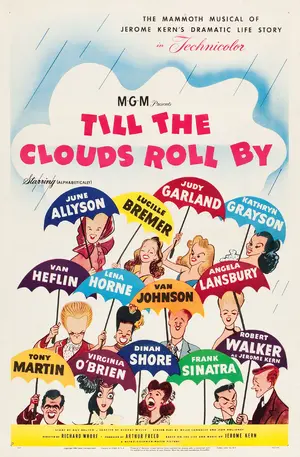
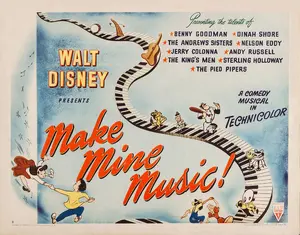
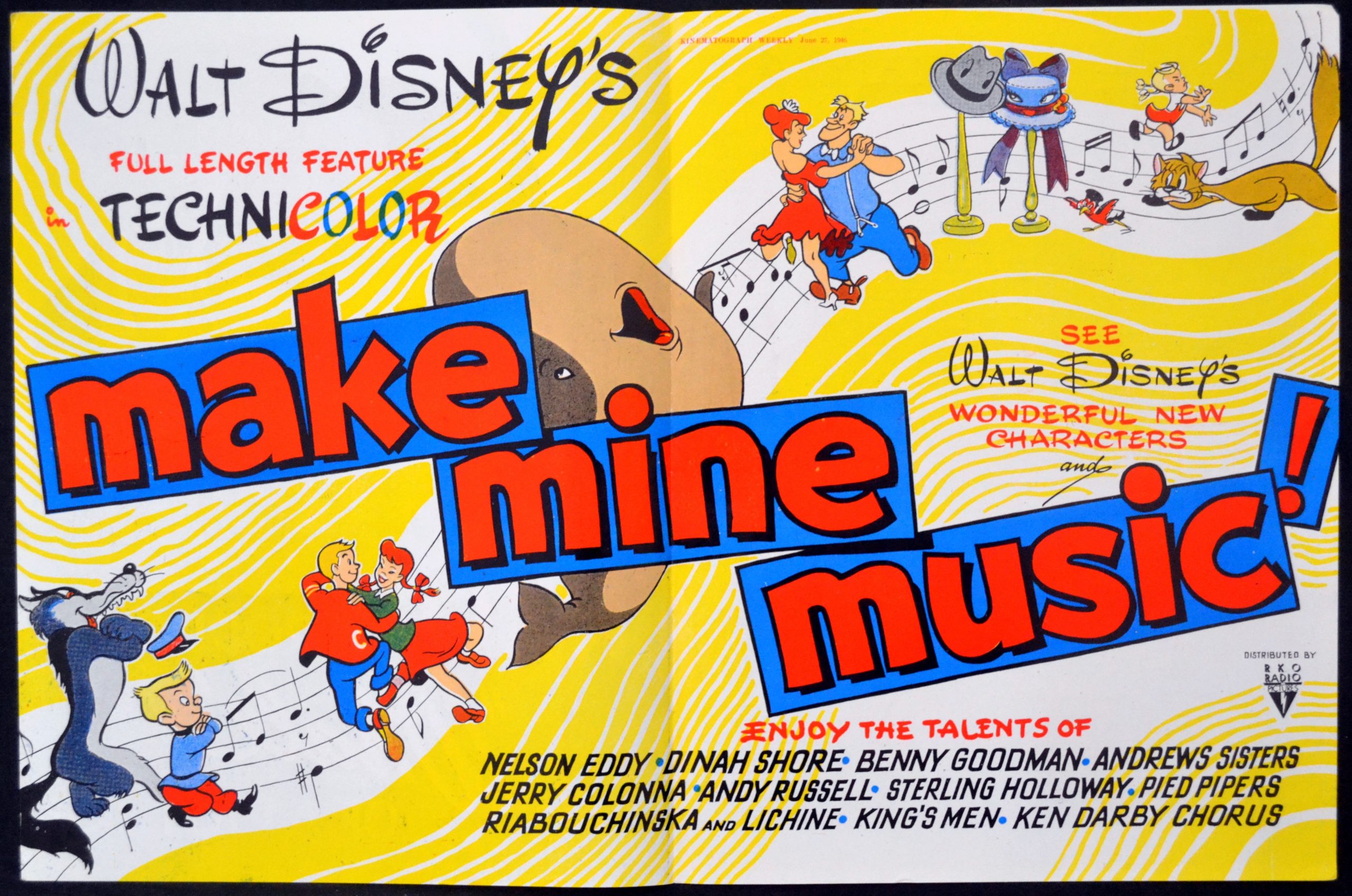
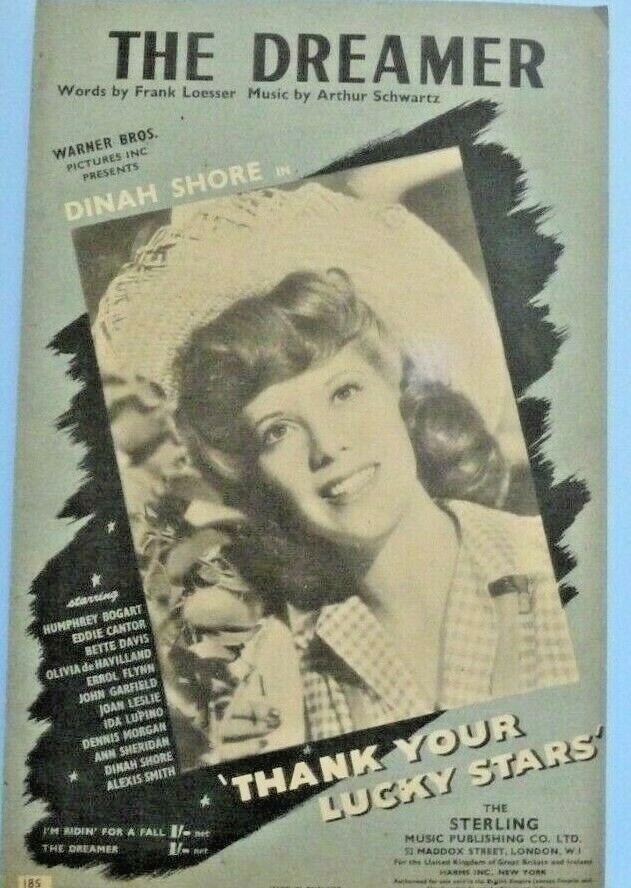
Shore’s film career had begun with Thank Your Lucky Stars (1943), in which she played herself. No more demanding were her roles in Follow the Boys and Belle of the Yukon (both 1944). She got to clown a little and sing ‘Tess’s Torch Song’ and ‘Now I Know’ in Danny Kaye’s first film, Up in Arms (also 1944), and never photographed better than in the fictionalised Jerome Kern biopic Till the Clouds Roll By (1946). She lent her voice to two Disney cartoon features, Make Mine Music (1946) and Fun and Fancy Free (1947). Her best screen performance was in Aaron Slick from Punkin Crick (1951), but that musical was so disastrous that she didn’t film again for 26 years.

She hardly needed to; 1951 was also the year she entered television. Variety wrote that she had ‘a charm and ease that established her right off as one of TV’s standout personalities’. A minority view was expressed by Oscar Levant, who found her too effusive. ‘My doctor won’t let me watch Dinah,’ he claimed. ‘I’m a diabetic.’

Her television success (she won 10 Emmy Awards in all) caused a career clash with George Montgomery, and they were divorced in 1962. In 1963 Shore married a building contractor, but the marriage was over by 1964. She retired for five years to devote herself to two children from her first marriage, returning to television in 1970 as a talk show hostess in Dinah’s Place. One of her guests was Burt Reynolds, with whom she began a long, tabloid-titillating relationship.

She was seen again on the cinema screen in the George Burns comedy Oh God] (1977) and in Robert Altman’s HEALTH (1979). From 1989 to 1991 she presented the talk show Conversation with Dinah.

The above “Independent” obituary can also be accessed online here.

Sebastian Stan
Sebastian Stan
Sebastian Stan

Sebastian Stan was born in Romania in 1983.   When he was twelve he moved to the U.S.   His movies include “The Covenant” and “Black Swan”. On television he stars in “Once Upon A Time”. In the Spring of 2013 he starred on Broadway in “Picnic”

TCM overview:

.Some actors are blessed with good looks, and Sebastian Stan was definitely one of those. However, across numerous roles over his career, which began in the early 2000s, he also showed tremendous emotional and physical range, making him more than just a pretty face. He showed poise in his varied roles, whether kicking back with Captain America and Black Widow, dealing with the drama of privileged teenagers, or bringing The Mad Hatter to modern times. Born in Romania in 1982, Stan lived there with his mother until they moved to New York in 1994. He was taken by the stage at a young age, appearing in numerous school productions before eventually attending Rutgers University’s Mason Gross School of the Arts for acting. While still attending school, Stan got his professional start on “Law & Order” (NBC 1990-2010) in 2003. He also appeared in a few independent films, most notably “Tony n’ Tina’s Wedding” (2004) and “Red Doors” (2005). Graduating from Rutgers, he almost immediately filmed the drama “The Architect” (2006) and the supernatural thriller “The Covenant” (2006). His first breakthrough came with a recurring role on the teen drama “Gossip Girl” (CW 2007-2012), followed by a small role in Jonathan Demme’s family drama “Rachel Getting Married” (2008). He then joined the cast of the short-lived alternate-reality drama “Kings” (NBC 2009). The disappointment of that series’ swift cancellation was tempered by key supporting roles in the critically-acclaimed drama “Black Swan” (2010) and the cult-favorite comedy “Hot Tub Time Machine” (2010). After he appeared as Captain America’s sidekick Bucky Barnes in “Captain America: The First Avenger” (2011), Stan co-starred in the Washington D.C.-based miniseries “Political Animals” (USA 2012) and the film “Gone” (2012). He also appeared as The Mad Hatter in several episodes of the fantasy “Once Upon a Time” (ABC 2011- ) before reprising his role as Bucky in “Captain America: The Winter Soldier” (2014).

The above TCM overview can also be accessed online here.

Tarita
Tarita
Tarita

Tarita was born in 1941 in Bora Bora in the South Pacific.   She was discovered and given the lead in “Mutiny on the Bounty” in 1962 while the movie was shot on location in Bora Bora.   She became the partner of Marlon Brando for many years.   She did not make any other movies.

IMDB entry:

Had two children with Marlon Brando: a son, Simon Teihotu Brando (born on 30 May 1963) and a daughter, Tarita Zumi Cheyenne (13 February 1970-14 April 1995, suicide).
Born in a bamboo hut 6 kilometers from Bora Bora’s one village, Vaitape.   Has 5 brothers and 1 sister.   Father, Teriichira, was a fisherman.   Attended school until she was 12.
Was working as a dishwasher at a resort near Papeete, Tahiti, when she was discovered.   Grandmother of Tuki Brando, Cheyenne’s son.   Daughter-in-law of Marlon Brando Sr. during her marriage to Marlon Brando.   Sister-in-law of Jocelyn Brando during marriage to Marlon Brando.   Although she had signed a contract with MGM, Marlon Brando made sure that she didn’t get any more roles after Mutiny on the Bounty (1962).   Has lived on Marlon Brando‘s estate at the beach of Papeete since 1970.   Grandson Tuki Brando (b. 1990), her daughter’s Cheyenne’s son, has been chosen byDonatella Versace to be the new face of Versace for Men’s collection. (2007).
Neville Brand
Neville Brand
Neville Brand

Neville Brand was one of the great evil characters in gangster and Western movies and television series of the 1950’s and 60’s.   He was born in 1920 in Iowa.   He had a distinguished war record while serving during World War Two.   He made his movie debut in the film noir “D.O.A.” in 1950.   His best known role was as ‘Al Capone’ in the TV series “The Untouchables”.   He also shot and killed the Elvis Presley character in “Love Me Tender” in 1956 and was excellent opposite Burt Lancaster in the 1962 movie “Birdman of Alcatraz”.   He starred in the TV series “Laredo” from 1965 until 1967.   He died in 1992 at the age of 71.

IMDB entry:

Neville Brand joined the US Army in 1939, bent on a career in the military. It was while he was in the army that he made his acting debut, in Army training films, and this experience apparently changed the direction of his life. Once a civilian again, he used his GI Bill education assistance to study drama with the American Theater Wing and then appeared in several Broadway plays. His film debut was in Port of New York (1949). Among his earliest films was the Oscar-winning Stalag 17 (1953). His heavy features and gravelly voice made Brand a natural tough guy (and he wasn’t just a “movie” tough guy–he was among the most highly decorated American soldiers in World War Ii, fighting in the Pacific against the Japanese). “With this kisser, I knew early in the game I wasn’t going to make the world forget Clark Gable,” he once told a reporter. He played Al Capone in The George Raft Story (1961), The Scarface Mob (1959), and TV’s The Untouchables (1959). Among his other memorable roles are the sympathetic guard inBirdman of Alcatraz (1962) and the representative of rioting convicts in Riot in Cell Block 11 (1954). Perhaps his best-known role was that of the soft-hearted, loud-mouthed, none-too-bright but very effective Texas Ranger Reese Bennett of Backtrack! (1969),Three Guns for Texas (1968), and TV’s Laredo (1965).

– IMDb Mini Biography By: Kat Parsons <fke2d@Virginia.EDU> (qv’s & corrections by A. Nonymous)

The above IMDB entry can also be accessed online here.

Article on Neville Brand in “Tina Aumont’s Eyes” website:

Tough and uncompromising, former military hero Neville Brand brought his hard, threatening manner to a number of westerns, prison flicks and other cult movies. With his gruff voice and intimidating stare, it’s easy to see why he was so often cast in villainous roles, yet he could also be sympathetic and gentle when called for.

Born in Iowa on August 13th, 1920, Brand spent the years 1939 to 1945 in the US Army, where his heroic actions earned him both the Silver Star and Purple Heart. After studying drama, he made his feature debut in the 1950 noir ‘D.O.A.’, where his no-nonsense henchman viciously beats a fatally poisoned Edmond O’Brien. After playing one of William Holden’s fellow prisoners in Billy Wilder’s excellent P.O.W drama ‘Stalag 17′ (’53), he was great as a psychopathic inmate leading a riot, in Don Siegel’s classic prison drama ‘Riot in Cell Block 11′ (’54). In a change of pace role, Brand was likable as a kindhearted Navy Officer, romancing Jan Sterling’s toughened waitress, in the little-known drama ‘Return from the Sea'(’56). Around this time, Neville would also make a number of appearances in various westerns, such as ‘The Man from Alamo’ (’53), with Glenn Ford, and Anthony Mann’s ‘The Tin Star’ (’57), with Henry Fonda and a young Anthony Perkins.

From time to time, Brand wasn’t averse to playing real life characters. He twice played Butch Cassidy, first in 1956’s ‘The Three Outlaws’, and again two years later in ‘Badman’s Country’ (’58). He also made a good Al Capone, on both television (‘The Untouchables’-’59), and screen (‘The George Raft Story’-’61). My favourite performance of Brand’s at this time, was as the kindly prison guard; Bull Ransom, in the superb biopic ‘Birdman of Alcatraz’ (’62).

Television would keep Brand busy in the Sixties, cropping up in the western serials ‘Rawhide’ ‘Wagon Train’ and ‘Laredo’. In 1965 he was a Disney villain paired with Frank Gorshin, in ‘That Darn Cat!’, with Hayley Mills. Another military role came in 1970, when he played Lieutenant Kaminsky in the Pearl Harbor adventure ‘Tora! Tora! Tora! (’70). Back in western mode, other roles around this time included the part of a half-breed Indian in the John Wayne starrer ‘Cahill U.S Marshall’ (’73), and then an outlaw named Choo Choo, in the much maligned ‘The Deadly Trackers’ (’73), with Richard Harris and Rod Taylor. Venturing into exploitation territory, Brand played a rapist in Bert I. Gordon’s violent shocker ‘The Mad Bomber’ (’73), an ok thriller that certainly pulls no punches. He then co-starred with Jim Hutton in the mental institution thriller ‘Psychic Killer’ (’75), and was a crazed hotel owner in the cult yet rather dreary oddity ‘Eaten Alive’ (’76). one of Brand’s last memorable roles was that of Major Groper, in William Peter Blatty’s asylum-based sleeper ‘The Ninth Configuration’ (’80). After appearing in a couple of Greydon Clark’s B-movies (‘Without warning’ & ‘The Return’ – both 1980), Neville’s final movie was the terrible alien sexploiter ‘Evils of the Night’ (’85), with Aldo Ray and the ubiquitous John Carradine.

A talented and versatile actor, Neville Brand died from emphysema, on April 16th 1992, aged 71. In a career lasting 35 years, he was one of cinema’s most memorable tough guys, and has the distinction of killing Elvis Presley in his movie debut!

Favourite Movie: Birdman of Alcatraz
Favourite Performance: Riot in Cell Block 11

Article on Neville Brand can also be accessed online here.
Kaz Garas
Kaz Garas
Kaz Garas

Kaz Garas was born in Lithuania in 1940.   He came to the U.S. when he was nine years of age.   He made his debut in the TV series “Seaway” in 1966.  He came to the U.K. to make the popular series “Strange Report” in 1969.   His films include “The Last Safari” with Stewart Granger in 1967.   Fropm the 1970’s onwards most of his work has been on American television.

Shirley Yamaguchi
Shirley Yamaguchi
Shirley Yamaguchi

Shirley Yamaguchi obituary in “The Guardian” in 2014.

Filmic evidence has often been produced in war trials, but Li Xianglan, who has died aged 94, had the distinction, in 1945, of being prosecuted for treason in China for the fictional roles she had played. Having depicted on screen Chinese women falling for members of the Japanese occupation forces, she read in the newspapers that she was to be publicly executed at Shanghai’s horse track. Then, as if in the plot of a baroque opera – a genre that would have suited her vocally – her family register was smuggled in, within the head of a doll.

The document proved that Li had been born Yamaguchi Yoshiko, the daughter of Japanese parents in Manchuria, a colony of Japan before the second world war. Yamaguchi became one of millions to be repatriated to the main Japanese islands. But her singing talent, fame, and ability with languages was to propel her through careers in journalism and politics.

When their daughter was born, Yamaguchi’s parents had befriended two influential Chinese men; the girl became their goddaughter and so also acquired the Chinese name Li Xianglan. Her musical talent was developed by lessons with professional singers, often Russian. From the age of 13 and using another Chinese name bestowed upon her, Pan Shuhua, she attended high school in Beijing. Here she added to her proficiency in Mandarin – unusual enough among Japanese settlers – by acquiring all the mannerisms of Chinese girls.

In 1934, recruited by a radio station to sing Chinese tunes, she used her adopted name of Li Xianglan, which she retained as her career developed. By the age of 18, she had been recruited by Manchuria Film Productions, or Man’ei, the rapidly expanding film studio in Harbin, Manchuria. The initial idea had been for her to sing, but Man’ei rapidly realised that it could develop her acting and personality to further its transnational aims.

The problem for the commercially minded propagandists at Man’ei was that its early films had little success in China, with films such as China Nights(1940) faring much better in Japan. The three Chinese characters of her stage name rendered into Japanese as Ri Koran, the performer always appeared in a Chinese qipao dress, and her recordings launched a craze for “continental” songs and films. Back in China, the film, where it was not boycotted entirely, caused particular offence by showing the star taking a violent slap from her Japanese admirer as a proof of affection, resulting in marriage in short order.

It was films such as this that were produced as evidence for the prosecution in Shanghai. In reality, virtually no one had seen them, even after the considerable Chinese success of her later film Eternity (1942), from which came her hit song Stop Smoking, about opium.

Up to the end of the war, Shanghai periodicals doted on the persona of Li Xianglan. Li’s Japanese origin was never entirely obscured, even though the star continued to represent China’s young women. Taking daily English and Russian lessons in Shanghai, Li was better equipped than most to deal with the defeat of her native Japan, but being put on trial for her roles seems to have come as a genuine shock.

Back in Tokyo, her fame still lay in her persona as Ri Koran. The script of Desertion at Dawn (1950), initially an adaptation by Akira Kurosawa, went through six major rewrites under occupation censorship. Strongly condemning militarism, it depicted the love of a Japanese soldier for a Chinese “comfort woman”. Its success at the box office prompted further nostalgic musical memories of the empire that were less nuanced as the moral crusade of the occupation had dissolved. But Yamaguchi went on to star in a Kurosawa film, Scandal (1950), which dealt with the media-hounding of an actress.

Yamaguchi travelled to the US that year, taking the first name Shirley. She starred in two Hollywood films, and befriended figures such as Charlie Chaplin, working on the musical soundtrack of Limelight (1952). Her marriage to the American sculptor Noguchi Isamu in 1952 lasted only a few years, and she was later denied entry to the US because of her association with names such as Chaplin.

Her final acting appearances came in some Hong Kong films, apparently lost in a fire. By this time, she had married a Japanese diplomat, Otaka Hiroshi; formally, she kept her married name Otaka Yoshiko after his death in 2001.

To later generations in the 1960s and 70s she was known as a television journalist on Asian subjects, often focusing on Palestine and women’s issues. She pursued these concerns as a representative of the upper house of the Japanese legislative body, the Diet, for 18 years.

A musical of her career ran in Tokyo for more than 20 years. Her voice may yet be her most enduring legacy. Recordings from Russia, seemingly acquired and treasured by postwar Red Army soldiers, can be heard on YouTube, and testify to a voice that hits every note in the middle, without a hint of vibrato.

• Yoshiko Yamaguchi (Li Xianglan), actor, journalist and politician, born 12 February 1920; died 7 September 2014