

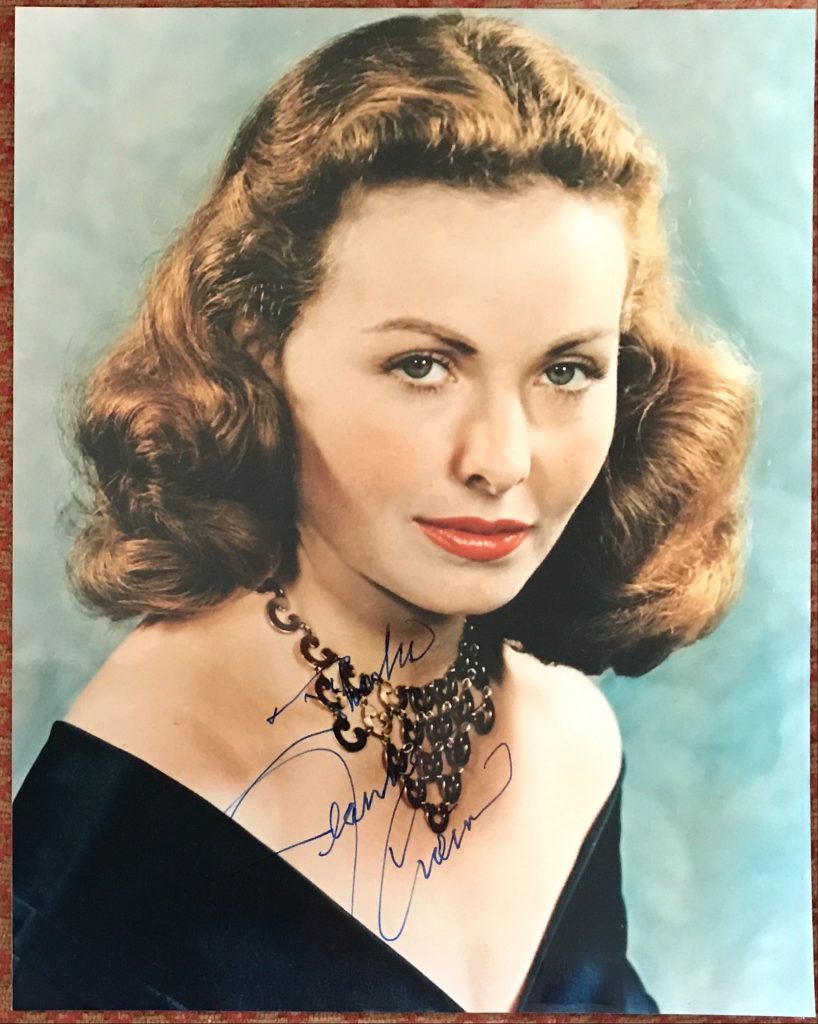
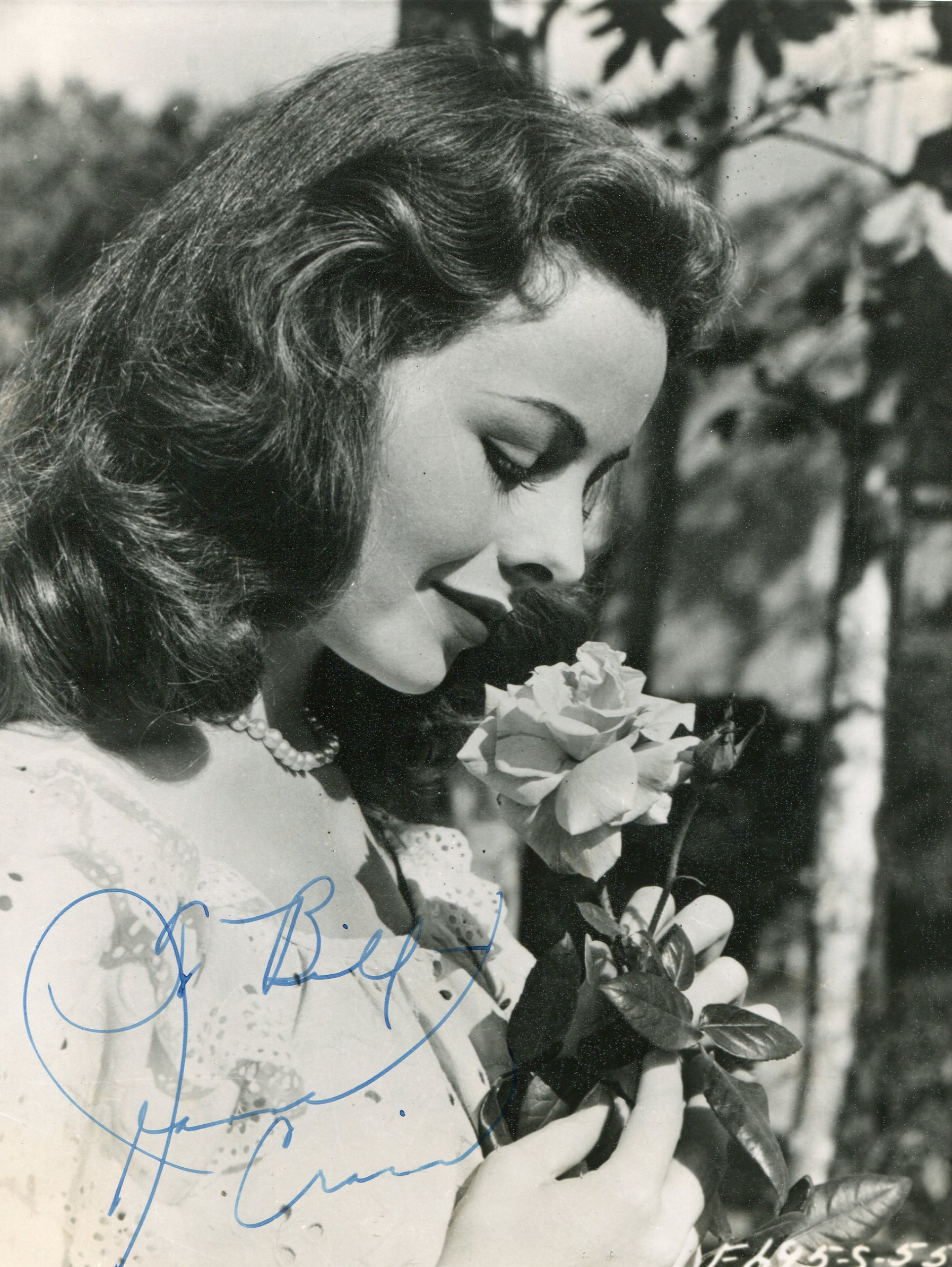
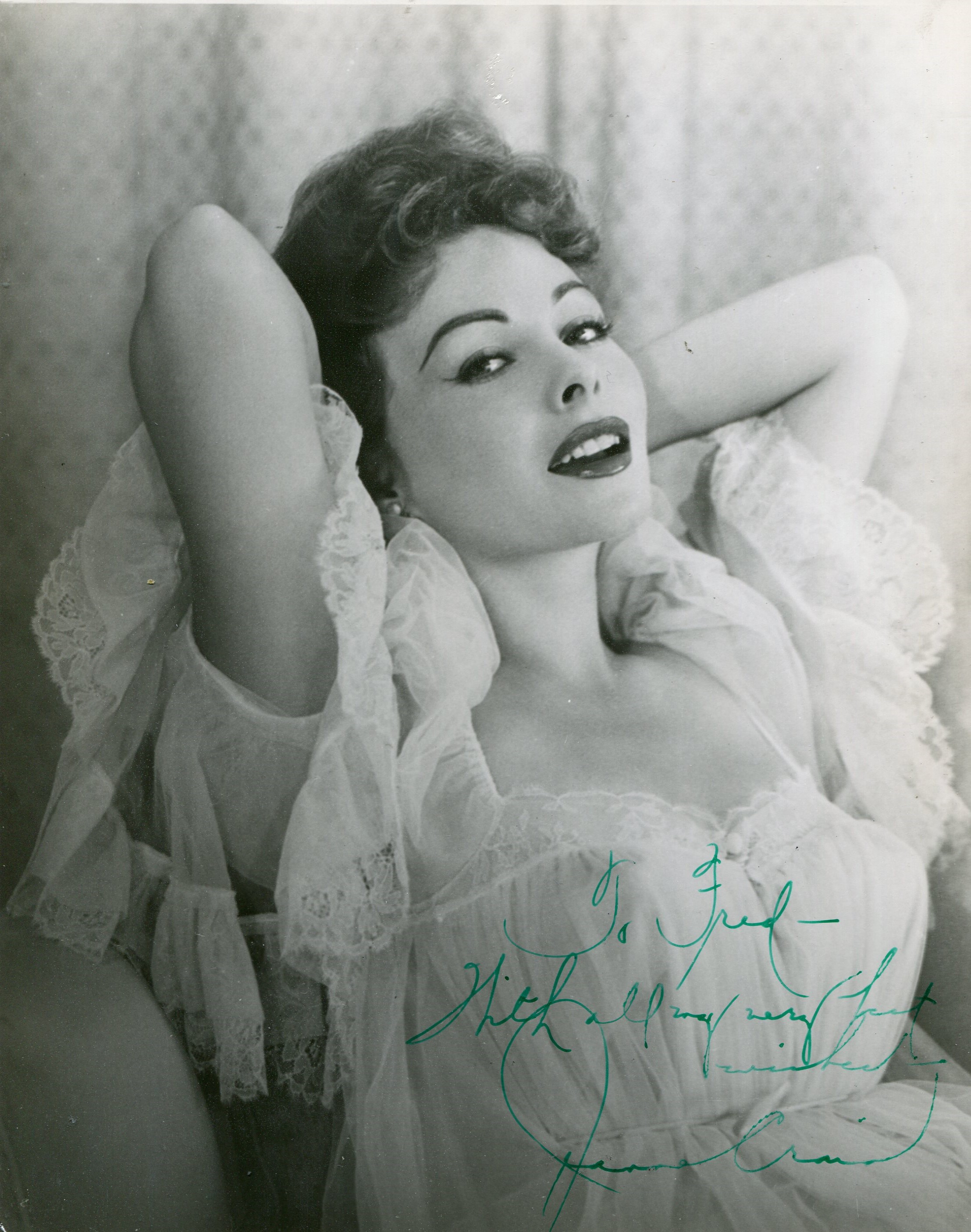
.TCM Overview:
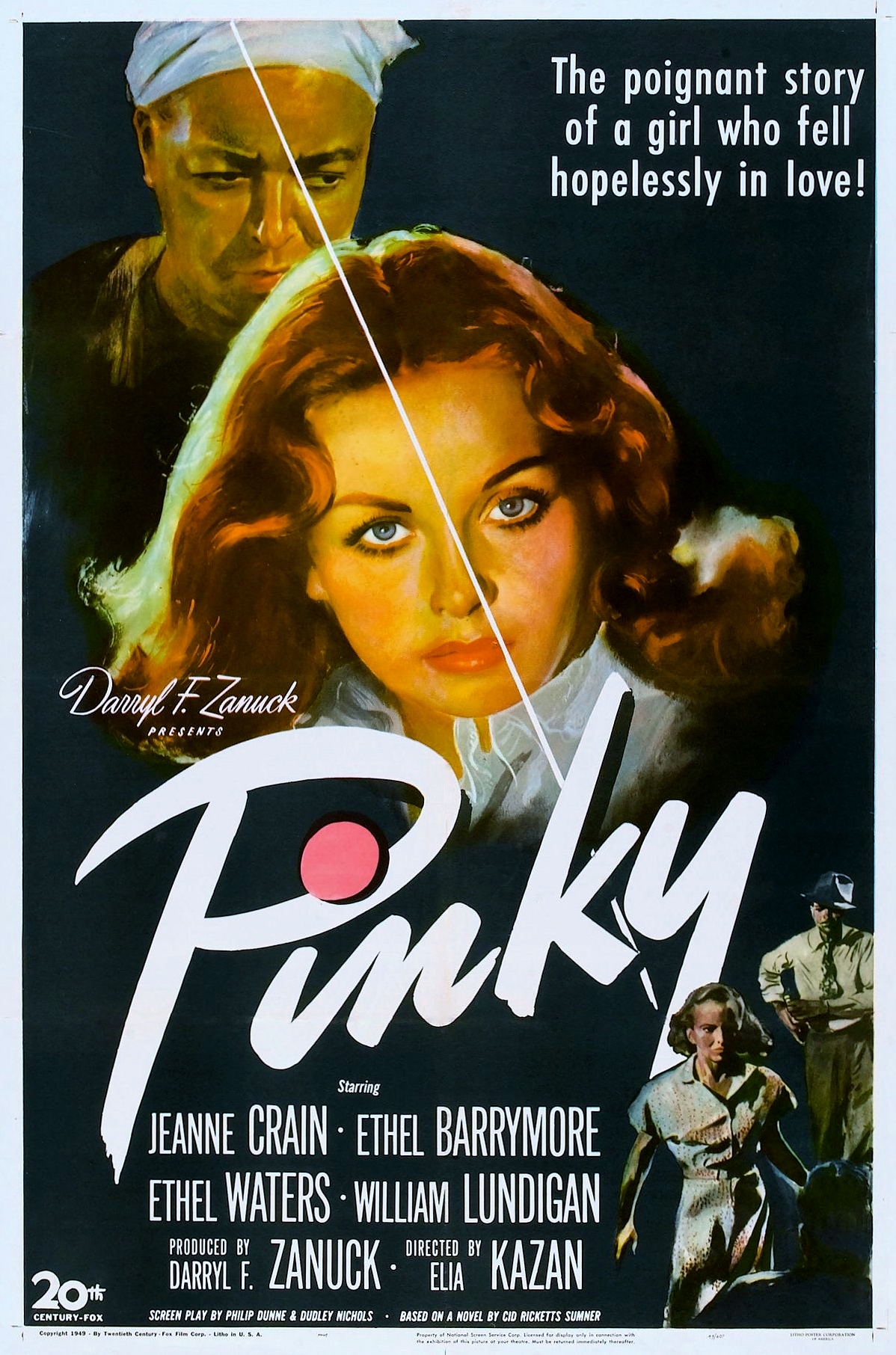
With her natural beauty and unaffected charm, the young Jeanne Crain was a breath of fresh air in 20th Century-Fox films of the 1940s. Her looks and manner became somewhat brittle as she matured, but she remained a top leading lady at Fox into the early ’50s. The high point of her career was an Oscar® nomination as Best Actress for Pinky(1949), in which she plays a light-skinned black woman who can “pass” for white. Although director Eliza Kazan later wrote that he found her emotionally impassive as an actress, her performance remains a movingone.
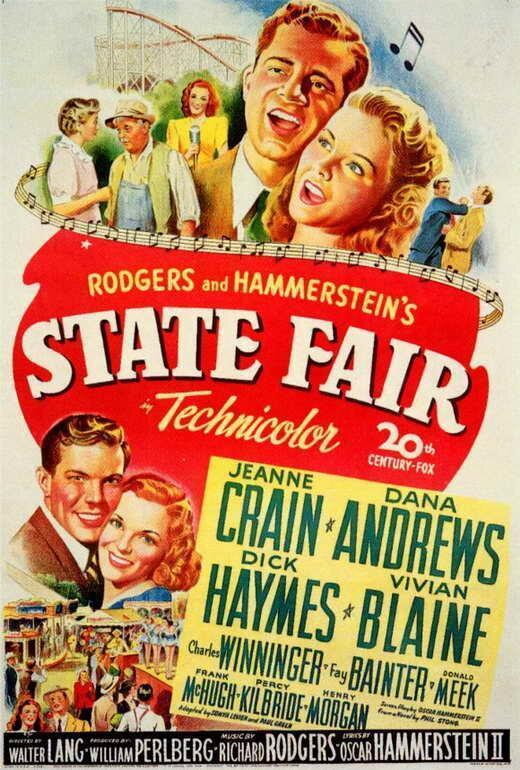
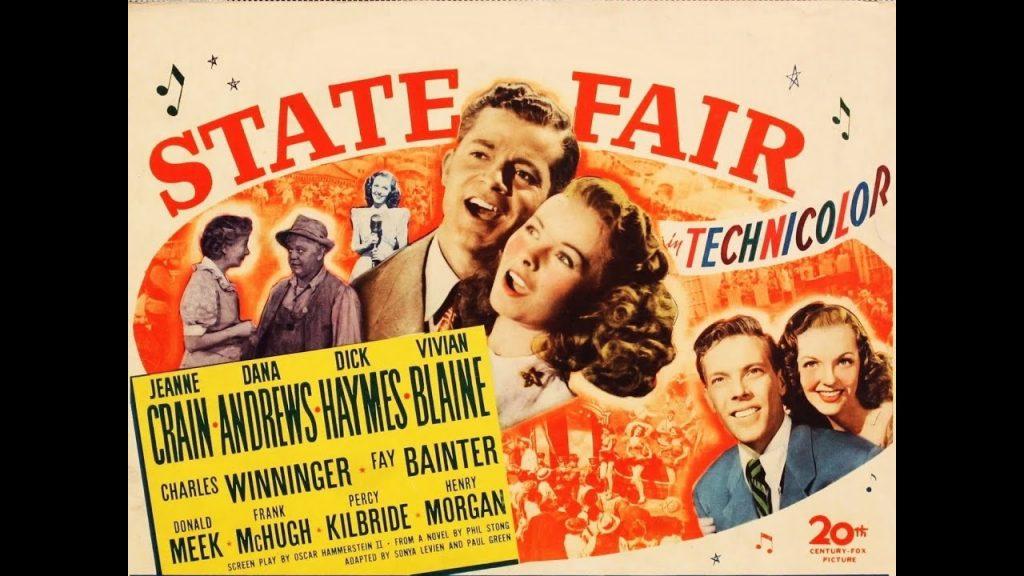
She was born Elizabeth Jeanne Crain in Barstow, California on May 25, 1925, and grew up in Los Angeles. She studied drama at UCLA and signed with Fox at the age of 18, making her debut in an uncredited bit in The Gang’s All Here(1943). She first attracted favorable attention as Lon McCallister’s tomboyish love interest in Home in Indiana (1944), a horseracing story that became a big hit. After achieving star billing she had an even bigger success in State Fair(1945), a musical with an original Rodgers and Hammerstein score. Dubbed by Louanne Hogan (who would regularly provide her singing voice in Fox films), Crain performed “It Might as Well Be Spring” and other songs.
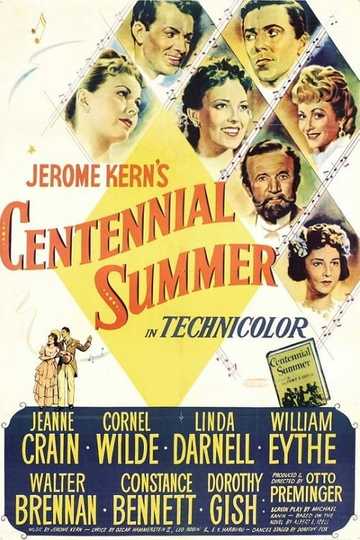
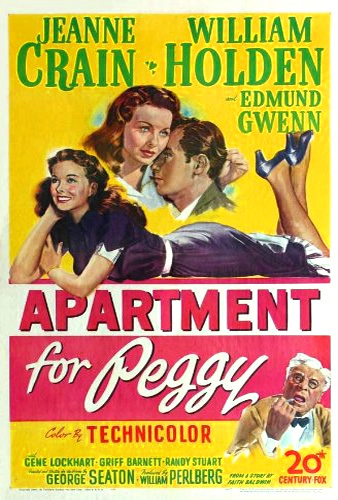
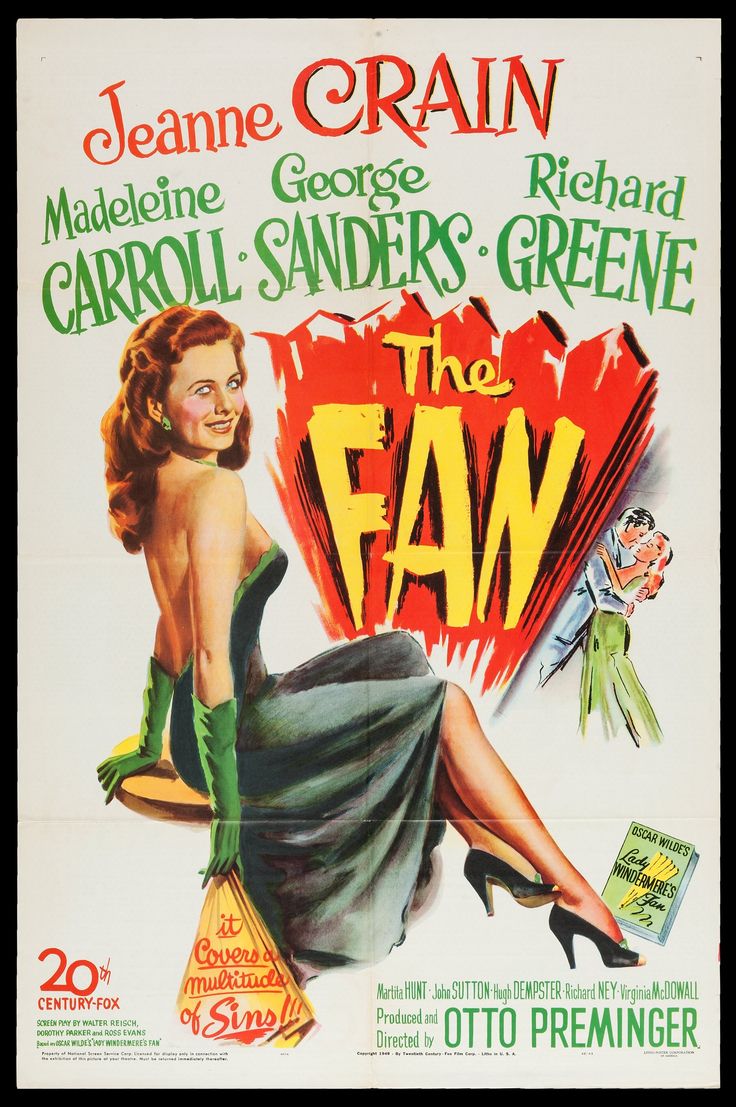
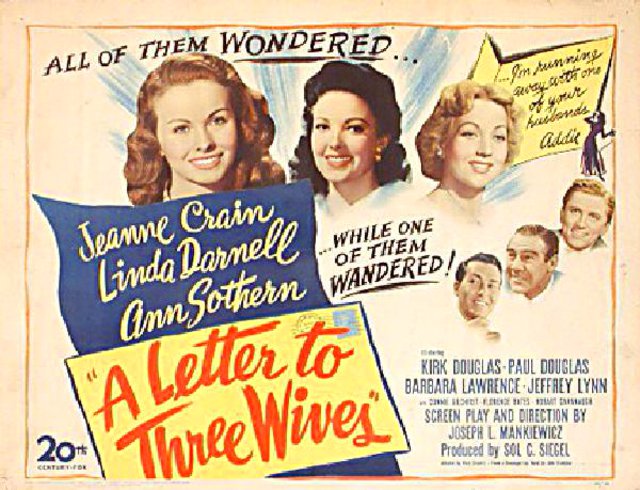
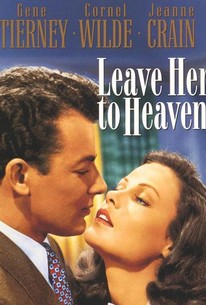
She was the “good girl” to Gene Tierney’s evil schemer in another hit, the classic melodrama Leave Her to Heaven (1945), and was dubbed again by Hogan in the Jerome Kern musical Centennial Summer (1946). She gave an especially engaging performance in Apartment for Peggy (1948) as the pregnant bride of an ex-GI played by William Holden. 1949 was a good year for Crain; in addition to Pinky she acted in A Letter to Three Wives, with Oscar®-winning script and direction by Joseph L. Mankiewicz, and played Lady Windermere in The Fan, an adaptation of a comedy of manners by Oscar Wilde, with a script co-written by no less than Dorothy Parker.
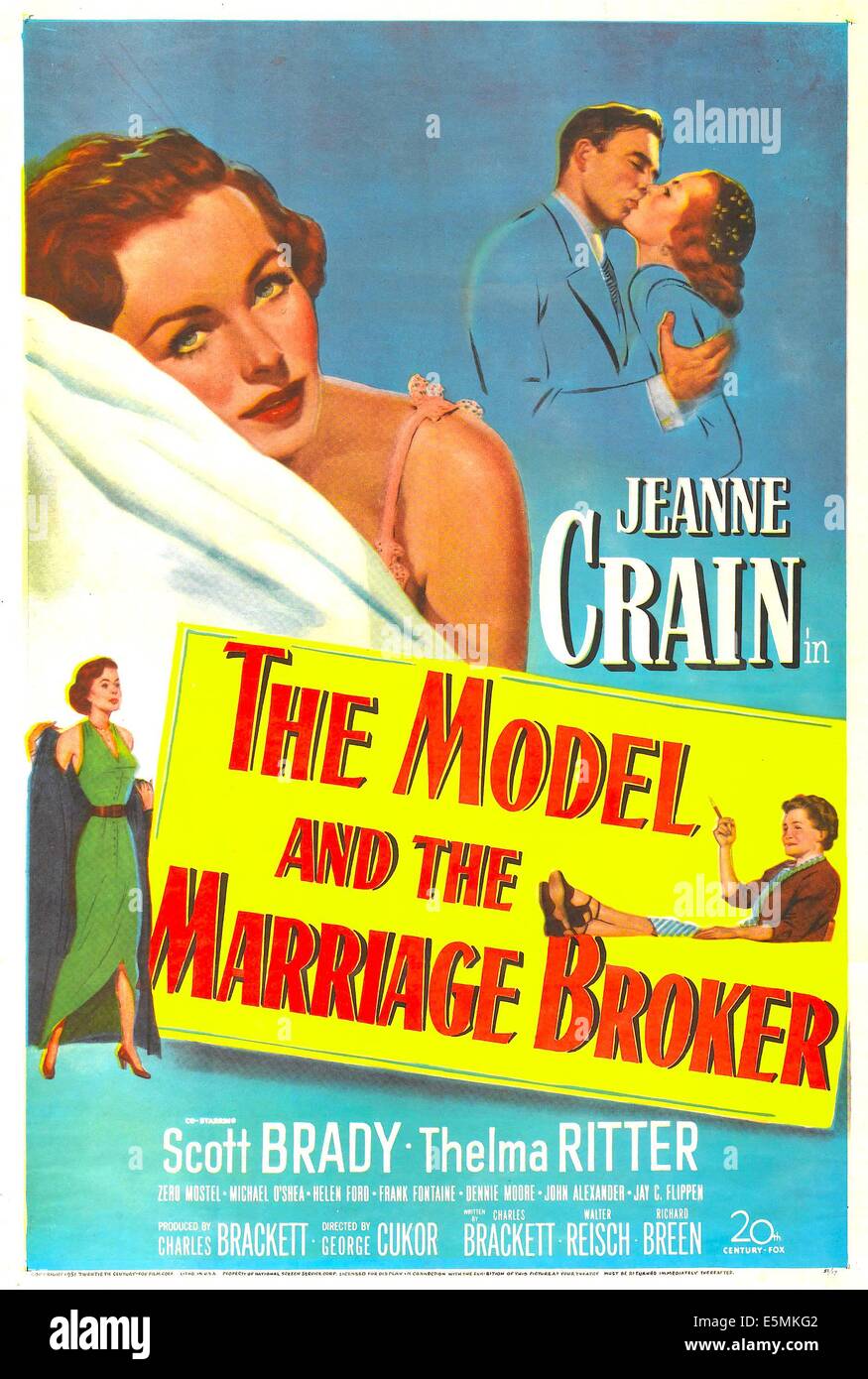
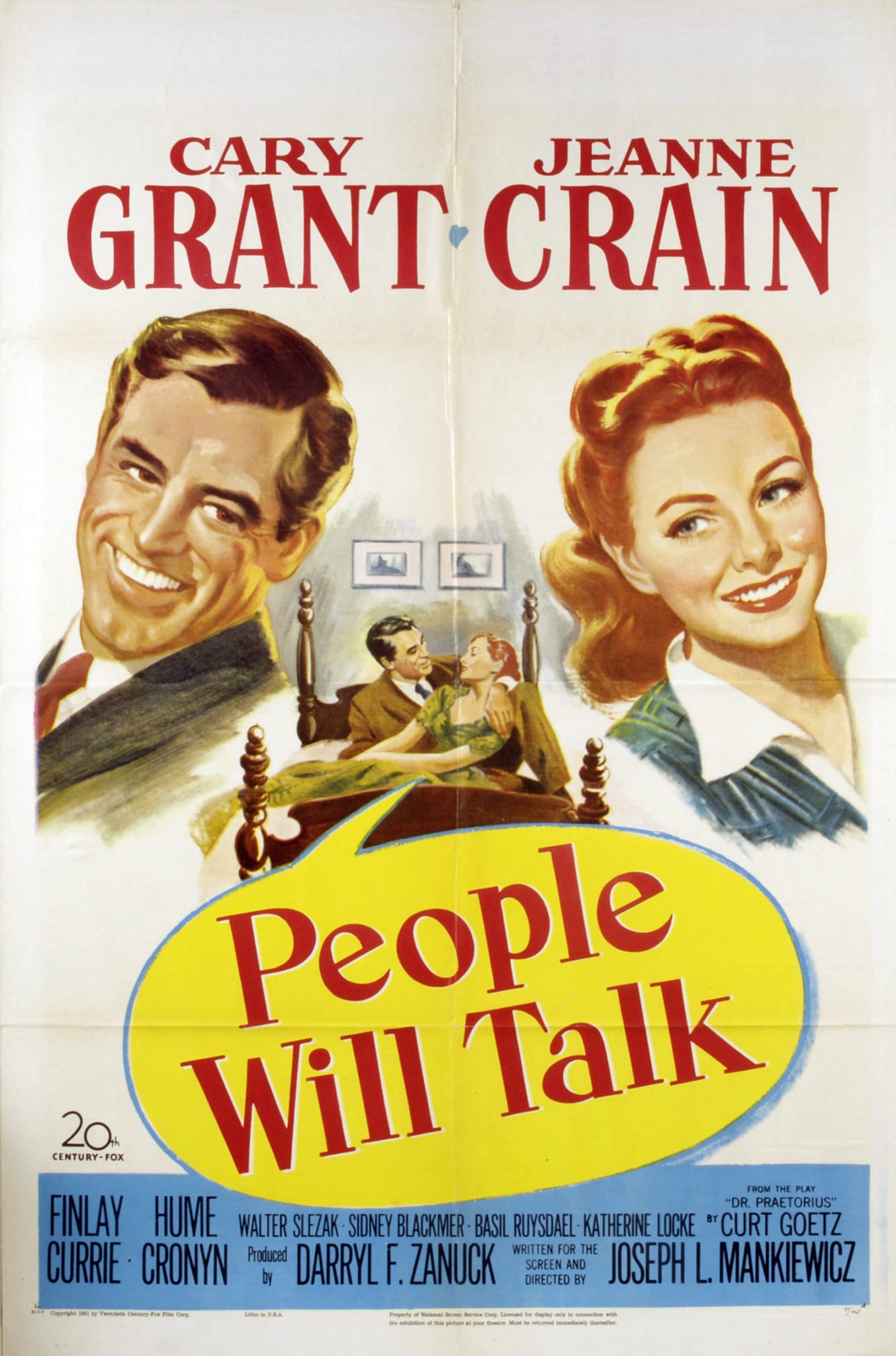
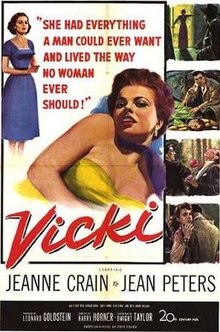
Among Crain’s 23 films under her Fox contract, other notable entries included the nostalgic comedy Cheaper by the Dozen (1950) and its sequel, Belles on Their Toes (1952), in both of which she is the eldest daughter of a very large family; People Will Talk (1951), a thoughtful comedy of manners in which she is again directed by Mankiewicz and sparkles opposite Cary Grant; and The Model and the Marriage Broker (1951), in which she is at her most beautiful and, under the sensitive direction of George Cukor, enjoys charming byplay with outstanding character actress Thelma Ritter. Crain’s final film before leaving the studio was Vicki (1953), a remake of the 1941 mystery I Wake Up Screaming.
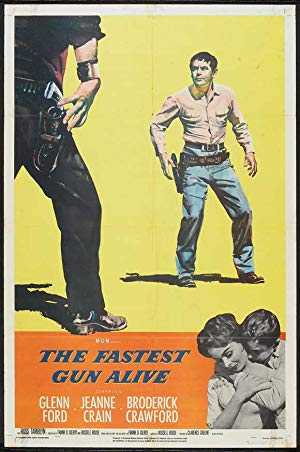
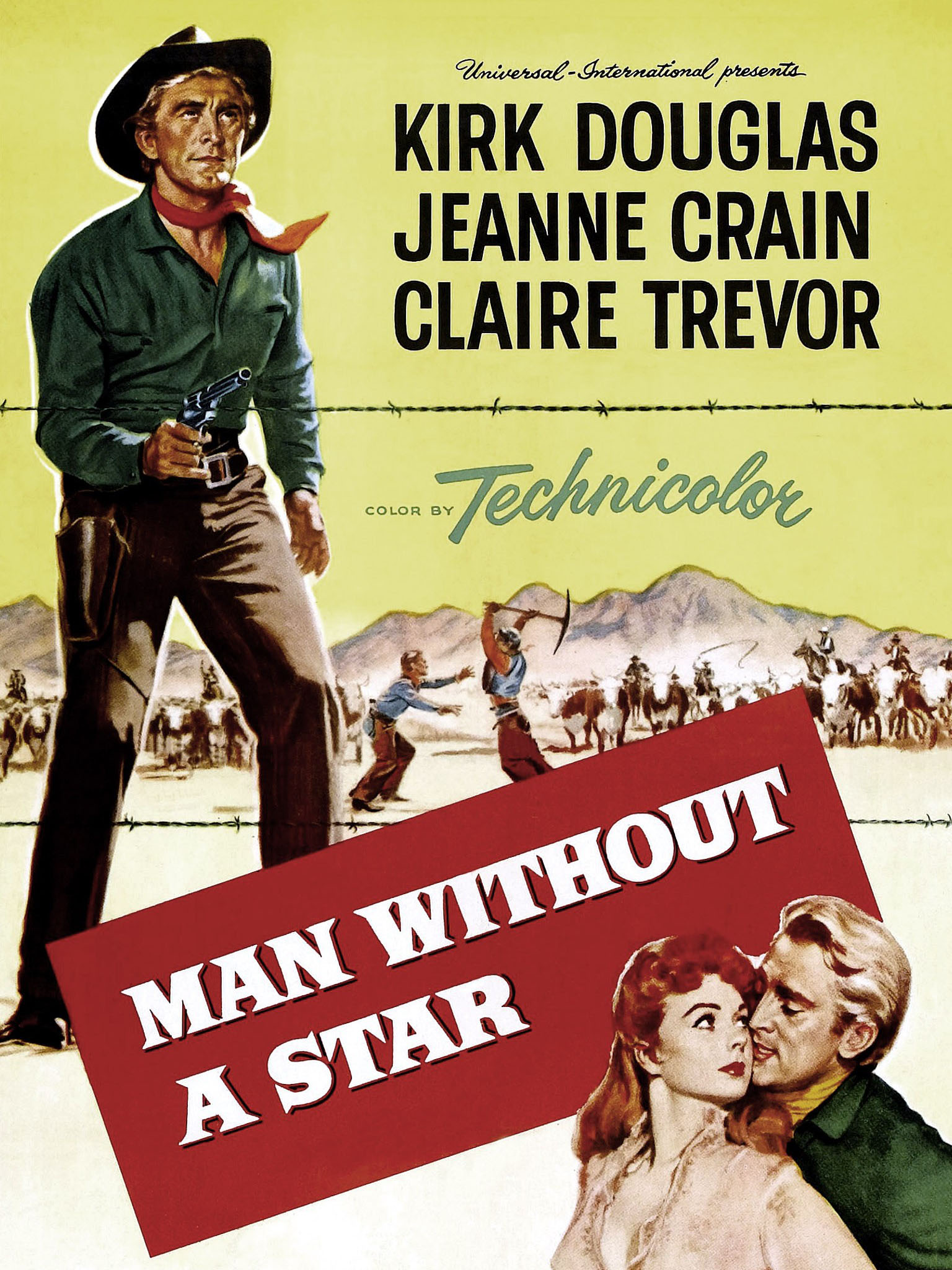
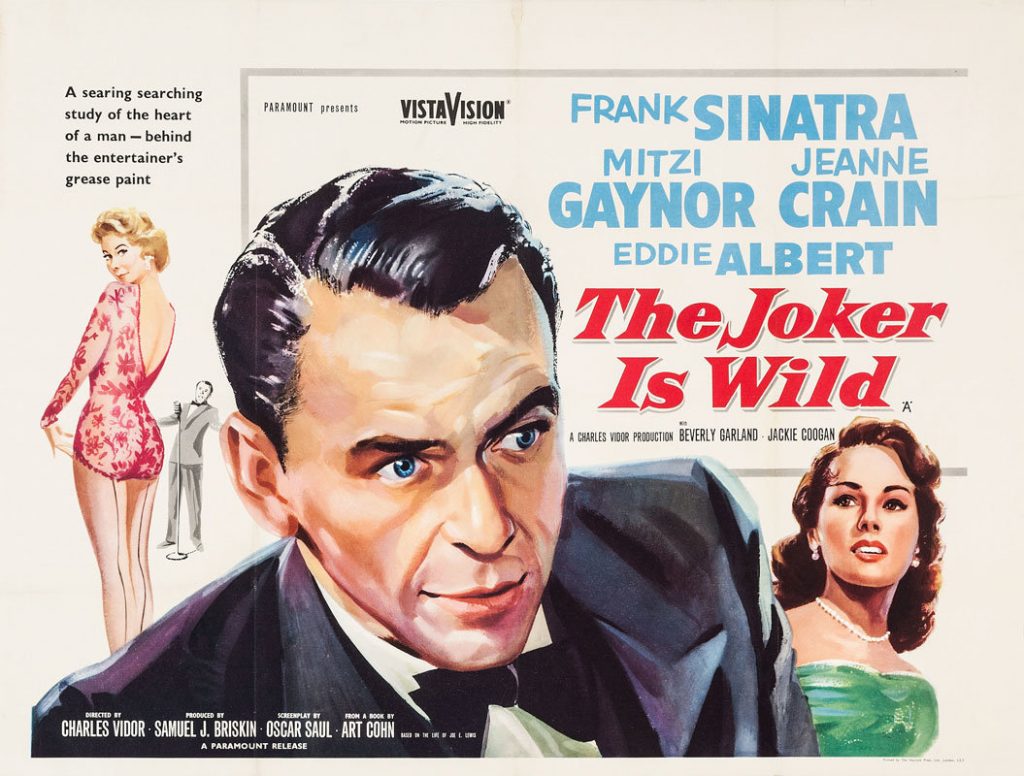
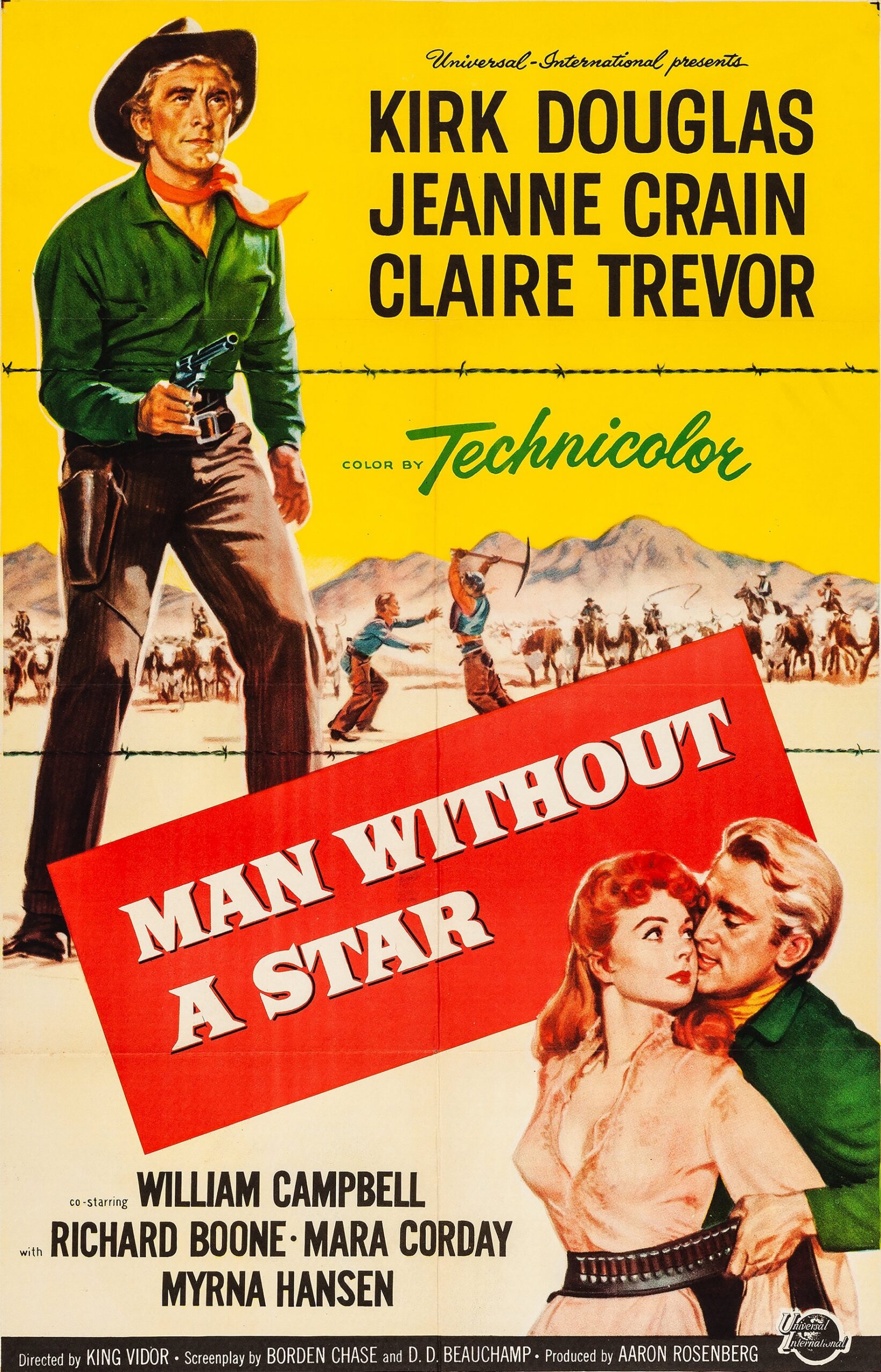
Crain’s follow-up films included two Westerns, Universal’s Man Without a Star (1955), opposite Kirk Douglas; and MGM’s The Fastest Gun Alive (1956), opposite Glenn Ford; and a pair of 1955 musicals, the well-received The Second Greatest Sex for Universal and the poorly received Gentlemen Marry Brunettes for United Artists. In the MGM biopicThe Joker Is Wild (1957), she is one of the women in the life of singer/comedian Joe E. Lewis as played by Frank Sinatra. Crain’s final feature film was Skyjacked (1972). She fleshed out her later career on television, landing the choice role of Daisy Buchanan in a Playhouse 90 production of The Great Gatsby before settling in to make appearances in various series. Sprinkled in were a couple of minor film epics made in Europe. Crain was married to Paul Brinkman and they had seven children together. She died a few months after Brinkman’s death in 2003.
Ronald Bergan’s obituary in “The Guardian”:
n the glory days of the studio system, movie stars were identified with one particular studio, becoming part of their company’s particular style and aura. From 1943 to 1953, Jeanne Crain, who has died aged 78, was a typical 20th Century Fox girl – charming, youthful and pretty. Fox, which had a smaller roster of stars than the other major studios, kept their contract players busy, and Crain made an average of two films a year, most of them bright and breezy.
Born in California of Irish-Catholic parents, Jeanne (pronounced Jean) Crain won the Miss Long Beach beauty contest in her teens, going on to become Camera Girl of 1942. But she had acting ambitions and, while still at school, took a screen test for Orson Welles for the role of Lucy Morgan in The Magnificent Ambersons. In the event, the slightly older and more experienced Anne Baxter got the part, subsequently pipping her to the post twice more, in All About Eve (1950) and One Desire (1955).
Crain’s problem was that she was mainly perceived at Fox as just a comely juvenile, lacking gravitas, and as a result was also passed over in favour of Susan Hayward in With A Song In My Heart (1952) and of Jean Simmons in The Robe (1953).
Occasionally, however, she did get a chance to reveal her ability, as in Elia Kazan’s Pinky (1949), playing a girl who has passed for white for years until forced to admit her roots. Kazan later commented: “It stirred up all kinds of hell, but it was a phoney picture. If I made it now, I’d never try to make the Fox back-lot look like the south or use Jeanne Crain, the blandest person I ever worked with.” Actually, Crain, who was Oscar nominated, was very affecting, though a black actor should have been cast, if that had been possible at the time.
Crain made her first, albeit brief, appearance on screen posing in a bathing costume in Busby Berkeley’s garish The Gang’s All Here (1943), before being introduced properly to audiences in Home In Indiana (1944), in which she portrayed a horsy girl who rides beautifully but is considered a tomboy.
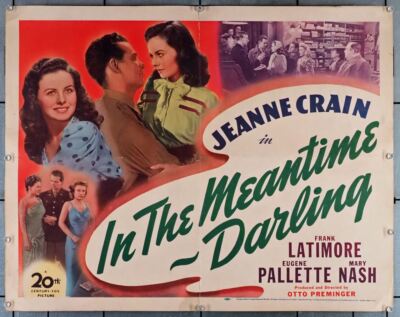
She played a rather gutsy soldier’s wife in Otto Preminger’s In The Meantime Darling (1944), but became a real star in the Rogers and Hammerstein musical State Fair (1945), giving a delightfully fresh performance as the love-struck daughter of an Iowa farming family. Although her songs were dubbed by Luanne Hogan (who also dubbed her in subsequent musicals), a record of the hit songs, It’s A Grand Night For Singing and It Might As Well Be Spring, was issued under Crain’s name.
Crain’s rise to stardom coincided with her marriage to Paul Brinkman, a businessman and former small-time actor, who went on to become a top executive with an arms manufacturing company. Her mother opposed the marriage, and the two became estranged for some time thereafter. Crain had the first of their seven children, five of whom survive her, in 1947.
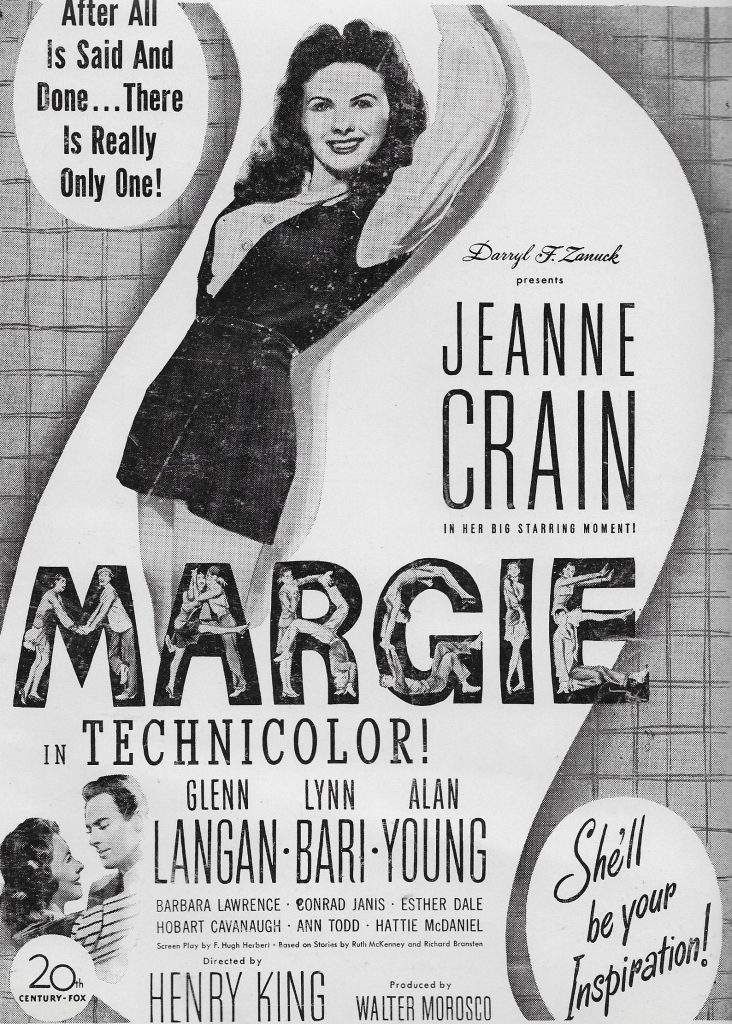
Previously, she had appeared in three successful movies. She was jealous Gene Tierney’s sweet foster sister in the lurid Leave Her To Heaven (1945), and Linda Darnell’s love rival sister in Preminger’s Centennial Summer (1946), in which she “sang” Jerome Kern melodies. Best of all was the engaging period musical Margie (1946), which showed Crain at the top of her form as a schoolgirl (though she was actually 21) with a crush on the French teacher and a tendency to lose her bloomers.
She then alternated between playing young wives or teenage daughters in a believable and ingratiating manner. She was married to William Holden in Apartment For Peggy (1948), and to bandleader Dan Dailey in You Were Meant For Me (1948). For Mankiewicz, in the stringent social comedy A Letter To Three Wives (1949), she was a shy newlywed, and, in People Will Talk (1951), she was the pregnant medical student whom gynaecologist Cary Grant marries to prevent her from committing suicide or having an abortion.
In both Cheaper By The Dozen (1950), and its sequel Belles On Their Toes (1952), Crain was the oldest of Myrna Loy’s 12 children, though she did the latter unwillingly after Zanuck refused to loan her out to Paramount for Carrie, opposite Laurence Olivier. There was another disappointment when she had to turn down a lead in Three Coins In The Fountain because her husband refused to let her go on location to Rome – though, in an attempt to compensate, he built his wife a studio in which to enjoy her hobby of painting.
Prior to asking Fox to release her in 1953, she made George Cukor’s enchanting The Model And The Marriage Broker (1952), and she was touching as the poverty-stricken young wife of Farley Granger in The Gift Of The Magi episode from O Henry’s Full House (1952).
Away from Fox, and now in her 30s, Crain made a conscious decision to break with her dewy-eyed juvenile past, dying her hair red and taking on gutsier and sexier roles. Thus she appeared in westerns as bold ranchers, matching Kirk Douglas in Man Without A Star (1955) and Alan Ladd in Guns Of The Timberland (1962), and as sophisticated women, as in The Joker Is Wild (1957), playing nightclub comedian Frank Sinatra’s wife.
As the Hollywood studio system broke up, she followed many other American stars to Italy, to appear in hokum costume epics. She was one of the Roman procurator’s lovers in Pontius Pilate (1961), and a languid Nefertiti in Queen Of The Nile (1962). Meanwhile, her marriage was going through turbulent times, but although Crain, a practising Catholic, sued Brinkman for divorce in 1956, the decree never became final and they got back together again.
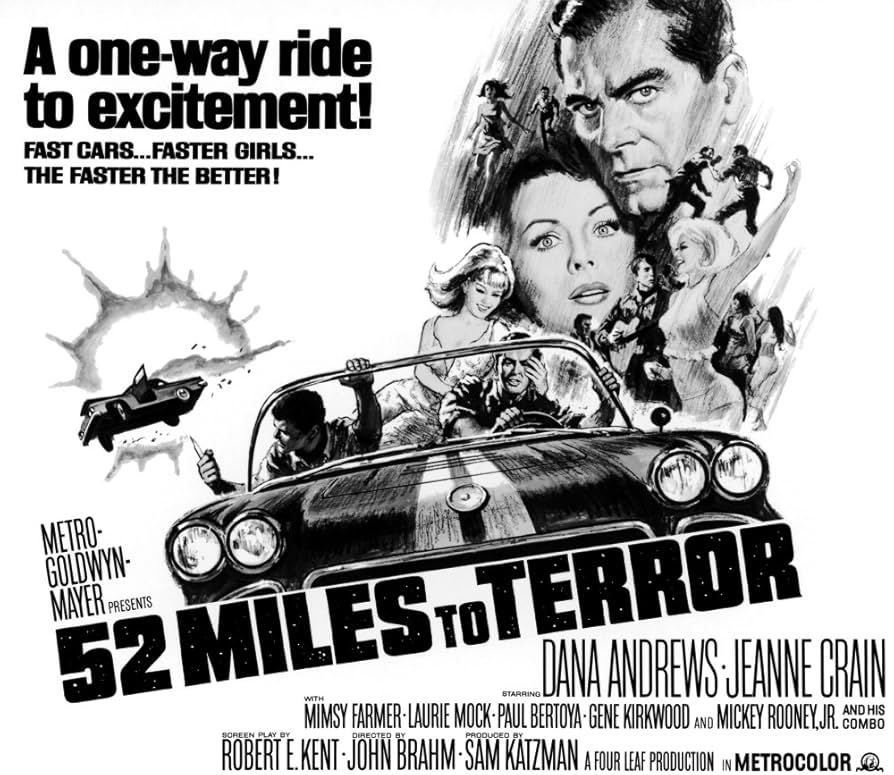
Among her last films, when the pickings became slim, were Hots Rods To Hell (1967), in which she and Dana Andrews were parents terrified by young people with souped-up cars; Skyjacked (1972), as a passenger on a plane piloted by Charlton Heston; and The Night God Screamed (1973), playing a court witness hunted by a murderous hooded figure after her testimony had sent other defendants to death row. It was a long way from those well-scrubbed roles in guileless Fox movies of the 1940s.
· Jeanne Crain, actor, born May 25 1925; died December 14 2003
Her “Guardian” obituary can also be accessed here.
With her natural beauty and unaffected charm, the young Jeanne Crain was a breath of fresh air in 20th Century-Fox films of the 1940s. Her looks and manner became somewhat brittle as she matured, but she remained a top leading lady at Fox into the early ’50s. The high point of her career was an Oscar® nomination as Best Actress for Pinky(1949), in which she plays a light-skinned black woman who can “pass” for white. Although director Eliza Kazan later wrote that he found her emotionally impassive as an actress, her performance remains a movingone.
She was born Elizabeth Jeanne Crain in Barstow, California on May 25, 1925, and grew up in Los Angeles. She studied drama at UCLA and signed with Fox at the age of 18, making her debut in an uncredited bit in The Gang’s All Here(1943). She first attracted favorable attention as Lon McCallister’s tomboyish love interest in Home in Indiana (1944), a horseracing story that became a big hit. After achieving star billing she had an even bigger success in State Fair(1945), a musical with an original Rodgers and Hammerstein score. Dubbed by Louanne Hogan (who would regularly provide her singing voice in Fox films), Crain performed “It Might as Well Be Spring” and other songs.
She was the “good girl” to Gene Tierney’s evil schemer in another hit, the classic melodrama Leave Her to Heaven(1945), and was dubbed again by Hogan in the Jerome Kern musical Centennial Summer (1946). She gave an especially engaging performance in Apartment for Peggy (1948) as the pregnant bride of an ex-GI played by William Holden. 1949 was a good year for Crain; in addition to Pinky she acted in A Letter to Three Wives, with Oscar®-winning script and direction by Joseph L. Mankiewicz, and played Lady Windermere in The Fan, an adaptation of a comedy of manners by Oscar Wilde, with a script co-written by no less than Dorothy Parker.
Among Crain’s 23 films under her Fox contract, other notable entries included the nostalgic comedy Cheaper by the Dozen (1950) and its sequel, Belles on Their Toes (1952), in both of which she is the eldest daughter of a very large family; People Will Talk (1951), a thoughtful comedy of manners in which she is again directed by Mankiewicz and sparkles opposite Cary Grant; and The Model and the Marriage Broker (1951), in which she is at her most beautiful and, under the sensitive direction of George Cukor, enjoys charming byplay with outstanding character actress Thelma Ritter. Crain’s final film before leaving the studio was Vicki (1953), a remake of the 1941 mystery I Wake Up Screaming.
Crain’s follow-up films included two Westerns, Universal’s Man Without a Star (1955), opposite Kirk Douglas; and MGM’s The Fastest Gun Alive (1956), opposite Glenn Ford; and a pair of 1955 musicals, the well-received The Second Greatest Sex for Universal and the poorly received Gentlemen Marry Brunettes for United Artists. In the MGM biopicThe Joker Is Wild (1957), she is one of the women in the life of singer/comedian Joe E. Lewis as played by Frank Sinatra. Crain’s final feature film was Skyjacked (1972). She fleshed out her later career on television, landing the choice role of Daisy Buchanan in a Playhouse 90 production of The Great Gatsby before settling in to make appearances in various series. Sprinkled in were a couple of minor film epics made in Europe. Crain was married to Paul Brinkman and they had seven children together. She died a few months after Brinkman’s death in 2003.
JEANNE CRAIN OBITUARY IN “THE GUARDIAN” IN 2003.
Ronald Bergan’s obituary in “The Guardian”:
n the glory days of the studio system, movie stars were identified with one particular studio, becoming part of their company’s particular style and aura. From 1943 to 1953, Jeanne Crain, who has died aged 78, was a typical 20th Century Fox girl – charming, youthful and pretty. Fox, which had a smaller roster of stars than the other major studios, kept their contract players busy, and Crain made an average of two films a year, most of them bright and breezy.
Born in California of Irish-Catholic parents, Jeanne (pronounced Jean) Crain won the Miss Long Beach beauty contest in her teens, going on to become Camera Girl of 1942. But she had acting ambitions and, while still at school, took a screen test for Orson Welles for the role of Lucy Morgan in The Magnificent Ambersons. In the event, the slightly older and more experienced Anne Baxter got the part, subsequently pipping her to the post twice more, in All About Eve (1950) and One Desire (1955).
Crain’s problem was that she was mainly perceived at Fox as just a comely juvenile, lacking gravitas, and as a result was also passed over in favour of Susan Hayward in With A Song In My Heart (1952) and of Jean Simmons in The Robe (1953).
Crain’s rise to stardom coincided with her marriage to Paul Brinkman, a businessman and former small-time actor, who went on to become a top executive with an arms manufacturing company. Her mother opposed the marriage, and the two became estranged for some time thereafter. Crain had the first of their seven children, five of whom survive her, in 1947.
Occasionally, however, she did get a chance to reveal her ability, as in Elia Kazan’s Pinky (1949), playing a girl who has passed for white for years until forced to admit her roots. Kazan later commented: “It stirred up all kinds of hell, but it was a phoney picture. If I made it now, I’d never try to make the Fox back-lot look like the south or use Jeanne Crain, the blandest person I ever worked with.” Actually, Crain, who was Oscar nominated, was very affecting, though a black actor should have been cast, if that had been possible at the time.
Crain made her first, albeit brief, appearance on screen posing in a bathing costume in Busby Berkeley’s garish The Gang’s All Here (1943), before being introduced properly to audiences in Home In Indiana (1944), in which she portrayed a horsy girl who rides beautifully but is considered a tomboy.
She played a rather gutsy soldier’s wife in Otto Preminger’s In The Meantime Darling (1944), but became a real star in the Rogers and Hammerstein musical State Fair (1945), giving a delightfully fresh performance as the love-struck daughter of an Iowa farming family. Although her songs were dubbed by Luanne Hogan (who also dubbed her in subsequent musicals), a record of the hit songs, It’s A Grand Night For Singing and It Might As Well Be Spring, was issued under Crain’s name.
Previously, she had appeared in three successful movies. She was jealous Gene Tierney’s sweet foster sister in the lurid Leave Her To Heaven (1945), and Linda Darnell’s love rival sister in Preminger’s Centennial Summer (1946), in which she “sang” Jerome Kern melodies. Best of all was the engaging period musical Margie (1946), which showed Crain at the top of her form as a schoolgirl (though she was actually 21) with a crush on the French teacher and a tendency to lose her bloomers.
She then alternated between playing young wives or teenage daughters in a believable and ingratiating manner. She was married to William Holden in Apartment For Peggy (1948), and to bandleader Dan Dailey in You Were Meant For Me (1948). For Mankiewicz, in the stringent social comedy A Letter To Three Wives (1949), she was a shy newlywed, and, in People Will Talk (1951), she was the pregnant medical student whom gynaecologist Cary Grant marries to prevent her from committing suicide or having an abortion.
In both Cheaper By The Dozen (1950), and its sequel Belles On Their Toes (1952), Crain was the oldest of Myrna Loy’s 12 children, though she did the latter unwillingly after Zanuck refused to loan her out to Paramount for Carrie, opposite Laurence Olivier. There was another disappointment when she had to turn down a lead in Three Coins In The Fountain because her husband refused to let her go on location to Rome – though, in an attempt to compensate, he built his wife a studio in which to enjoy her hobby of painting.
Prior to asking Fox to release her in 1953, she made George Cukor’s enchanting The Model And The Marriage Broker (1952), and she was touching as the poverty-stricken young wife of Farley Granger in The Gift Of The Magi episode from O Henry’s Full House (1952).
Away from Fox, and now in her 30s, Crain made a conscious decision to break with her dewy-eyed juvenile past, dying her hair red and taking on gutsier and sexier roles. Thus she appeared in westerns as bold ranchers, matching Kirk Douglas in Man Without A Star (1955) and Alan Ladd in Guns Of The Timberland (1962), and as sophisticated women, as in The Joker Is Wild (1957), playing nightclub comedian Frank Sinatra’s wife.
As the Hollywood studio system broke up, she followed many other American stars to Italy, to appear in hokum costume epics. She was one of the Roman procurator’s lovers in Pontius Pilate (1961), and a languid Nefertiti in Queen Of The Nile (1962). Meanwhile, her marriage was going through turbulent times, but although Crain, a practising Catholic, sued Brinkman for divorce in 1956, the decree never became final and they got back together again.
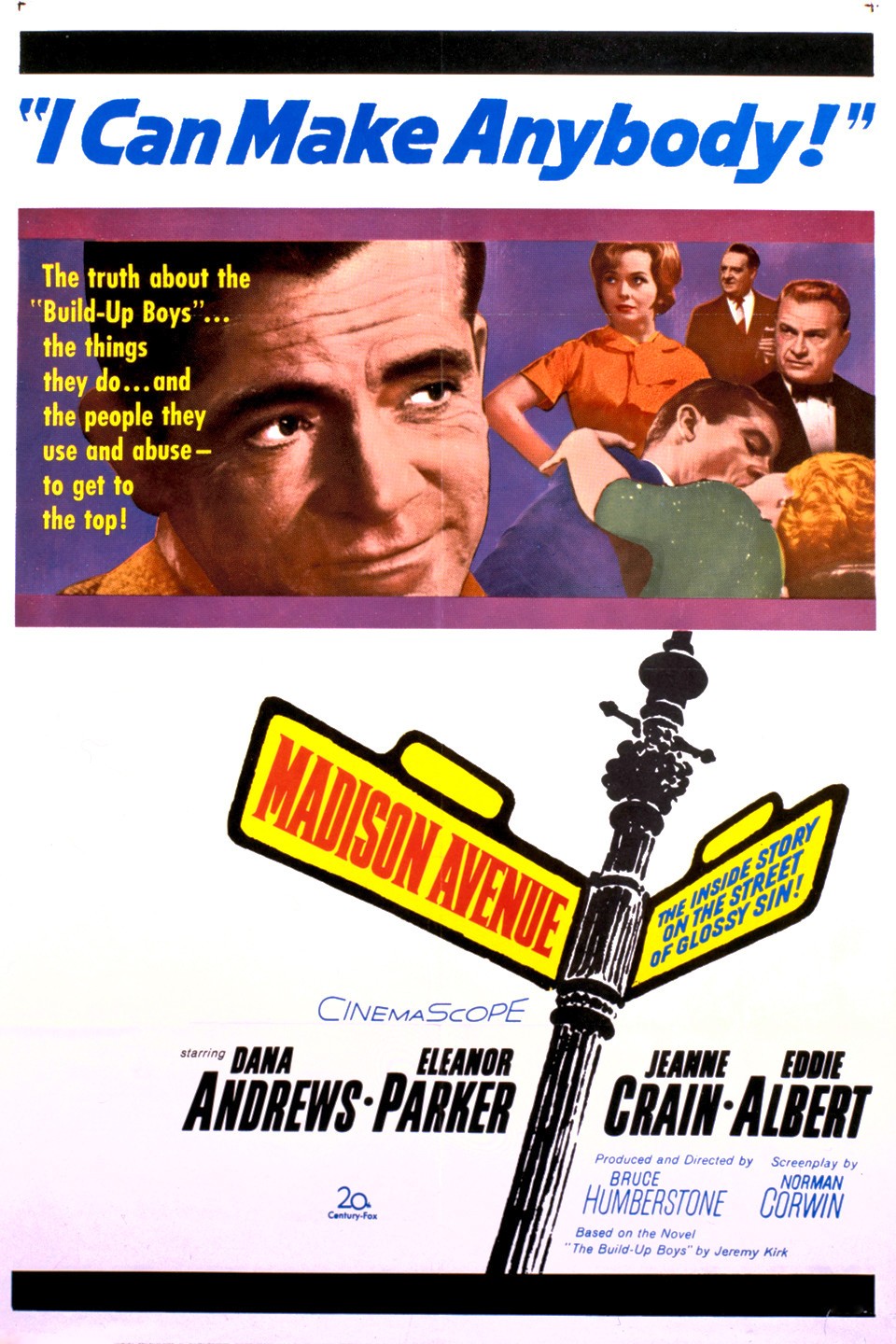
Among her last films, when the pickings became slim, were Hots Rods To Hell (1967), in which she and Dana Andrews were parents terrified by young people with souped-up cars; Skyjacked (1972), as a passenger on a plane piloted by Charlton Heston; and The Night God Screamed (1973), playing a court witness hunted by a murderous hooded figure after her testimony had sent other defendants to death row. It was a long way from those well-scrubbed roles in guileless Fox movies of the 1940s.
· Jeanne Crain, actor, born May 25 1925; died December 14 2003
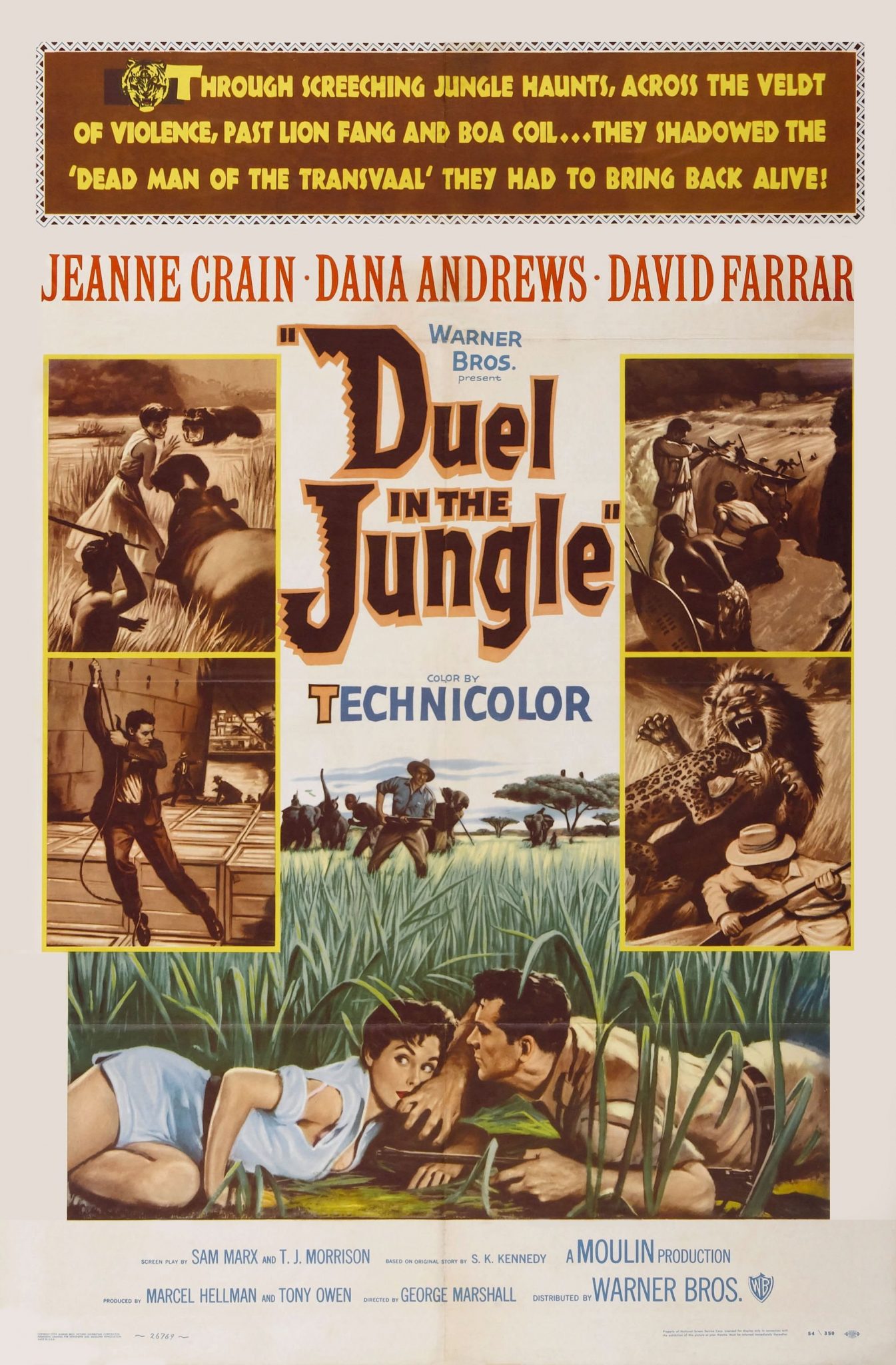
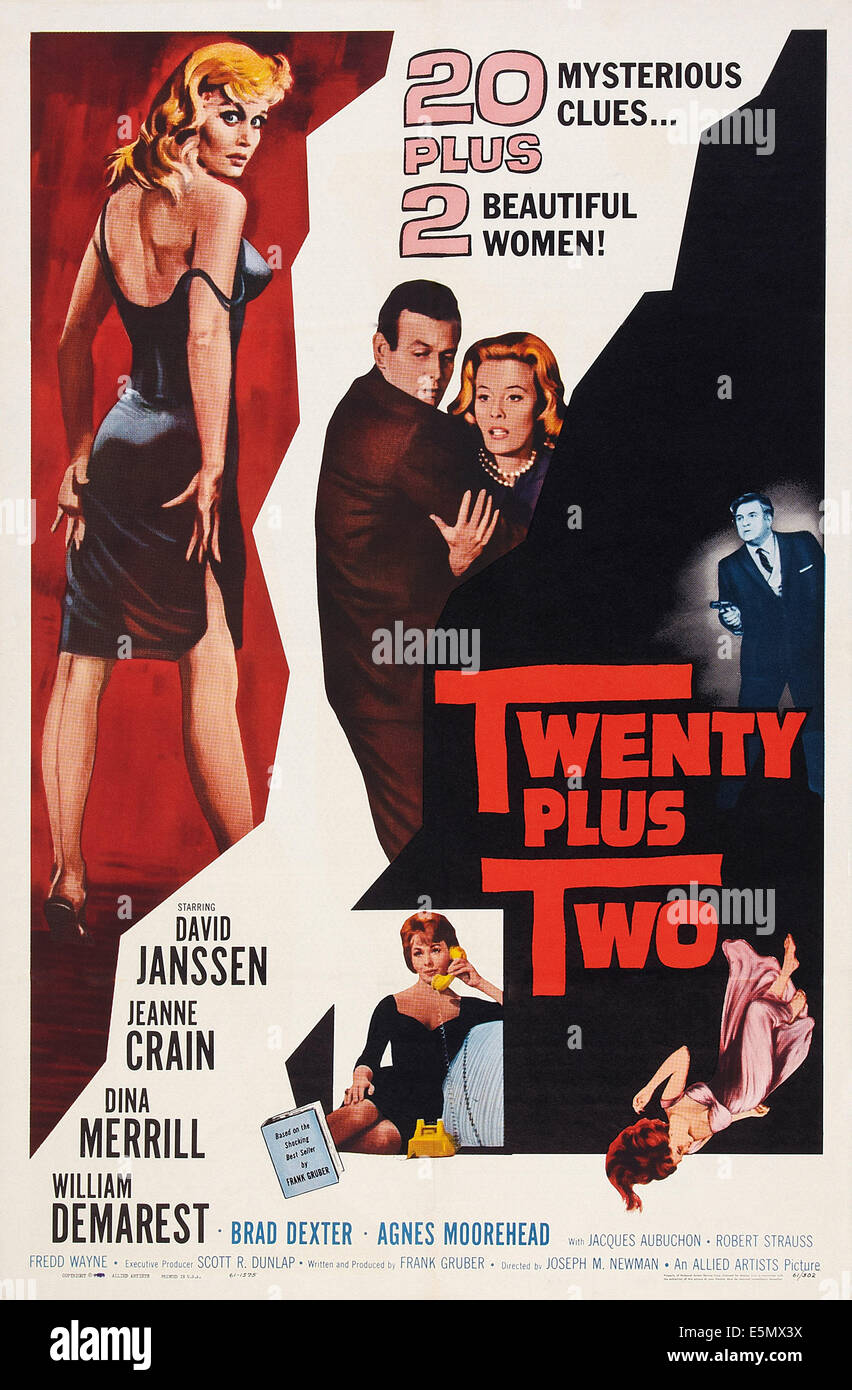
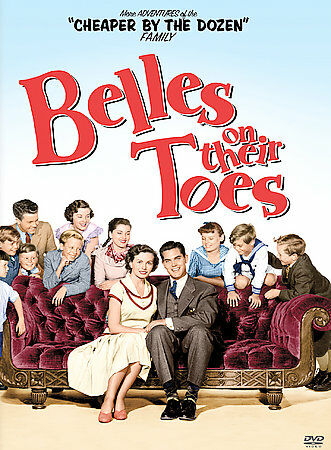
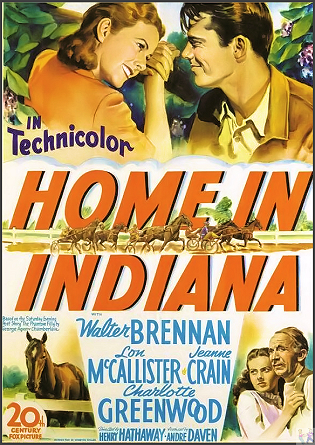
Career Overview and Critical Analysis of Jeanne Crain
Jeanne Crain (1925–2003) was a leading actress of the 1940s and 1950s whose career exemplifies the classic MGM starlet arc: early typecasting as wholesome, all-American young women, followed by a gradual attempt to expand into more mature and complex roles. While often overshadowed by contemporaries like June Allyson and Doris Day, Crain’s performances are notable for emotional subtlety, restrained charm, and naturalistic style within the confines of studio melodramas.
1. Early Life and Entry into Hollywood
Jeanne Crain was born in Barstow, California, and moved to Los Angeles, where she trained in acting and singing. She was discovered by MGM after winning a beauty contest and began her career with small parts in B‑pictures and supporting roles.
- Early films: Song of Love (1947), State of the Union (1948) – minor or supporting appearances.
Her early screen persona was defined by girl-next-door appeal, innocence, and warmth, qualities that MGM cultivated carefully to appeal to mainstream audiences in the post‑war period.
2. Rise to Prominence: Typecasting as the All-American Girl
Crain’s breakthrough came with roles that showcased her wholesome, morally upright image:
- Margie – Crain’s first major leading role, playing a high‑school girl navigating teenage life.
- State of the Union – ensemble drama directed by Frank Capra, where Crain played a politically aware but innocent young woman.
Critical Analysis
- Crain’s performances were praised for naturalistic delivery and emotional clarity, even within melodramatic or formulaic narratives.
- Critics often highlighted her ability to convey sincerity and internal emotion subtly, distinguishing her from the broader, more theatrical acting common in the 1940s.
- Limitations: Her early work kept her largely within “good girl” archetypes, rarely allowing for moral ambiguity or psychological depth.
3. Peak Career: Dramatic and Romantic Roles
By the late 1940s and early 1950s, Crain starred in high-profile MGM films that cemented her status:
- Pinky – Crain received an Academy Award nomination for Best Actress for her portrayal of a light-skinned African-American woman passing as white.
- Critical evaluation:
- The role demanded subtlety in portraying racial identity and internal conflict.
- Critics recognized Crain’s emotional nuance, though some later historians critique the film’s choice to cast a white actress in the role.
- Critical evaluation:
- Cheaper by the Dozen – comedic/family drama showcasing Crain’s warmth and light touch.
- Leave Her to Heaven (co-starring with other MGM stars) – Crain occasionally appeared in melodramatic, femme‑fatale adjacent contexts, though her core persona remained wholesome.
Critical Analysis
- Crain’s work in Pinky demonstrates her capacity for psychological subtlety, signaling her potential beyond typecasting.
- In contrast, films like Cheaper by the Dozen emphasized persona over depth, highlighting the tension between commercial appeal and artistic opportunity.
- She maintained a screen style of restraint, clear diction, and understated emotive expression, which often contrasted with more flamboyant co-stars.
4. Acting Style
Jeanne Crain’s performances were characterized by:
- Naturalistic emotion: Her expressiveness was understated rather than theatrical, lending credibility to everyday scenarios.
- Poise and elegance: A polished presence suitable for both romantic and domestic roles.
- Vocal clarity: MGM often emphasized her ability to convey sincerity and composure through dialogue delivery.
While her technical skill was consistent, her artistic range was sometimes constrained by studio-imposed typecasting, which favored wholesome, morally upright characters.
5. Career Challenges and Later Work
By the mid-1950s, Crain began to seek more mature and dramatic roles, including:
- The Great Caruso – musical biopic; Crain played supportive, romanticized roles.
- Titanic – historical romance, again emphasizing elegance and propriety over moral ambiguity.
Critically, these films showed Crain’s adaptability to period dramas and musical sequences, though they rarely challenged her acting range. By the late 1950s, as younger stars and method-trained actors gained prominence, Crain’s career slowed.
- Television and guest appearances in the 1960s allowed her to continue working, though not at her previous level of prominence.
6. Critical Legacy
Jeanne Crain’s career is significant for several reasons:
✔ Strengths
- Emotional restraint: Her ability to project authenticity without melodrama.
- Versatility within type: While typecast, she convincingly inhabited roles from teen romances to socially conscious melodramas.
- Screen presence: Poised, elegant, and appealing to a postwar audience seeking stability and wholesomeness.
✖ Limitations
- Typecasting: Repeated “all-American girl” roles limited exposure to complex characters.
- Studio constraints: MGM controlled her image tightly, preventing exploration of darker or morally complex roles.
- Competition with younger stars: As Hollywood shifted to Method and edgier personalities, Crain’s polished style appeared conservative.
Critical Conclusion
Crain’s work represents the quintessential MGM ideal of postwar womanhood, balancing beauty, moral clarity, and understated emotional depth. While not regarded as revolutionary, her performances in Pinky and select romantic dramas demonstrate artistry within constraints, showing how an actor can convey subtlety and sincerity even when limited by typecasting.
Her legacy is thus less about transformative roles and more about the artistry of consistency and charm in the Golden Age of Hollywood.