
Barrie Chase

Barrie Chase

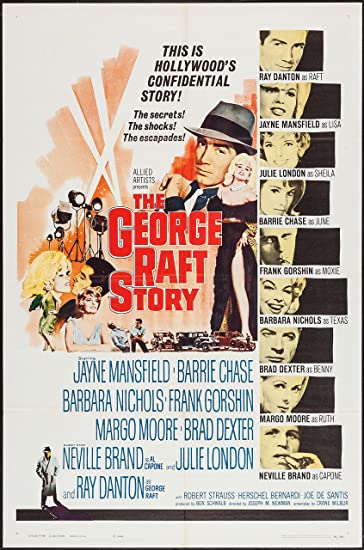
Barrie Chase was a beautiful American singer and actress who became Fred Astaire’s last dancing partner.  They appeared on television specials together.    She was born in Long Island, New York in 1933.   She appeared in the chorus of many a Hollywood musical iuncluding “White Christmas”,”Hans Christian Andersen”, “Brigadoon” and “Pal Joey”.   She had dramatic roles in “Cape Fear”and “The George Radt Story”.   She retired from show business for domestic life in 1972.   Clipon “Youtube” of Fred Astaire and Barrie Chase here.

“Wikipedia” entry:

When she was six, her father, writer Borden Chase, moved the family to California so he could begin a career as a screenwriter. She grew up in Encino and studied ballet. She abandoned her intention to become a ballerina in New York to stay in Los Angeles and help support her mother, pianist Lee Keith, after her parents’ divorce. Her brother was screenwriter Frank Chase.   She danced on such live TV programs as The Colgate Comedy Hour and The Chrysler Shower of Stars. It was while she was working as Jack Cole’s assistant choreographer at MGM that Fred Astaire asked her to be his dancing partner on An Evening with Fred Astaire. She made four television appearances as Astaire’s partner in his television specials between 1958 and 1968. The two danced on Hollywood Palace in 1966. During this period, she dated Astaire, a widower.

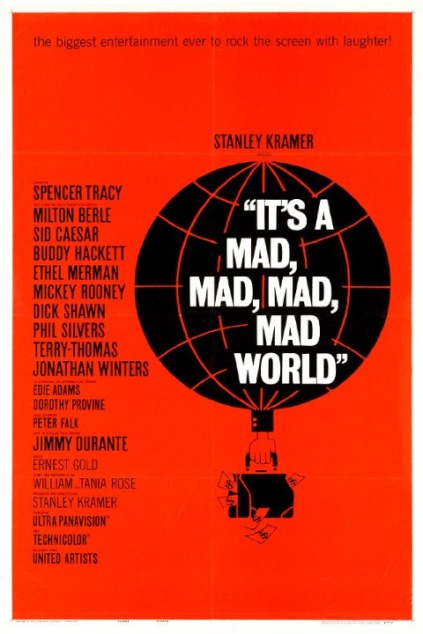
She appeared on the syndicated talk show version of The Donald O’Connor Show. Chase worked in the chorus of many Hollywood musicals, including Hans Christian Andersen (1952), Call Me Madam (1953), Deep in My Heart (1954), Brigadoon (also 1954),Kismet (1955), Pal Joey (1957), Les Girls (also 1957), and two Fred Astaire films, Daddy Long Legs (1955) and Silk Stockings(1957). She appeared in White Christmas (1954) as the chorus girl who speaks the line, “Mutual, I’m sure.”   Chase’s other film roles included The George Raft Story (1961); the beating victim of a sadistic Robert Mitchum in the thriller Cape Fear (1962); and the dancing, bikini-clad paramour (restored footage revealed her character was in reality married) of Dick Shawn‘s maniacal character, Sylvester Marcus, in It’s a Mad, Mad, Mad, Mad World (1963). She played Farida in the film The Flight of the Phoenix (1965), starring James Stewart and Richard Attenborough, in a dream sequence. In 1965 she appeared on an episode of the Bonanza “The Ballerina” television series, playing a saloon dancer who longed to be a ballerina.

In 1972, Chase retired from performing to devote herself to her own family. Twice divorced, she is currently married to James Kaufman; the couple has one child.
Barrie Chase (born 1933) is a singular figure in the history of dance, best known as the final and most technically athletic dance partner of Fred Astaire. While she began her career in the traditional Hollywood chorus system, she eventually became a central architect of the “Television Special” era, bridging the gap between Golden Age elegance and mid-century modernism.


Career Overview

Chase’s career is defined by a rapid ascent from the background to center stage, driven by a rare combination of classical ballet training and “cool jazz” sensibilities.

  • The Chorus Years (1952–1957): Chase spent her early 20s as a “reliable” dancer in major MGM musicals, including Silk StockingsPal Joey, and Les Girls. During this time, she worked closely with legendary choreographer Jack Cole, whose high-tension, jazz-influenced style deeply informed her movement.


  • The Astaire Partnership (1958–1968): Her breakthrough came when Astaire, seeking a new partner for his move into television, plucked her from the chorus. They headlined four award-winning specials, starting with An Evening with Fred Astaire (1958).


  • Film and Character Work (1960s): While she continued to dance, she transitioned into acting roles that often utilized her “siren” or “femme fatale” physicality, notably in It’s a Mad, Mad, Mad, Mad World (1963) and the thriller Cape Fear (1962).


Critical Analysis of Her Work

1. The “Modern” Partner: Athleticism vs. Elegance

Historically, Astaire’s partners fell into two categories: the ethereal (Ginger Rogers) or the technically superior (Cyd Charisse). Chase represented a third category: the Athletic Modernist.

  • Analysis: Unlike previous partners, Chase brought a lean, muscular precision that felt distinctly 1960s. In their “St. James Infirmary” routine, she displayed a flexibility and a “percussive” style of movement that Rogers never possessed. Critics often note that while Rogers followed Astaire, Chase pushed him, forcing the aging legend to adopt a more contemporary, jazz-inflected energy.

2. The Jack Cole Influence

Much of Chase’s critical acclaim stems from her “cool” demeanor, a hallmark of Jack Cole’s training.

  • Analysis: Her dancing was characterized by “isolated movements”—the ability to move her hips or shoulders independently of her frame with surgical precision. This made her the perfect foil for the television camera, which favored tight shots and high contrast. She didn’t just dance; she projected a “mood” of sophisticated detachment that defined the “Space Age” aesthetic of the early 1960s.

3. Subverting the “Bikini Girl” Trope: It’s a Mad, Mad, Mad, Mad World

In her most famous film role, Chase plays the dancing girlfriend of Dick Shawn’s character, Sylvester.


  • Analysis: While the role was written as a comedic “bimbo” archetype, Chase’s performance is critically praised for its sheer physical commitment. She dances with a frenetic, almost absurdist intensity that becomes the highlight of the scene. She used her body as a comedic tool, proving that her technical skill could be leveraged for satire just as easily as for romance.

4. The Challenge of the “Last Partner” Legacy

Critically, Chase is sometimes overshadowed by the sheer weight of the Astaire legacy.

  • Analysis: Because she was his last major partner, she is often viewed through the lens of “The End of an Era.” However, a deeper analysis of her solo work on variety shows like The Hollywood Palace reveals a dancer who was far more experimental than the “Astaire Partner” label suggests. She was one of the few dancers who successfully transitioned the language of 1940s MGM into the “Mod” era of the late 60s.


Key Performances for Study

 
Work Year Role Significance
An Evening with Fred Astaire 1958 Partner Won 9 Emmys; transformed her into a national star overnight.
It’s a Mad… World 1963 Sylvester’s Girlfriend A masterclass in “comedic dancing” and physical satire.
Cape Fear 1962 Diane Taylor A non-dancing role that showcased her range as a dramatic “victim” actress.
The Hollywood Palace 1966 Guest Performer Her solo and duo work here defined the “Cool Jazz” dance aesthetic of the 60s.
White Christmas 1954 Chorus Girl Famous for the one-liner, “Mutual, I’m sure,” showing her early comedic timing.


In summary: Barrie Chase was more than just Fred Astaire’s final partner; she was a bridge between the classical and the contemporary. Her work is a study in how traditional ballet training can be “deconstructed” into the sharp, rhythmic, and coolly detached style that would eventually lead to the Broadway works of Bob Fosse

Leave a Reply

Your email address will not be published. Required fields are marked *