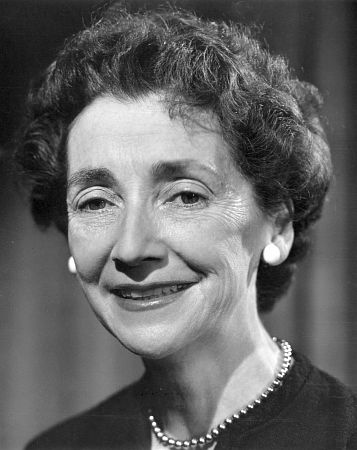
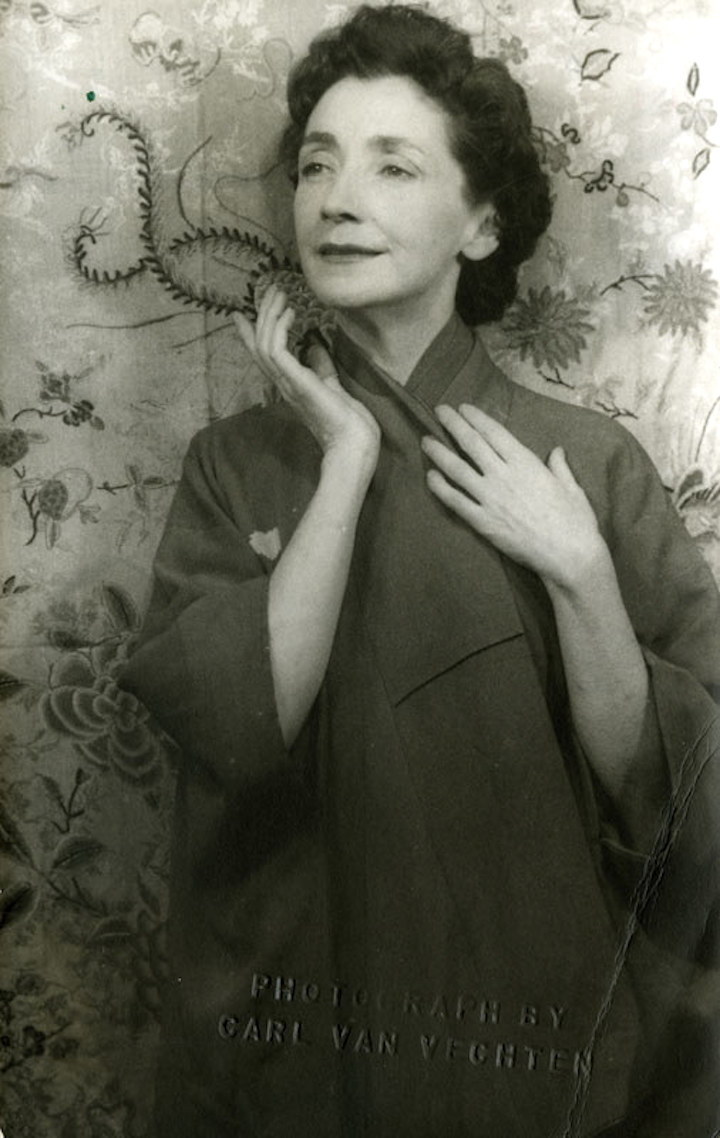
Mildred Dunnock

Mildred Dunnock
Mildred Dunnock

Mildred Dunnock. TCM Overview.

Mildred Dunnock seemed to be very quiet almost birdlike in her characterisations.   She could at times be very moving as in her performance as Elvis Presley’s mother in “Love Me Tender” and as Mother Christophre the strict but kindly nun in chagre of the novices in “The Nun’s Story”.   She was born in 1901 in Baltimore.   She made her film debut in 1945 repeating her stage role in “The Corn is Green”. Her other films include “Peyton Place”, “Baby Doll” and the woman in a wheelchair who is pushec down the stairs by the giggling psychopath Richard Widmark in the classic film noir “Kiss of Death”.   Mildred Dunnock died in 1991 at the ago of 90.   Her obituary in the “New York Times” can be accessed here.

TCM Overview:

When Mildred Dunnock quietly demanded that “Attention must be paid” to Willy Loman in the 1949 Broadway premiere of Arthur Miller’s “Death of a Salesman” opposite Lee J. Cobb, her indelible performance as Linda Loman became the embodiment of Miller’s idealized mother figure: loving, supportive mother and wife and the family’s moral balast. She repeated her landmark performance in the disappointing 1951 Laslo Benedek film opposite Fredric March (winning her first Oscar nomination) and again opposite Cobb in the brilliant 1966 TV adaptation (directed by Alex Segal) and for the Caedmon recording in the 1960s.

Formerly a schoolteacher, Dunnock made her stage debut in 1932 and won acclaim on Broadway in 1940 as a Welsh teacher in Emlyn Williams’ autobiographical drama “The Corn Is Green”, a role she reprised in her film debut in 1945. Although she is memorable in the brief role as the wheelchair bound victim whom Richard Widmark pushes down the stairs in “Kiss of Death” (1948), Dunnock gave her finest performances as seemingly genteel spinster types who display surprising inner strength and sympathy.

Dunnock studied acting with Actors Studio founders Lee Strasberg, Robert Lewis and Elia Kazan and after directing her in “Death of a Saleman”, Kazan repeatedly cast her as a figure of quiet moral authority in such films as “Viva Zapata!” (1952) and as Aunt Rose Comfort in Tennessee Williams’ “Baby Doll” (1956) for which she received her second supporting actress Oscar nomination.

Evidently a favorite actress of Williams as well as Kazan, she continued her association with the playwright on Broadway, creating the role of Big Mama in “Cat on a Hot Tin Roof” (1955), appearing in “The Milk Train Doesn’t Stop Here Anymore” (1963) and starring in a 1966 regional revival of “The Glass Menagerie”. She was also featured as Aunt Nonnie in Richard Brooks’ 1962 film adaptation of “Sweet Bird of Youth”.

Although she didn’t begin acting professionally until she was in her 30s, Dunnock maintained an active career as a superb, understated character actress on stage, screen and TV. Her other notable films include Alfred Hitchcock’s “The Trouble With Harry” (1955), “Love Me Tender” (1956), “Peyton Place” (1957), “Butterfield 8” (1960) and John Ford’s last feature “Seven Women” (1966).

Mildred Dunnock (1901–1991) was an American stage and screen actress whose career is defined by a series of quietly powerful, often heart‑breaking character roles rather than flamboyant star turns. Though she did not become a household name, she left a deep imprint on mid‑20th‑century American drama, particularly through her definitive stage and film performance as Linda Loman in Death of a Salesman.


Early career and stage foundation

Dunnock began her professional acting career in her 30s, after years of teaching and studying acting, and quickly gravitated to the New York stage. She appeared in Broadway productions such as Life Begins (1932) and The Hill Between (1938), but her breakthrough came in 1940 with her role as a Welsh school‑teacher in The Corn Is Green, a part she created while still working full‑time as a teacher at Brearley School. Her performance there established her as a sensitive, emotionally intelligent actress capable of anchoring serious drama.

Throughout the 1940s she became a mainstay of serious American theatre, appearing in such plays as Another Part of the Forest and Lillian Hellman’s adaptations, as well as the musical Lute Song. She also worked regularly in regional theatre, including the Long Wharf and the Yale Repertory, which helped cement her reputation as a reliable, intelligent stage actress rather than a purely commercial star.


Death of a Salesman and Linda Loman

Dunnock’s most iconic role is Linda Loman in Arthur Miller’s Death of a Salesman. She originated the part on Broadway in 1949 opposite Lee J. Cobb’s Willy, playing 742 consecutive performances at the Morosco Theatre—a rare marathon run that speaks to both her stamina and the play’s cultural impact. Her Linda is a quietly shattered wife and mother, caught between her love for a deluded husband and her own awareness of the family’s ruin; she gives her supportive lines—“Attention, attention must be finally paid to such a person”—such emotional weight that they resonate far beyond the speech itself.

Critics and later analyses frequently describe her stage performance as “definitive,” noting that she combines maternal tenderness with a deep, almost premonitory sadness, so that Linda feels less like a clichéd long‑suffering wife and more like the tragic center of the play. She reprised the role in the 1951 film, earning an Academy Award nomination for Best Supporting Actress and critical praise for keeping the character’s vulnerability without over‑emoting. Bosley Crowther, among others, called her performance “simply superb,” underscoring that her restraint made Linda’s inner pain more palpable, not less.


Film career and pattern of roles

Dunnock’s film work is eclectic but thematically consistent: she plays quiet, often morally solid women—wives, mothers, aunts, and older sisters—who are both emotionally generous and quietly limited by their circumstances. Her screen debut was the 1945 adaptation of The Corn Is Green, a natural extension of her stage success. She later appeared in a range of mid‑century Hollywood productions, often in supporting roles that use her serious, understated presence to anchor more melodramatic plots.

Notable films include:

  • The Trouble with Harry (1955), Alfred Hitchcock’s darkly comic romance‑mystery, in which she plays Mrs. Wiggs, a no‑nonsense, somewhat repressed school‑marm‑style neighbor. Critics note that her performance subtly underlines the film’s mix of whimsy and tension, acting as a grounded counterweight to the eccentricity around her.

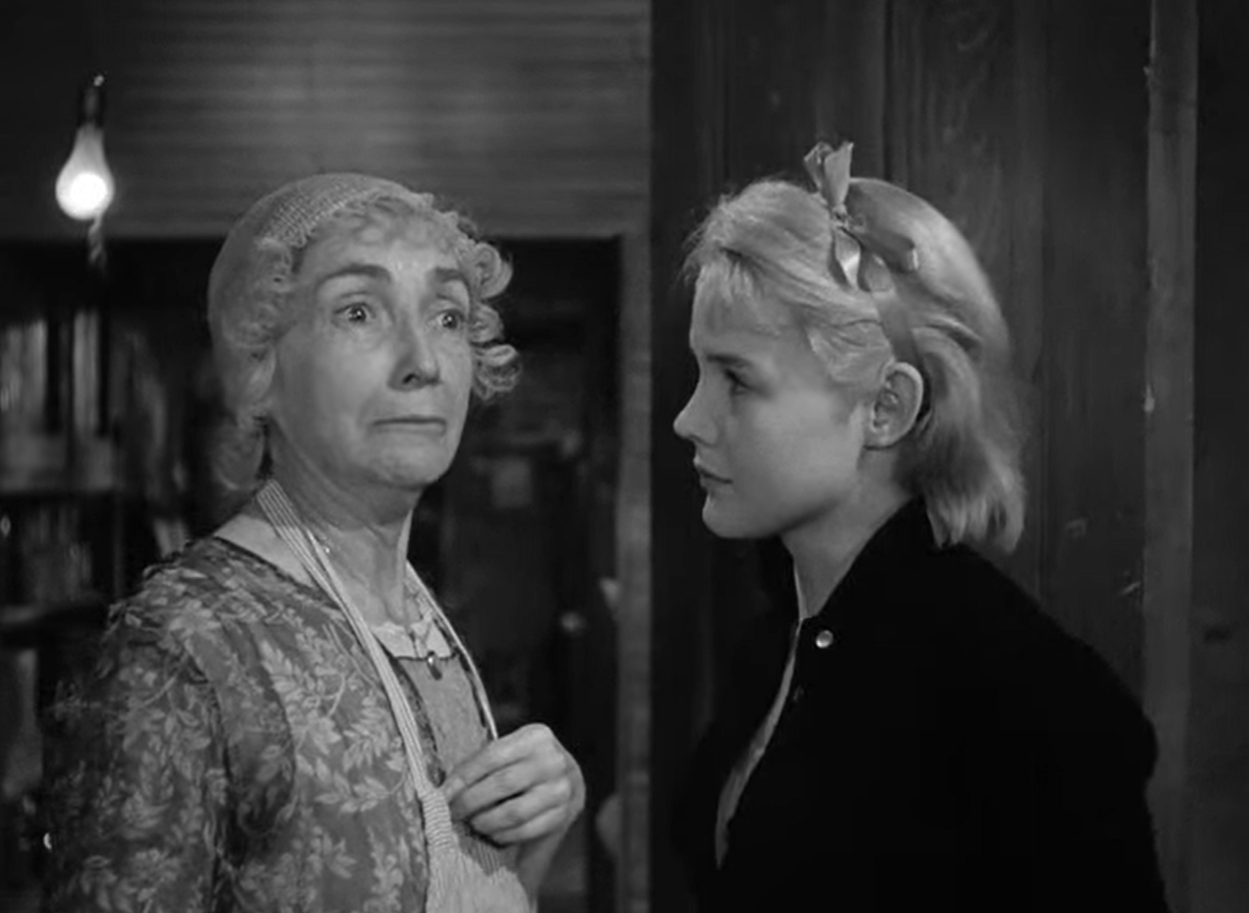
  • Baby Doll (1956), Elia Kazan’s Southern psychological drama, where she plays simple‑minded, perpetually frightened Aunt Rose Comfort; her second Academy Award nomination came from this relatively small but utterly convincing role. Critics often highlight how Dunnock imbues Aunt Rose with a blend of childishness, fear, and kindness, creating a character that feels more human than grotesque.

  • Sweet Bird of Youth (1962), where she plays Aunt Nonnie, a gentle, house‑proud relative of Paul Newman’s character, adding a note of familial warmth and fragility to the story’s more overheated sexuality and decay.

  • Peyton Place (1957), Butterfield 8 (1960), and Viva Zapata! (1952), where she appears in smaller but emotionally pointed roles as mothers or older women observing, enabling, or quietly suffering the central dramas.

In all of these roles, her slight frame and delicate features belie a strong, intense presence; she often “holds the stage” while doing very little in the way of showy acting.


Later work and television

As her film roles became fewer, Dunnock remained active on television and in regional theatre, particularly at the Long Wharf, where she performed in works by Tennessee Williams and Eugene O’Neill. On TV she appeared in anthology series and dramas, including episodes of Celanese TheatreThe Ford Theatre Hour, and other live‑TV and mid‑century scripted programs, often playing pious, worried, or morally serious women.

Critics and retrospectives describe her as a “superb, understated character actress” who maintained high standards and emotional honesty even when the material around her was more melodramatic. In her later years, she was often cast as eccentric spinsters or vulnerable senior figures, but she used facial nuance, vocal shading, and careful pacing to keep these women from descending into caricature.


Critical reputation and performance style

Dunnock is widely regarded as one of the most truly emotional and psychologically honest character actresses of her generation. Her strength lay in her ability to convey deep inner life through minimal gestures: a tightening of the mouth, a slight shift in posture, or a catch in the voice could communicate resignation, hope, or fear more powerfully than more demonstrative acting.

Critically, her work is often read as a kind of moral compass in the stories she joins. Whether as Linda Loman, Aunt Rose, or a minor but sharp‑eyed mother in a Southern or New England melodrama, she incarnates a specific American archetype: the quietly suffering, morally responsible woman who sees the truth but is powerless to prevent tragedy. At the same time, she rarely plays a purely passive victim; instead, she brings a low‑key dignity and emotional intelligence that complicate simple “good woman” labeling.

In sum, Mildred Dunnock’s career is that of a late‑blooming but profoundly respected actress whose legacy rests on a handful of indelible performances—especially Linda Loman—and on a much larger body of quietly powerful supporting roles that helped give serious mid‑century American drama its emotional weight and realism


Mildred Dunnock (1901–1991) was the supreme “poet of the ordinary” in American acting. A former schoolteacher who didn’t make her Broadway debut until her 30s, she became the go-to interpreter for the fragile, repressed, and resilient matriarchs of mid-century American drama. While she lacked the flamboyant ego of many “stars,” her technical precision and emotional transparency made her a favorite of giants like Elia Kazan, Tennessee Williams, and Arthur Miller.


1. Career Arc: The Late-Blooming Moral Anchor

Dunnock’s career is defined by her transition from academia to the very pinnacle of the Actor’s Studio era.

  • The Broadway Ascent (1930s–1940s): She spent years balancing teaching with theater before her breakout in The Corn Is Green (1940). Her path was not that of an ingénue, but of a character actress who possessed a rare, “ageless” quality.

  • The Definitive Linda Loman (1949–1966): In 1949, she originated the role of Linda Loman in Arthur Miller’s Death of a Salesman. She would play the role on stage, in the 1951 film, and in the 1966 television movie, effectively defining the character for the 20th century.

  • The Southern Gothic Muse: Dunnock became a recurring figure in the cinematic adaptations of Tennessee Williams’ plays, specializing in characters who were either the victims of Southern social rot or the steely observers of it (Baby DollCat on a Hot Tin RoofSweet Bird of Youth).

  • Elder Stateswoman (1970s–1980s): In her later years, she became a revered figure in New York theater circles, often appearing in classical revivals and the occasional prestige film, such as The Trouble with Harry or Butterfield 8.


2. Critical Analysis of Key Performances

Death of a Salesman (1951) – The Steel Beneath the Sorrow

As Linda Loman, Dunnock provided the “moral spine” of the story.

  • Analysis: Her performance is a masterclass in active listening. While Lee J. Cobb (or Fredric March in the film) blustered and collapsed, Dunnock’s Linda was a portrait of exhausting, hyper-vigilant love. She famously delivered the “Attention must be paid” speech not as a sentimental plea, but as a fierce, rhythmic command.

  • Critique: Critics often noted that Dunnock prevented Linda from becoming a doormat. By playing her with a sharp, almost terrifying lucidity, she made the tragedy of the Loman family feel like a systemic failure rather than just one man’s delusion.

Baby Doll (1956) – The Comedy of Decay

In Elia Kazan’s controversial Southern Gothic film, she played Aunt Rose Comfort.

  • Analysis: This role showcased Dunnock’s ability to play tragicomic eccentricity. Aunt Rose is a woman who “visits” relatives just to be fed, hiding her desperation behind a veneer of fluttery, bird-like politeness.

  • Critique: Dunnock’s physicality here—small, hunched, and perpetually moving—contrasted brilliantly with the heavy, humid stillness of the other actors. She represented the “genteel poverty” of the South with a realism that was both pitiable and deeply uncomfortable to watch.

The Nun’s Story (1959) – Disciplined Restraint

Playing Sister Margharita opposite Audrey Hepburn.

  • Analysis: This performance demonstrates Dunnock’s vocal control. In a film defined by silence and ritual, she used the micro-expressions of her face and the precise modulation of her voice to convey an inner life of immense spiritual discipline.

  • Critique: She proved she didn’t need the high-wire tension of a Tennessee Williams play to be effective; she could be equally compelling in a role of quiet, institutional authority.


3. Style and Legacy: The “Transparent” Actress

Dunnock was often described as an actress who “disappeared” into her roles, a hallmark of the Stanislavski-based Method style she helped popularize.

Attribute Impact on Performance
Physical Fragility She was a small woman with delicate features, which she used to project a sense of “vulnerability-as-strength.”
Rhythmic Diction Her background in teaching gave her a crisp, intelligent way of speaking that made complex dialogue sound spontaneous.
Emotional Economy She never over-acted; she understood that on film, the camera catches the thought before the gesture.

The Legacy of the “Common Woman”

Mildred Dunnock’s legacy is inextricably linked to the democratization of American drama. Before her, the “mother” role was often a caricature or a background figure. Dunnock elevated the “common woman” to the status of a tragic hero. She showed that there is as much drama in a woman protecting a small house in Brooklyn as there is in a queen defending a throne.

Critical Note: Her three Academy Award nominations and three Emmy nominations reflect a career of consistent, high-level craftsmanship. She was never a “star” in the sense of glamour, but she was a star of the American conscience.

Leave a Reply

Your email address will not be published. Required fields are marked *