
Jill Bennett

Jill Bennett
Jill Bennett

Jill Bennett was born in 1931 in Penang in Malaya.   She trained in London at RADA and made her stage debut in 1949.   Her film debut came in 1951 with “The Long Dark Hall”.   She alternated her career between stage and film and television appearances.   Her film appearances of note include “The Nanny” with Bette Davis in 1965, “The Charge of the Light Brigade” and “Fr Your Eyes Only”.   Jill Bennett died in 1990.

.

TCM Overview:

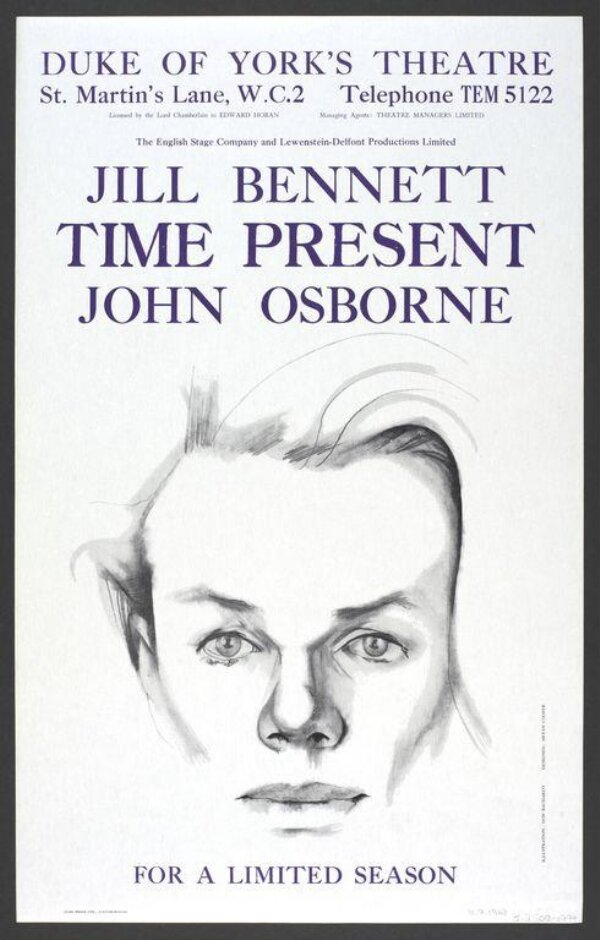
Upper-crust beauty who established herself on the British stage and made her film debut in “Moulin Rouge” (1952). Bennett appeared in several plays written by her then-husband John Osborne, including “A Patriot for Me”, “Watch It Come Down” and “Time Present,” for which she won the London Evening Standard Award and Variety Club of Britain awards.

Wikipedia:

Jill Bennett (24 December 1931 – 4 October 1990) was a British actress, and the fourth wife of playwright John Osborne.

Bennett was born in Penang, the Straits Settlements, to British parents, educated at Prior’s Field School, an independent girls boarding school in Godalming, and trained at RADA. She made her stage début in the 1949 season at the Shakespeare Memorial Theatre in Stratford upon Avon, and her film début in The Long Dark Hall (1951) with Rex Harrison.

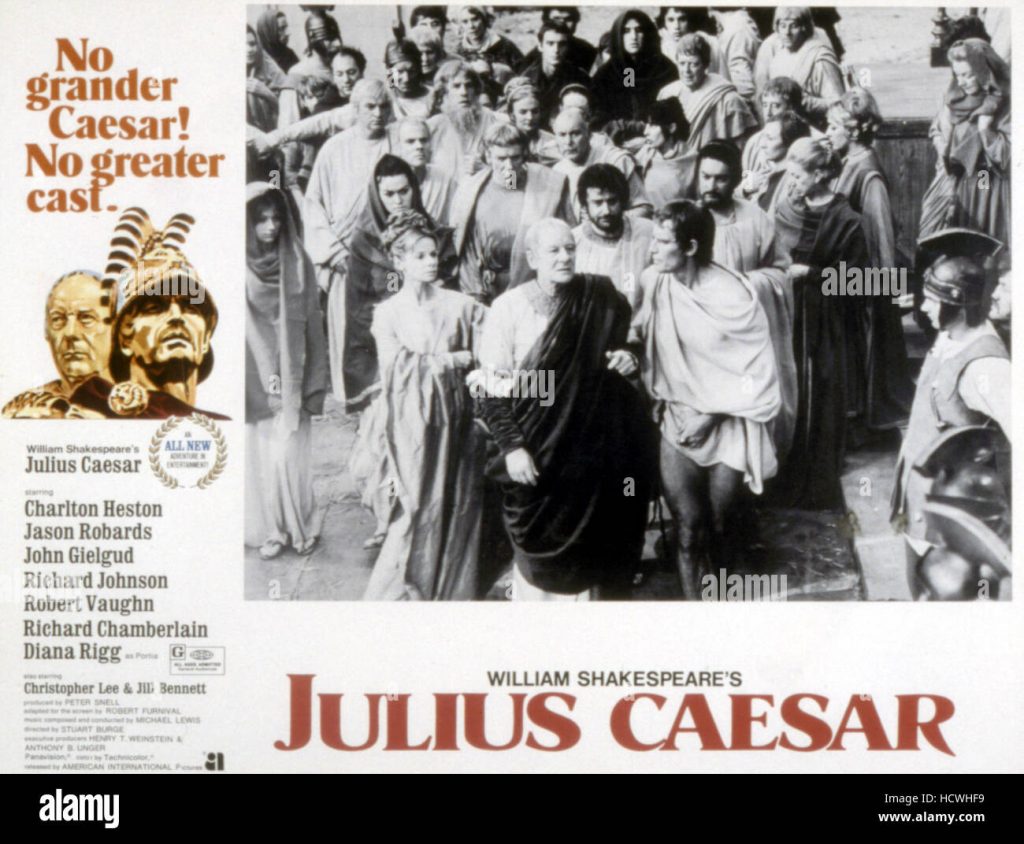
Bennett made many appearances in British films including Lust for Life (1956), The Criminal (1960), The Nanny (1965), The Skull (1965), Inadmissible Evidence (1968), The Charge of the Light Brigade (1968), Julius Caesar (1970), I Want What I Want (1972), Mister Quilp (1975), Full Circle (1977) and Britannia Hospital (1982). She also appeared in the Bond film For Your Eyes Only (1981), Lady Jane (1986) and Hawks (1988). Her final film performance was in The Sheltering Sky (1990).

She made forays into television, such as roles in Play for Today (Country, 1981), with Wendy Hiller, and as the colourful Lady Grace Fanner in John Mortimer‘s adaptation of his own novel, Paradise Postponed(1985). In 1984 she co-wrote and starred in the sitcom Poor Little Rich Girls alongside Maria Aitken. Among several roles, Osborne wrote the character of Annie in his play The Hotel in Amsterdam (1968) for her. But Bennett’s busy schedule prevented her from playing the role until it was screened on television in 1971.

She co-starred with Rachel Roberts in the Alan Bennett television play The Old Crowd (1979), directed by Lindsay Anderson.

Bennett was the live-in companion of actor Godfrey Tearle in the late 1940s and early 1950s. She was married to screenwriter Willis Hall and later to John Osborne. Bennett and Osborne divorced, acrimoniously, in 1978. She had no children.

Bennett died by suicide in October 1990, aged 58, having long suffered from depression and the brutalising effects of her marriage to Osborne (according to Osborne’s biographer).[2] She did this by taking an overdose[3] of Quinalbarbitone[4] Her death took place at home, 23, Gloucester Walk, Kensington, London W8, and she left an estate valued at £596,978.[5]

Osborne, who was subject during her life to a restraining order regarding written comments about her, immediately wrote a vituperative chapter about her to be added to the second volume of his autobiography. The chapter, in which he rejoiced at her death, caused great controversy.

In 1992, Bennett’s ashes, along with those of her friend, the actress Rachel Roberts (who also died by suicide, in 1980), were scattered by their friend Lindsay Anderson on the waters of the River Thames in London. Anderson, with several of the two actresses’ professional colleagues and friends, took a boat trip down the Thames, and the ashes were scattered while musician Alan Price sang the song “Is That All There Is?” The event was included in Anderson’s autobiographical BBC documentary Is That All There Is? (1992

The career of Jill Bennett (1926–1990) is one of the most intellectually rigorous and emotionally stark in the history of British post-war theatre. While she appeared in numerous films, she was primarily a creature of the stage—specifically the “Angry Young Men” movement and the avant-garde Royal Court Theatre.

Her work was defined by a razor-sharp, often brittle intensity that made her the muse (and later the wife) of playwright John Osborne.


Career Overview: The Avant-Garde Aristocrat

Bennett didn’t possess the “softness” typical of 1950s leading ladies; she had a percussive, modern energy.

  • The Old Vic Foundation: She trained at the Royal Academy of Dramatic Art (RADA) and began her career with the Old Vic company, performing Shakespeare alongside giants like Laurence Olivier.

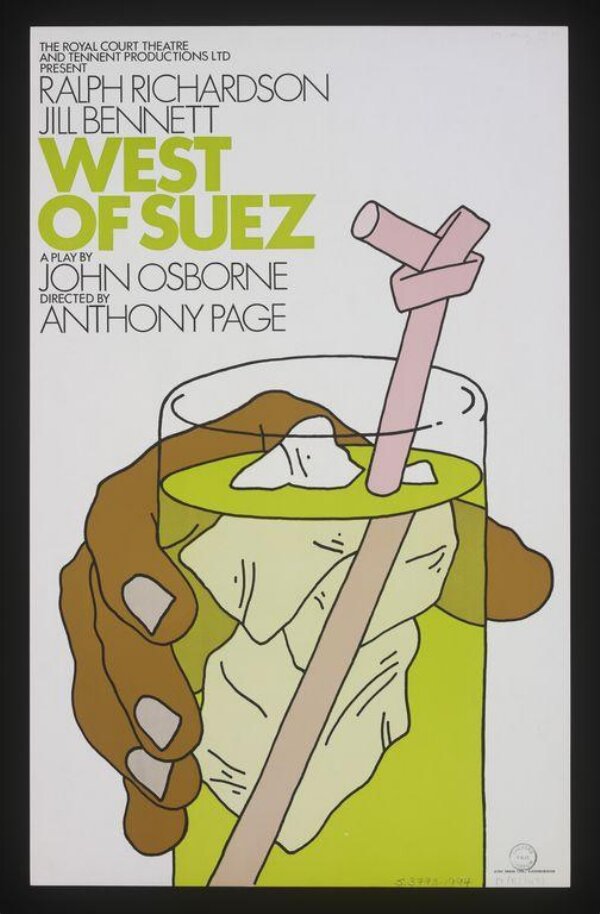
  • The Royal Court Era: In the mid-1950s, she became a central figure in the revolution of British drama. She was the first actress to play the role of Annie in Dilemma, but her true ascent came through her collaborations with John Osborne in plays like The Blood of the Bambergs and A Patriot for Me.

  • Film & Television: Though she considered herself a stage actress first, she delivered chillingly precise performances in films such as The Nanny (1965) with Bette Davis, Inadmissible Evidence (1968), and the Bond film For Your Eyes Only (1981).

  • Late Career: She remained a formidable presence in the 1980s, culminating in her final film role in The Sheltering Sky (1990), released shortly after her death.


Detailed Critical Analysis: The “Nerve-Ending” Style

1. The Aesthetic of Discomfort

Bennett was rarely cast as a “nurturer.” Critics often described her screen and stage presence as “mercurial” and “acidic.”

  • Analysis: She specialized in characters who were highly intelligent, socially superior, and deeply unhappy. She used her physical features—high cheekbones, a sharp jawline, and wide, unblinking eyes—to suggest a woman who was perpetually “on edge.” In the horror-thriller The Nanny, she plays an aunt whose fragility is so palpable it becomes a source of dread.

2. The Osborne Muse: Language as a Weapon

Her marriage to John Osborne was notoriously volatile, but it produced some of the most searing theatre of the 20th century.

  • Critical Insight: Osborne wrote roles for her that required a specific kind of vocal athleticisim. Bennett had a way of delivering “Sloane Ranger” dialogue with a clipped, rhythmic precision that made insults sound like poetry. She understood that in the new wave of British drama, silence was less important than the “torrent of words.”

3. Subverting the “Bond Girl” Archetype

Her appearance as Jacoba Brink in For Your Eyes Only is a fascinating outlier in the 007 franchise.

  • Analysis: While Bond films of that era were filled with decorative characters, Bennett played a skating coach with a cold, professional detachment. She brought a “High Theatre” seriousness to the role that made her brief screen time memorable, treating the blockbuster material with the same gravity she gave to Ibsen or Chekhov.

4. The “Brittle” Interiority

In her television work, such as Paradise Postponed, Bennett mastered the art of playing the disillusioned upper class.

  • Critical View: Critics noted that she could convey “the rot behind the pearls.” Her performance style was built on the tension between a perfectly composed exterior and a psyche that was clearly fraying. She didn’t ask for the audience’s love; she demanded their attention through sheer, uncomfortable honesty.


Key Credits & Critical Highlights

Year Title Role Note
1952 Moulin Rouge Sarah An early glimpse of her “Parisian” sophistication.
1965 The Nanny Aunt Pen A masterclass in suppressed hysteria opposite Bette Davis.
1965 A Patriot for Me Countess Sophia A landmark stage performance in an Osborne play.
1968 Inadmissible Evidence Liz Portrayed the exhaustion of the “modern woman.”
1981 For Your Eyes Only Jacoba Brink Brought unexpected gravitas to the Bond franchise.
1990 The Sheltering Sky Mrs. Lyle Her final, haunting Film role

Leave a Reply

Your email address will not be published. Required fields are marked *