

“Independent” obituary by David Shipman:
Mary Lydia Thornton (Christine Norden), actress, born Sunderland 28
December 1924, married 1944 Norman Cole (one son), 1947 Jack Clayton,
1953 Mitchell Dodge, 1956 Herbert Hecht, 1980 George Heselden, died
London 21 September 1988.
ChristineNorden occupies a small, but secure, niche in British film history as Alexander Korda’s first post-war star. British film-stars of the pre-war period, Gracie Fields and George Formby always excepted, were there courtesy of the stage (Laurence Olivier, Vivien Leigh) or Hollywood, allowing them to work here (Leslie Howard, Robert Donat). But during the war the British cinema discovered a flock of artists who were genuine box-office attractions, starting with Margaret Lockwood and James Mason. Korda, returning to production in Britain in 1945, had either to filch or borrow these (in this respect he was far more successful with behind-the-camera personnel) or create his own. The first he created was Christine Norden. She was also the last.
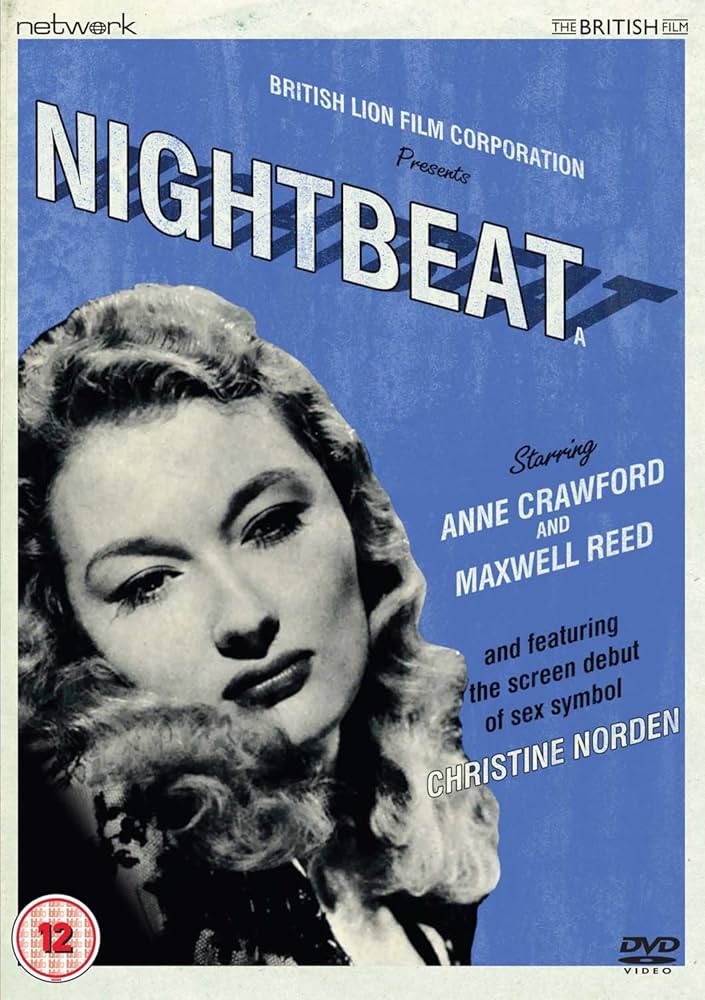
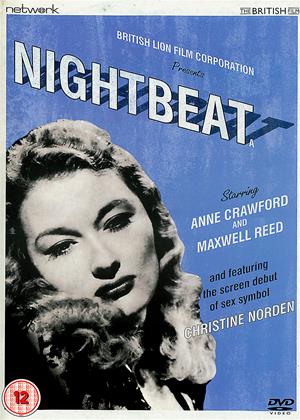
The publicity lie was that he spotted her in a cinema queue. Well, they got a lot of press mileage out of it. Picturegoer, Picture Show and the popular press featured her prominently: British moviegoers panted for their first glimpse of her. Since she was blonde and sexy, and since Miss Lockwood had made this an era of wicked ladies, it was not surprising that Korda chose for her first role that of a devious night-club singer, in Night Beat, but the film itself went out without his London Films logo because he did not think it of a standard to re-introduce his work. Its hero (Ronald Howard) was a cop going bent because of Norden, who is more interested in a ‘you’re my sort’ affair with a slimy night-club owner (Maxwell
Reed): at the climax she sings his favourite song, has a big drunk scene and falls to her death. She and the film were ludicrous, but she, at least, could claim inexperience.
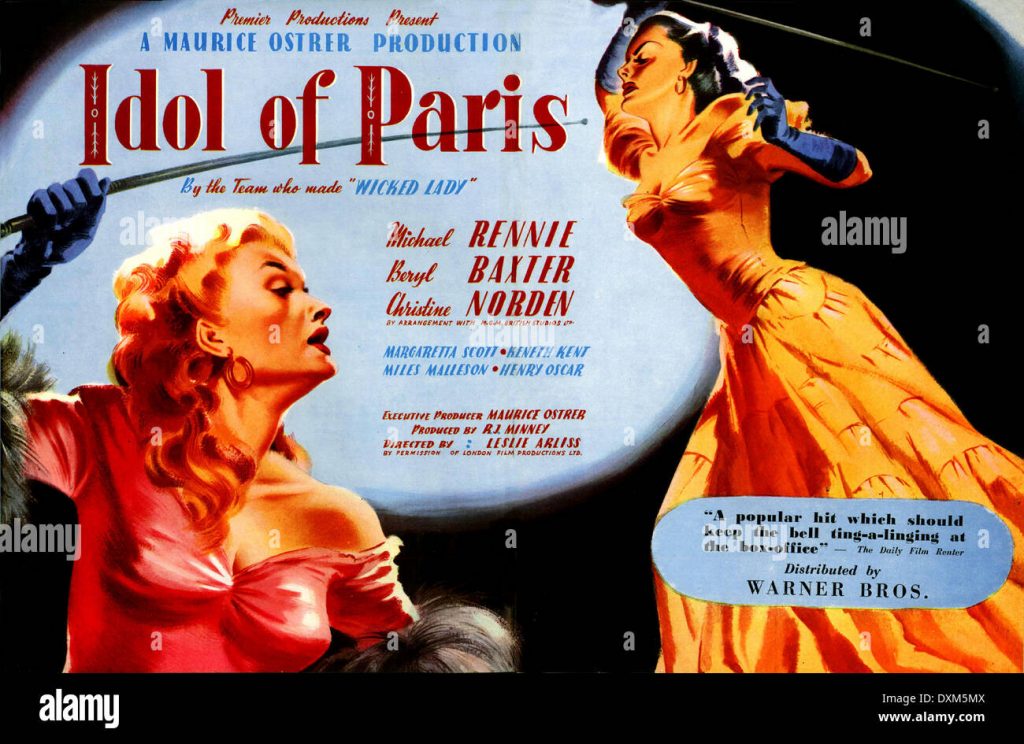
Korda and MGM (since she was technically under contract to both, as he had signed her during his brief association with that company) loaned her the following year to Premier, the company started by the Ostrer brothers after their break from Rank. With Rank, the Ostrers had mined gold with a series of pseudo-Gothic melodramas: but Isle of Paris proved the beginning and end for Premier. Norden played the Second Empire courtesan Cora Pearl, engaged in a duel of whips with the heroine – Beryl Baxter, obviously chosen for her resemblance to Miss Lockwood. The critic CA Lejeune felt that she would be failing in her duty if she discouraged anyone ‘from sharing this unique experience .. . Such stupendous imbecility in a film, delivered with such portentous gravity in such excruciating dialogue, demands a sort of recognition.’
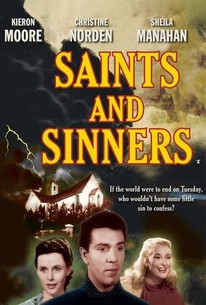
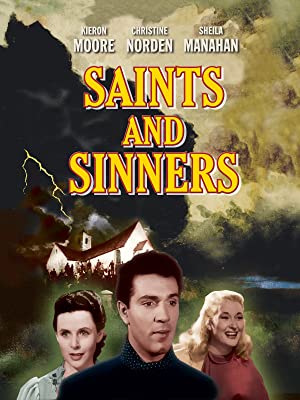
Miss Norden’s hysterical performance could not now be explained by inexperience; Korda gave up on her fifth film for him, Saints and Sinners, a load of blarney co-starring her male equivalent, Kieron Moore, which literally emptied cinemas. She carried on vamping four more times, twice in unabashed B movies, then left to discuss Hollywood offers’. It was true that she had married an American – her second husband had been Jack Clayton, later to direct Room at the Top but American show-business was not too welcoming: in 1960 she did
manage to get a role in a Broadway musical, Tenderloin, but not one which enabled her to get her name on the adverts.
In 1983, the National Film Theatre showed Isle of Paris, and in a flurry of press releases Miss Norden announced that she had no intention of making a comeback. She did, however, appear at the National Film Theatre with a press agent, in a profusion of diamonds and an elaborate pill-box hat, her full-length velvet dress under a riding habit in several shades of green, none of them too different from the paint on the walls of NFT 2. She laughed a little too loudly during the duel scene and the rest of us laughed through all of it.Miss Lejeune was right: for connoisseurs of bad movies it is the most
cherishable of them all.
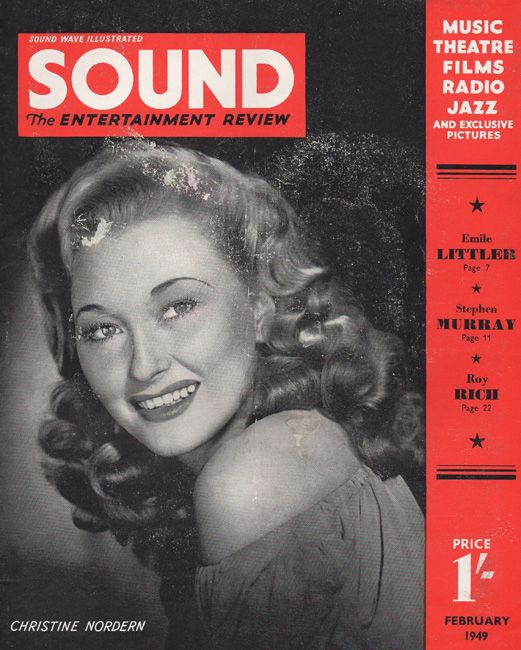
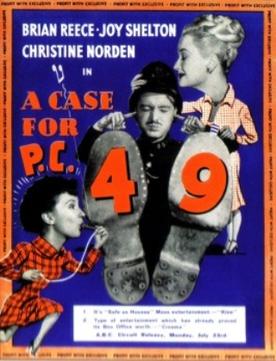
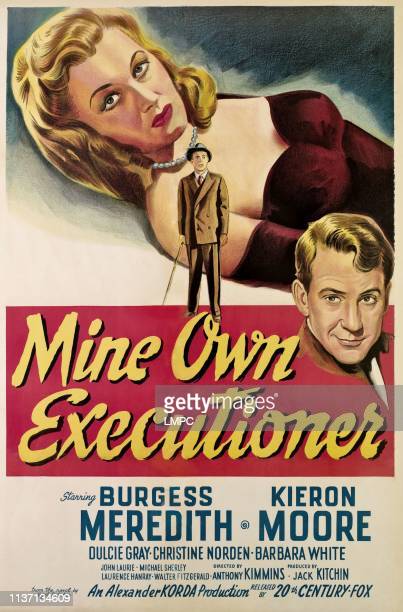
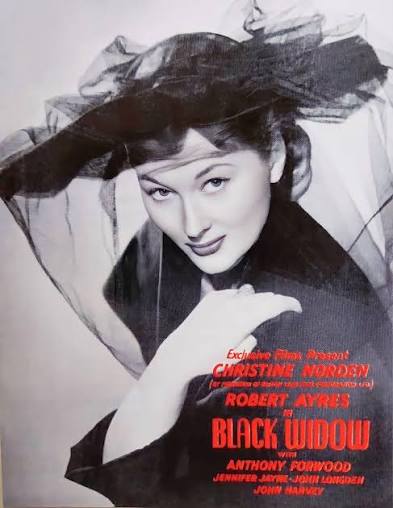
Christine Norden
Christine Norden was a British film actress whose brief but striking career during the late 1940s and early 1950s made her one of the most intriguing figures of postwar British cinema. Although she appeared in relatively few films, her work captured the changing cultural atmosphere of post–World War II Britain, where filmmakers began exploring realism, social conflict, and moral ambiguity. Norden’s performances often reflected this shift, combining sensuality, vulnerability, and psychological complexity in ways that challenged earlier cinematic conventions.
Career Overview
Early Life and Entry into Film
Born Mary Beryl Elizabeth Norden in London, Christine Norden trained for acting during the wartime years and entered the British film industry in the mid-1940s. She initially appeared in smaller roles before achieving prominence with the controversial film:
- Night and the City
- London Belongs to Me
- The Calendar
Her breakthrough came with the controversial social drama:
- Good Time Girl
This film established her as a compelling new screen presence and briefly positioned her as a rising star in British cinema.
Detailed Critical Analysis
1. Breakthrough Performance in Good Time Girl (1948)
In Good Time Girl, Norden plays Gwen Rawlings, a young woman whose life spirals into crime and moral disintegration.
The film is structured as a cautionary tale about juvenile delinquency, but Norden’s performance complicates the moral simplicity of the narrative.
Performance characteristics
Her portrayal combines:
- youthful rebelliousness
- emotional fragility
- underlying desperation
Rather than presenting Gwen as a purely immoral character, Norden conveys a sense of social alienation and emotional neglect, suggesting that her downfall is shaped by circumstances as much as personal choices.
Critics have noted that her performance anticipates later “angry young woman” archetypes in British cinema of the 1950s and 1960s.
2. Acting Style and Screen Persona
Norden’s acting style differed markedly from the polished elegance typical of many British actresses of the 1940s.
Her screen presence was characterized by:
Naturalistic emotional expression
Her performances often felt spontaneous rather than carefully controlled.
Emotional volatility
She portrayed characters whose moods shifted quickly between confidence, vulnerability, and defiance.
Working-class authenticity
Unlike many contemporaries, she convincingly embodied characters from socially marginal backgrounds.
These qualities aligned her with the emerging realism of postwar British filmmaking.
3. Supporting Work and Range
In London Belongs to Me, Norden demonstrates a softer side of her acting. The film portrays life in a crowded London boarding house, and her character contributes to the ensemble’s depiction of postwar urban life.
Here she shows:
- warmth and emotional sensitivity
- understated romantic vulnerability
- a capacity for ensemble performance
Although the role is smaller than her work in Good Time Girl, it reveals her ability to blend realism with charm.
4. Association with Film Noir and Postwar Realism
Norden’s work intersects with the darker tone of postwar cinema, particularly in films such as:
- Night and the City
Although she appears in a smaller role, the film’s themes of desperation, ambition, and moral compromise echo the psychological intensity she brought to earlier performances.
This alignment with noir and social realism positions her within the broader transformation of British cinema after World War II.
Career Decline and Industry Context
Despite the promise of her early work, Norden’s film career declined relatively quickly.
Several factors contributed:
Changing industry dynamics
The British film industry in the early 1950s became increasingly competitive and unstable.
Typecasting
Her association with troubled or morally ambiguous characters limited the range of roles offered to her.
Personal and professional circumstances
Like many performers of the era, career momentum could be fragile and easily disrupted.
By the mid-1950s, her film appearances had largely diminished.
Acting Technique and Artistic Qualities
Christine Norden’s performances display several notable qualities:
Psychological realism
Her characters feel emotionally authentic rather than symbolic.
Expressive physicality
She used body language—posture, movement, and facial tension—to convey inner conflict.
Emotional immediacy
Her acting style created the impression that emotions were unfolding spontaneously in the moment.
These traits helped make her performances unusually vivid within the conventions of late-1940s British cinema.
Historical Significance
Although her filmography is relatively small, Christine Norden remains significant for several reasons:
- Representation of postwar social anxieties
Her roles reflected fears about youth rebellion, moral decline, and social instability. - Early example of British cinematic realism
Her performances anticipated the socially conscious filmmaking that would emerge more fully in the 1950s. - A brief but memorable star presence
Her work in Good Time Girl remains one of the most striking portrayals of female delinquency in British film of the period.
✅ Critical Legacy
Christine Norden’s career illustrates how a single powerful performance can secure a lasting place in film history. While she never became a major international star, her portrayal of Gwen Rawlings stands as a vivid example of the emotional intensity and social realism that defined postwar British cinema.
Comment
Terry Christie
The late Christine Norden Born in Sunderland and She’s The Great British Actress in The Post-War Years.
She’s Appeared in The Movies included Night Beat with Maxwell Reed & Sidney James in 1948.
Christine Norden Died in September 1988 and The Legend Lives On.
Terry Christie,
Sunderland,Tyne & Wear.