

Elton Hayes

Elton Hayes
Elton Hayes

Elton Hayes was a British guitarist/singer and actor.   He was born in 1915 in Bletchley.   He served in India during World War Two.   After the War he began a career on radio principally on “Children’s Hour”.   Two of his best-loved songs are Edward Lear’s  “The Owl and the Pussycat” and”The Gypsy Rover”.   His films include Walt Disney’s “The Story of Robin Hood and his Merrie Men” in 1952 where he played Alan-a-Dale and “The Black Knight” which also starred Alan Ladd and Patricia Medina.   Elton Hayes retired from performing at an early age and took up farming.   He died in 2001.

Good article on Elton Hayes in “Films of the Fifties” can be accessed here.
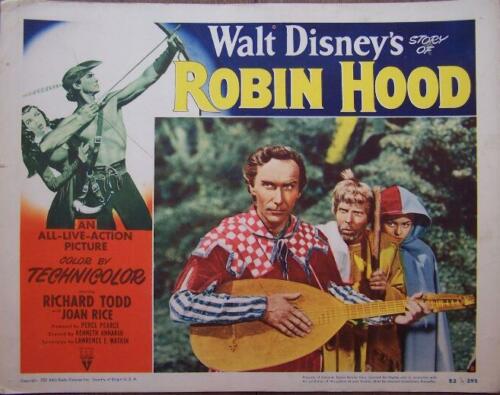
Elton Hayes (1915–2001) was a unique figure in the post-war British entertainment landscape—a “singing actor” who successfully revived the medieval tradition of the wandering minstrel for a 20th-century audience. While he is most famous for his definitive portrayal of Alan-a-Dale in Disney’s The Story of Robin Hood and His Merrie Men (1952), a critical analysis of his work reveals a sophisticated musician who used the “small” medium of early television to master a lost art of intimate storytelling.


I. Career Overview: The Modern Troubadour

Act 1: The “Small-Screen” Pioneer (1940s)

After serving in the Royal Army Ordnance Corps during WWII, Hayes became a breakout star on early BBC television. He was famously known for “He Sings to a Small Guitar,” a segment where he performed folk songs and 19th-century poems set to his own music. His “small guitar” was actually a custom-made small-bodied Spanish guitar, which became his visual and sonic trademark.

Act 2: The Disney Peak (1952–1955)

Hayes achieved international stardom when Walt Disney cast him in the live-action epic The Story of Robin Hood and His Merrie Men. Not only did he act, but he also composed and performed the film’s musical interludes. He followed this with another high-profile role in The Black Knight (1954) opposite Alan Ladd.

Act 3: Retirement and the Rural Life

By the late 1960s, as the musical landscape shifted toward rock and roll, Hayes largely retired from the professional stage. He retreated to a farm in Suffolk, where he became a respected breeder of horses and livestock, though he occasionally surfaced for radio broadcasts that celebrated the folk tradition he helped popularize.


II. Critical Analysis: The Minstrel Aesthetic

1. The Subversion of the “Musical” Hero

In the 1950s, musical leads were typically booming baritones (like Howard Keel) or brassy tenors. Hayes offered a radical alternative: vocal intimacy.

  • The Technique: Hayes possessed a light, conversational tenor. He didn’t “belt” to the back row; he sang as if he were whispering a secret to the person sitting next to him.

  • Critical Impact: In Robin Hood, his portrayal of Alan-a-Dale provided the film’s “heart.” Critics noted that while the rest of the film was a boisterous action-adventure, Hayes’s musical moments acted as a lyrical breather, grounding the mythic heroics in a sense of genuine folk history.

2. The Guitar as a Narrative Tool

Unlike the “singing cowboys” of American cinema who used guitars as props, Hayes was a technically proficient musician who used the instrument to drive the narrative.

  • The “Lute” Surrogate: By using a small-bodied guitar, Hayes mimicked the timbre of a medieval lute. Critically, he is viewed as a bridge between the “Early Music” revival and mainstream pop. He made the 15th-century aesthetic accessible to a 1950s housewife or a child in a cinema seat.

  • Performance Style: He was a master of the rubato—the slight speeding up and slowing down of tempo for emotional effect. This gave his performances a “live,” improvisational feel that felt more authentic than the over-produced studio recordings of the time.

3. The “Gentle” Masculinity

Hayes represented a very specific post-war British archetype: the “gentle scholar-adventurer.”

  • Analysis: At a time when masculine archetypes were either “hard-boiled” or “slapstick,” Hayes’s Alan-a-Dale was poetic, sensitive, and observant. Critics have retrospectively analyzed his screen presence as a precursor to the “folk-rock” sensitivity of the late 1960s. He proved that a man could be a “Merrie Man” without being a brawler.


III. Major Credits and Discography

Work Medium Role / Song Significance
The Story of Robin Hood… (1952) Film Alan-a-Dale His most iconic role; defined the “Minstrel” trope for Disney.
The Black Knight (1954) Film The Minstrel Solidified his status as the go-to actor for period musicality.
“The Owl and the Pussycat” Recording Singer/Composer A beloved setting of Edward Lear’s poem that stayed in print for decades.
Elton Hayes Sings Radio/TV Host/Performer The blueprint for “unplugged” intimate musical broadcasting.

Leave a Reply

Your email address will not be published. Required fields are marked *