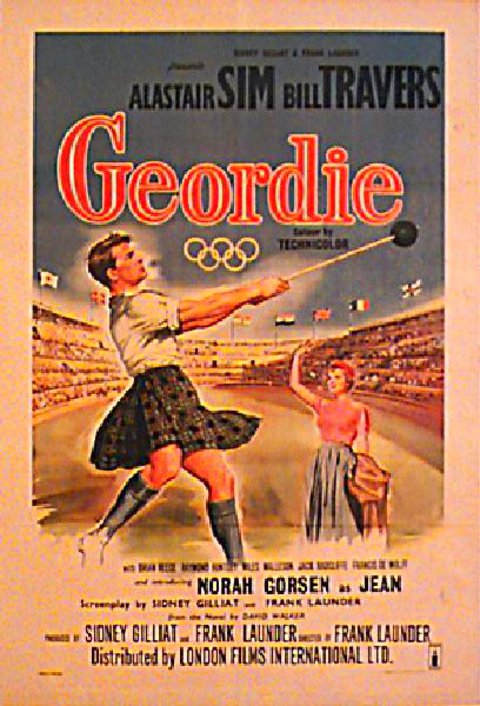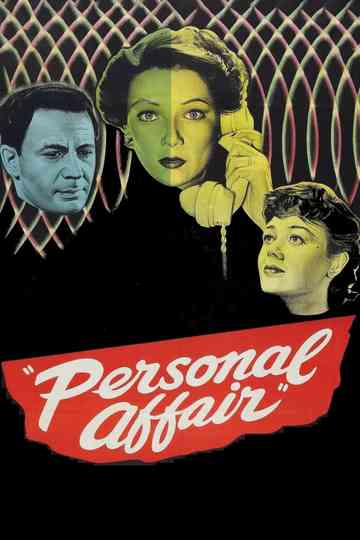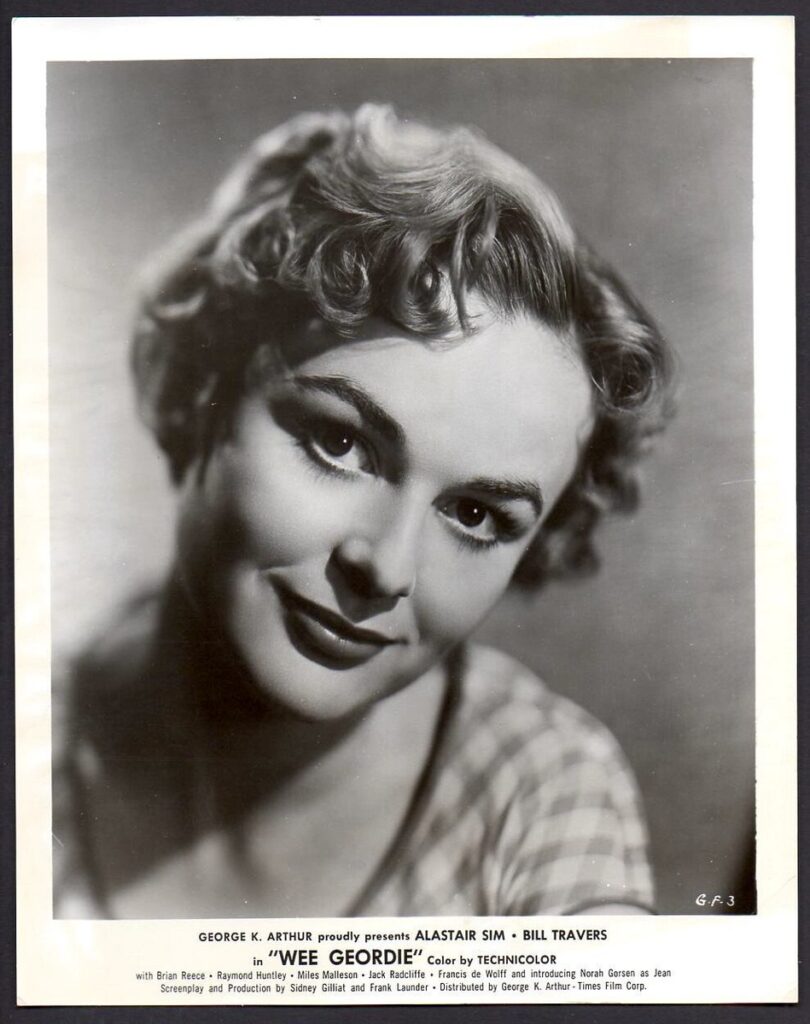


Norah Gorsen was Bill Traver’s leading lady in “Geordie” in 1955. She was born in Poole, Dorset in 1933. Her only other film seems to be “Personal Affair” with Gene Tierney and Glynis Johns. She featured on television until 1969. She was married at one time to actor Ronald Lewis.
Norah Gorsen was born Norah Ethel Gaussen on 22 November 1931 in Weymouth, Dorset, England. She trained in acting at the Royal Academy of Dramatic Art (RADA), one of the United Kingdom’s most prestigious acting schools, which grounded her in stagecraft, voice, and classical technique.
Critical Context:
RADA training in the post‑war period emphasized textual precision, physical control, and psychological insight, preparing actors not just for theatre but for emerging television and film opportunities. This foundation likely informed Gorsen’s measured performances, even when cast in lighter or genre work.
🎬 Entry into Performance: Stage and Television (Early 1950s)
Gorsen’s first notable stage success was appearing as Wendy in a 1953 production of Peter Pan opposite Pat Kirkwood, which showcased her youthful charm and theatrical poise early in her career.
Television and Early Screen Appearances
She entered screen acting initially under her birth name before adopting the stage name Norah Gorsen:
- BBC’s Little Women (1950–1951) — Gorsen played Beth March in the BBC’s early television adaptation of Little Women, demonstrating her ability to carry emotional nuance in dramatic narrative.
- Various British TV plays and anthology series (e.g., BBC Sunday‑Night Theatre), where she developed versatility across roles in drama and period pieces.
Critical Analysis:
In these early screen performances, Gorsen displayed a grounded presence and emotional sincerity that marked her as a capable young actress. Her RADA background likely contributed to her ability to deliver text fluently and with clarity, vital in the early days of live and recorded television.
🎥 Film Work: Mid‑1950s British Cinema
Those People Next Door (1953) and Personal Affair (1953)
In 1953 Gorsen appeared in a series of British feature films including:
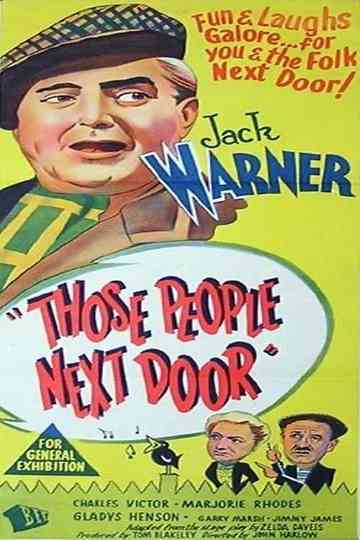
- Those People Next Door — a British social comedy‑drama
- Personal Affair — a domestic drama in which she played a supporting role Phoebe (uncredited but notable)
While these films were not major international hits, Gorsen’s involvement positioned her within the British studio system during a period when the national cinema was grappling with both post‑war social realism and Hollywood‑style narrative forms.
Critical Analysis:
These early film roles show her range within ensemble casts, though she was still generally cast as youthful, genteel characters rather than leads. The British cinema of the early 1950s often favored narratives grounded in class, social change, and family dynamics, and Gorsen’s training allowed her to hold her own among more experienced co‑stars.
👩🎤 Breakthrough Film: Geordie (1955)
One of Gorsen’s best‑known appearances was in Geordie (1955), in which she played the title character’s girlfriend. The film was a colour comedy‑drama about a small Scottish farmer’s son who becomes an Olympic hammer‑thrower, starring Bill Travers and Alastair Sim.
Critical Analysis
- Screen Presence: Gorsen’s performance, though not the lead, contributed a romantic and humanising counterbalance to the athletic and comedic elements of the narrative.
- Aesthetic Contribution: Geordie was noted for its Technicolor cinematography and broad appeal in British cinema. Gorsen’s screen persona — refined, yet relatable — complemented the film’s blend of humour and character study.
- Professional Limitation: Despite Geordie’s success, Gorsen did not substantially capitalise on this exposure with subsequent leading film roles, reflecting the constraints placed on female actors in mid‑century British cinema, where youthful charm often overshadowed opportunities for more substantial dramatic development.
📺 Television Career: 1950s–1960s
Gorsen sustained her career with a range of television roles through the late 1950s and into the 1960s:
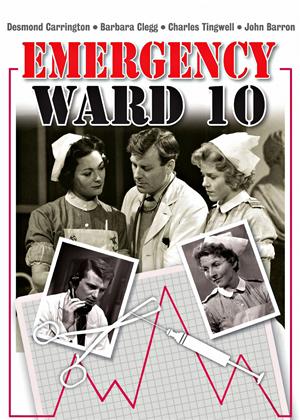
- Emergency – Ward 10 (1958–1967) — long‑running British medical drama in which she appeared as Nurse Ann Guthridge/Mrs. Neilson in over 30 episodes.
- Ivanhoe (1958) — played Lady Rowena in the adventure series.
- Numerous episodic roles in anthology programmes like Studio 4, Moonstrike, Suspense, and Zero One.
Critical Evaluation
- Range and Reliability: Her television work demonstrated her adaptability across genres — from period adventure to medical drama — and her capacity to sustain a character over long runs, especially in Emergency – Ward 10.
- Screen Solidity vs. Stardom: While Gorsen was never headline star material, critics and historians note that her performances were consistently professional, embodying the mid‑century British television actor who could reliably support narratives and sustain ensemble work. Her long run in Emergency – Ward 10 suggests audiences and producers alike valued her steady presence.
🧠 Acting Style and Screen Persona
A critical look at Gorsen’s work reveals several defining stylistic traits:
1. Classical Training Influence
Her RADA background endowed her with vocal clarity and text adherence, which translated well across both live and filmed performance — a significant asset during a period in British TV when theatrical technique was still closely linked to screen performance.
2. Warmth and Nuance
Gorsen’s portrayals — especially in Little Women and Geordie — reveal a capacity for emotional subtlety, especially in roles requiring empathy or romantic support, lending depth to characters that might otherwise have remained two‑dimensional.
3. Ensemble Strength
Her recurring roles in ensemble dramas such as Emergency – Ward 10 illustrate a collaborative acting skill, capable of sustaining dramatic continuity in serialized television.
📉 Later Career and Departure from Acting
After the mid‑1960s, Gorsen effectively ceased appearing in acting roles, with television credits tapering off by 1965 and no recorded screen work thereafter.
Critical Considerations:
This waning reflects both the limited opportunities available to actresses as they age in mid‑20th‑century British media and the transitional nature of post‑war television, which increasingly favoured newer faces and different modes of performance. Gorsen’s career arc thus embodies a broader structural issue: actors often found themselves confined to supporting roles without sufficient pathways to sustained stardom or leading dramatic parts.
🕊️ Legacy
Norah Gorsen died on 15 April 2020 in Mouans‑Sartoux, France, at age 88. Her body of work — though not large — offers an instructive example of how a classically trained actress navigated the evolving British performance industries of the mid‑20th century, from early television adaptations to supporting film roles and serialized TV drama.
Critical Appraisal Summary
- Strengths:
- Clear, classical technique endowed by RADA training.
- An engaging screen presence in ensemble and supporting roles.
- Emotional nuance in portrayals of romantic or earnest characters.
- Limitations:
- Restrained by the era’s casting norms, which often typecast women in supportive, genteel roles rather than complex leads.
- A career that did not fully capitalise on early potential despite solid performances.
- Cultural Impact:
- Gorsen’s work — especially in Little Women and Emergency – Ward 10 — contributes to the history of British television performance, illustrating how trained actors shaped early serialized drama before the rise of later “kitchen sink” realism and contemporary naturalism.