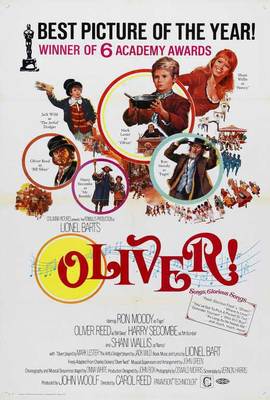



Jack Wild was born in Royton in the U.K. in 1952./ Best known for his wonderful performance in “Oliver” in 1968. Sadly he died in 2006.
His “Independent” obituary by Tom Vallance:
Jack Wild will be best remembered for his exuberant performance as the cheeky pickpocket, the Artful Dodger, in Carol Reed’s film version of Lionel Bart’s Oliver! (1968), for which he was deservedly nominated for an Oscar. His top-hatted, mischievous urchin made an indelible impression and accomplished the seemingly impossible by matching the impact of the classic performance of Anthony Newley in David Lean’s earlier non-musical version of Oliver Twist.
His performance was different from Newley’s, less sly and knowing, but perfect for the lighter musical mood. With his impish grin, snub nose, boundless energy and husky voice, he gave splendid impetus to numbers such as “Consider Yourself”, “I’d Do Anything” and “Be Back Soon” and gave Ron Moody, as Fagin, a run for his money in the scene-stealing stakes.
Almost inevitably, his post-Oliver! career was a disappointment, and his descent to alcohol and obscurity could be said to mark him as yet another child star unable to cope with fame, though it is always difficult to follow up such a smash hit (even his co-stars Moody, Shani Wallis and Mark Lester – now an osteopath – never found subsequent movie roles of equal stature).
Wild’s youthful energy and versatility were similar to that displayed by Mickey Rooney 20 years earlier, but Hollywood was no longer making Rooney-type musicals, and Wild had no studio to protect, develop or discipline him. “It’s very hard not to let fame affect you because you are continually being told how good you are,” he said. “After a while you begin to think there must be some truth in it because all those people can’t be wrong.” Wild would adamantly deny, however, that his later drinking problem was the result of early stardom:
A lot of people try to blame the fact that I was successful at a young age. I don’t agree with them. I firmly believe that it wouldn’t have mattered what career I’d have chosen, I’d have ended up with a drinking problem. I think it was just in my genes.
Jack Wild was born in 1952 in Royton, Lancashire, to parents who worked in the cotton mills, but while he was still an infant the family moved to the London suburb of Hounslow, where Wild’s mother worked in a shop and his father in a tyre factory. Jack and his brother Arthur were boyhood friends of the future Genesis star Phil Collins, whose mother June ran a stage school with Barbara Speake. After watching the boys play football in the park one afternoon June Collins was convinced the Wild brothers had charisma and suggested they enrol at her school. Wild began going to auditions at the age of 11 and later revealed that he had to work constantly to pay the school fees:
My parents were working-class and couldn’t afford them. At 12, I was treated as an adult at “work” and it was difficult for me to switch from that role at home. I grew up too quickly.
Arthur Wild was later to be one of the boys who played Oliver in the original stage production of the musical, with Phil Collins as the Artful Dodger. Later Jack, who had already had some small roles on television, took over the role of Oliver in the stage production. When he won the role of the Artful Dodger in the film version, he was 16 and the second oldest boy in the cast:
I was the leader of the gang and we got up to a lot of escapades for the whole year we were making it. But Carol Reed was an excellent director and he knew how to deal with us.
Oliver! won the years’s Oscar for best film, and both Mooney and Wild were nominated for their performances. Wild received a good-luck telegram from his idol James Cagney, but he lost the best supporting actor award to Jack Albertson in The Subject Was Roses. “I didn’t win,” he later said, “but I had a great time in America and lots of doors were opened.” He made guest appearances on top television programmes, and he was given a million-dollar contract with Capitol Records, for whom he made three albums, The Jack Wild Album, Everything’s Coming Up Roses and Beautiful World.
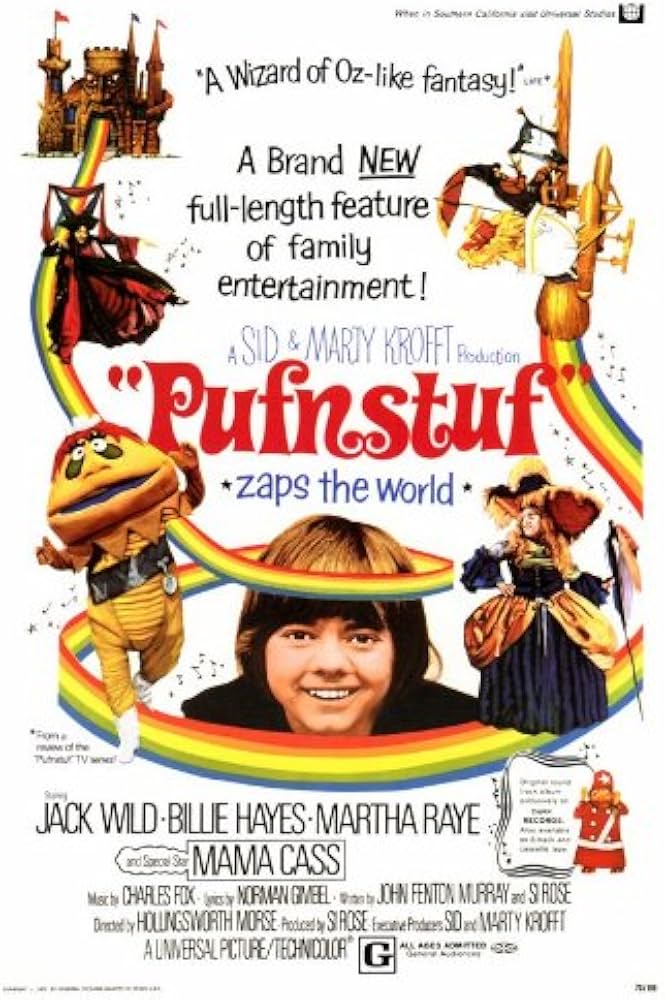
At the Hollywood premiere of Oliver! he had met the puppeteers Sid and Marty Krofft, who thought he would be perfect for a Saturday-morning children’s television show they were preparing. Jack and his brother left London and moved in with Marty Krofft’s family while Jack starred in the series H.R. Pufnstuff (1969).
Set on an enchanted island, it was a mixture of live action and giant puppets, in which Wild played a boy befriended by a dragon as he battles the evil Witchiepoo, who wants to steal his magic flute. He received another million dollars for the series. “I spent most of the money on the family,’ he later said, “buying them cars and houses.” He had already started drinking heavily:
I was smoking since I was 12. The people around me – the agents, personal and business managers – could hardly say, “You can’t have a drink.” I was employing them, after all. By the time I was 19 I thought I was God.
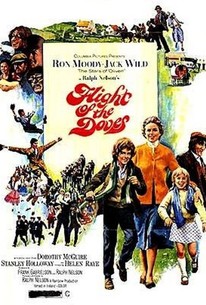
In 1970 he starred in a film version of Pufnstuff but the banal script and poor songs stifled the efforts of Wild and his co-stars Billy Hayes, Martha Raye and Mama Cass. Poor songs also blighted Wild’s next film, an otherwise charming family movie made in Ireland, Ralph Nelson’s Flight of the Doves (1971), which reunited the actor with Ron Moody. Wild and Helen Raye were a pair of orphans who run away from their cruel stepfather but encounter further danger from a wicked uncle (Moody) who is a master of disguise. Wild later confessed, “I was never really sober. I just topped myself up every day.”
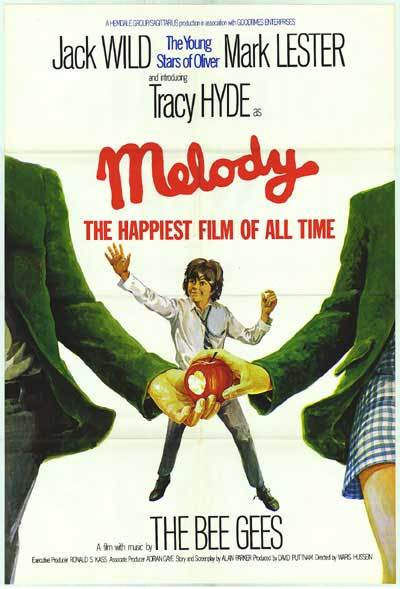
He was teamed with Mark Lester again in Melody (1971). Lester played an 11-year old boy who wants to marry a 12-year old girl (Tracy Hyde), with Wild playing their older friend who tries to dissuade them from telling their parents. It was an appealing, but minor, film (an early work of the producer David Puttnam and writer Alan Parker) distinguished by a fine score by the Bee Gees.
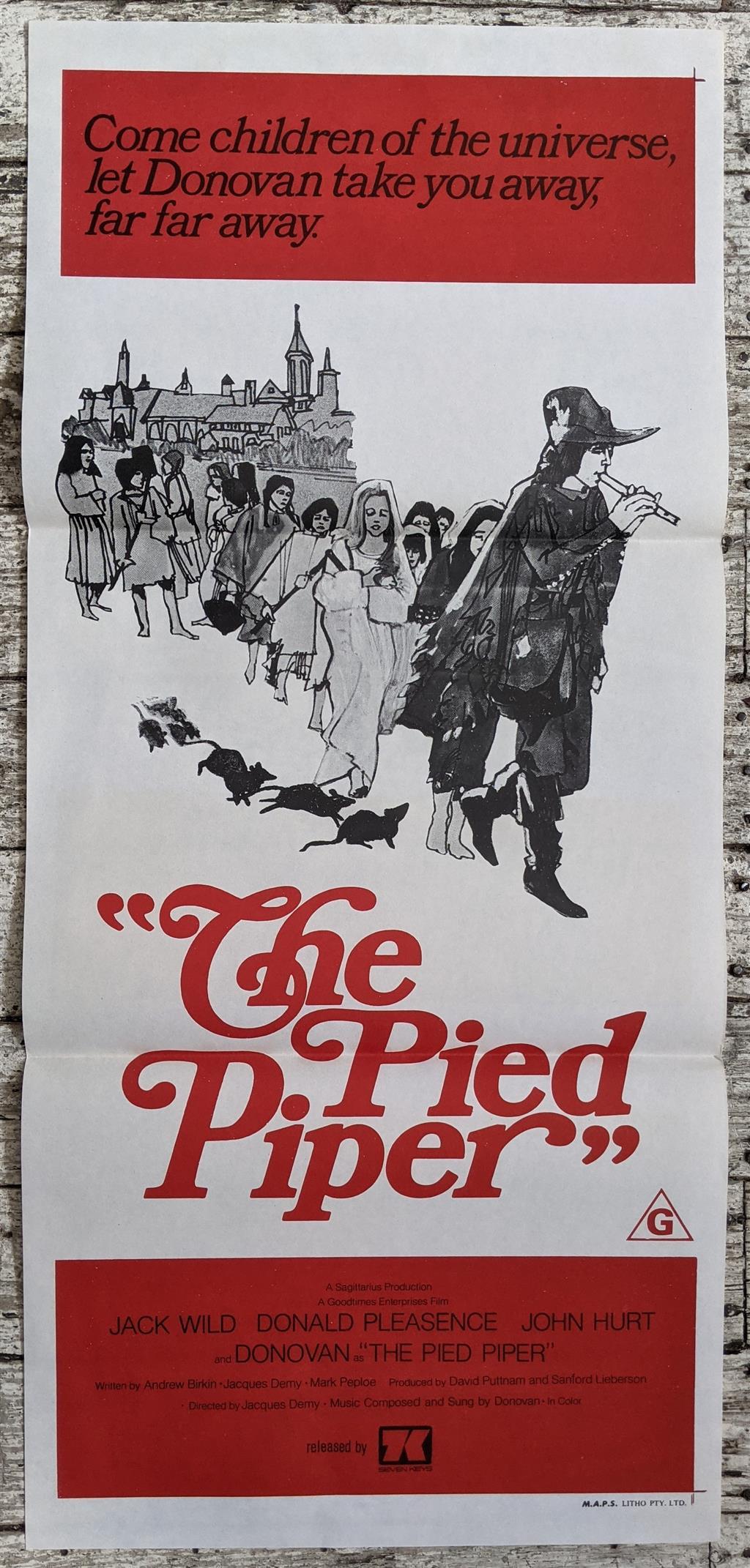
Oliver! and H.R. Pufnstuff had given Wild a huge fan following, and he was a favourite of teen magazines, but his drinking quickly affected his looks, and he played a supporting role in Jacques Demy’s The Pied Piper (1982), a dark version of the disturbing children’s tale. The last film in which he received top billing was David Hemmings’s touching drama The Fourteen (1983), in which he was the oldest of 14 children who are suddenly orphaned and try to resist inevitable separation.
Relative obscurity followed, but though work became scarce he refused to give up acting. “There is no buzz,” he said, “like performing for a live audience.” He continued to work sporadically, particularly in America, where regular repeats of H.R. Pufnstuff kept his name known.
In the UK he was a popular draw in provincial pantomime. He played Buttons in Cinderella several times until age prompted a switch to an Ugly Sister. He particularly regretted that, having played a famous fictional cockney, he had never appeared in EastEnders. “I’d definitely be up for it,” he said,
just the same as I would if Coronation Street was offered. Either way, it would be like going back to my roots.
His heavy drinking, which he admitted contributed to the breakdown of his marriage to his Welsh wife Gaynor, lasted until 1988, despite attempts to dry out at clinics. “You have to reach your own personal bottom line,” he said,
and the time wasn’t right for me at clinics. I joined Alcoholics Anonymous, and don’t consider I have a drink problem any more. I might have a low-alcohol lager but that’s all.
A “born again” Christian and a diabetic, Wild had been sober for the past 16 years, and made a minor comeback in the film Robin Hood: Prince of Thieves (1991) with Kevin Costner. Wild played one of Robin’s merry men, Much, the Miller’s son. He also appeared as a porn merchant in Channel 4’s series based on the movie Lock, Stock and Two Smoking Barrels, had the small role of a pedlar in Basil (1998), and portrayed the Cowardly Lion in a London production of The Wizard of Oz.
Diagnosed with mouth cancer in 2001, he had his tongue and voicebox removed in 2004, and had become an active campaigner for cancer charities. “My life style had made me a walking timebomb,” he said in an interview last year. Even when unable to speak, he took to the stage in Cinderella, as a mute but touching Baron Hardup.
Supported by his actress girlfriend of 10 years, Claire Harding, whom he met when they were appearing in Jack and the Beanstalk in Worthing and married last September, he continued to give interviews and make appearances. In 2005 he had a part, with Ron Moody, in Danny Patrick’s film Moussaka & Chips, and featured with other members of the Oliver! cast in two television retrospectives, After They Were Famous, on New Year’s Day, and Celebrate “Oliver!”, on Boxing Day. In September the Daily Mail brought him and Mark Lester together on the launch of Roman Polanski’s Oliver Twist. “Jack was like my big brother,” recalled Lester, who said that Wild, six years his senior, was “a very good footballer”:
We just got on really well, although I wasn’t allowed to play football because my face got too red and it did not go down too well with the lighting guys.
In a 1996 interview, Jack Wild had remarked with cheerful resignation, “I guess I’ll go to my grave as the Dodger, but at least I’ve made my mark on show-business history.”
Tom Vallance
The above “Independent” obituary can also be accessed online here.