

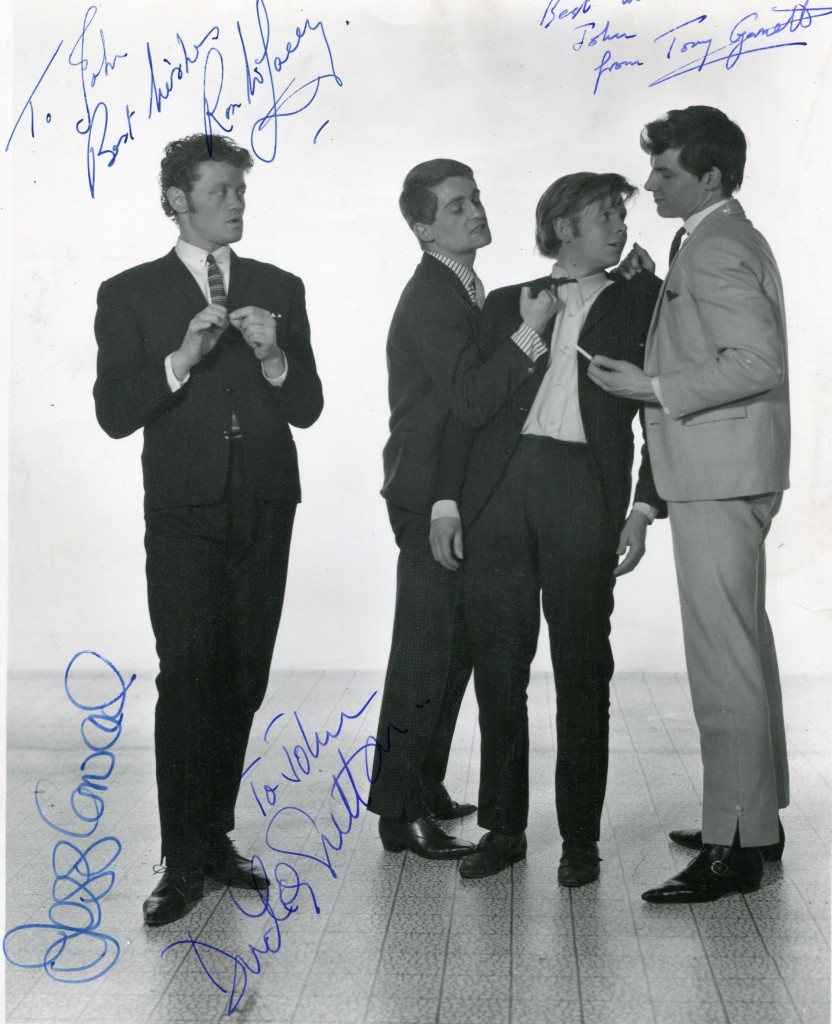
IMDB Entry:
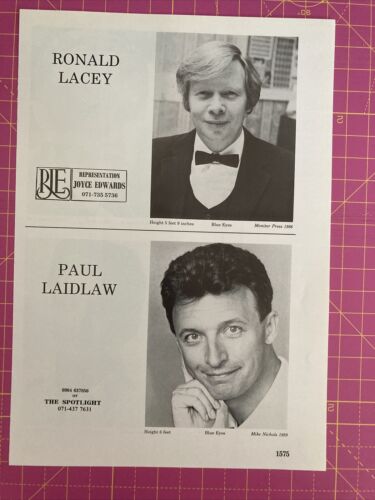
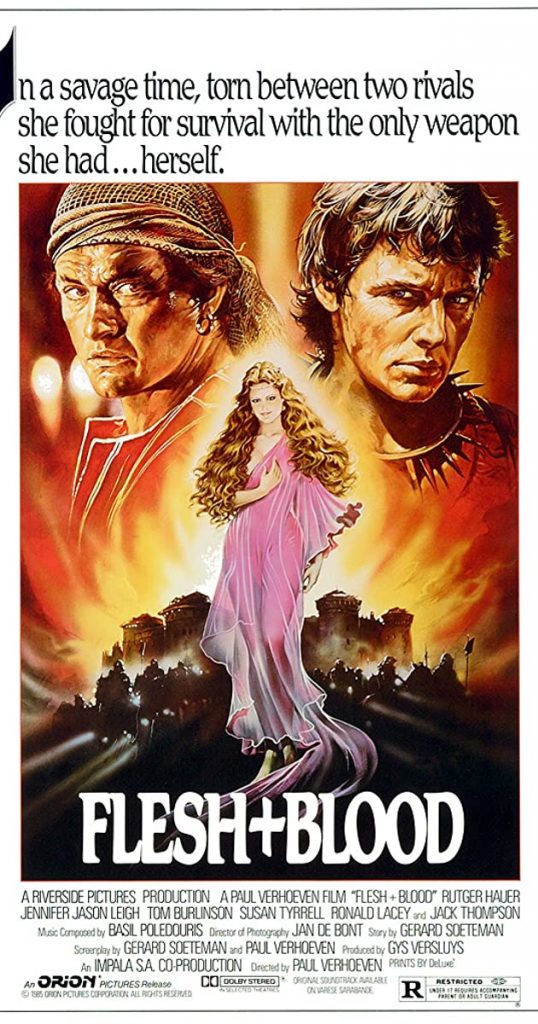
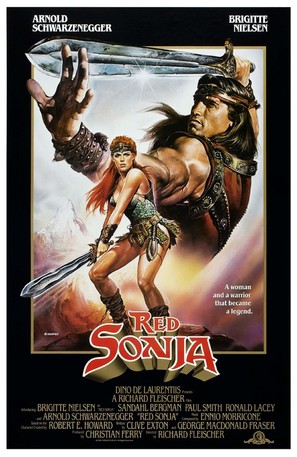
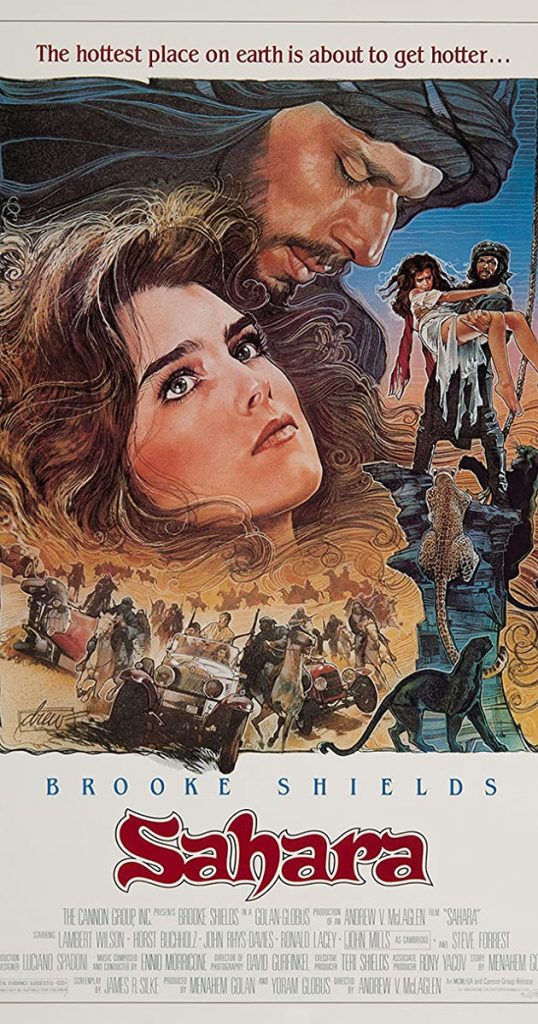
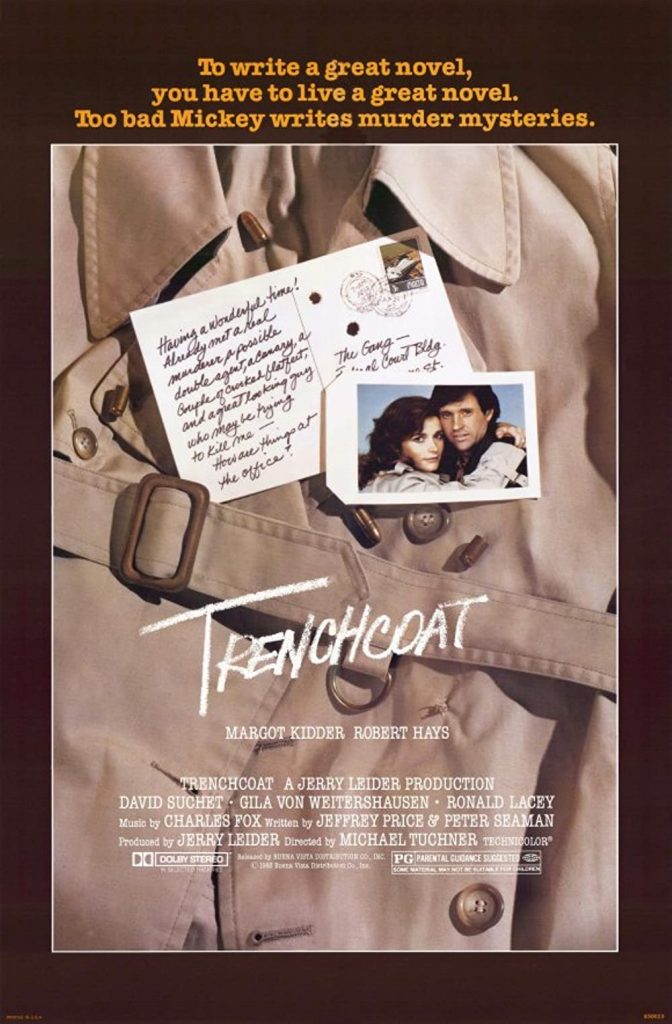
Ronald Lacey was born on June 18, 1935 in the suburbs of London. He began his career in 1961 after a brief stint in the Royal service. He attended The London Academy of Music and Dramatic Arts. His first notable performance was delivered at The Royal Court in 1962’s “Chips With Everything”. Lacey had an unusual pug look with beady eyes and cherub’s cheeks which landed him repeatedly in bizarre roles on both stage and screen. However it was his unforgettable demonic smile and peculiar Peter Lorremannerisms that would bring Lacey a short period of fame in Hollywood. After performing on British television throughout the 1960’s and 1970’s, Lacey finally landed the role for which these characteristics could be used to full advantage. In 1981 he was cast as the villainous Nazi henchman in ‘Steven Spielberg’ ‘s widescreen blockbusterRaiders of the Lost Ark (1981) He followed this with a series of various villainous roles for the next five to six years: Firefox (1982) with ‘Clint Eastwood’, Sahara (1983) withBrooke Shields, and Red Sonja (1985) with Arnold Schwarzenegger. Lacey turned in two hilarious cinematic performances in full drag (Disney’s Trenchcoat (1983) with Margot Kidder from 1982 and Invitation to the Wedding (1983) from 1985 – in which he played a husband/wife couple!). Sadly his career began to wane in the late eighties and Lacey died in London of liver failure on May 15, 1991. A tremendous talent with great depth and many facets, Ronald Lacey will be remembered best for his small but significant role as the dapper yet psychotic Nazi in Raiders of the Lost Ark (1981).
– IMDb Mini Biography By: Michael Loris
The above IMDB entry can also be accessed online here.
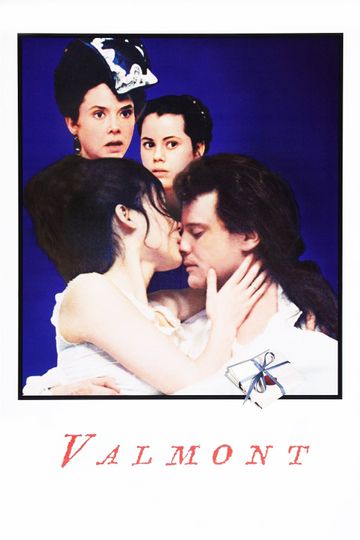
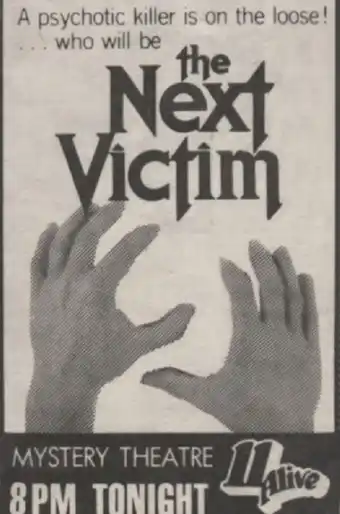
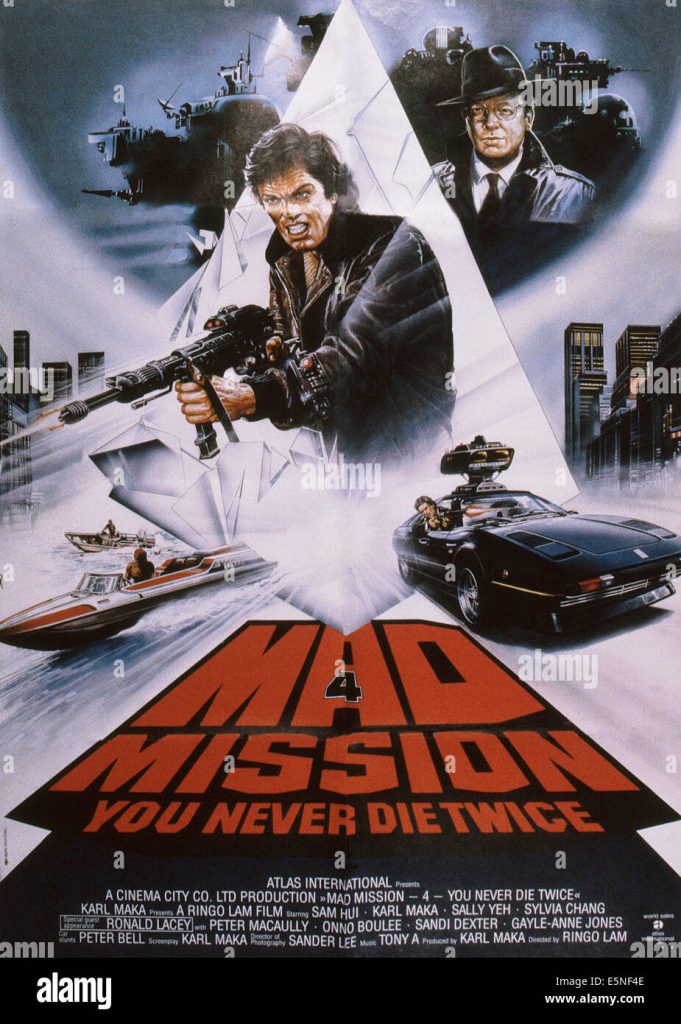
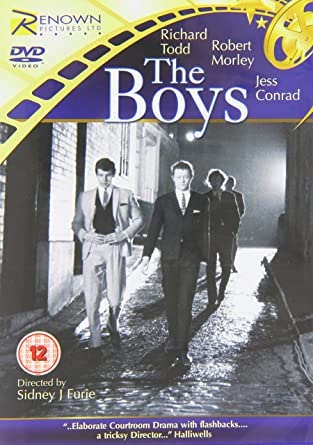
by Pete Stampede
Ronald Lacey’s character’s name in “The Joker,” Strange Young Man, aptly sums up most of the parts he played. He was once memorably described by leading theatre critic Michael Billington as “looking like a cherub versed in the works of the Marquis de Sade.” His entry into TV was in The Younger Generation (Granada, 1962), built around a repertory company of actors, all under 30 at the time; John Thaw and future film director Bill Douglas were other members of the company, and Michael Caine had a guest role in Lacey’s starring segment—regrettably, not a single episode of this series still exists. Lacey soon found a niche in TV plays, notably John Hopkins’ ambitious, anti-racist Fable (1965), and Boa Constrictor (1967), a typically bitchy work from Simon Gray. He later turned in a bravura performance as Dylan Thomas in Dylan (BBC, 1978). Lacey was the village idiot in Roman Polanski’s The Fearless Vampire Killers (UK: Dance of the Vampires, 1967) (he looked a bit like Polanski, come to think of it), and for the rest of his film career, including a Hollywood spell in the 80’s, was predominantly cast in the fantasy genre, suiting his talent for playing the weird and obsessed—The Final Programme (1973, for Avengers director Robert Fuest), The Adventures of Buckaroo Banzai Across the Eighth Dimension (1984), Flesh and Blood, and Red Sonja (both 1985).
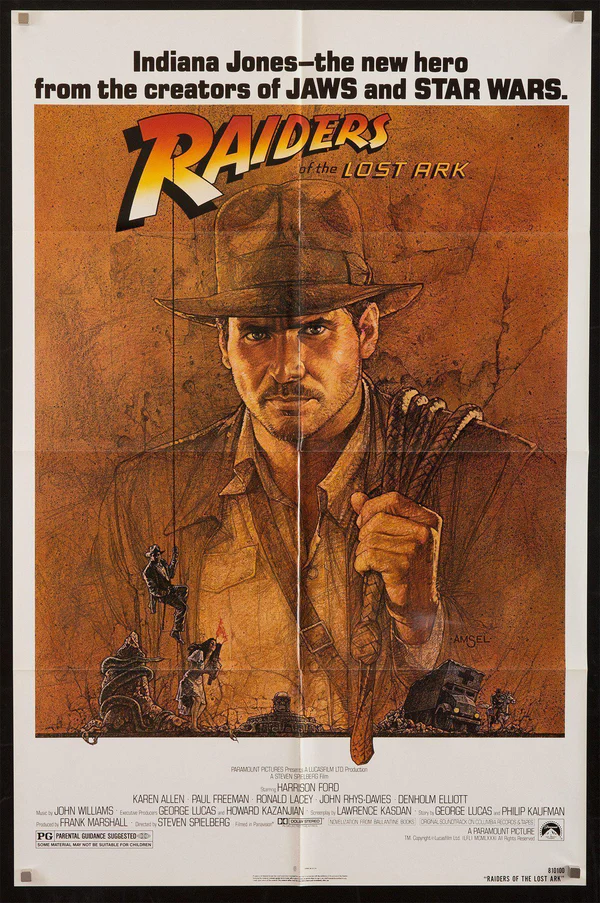
But his most notable role, overall, was as a Gestapo man with a fondness for wire coat hangers in Raiders of the Lost Ark (1981). He returned the favour with an unbilled cameo in Indiana Jones and the Last Crusade (1989). Other TV guest appearances include a beatnik who witnesses the murder of Hopkirk in the premiere episode of Randall and Hopkirk (Deceased), “My Late, Lamented Friend and Partner” (1969), an assistant to Dennis Price in several episodes of Jason King (1971-72), a nasty little jailbird called Harris in Porridge (again, a recurring role), and a memorably revolting turn as the baby-eating Bishop of Bath and Wells in Blackadder II, “Head” (1985). In a classic episode of The Sweeney, “Thou Shalt Not Kill!” (1975), he was one of a pair of tooled-up blaggers—er, that’s “armed robbers” in Sweeney-ese—who cause a siege at a bank. I’m afraid I also remember an episode of Hart to Hart in which he and the lovable Bernard “Dr. Bombay” Fox had to pretend to be French. It came as a shock, in 1991, to hear of Lacey’s death (from liver failure). He was the type of actor who, having been around for so long, you expect to go on for ever.
Ronald Lacey was an actor who specialized in the “grotesque,” but he did so with a technical precision that elevated his characters from mere villains into haunting, unforgettable portraits of human eccentricity. While global audiences know him as the face-melting Nazi Toht in Raiders of the Lost Ark, a critical analysis of his career reveals a highly versatile “character-star” who moved fluidly between high-brow Shakespearean theater and visceral screen villainy.
Lacey’s aesthetic was defined by a soft, almost cherubic face that he could contort into expressions of extreme malice, cowardice, or unsettling delight. He was the master of the “effeminate threat”—characters who appeared physically unintimidating but possessed a terrifying, sharp-edged intellect.
The Analytical Overview: The “Technical Grotesque”
1. The Royal Shakespeare Company & Classical Roots (1960s)
Lacey’s career began in the rigorous environment of the RSC and the English Stage Company.
-
Critical Analysis: His theatrical training gave him a “vocal flexibility” that many of his film peers lacked. He understood how to use his voice—which could range from a high-pitched whine to a resonant, authoritative bark—to command a stage. Even in his smallest early roles, critics noted his “mercurial” energy; he was an actor who could never be ignored, even when standing still.
2. The Face of Villainy: Raiders of the Lost Ark (1981)
-
The Role: Major Arnold Toht.
-
Critical Analysis: This is a masterclass in economical acting. Toht has relatively few lines, yet Lacey makes him the film’s most memorable antagonist.
-
The Technique: He utilized a “soft-spoken” menace. By playing the character with a giggle and a series of polite, almost dainty gestures (like the folding of his coat), he made the character’s underlying sadism feel more perverse. He understood that the most frightening villains aren’t the ones who scream, but the ones who seem to be enjoying the process.
3. The Variety of “The Outsider”
Lacey’s physical appearance—balding, slightly stout, with pale, intense eyes—meant he was rarely cast as the hero. Instead, he became the definitive “Outsider.”
-
Firefox (1982): Playing the dissident scientist Semel, he showcased his capacity for pathos and vulnerability. He proved he could play the victim of an oppressive regime just as convincingly as its enforcer.
-
The Adventures of Buckaroo Banzai (1984): As President Widmark, he leaned into absurdist comedy, using his “high-strung” energy to play a man constantly on the verge of a nervous breakdown.
4. Television Mastery: The Monocled Mutineer & Blackadder (1980s)
Lacey was a staple of British television, often playing characters of “shabby authority.”
-
Blackadder II (1986): As The Baby-Eating Bishop of Bath and Wells, he delivered a performance of “glorious vulgarity.”
-
Critical Insight: He possessed a rare “comedic fearlessness.” He was willing to be ugly, sweating, and repulsive for the sake of a character’s internal truth. Critics praised his ability to find the “human logic” even in the most exaggerated comedic roles.
Technical Summary: The “Lacey Profile”
| Feature | Ronald Lacey’s Style |
| Vocal Profile | Capable of “sibilant” whispers and high-pitched, mocking laughter. |
| Physicality | Used his “soft” features to create a contrast with “hard” psychological traits. |
| The Niche | The “Intellectual Sadist” or the “Terrified Toady.” |
| Legacy | He redefined the “B-movie” villain as a figure of high-theatrical complexity. |
Critical Summary: The Beauty in the Bizarre
Critically, Ronald Lacey was a “brave” actor. He never sought the audience’s affection; instead, he sought their unsettled attention. He occupied a space in British acting similar to Peter Lorre—an actor whose physical “unconventionality” became his greatest asset. He understood that the most interesting parts of the human experience often lie in the shadows, the neuroses, and the eccentricities.
His untimely death in 1991 at the age of 55 robbed the industry of one of its most reliable “flavor” actors—a performer who could turn a standard thriller into something strange, poetic, and deeply memorable.