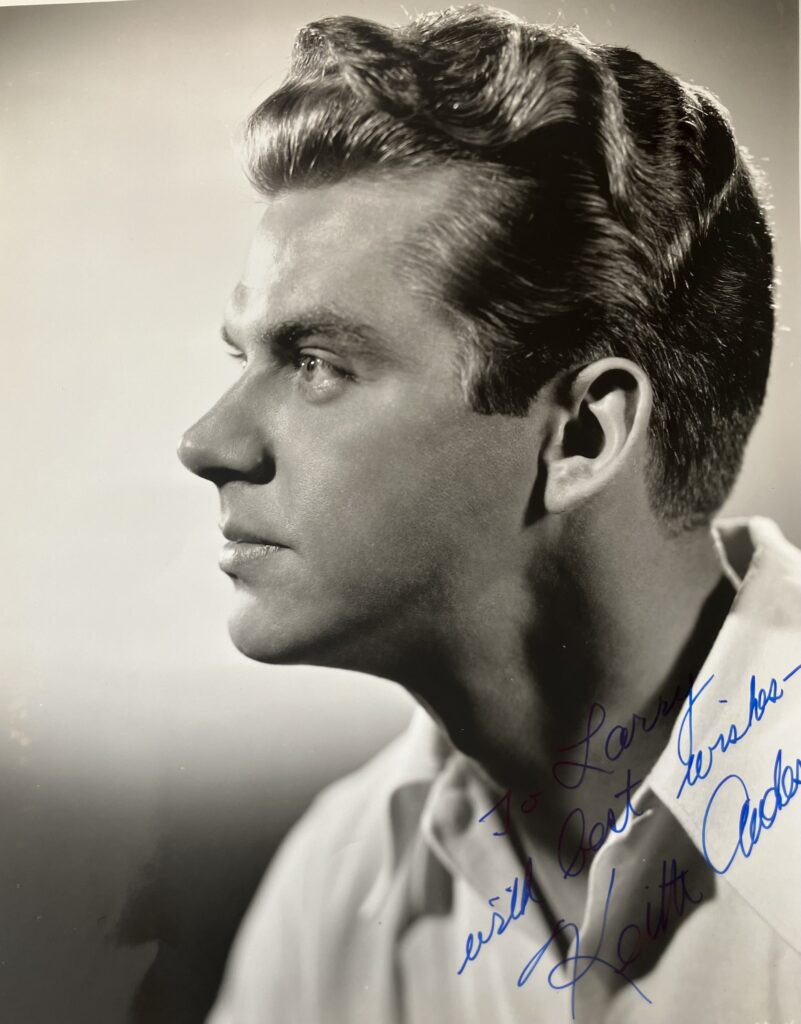

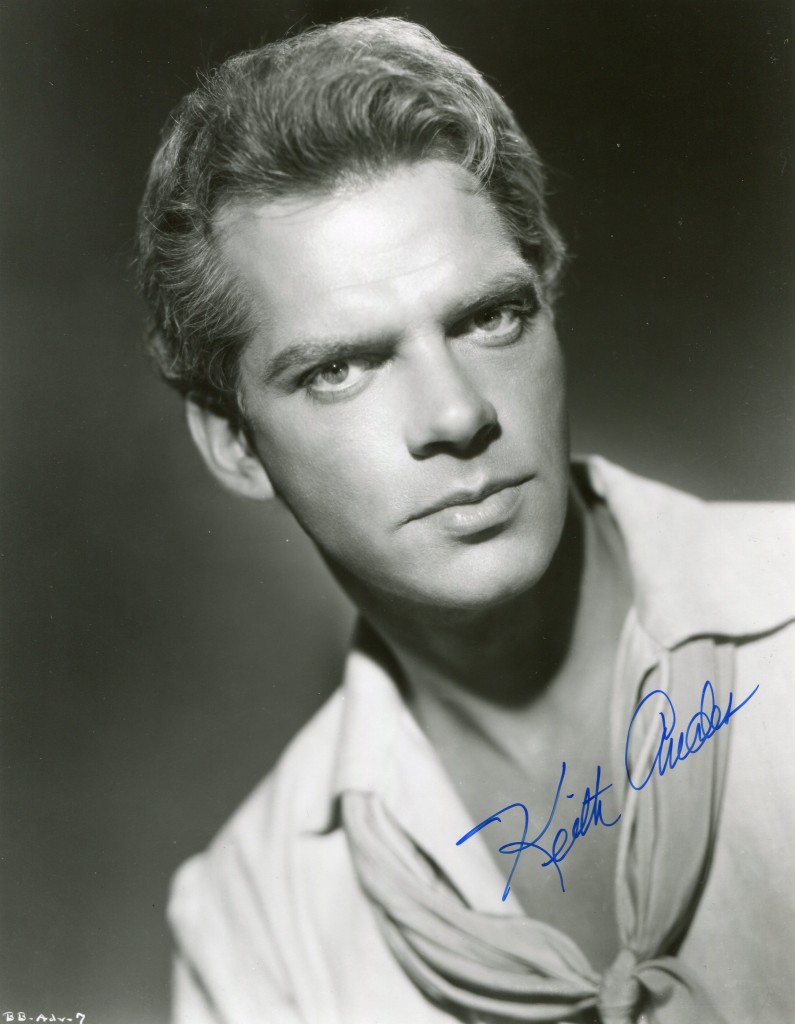
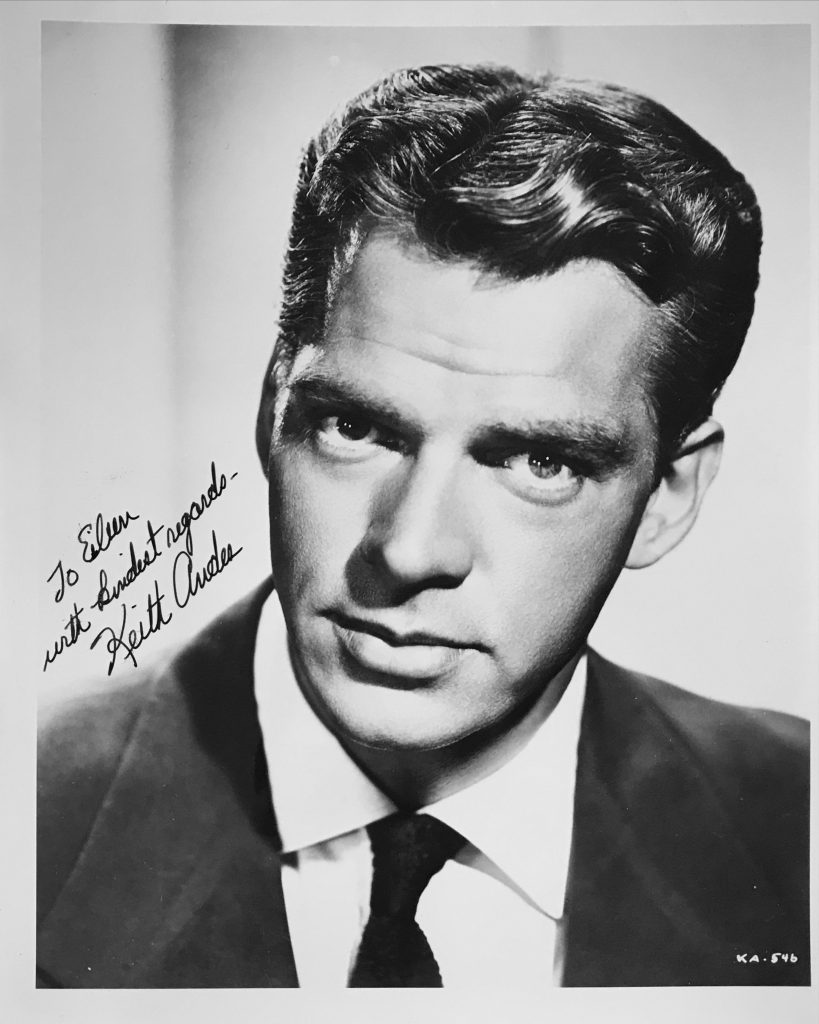
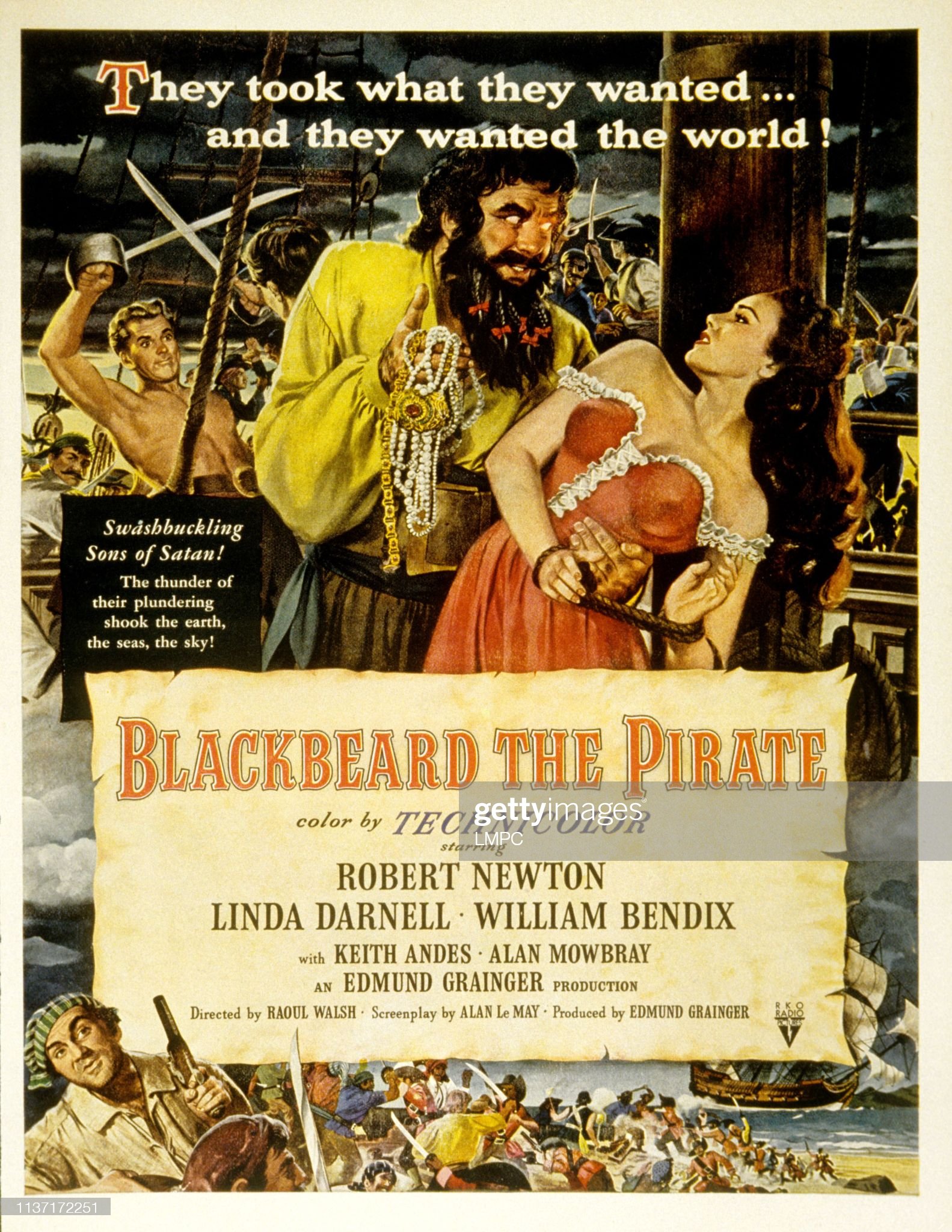
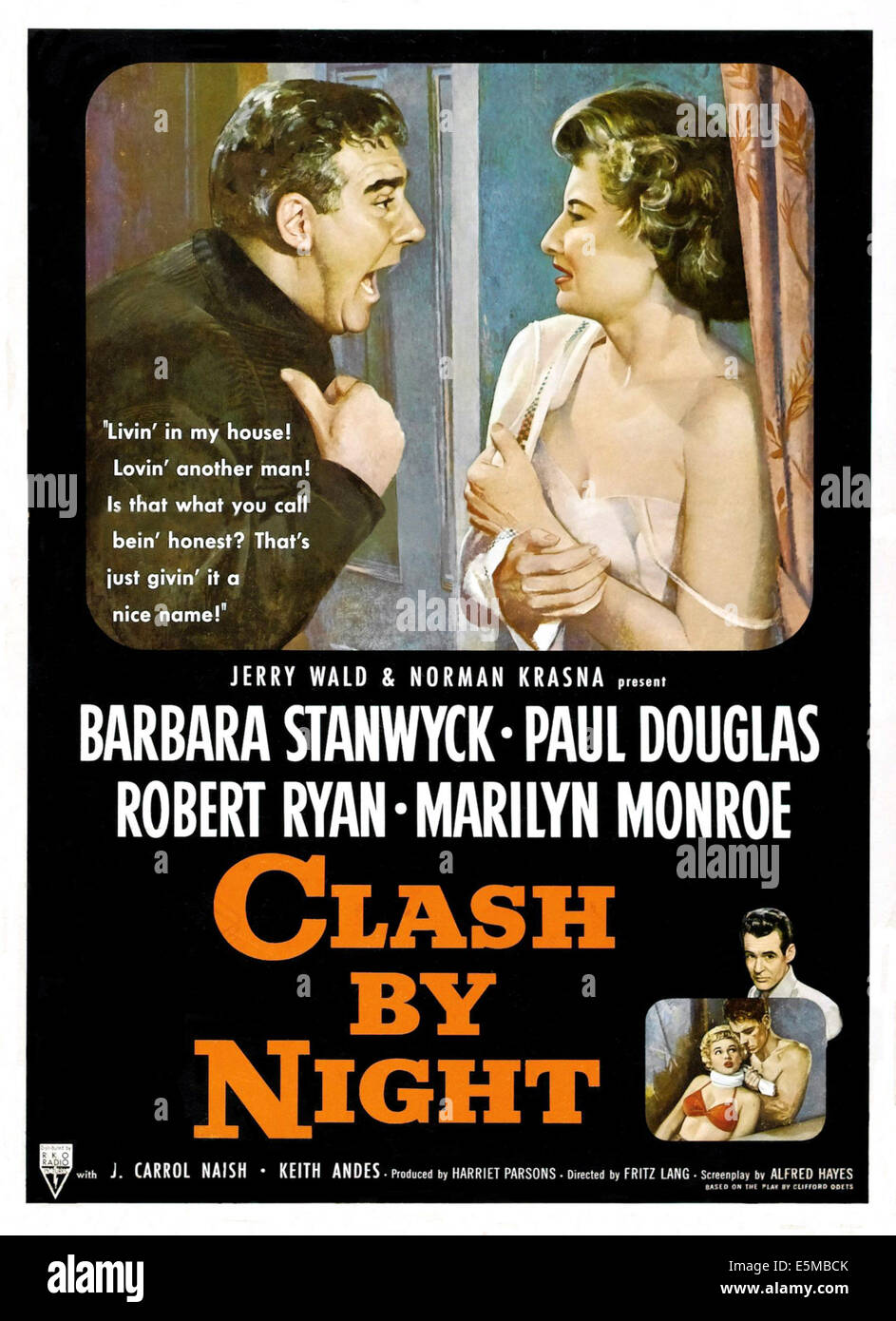
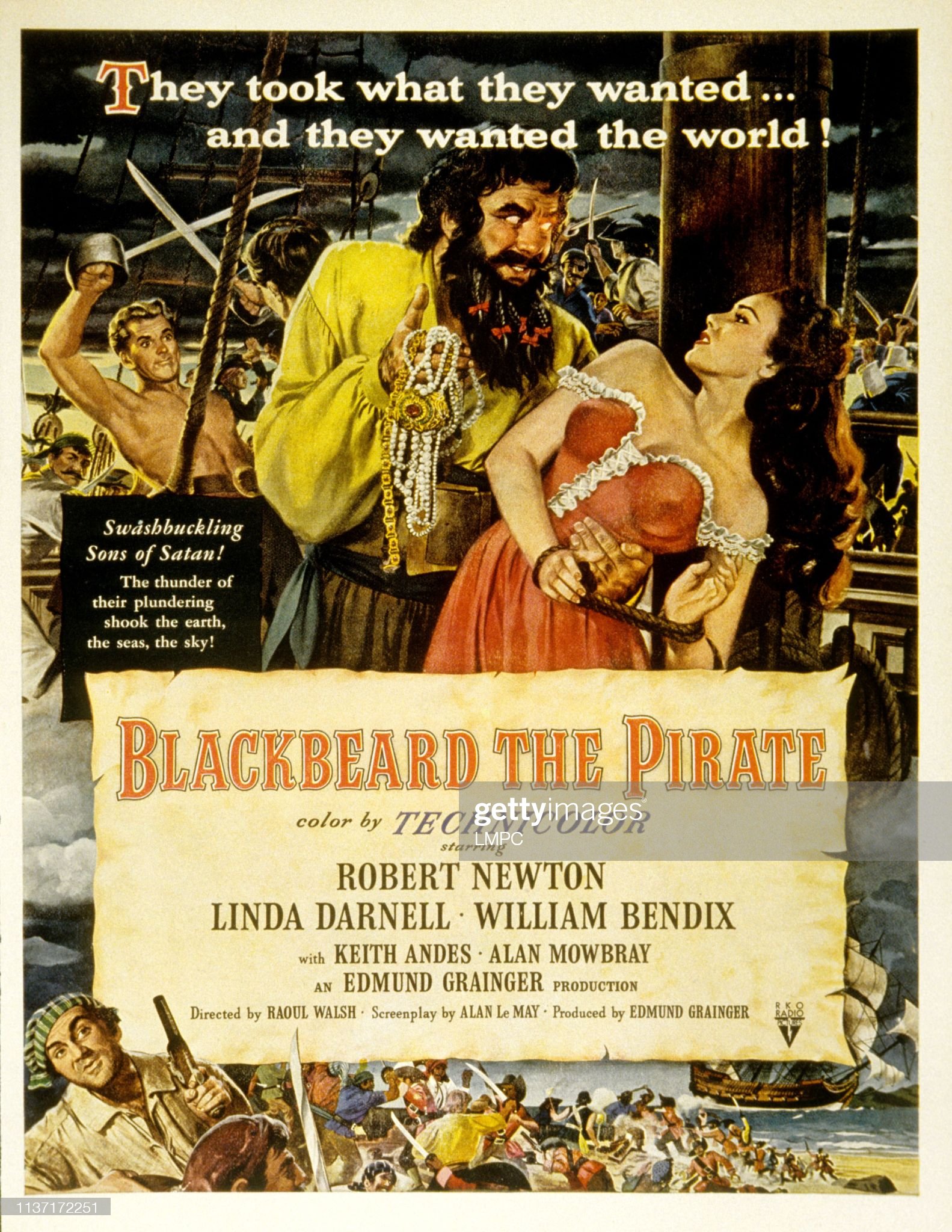
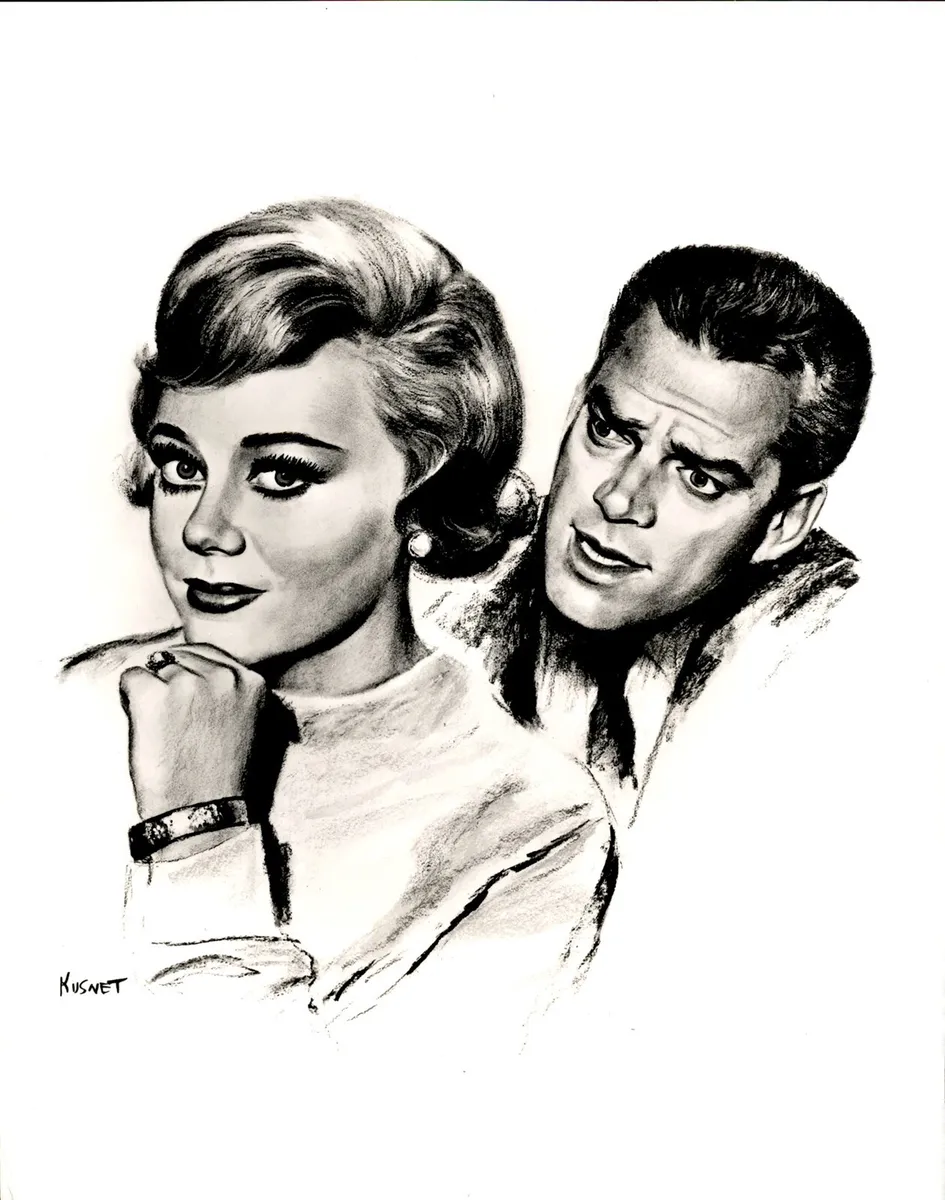
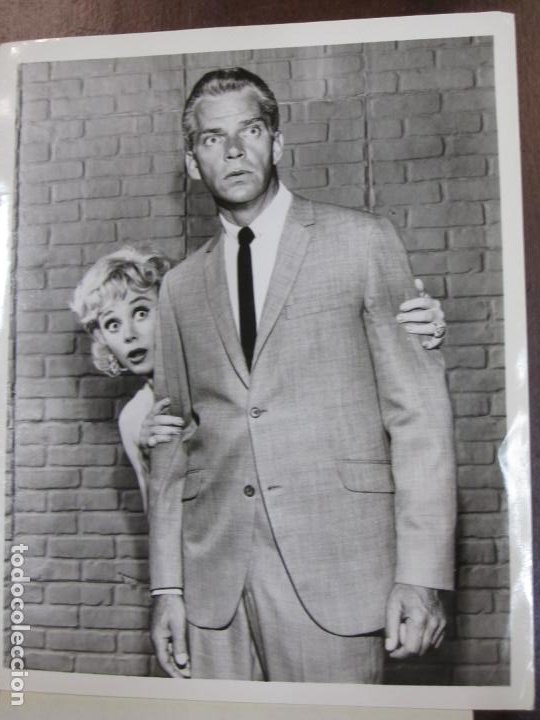
Keith Andes was born in 1920 in New Jersey. He had a minor role in 1944 in “Winged Victory” and then three years later was one of Loretta Young’s Swedish brothers in “The Farmer’s Daughter”. In 1952 he appeared with Marilyn onroe and Barbara Stanwyck in “Clash By Night” and “Blackbeard the Pirate” with Robert Newton. In 1963 he starred with Glynis Johns in the television series “Glynis”. His later films included “Tora, Tora, Tora” and “And Justice For All”. Keith Andes died in 2005 at the age of 85.
Tom Vallance’s “Independent” obituary on Keith Andes:
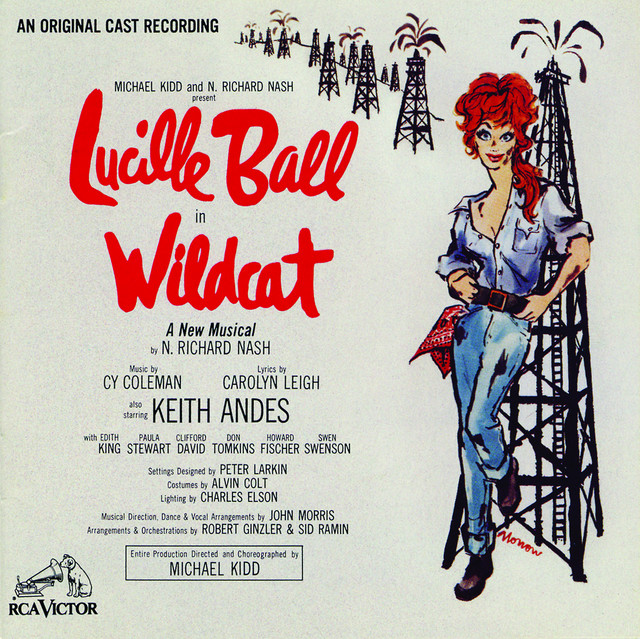
A blond actor with an impressive physique and brooding good looks, Keith Andes made a strong impression in several films of the early Fifties – he played Marilyn Monroe’s possessive boyfriend in Clash by Night (1952). He also possessed a fine baritone that was heard to advantage on the stage – he was Lucille Ball’s leading man in her only Broadway musical Wildcat (1960) – and he could have been a natural successor to Howard Keel had not Hollywood cut back on musicals in the late Fifties.
Born John Charles Andes in New Jersey in 1920, he graduated from Temple University and worked in radio as an actor and singer prior to joining the Army Air Force. He had wanted to be a pilot but failed cadet training, and when Moss Hart’s morale-boosting play Winged Victory was being produced with an all-servicemen cast, Andes won the role of a flyer in both the play (1943) and the film version that followed in 1944.
Andes had his first starring role on Broadway, by then using the name Keith Andes, in a revival of the operetta The Chocolate Soldier (1947), with choreography by George Balanchine, a new libretto by Guy Bolton and some scene-stealing comedy from Billy Gilbert. Opinions of Andes were varied – the critic George Jean Nathan found him “embarrassing to both song and story” – but he was given the Theatre World Award for the year’s best performance in a musical. The same year, he was seen on screen in The Farmer’s Daughter, which won Loretta Young an Oscar.
He returned to Broadway in 1950 to take over from Alfred Drake as Fred Graham in Kiss, Me, Kate, starring in the show for over a year. He then signed with RKO, and was cast in Fritz Lang’s Clash By Night (1952) – Monroe documentaries often include the scene in which he playfully tightens a towel around her throat to signify his jealousy.
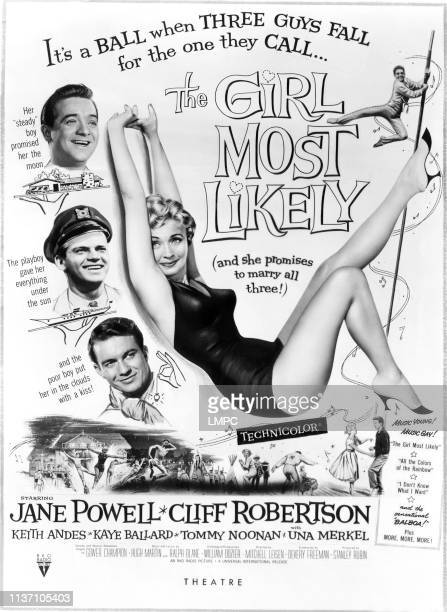
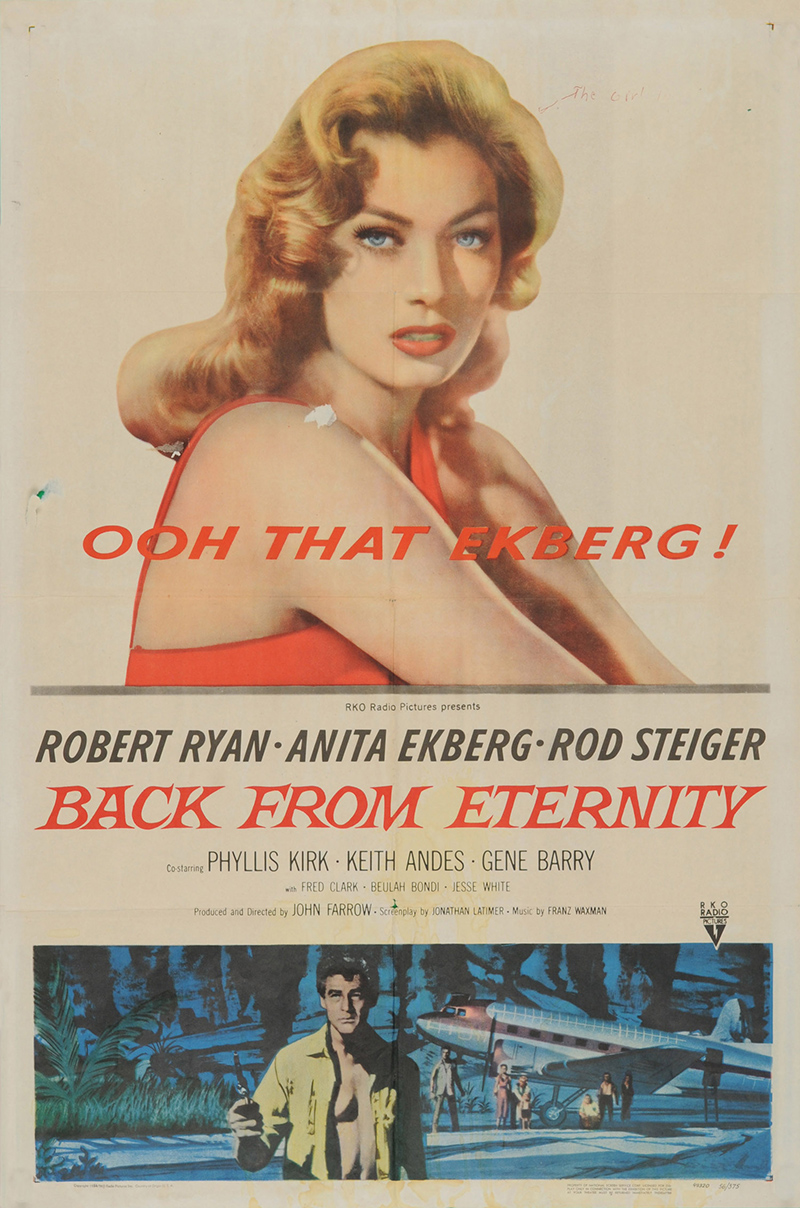
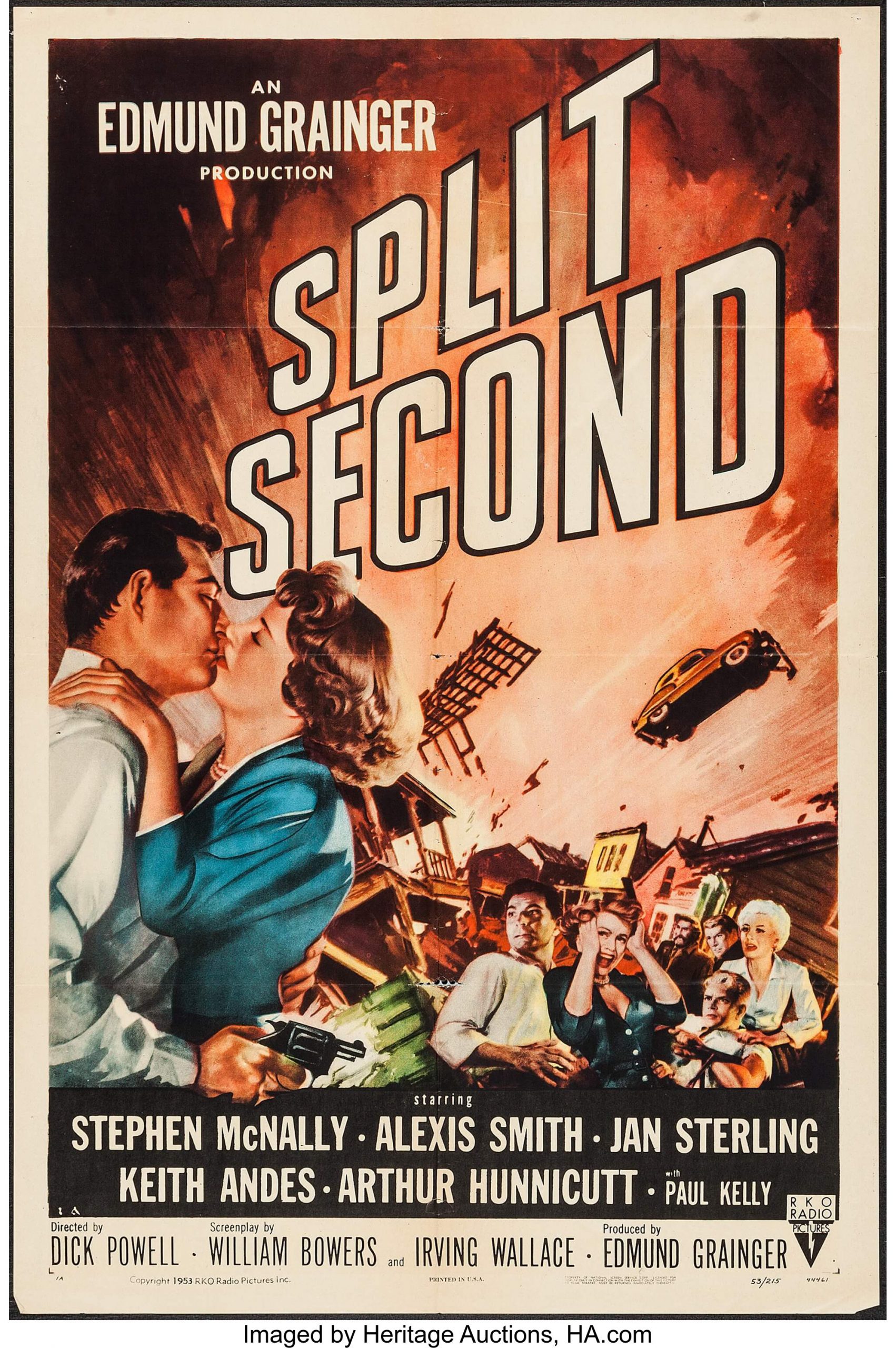
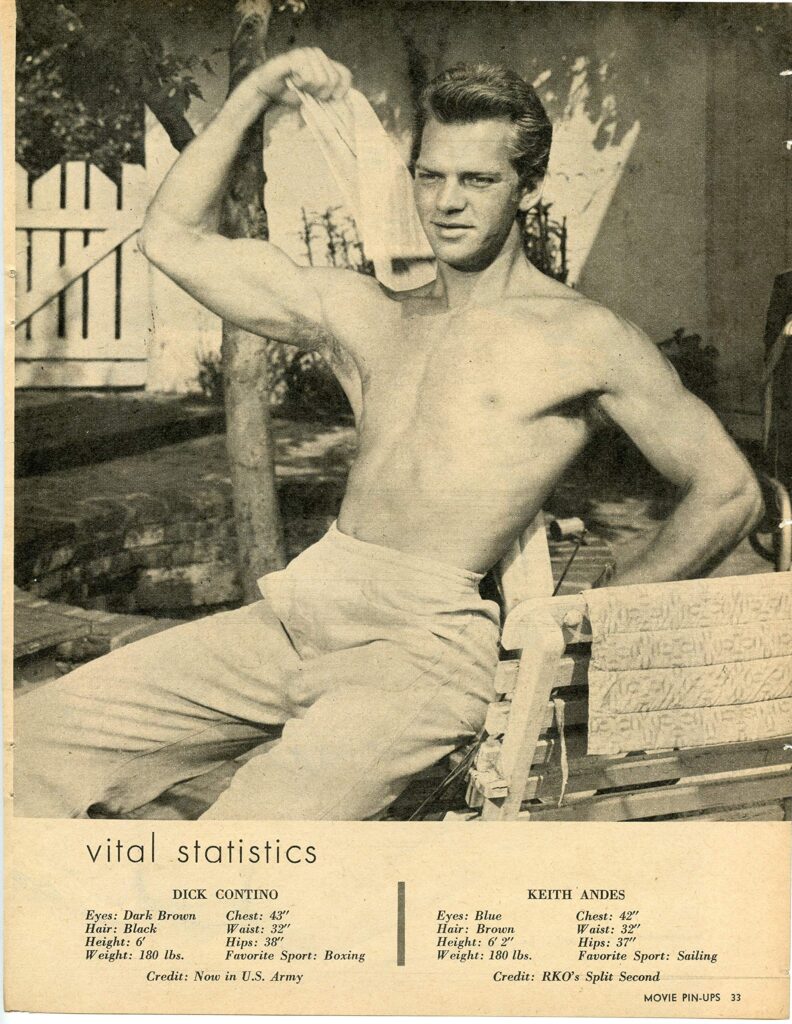
Other RKO movies included a spirited swashbuckler, Blackbeard the Pirate (1952), the thriller Split Second (1953), Back from Eternity (1956), as a co-pilot stranded with crash survivors in the jungle, and The Girl Most Likely (1957), a musical remake of the comedy Tom, Dick or Harry, with Jane Powell the bemused heroine trying to choose between three suitors. Andes was the handsome millionaire she almost marries before settling for true love, but though the film was a musical he was given no songs. (His only singing on screen was in the 1955 Universal musical, The Second Greatest Sex, an uninspired attempt to put Lysistrata into a western setting.)
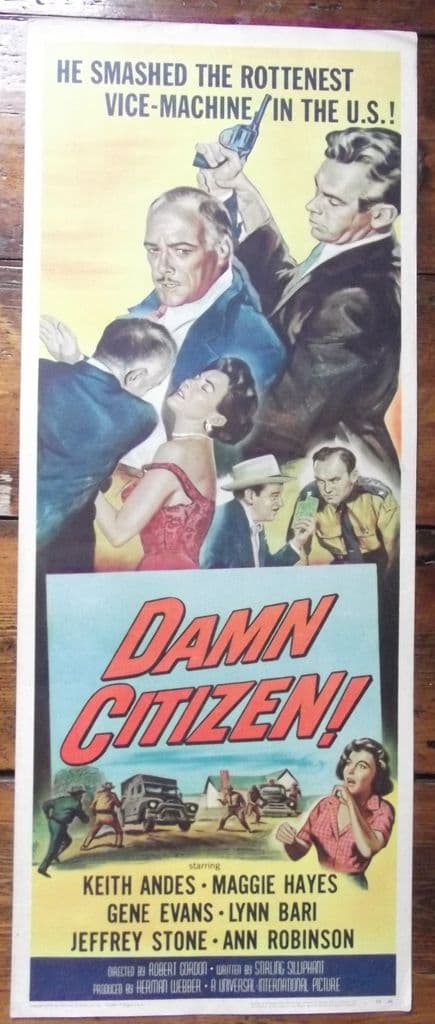
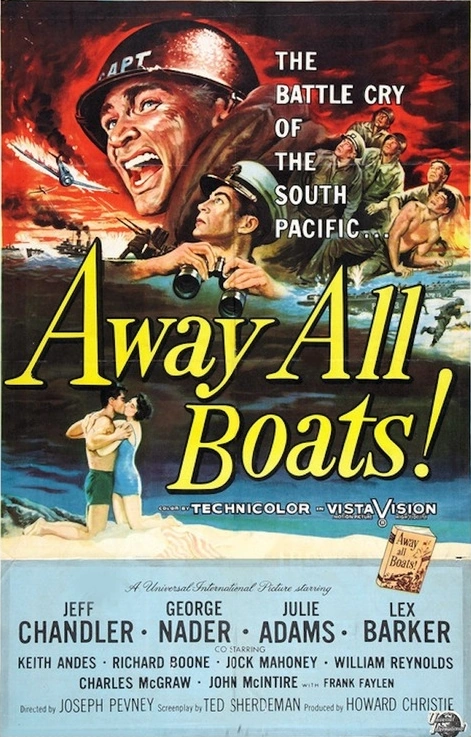
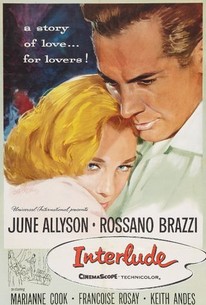
A short spell as a contract player at Universal included roles in Away All Boats (1956), and Interlude (1957, as the doctor boyfriend of June Allyson, patiently waiting for her to end an affair with a married man). His role in Damn Citizen (1958), that of a police chief charged with ridding his department of corruption, was the inspiration for a short-lived television series in which he starred, This Man Dawson (1959). Television had given his singing a showcase when he played Johann Strauss Jnr in The Great Waltz (1955), co-starring Patrice Munsel and Jarmila Novotna. Andes sang duets with both ladies, and in a tour de force conducted the orchestra while singing a vocal version of the Overture to Die Fledermaus.
His most memorable singing role came when Lucille Ball cast him as her leading man in the musical Wildcat (1960). The Cy Coleman/Carolyn Leigh songs given to Andes included a humorous duet with Ball, “Give a Little Whistle”, and the paean to oil drilling “Corduroy Road”. Happily, these numbers are preserved on the original cast album, although the show closed after six months due to Ball’s health. “Lucy was a hard-working woman,” said Andes:
What she didn’t have, though, was the stage discipline as opposed to television discipline. She was the lead and she needed to pace herself, and she never learned how to do that. The show could have run for three years at least.
While appearing in Wildcat, Andes divorced his first wife and married the actress Shelah Hackett, although that marriage also ended in divorce. He toured in the national production of Man of La Mancha (1968) and although he played guest roles in television series, he had virtually retired by the Seventies.
I was divorced, my kids were grown, and that is when I bought a boat and lived on it and ran charters on it over to Catalina and down to Mexico and back. I just had a ball.
A dedicated weight-lifter who went to the gym five days a week, he was also a chain-smoker, and had been stricken with a series of health problems that led to his apparently committing suicide by asphyxiation.
Tom Vallance
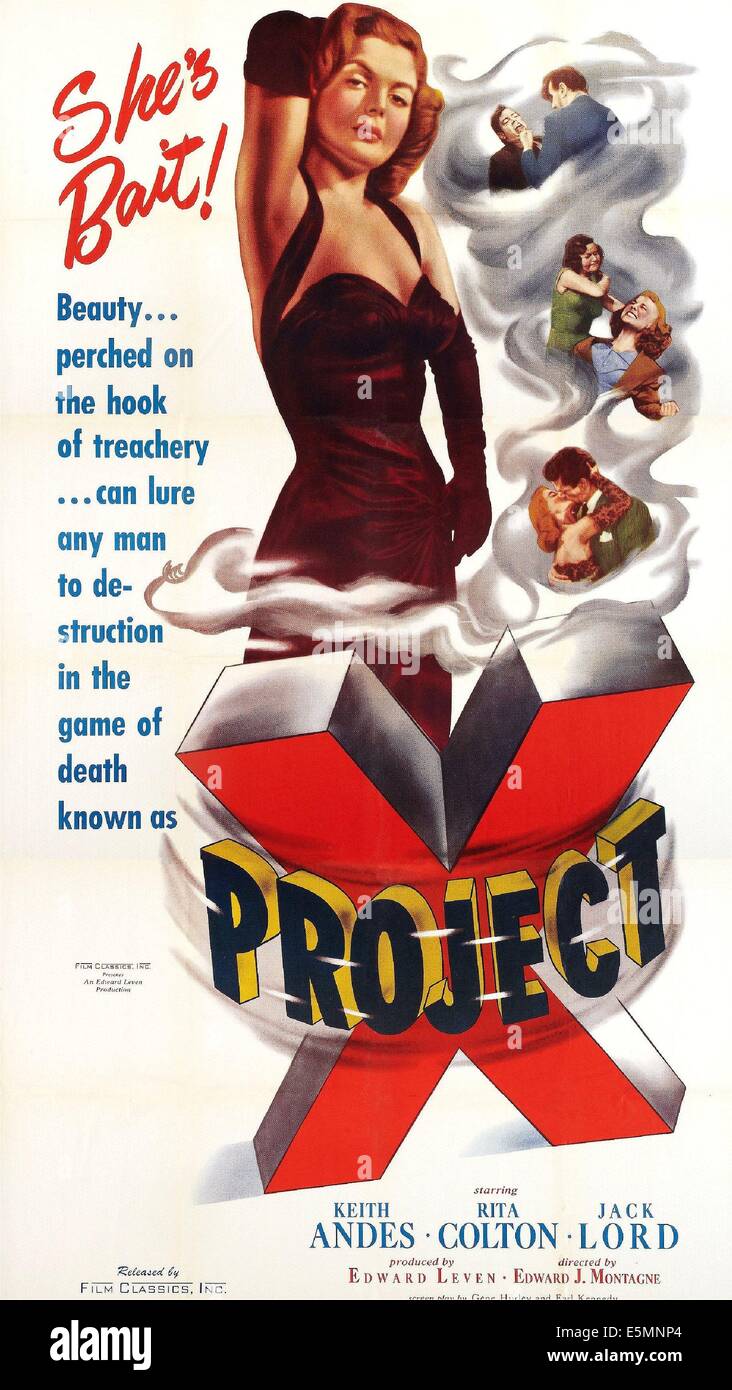
Career Overview
Keith Andes was born John Charles Andes on July 12, 1920, in Ocean City, New Jersey. His early interest in performing led him into radio by age twelve, before he served in the U.S. Army Air Forcesduring World War II. During that time, he performed in USO shows and the wartime stage production Winged Victory, which later brought him to Hollywood when 20th Century Fox adapted the play into a 1944 film .
After the war, Andes pursued acting seriously, earning a Theatre World Award in 1947 for his Broadway debut in The Chocolate Soldier. He quickly became a versatile performer known for his strong singing voice and commanding stage presence. His Broadway success led to a Hollywood contract with RKO Pictures, where he took on roles opposite major stars of the period.
His most famous screen performance came in Fritz Lang’s Clash by Night (1952), where he played Barney, the fisherman boyfriend of Marilyn Monroe and the younger brother of Barbara Stanwyck’s character. His combination of quiet masculinity and decency stood out against Lang’s noir-style emotional turbulence. The same year, he co-starred in the Technicolor swashbuckler Blackbeard, the Pirate (1952), confirming his range as both romantic lead and action actor .
Through the mid‑1950s, Andes alternated between film and theater, appearing in musical comediessuch as The Second Greatest Sex (1955) and The Girl Most Likely (1957). However, as the studio system declined, so did the steady flow of feature roles. He returned to Broadway in the musical Wildcat (1960–61) opposite Lucille Ball, receiving praise for his strong vocal performances and charisma on stage .
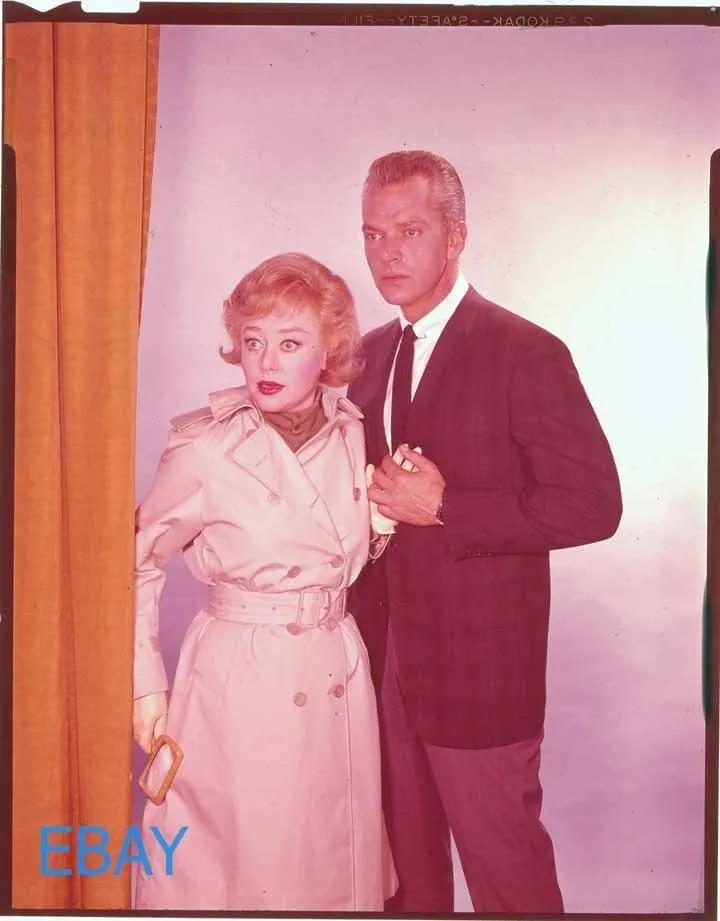
Television became his main platform from the late 1950s onward. Andes starred in the syndicated police drama This Man Dawson (1959–60), the sitcom Glynis (1963) with Glynis Johns, and Paradise Bay (1965–66), while guesting on shows such as Perry Mason, The Outer Limits, I Spy, and Star Trek. His Star Trek appearance as Akuta in the 1967 episode “The Apple” became a cult favorite among science fiction fans .
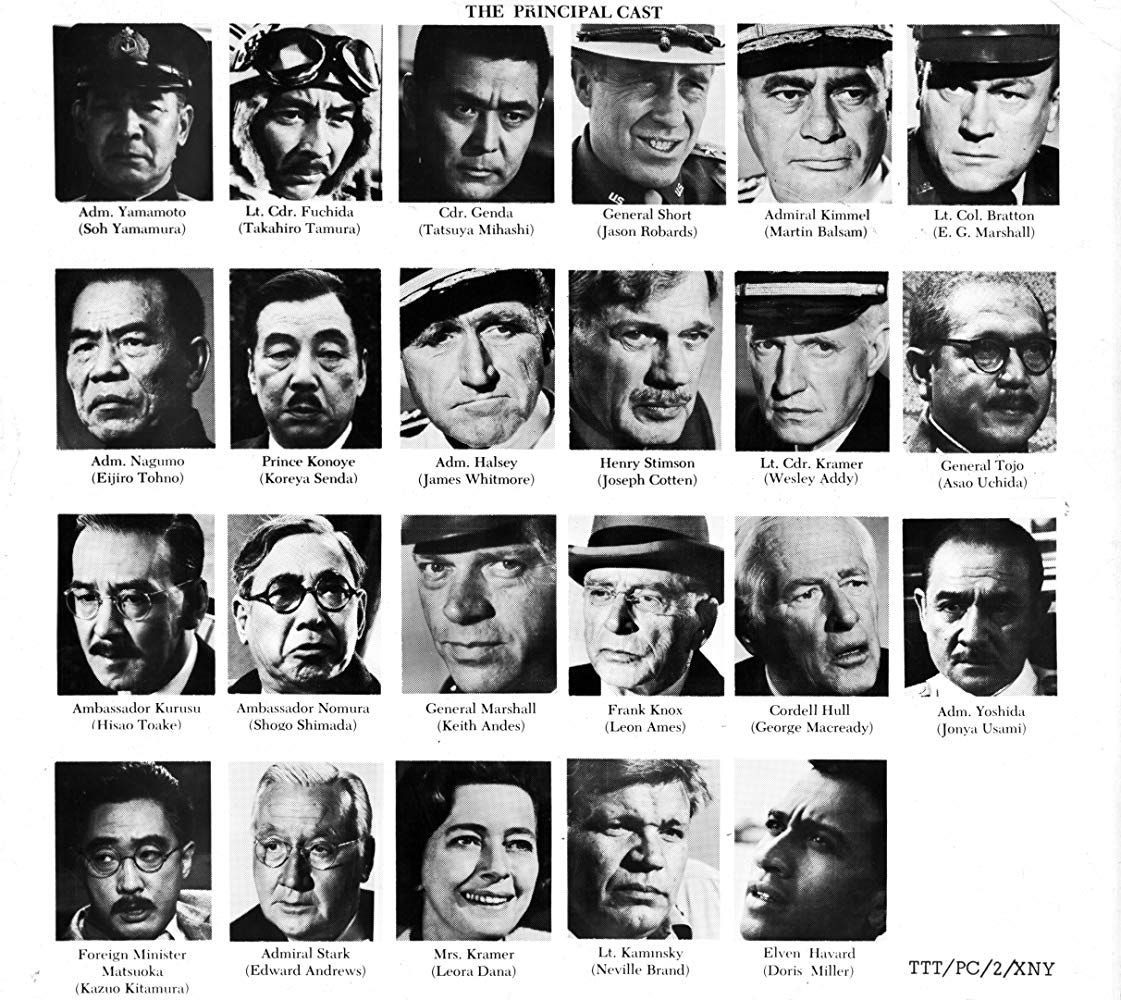
His later film work included Tora! Tora! Tora! (1970), where he portrayed General George C. Marshall, marking one of his last major screen appearances before largely retiring in the 1980s. Andes passed away in 2005 at age 85 in California, having lived a quiet life devoted to music, theatre, and teaching.
Critical Analysis
1. Screen Persona and Performance Style
Keith Andes projected a polished masculinity—a composed, articulate, and morally grounded presence that fit postwar Hollywood’s image of the disciplined professional man. His background in theater lent him a controlled delivery and robust vocal command, which made him ideal for roles requiring authority or integrity: officers, professionals, or calm romantic partners. This same poise, however, sometimes read as restraint on screen, making it harder for him to project the volatility that attracted star fanfare in the 1950s.
2. Stage Craft and Musical Talent
On stage, Andes’s talents were more fully realized. He combined leading-man good looks with legitimate vocal training from the Philadelphia Conservatory of Music, allowing him to carry musicals like Kiss Me, Kate and Wildcat with confidence. His performances were praised for technical control and rich baritone resonance, qualities that television microphones could not always capture.
3. Career Circumstance and Underrated Versatility
Despite solid reviews and strong craft, Andes never reached top-tier stardom—a result of timing more than talent. By the mid‑1950s, studios were shrinking their contract lists, and television was shifting Hollywood’s power structure. Andes’s earnest, hero-next-door persona lacked the dangerous charm or rebellious energy favored by directors of the new realism (e.g., Brando, Clift). Yet his adaptability allowed him to work across genres—film noir, adventure, musical, war drama, and TV procedural—with consistent professionalism.
4. Legacy and Reassessment
Today, Andes stands as a representative of the transitional mid-century actor—bridging classic studio theatricality with early television realism. His roles opposite stars like Barbara Stanwyck, Marilyn Monroe, Lucille Ball, and Jane Powell reflect his reliability as a “strong second lead”: dignified, intelligent, and credible. While he didn’t break major artistic ground, his steady excellence across mediums and decades earned him enduring respect among film and theatre historians.
Summary Timeline
| Period | Medium | Key Works | Notable Traits |
|---|---|---|---|
| 1940s | Stage debut | Winged Victory (1944), The Chocolate Soldier (1947) | Dynamic baritone; Theatre World Award. |
| 1950s | Film | Clash by Night (1952), Blackbeard the Pirate (1952), The Second Greatest Sex (1955) | Romantic and heroic screen roles. |
| 1960–1965 | Stage & TV | Wildcat (Broadway), This Man Dawson, Glynis | Musical leads; transition to television. |
| 1966–1970s | Television & Film | Star Trek (1967), Tora! Tora! Tora! (1970) | Sci-fi and historical roles; character actor phase. |
| 1980s–2000s | Retired | — | Voice coaching, private life. |
In essence:
Keith Andes was a consummate professional actor—disciplined, articulate, and musically gifted—whose classical training and integrity defined his work on both stage and screen. Though overshadowed by flashier contemporaries, he represents a generation of performers who embodied craft over celebrity, leaving behind a body of work that remains respected by classic film enthusiasts and theatre historians alike.
Would you like me to create a visual timeline diagram summarizing Andes’s career by decade and medium (stage, film, television)?.