Alan MacNaughton was born in 1920 in Scotland. His first film was “Bond of Fear” in 1956. Among his other films are “Victim” in 1961 and “Frankenstein Created Women”. His last television perfomrance was in 1999 in “Kavanagh Q.C.”.
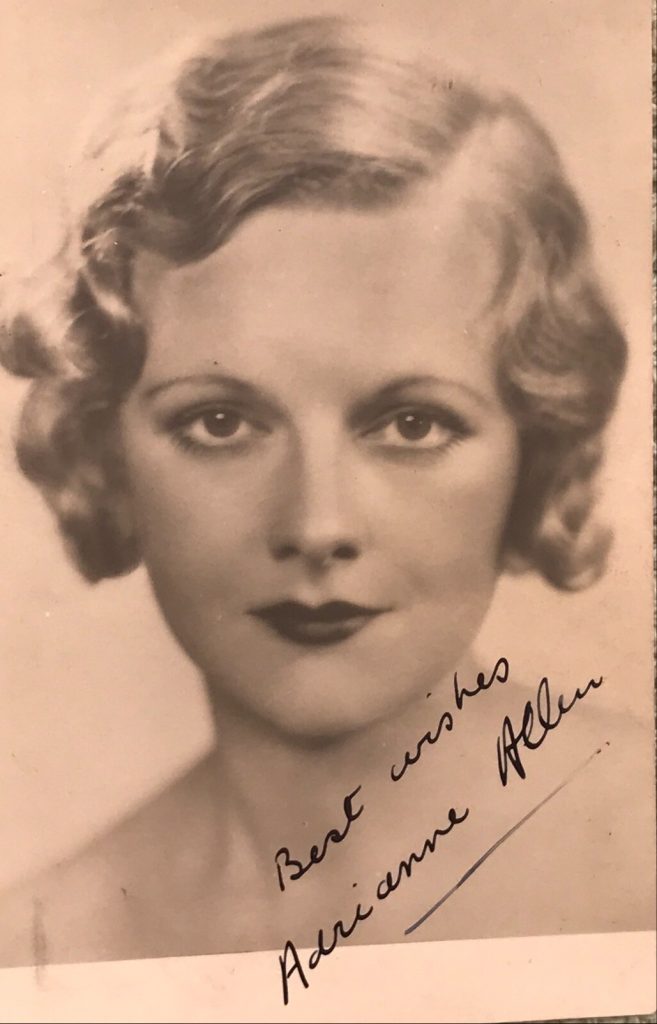
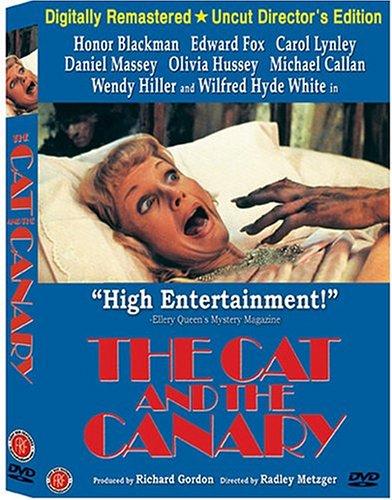
Adrianne Allen was born in 1907 in Manchester. Her films include “Loose Ends” in 1930, “The October Man” and “Bond Street”. She was married to Raymond Massey and her children are actors Daniel Massey and Anna Massey. Adrianne Allen died in 1993 at the age of 86 in Switzerland.
IMDB entry:
Adrianne Allen was married to Raymond Massey from 1929 to 1939. The Masseys were great friends with William and Dorothy Whitney, who were divorced in the late 1930s. William was an international lawyer, and Adrianne went to him for the divorce. Shortly after the divorce of Adrianne and Raymond, William and Adrianne married, as did Raymond and Dorothy Whitney, and all lived happily ever after. Adrianne and Bill lived in London before and during WWII and Adrianne’s children, Daniel Massey and Anna Massey, spent much of their time with the Whitneys. In the 1950s, Adrianne and Bill moved to Glion-sur-Montreux, Switzerland, where they lived out their days.
– IMDb Mini Biography By: annie whitney
The above entry can also be accessed on IMDB here.
TCM Ove4rview:
Delicately lovely British actress, primarily on stage in light, brittle comedy from the mid-1920s until the late 50s. After training at RADA, Allen made her London stage debut in Noel Coward’s “Easy Virtue” in 1926. She often brought her intelligence and grace to the Broadway stage, in productions ranging from the mournful romance “Cynara” (1931) to the high period comedy “Pride and Prejudice” (1935) to the intense family saga “Edward, My Son” (1948). From the mid-40s on, Allen primarily played mother roles, like her matchmaker in “The Reluctant Debutante” (1956).Allen also made a dozen film appearances on both sides of the Atlantic between 1930 and 1954. Her busiest period in film came shortly after her debut in “Loose Ends” (1930), but the middling “The Stronger Sex” and “The Woman Between” (both 1931) failed to establish her in film. Decidedly better were the offbeat small-town drama, “The Night of June 13” (1932) and the superior British noir, “The October Man” (1947).
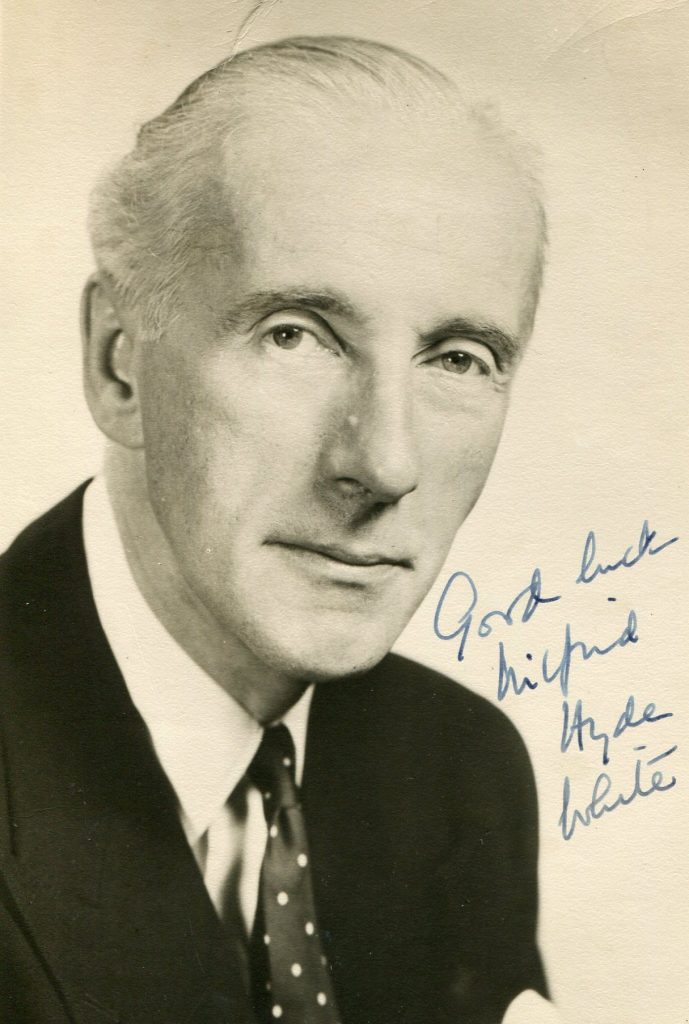
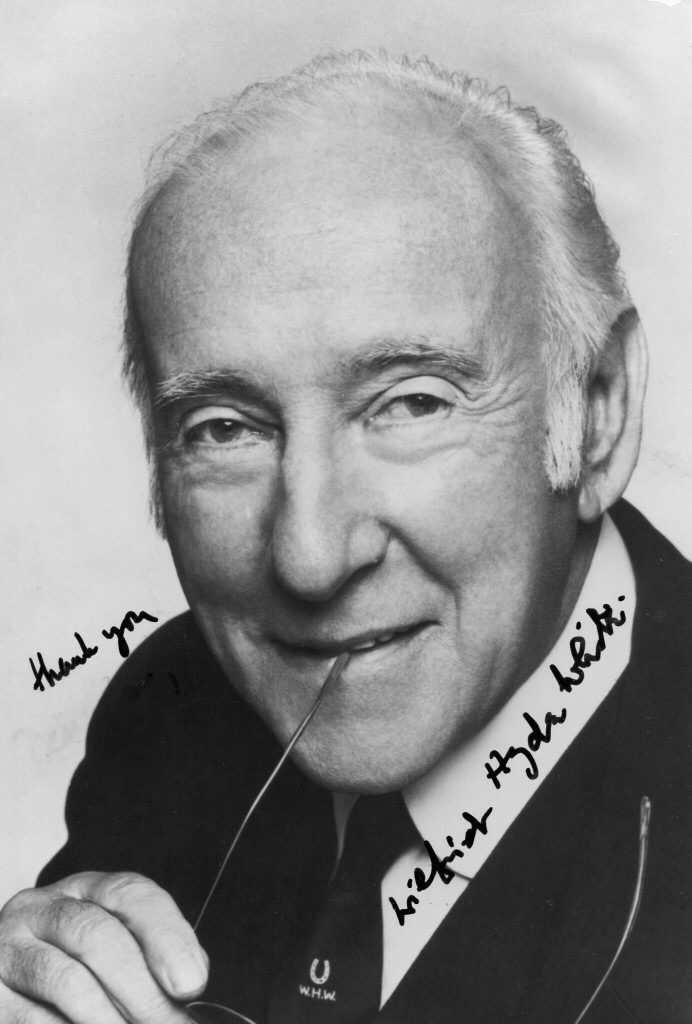
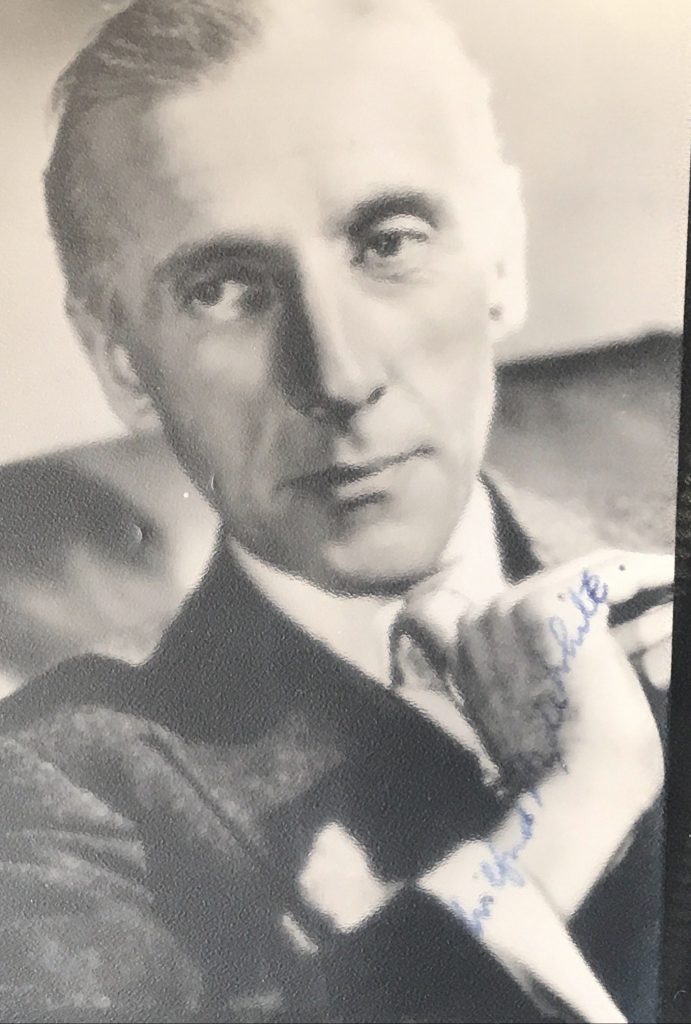
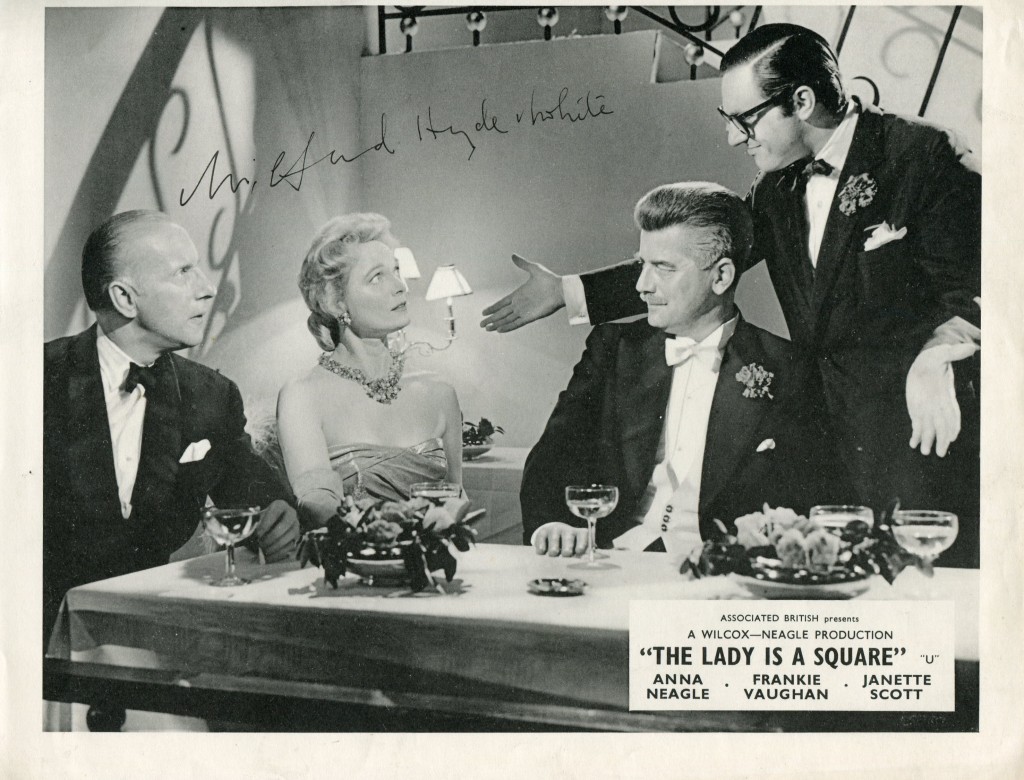
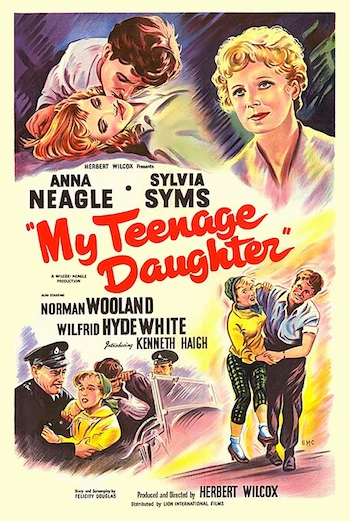
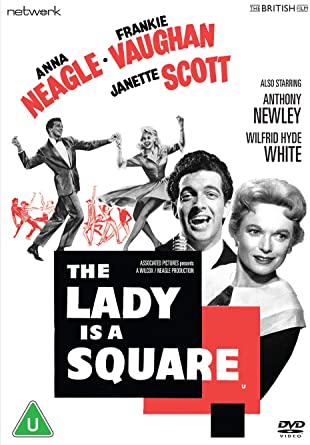
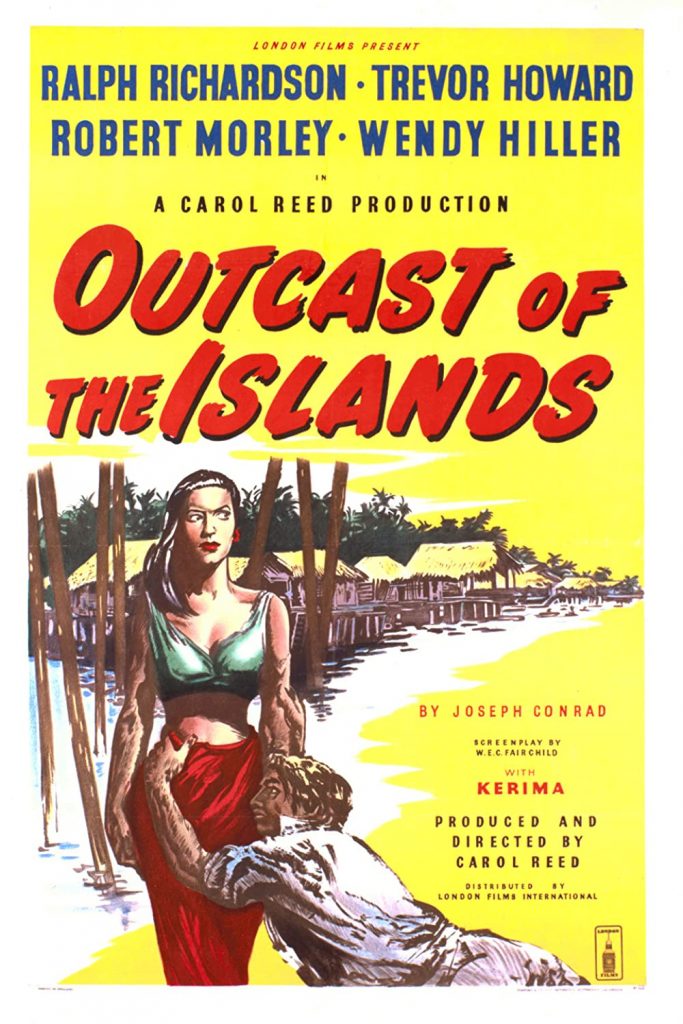
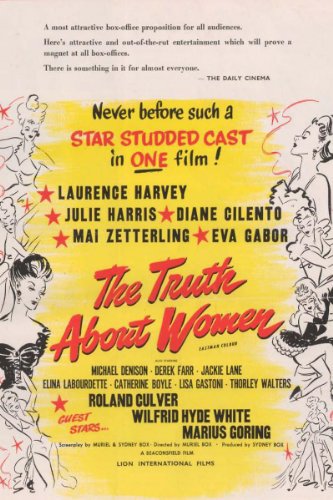
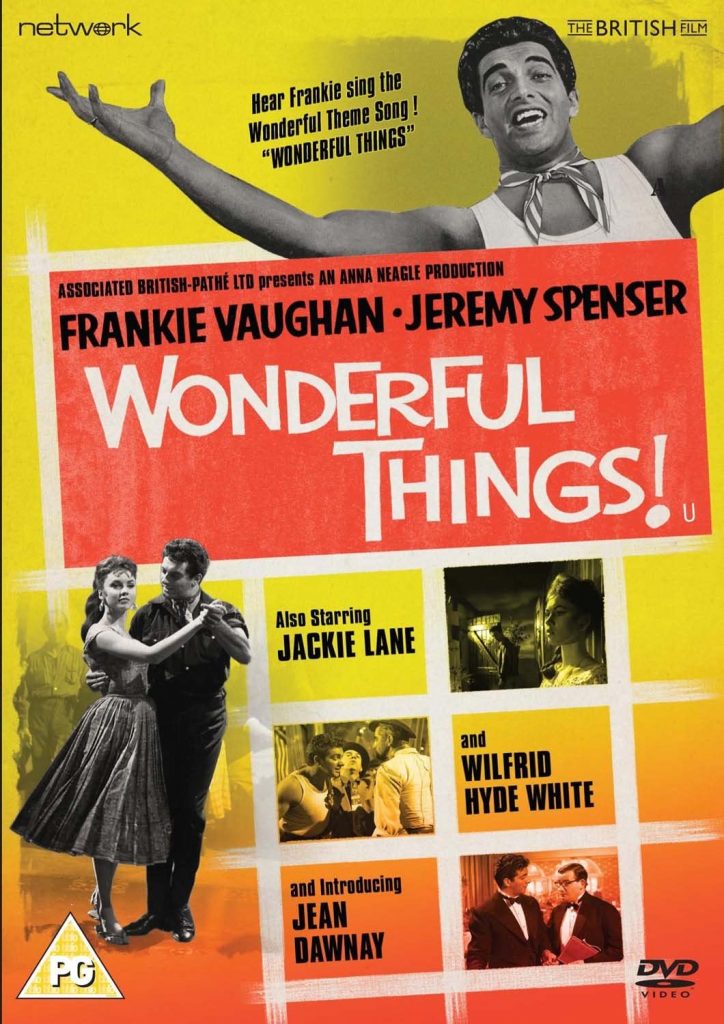
Wilfrid Hyde-White came to prominence in late middle age, after having spent a long time in minor roles. He was born in 1903 in Burton-on-the-Water, England, the son of a rector. He made his film debut in 1934 in “Josser on the Farm” and then went on to make “Turned Out Nice Again” with George Formby.
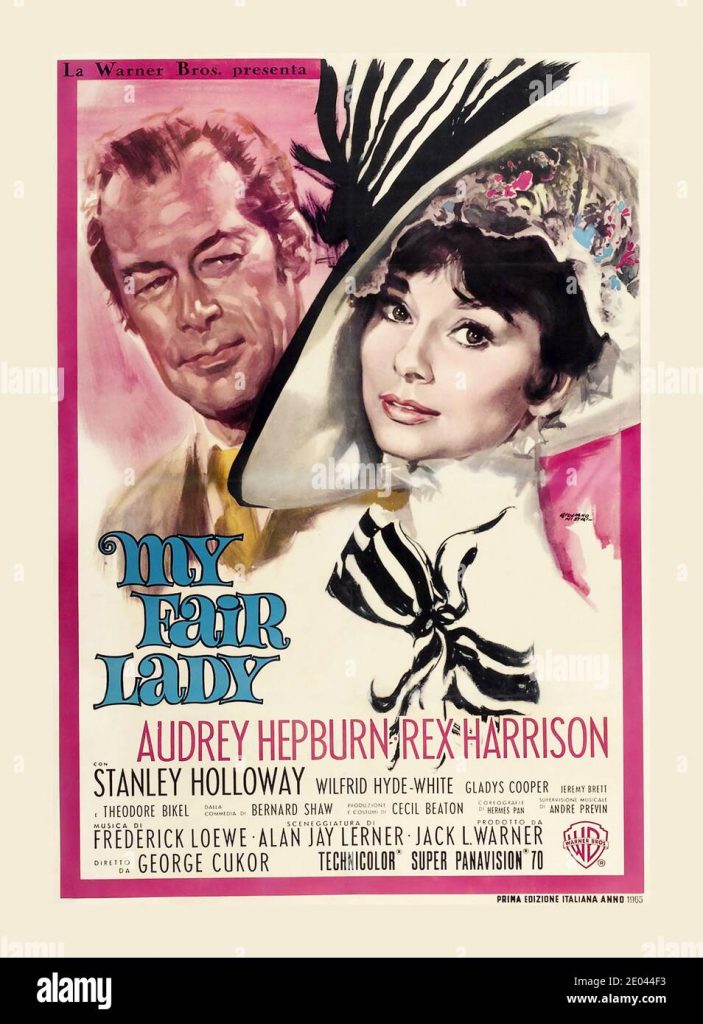
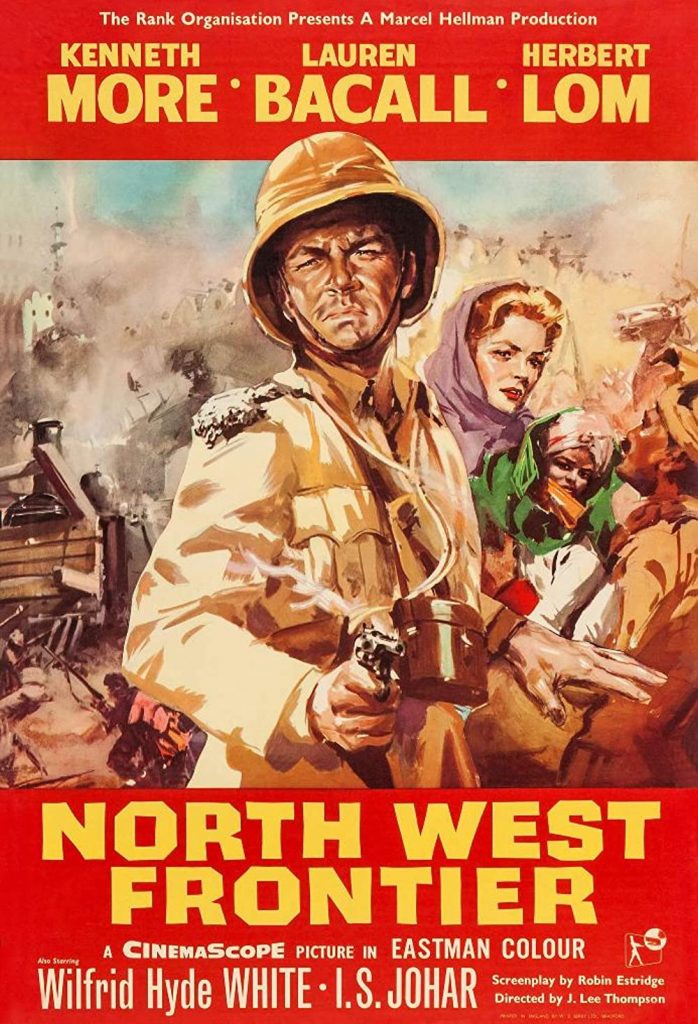
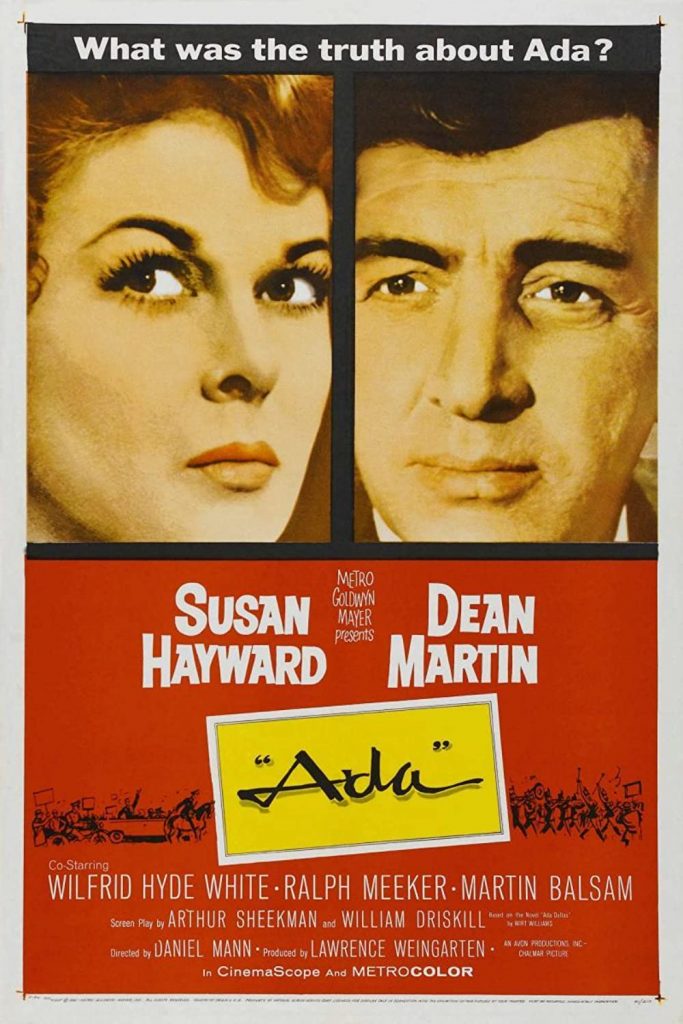
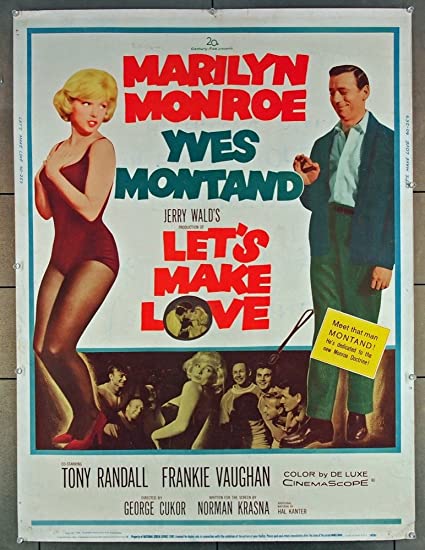
His breakthrough role came in the Carol Reed classic of 1949 “The Third Man”. “North West Frontier” with Kenneth More and Lauren Bacall weas a major success. He went to Hollywood in 1959 and made such films as “Ada” with Susan Hayward, “let’s Make Love” with Marilyn Monroe and as Pickering in “My Fair Lady” in 1964. Most of his subsequent career was spent in Hollywood where he died in 1991 at the age of 87. His son is the actor Alex Hyde-White.
IMDB Entry:
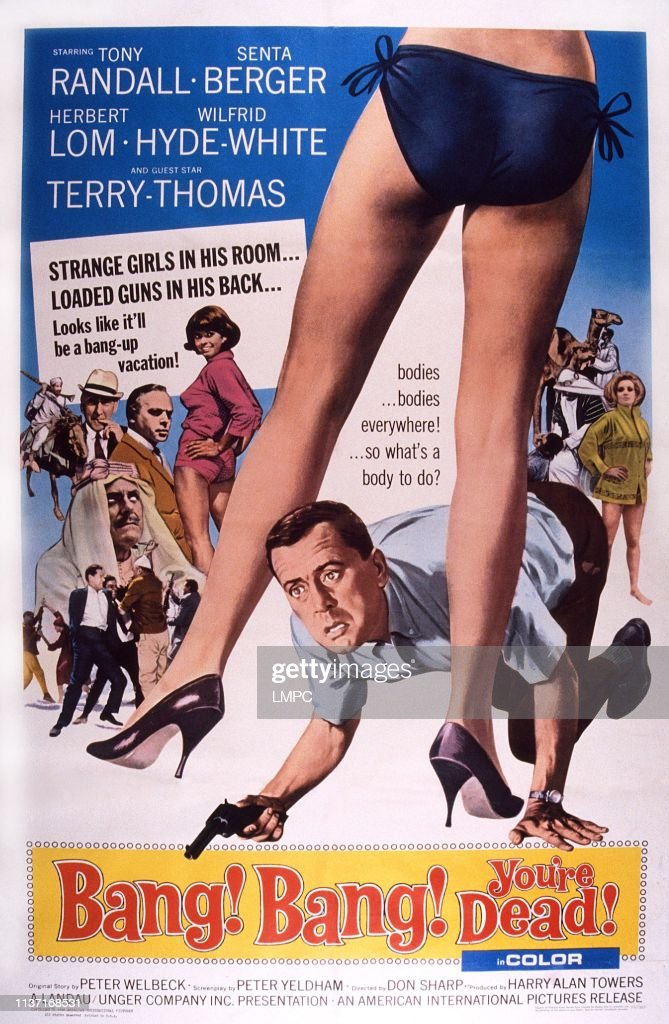
Bang! Bang! You’re Dead!, poster, (aka OUR MAN IN MARRAKESH), US poster, left: Wilfred Hyde-White, Herbert Lom, Senta Berger, Terry-Thomas; Tony Randall (on ground), 1966. (Photo by LMPC via Getty Images)
– IMDb Mini Biography By: Jim Beaver <jumblejim@prodigy.net>
British character actor of wry charm, equally at home in amused or strait-laced characters. A native of Bourton-on-the-Water in Gloucestershire, he attended Marlborough College and the Royal Academy of Dramatic Arts. His stage debut came in 1922, and by 1925 he was a busy London actor. He married actress Blanche Glynne (real name: Blanche Hope Aitken) and in 1932 toured South Africa in plays. Alleged to have been spotted by George Cukor during a performance in Aldritch, Hyde-White (with or without Cukor’s help) made his film debut in 1934.
He often appeared under the name Hyde White in these early films. He continued to act upon the stage, playing oppositeLaurence Olivier and Vivien Leigh in “Caesar and Cleopatra” and “Antony and Cleopatra” in 1951. With scores of films to his credit, he will always be remembered for one, My Fair Lady (1964), in which he played Colonel Pickering. Active into his ninth decade, Hyde-White died six days before his 88th birthday. He was survived by his second wife, Ethel, and three children.
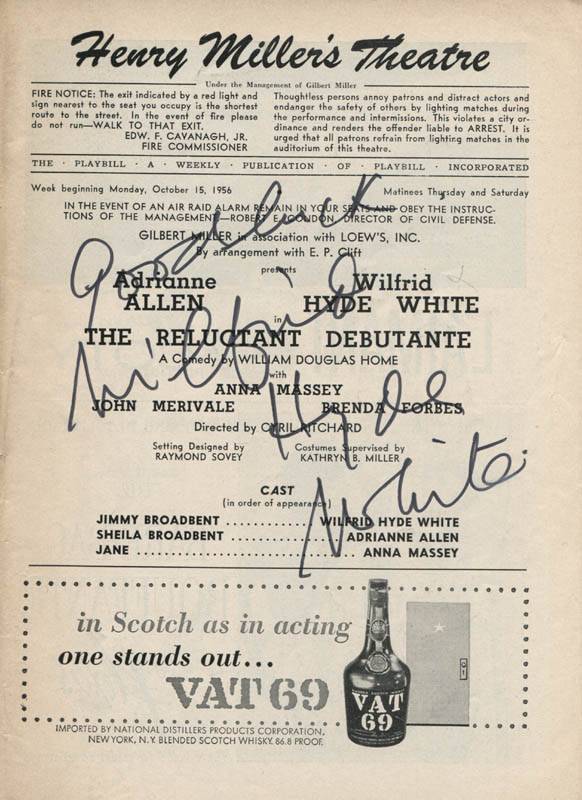
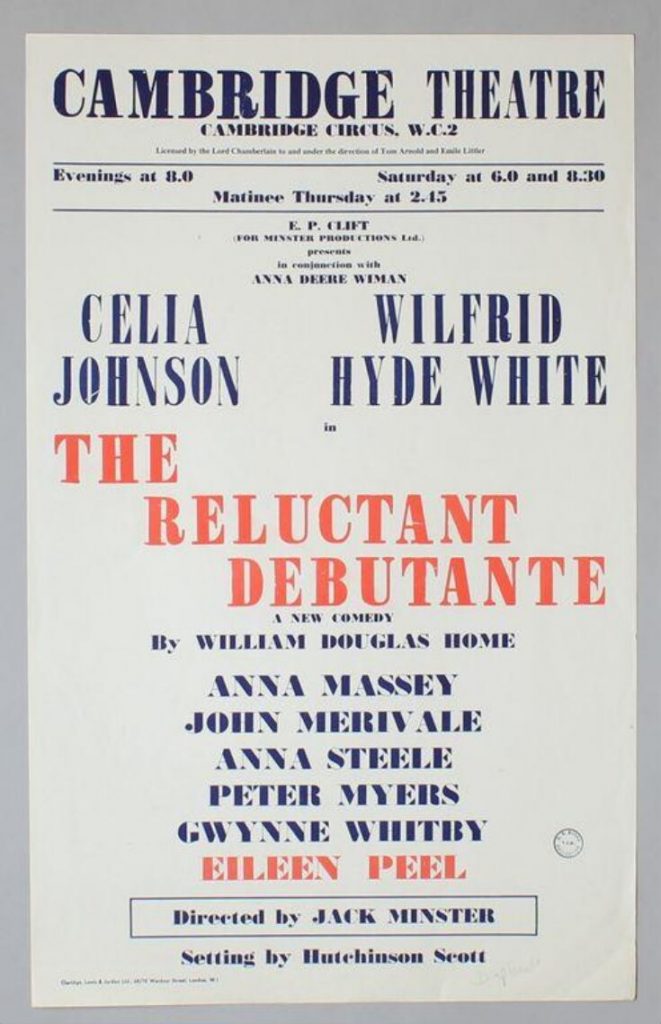
Distinguished-looking, urbane character actor noted for his droll humor on stage as the father of the title character in the drawing room comedy “The Reluctant Debutante” (London 1956, Broadway 1957) and the Laurence Olivier-Vivien Leigh “Caesar and Cleopatra” (1952).
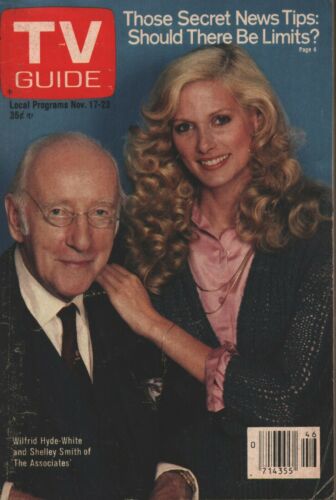
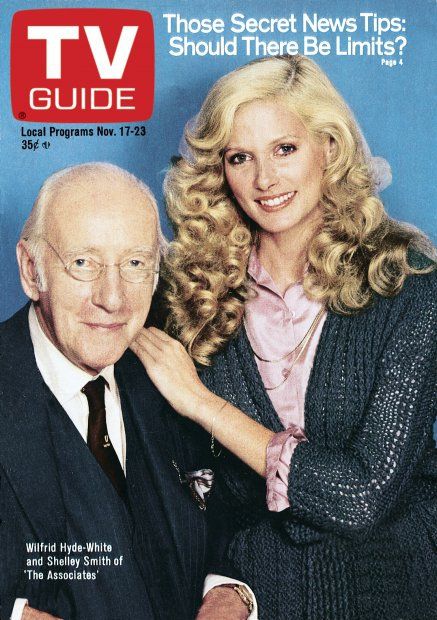
Often cast as genteel Englishmen whose surface manners mask a roguish or larcenous soul, Hyde-White is best known for his performances as Crippin, a British Council functionary in “The Third Man” (1949), the hypocritical headmaster in “The Browning Version” (1951) and Henry Higgins’s bemused friend, Colonel Pickering, in “My Fair Lady” (1964). On TV he appeared briefly on the nighttime soap opera “Peyton Place” (1967), starred as Emerson Marshall in the legal comedy series, “The Associates” (1979) and played Dr. Goodfellow in “Buck Rogers in the 25th Century” (1981).
A supremely unctuous character player, adept at smoothly honed sycophancy – as, for example, the literary chairman of The Third Man (d. Carol Reed, 1949), the headmaster in The Browning Version (d. Anthony Asquith, 1951), and one of the wealthy brothers in The Million Pound Note (d. Ronald Neame, 1953).
With his plummy tones and sleekly coiffed appearance, he usually played upper-class, but there is a smattering of fake smoothies, like crim Soapie Stevens in Two-Way Stretch (d. Robert Day, 1960), or the merely deferential like the jeweller in Bond Street (d. Gordon Parry, 1948). However, it is hopeless trying to limit the highlights in such a career, which spanned fifty years, every type of British film and not a few international ones, most famously as that arch-gent, Colonel Pickering, in My Fair Lady (US, d. George Cukor, 1964).
Marlborough-educated and RADA-trained, he was first on stage in 1922, scoring a major hit as the father of The Reluctant Debutante (1955) and screen since 1936. His son Alex Hyde-White (b.London, 1959) has acted in several films including Biggles (d. John Hough, 1986) and Pretty Woman(US, d. Garry Marshall, 1990).
Brian McFarlane, Encyclopedia of British Film
New York Times obituary in 1991:
Wilfrid Hyde-White, the English actor who appeared in films including “My Fair Lady,” “Ten Little Indians,” “The Third Man” and “The Browning Version,” died yesterday in Woodland Hills, Calif. He was 87 years old.
He died of congestive heart failure at the Motion Picture and Television Hospital, where he had been a patient since 1985, said Louella Benson, a spokeswoman for the Motion Picture and Television Fund.
Mr. Hyde-White was especially well known for his urbane drollery, in such roles as the father of the title character in the play “The Reluctant Debutante,” which he performed in London and then, in 1956 and 1957, on Broadway.
Reviewing that drawing-room comedy, Brooks Atkinson of The New York Times said Mr. Hyde White gave a “brilliant performance” as the head of a frantic household — “relaxed, quizzical, neat, funny.” Of ‘Certain Tricks’
The actor told an interviewer at the time: “The premise of the drollery has to be firm. It is allowed to look leisurely, but actually my technique is hidebound by method. I really don’t take chances onstage. My style of acting is made up of certain tricks acquired over many years.”
Those, he said, included lowering his voice if audiences were noisy or sleepy. The worst thing to do is outshout them, he said, and if they are sleeping, do not awaken them, thereby eliminating a few critics.
“The suaveness,” he said, “isn’t born of confidence: it’s born of fright.” Comedies on the Stage
Mr. Hyde-White, who was born in Gloucester, began his career in a series of comedies produced during the late 1920’s at the Aldwych Theater in London, then began his film career as a stuffy burgomaster in “Rembrandt.”
He played a professor in “The Third Man” (1950) and the headmaster in “The Browning Version,” the 1951 film based on Terence Rattigan’s play. In “My Fair Lady” (1964), he played Henry Higgins’s associate.
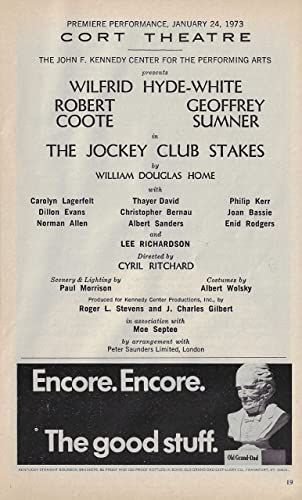
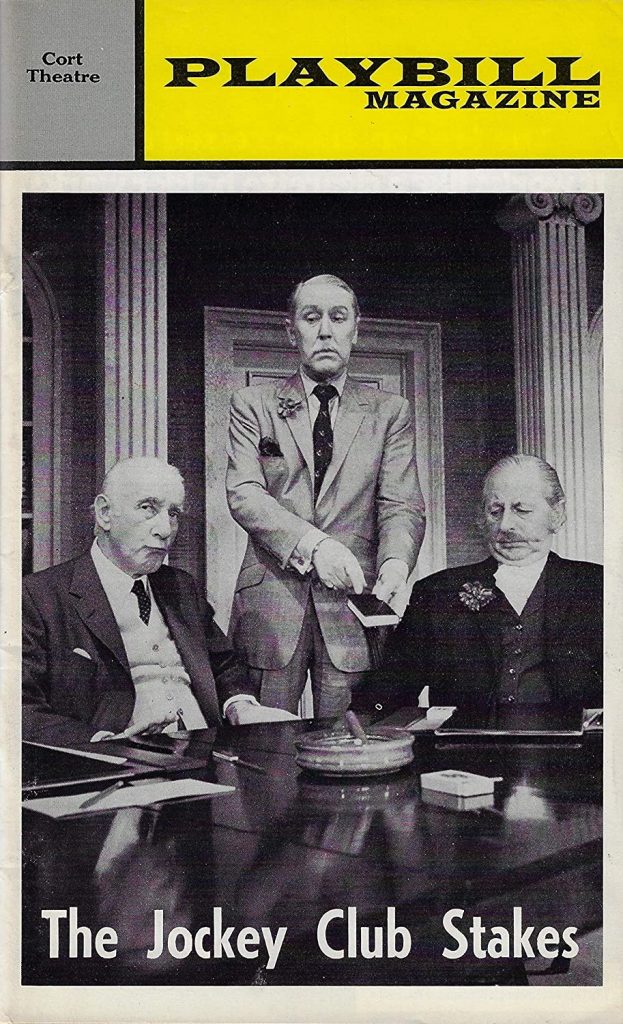
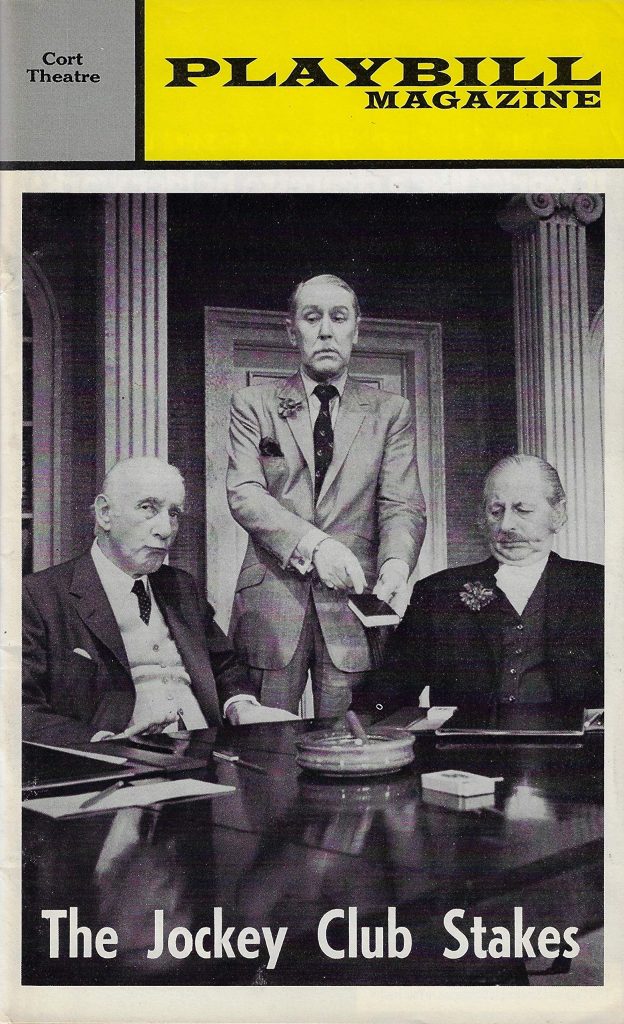
In 1952, he appeared in New York with Laurence Olivier and Vivien Leigh in “Caesar and Cleopoatra” and “Antony and Cleopatra.” In 1973, he played an urbane marquis on Broadway in “The Jockey Club Stakes,” a British comedy.
His American television credits included a brief run in the 1960’s nighttime soap opera “Peyton Place.” He also starred as Emerson Marshall in ABC’s lawyer comedy series “The Associates” and appeared as Dr. Goodfellow in “Buck Rogers in the 25th Century.”
He is survived by his wife, Ethel; two sons, Alex and Michael; a daughter, Juliet, and four grandsons
Career overview
Wilfrid Hyde‑White (1903 – 1991) was an English actor whose wry charm, dry musical voice, and air of bemused superiority made him one of the screen’s quintessential British gentlemen. Over five decades he amassed more than 160 film, stage, and television credits, moving effortlessly between West End farce, Hollywood prestige pictures, and television comedy. Though rarely the star, he became a fixture of Anglo‑American cinema—a master of timing, understatement, and civilized irony.
Early life and theatrical foundations
Born in Bourton‑on‑the‑Water, Gloucestershire, the son of the Reverend William Edward White, he was educated at Marlborough College and trained at the Royal Academy of Dramatic Art, joking that at RADA he “learned two things — that I couldn’t act and that it didn’t matter” . He made his stage debut on the Isle of Wight in 1922, appeared in the West End by 1925, and developed a reputation in Aldwych farces for his facility with comic timing and genteel manner.
By the 1930s Hyde‑White was touring with repertory companies and performing opposite music‑hall comedians such as Ernie Lotinga . His stage experience—rooted in rhythm, diction, and a close rapport with audiences—would later underwrite the conversational ease that became his screen signature.
Early film career (1934–1948)
He made his first screen appearance in Josser on the Farm (1934) and soon became a regular supporting actor in British comedies, often listed as “Hyde White.” Through the 1930s and 1940s he specialized in civil servants, academics, and clubroom wits—characters defined by their speech cadences and moral shrug. Decades later he quipped that acting in those days was “mainly remembering which door to use and when to look surprised.”
His breakthrough came with a supporting part in Carol Reed’s The Third Man (1949), where his droll composure offset the film’s tense moral atmosphere . The performance marked the transition from journeyman comedian to character actor of distinction.
Post‑war prominence and Hollywood success (1950s–1960s)
During the 1950s Hyde‑White became one of the screen’s most reliable portrayals of urbane Englishness.
The Browns and Edith’s Breakfast Table (1951–52) on stage showed his ease with drawing‑room comedy.
In films such as North West Frontier (1959), Carry On Nurse (1959), and Two‑Way Stretch (1960)he refined a persona the critic Philip French later called “a classic British film archetype” .
Hollywood welcomed him for his mix of dignity and mischief—seen in Ada (1961) with Susan Hayward, Let’s Make Love (1960) with Marilyn Monroe, and My Fair Lady (1964), where his Colonel Pickering opposite Rex Harrison became the definitive embodiment of genial, scholarly reserve .
That performance, gentle yet authoritative, made him internationally recognizable; the role precisely matched his gifts for courtesy, irony, and effortless grace.
Stage achievements
Concurrent with his film work, Hyde‑White remained active in theatre, earning two Tony Award nominations:
1957, The Reluctant Debutante, for his dry portrayal of an exasperated father.
1973, The Jockey Club Stakes, confirming his enduring stage craftsmanship .
He also joined Laurence Olivier and Vivien Leigh in rotating productions of Caesar and Cleopatra and Antony and Cleopatra (1951), proving that beneath the comic façade lay disciplined classical technique .
Later film and television career (1960s–1980s)
Settling part‑time in the United States after 1959, Hyde‑White became a familiar face on both sides of the Atlantic. He appeared in the spy romp Our Man in Marrakesh (1966), the prison comedy Two‑Way Stretch, and countless television sketches.
His expressive half‑closed eyes and smirking delivery lent themselves perfectly to episodic TV. American audiences met him through guest spots on Columbo(“Dagger of the Mind,” 1972; “Last Salute to the Commodore,” 1976), The Love Boat, and The Associates (1980) . Even minor projects benefited from his practiced irony and musical phrasing.
Active into his eighties, he retired in the early 1980s and died in Woodland Hills, California, in 1991, days shy of his eighty‑eighth birthday .
Acting style and screen persona
Dry understatement: Hyde‑White elided grand gestures in favor of impeccable timing and precise diction. His humor originated in phrasing, not punch lines.
The bemused Englishman: With half‑closed eyes and a perpetual near‑smile, he seemed perpetually on the verge of a witty comment—the archetype of Oxford‑educated irony that Hollywood adored.
Conversational naturalism: Decades of stage comedy taught him to underplay; he gave dialogue the rhythm of a private conversation overheard.
Adaptability: While limited by type—aristocrats, professors, doctors—he could shade these figures with kindness (Pickering), cowardice (North West Frontier), or sly duplicity (Two‑Way Stretch).
As the Travalanche critic observes, Hyde‑White “was not known for artistic ambition … but he worked constantly … for about half a century,” a testament to reliability and craft .
Critical assessment
Strengths - Perfect comic timing rooted in understatement. - Mastery of “civilized eccentricity” — the essence of mid‑century British character acting. - Longevity across stage and screen through technical professionalism.
Limitations - Typecast as the urbane Englishman; rarely challenged with darker or more emotionally raw material. - He regarded acting as craft rather than art, which confined his roles to well‑worn social archetypes.
Yet this modesty was itself part of his authenticity; he proved that a supporting actor could define the tone of an entire film simply by calibrating irony and warmth.
Legacy
Hyde‑White occupies a special niche in British‑American screen history: a bridge between inter‑war stage gentility and post‑war film naturalism. His best work—The Third Man, North West Frontier, My Fair Lady, and his Columbo portrayals—summarizes half a century of Anglo‑Saxon comic subtlety. He stood for effortless civility, winking intelligence, and quiet professionalism. In the words of critic Philip French, he remains “a classic British film archetype”—the embodiment of wit without cruelty, irony without cynicism .
Hywel Bennett was born in Wales in 1944. He made his film debut in 1n 1966 with the lead role opposite Hayley Mills in Roy Boulting’s classic “The Family Way”. He made two further films with Hayley Mills, “Twisted Nerve” and “Endless Night”. His other films include “The Buttercup Chain” and “The Virgin Soldiers”. He had a hit on television with the series “Shelley”. He died in 2017.
Obituary from “The Guardian”:
The actor Hywel Bennett, who has died aged 73, achieved his greatest fame as the thinking man’s layabout in the title role of the hugely popular ITV sitcom Shelley. The character was a geography graduate with an analytical brain but no desire to work – a philosopher on a sofa. A handful of jobs failed to last and Shelley was in constant conflict with the tax office, his building society and his father-in-law, aided only by his sardonic wit and anti-establishment attitude.
Loot, poster, poster Richard Attenborough (left), Hywel Bennett (top center left)), Lee Remick (top center right), Milo O’Shea (right), 1970. (Photo by LMPC via Getty Images)
As a programme, Shelley was a slow-burner, but it caught on and initially ran for six series, from 1979 until 1984. Bennett’s private life made headlines, and heavy drinking led him to book into a clinic in 1986. Repeats of the sitcom then led ITV to revive the series as The Return of Shelley (1988), before reverting to its original title for a final three runs between 1989 and 1992.
Shelley was the brainchild of Peter Tilbury, who wrote most of the original episodes, with Andy Hamilton and Guy Jenkin scripting many of the later ones. “The writers had done something pretty amazing,” said Bennett. “They had created what was almost a monologue and turned it into a popular sitcom.”
Bennett’s TV popularity followed a false start for him as a star of the big screen – he was unfortunate to emerge at a time when the British film industry was in decline. His good looks and appearance in pictures that pushed the boundaries in the swinging 60s had made him a part of that vibrant era; it seemed appropriate that in 1970 he should marry Cathy McGowan, the fashion icon who had shot to fame presenting the TV pop show Ready Steady Go!.
In Bennett’s first film, The Family Way (1966), a comedy made by the Boulting brothers, John and Roy, with music by Paul McCartney, he played an impotent teenage husband opposite Hayley Mills. Two years later, he played Mills’s stalker in Roy Boulting’s psychological saga Twisted Nerve (1968), in which the drama turns to terror, and he was with her again in the Agatha Christie thriller Endless Night (1972), taking the role of a chauffeur marrying a wealthy heiress, then moving into a dream home that proves to be a nightmare.
His most enduring film was The Virgin Soldiers (1969), based on Leslie Thomas’s best-selling novel about national service recruits in Singapore dealing with a guerrilla uprising against the colonial administration in Malaya. Bennett starred as a private who has his first sexual experience with a prostitute known as Juicy Lucy. “Hywel Bennett’s young Brigg appeals by grace of his close-set eyes, puddle brow and general air of queasiness,” remarked the New York Times critic.
Bennett was born in Garnant, Carmarthenshire, son of Gorden, a police officer, and Sarah Gwen (nee Lewis). When he was five, the family moved to London, where his brother, Alun (who became an actor under the name Alun Lewis), was born. At the age of 15, while attending Henry Thornton grammar school, Clapham, Bennett joined the National Youth Theatre. He played the female role of Ophelia in Hamlet (Queen’s theatre, 1959) when it became the first amateur company to perform in Shaftesbury Avenue and was still casting only male actors, as in Shakespeare’s time – a practice that changed shortly afterwards. He continued with the company for five years, his roles including Richmond in Richard III (Scala theatre, 1963
After a brief spell as a teacher, Bennett won a scholarship to train at Rada, then gained experience with rep theatre companies in Salisbury and Leatherhead in 1965. He continued to excel on stage in the classics, as Prince Hal in Henry IV, Parts I & II (Mermaid theatre, 1970), Mark Antony in the National Theatre company’s Young Vic production of Julius Caesar (1972), the lead in Hamlet on a 1974 South African tour, Marlow in She Stoops to Conquer (National Theatre at the Lyttelton theatre, 1984) and Andrey Prozorov in Three Sisters (Albery theatre, 1987). He also directed productions in provincial theatres.
Bennett’s movie career petered out with parts in sex comedies such as Percy (1971) and It’s a Two-Foot-Six-Inch-Above-the-Ground World (1973, also known as Anyone for Sex?), although Loot (1970) gave him a starring role in the film version of Joe Orton’s play and earned a screening at the Cannes film festival. “I had come in at the tail end of everything, the studio system and so on,” he told Bryan Appleyard in a 1986 interview. “I found myself in the early 70s with nowhere to go.”FacebookTwitterHe took one-off character roles on television, then starred as the doctor planning to murder his wife in the four-part drama Malice Aforethought (1979) and played the field agent Ricki Tarr in Arthur Hopcraft’s six-part adaptation of John le Carré’s novel Tinker Tailor Soldier Spy (1979), before Shelley made him a household name.
There were also parts as the investigative journalist Allan Blakeston in Paula Milne’s single drama Frankie and Johnnie (1986), Detective Sergeant Eddie Spader in the Stephen Poliakoff crime series Frontiers (1996) and the pompous assassin Mr Croup in the fantasy drama Neverwhere (1996), as well as a short run playing the gangland boss Jack Dalton (2003) in EastEnders.
Bennett appeared in three Dennis Potter serials – as the pimp Tom in Pennies from Heaven (1978) and the sleazy club owner Arthur “Pig” Mallion in both of the writer’s final, linked works, Karaoke and Cold Lazarus (both in 1996).
In 2007, he retired after being diagnosed with a congenital heart defect.
Bennett is survived by his second wife, Sandra Layne Fulford, whom he married in 1998, and a daughter, Emma, from his marriage to McGowan, which ended in divorce.
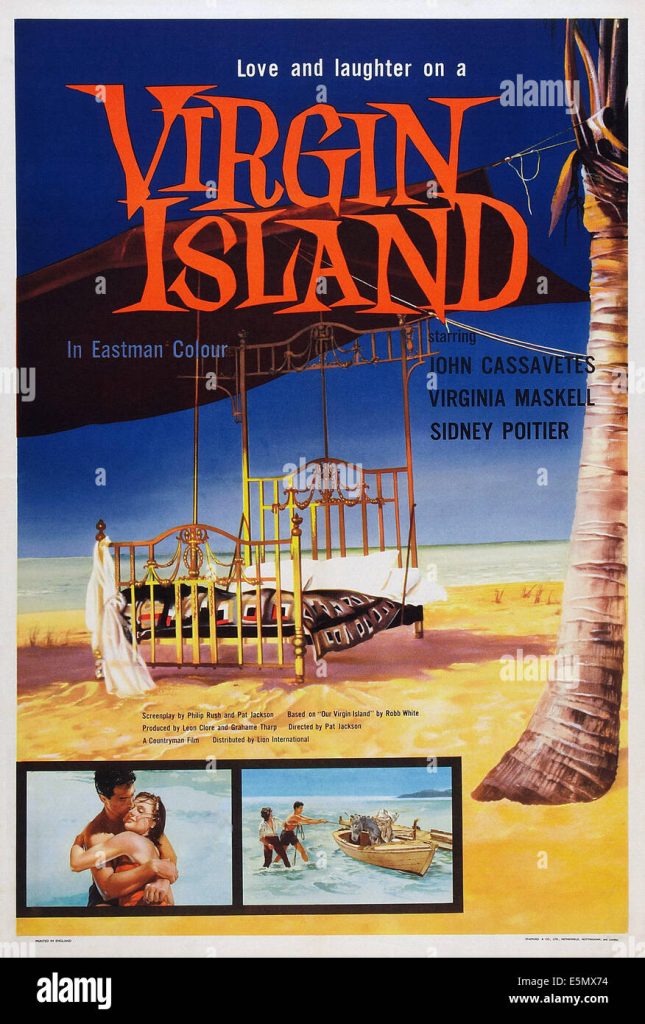
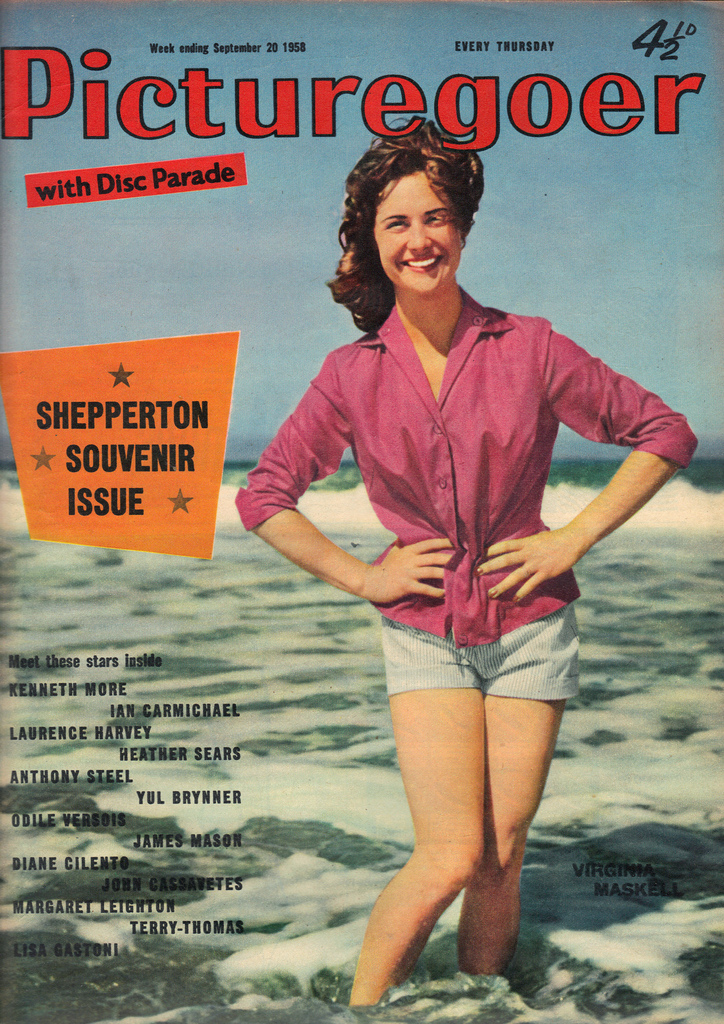
Virginia Maskell was born in 1936 in Shepard’s Bush, London. During World War Two she and her family moved to South Africa. After she returned to London, she commenced her acting career. Her film debut came in 1957 with “Happy Is the Bride”. The following year she was given the lead female role opposite John Cassavettes and Sidney Poitier in “Virgin Island”. Her subsequent film roles include “Doctor in Love” and “Only Two Can Play”. She died tragically after the completion of “Interlude” in 1968 at the age of 32.
Gary Brumburgh’s entry:
This ill-fated British actress was born in the Shepherd’s Bush area of London, England, on February 27, 1936. After the outbreak of World War II, young Virginia and her family were evacuated to South Africa. She eventually returned to London and entered a convent school where the pretty, grey-eyed brunette developed an interest in acting. She attended drama school and finally broke into the business with TV parts, usually playing demure young lasses in assorted dashing action series such as “The Buccaneers” and The Adventures of Robin Hood.” Making a minor film debut for director Roy Boulting withHappy Is the Bride (1958), she achieved better notices with her second film. In Our Virgin Island (1959), she played the bride of John Cassavetes who learns to adapt to a Robinson Crusoe-styled existence. Co-starring an up-and-coming Sidney Poitier, the story lightly tinges on racial issues. On the strength of this she won a contract with British Lion Pictures and showcased well in The Man Upstairs (1958) with Richard Attenborough, but less so playing a airline stewardess in the mediocre Jet Storm (1959) which also wasted a top-notch cast including Attenborough, Mai Zetterling, Diane Cilento, Stanley Baker and Sybil Thorndike. Her reticent but sincere approach to films worked remarkably well in an understated way, and she proved just as quietly compelling on stage with a prime role in “The Catalyst” in 1958 with Phil Brown and Renée Asherson. She showed escalating promise and earned BAFTA nominations for her memorable work in Young and Willing (1962) and as Peter Sellers‘ forlorn wife in Only Two Can Play (1962), but then all filming stopped. This was primarily due to her marriage in 1962 and a focus on family life. Other than occasional TV appearances in such popular series as “Danger Man” and “The Prisoner,” Virginia was seldom seen. It was learned that following the birth of her second son in February, 1966, she began showing acute signs of post-natal depression. In the summer of 1967 Virginia returned auspiciously to filming with a remake of the soap drama Interlude (1968) playing the cast-off wife of orchestra conductor Oskar Werner. She suffered a severe nervous breakdown following the film’s shoot and never recovered. On a bitterly cold day on January 24, 1968, she took a major overdose of antidepressants, drove from her home at Princes Risborough, and never returned. She was found collapsed in a nearby wooded area the next day suffering from acute hypothermia. Although she was revived briefly, she died shortly after at a nearby hospital. Virginia won a posthumous National Board of Review award and a BAFTA nomination for her work in “Interlude.” During her relatively short career, she seemed doomed to play the unhappy, sympathetic third party in romantic triangles. While a notable sadness touched many of Virginia Maskell’s roles, it makes her performances all the more haunting to watch considering her tragic circumstances.
– IMDb Mini Biography By: Gary Brumburgh / gr-home@pacbell.net
Yolande Dolan was born in 1920 in Jersey City, New Jersey. She began her career in U.S. films but came to Britain early in her career to star in the play “Born Yesterday” in London’s West End. Among her films are “Penny Princess” in 1952 directed by her husband Val Guest and starring Dirk Bogarde. She has also starred in “Expresso Bongo” and “Tarzan and the Lost Safari”. “Desert Island Discs” link here.
Yolande Donlan (June 2, 1920 – December 30, 2014) was an American-British actress who worked extensively in the United Kingdom.
The daughter of James Donlan, a character actor in Hollywood films of the 1930s, it is speculated by some that she had uncredited roles in films such as Pennies From Heaven (1936) and Love Finds Andy Hardy (1938), but this has not been confirmed.
Her early credited roles include Frenchy, the maid in the horror film The Devil Bat (1940), with Bela Lugosi, and other small roles often as similar French-accented maid characters. She played Carole Landis‘ maid in Turnabout (also 1940) and one of Red Skelton‘s concubines in DuBarry Was a Lady (1942).
Donlan was a success as Billie Dawn in a touring production of Born Yesterdayby Garson Kanin. It was the start of bigger things for Donlan. Laurence Olivierflew to Boston to confirm the opinion of American reviewers and chose Donlan to star in his production of the play to be staged in London’s West End. The production opened at the Garrick Theatre in January 1947 and was very well received. Donlan was initially denied a work permit to star in the lead in Peter Pan due to complaints from Equity, the actor’s union, who felt that a British star should have the lead.
Her autobiographical travelogue, Sand in My Mink (1955) is a humorous tale of holiday adventures taken across Europe with her husband.
Donlan’s autobiography, Shake the Stars Down was published in 1976 (known as Third Time Lucky in the USA), which concentrates on her childhood years growing up in the household of her actor father James Donlan in the Hollywood of the 1930s. It also charts her early career as a dancer and actress.
Guest retired from directing in 1985 and the couple moved to the USA in the early 1990s, where they resided in Palm Springs until his death in 2006. In later years, Donlan lived in Belgravia, London.
In 2004, a Golden Palm Star on the Palm Springs Walk of Stars was dedicated to her and Guest. She died in London on December 30, 2014
Ferdy Mayne was born in 1916 in Mainz, Germany. He came to Britain before World War Two. He worked for MI5 during the War. His first film was “Meet Sexton Blake” in 1945. Among his other films are “Our Man in Havana” and “Operation Crossbow”. In the 1980’s he moved to Los Angeles where he was a semi-regular on “Cagney & Lacey”. He died in London in 1998 at the age of 81.
“Independent” obituary:
Ferdinand Philip Mayer-Horckel (Ferdy Mayne), actor: born Mayence, Germany 11 March 1916; married 1950 Deirdre de Peyer (two daughters; marriage dissolved 1976); died Lordington, West Sussex 30 January 1998.
A master of charmingly sly villainy, the tall dark and urbane actor Ferdy Mayne will be remembered for the effective menace he provided in countless films and television shows in his 60-year career, though his versality extended well beyond portraying suave duplicity, to include comedies, musicals and classic plays (his favourite role was Trigorin in The Seagull). He was born Ferdinand Mayer-Horckel in Mayence, Germany in 1916. His father was the Judge of Mayence and his mother, who was half- English, a singing teacher. Since the family was Jewish, the teenage Ferdinand was sent to England in 1932 to stay with his aunt Lee Hutchinson, a noted photographer and sculptress. He attended Frensham Heights School prior to training for the stage at the Royal Academy of Dramatic Art and the Old Vic School. His first stage appearane was as the White Kpropaganda bnight in Alice Through the Looking Glass with the West Croydon Repertory Company, but most of his early work came in radio – his fluent German put him in demand for roadcasts during the Second World War.
His parents had been briefly interned in Buchenwald but were fortunate enough, due to his mother’s lineage, to get to England before the outbreak of war. Mayne’s first West End appearance was in a German role, as Kurt Muller in Lillian Hellman’s powerful anti-Fascist play Watch on the Rhine at the Aldwych (1943), the same year that he made his screen debut (billed as Ferdi) in Old Mother Riley Overseas. In the highly prolific career that followed, Mayne appeared in over 80 films. In one of his earliest, Prelude to Fame (1950), as the hearty peasant father of a child progidy, he was enormously touching in the scene in which he realises he must temporarily give his son up to the wealthy socialiate who can develop the boy’s talent.
Though Mayne’s singing in the film was dubbed, he possessed a fine baritone voice which he displayed to effect in several West End musicals. It was while appearing in the musical Belinda Fair (1949) that he met the actress Deidre de Peyer who became his wife – they named their first daughter Belinda in memory of the show – and though they divorced in 1976 they remained close. He later played a feature role in Richard Rodgers’ musical No Strings (1963) in which as the bored millionnaire dillentante Louis de Pourtal he had a solo number “The Man Who Has Everything (has nothing)”, and in 1965 he took over the role of Max in the long-running Rodgers and Hammerstein hit The Sound of Music. Other stage work included the role of the German officer Hauptman Schultz in Albert RN (1952), the true-life story (later filmed) of prisoners-of- war who substituted a dummy during roll-call for an escaping officer, and Judge Advocate Kunz in John Osborne’s A Patriot For Me (1965) at the Royal Court.
On screeen he was a sheikh in the delightful comedy The Captain’s Paradise (1953) in which Alec Guinness maintained two contrasting wives, one in North Africa and the other in Gibraltar, and in the epic Ben-Hur (1959) played the captain of the vessel which rescues the hero from the wreck of the galley ship. Mayne effectively bared fangs in Roman Polansky’s parody of Dracula movies, Dance of the Vampires (1967), an unsubtle farce which, despite a mixed reception on its initial release, has become a cult favourite, and Polanski used him again in The Pirates (1986), an equally broad pastiche of swashbucklers.
In the war adventure Where Eagles Dare (1968) Mayne had an important role as a traditionalist Nazi general trying to curb the more vicious excesses of the Gestapo, and he worked with Kubrick in Barry Lyndon (1975). His television credits included a leading role in Epitaph for a Spy (1953), a six-part adaptation of Eric Ambler’s espionage story, and a regular role as a chef in the series The Royalty (1957-58), which starred Margaret Lockwood as the owner of a luxury hotel.
In recent years Mayne filmed frequently in Europe (he was a particular favourite of German audiences) and in the mid-1970s he settled in America, working consistently until two years ago on television and in such films as The Black Stallion Returns (1983) and Conan the Destroyer (1984), but with the onset of Parkinson’s Disease he returned to England to be near his family.
– Tom Vallance
The above “Independent” obituary can also be accessed online here.
Tribute
2014
More than just a suave villain, German born Ferdy Mayne appeared in a few cult features over the years. In Britain from the early Forties, he took on musicals, comedies and the classics. Although adept at a variety of characters, in his later career it seems he was either playing a villain, vampire or both.
Born into a Jewish family on March 11th, 1916, Mayne was moved from his German birthplace, and sent to the UK to escape the Nazi’s. He made his screen debut in 1943, and spent the next few years in both comedies and dramas, playing such characters as a Sheik in the enjoyable Alec Guinness comedy ‘The Captain’s Paradise’ (’53), and a German officer in the POW drama ‘The Password is Courage’ (’62). Other notable movies at this time included ‘Those Magnificent Men in their Flying Machines’, and ‘Operation Crossbow’ (both ’65). It would be the following couple of years however that would prove to be the high point of Mayne’s screen career.
In 1967 Mayne achieved international recognition when he played Count von Krolock, who abducts the beautiful Sharon Tate, in Roman Polanski’s cult favorite; ‘The Fearless Vampire Killers’. He was wonderful and gives a suitably sinister turn in this beautifully photographed spoof. Mayne is also remembered as the monocled Nazi; Julius Rosemeyer, in ‘Where Eagles Dare’ (’68), playing his part seriously amongst all the ‘boys-own’ derring-do.
After playing a doctor in Hammer’s ‘The Vampire Lovers’ (’70), it was nice to see Ferdy in a rare family role, playing Samantha Eggar’s sympathetic father in the romantic drama ‘The Walking Stick’. Next, he was back on familiar ground playing another count, this time in Freddie Francis’s camp German parody; ‘The Vampire Happening’ (’71). Like many character actors before him Mayne succumbed to the 70’s saucy era, playing a womanizing sheik in the sexploitation piece ‘Au Pair Girls’ (’72). Around this time Mayne was also seen in more respectable films, including spy movies ‘When Eight Bells Toll’ (’71) and the under-rated ‘Innocent Bystanders’ (’72), with Stanley Baker.
Moving to the US in the 1970’s, Mayne occasionally flirted with Hollywood and the mainstream. This included supporting roles in Stanley Kubrick’s ‘Barry Lyndon’ (’75) and Billy Wilder’s ‘Fedora’ (’78). In his long career he also had uncredited bits in such classics ‘The Life and Death of Colonel Blimp’ (’43), ‘Ben-Hur’ (’59) and John Huston’s ‘Freud’ (’62).
After playing a professor in the Marlon Brando Nazi thriller ‘The Formula’ (’80), Mayne was the father of Jack Palance, in the late-night favourite ‘Hawk the Slayer’. A minor part in Graham Chapman’s ‘Yellowbeard’ (’83) was followed by another turn as a sheik, this time in ‘The Black Stallion Returns’ (also ’83). Other genre fare around this time included the action sequel ‘Conan the Destroyer’ (’84), 1985’s ‘Night Train to Terror’, a cobbled together anthology in which he played God(!), and Roman Polanski’s big budget flop ‘Pirates’ (’86). The following year also saw Ferdy play Dracula in the German TV co-production; ‘Frankenstein’s Aunt’ (’87).
After a small role in the Christopher Lambert chess thriller ‘Knight Moves’ (’92), Mayne’s final movie was another Nazi themed thriller ‘The Killers Within’ (’95), starring alongside cult stars; John Saxon, Meg Foster and Robert Carradine.
After battling Parkinson’s disease, Ferdy Mayne died in London, on 30th January 1998, aged 81. With over 200 screen appearances in British, American and German productions, there doesn’t seem to be much ground Ferdy didn’t cover in his 50 year career. It’s just a shame he never played a Bond villain though, he would have been great.
Doris Speed will forever be remebered for her role as the snobby Annie Walker the first landlady of “The Rovers Return” in “Coronation Street”. She was 61 before she won the role. She spent years acting in regional theatre in the North of England . While not working she worked in various establishemnts such as in the offices of the Gunness brewery in Manchester. There seems to be only one film role in her credit’s, 1960’s “Hell Is a City” with Stanley Baker. She starred in “Coronation Street” from it’s inception in 1960 until 1983. Doris Speed died in 1994 at the age of 95.
Her IMDB entry:
Doris Speed was one of Britain’s best-loved soap actresses, fondly remembered for her portrayal of Annie Walker, the snooty landlady of the Rovers Return pub in ITV’sCoronation Street (1960). She played the role for 23 years and was dubbed by the press as ‘The Queen Mother of Soap.’
Born in Manchester, her father George was a singer and her mother Ada a repertory actress. She toured with both her parents as a child. She later left the stage to work as a clerk in the giant Guinness brewery in Manchester and remained with the company for several years.
‘Coronation Street’ creator Tony Warren became a close friend of Speed and wrote the part of Annie Walker specifically for her. She joined the series when it was first aired in 1960 and appeared in 1,746 episodes. Hugely popular with viewers she received more fan mail than any other member of the cast.
Offstage she was a shy and retiring person but a keen theatre-goer. She once said “I would love to have done more theatre work because that is how I started. There are so many roles I would love to have played. But I owe my life to ‘Coronation Street’ and I don’t regret a minute of it.”
She was awarded the MBE (Member of the Order of the British Empire) for her services to television in 1977 and received The Pye Television Award two years later. She was also an honorary member of the Licensed Victuallers’ Association. Doris made her final television appearance in 1993, when she gave an interview on Classic Coronation Street(1993), alongside her former screen son, Kenneth Farrington.










.png)