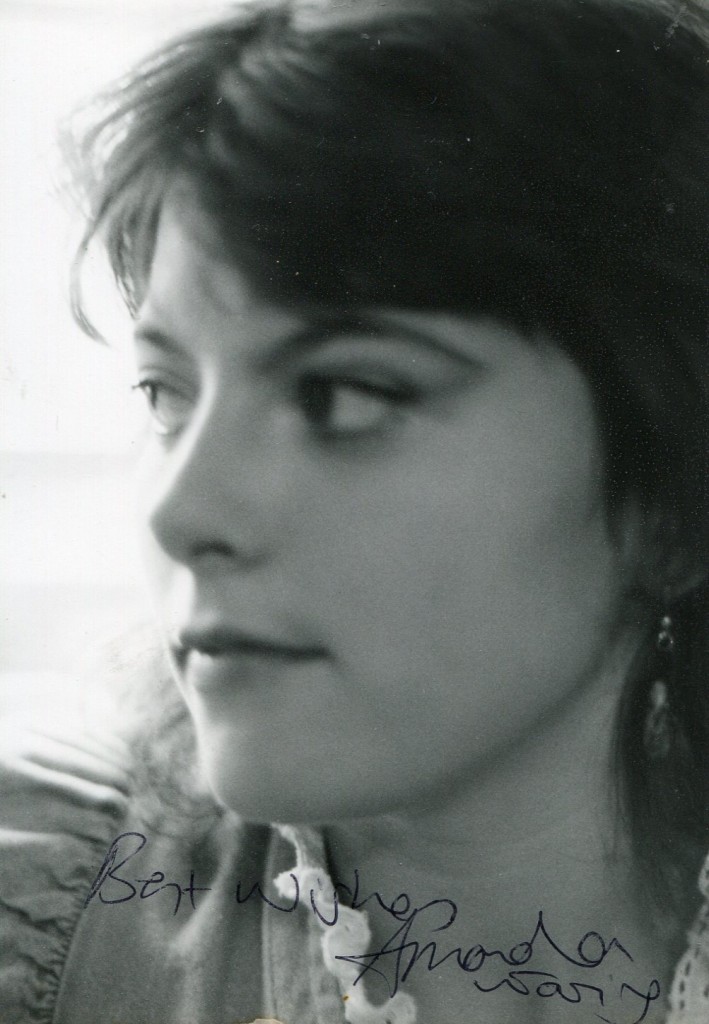
Amanda Waring was born in 1966 in England. She is an actress, known for Eat Yourself Slim (2005), Tucker’s Luck (1983) and No Strings (1989). She is the daughter of the late Dame Dorothy Tutin and Derek Waring.


Amanda Waring was born in 1966 in England. She is an actress, known for Eat Yourself Slim (2005), Tucker’s Luck (1983) and No Strings (1989). She is the daughter of the late Dame Dorothy Tutin and Derek Waring.
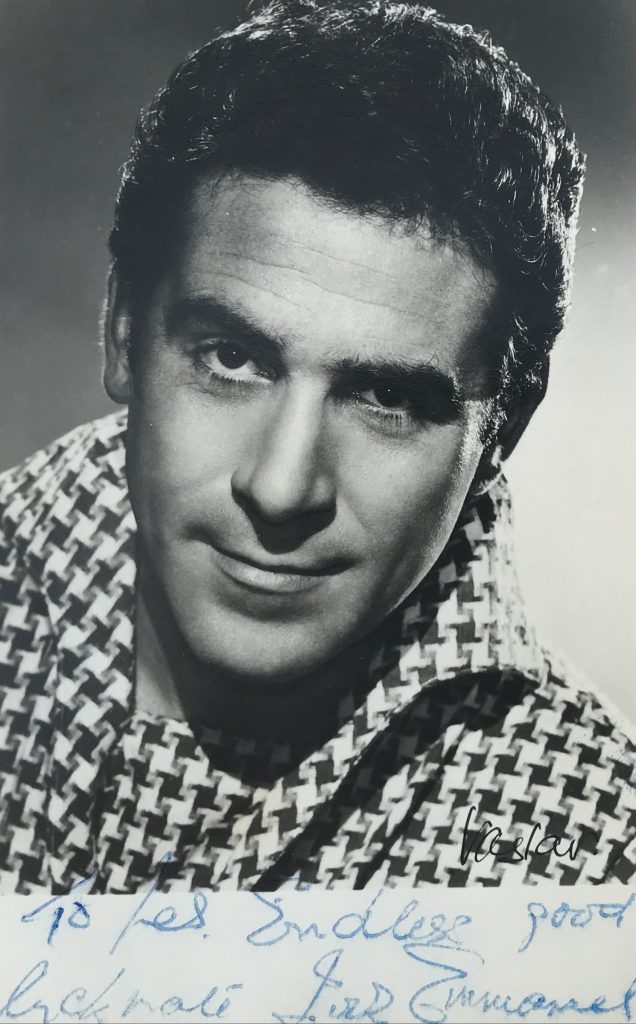
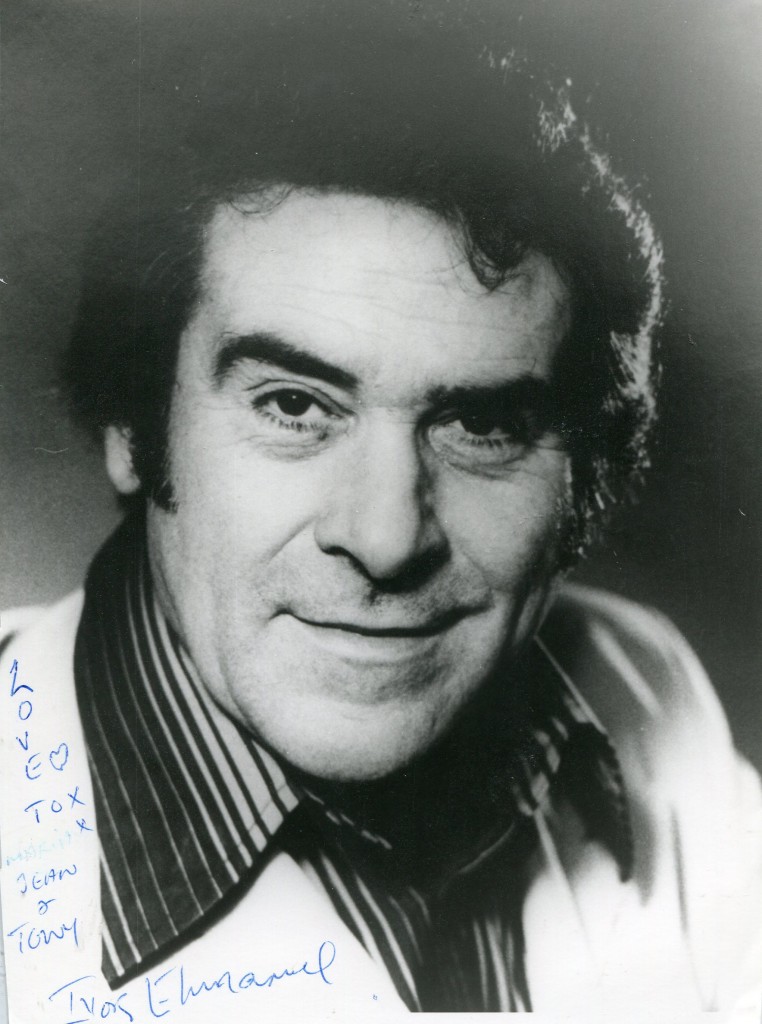
Patrick Hannan’s obituary in “The Independent” in 2007:
Even today, long after he made an early departure from showbusiness to spend the last 25 years of his life in Spain, people still nod with recognition at the name of Ivor Emmanuel, who has died aged 79. Of course, they say, he was the guy in Zulu. More specifically, he was Private Owen in that 1964 film, leading a small band of British soldiers in the defiant singing of Men of Harlech in response to the war chants of 4,000 Zulus preparing to slaughter them.
Zulu was the story of the siege, in the Anglo-Zulu war of 1879, of Rorke’s Drift, when 150 British soldiers defended a supply station against the Zulus, winning 11 Victoria crosses in the process.
Starring and produced by another Welsh actor, Stanley Baker, it was given a more intensely Welsh flavour than history justified, but in its turn that provided the occasion for Emmanuel’s unforgettable part in the swelling version, with specially written words referring to Zulu spears, of the familiar and rousing (and anti-English) Welsh song, Men of Harlech. Whatever you think of the story, it remains an unforgettable movie moment. And it was to overshadow everything else Emmanuel did in his career as a singer and actor.
His own life might have made a decent drama, or perhaps a south Wales rags to riches novel. He was born in Margam and raised in the mining village of Pontrhydyfen, near Port Talbot, an area that forms part of a golden triangle for the acting trade. Richard Burton, a couple of years older, was born there; Anthony Hopkins, 10 years younger, was from Taibach, just down the road.
In the 1940s the future for a boy from a poor working class family was clear enough: a life in the pits or the steelworks. Emmanuel’s prospects were made even more dismal by the stray German bomb that killed his father, mother, sister and grandfather when he was 14.
Emmanuel, who was then brought up by his aunt Flossie, became a miner and then a steelworker, developing his singing with the Pontrhydyfen Operatic Society in a period when even a modest mining village might have substantial cultural ambitions. From time to time he would walk off into the countryside with his wind-up gramophone to listen to recordings of Caruso.
In 1950 he got into the chorus of the D’Oyly Carte Opera Company and then – advised by Burton, legend has it – he got a part in Oklahoma at the Theatre Royal, Drury Lane. He was ideal for roles in those US musicals – strong, good-looking with dark, wavy hair and a powerful baritone voice. He was to play in many of them, including South Pacific and the King and I, but he did not get leading roles and it turned out to be his Welshness that unexpectedly brought him national recognition.
In the 1950s, Sunday television was precluded from disturbing the Sabbath’s religious character. So the ITV network was happy with Gwlad y Gan (Land of Song) from TWW, the then franchise holder for Wales and the west of England. It ran until 1964, and Emmanuel figured as an older brother figure among the children’s choirs.
It brought him much more work, but perhaps he was too Welsh for his own good. He was a natural for a New York musical of How Green Was My Valley, but it ran for only 41 performances and that was the end of his Broadway career. He made records and continued in stage musicals and on TV without becoming firmly established at the top of the bill.
It is curious that Zulu, an account of an imperial adventure, remains a staple of TV repeats in an entirely different era. But it does so and has provided Emmanuel with his piece of screen immortality.
Married three times, he is survived by his wife Malinee and their daughter, and his son and daughter from his first marriage.
· Ivor Emmanuel, singer and actor, born November 7 1927; died July 20 2007
The above obituary from “The Guardian” can also be accessed here.
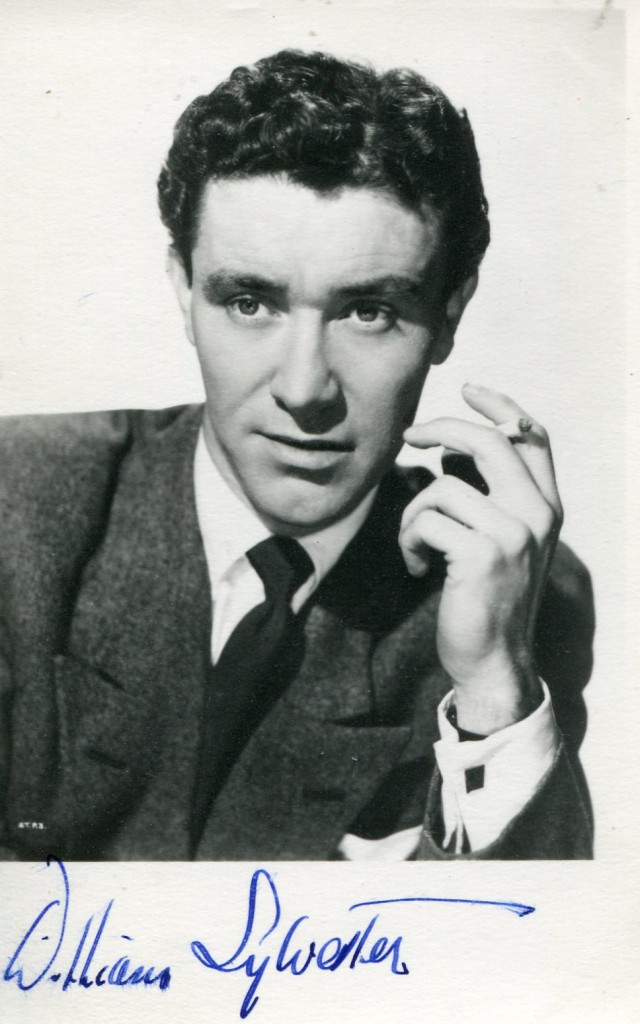
Richard Chatten’s obituary from 1995 in “The Independent”
Virile and good-humoured, William Sylvester was always good company in the films in which he starred, and he made more of the role of Dr Heywood Floyd in 2001: a Space Odyssey (1968) than was probably the intention of the film’s director, Stanley Kubrick. The cast was made up of actors rather than stars, and the spellbinding special effects of the film’s middle section aboard a space station orbiting the Earth created a sense of wonder in audiences that subverted Kubrick’s bleak conception of a world in which human beings had become an increasingly small and insignificant component. Investigating a mysterious monolith discovered on the moon, Dr Floyd later made the journey to Jupiter himself in Peter Hyams’s sequel 2010 (1984), in which Floyd was played by Roy Scheider: it was a much murkier film that could have done with Sylvester’s relaxed and reassuring presence.
Sylvester’s first appearance on the stage had been in his home town of Oakland in 1941, before joining the US Navy for the duration of the Second World War. In 1947 he settled in England to study at RADA, taking his first London bow in 1948 as the shadow in Winterset at the New Lindsey Theatre. His film dbut followed with a supporting role in Give Us This Day (1949), set amid Brooklyn’s Italian community, which he followed with J. Lee Thompson’s The Yellow Balloon (1952), a rare villainous part, but one in which he was well cast, calling for an actor engaging enough to take in the unsuspecting adults (one of whom was played by Veronica Hurst, who became his second wife), while able swiftly to turn on the menace with the boy hero, Andrew Ray. Sylvester also combined these qualities as Gordon Lonsdale in Ring of Spies (1964), a fictionalisation of the Portland spy case in which he was affability itself while luring Harry Houghton and Ethel Gee (Bernard Lee and Margaret Tyzack) into passing secrets to the Russians.
Sylvester played wisecracking Yanks with names like “Mac” and “Texas” in a couple of the ubiquitous war films of the Fifties, Appointment in London and Albert RN (both 1953) and a member of the Nova Scotian lobster- fishing community in High Tide At Noon (1957). On the radio he gave a fine interpretation of the title-role in The Great Gatsby, while on stage he played Captain Fisby for two years in The Teahouse of the August Moon, and made his first appearance in New York as Rudbeck in Mr Johnson in 1956. In 1961 he appeared in The Andersonville Trial at the Mermaid Theatre and as Adam Brant in Mourning Becomes Electra at the Old Vic.
By the early Sixties he was established as a rugged leading man in low- budget thrillers and horror movies, some of them quite good, such as Eugne Louri’s Gorgo (1960) and Lindsay Shonteff’s Devil Doll (1964), the latter a bizarre extrapolation from the ventriloquist’s dummy episode in the 1945 film Dead of Night. In 1968 Sylvester returned to the US, where his television appearances included a regular role in the mediocre series Gemini Man, starring Ben Murphy as a special agent who could become invisible. His film roles became regrettably scarce and inexplicably brief, consisting of a handful of fleeting appearances in such films as The Lawyer (1970), Busting (1974), The Hindenburg (1975, as a German officer), Warren Beatty’s Heaven Can Wait (1978) and First Family (1980).
The above “The Independent” obituary can also be accessed on,line here.
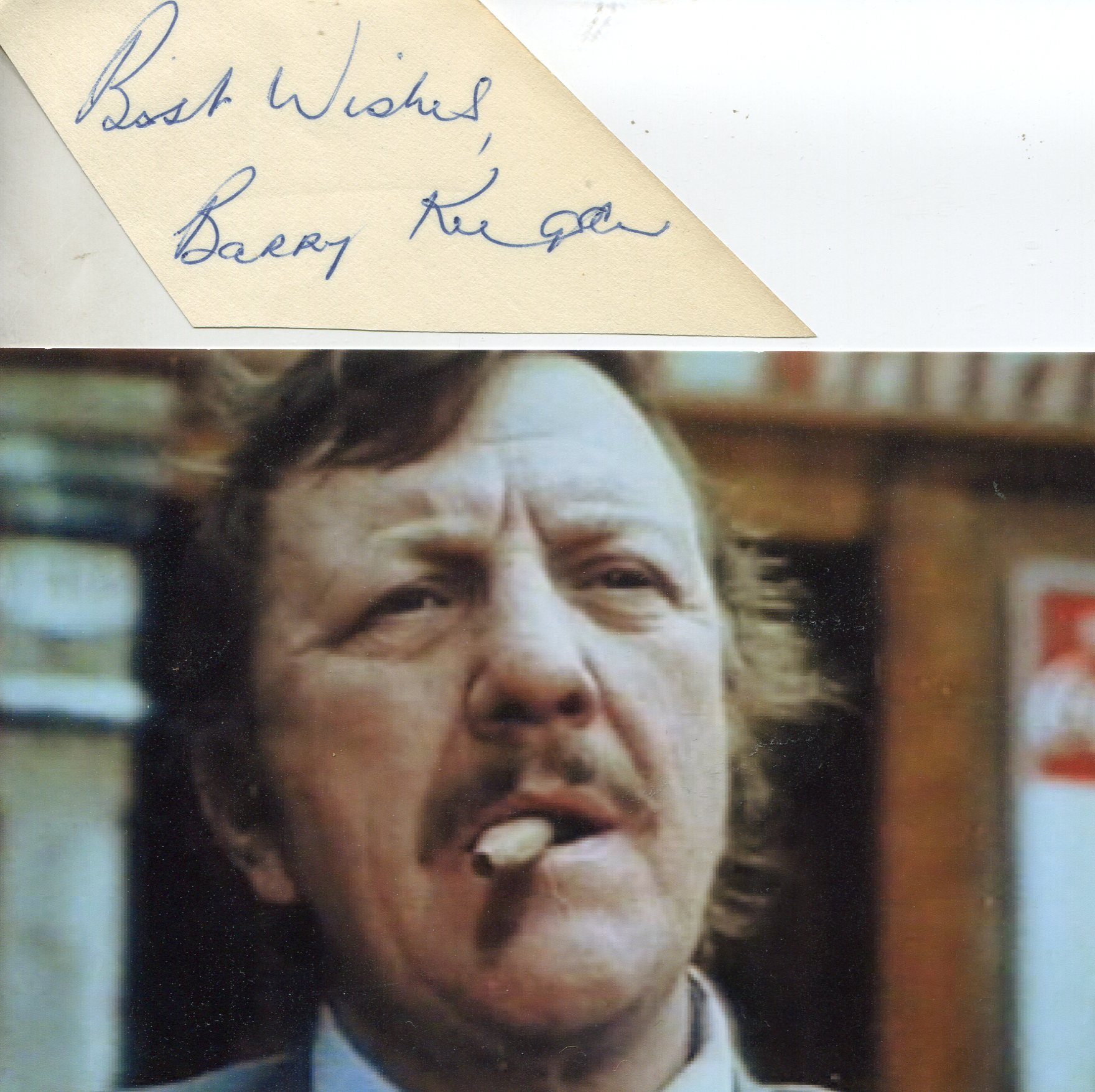
Barry Keegan
Barry Keegan was born on September 12, 1922 in Dublin, Ireland as John Barry Keegan. He was an actor and writer, known for Billy Budd (1962), King of Kings (1961) and Glencannon (1959). He died in September 1977 in London, England.
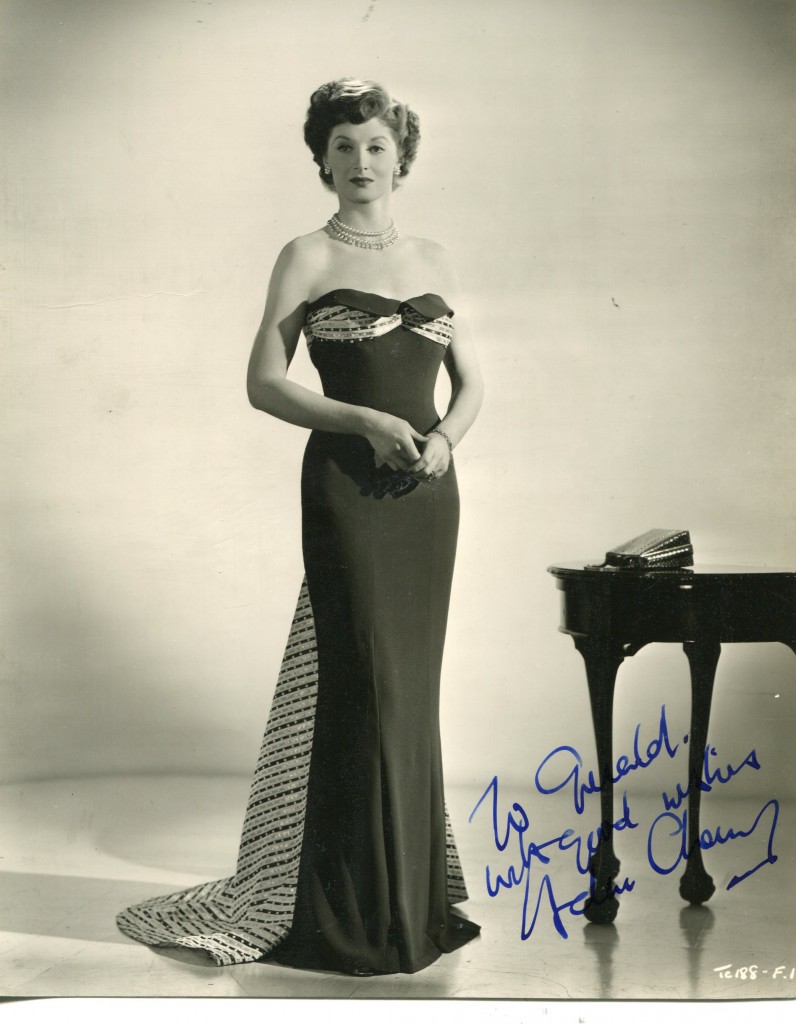
Eric Shorter’s obituary in “The Guardian” in 2001:
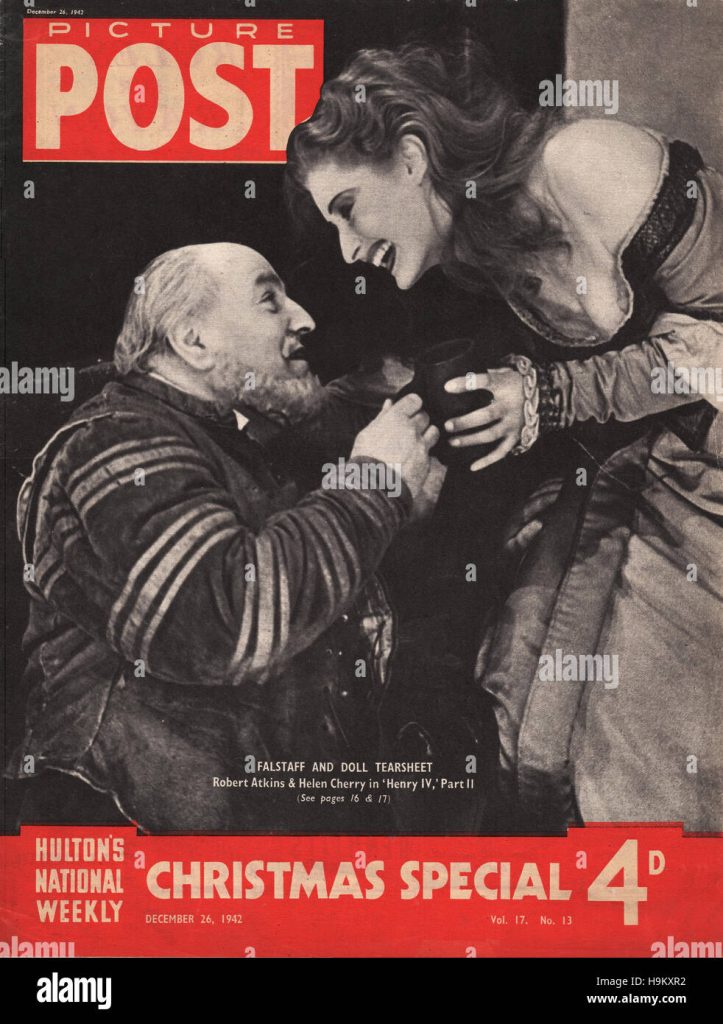
Helen Cherry, who has died aged 85, had an acting career that spanned nearly half a century on stage, screen and radio. She was staunchly classical by choice – as devoted to Shakespeare, Jonson, Farquhar and co as she was to her notoriously errant actor husband, the late Trevor Howard.
Cherry had a voice and an ear for verse, and spoke with intelligence and wit. Her Rosalind in As You Like It seemed unrivalled in the 1940s; and her cross-dressing Sylvia in The Recruiting Officer (1944) was enchanting. There was often something cool in her acting, yet she had an integrity that brought charm to her performances.
It was in one of Herbert Farjeon’s intimate revues, In Town Again, that she made her London debut in 1940 at the Criterion. She was to give ladylike, if hardly sublime, performances in a couple of dozen feature films, including Roy Baker’s Morning Departure (1950), when, married to doomed submariner John Mills, she cried: “I’m so sick of sharing you with a lot of damn submarines!”
There was television too, but none of it was, for Cherry, a patch on the theatre. She had entered it at a time when a serious-minded young woman could choose from several companies to act Shakespeare, when the regions were bristling with repertory companies.
She was born in Manchester and brought up in Harrogate. Intending to be a stage designer, she trained as a commercial artist, but the first job she put in for – and what became her professional debut – was in Manchester in 1938 as an extra in The Vagabond King. Repertory theatre followed, in Manchester, Chester and St Annes, and in 1940 a tour of a Farjeon revue, Nine Sharp, followed by In Town Again.
In 1942 she joined Robert Atkins’s open-air Shakespearean company in Regent’s Park. She played Olivia in Twelfth Night, Oberon in A Midsummer Night’s Dream and the Widow in The Taming of the Shrew. When Atkins moved his troupe under cover for the winter, to the Westminster Theatre, Cherry’s roles included Jessica in The Merchant of Venice, Lady Percy in King Henry IV Part I, Doll Tearsheet in King Henry IV Part II and Helena in A Midsummer Night’s Dream.
In the summer of 1943 her parts included her favourite, Rosalind in As You Like It. That year, too, she joined Alec Clunes’s Arts Theatre Club Group of Actors – dubbed in those days “the best national theatre we never had”, and in 1944 partnered the young and newly demobbed Trevor Howard as Captain Plume to her Sylvia in The Recruiting Officer. They were married that year at the end of a Stratford season with Atkins, where her roles included Portia in The Merchant of Venice, Lady Corvino in Jonson’s Volpone and, again, Rosalind.
As the war concluded, Cherry continued in the West End. She also joined Anthony Hawtrey at the Embassy, Swiss Cottage, an outpost for new plays such as Fit for Heroes, a satire on postwar house-building in which Cherry played a very amusing Hon Elizabeth Wimpole (1945).
After the war she was back in Shakespeare for Hugh Hunt’s last Old Vic season, in 1953, and in 1955 she played Ursula in John Gielgud’s great revival of Much Ado About Nothing (Palace). In the same London season, Cherry played Goneril to his controversially designed and absurdly stylised “Japanese” King Lear. Her last West End appearance was in Ladies in Retirement at the Fortune in 1982.
In the early 1950s Cherry became well known on television via the Guess My Story quiz show. Later credits included Time After Time, Jury, The Professionals and A Ghost In Monte Carlo.
She made more than a score of films. These included The Courtneys of Curzon Street (1947), They Were Not Divided (1950), Young Wives’ Tale (1951), His Excellency (1952), Three Cases of Murder (1955), in which she played opposite Orson Welles, High Flight (1956), The Naked Edge (1961), Lady Scarlett in Tony Richardson’s The Charge of the Light Brigade (1968), Conduct Unbecoming (1975) and The Girl on a Swing (1979).
In 1961, as the Campaign for Nuclear Disarmament struggle was reaching its height, Cherry – a CND supporter – was arrested on a demonstration.
Her husband’s outrageous philandering and heavy drinking struck outsiders as excessive. Had it not imperilled the marriage? If there were unsettled moments, the couple did not seem to see it that way. Indeed, when, after his death in 1988, it was suggested that Howard’s alcoholism spoiled his acting, she sprang to his defence.
Even so, most observers recalled the couple’s private life (or what they knew of it) more vividly than Cherry’s acting; and though, of course, it hardly rivalled her husband’s for gusto, passion, fury or fame, Cherry, throughout her career, demonstrated steady, reliable and subtle quality.
Helen Cherry, actor, born November 24 1915; died September 27 2007.
The above obituary from the “Guardian” can also be accessed online here.





TCM overview:
A combination of beauty, brains and talent, English actress Rosamund Pike began her ascent to stardom even as she was in the process of earning a degree from Oxford College. Pike vaulted directly from university and a handful of minor roles on U.K. television to a breakout role opposite Pierce Brosnan’s James Bond in the 007 action-adventure “Die Another Day” (2002). Unlike so many “Bond girls” before her who quickly sank into obscurity, Pike continued to hone her craft and garner attention in such period pieces as “The Libertine” (2004) and “Pride and Prejudice” (2005), starring alongside established talents like Johnny Depp and Keira Knightley. In addition to making a name for herself on the stages of London’s West End, the burgeoning actress received critical acclaim for supporting turns in several independent features, “An Education” (2009) and “Barney’s Version” (2010), among them. Balancing the smaller budget projects with more blockbuster fare, she took on significant roles in the Greek mythology fantasy-adventure “Wrath of the Titans” (2012) and the action-packed Tom Cruise thriller “Jack Reacher” (2012). Determined to establish herself as more than a pretty face, Pike shrewdly bolstered her artistic reputation even as she continued to build a solid profile in mainstream entertainments.

His film credits include: Juan Antonio Bardem‘s Behind the Shutters, The Ups and Downs of a Handyman, Prey, Spaced Out,[2] Hawk the Slayer, Rendezvous in Paris and Enemy Mine.
Television appearances include: Dixon of Dock Green, Z-Cars, UFO, Space: 1999, Survivors, The Professionals and Reilly, Ace of Spies. The Prince & the Pauper 1976 (TV Series).
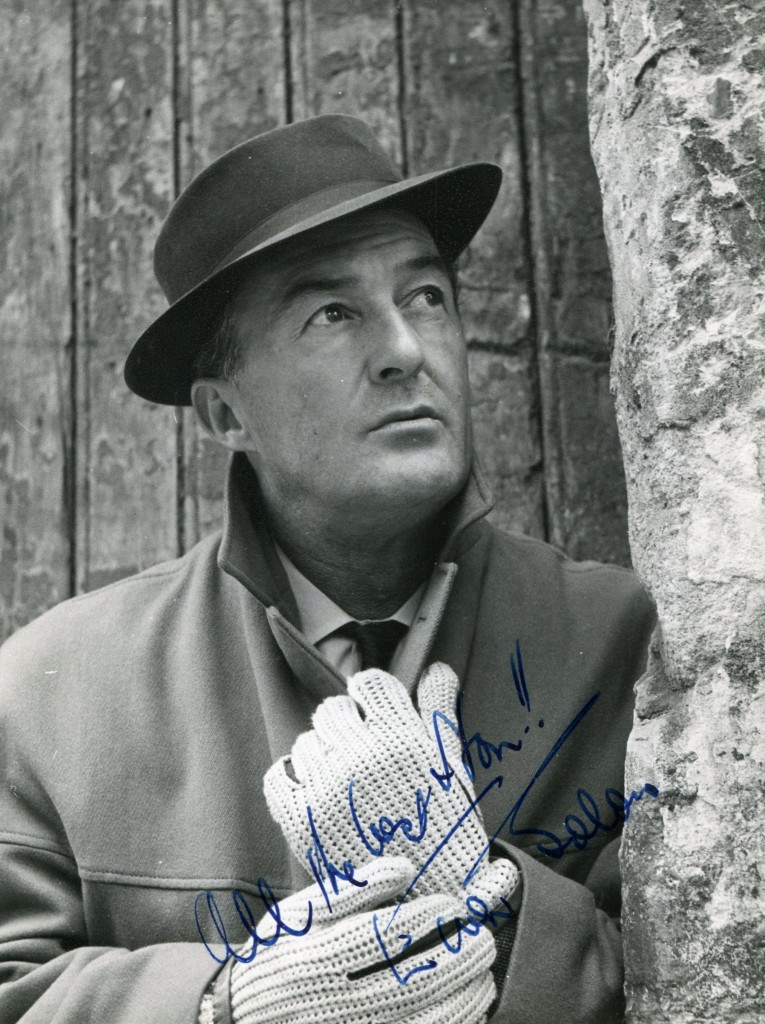
IMDB entry:
Ewen Solon was born on September 7, 1917 in Auckland, New Zealand as Peter Ewen Solon. He was an actor, known for The Revenue Men (1967), The Message (1977) andThe Hound of the Baskervilles (1959). He died on July 7, 1985 in Addlestone, Surrey, England.
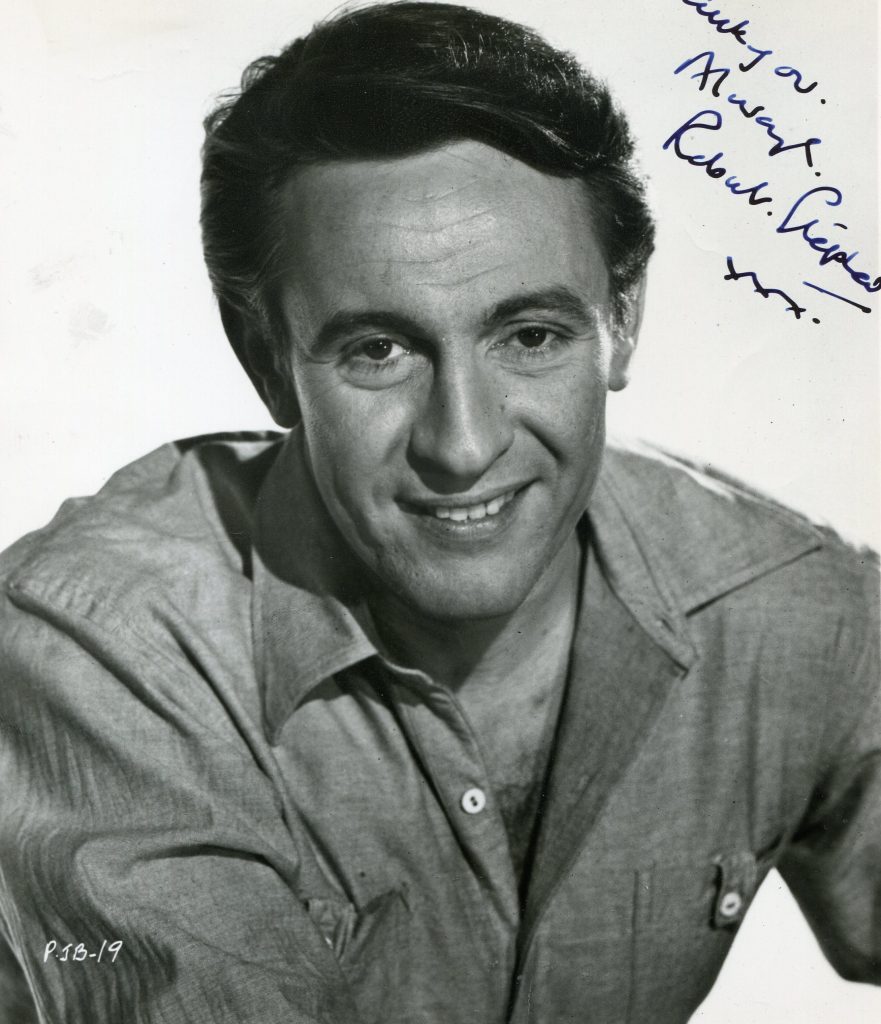
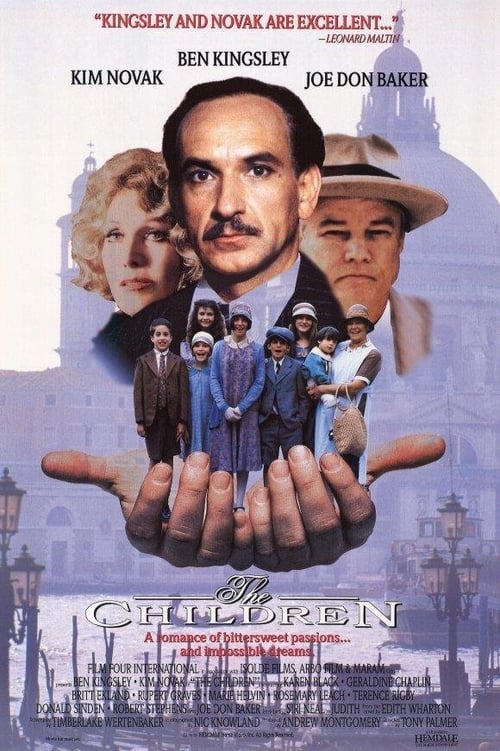
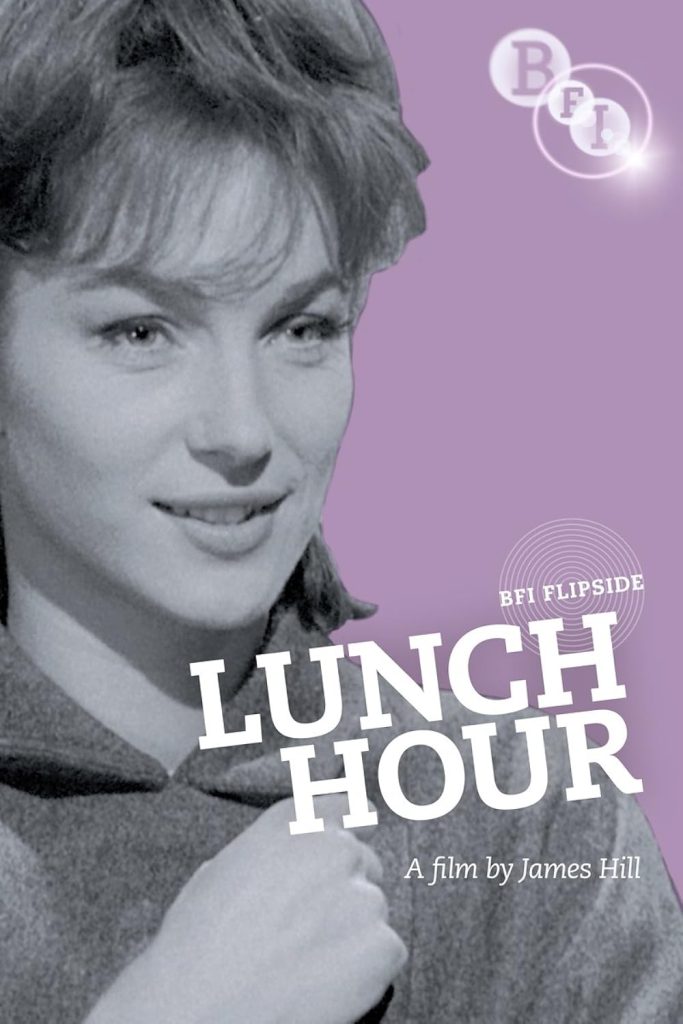
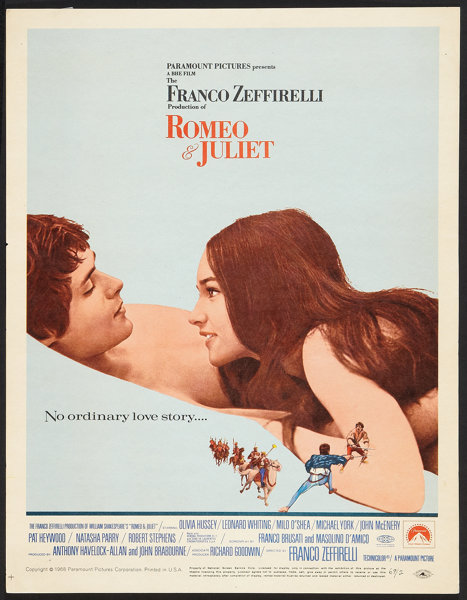
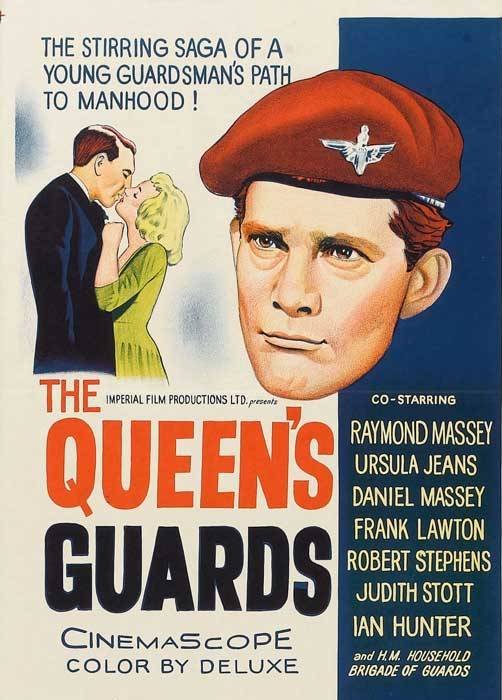
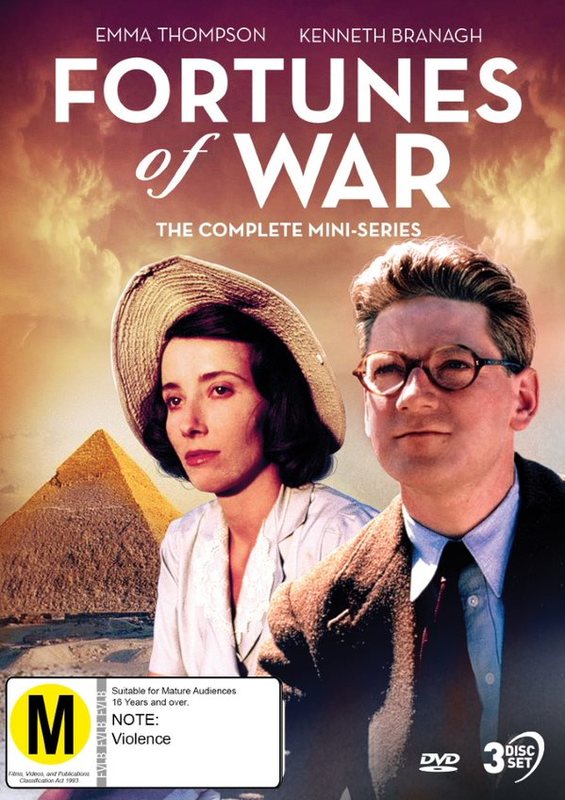
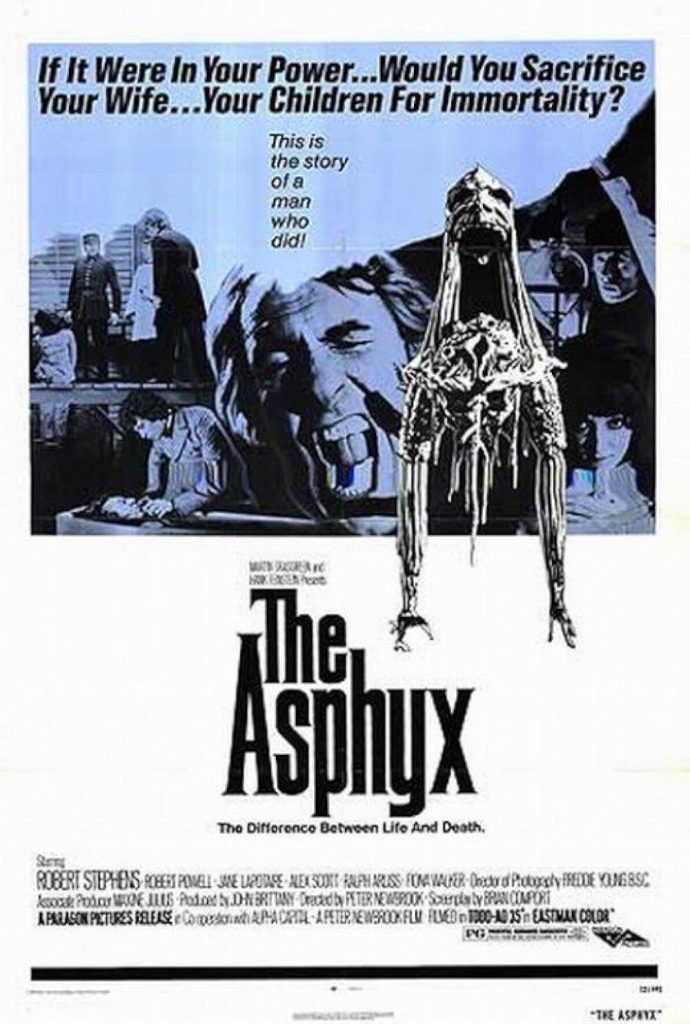
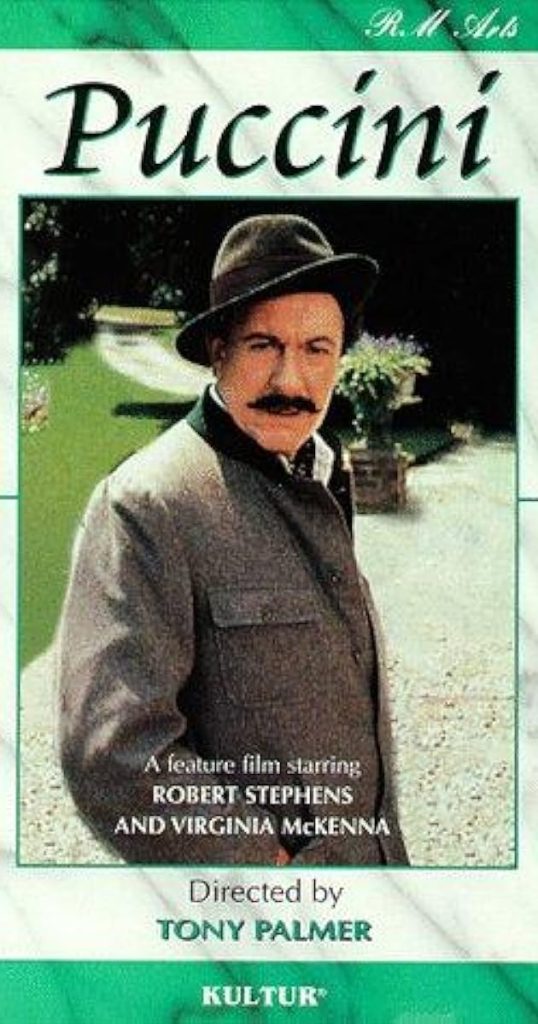
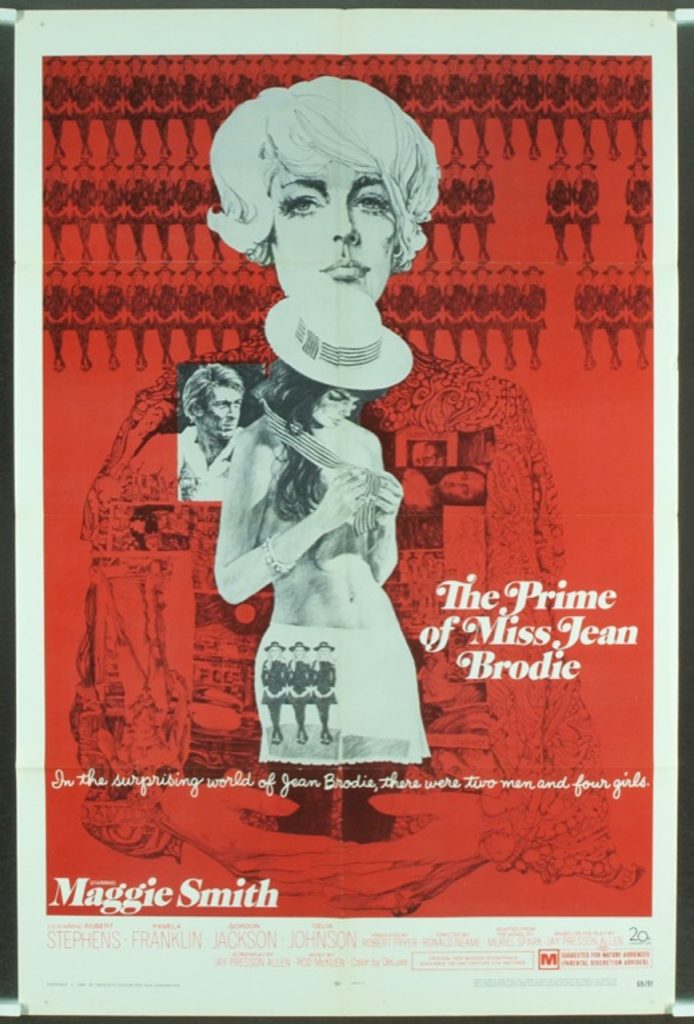
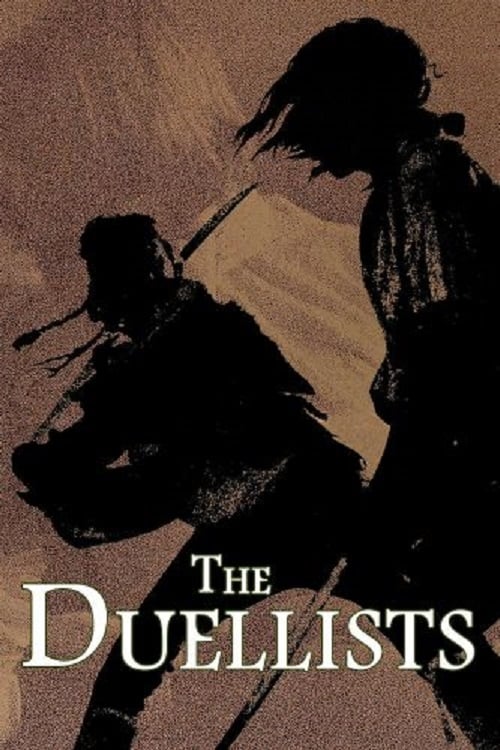

“Independent” obituary by Adam Benedick:
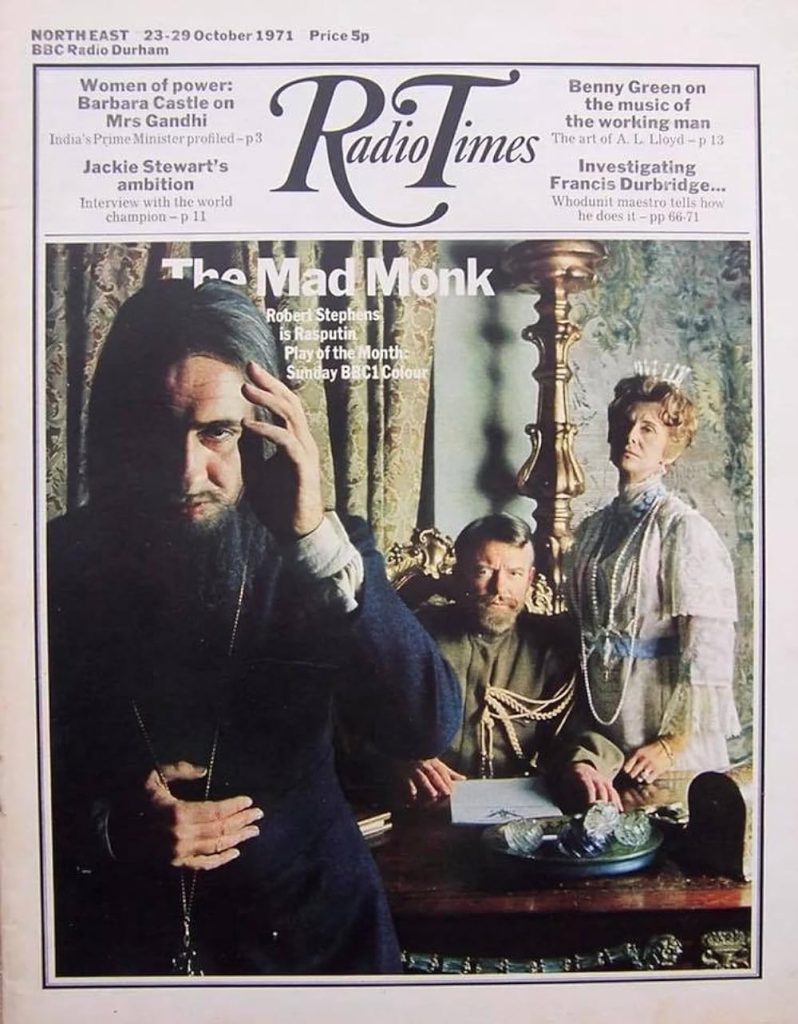
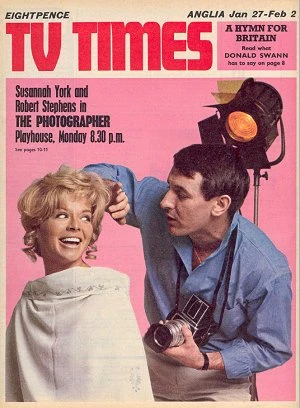
It was as if he had cast himself among that generation of so-called hell- raising players – Richard Burton, Peter O’Toole, Albert Finney, Nicol Williamson, whose talents burned so bright in the playhouse until the cinema claimed most of them – except that Stephens could never claim great success in films. He would therefore prove that he at least had never turned away from the greatest test of all: the great roles in the theatre.
If he did not convince everyone of his greatness, he reminded a younger generation of playgoers of the guts, gusto, personality and bravado necessary to heroic acting in its heyday.
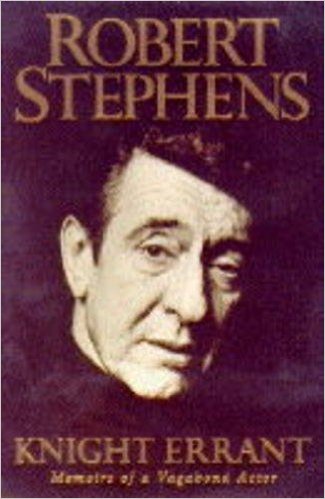
Nor did he neglect the supposedly romantic element in that tradition of acting, which he vividly chronicles in an autobiography, Knight Errant, published a fortnight ago.
Brimful of swagger and of egocentric fancy, it charts a career divided boldly between artistic ambition and personal indulgence, displaying a restless energy and Don Juan assurance which sometimes leaves the reader breathless with admiration or astonishment at the author’s effrontery. The book was as if he were re-enacting the adventures of the hero of an 18th-century novel; but at the same time it seldom reflects the kind of actor he was on stage during most of his career until its relatively glamorous end.
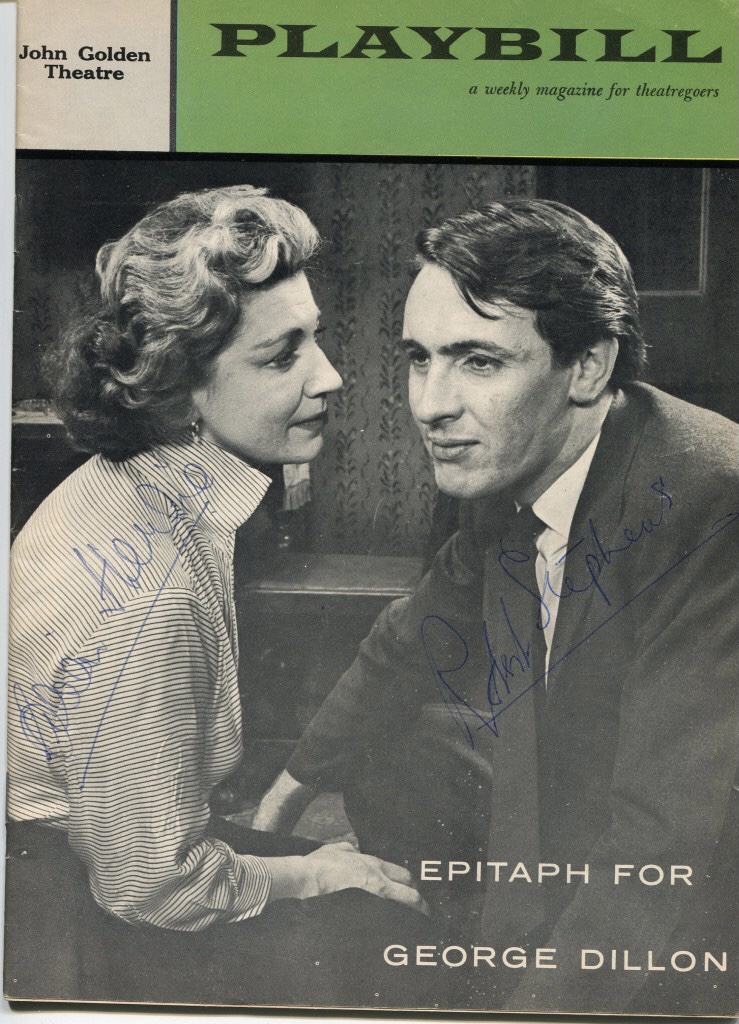
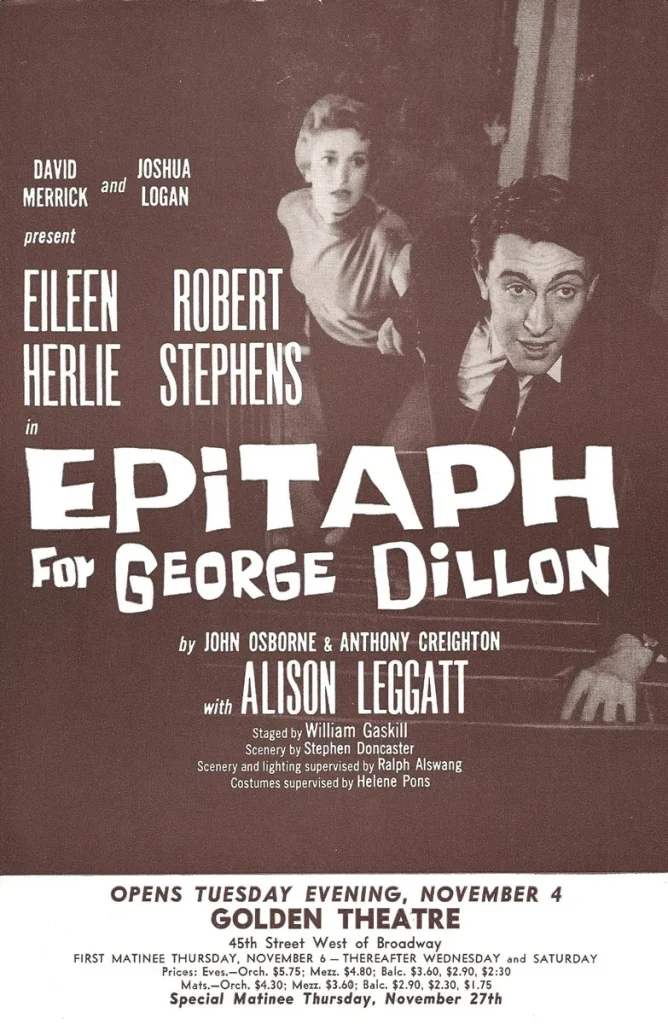
Kenneth Tynan had acclaimed him as the essence of the red-brick style of acting which puts brains before breeding. George Devine was certainly not looking for classical actors when he was setting up shop for the English Stage Company, at the Royal Court Theatre in the mid-1950s, for new writers for the stage. But in recruiting Stephens from the Library Theatre, Manchester, he found an actor of integrity and grit who created a stir in all sorts of forgotten works as well as in Osborne’s The Entertainer, Wesker’s The Kitchen and, above all, Epitaph for George Dillon.
Here was an anti-hero even nearer to Osborne’s heart than Jimmy Porter and Stephens acted it with all his heart. “The cleverest portrait I have seen of a certain kind of neurotic artist,” declared Tynan. “Quite wonderful,” said Noel Coward; Laurence Olivier made a note to have him as one of the 50 founding members of the forthcoming National Theatre Company.
With his hooded eyes, beaky nose, heavy jowl, cawing voice, and devil- may-care delight in a profession which gave him scope for being larger than life and twice as exuberant, Stephens did not win universal praise as a charmer. Nor was it in his nature to play for sympathy. Stephens was an off-beat actor, and rather heavy-handed with it.
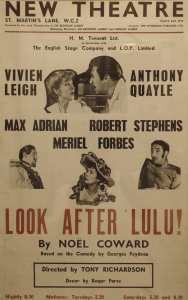
Indeed that was obvious in Coward’s somewhat heavy-handed 1959 version of Feydeau, Look after Lulu, which had rather oddly got into the Royal Court repertoire with Vivien Leigh in the Madeleine Renaud part and Stephens dashing about in his Edwardian combinations.
It was a fault, though, which he was ready enough to correct when a veteran from the pre-war Aldwych farces, Robertson Hare, suggested that he took up daily skipping. Other ungainlinesses of manner were less easy to shed.
Nevertheless, Stephens had intelligence, personality, determination and technique. Even before his George Dillon had won golden opinions in London and New York he had shown himself satisfactorily versatile for the Royal Court in authors as diverse as Arthur Miller, Brecht, Wycherley, Nigel Dennis and Michael Hastings.
But who could have foreseen – except perhaps Olivier – that, within five years of Dillon, Stephens would be a rising star with the National Theatre at the Old Vic in its heyday and even in line for its throne? Would he have risen so rapidly as an actor, without the good fortune of encountering on stage within three months of his arrival at the National one of the most brilliant comediennes of the day – perhaps of any day – the even more versatile Maggie Smith?
Their partnership began purely by chance casting; soon they were cast as a couple whose acting together made one and one add up to three, and in a few seasons they had become the most famous partnership in British theatre.
Although they worked apart well enough in the National’s mainly classical repertoire, they made audiences look forward to seeing them together; and halfway through that glittering decade from 1963 to 1973 Olivier one day touched the dashing, handsome and effervescent Stephens on the shoulder. Would he like to be one of Olivier’s chief lieutenants?
Could it be true? Might he as an associate director and something of a matinee idol be heading even higher up the National ladder? Here he was standing as it were in the wings of what was to be called the Royal National Theatre whose great but ageing artistic director was ailing.
If ever an actor felt greatness being thrust upon him Stephens could be forgiven for so thinking. Married by then to one of the era’s most accomplished and popular actresses – a comedienne and tragedienne who had also become a film star in The Prime of Miss Jean Brodie (in which he also appeared) – Stephens was thrice blest.
With some accuracy the partnership was compared to other, illustrious couples like the Lunts (Alfred Lunt and Lynn Fontanne), John Clements and Kay Hammond, Laurence Olivier and Vivien Leigh; and playgoers could sense across the Old Vic footlights the mutual exhilaration, verve and delight in their own teamwork.
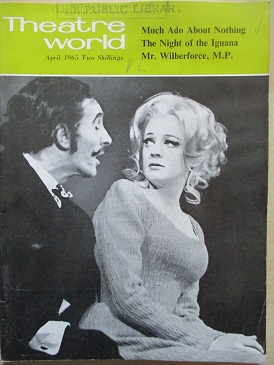
The couple were together in Farquhar’s The Recruiting Officer (1963: Captain Plume and Silvia), Coward’s Hay Fever (1964: Sandy Tyrell and Myra), Much Ado About Nothing (1965: Benedick and Beatrice), Farquhar’s The Beaux’ Stratagem (1970: Frances Archer and Mrs Sullen), Hedda Gabler (1970: Eilert Loevborg and Hedda) and – perhaps their most popular and poignant collaboration – John Gielgud’s West End revival of Coward’s Private Lives (1972: Elyot Chase and Amanda Prinn).
By then, alas, Stephens had wrong-footed it with his boss Olivier (“Larry? He’s all dear, darling, lovely boy until opening night, then it’s just him and the audience”); and having resigned from the National realised that his marriage was drawing to a close, though not before Private Lives had been a huge success at the Queen’s and then the Globe, bringing Smith another prize as best actress.
With its story of a divorced couple who meet on their honeymoons and fall in love all over again only to realise that they cannot live apart – or together, it was as if the couple were acting out their private life before the public every night.
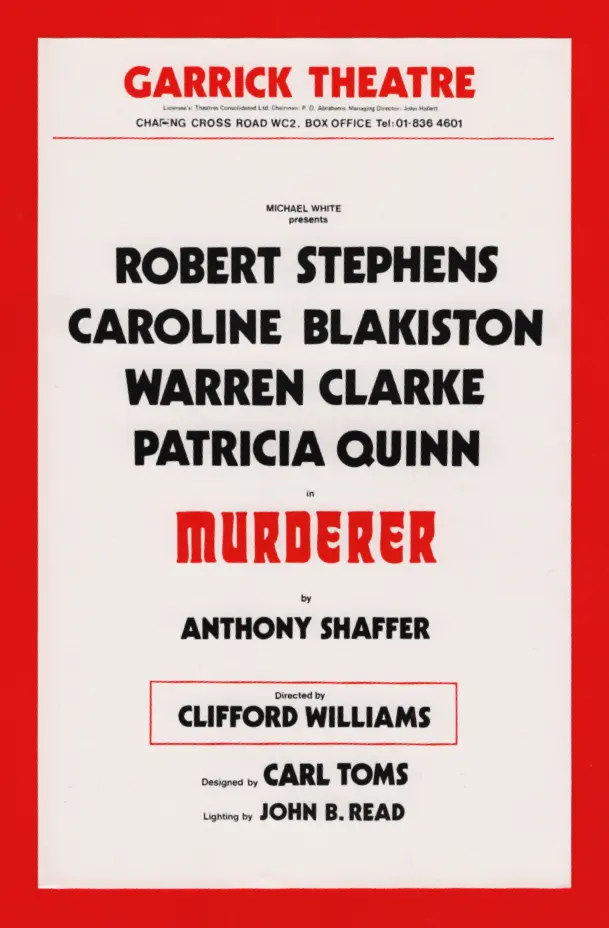
When the play crossed the Atlantic, Stephens did not go. He directed a play at the Open Space, in London. He played Trigorin in The Seagull at Chichester and Greenwich, Pastor Manders in Ghosts and Claudius in Hamlet (again at Greenwich) and in the West End, a thriller, Murderer (Garrick, 1975). Meanwhile Peter Hall had taken over at the National; and, the divorce concluded, the spirits of the ebullient Stephens sank deeper than he dared admit.
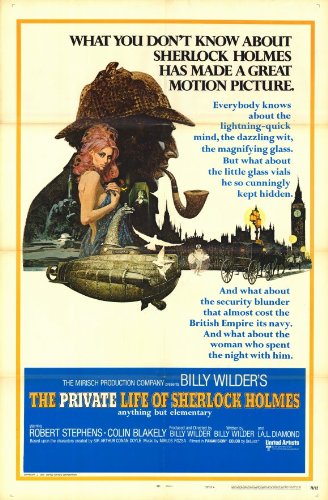
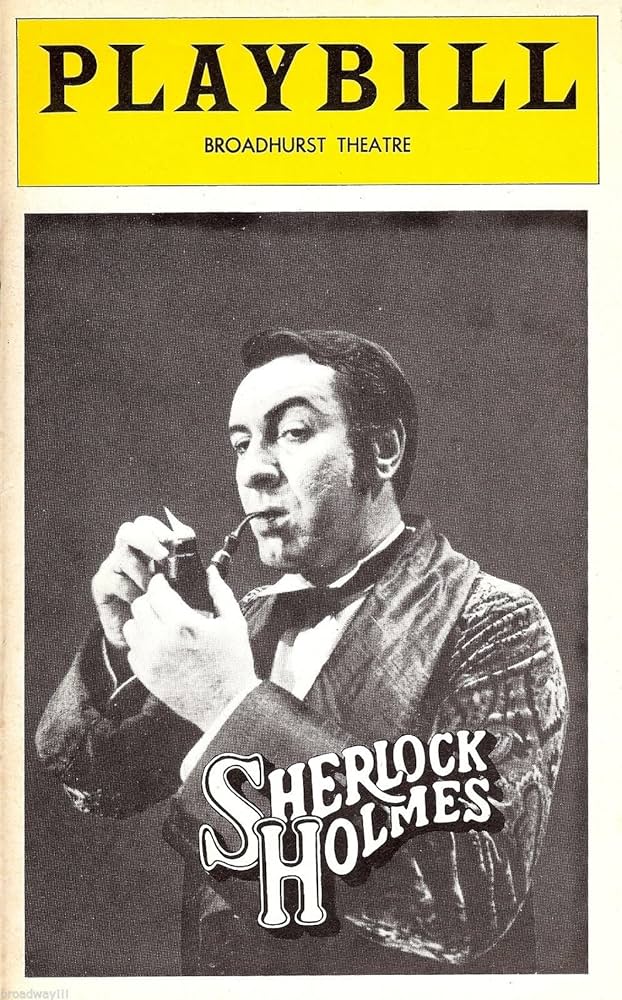
He went on acting. On Broadway he showed his comic mettle again as Sherlock Holmes in a revival of the William Gillette-Conan Doyle play Sherlock Holmes, offsetting some of the frustration felt after the failure of Billy Wilder’s film The Private Life of Sherlock Holmes (1969) in which he also took the title-role.
Stephens gave his Othello in Regent’s Park, and in 1978 returned to the National Theatre under its new regime in Shakespeare (Oberon), Chekhov (Gayev), Ibsen (the Mayor in Brand), Congreve and as Pontius Pilate. Not a man to let self-pity overrule him, he had however a sociable nature and fell into bouts of dissipation and sustained obscurity.
Towards the end of the 1980s he was invited to join the Royal Shakespeare Company. Its director, Adrian Noble, had, as a schoolboy, revered Stephens’s acting as the half-naked, weird-voiced, chain-clad, god-like sovereign of medieval Peru in The Royal Hunt of the Sun (1964).
At Stratford-upon-Avon he played, despite spells of serious illness, Julius Caesar and Falstaff. He won the Olivier Award as best actor for 1991 for his highly praised Falstaff, a sadder dog than usual. Two seasons later he came forward, again after serious illness, as a much-admired but younger than usual King Lear.
Neither of them however was so much the performance of a great actor as of a once potentially great actor. Their challenge and the extent of his achievement served as a kind of plucky personal therapy: a belated call to arms, which the actor answered with a stout heart and high courage; and this year he was duly knighted in the New Year’s Honours list.
Whether his racy, name-dropping memoirs, Knight Errant, subtitled “Memoirs of a Vagabond Actor” and written with Michael Coveney, added to any understanding of his art, they drew a zestful, entertaining portrait of a sexual opportunist and promising if not tactful actor in the Permissive Society of 1960s and 1970s London.
They also drew eddies of indignation in certain quarters at their less than courtly manners, for among the actor’s proud and numerous conquests of note was, apparently, the historian Lady Antonia Fraser (“I was her last bad boy,” he wrote); and to the charges of bad taste and lack of chivalry he would languidly reply, “My book is certainly a precedent.”
From, as it were, his death-bed, he would recreate on the page one of those legendary, hell-raising celebrants of venery and alcoholism from the post-war British theatre, and whether the figure he wrote about was truly Robert Stephens or one of his even more illustrious contemporaries, or a mixture of them all, there was something undeniably heroic in his attitude if not his acting.
And defiant. Stephens defied, again and again, all medical augury in his last months, holding court in local pubs whenever he could get away from hospital to chat about his ideas of great acting or great actors; swaggering and (sometimes) swanking to the last, but committed to the notion that in the theatre great acting was ever rooted in the actor’s personality. “If I am indeed a good actor,” he wrote, “it is partly because I am not, I hope, a dull man. It is impossible for a dull man to be a good actor.”
Adam Benedick
Robert Stephens, actor: born Bristol 14 July 1931; Kt 1995; married 1951 Nora Ann Simmonds (one son; marriage dissolved 1956), 1956 Tarn Bassett (one daughter; marriage dissolved 1967), 1967 Maggie Smith (two sons; marriage dissolved 1975), 1995 Patricia Quinn; died London 13 November 1995.
TCM Overview for Robert Stephens:
Tall leading and character player whose long face and crisp demeanor have seen wide exposure in a distinguished stage career. Stephens’s film credits, though fairly regular since the early 1960s, have generally been less exciting, with the actor playing a series of passive suitors, sensitive artistic types and character roles calling on him largely to embody middle-aged, professional Englishmen.
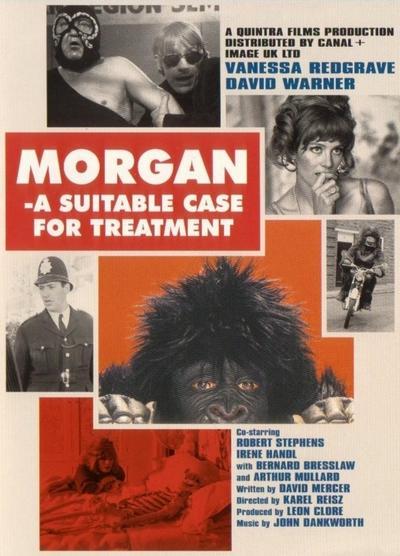
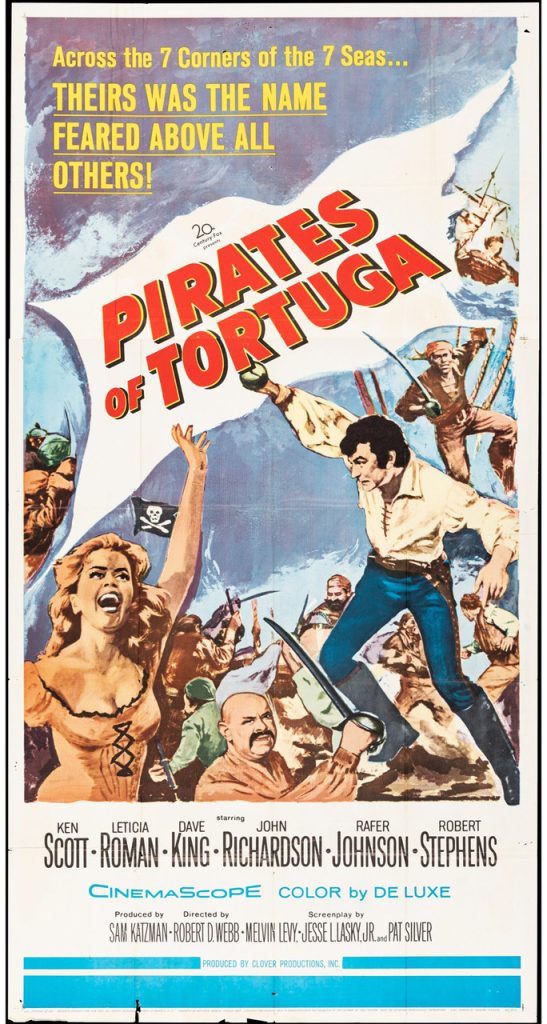
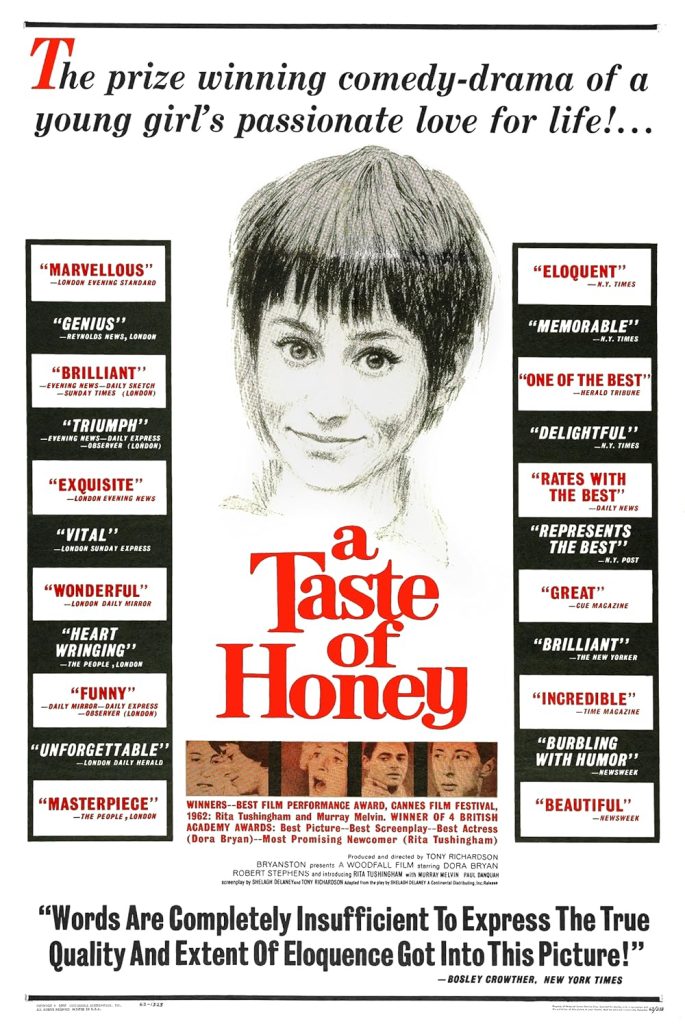
Stephens began acting as a teen in repertory theater and continued after studies at drama school. He joined the Royal Court in London in 1956 for important plays like “Look Back in Anger” and “The Crucible”. Work in features began with parts which laid the grounds for future film roles: He made pirate Henry Morgan a robust Britisher in his US debut in the routine “Pirates of Tortuga”, and he played the colorless, along-for-the-ride boyfriend of the heroine’s domineering mother in the classic “A Taste of Honey” (both 1961). After joining the completely overwhelmed cast of the gargantuan “Cleopatra” (1963), Stephens played the nice, ordinary guy engaged to a woman desperately wanted by her loony ex-husband, the anti-hero protagonist of the landmark anarchic comedy “Morgan” (1966). Stephens and director Karel Reisz admirably refrained from making his role a dull, standardized comic villain, but David Warner and Vanessa Redgrave stole the acting thunder just the same.
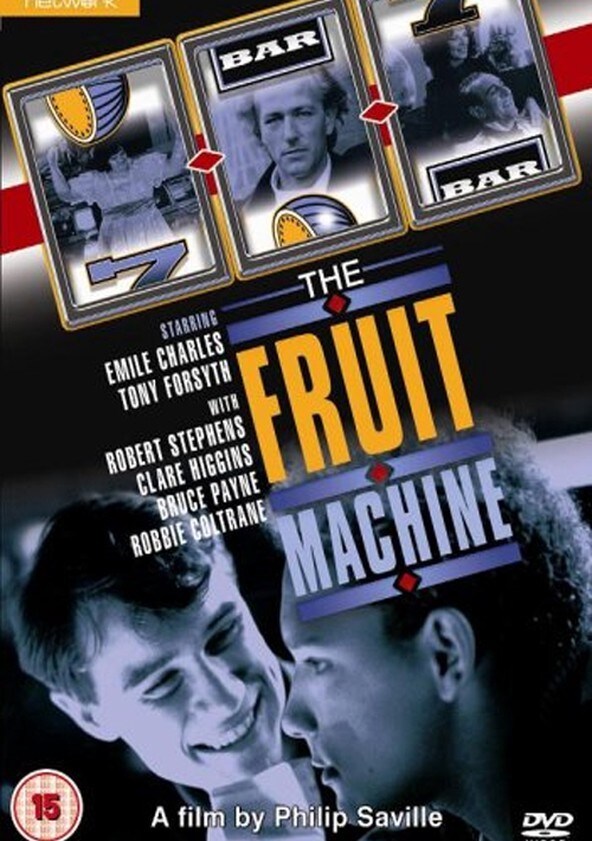
Stephens’ third wife (1967-74) was actor Maggie Smith, and the pair teamed for two films in which he played her lover. He was quite good as the sharp, lusty but feckless teacher colleague who witnesses “The Prime of Miss Jean Brodie” (1969) and was touching as the peripatetic protagonist’s paramour in “Travels With My Aunt” (1972), but in each case Smith’s zany comic elan was practically the whole show. His one major showcase came with his funny, profoundly troubled and yet stalwart sleuth in Billy Wilder’s splendid “The Private Life of Sherlock Holmes” (1970). Subsequent character roles have been as military men (“The Duelists” 1977), artists (“Testimony” 1987), and titled Englishmen (“Bonfire of the Vanities” 1990). His best parts have came in offbeat fare, from “The Fruit Machine” (1988, as an opera star) to Kenneth Branagh’s “Henry V” (1988, as Pistol).
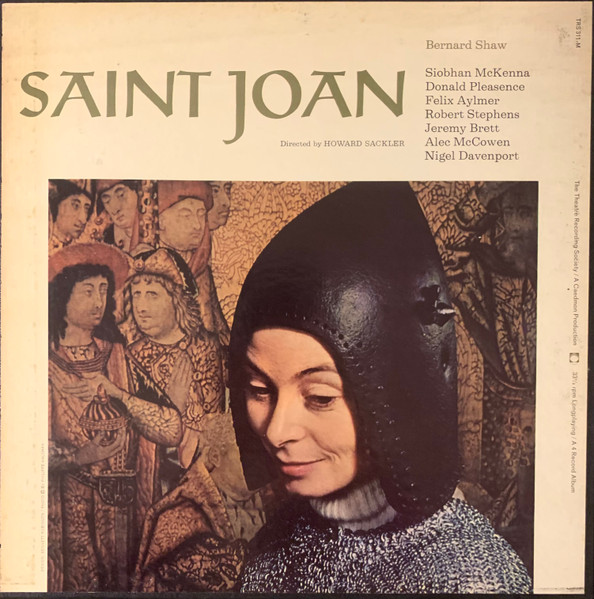
Stephens’ TV work has been modest but effective with the actor appearing mostly in highly prestigious miniseries such as “QB VII” (1974), “Holocaust” (1978), “War and Remembrance” (1988) and “Adam Bede” (1992). Much of his most important work has remained on the stage, with acting at the Royal Shakespeare Company and practically every other major theater running the gamut from “The Entertainer”, “Saint Joan”, “Royal Hunt of the Sun” and “Apropos of Falling Sleet” (which he also directed) to New York work in “Epitaph for George Dillon” and “Sherlock Holmes”. In the 1990s, Stephens returned to the London stage and earned critical praise and awards for his performances as Falstaff and Lear. Father of actors Toby Stephens and Chris Larkin.
It was as if he had cast himself among that generation of so-called hell- raising players – Richard Burton, Peter O’Toole, Albert Finney, Nicol Williamson, whose talents burned so bright in the playhouse until the cinema claimed most of them – except that Stephens could never claim great success in films. He would therefore prove that he at least had never turned away from the greatest test of all: the great roles in the theatre.
If he did not convince everyone of his greatness, he reminded a younger generation of playgoers of the guts, gusto, personality and bravado necessary to heroic acting in its heyday.
Nor did he neglect the supposedly romantic element in that tradition of acting, which he vividly chronicles in an autobiography, Knight Errant, published a fortnight ago.
Brimful of swagger and of egocentric fancy, it charts a career divided boldly between artistic ambition and personal indulgence, displaying a restless energy and Don Juan assurance which sometimes leaves the reader breathless with admiration or astonishment at the author’s effrontery. The book was as if he were re-enacting the adventures of the hero of an 18th-century novel; but at the same time it seldom reflects the kind of actor he was on stage during most of his career until its relatively glamorous end.
Kenneth Tynan had acclaimed him as the essence of the red-brick style of acting which puts brains before breeding. George Devine was certainly not looking for classical actors when he was setting up shop for the English Stage Company, at the Royal Court Theatre in the mid-1950s, for new writers for the stage. But in recruiting Stephens from the Library Theatre, Manchester, he found an actor of integrity and grit who created a stir in all sorts of forgotten works as well as in Osborne’s The Entertainer, Wesker’s The Kitchen and, above all, Epitaph for George Dillon.
Here was an anti-hero even nearer to Osborne’s heart than Jimmy Porter and Stephens acted it with all his heart. “The cleverest portrait I have seen of a certain kind of neurotic artist,” declared Tynan. “Quite wonderful,” said Noel Coward; Laurence Olivier made a note to have him as one of the 50 founding members of the forthcoming National Theatre Company.
With his hooded eyes, beaky nose, heavy jowl, cawing voice, and devil- may-care delight in a profession which gave him scope for being larger than life and twice as exuberant, Stephens did not win universal praise as a charmer. Nor was it in his nature to play for sympathy. Stephens was an off-beat actor, and rather heavy-handed with it.
Indeed that was obvious in Coward’s somewhat heavy-handed 1959 version of Feydeau, Look after Lulu, which had rather oddly got into the Royal Court repertoire with Vivien Leigh in the Madeleine Renaud part and Stephens dashing about in his Edwardian combinations.
It was a fault, though, which he was ready enough to correct when a veteran from the pre-war Aldwych farces, Robertson Hare, suggested that he took up daily skipping. Other ungainlinesses of manner were less easy to shed.
Nevertheless, Stephens had intelligence, personality, determination and technique. Even before his George Dillon had won golden opinions in London and New York he had shown himself satisfactorily versatile for the Royal Court in authors as diverse as Arthur Miller, Brecht, Wycherley, Nigel Dennis and Michael Hastings.
But who could have foreseen – except perhaps Olivier – that, within five years of Dillon, Stephens would be a rising star with the National Theatre at the Old Vic in its heyday and even in line for its throne? Would he have risen so rapidly as an actor, without the good fortune of encountering on stage within three months of his arrival at the National one of the most brilliant comediennes of the day – perhaps of any day – the even more versatile Maggie Smith?
Their partnership began purely by chance casting; soon they were cast as a couple whose acting together made one and one add up to three, and in a few seasons they had become the most famous partnership in British theatre.
Although they worked apart well enough in the National’s mainly classical repertoire, they made audiences look forward to seeing them together; and halfway through that glittering decade from 1963 to 1973 Olivier one day touched the dashing, handsome and effervescent Stephens on the shoulder. Would he like to be one of Olivier’s chief lieutenants?
Could it be true? Might he as an associate director and something of a matinee idol be heading even higher up the National ladder? Here he was standing as it were in the wings of what was to be called the Royal National Theatre whose great but ageing artistic director was ailing.
If ever an actor felt greatness being thrust upon him Stephens could be forgiven for so thinking. Married by then to one of the era’s most accomplished and popular actresses – a comedienne and tragedienne who had also become a film star in The Prime of Miss Jean Brodie (in which he also appeared) – Stephens was thrice blest.
With some accuracy the partnership was compared to other, illustrious couples like the Lunts (Alfred Lunt and Lynn Fontanne), John Clements and Kay Hammond, Laurence Olivier and Vivien Leigh; and playgoers could sense across the Old Vic footlights the mutual exhilaration, verve and delight in their own teamwork.
The couple were together in Farquhar’s The Recruiting Officer (1963: Captain Plume and Silvia), Coward’s Hay Fever (1964: Sandy Tyrell and Myra), Much Ado About Nothing (1965: Benedick and Beatrice), Farquhar’s The Beaux’ Stratagem (1970: Frances Archer and Mrs Sullen), Hedda Gabler (1970: Eilert Loevborg and Hedda) and – perhaps their most popular and poignant collaboration – John Gielgud’s West End revival of Coward’s Private Lives (1972: Elyot Chase and Amanda Prinn).
By then, alas, Stephens had wrong-footed it with his boss Olivier (“Larry? He’s all dear, darling, lovely boy until opening night, then it’s just him and the audience”); and having resigned from the National realised that his marriage was drawing to a close, though not before Private Lives had been a huge success at the Queen’s and then the Globe, bringing Smith another prize as best actress.
With its story of a divorced couple who meet on their honeymoons and fall in love all over again only to realise that they cannot live apart – or together, it was as if the couple were acting out their private life before the public every night.
When the play crossed the Atlantic, Stephens did not go. He directed a play at the Open Space, in London. He played Trigorin in The Seagull at Chichester and Greenwich, Pastor Manders in Ghosts and Claudius in Hamlet (again at Greenwich) and in the West End, a thriller, Murderer (Garrick, 1975). Meanwhile Peter Hall had taken over at the National; and, the divorce concluded, the spirits of the ebullient Stephens sank deeper than he dared admit.
He went on acting. On Broadway he showed his comic mettle again as Sherlock Holmes in a revival of the William Gillette-Conan Doyle play Sherlock Holmes, offsetting some of the frustration felt after the failure of Billy Wilder’s film The Private Life of Sherlock Holmes (1969) in which he also took the title-role.
Stephens gave his Othello in Regent’s Park, and in 1978 returned to the National Theatre under its new regime in Shakespeare (Oberon), Chekhov (Gayev), Ibsen (the Mayor in Brand), Congreve and as Pontius Pilate. Not a man to let self-pity overrule him, he had however a sociable nature and fell into bouts of dissipation and sustained obscurity.
Towards the end of the 1980s he was invited to join the Royal Shakespeare Company. Its director, Adrian Noble, had, as a schoolboy, revered Stephens’s acting as the half-naked, weird-voiced, chain-clad, god-like sovereign of medieval Peru in The Royal Hunt of the Sun (1964).
At Stratford-upon-Avon he played, despite spells of serious illness, Julius Caesar and Falstaff. He won the Olivier Award as best actor for 1991 for his highly praised Falstaff, a sadder dog than usual. Two seasons later he came forward, again after serious illness, as a much-admired but younger than usual King Lear.
Neither of them however was so much the performance of a great actor as of a once potentially great actor. Their challenge and the extent of his achievement served as a kind of plucky personal therapy: a belated call to arms, which the actor answered with a stout heart and high courage; and this year he was duly knighted in the New Year’s Honours list.
Whether his racy, name-dropping memoirs, Knight Errant, subtitled “Memoirs of a Vagabond Actor” and written with Michael Coveney, added to any understanding of his art, they drew a zestful, entertaining portrait of a sexual opportunist and promising if not tactful actor in the Permissive Society of 1960s and 1970s London.
They also drew eddies of indignation in certain quarters at their less than courtly manners, for among the actor’s proud and numerous conquests of note was, apparently, the historian Lady Antonia Fraser (“I was her last bad boy,” he wrote); and to the charges of bad taste and lack of chivalry he would languidly reply, “My book is certainly a precedent.”
From, as it were, his death-bed, he would recreate on the page one of those legendary, hell-raising celebrants of venery and alcoholism from the post-war British theatre, and whether the figure he wrote about was truly Robert Stephens or one of his even more illustrious contemporaries, or a mixture of them all, there was something undeniably heroic in his attitude if not his acting.
And defiant. Stephens defied, again and again, all medical augury in his last months, holding court in local pubs whenever he could get away from hospital to chat about his ideas of great acting or great actors; swaggering and (sometimes) swanking to the last, but committed to the notion that in the theatre great acting was ever rooted in the actor’s personality. “If I am indeed a good actor,” he wrote, “it is partly because I am not, I hope, a dull man. It is impossible for a dull man to be a good actor.”
Adam Benedick
Robert Stephens, actor: born Bristol 14 July 1931; Kt 1995; married 1951 Nora Ann Simmonds (one son; marriage dissolved 1956), 1956 Tarn Bassett (one daughter; marriage dissolved 1967), 1967 Maggie Smith (two sons; marriage dissolved 1975), 1995 Patricia Quinn; died London 13 November 1995.
The above “Independent” obituary can also be accesed here.